Marine Biodiversity Science Center

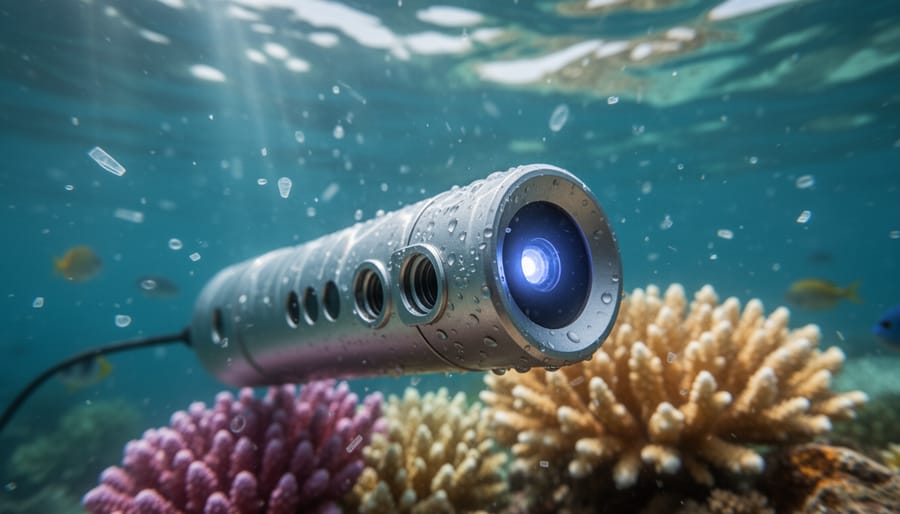
Beneath the ocean’s surface, a silent crisis unfolds as eight million tons of plastic enter our seas each year, joined by agricultural runoff, chemical pollutants, and oil spills that threaten marine ecosystems worldwide. Yet a technological revolution is giving us unprecedented power to track, measure, and respond to these threats in real time. Underwater sensors, sophisticated devices deployed across ocean depths from coral reefs to the deep sea, now serve as our eyes and ears in monitoring water quality, detecting pollutants, and safeguarding marine biodiversity.
These remarkable instruments measure everything from pH levels and oxygen concentrations to the presence of specific contaminants like heavy metals, microplastics, and agricultural nutrients. Unlike traditional water sampling that captures only snapshots in time, modern sensor networks provide continuous data streams, revealing pollution patterns, tracking harmful algal blooms as they develop, and alerting conservationists to contamination events within hours rather than weeks. Marine biologist Dr. Sarah Chen describes them as “sentinels of the sea” that have transformed how we understand and protect ocean health.
The technology ranges from simple temperature and salinity probes to advanced chemical sensors capable of detecting parts-per-billion concentrations of specific pollutants. Some autonomous systems patrol coastlines independently, while others form vast monitoring networks spanning entire marine protected areas. What makes this particularly exciting is that citizen scientists and conservation volunteers increasingly participate in sensor deployment and data collection efforts, democratizing ocean monitoring in ways previously impossible.
Understanding how these sensors work, where they’re deployed, and how their data drives conservation action empowers everyone to participate in protecting our oceans. The future of marine conservation depends on this technology and the people committed to using it effectively.
The Silent Crisis: Why Traditional Pollution Detection Falls Short
Every year, approximately 8 million metric tons of plastic enter our oceans—equivalent to dumping a garbage truck full of plastic into the sea every single minute. Yet this staggering figure represents only the pollution we can see. The true crisis lurking beneath the waves remains largely invisible, silently devastating marine ecosystems while traditional detection methods struggle to keep pace.
Conventional water sampling relies on researchers physically collecting samples at specific locations and times, then transporting them to laboratories for analysis. Dr. Sarah Chen, a marine biologist with fifteen years of fieldwork experience, describes the frustration: “By the time we analyze a water sample and identify a pollution spike, the damage has often already spread. We’re always chasing problems instead of preventing them.” This lag time between detection and response can mean the difference between saving a coral reef and watching it suffocate under an oil slick.
The scale of our oceans makes traditional sampling even more challenging. Covering over 70 percent of Earth’s surface, the ocean’s vastness means that periodic sampling captures only fleeting snapshots of conditions that change by the hour. Pollution hotspots shift with currents, seasonal variations alter chemical compositions, and toxic algal blooms can appear and disappear between sampling intervals.
This is where marine monitoring systems equipped with advanced underwater sensors become game-changers. Real-time monitoring provides continuous data streams, detecting pollution events as they occur rather than days or weeks later. These systems track multiple parameters simultaneously—from pH levels and temperature to specific chemical pollutants and microplastic concentrations—creating comprehensive pictures of ocean health.
The impact on biodiversity is measurable. Studies show that areas with real-time monitoring systems experience 40 percent faster response times to pollution events, significantly reducing harm to marine life. For volunteers and citizen scientists, this technology offers unprecedented opportunities to contribute meaningful data, transforming ocean conservation from reactive cleanup efforts into proactive protection strategies.
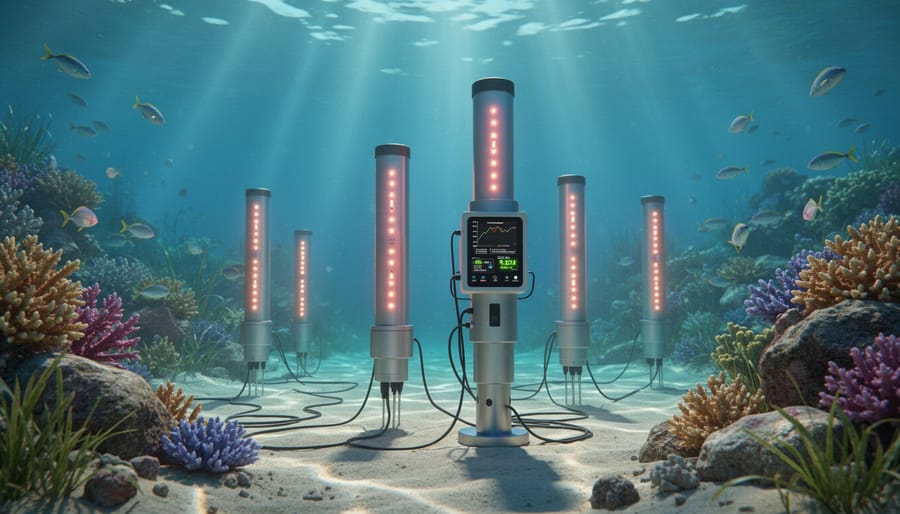
How Modern Underwater Sensors Actually Work
Chemical Sensors: Detecting Invisible Threats
Think of chemical sensors as underwater taste buds, constantly sampling the ocean’s chemistry to detect invisible threats before they become visible disasters. These remarkable devices monitor everything from heavy metal contamination to subtle pH shifts that signal ocean acidification, providing early warnings that can save entire ecosystems.
Chemical sensors work by detecting specific molecules in seawater, much like a smoke detector identifies particles in air. When measuring dissolved oxygen, sensors use electrochemical reactions to determine how much oxygen is available for marine life to breathe. Low oxygen levels, called hypoxia, can create dead zones where fish and other creatures cannot survive. Similarly, pH sensors act as the ocean’s litmus test, tracking acidification that threatens coral reefs and shellfish populations worldwide.
Heavy metal sensors are particularly crucial near industrial areas and shipping lanes. These devices identify toxic elements like mercury, lead, and cadmium at concentrations measured in parts per billion, equivalent to detecting a single drop of contamination in an Olympic-sized swimming pool. Nutrient sensors monitor nitrogen and phosphorus levels, helping scientists understand harmful algal blooms that devastate coastal waters.
Marine biologist Dr. Sarah Chen recalls deploying chemical sensor arrays in a compromised estuary: “Within weeks, we identified pollution sources no one knew existed. That data empowered local volunteers to advocate for cleanup efforts, and today, that waterway is recovering beautifully.”
For those inspired to contribute, many research institutions and conservation organizations welcome volunteers to help maintain sensor networks and analyze data, turning citizen scientists into guardians of our ocean’s chemical balance.
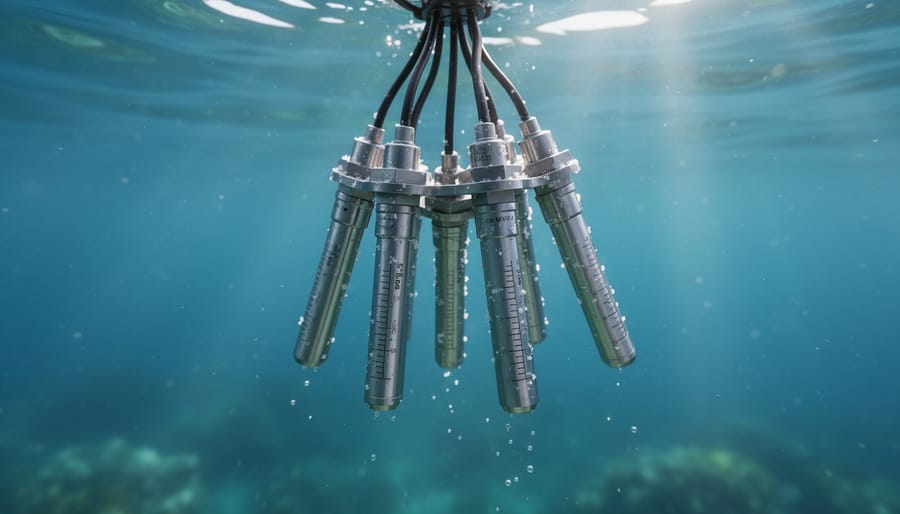
Optical Sensors: Seeing What We Cannot
Optical sensors act as underwater eyes, using light to detect pollutants invisible to the naked eye. These sophisticated instruments help scientists monitor oil spills, identify microplastic concentrations, and measure water clarity—all critical indicators of ocean health.
When oil enters the ocean, optical sensors employ fluorescence technology to track contamination. By shining ultraviolet light into the water, these sensors cause oil compounds to emit characteristic glows that reveal the spill’s location and concentration. Think of it like a blacklight revealing hidden stains—except underwater and far more precise.
Spectroscopy takes a different approach, analyzing how light interacts with particles in the water. Different substances absorb and reflect specific wavelengths of light, creating unique signatures that sensors can identify. This technology excels at detecting microplastics, those tiny plastic fragments threatening marine life throughout the food chain.
Turbidity sensors measure water clarity by detecting how much light scatters when passing through suspended particles. Cloudy water often indicates pollution, sediment disturbance, or harmful algal blooms that can devastate marine ecosystems.
Marine biologist Dr. Elena Vasquez shares her experience: “Using optical sensors during coastal surveys, we’ve mapped microplastic hotspots that guide our cleanup efforts. Volunteers can now focus their energy where it matters most.”
These sensors transform invisible threats into actionable data, empowering communities to protect marine biodiversity through informed conservation strategies.
Biological Sensors: Nature’s Own Alarm System
Nature has spent millions of years perfecting detection systems, and scientists are now harnessing these biological blueprints to monitor ocean health. Biosensors use living organisms or biological materials—such as bacteria, enzymes, or even marine animal tissues—to detect pollutants and toxins in seawater. These remarkable tools work by mimicking how marine life naturally responds to environmental threats.
One innovative approach uses bioluminescent bacteria that glow when exposed to specific contaminants. When toxins are present, these microorganisms alter their light emission patterns, providing an immediate visual signal of pollution. Similarly, researchers have developed sensors incorporating mussel tissues, which filter water constantly in nature. When exposed to harmful substances, these biological components trigger measurable chemical reactions, acting as early warning systems for contamination events.
Dr. Elena Rodriguez, a marine biologist working with biosensor development, shares her enthusiasm: “We’re essentially asking nature, ‘How do you know when something’s wrong?’ and then translating that wisdom into monitoring technology. It’s humbling and exciting to work with systems that evolution has already optimized.”
These living sensors offer advantages over traditional methods—they’re often more sensitive, cost-effective, and can detect multiple pollutants simultaneously. For volunteers interested in citizen science projects, some organizations now deploy simplified biosensor kits that enable community members to participate in water quality monitoring, making ocean protection a truly collaborative effort between nature, science, and dedicated individuals.
Real-World Success Stories: Sensors Saving Ecosystems
Across the globe, underwater sensor networks are moving from experimental technology to proven conservation tools, delivering measurable results that are transforming how we protect marine ecosystems. These success stories demonstrate the tangible difference that real-time monitoring makes in safeguarding our oceans.
In Chesapeake Bay, one of North America’s most important estuaries, a network of over 100 sensors deployed since 2017 has revolutionized water quality management. These devices continuously monitor dissolved oxygen levels, nutrient concentrations, and temperature fluctuations. When sensors detected a developing hypoxic zone—an area with dangerously low oxygen that can suffocate marine life—in the summer of 2019, authorities received immediate alerts. Within hours, they identified agricultural runoff from recent storms as the source and worked with local farmers to implement emergency containment measures. The rapid response prevented what could have been a massive fish kill event. Today, this sensor network provides public data that has helped reduce dead zones in the bay by 23 percent since implementation, allowing oyster populations and underwater grasses to begin recovering.
Halfway around the world, the Great Barrier Reef Marine Park Authority deployed an advanced sensor array in 2020 to combat coral bleaching events. The system monitors water temperature, pH levels, and sediment loads across hundreds of reef sections. Dr. Elena Martinez, a marine biologist who helped design the monitoring program, recalls the network’s first major test. “We detected temperature spikes in a particularly vulnerable reef section three days before visible bleaching began,” she explains. “That early warning allowed us to mobilize intervention teams who deployed shade cloths and tested cooling techniques. We couldn’t save every coral, but we protected roughly 40 percent of that section—colonies that would have certainly died without advance notice.”
Dr. Martinez now leads training workshops where she teaches volunteers to help maintain sensor equipment during quarterly research expeditions. “Citizen scientists have become invaluable partners,” she notes. “They learn to calibrate sensors, collect supplementary data, and most importantly, they become ambassadors for ocean health in their communities.”
Perhaps most inspiring is the Baltic Sea case, where sensor networks detected illegal chemical dumping in 2021. Automated alerts triggered when sensors registered sudden spikes in heavy metals led authorities directly to the source: a factory discharging waste through an unauthorized pipeline. Legal action followed, the pipeline was shut down, and sensors confirmed water quality restoration within six months. Local fish populations rebounded, and commercial fishing resumed in previously contaminated areas.
These examples prove that underwater sensors do more than collect data—they create opportunities for timely intervention, turning potential disasters into conservation victories that benefit entire ecosystems and the communities that depend on them.
The Technology Behind the Networks
Smart Deployment: From Buoys to Underwater Drones
The real magic of underwater sensors lies not just in their sophistication, but in how we deploy them throughout our oceans. Scientists and conservationists have developed an impressive toolkit of platforms to carry these vital instruments into the marine environment, each suited to different monitoring needs.
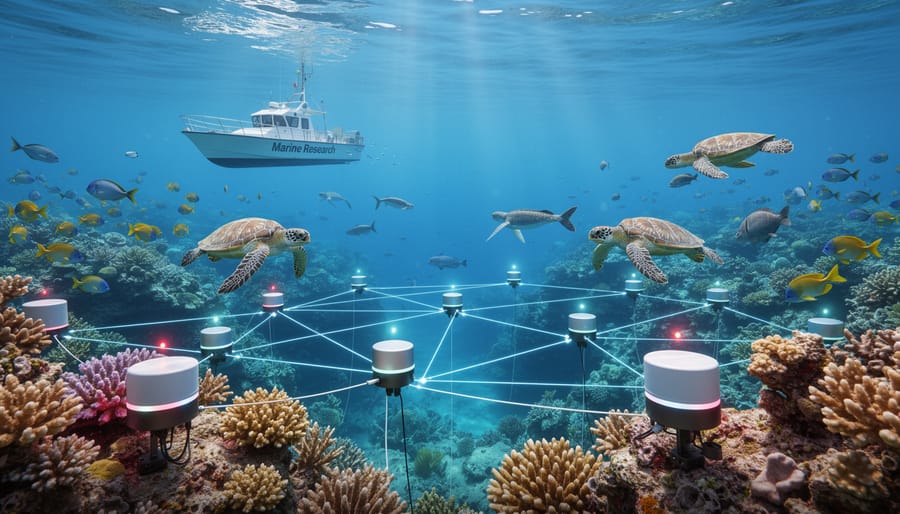
Stationary sensor arrays, often mounted on buoys or anchored to the seafloor, serve as the ocean’s weather stations. These fixed platforms continuously monitor conditions at specific locations, providing long-term data essential for tracking changes over time. Along coastlines and in marine protected areas, these arrays form networks that alert researchers to pollution events or unusual environmental shifts.
Autonomous underwater vehicles (AUVs) and gliders have revolutionized ocean monitoring by covering vast distances without human operation. These tireless robots can dive thousands of feet, collecting data across entire ocean basins while using minimal energy. Marine biologist Dr. Sarah Chen describes them as “our eyes in places humans rarely venture, gathering information that would otherwise remain unknown.”
Perhaps most innovative are sensors attached to marine animals themselves. Seals, sea turtles, and whales become voluntary research partners, carrying tags that record temperature, salinity, and sometimes even pollution markers as they travel their natural migration routes. This approach not only expands our monitoring reach but also provides insights into how animals experience their changing environment.
For those interested in supporting these technologies, many research institutions offer volunteer opportunities in sensor deployment and data collection, making ocean monitoring a truly collaborative effort between scientists and engaged citizens.
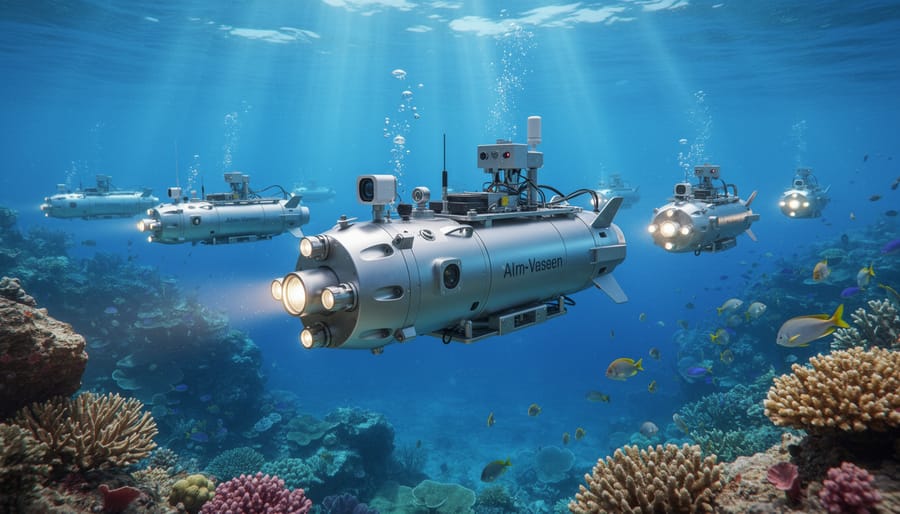
Turning Data Into Action
Modern underwater sensors don’t just collect information—they transform raw data into immediate, life-saving action. When a sensor detects elevated pollution levels, that information streams in real-time to monitoring stations where sophisticated software analyzes patterns and triggers alerts. Within minutes, response teams can mobilize to contain spills, regulatory agencies receive notifications, and nearby communities get warnings about water quality.
The real power emerges when multiple sensors work together. AI-powered analysis identifies pollution sources by tracking concentration gradients across sensor networks, essentially creating a digital map that points investigators directly to the contamination’s origin. Marine biologist Dr. Sarah Chen describes this capability as “giving the ocean a voice to tell us exactly where it’s hurting.”
This data also drives long-term conservation strategies. By analyzing trends over months and years, scientists identify pollution hotspots, assess the effectiveness of cleanup efforts, and predict future risks. Volunteers can even access some sensor data through citizen science platforms, enabling communities to actively participate in protecting their local marine environments and holding polluters accountable.
What This Means for Marine Biodiversity
The connection between underwater sensor technology and marine biodiversity protection is profound and measurable. When sensors detect pollution events within hours rather than days or weeks, the window for intervention expands dramatically, often making the difference between ecosystem collapse and recovery.
Consider coral reefs, among the ocean’s most biodiverse yet vulnerable ecosystems. These living structures are extremely sensitive to chemical changes in their environment. Traditional monitoring methods might detect harmful pollution levels only after visible bleaching begins, but advanced sensors can identify problematic pH shifts, temperature anomalies, or chemical contaminants before corals show distress. This early warning allows conservationists to implement protective measures, potentially diverting pollution sources or establishing temporary barriers that give reefs time to adapt.
For endangered species like sea turtles, manatees, and monk seals, sensor networks provide critical habitat protection. Dr. Patricia Chen, a marine biologist working with sensor arrays in the Caribbean, shares an encouraging example: “We detected an oil discharge near a known hawksbill turtle nesting beach within two hours of the incident. Our rapid response team deployed containment booms before the slick reached shore, protecting both nesting females and hatchlings during their most vulnerable period.”
The technology proves especially valuable for species we cannot easily observe. Deep-sea ecosystems, home to countless undiscovered species, face threats from mining operations and industrial waste. Sensors stationed at various depths monitor these remote habitats continuously, alerting scientists to changes that might otherwise go unnoticed until irreversible damage occurs.
The optimistic reality is that marine ecosystems possess remarkable resilience when given the chance to recover. Real-time monitoring supports targeted ecosystem restoration efforts by identifying which areas need immediate intervention and which are recovering successfully. Volunteer monitoring programs now incorporate citizen scientists in data collection, creating broader surveillance networks while building public awareness about ocean health.
When pollution is caught early, recovery timelines shorten from decades to months, allowing marine life to rebound and thrive once more.
Getting Involved: Citizen Science and Volunteer Opportunities
The exciting growth of underwater sensor networks has created numerous opportunities for citizens to contribute directly to ocean monitoring and conservation. Whether you have scientific expertise or simply care about marine ecosystems, there’s a role for you in this technological revolution.
The Marine Biodiversity Science Center offers several pathways for involvement. Their Sensor Guardian program trains volunteers to assist with sensor deployment and maintenance along accessible coastal areas. Participants learn to check equipment, report anomalies, and even help retrieve data loggers during scheduled collection periods. “Having community members invested in the sensors creates a powerful network of ocean advocates,” explains Dr. Sarah Chen, who coordinates the program. “They become ambassadors for marine conservation in their communities.”
For those who prefer desktop participation, citizen science platforms like Zooniverse and Ocean Networks Canada provide opportunities to analyze sensor data from home. Volunteers help identify patterns in acoustic recordings, verify water quality readings, and flag unusual events that warrant further investigation. These contributions are genuinely valuable—human pattern recognition still surpasses artificial intelligence in certain detection tasks.
Educational institutions frequently partner with monitoring programs, offering students hands-on experience with sensor technology while contributing real data to research databases. Teachers can contact local marine research facilities to explore collaboration opportunities.
Your participation, regardless of scale, strengthens the collective effort toward conservation action. Every data point analyzed and every sensor maintained contributes to our understanding of ocean health and informs protection strategies for marine biodiversity.
Remember the gray whale mother and calf navigating through murky waters, their path uncertain in the face of invisible pollution? Today, thanks to networks of underwater sensors deployed along their migration route, researchers track water quality in real-time, alerting responders to contamination events before they spread. That mother whale now swims through waters monitored by technology that never sleeps, protecting her and countless other marine creatures from unseen dangers.
The transformative potential of underwater sensor technology extends far beyond detection—it represents a fundamental shift in how we safeguard our oceans. These devices serve as our eyes and ears beneath the waves, providing the data-driven insights necessary for meaningful conservation action. From tracking microplastic concentrations to identifying chemical spills before they devastate marine habitats, sensors empower us to respond with unprecedented speed and precision.
Yet technology alone cannot save our oceans. The real power emerges when communities, scientists, and citizens unite behind this shared mission. Marine biologist Dr. Elena Rodriguez puts it simply: “Every data point collected by these sensors tells a story—but we need people to listen and act on what we learn.”
You can be part of this transformation. Volunteer with local ocean monitoring programs, support organizations deploying sensor networks, or simply share what you’ve learned about these remarkable technologies. The health of our oceans depends on collective vigilance and action. Together, armed with knowledge and driven by hope, we can ensure that future generations inherit thriving marine ecosystems where every creature—from microscopic plankton to majestic whales—can flourish.

jessica
Ava Singh is an environmental writer and marine sustainability advocate with a deep commitment to protecting the world's oceans and coastal communities. With a background in environmental policy and a passion for storytelling, Ava brings complex topics to life through clear, engaging content that educates and empowers readers. At the Marine Biodiversity & Sustainability Learning Center, Ava focuses on sharing impactful stories about community engagement, policy innovations, and conservation strategies. Her writing bridges the gap between science and the public, encouraging people to take part in preserving marine biodiversity. When she’s not writing, Ava collaborates with local initiatives to promote eco-conscious living and sustainable development, ensuring her work makes a difference both on the page and in the real world.