Marine Biodiversity Science Center

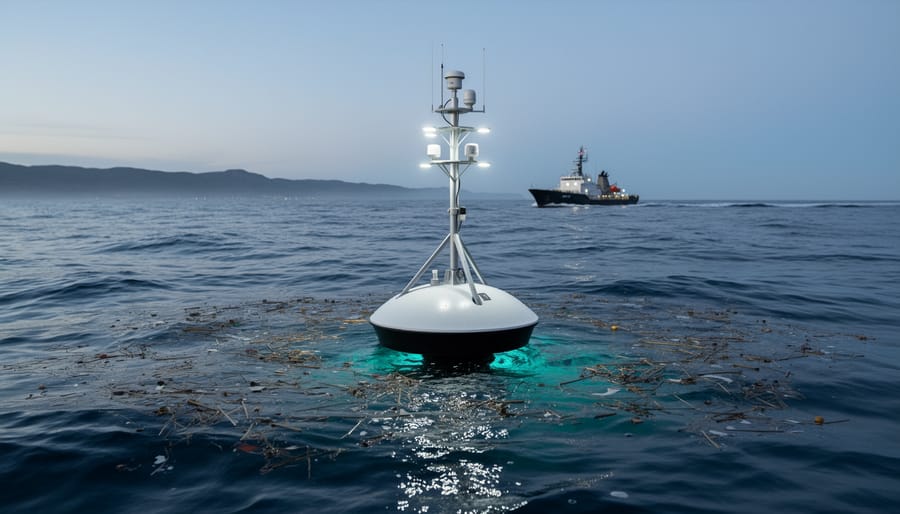
Advanced detection systems for ocean pollution are networks of sensors, satellite imagery, acoustic monitors, and data analytics platforms that continuously identify and measure contaminants, debris, and ecological changes in marine environments. These technologies have transformed our ability to spot oil spills, track plastic accumulation zones, monitor harmful algal blooms, and detect chemical pollutants before they spread across entire ecosystems.
The need for such systems has never been more urgent. By 2026, ocean pollution threatens biodiversity hotspots worldwide, yet traditional ship-based monitoring can only cover a fraction of our vast marine territories. Advanced detection fills this gap through automated, round-the-clock surveillance that alerts researchers and response teams the moment pollution signatures appear. Dr. Elena Martínez, a marine biologist who spent fifteen years developing sensor arrays off the California coast, describes the shift this way: “We used to discover pollution events weeks after they began. Now we can detect chemical plumes within hours and mobilize cleanup efforts while the affected area is still manageable.”
This article explains how advanced detection systems actually work, from the sensors that sample seawater chemistry to the satellites that photograph floating debris fields. You’ll learn about the distinct categories of detection technology, each suited to different pollutants and environments, and discover where these systems are making measurable differences in ocean health. We’ll also cover practical ways you can contribute to these efforts, including citizen science programs that rely on volunteers to deploy low-cost sensors and report observations that complement professional marine monitoring systems.
Understanding these tools matters because effective pollution response depends on early, accurate detection. The systems detailed here represent our best defense against the accelerating threats facing marine ecosystems.
What Advanced Detection Systems Mean for Ocean Health
Advanced detection systems for ocean pollution are networks of interconnected sensors and analytical tools that continuously monitor marine environments for contaminants, providing real-time data to scientists and conservationists. Unlike traditional sampling methods that require researchers to physically collect water samples and send them to labs for weeks of analysis, these systems work around the clock, identifying threats as they emerge. Think of them as an early warning system for the ocean, similar to smoke detectors in a building but capable of detecting everything from oil spills and chemical runoff to microplastic accumulation and harmful algal blooms.
The leap forward these systems represent becomes clear when you compare timelines. Traditional methods might reveal a pollution event days or weeks after it occurred, when damage to coral reefs, sea turtle populations, or fish nurseries is already extensive. Advanced systems can alert authorities within hours, sometimes minutes, giving responders a fighting chance to deploy containment measures, evacuate sensitive areas, or track the pollution source while evidence remains fresh.
For marine biodiversity, this speed matters enormously. A sea turtle nesting beach exposed to chemical pollutants for three weeks faces far worse outcomes than one where contamination is detected and addressed within 48 hours. Coral reefs stressed by warming waters become exponentially more vulnerable when pollution compounds that stress, and early detection allows scientists to implement targeted interventions during critical windows.
These systems also capture patterns invisible to periodic sampling. Seasonal pollution trends, illegal dumping operations that occur at night, and gradual contamination from agricultural runoff all become visible when monitoring is continuous rather than episodic. Marine biologists working with these technologies report discovering pollution sources and ecosystem stressors they never would have identified through conventional methods, fundamentally changing their understanding of threats facing the species they study.
How Advanced Detection Systems Work
Sensor Technology and Data Collection
At the heart of every advanced detection system lies a suite of specialized sensors, each engineered to identify specific types of ocean pollutants. Ocean pollutant sensors come in three primary categories, and understanding their distinct capabilities reveals how these systems achieve such precise monitoring across vast marine environments.
Chemical sensors for heavy metals and petroleum compounds work by detecting molecular signatures in water samples. These devices measure changes in electrical conductivity, pH levels, or specific ion concentrations that indicate the presence of contaminants like mercury, lead, or crude oil. Some advanced chemical sensors can distinguish between different hydrocarbon types, helping researchers pinpoint whether pollution originates from shipping traffic, industrial runoff, or natural seeps.
Optical microplastic detection relies on cameras and spectroscopy to identify tiny plastic particles suspended in seawater. These sensors capture high-resolution images and analyze light absorption patterns to differentiate plastic polymers from organic matter like plankton or sediment. The technology proves particularly valuable for tracking microplastic concentrations near coastal breeding grounds where filter-feeding species are most vulnerable.
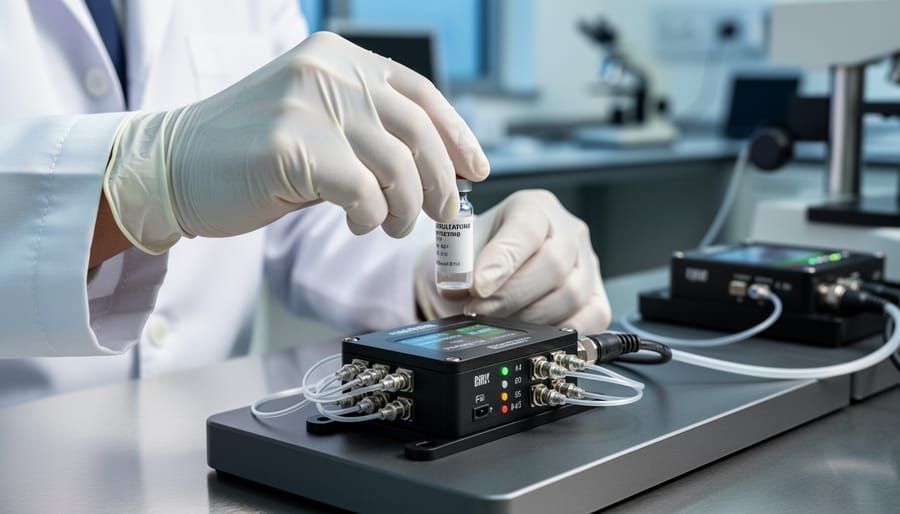
Biosensors for marine toxins use biological components, often enzymes or antibodies, that react to specific harmful substances like algal toxins or industrial chemicals. When the target pollutant binds to the sensor’s biological element, it triggers a measurable signal, providing rapid confirmation of contamination events.
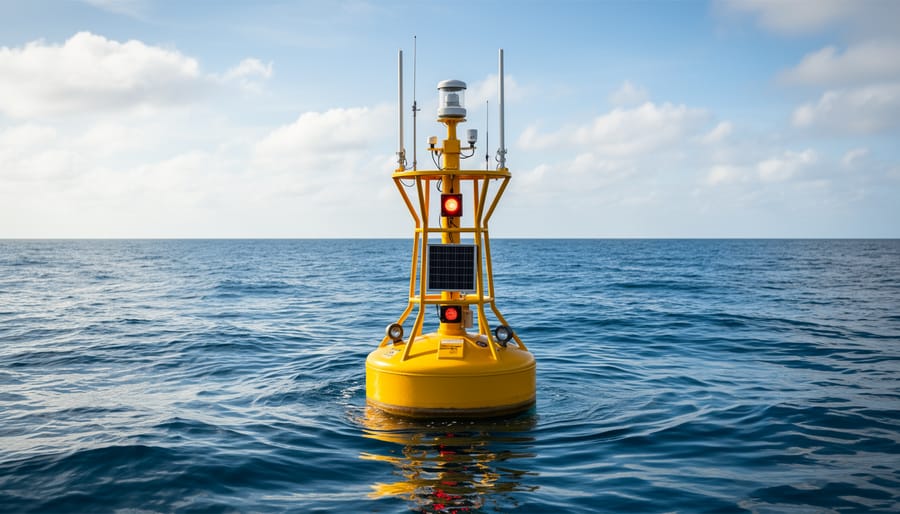
These sensors reach their monitoring locations through multiple deployment methods. Autonomous underwater vehicles navigate programmed routes at various depths, while surface buoys remain stationary at critical sites, transmitting continuous data streams. Satellites equipped with multispectral imaging detect large-scale pollution events like oil slicks or algal blooms from orbit, covering ocean areas impossible to monitor with vessels alone.
Real-Time Analysis and Response
Once sensors collect pollution data from the ocean, the real value emerges in how quickly and accurately that information becomes actionable. Modern detection systems transmit raw measurements, chemical concentrations, particle counts, temperature anomalies, to cloud-based platforms where sophisticated algorithms immediately begin processing. Machine learning models, trained on years of baseline data, compare incoming readings against normal environmental patterns and flag deviations that suggest pollution events. This approach allows systems to distinguish between natural fluctuations and genuine threats, reducing false alarms that can drain response resources.
AI in ocean conservation has transformed the speed and precision of these analyses. Neural networks can identify pollution signatures, such as the spectral fingerprint of a specific crude oil or the size distribution of microplastics from a particular industrial source, in minutes rather than the days required for traditional laboratory testing. Automated alerts trigger immediately when thresholds are exceeded, notifying marine biologists, coast guard stations, and environmental enforcement teams through integrated communication systems. Text messages, app notifications, and dashboard alerts provide GPS coordinates, pollutant type, and estimated concentration, enabling rapid deployment of containment measures or sample collection teams.
Some advanced networks incorporate predictive modeling, using current data combined with ocean current patterns and weather forecasts to project where a detected plume will drift. This foresight allows conservationists to move endangered species from threatened areas, deploy protective barriers around critical habitats like coral reefs, or position cleanup equipment ahead of the pollution’s arrival. The shift from reactive investigation to proactive intervention represents a fundamental change in how we protect marine ecosystems from contamination.
Types of Advanced Ocean Pollution Detection Systems
Autonomous and Remote Sensing Platforms
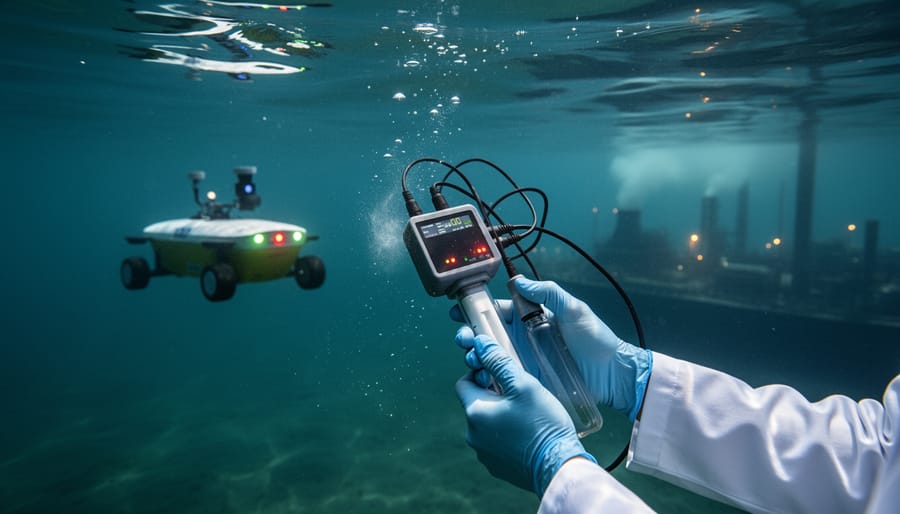
Autonomous platforms represent the frontline of ocean pollution detection, operating continuously across vast marine territories that would be impossible to monitor through traditional sampling alone. Each platform type serves distinct surveillance needs based on water depth, target pollutants, and environmental conditions.
Underwater dronesor autonomous underwater vehicles (AUVs), navigate beneath the surface to detect pollutants in mid-water zones and near the seafloor. Equipped with chemical sensors for heavy metals and hydrocarbons, these submersibles follow pre-programmed routes or respond adaptively to detected contamination patterns. They excel in mapping pollution plumes around shipwrecks, offshore drilling sites, and deep-sea dumping zones where surface methods can’t reach. Some models carry optical imaging systems to document marine life impacts alongside pollution measurements.
Autonomous surface vehicles (ASVs) patrol ocean surfaces, collecting data on floating debris, oil slicks, and surface-layer contaminants. Solar-powered and designed for extended deployments, these unmanned craft cover larger areas than research vessels at a fraction of the cost. Their real-time connectivity allows scientists to redirect them toward emerging pollution events, making them invaluable for tracking oil spills or industrial discharge as it spreads.
Satellite-based remote sensing provides the broadest perspective, using spectral imaging to detect pollution signatures across entire ocean basins. Satellites identify chlorophyll blooms indicating nutrient pollution, track plastic accumulation zones, and monitor coastal water quality from space. While they can’t match the chemical specificity of in-water sensors, they guide deployment of other platforms to areas showing concerning patterns. Understanding how marine tech works across these integrated systems reveals the coordinated effort required for comprehensive ocean monitoring.
Stationary monitoring buoys anchor detection systems in high-priority locations, near marine protected areas, shipping lanes, or industrial outfalls. These fixed stations provide continuous temporal data, revealing pollution trends, seasonal variations, and baseline conditions against which acute contamination events stand out clearly.
Integrated Multi-Sensor Networks
The most powerful pollution detection systems don’t rely on a single technology or platform, they weave together multiple sensor types and deployment methods into coordinated networks that monitor entire ocean regions. These integrated multi-sensor networks create what scientists call a “pollution monitoring ecosystem,” combining the strengths of autonomous vehicles, fixed buoys, satellite imaging, and shore-based sensors into a unified early-warning system.
A typical integrated network might position fixed monitoring buoys at strategic points throughout a bay or coastal zone, each equipped with chemical sensors, optical instruments, and biosensors. Autonomous underwater vehicles patrol predetermined routes between these stations, filling gaps in coverage and investigating anomalies the buoys detect. Meanwhile, satellite systems track large-scale changes in water color, temperature, and surface conditions across the entire region. All these platforms feed data to a central processing hub where algorithms identify patterns, correlate findings across sensors, and flag pollution events that individual sensors might miss.
The European Marine Observation and Data Network exemplifies this approach, connecting over 1,500 monitoring stations across European waters. When one sensor detects elevated hydrocarbon levels, the network automatically redirects nearby autonomous vehicles to investigate the source while satellite imagery confirms surface oil signatures. This coordination transforms scattered data points into comprehensive pollution intelligence.
Regional networks in the Caribbean track agricultural runoff and plastic accumulation across multiple island nations, sharing data that helps scientists understand how pollutants move through interconnected marine ecosystems. The Great Barrier Reef Marine Park Authority operates an integrated system that monitors pesticide loads, sediment plumes, and nutrient pollution across two thousand kilometers of reef habitat.
These networks cost substantially more than standalone sensors, often millions of dollars for regional coverage, but they catch pollution events that single-point monitoring would miss entirely. The coordination also reduces redundancy, with each sensor type deployed where it performs best rather than attempting to do everything everywhere.
How These Systems Are Applied in Marine Conservation
Protecting Critical Marine Habitats
Advanced detection systems have become indispensable tools for safeguarding the world’s most vulnerable marine ecosystems. In coral reef environments, networks of autonomous sensors continuously monitor for chemical pollutants, temperature anomalies, and turbidity changes that can trigger bleaching events or inhibit coral reproduction. These systems provide conservationists with the critical window needed to implement protective measures before irreversible damage occurs.
Marine protected areas around breeding grounds for sea turtles, seals, and endangered fish species now benefit from integrated monitoring platforms that track everything from microplastic concentrations to agricultural runoff. When pollution levels spike during critical breeding seasons, automated alerts enable rapid containment responses that protect vulnerable juveniles and nesting sites.
Dr. Elena Rodriguez, a marine biologist with the Caribbean Marine Conservation Network, describes the impact firsthand: “Three years ago, we relied on monthly water sampling trips to monitor pollution around turtle nesting beaches. We’d often discover contamination weeks after it occurred, when the damage was already done. Now, our autonomous buoy system detects chemical signatures within hours. Last spring, sensors caught an oil sheen from an illegal discharge two miles offshore before it reached our nesting areas. We mobilized cleanup crews immediately and deployed protective booms. That early detection likely saved an entire season’s worth of hatchlings.”
The difference between reactive and proactive conservation can mean the survival or collapse of entire populations, making these detection systems not just technological achievements but lifelines for endangered species.
Supporting Enforcement and Policy
Detection systems transform environmental enforcement from reactive to proactive, giving authorities the evidence they need to hold polluters accountable and protect marine ecosystems through strengthened regulations. When sensors document illegal discharges in real time, enforcement agencies can respond while violations are still occurring rather than discovering contamination days or weeks later. This immediacy makes prosecution significantly more viable.
Coast guard units and environmental protection agencies now use detection network data to identify patterns of illegal dumping, tracking repeat offenders and pinpointing high-risk zones that require increased surveillance. In the Mediterranean, for example, satellite-based detection systems have helped authorities prosecute shipping companies for deliberate oil discharges, with sensor data providing court-admissible evidence of violations. The precision of these systems, documenting exact times, locations, and pollutant concentrations, strengthens legal cases that might otherwise rely on circumstantial evidence.
Beyond enforcement actions, the comprehensive datasets generated by detection networks inform policy development at local, national, and international levels. Regulatory bodies use pollution trend data to establish discharge limits, designate protected areas, and justify stricter environmental standards. When policymakers can demonstrate specific threats to marine biodiversity with quantifiable data, conservation measures gain legislative support that advocacy alone might not achieve.
Detection systems also enable adaptive management approaches, where monitoring reveals whether existing regulations effectively protect marine habitats. If sensors show persistent contamination despite current policies, authorities have objective grounds to revise standards or expand protected zones, creating feedback loops that continuously improve ocean protection frameworks.
Common Questions About Ocean Pollution Detection Technology
How accurate are advanced detection systems?
Modern systems can identify specific pollutants at concentrations as low as parts per billion, with accuracy rates exceeding 95% for many chemical contaminants. However, accuracy varies by pollutant type, environmental conditions, and sensor calibration, which is why ongoing maintenance and validation studies are essential.
Can citizen scientists use this technology?
While the most sophisticated systems require specialized training and equipment, simplified versions and mobile apps now enable citizen scientists to contribute valuable data. Many conservation organizations offer training programs and provide sensors for community monitoring projects, making ocean health tracking more accessible than ever.
How quickly can these systems detect pollution events?
Real-time systems can identify pollution within minutes of occurrence, transmitting alerts to researchers and authorities almost immediately. Satellite-based platforms typically provide updates every few hours, while autonomous vehicles and stationary buoys offer continuous monitoring with alerts triggered as soon as threshold levels are exceeded.
What happens when pollution is detected?
Detection triggers a coordinated response that includes alerting environmental authorities, notifying nearby communities, deploying cleanup teams, and documenting evidence for potential enforcement actions. The data becomes part of a larger database that scientists use to track pollution patterns, identify sources, and develop targeted conservation strategies.
How much do these systems cost?
Costs range from a few thousand dollars for basic sensor arrays to millions for comprehensive satellite-based networks. Many research institutions and conservation groups seek funding through grants, partnerships, and donations, creating opportunities for organizations and individuals to support specific monitoring projects without shouldering the entire expense.
The accessibility of detection technology continues to improve as equipment costs decline and collaborative networks expand. Universities, marine research centers, and conservation organizations increasingly welcome volunteers who want to get involved now with monitoring efforts, even without specialized backgrounds. Training programs teach participants how to deploy sensors, collect water samples, and interpret basic data, transforming community members into effective stewards of their local marine environments.
For those unable to participate in fieldwork, remote engagement options exist. Some organizations stream real-time data publicly, allowing anyone to observe pollution levels and environmental changes. Others maintain databases where volunteers analyze images from underwater cameras or tag detected pollutants in satellite imagery. These distributed approaches multiply the impact of detection systems while building public awareness about ocean health challenges.
Advanced detection systems represent a turning point in our ability to protect the ocean’s most vulnerable ecosystems. These technologies give us something we’ve never had before: the power to see pollution events as they unfold, track contaminants across vast distances, and respond before irreversible damage occurs. For marine biodiversity, this early warning capability means the difference between losing critical habitats and preserving them for future generations.
The science is advancing rapidly, but technology alone won’t save our oceans. Real progress happens when researchers, conservationists, policymakers, and everyday people work together. You don’t need a PhD in marine biology to make a meaningful contribution. Citizen scientists using smartphone apps to report pollution, volunteers maintaining coastal monitoring stations, and individuals supporting research initiatives all play vital roles in this expanding detection network.
The Marine Biodiversity Science Center offers multiple pathways for involvement, from hands-on fieldwork opportunities to data analysis training programs you can complete from home. Our citizen science initiatives connect people directly with researchers using advanced detection systems to monitor threatened marine areas. Whether you can dedicate a weekend to beach monitoring or simply want to learn more about ocean health in your region, there’s a place for you in this movement.
The challenges facing our oceans remain serious, but we’re entering an era where we can finally measure, understand, and act on pollution threats with unprecedented precision. Join us in turning that potential into protection.

jessica
Ava Singh is an environmental writer and marine sustainability advocate with a deep commitment to protecting the world's oceans and coastal communities. With a background in environmental policy and a passion for storytelling, Ava brings complex topics to life through clear, engaging content that educates and empowers readers. At the Marine Biodiversity & Sustainability Learning Center, Ava focuses on sharing impactful stories about community engagement, policy innovations, and conservation strategies. Her writing bridges the gap between science and the public, encouraging people to take part in preserving marine biodiversity. When she’s not writing, Ava collaborates with local initiatives to promote eco-conscious living and sustainable development, ensuring her work makes a difference both on the page and in the real world.