Marine Biodiversity Science Center

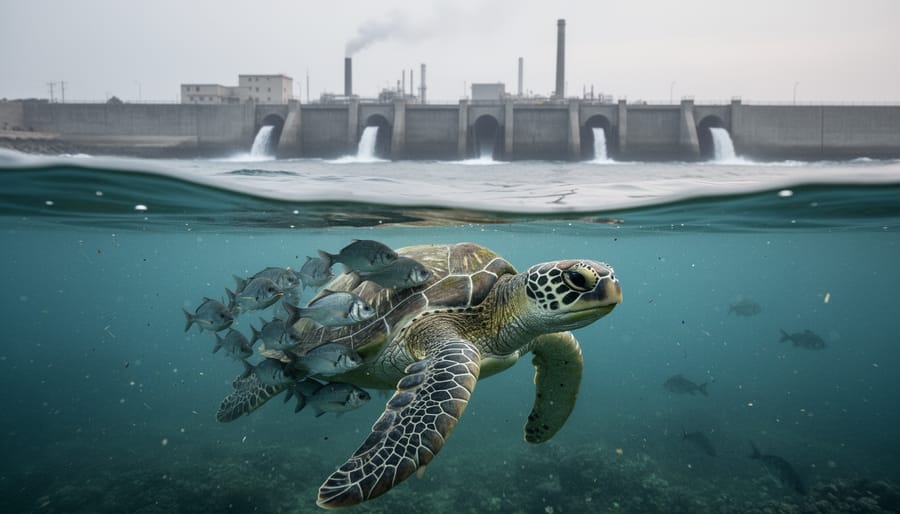
Every day, billions of gallons of contaminated water flow into our oceans, carrying pesticides, pharmaceuticals, heavy metals, and plastics that disrupt the delicate chemistry of marine life at the cellular level. Marine ecotoxicology examines how these chemical pollutants affect ocean organisms, from microscopic plankton to apex predators like sharks and whales, and ultimately traces their path back to human health and coastal economies.
The science reveals a sobering reality: chemical contaminants don’t simply disappear in seawater. They accumulate in sediments, concentrate through food chains, and alter the behavior, reproduction, and survival of marine species. A single coal-fired power plant can release enough mercury to contaminate fish populations hundreds of miles away. Sunscreen chemicals washing off beachgoers contribute to coral bleaching. Antidepressants flushed into wastewater systems change the feeding behavior of fish, making them easier prey for predators.
Understanding marine ecotoxicology means recognizing that ocean pollution operates as one of many invisible ocean threats reshaping marine ecosystems faster than species can adapt. Unlike oil spills or plastic debris, chemical pollution remains largely unseen beneath the waves, yet its impacts ripple through entire ocean food webs.
This field combines chemistry, biology, and environmental science to answer critical questions: At what concentrations do pollutants harm marine life? Which species serve as early warning systems for ecosystem health? How do multiple contaminants interact to create unforeseen effects? Most importantly, what solutions can protect both ocean biodiversity and the billion people worldwide who depend on marine resources for food and livelihoods?
The answers emerging from marine ecotoxicology research provide hope alongside urgency. Scientists, conservation organizations, and citizens are identifying pollution sources, developing cleaner alternatives, and restoring damaged habitats. Every action to reduce chemical contamination, whether through policy advocacy, sustainable product choices, or direct conservation work, contributes to healthier oceans and a more resilient planet.
What Is Marine Ecotoxicology?
Marine ecotoxicology is a specialized field of environmental science that investigates how chemical pollutants affect marine organisms, ecosystems, and ultimately human health. While general toxicology examines the harmful effects of substances on living organisms broadly, marine ecotoxicology focuses specifically on the ocean environment, considering the unique characteristics of saltwater ecosystems, the diverse marine life they support, and the complex ways pollutants behave in seawater.
This discipline emerged from the growing recognition that our oceans face unprecedented chemical threats. Every day, contaminants ranging from industrial chemicals and agricultural runoff to plastics and pharmaceutical residues enter marine environments through rivers, atmospheric deposition, and direct dumping. Marine ecotoxicologists work to understand how these substances move through ocean systems, how they transform chemically in seawater, and what concentrations pose risks to everything from microscopic plankton to apex predators like sharks and dolphins.
What makes marine ecotoxicology particularly crucial is its connection to human welfare. Many pollutants don’t simply disappear in the vast ocean; instead, they accumulate in marine organisms and concentrate as they move up the food chain, eventually reaching our dinner plates. Understanding these processes is essential for several key concepts:
- Bioaccumulation
- The process by which organisms absorb toxic substances faster than they can eliminate them, leading to increasing concentrations in body tissues over time.
- Biomagnification
- The phenomenon where pollutant concentrations increase at each successive level of the food web, resulting in top predators containing the highest toxin levels.
- LC50
- Lethal Concentration 50 represents the concentration of a substance that kills 50% of test organisms within a specified time period, helping scientists establish toxicity thresholds.
- Sublethal Effects
- Non-fatal impacts of pollutants that can impair reproduction, growth, immune function, or behavior, often affecting populations even when organisms survive direct exposure.
- Persistent Organic Pollutants
- Long-lasting toxic chemicals that resist degradation, travel long distances through ocean currents, and accumulate in marine food webs over decades.
Marine ecotoxicologists employ various research methods, from laboratory experiments testing individual species’ responses to field studies monitoring pollution levels in wild populations. Dr. Sarah Chen, a marine toxicologist studying coral reef health, explains: “We’re essentially ocean detectives, piecing together how invisible chemicals create visible problems in marine ecosystems. Every sample we collect tells part of a larger story about ocean health.”
This interdisciplinary science draws from chemistry, biology, oceanography, and statistics to protect marine biodiversity while safeguarding the two billion people worldwide who depend on seafood as their primary protein source.
The Main Chemical Culprits in Our Oceans
Heavy Metals and Industrial Contaminants
Heavy metals like mercury, lead, and cadmium rank among the ocean’s most persistent pollutants, posing serious threats to marine life and human health. Unlike organic contaminants that eventually break down, these metals accumulate in sediments and organisms, remaining dangerous for decades or even centuries.
Mercury enters our oceans primarily through coal-burning power plants and industrial facilities, settling into water where bacteria convert it to methylmercury, a highly toxic form that concentrates in fish tissue. Top predators like tuna and swordfish can accumulate mercury levels millions of times higher than surrounding waters. Lead contamination, once widespread from leaded gasoline and paint, still persists in coastal sediments near urban centers and shipping lanes. Cadmium reaches marine environments through mining operations, battery production, and agricultural runoff containing phosphate fertilizers.
Industrial discharge contributes additional heavy metals through manufacturing wastewater, especially from electronics production, metal plating, and textile industries. These pollutants don’t simply disappear; they bind to particles and settle into seafloor sediments, creating long-term contamination zones that affect bottom-dwelling organisms and work their way up food chains. Understanding these persistence patterns helps researchers identify pollution hotspots and prioritize cleanup efforts, while volunteer monitoring programs increasingly help track contamination levels in local waters.
Persistent Organic Pollutants (POPs)
Persistent Organic Pollutants, or POPs, are among the most concerning threats to marine ecosystems because they simply won’t go away. These synthetic chemicals, including legacy pesticides like DDT, industrial compounds such as polychlorinated biphenyls (PCBs), and flame retardants, resist natural breakdown processes and can persist in the environment for decades or even centuries.
What makes POPs particularly dangerous is their tendency to bioaccumulate and biomagnify. These fat-soluble compounds accumulate in the tissues of organisms and become increasingly concentrated as they move up the food chain. A tiny amount in seawater gets absorbed by plankton, consumed by small fish, then larger fish, and eventually reaches top predators like tuna, seals, and orcas at alarmingly high concentrations. Marine biologist Dr. Elena Rodriguez, who has studied contamination in Pacific marine mammals for fifteen years, notes that “some orca populations carry POPs levels high enough to compromise their immune systems and reproductive success.”
The effects include hormone disruption, weakened immunity, reproductive failure, and increased cancer rates. While many POPs have been banned internationally through the Stockholm Convention, their persistence means marine life continues facing exposure today, making cleanup efforts and prevention of new chemical releases critically important.
Plastics and Microplastics
Plastic pollution represents one of the most pervasive threats facing our oceans today. While the physical dangers of plastic debris to marine life are well-documented, a less visible but equally concerning problem lies in the chemical compounds associated with plastics. These materials contain numerous additives—including flame retardants, plasticizers, and stabilizers—that readily leach into seawater and accumulate in marine organisms.
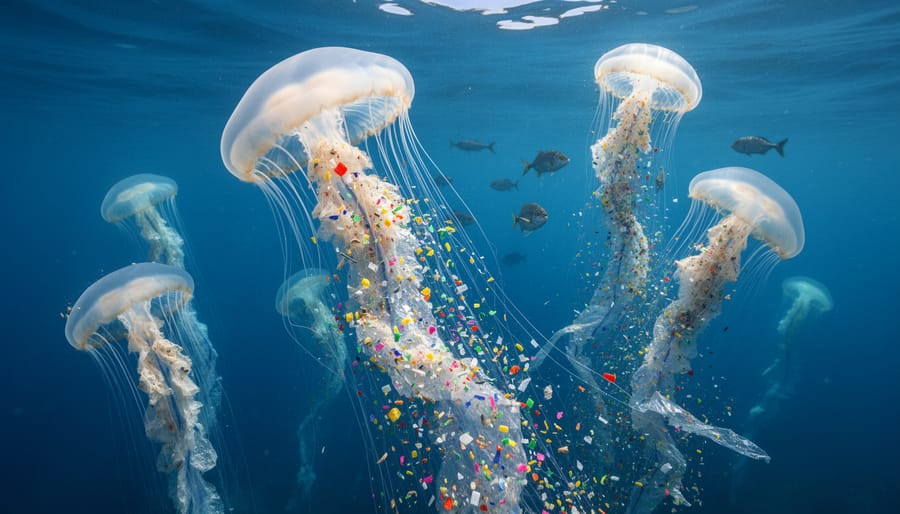
When plastics break down into smaller fragments, they become microplastics and their toxins become even more bioavailable. These tiny particles act like sponges, absorbing persistent organic pollutants from surrounding waters and concentrating them at levels up to a million times higher than the water itself. When fish and other marine animals ingest these contaminated particles, the chemicals transfer into their tissues and biomagnify up the food chain.
Dr. Sarah Chen, a marine toxicologist studying plastic impacts on coral reefs, shares: “We’re discovering that even pristine reef systems contain measurable levels of plastic-associated chemicals. The organisms there show disrupted hormone systems and weakened immune responses.”
Understanding this threat is crucial for developing effective solutions and protecting ocean health for generations to come.
Pharmaceuticals and Personal Care Products
Every time we flush medications down the toilet, apply sunscreen at the beach, or wash synthetic fabrics, we inadvertently introduce a cocktail of chemicals into marine environments. Pharmaceuticals and personal care products (PPCPs) represent an emerging threat that scientists are only beginning to understand. These compounds—including antibiotics, antidepressants, birth control hormones, and ingredients from lotions and cosmetics—pass through wastewater treatment plants largely unfiltered, eventually reaching coastal waters.
What makes PPCPs particularly concerning is their design to be biologically active at low concentrations. Marine biologist Dr. Sarah Chen recalls discovering elevated hormone levels in fish populations near wastewater outflows: “We found male fish producing egg proteins, a clear sign of endocrine disruption. These chemicals are altering the fundamental biology of marine life.”
Research shows that even trace amounts of these compounds can disrupt reproduction, alter behavior, and compromise immune systems in everything from mollusks to marine mammals. Antidepressants have been found to make normally cautious fish bolder and more vulnerable to predators, while antibiotics in the water contribute to antimicrobial resistance—a threat that circles back to human health.
The solution starts with proper medication disposal and choosing reef-safe, biodegradable personal care products.
How Toxic Chemicals Move Through Marine Ecosystems
When a drop of toxic chemicals enters the ocean, it doesn’t simply disappear into the vast blue expanse. Instead, it begins a troubling journey through marine ecosystems, growing more concentrated and dangerous with each step up the food chain. Understanding this process is crucial to grasping why even seemingly small amounts of pollution can devastate ocean life and ultimately affect human health.
The journey begins with bioaccumulation, where individual organisms absorb and retain pollutants faster than they can eliminate them. Imagine a tiny phytoplankton drifting in water containing low levels of mercury or persistent organic pollutants like PCBs. As this microscopic organism filters water to obtain nutrients, it inadvertently takes in these chemicals. Because many toxic substances don’t break down easily and bind to fatty tissues, they accumulate in the plankton’s body over time. The concentration in the organism becomes higher than the surrounding water.
Here’s where the problem intensifies. A small zooplankton eats hundreds of contaminated phytoplankton. A fish eats thousands of zooplankton. A larger fish consumes many smaller fish. At each level of this underwater dining experience, the predator inherits all the accumulated toxins from its prey. This process, called biomagnification, means that pollutant concentrations multiply dramatically as they move through the food web.
Dr. Sarah Chen, a marine toxicologist studying Pacific ecosystems, describes witnessing this phenomenon firsthand: “We tested everything from plankton to salmon to orcas in the same region. The orcas, at the top of the food chain, had contaminant levels that were shockingly high compared to the water quality measurements. These animals are essentially living repositories of decades of pollution.” Her research revealed that a single apex predator can carry toxic loads accumulated from millions of smaller organisms consumed throughout its lifetime.
This concentration effect explains why long-lived predators like sharks, swordfish, and marine mammals are particularly vulnerable to chemical pollution. They spend years accumulating toxins, often reaching levels that impair reproduction, weaken immune systems, or cause direct poisoning. The implications extend to humans who consume seafood, making this not just an environmental issue but a public health concern. Understanding these pathways helps researchers identify which species need protection and which pollutants require urgent action.
Real-World Impacts: What Marine Ecotoxicology Has Revealed
Effects on Marine Mammals and Seabirds
Marine mammals and seabirds serve as sentinels of ocean health, revealing the devastating impacts of chemical pollution in ways that demand our attention. Orca populations along the Pacific Northwest coast carry some of the highest PCB concentrations ever measured in marine mammals, with levels so extreme they’re suppressing immune systems and threatening reproduction. These apex predators accumulate toxins throughout their lives, creating a tragic legacy that passes to their calves through contaminated milk.
Harbor seals and sea lions face similar challenges. Studies have documented reproductive failures, thyroid disruptions, and weakened immunity linked to exposure to DDT, mercury, and flame retardants. Female seals experiencing high contaminant loads often produce fewer pups or suffer increased pup mortality.
Seabirds like albatrosses and puffins reveal another troubling pattern. Research shows that these ocean wanderers accumulate heavy metals and persistent organic pollutants from contaminated fish, leading to eggshell thinning, developmental abnormalities, and reduced breeding success. Dr. Sarah Chen, a marine toxicologist studying Arctic terns, shares: “Watching birds return year after year with increasing contaminant burdens reminds me why our monitoring work matters. Each data point represents a life affected and strengthens our case for stricter pollution controls.”
Impacts on Fish and Invertebrates
Marine pollution takes a devastating toll on fish and invertebrates, disrupting their development, immunity, and behavior in ways that ripple through entire ecosystems. When exposed to heavy metals, pesticides, and endocrine-disrupting chemicals, fish embryos often develop skeletal deformities, impaired organs, and reduced survival rates. Dr. Elena Martínez, a marine toxicologist studying coastal fisheries, shares that “we’re seeing juvenile fish with spinal curvatures and gill malformations that never would have survived in unpolluted waters—yet they’re becoming increasingly common in contaminated habitats.”
Chemical pollutants also suppress immune function in both fish and shellfish, making them vulnerable to diseases and parasites. Oysters and mussels, which filter vast quantities of water, accumulate toxins that weaken their ability to fight infections, leading to mass die-offs that devastate local populations and the communities dependent on them.
Perhaps most concerning are the behavioral changes triggered by neurotoxic substances. Fish exposed to pharmaceutical pollutants and pesticides exhibit altered predator-avoidance responses, disrupted schooling patterns, and impaired navigation abilities. These changes compromise their survival and reproduction, threatening population stability. Understanding these impacts helps scientists develop better protection strategies—and creates opportunities for citizen scientists to participate in water quality monitoring programs that track pollution’s effects on marine life.
Threats to Coral Reefs and Coastal Ecosystems
Coral reefs and coastal ecosystems face a perfect storm of threats, and chemical pollutants act as a dangerous multiplier of stress. These vibrant underwater cities, already struggling with rising ocean temperatures and acidification, must now contend with a cocktail of toxic substances that weaken their resilience and ability to recover.
When corals experience bleaching from heat stress, exposure to pesticides, heavy metals, and pharmaceutical residues further compromises their immune systems and reduces their capacity to rebuild symbiotic relationships with algae. Sunscreen chemicals like oxybenzone have been found to damage coral DNA and disrupt reproduction even at concentrations as low as a drop of water in six Olympic-sized swimming pools. Coastal runoff carrying fertilizers creates oxygen-depleted zones where pollutants concentrate, making these areas toxic dead zones rather than nurseries for marine life.
Dr. Maria Santos, a marine toxicologist who has studied Caribbean reefs for fifteen years, shares a sobering observation: “We’re seeing corals that might survive warming events succumb because pollution has already exhausted their energy reserves. It’s like asking someone to run a marathon after they’ve been fighting an illness.”
The good news is that reducing chemical pollution provides immediate benefits. Communities implementing better wastewater treatment and restricting harmful pesticides have observed faster reef recovery. Organizations working on coral reef restoration increasingly emphasize pollution reduction as essential to their success, recognizing that healthy water quality enables restored corals to thrive and reproduce naturally.
The Human Connection: Why This Matters to Us
Marine ecotoxicology isn’t just about protecting distant ocean creatures—it directly safeguards our own health and livelihoods. Every year, billions of people worldwide depend on seafood as their primary protein source, making the chemical safety of marine life a critical human health concern.
When toxins like mercury, microplastics, and persistent organic pollutants accumulate in fish and shellfish tissues, they travel up the food chain directly onto our dinner plates. Pregnant women, children, and coastal communities that rely heavily on seafood face particular risks from these contaminants. Mercury exposure can affect neurological development in children, while emerging research suggests microplastics may trigger inflammatory responses in humans. Understanding these pathways through marine ecotoxicology helps scientists and health officials establish safety guidelines and consumption advisories that protect families.
The health of our oceans is inseparable from human health—what we put into the water eventually comes back to us through the seafood we eat and the coastal environments we cherish.
Beyond personal health, marine pollution creates massive economic ripples. Commercial fisheries generate hundreds of billions in annual revenue globally, supporting millions of jobs from fishing crews to restaurant workers. When toxic algal blooms force shellfish harvest closures or contamination scares damage consumer confidence, entire coastal economies suffer. Tourism industries also feel the impact when polluted waters deter beachgoers and water sports enthusiasts.
I recently spoke with Dr. Elena Martinez, who studies contamination in Pacific fisheries. She shared how collaboration between toxicologists and fishing communities has helped identify safer harvest locations and timing, protecting both marine life and fisher incomes. These partnerships demonstrate how marine ecotoxicology creates tangible benefits for coastal residents.
Making sustainable seafood choices and understanding fishing impacts becomes easier when we recognize our intimate connection to ocean health. By supporting marine ecotoxicology research, we’re investing in our own future—cleaner oceans mean safer food, healthier communities, and thriving coastal economies for generations to come.
From Lab to Ocean: How Marine Ecotoxicologists Work
Marine ecotoxicologists are scientific detectives, piecing together clues about how pollutants move through ocean ecosystems and affect marine life. Their work spans from remote beaches to state-of-the-art laboratories, combining fieldwork adventure with meticulous lab analysis.
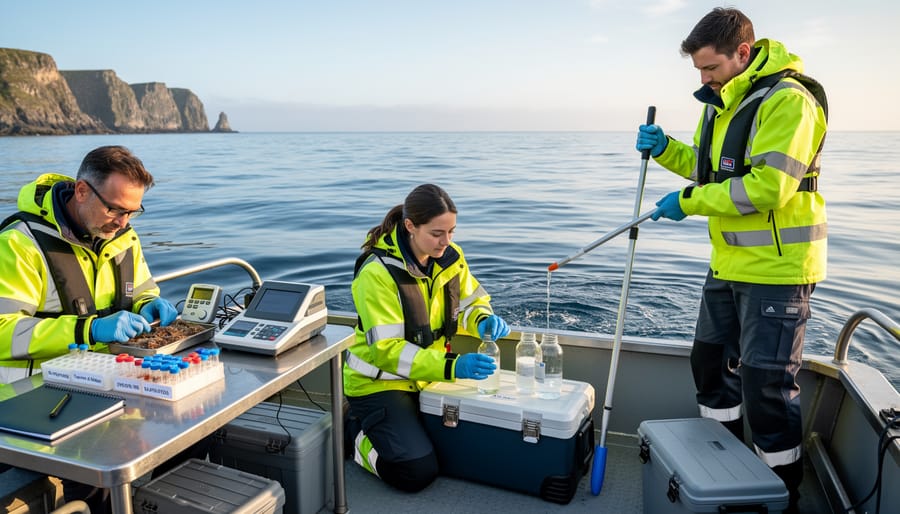
The research process typically begins in the field. Scientists venture to coastal areas, coral reefs, and open ocean sites to collect water samples, sediment cores, and tissue samples from marine organisms. Dr. Maria Santos, a marine ecotoxicologist who has studied microplastic contamination in Pacific fish populations for over a decade, describes these expeditions as both challenging and rewarding. “We might spend days on a research vessel in rough seas, but holding a water sample and knowing it will reveal crucial information about ocean health makes every wave worth riding,” she shares.
Back in the laboratory, researchers employ various techniques to detect and measure pollutants. Gas chromatography and mass spectrometry help identify specific chemicals, while microscopy reveals microplastics in tissue samples. Scientists also conduct controlled exposure experiments, carefully monitoring how marine organisms respond to different pollutant concentrations. These experiments might track behavioral changes in fish, measure stress hormones in sea turtles, or assess reproductive success in shellfish.
One innovative approach involves biomarkers, which are biological indicators that signal exposure to contaminants. For instance, researchers might measure enzyme levels in fish livers that indicate pesticide exposure, or examine DNA damage in coral cells exposed to heavy metals. These tools help scientists detect pollution impacts before visible harm occurs.
The work requires remarkable patience and precision. A single study might take years to complete, involving hundreds of samples and thousands of data points. Yet this dedication yields critical insights that inform conservation policies and cleanup efforts.
Many research teams welcome volunteers and interns who want hands-on experience in marine science. These opportunities provide invaluable learning experiences while contributing to meaningful conservation work. Whether assisting with sample collection on beach surveys or helping process data in the lab, volunteers play a vital role in advancing our understanding of ocean pollution.
Through this combination of rigorous fieldwork and careful laboratory analysis, marine ecotoxicologists build the scientific foundation needed to protect our oceans for future generations.
Education and Action: Building a Toxics-Aware Community
Understanding marine ecotoxicology is only the first step—translating that knowledge into meaningful action creates lasting change for our oceans. Marine Chemical Pollution and Toxics Education programs bridge the gap between scientific discovery and community engagement, empowering everyone from concerned citizens to policymakers with the tools to protect marine ecosystems from chemical threats.
These education initiatives work on multiple levels, creating ripples of awareness that extend far beyond classroom walls. At the individual level, they illuminate how everyday choices—from the sunscreen we wear at the beach to the cleaning products we use at home—can either contribute to or help solve marine pollution problems. Community workshops and citizen science programs transform passive concern into active participation, while policy-oriented educational efforts equip decision-makers with the scientific evidence needed to enact protective legislation.
Dr. Maria Santos, a marine toxicologist who leads educational outreach in coastal California, shares a transformative moment from her work: “I once taught a high school class about microplastics and chemical additives in the ocean. Six months later, those students organized a campaign that convinced three local businesses to eliminate single-use plastics. They understood that chemical pollution wasn’t just an abstract problem—it was something they could actually change.”
The beauty of toxics-aware communities lies in their multiplied impact. When individuals take informed action, the collective effect becomes substantial:
- Reduce personal chemical use by choosing phosphate-free detergents, natural personal care products, and avoiding unnecessary pesticides in yards and gardens
- Support clean water initiatives through donations, volunteering with local watershed groups, or attending municipal meetings about water quality
- Choose sustainable seafood using science-based guides that consider both overfishing and contamination levels
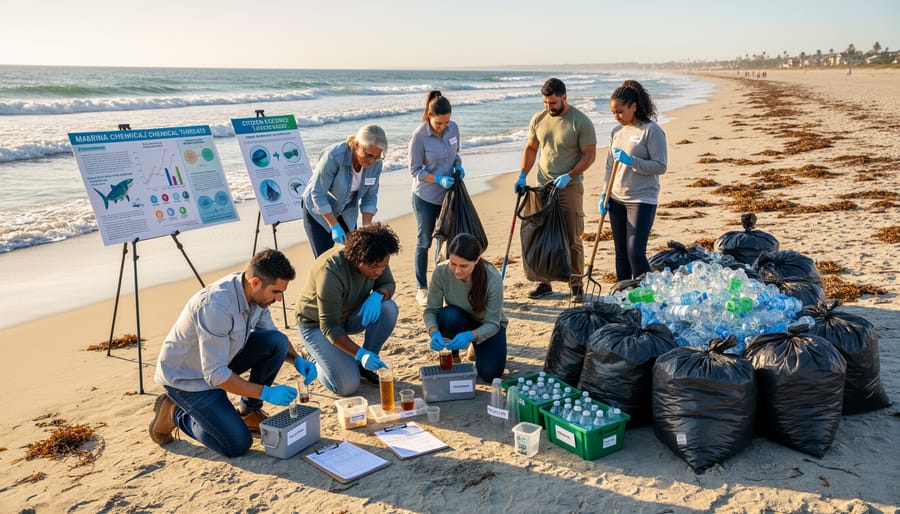
- Participate in beach cleanups that often include data collection on pollution types, contributing to research efforts
- Advocate for stronger regulations by contacting representatives, signing petitions for chemical safety reform, and supporting organizations working on marine protection
Volunteer opportunities abound for those wanting hands-on involvement. Many research institutions welcome citizen scientists to help collect water samples, monitor coastal wildlife health, or assist with laboratory analysis. These programs provide valuable data while deepening participants’ understanding of marine ecotoxicology in real-world settings.
Education programs also emphasize the interconnectedness of human and ocean health. When communities recognize that the same chemicals harming marine life can accumulate in seafood or affect coastal water quality, the motivation to act intensifies. This personal relevance transforms marine ecotoxicology from an academic subject into a shared responsibility, building resilient communities equipped to safeguard both marine biodiversity and human wellbeing for generations to come.
Get Involved: Volunteer and Learning Opportunities
You don’t need a PhD to make a meaningful contribution to marine ecotoxicology research and conservation. Organizations like the Marine Biodiversity Science Center offer numerous pathways for people at all experience levels to get involved in protecting our oceans from chemical pollution.
Citizen science projects provide an accessible entry point for curious individuals. These programs train volunteers to collect water samples, document marine wildlife health, and monitor pollution indicators along coastlines. Your observations—whether you’re spotting unusual algae blooms, photographing plastic debris, or recording fish populations—contribute valuable data that scientists use to track contamination patterns and ecosystem changes over time.
Educational workshops and webinars hosted by marine research centers make complex topics like bioaccumulation and endocrine disruption understandable for everyone. Many organizations offer free online courses covering marine pollution identification, proper sample collection techniques, and data reporting methods. Dr. Maria Santos, a marine toxicologist who regularly works with community volunteers, shares: “Some of our most valuable long-term monitoring data comes from dedicated citizen scientists who observe the same coastal areas year after year. They notice changes that sporadic research visits might miss.”
For students and early-career researchers, internship programs provide hands-on laboratory experience analyzing tissue samples for contaminants, conducting toxicity tests with marine organisms, and participating in field expeditions. These opportunities build practical skills while contributing to active research projects.
Even from home, you can support marine ecotoxicology efforts by participating in virtual data analysis projects, advocating for stronger pollution regulations in your community, and making informed consumer choices that reduce chemical runoff into waterways. Whether you have an hour a month or want to commit to regular involvement, there’s a role for you in safeguarding ocean health. Visit the Marine Biodiversity Science Center’s website to explore current opportunities and find the right fit for your interests and availability.
The journey through marine ecotoxicology reveals both challenges and reasons for genuine hope. While the ocean faces unprecedented chemical pressures, our growing understanding of these threats provides the foundation for meaningful change. Every research vessel that sets sail, every contaminated sediment sample analyzed, and every breakthrough in detecting emerging pollutants brings us closer to solutions that can protect marine life for generations to come.
The progress happening right now is tangible. Universities worldwide are expanding marine ecotoxicology programs, training a new generation of scientists equipped with cutting-edge tools to monitor and mitigate pollution. Policy changes at local, national, and international levels are restricting harmful chemicals, from microplastic bead bans to stricter regulations on agricultural runoff. Dr. Maria Santos, a marine toxicologist who has spent fifteen years studying coral reef resilience, shares this perspective: “When I started my career, we were just beginning to understand how pollutants interact with marine organisms. Today, we’re not only identifying problems faster, we’re implementing solutions that work. The research matters, and it’s making a difference.”
This transformation doesn’t happen in laboratories alone. Collective action multiplies the impact of scientific research. Beach cleanups remove plastics before they break down into microparticles. Citizen scientists contribute valuable data through water quality monitoring programs. Consumers choosing sustainable products reduce demand for polluting industries. Educators sharing knowledge about marine pollution inspire students who become tomorrow’s conservation leaders.
Understanding marine chemical pollution is truly the first step toward protecting ocean life. With that knowledge comes responsibility, but also opportunity. The ocean’s resilience, combined with human innovation and determination, creates pathways to recovery. Whether you’re a scientist, student, educator, or simply someone who cares about the blue planet, your role in this effort matters. Together, through continued research, education, policy advocacy, and daily choices, we can ensure that future generations inherit oceans teeming with life rather than chemical legacies we failed to address.

jessica
Ava Singh is an environmental writer and marine sustainability advocate with a deep commitment to protecting the world's oceans and coastal communities. With a background in environmental policy and a passion for storytelling, Ava brings complex topics to life through clear, engaging content that educates and empowers readers. At the Marine Biodiversity & Sustainability Learning Center, Ava focuses on sharing impactful stories about community engagement, policy innovations, and conservation strategies. Her writing bridges the gap between science and the public, encouraging people to take part in preserving marine biodiversity. When she’s not writing, Ava collaborates with local initiatives to promote eco-conscious living and sustainable development, ensuring her work makes a difference both on the page and in the real world.