Marine Biodiversity Science Center

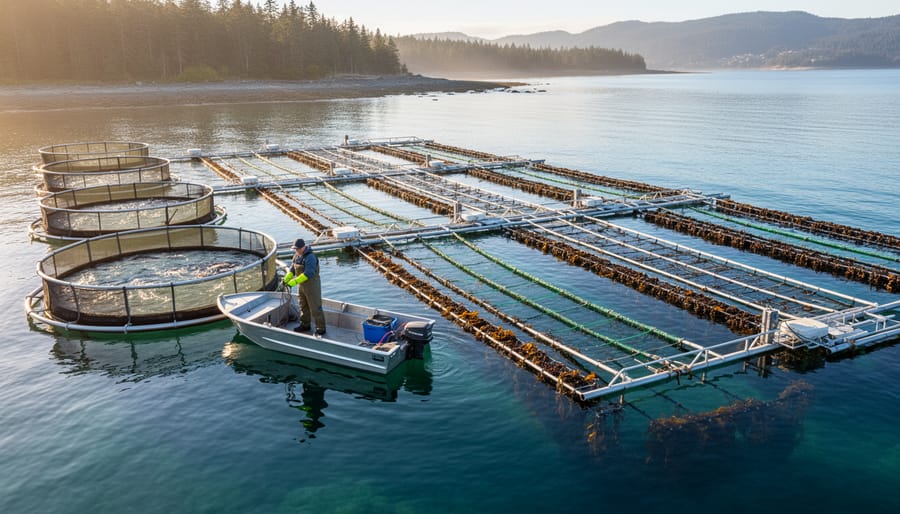
The fish on your plate doesn’t have to come at the expense of ocean health. Zero waste fish farming represents a paradigm shift in aquaculture, transforming what was once an industry plagued by pollution and resource depletion into closed-loop systems that mirror nature’s efficiency. These innovative operations capture fish waste, convert it into fertilizer for crops, use byproducts to feed other species, and recirculate water to eliminate discharge into natural waterways.
Traditional fish farms generate approximately 30-50% waste from uneaten feed and fish excrement, contaminating surrounding ecosystems with excess nitrogen and phosphorus. Zero waste systems eliminate this problem entirely. Integrated multi-trophic aquaculture, for example, pairs fish with seaweed and shellfish that consume the nutrients fish produce, creating a balanced ecosystem where nothing goes to waste. Land-based recirculating aquaculture systems filter and reuse 95-99% of water while converting solid waste into compost or biogas.
The ethical imperative is clear. Global fish consumption continues rising while wild populations decline, making sustainable aquaculture essential for feeding billions without destroying marine biodiversity. Yet sustainability alone isn’t enough. Modern aquaculture must align with ethical frameworks for fisheries management that prioritize ecosystem health, animal welfare, and social responsibility.
This article explores how zero waste fish farming operates, examines the science proving its effectiveness, and demonstrates why these systems represent our best path forward for producing protein while protecting oceans. You’ll discover real farms already succeeding with these methods and learn how you can support or participate in this conservation revolution, whether through consumer choices, volunteer opportunities, or advocacy efforts.
What Zero Waste Fish Farming Actually Means
The Circular Loop: From Waste to Resource
In zero waste fish farming, what was once considered pollution becomes the foundation of a regenerative cycle. The process begins with fish waste—primarily nitrogen-rich ammonia from excretion. Rather than contaminating waterways, this waste feeds beneficial bacteria in biofilters, which convert ammonia into nitrites and then nitrates. These nitrates become essential nutrients for aquaponic gardens or algae cultivation systems positioned alongside fish tanks.
Marine biologist Dr. Elena Rodriguez, who operates a demonstration facility in coastal Maine, describes the transformation: “We’re essentially mimicking natural ecosystems. Our fish waste supports thriving beds of lettuce, herbs, and tomatoes. Nothing leaves the system as pollution—it all circulates with purpose.”
Water recycling represents another crucial component. Advanced filtration removes solid waste, which gets composted or processed into organic fertilizer for terrestrial agriculture. The cleaned water returns to fish tanks, reducing freshwater consumption by up to 90 percent compared to traditional aquaculture. Some innovative farms capture this solid waste to produce biogas through anaerobic digestion, generating renewable energy that powers facility operations.
Even fish processing yields zero waste. Byproducts like bones, scales, and offal become protein-rich animal feed, fishmeal for other aquaculture operations, or collagen for medical and cosmetic applications. Some facilities partner with universities to extract omega-3 supplements from fish oil.
This circular approach demonstrates that waste is simply a resource we haven’t yet utilized properly. By closing the loop, fish farms become productive ecosystems rather than extractive operations, offering volunteers and students hands-on opportunities to witness sustainable food production in action.
Beyond Traditional Aquaculture
Traditional fish farming often leaves behind a troubling environmental footprint. Conventional aquaculture systems discharge nutrient-rich wastewater into surrounding ecosystems, contributing to algal blooms, oxygen depletion, and coastal degradation. Excess feed settles on ocean floors, while antibiotics and chemicals enter marine food webs. The industry has historically operated on a linear model: inputs go in, fish come out, and waste becomes someone else’s problem.
Zero waste fish farming flips this approach entirely. These circular systems capture what conventional farms discard and transform it into valuable resources. Fish waste becomes fertilizer for hydroponic vegetables or feeds biofilters that purify water for reuse. Uneaten feed gets minimized through precision feeding technologies that monitor fish behavior and appetite in real time. Water recirculation systems reduce freshwater consumption by up to 90 percent compared to flow-through operations.
The efficiency gains are remarkable. Marine biologist Dr. Sarah Chen, who transitioned from studying wild fish populations to designing closed-loop aquaculture systems, shares her perspective: “I spent years documenting habitat destruction from conventional farming. Now I’m helping prove we can produce protein without sacrificing ocean health. It’s the most hopeful work I’ve ever done.”
The Ethical Imperative: Why Zero Waste Matters Now
Meeting Our Responsibility to Marine Ecosystems
Zero waste fish farming represents more than just an innovative production method—it embodies our collective responsibility to protect marine ecosystems while meeting humanity’s growing food needs. Traditional aquaculture has often contributed to environmental degradation through nutrient pollution, habitat destruction, and unsustainable reliance on wild fish for feed. In contrast, zero waste systems align with stewardship ethics by transforming waste into resources, thereby reducing the ecological footprint of fish farming operations.
These closed-loop systems significantly decrease pressure on wild fish populations by utilizing waste products to cultivate alternative protein sources for feed, such as insect larvae or microalgae. This innovation helps break the cycle where we harvest wild fish to feed farmed fish—a practice that has strained ocean ecosystems. By recirculating water and capturing nutrients, zero waste farms also prevent harmful effluent from entering waterways, protecting sensitive coastal habitats from eutrophication and toxic algal blooms.
Dr. Elena Martinez, a marine biologist working with coastal communities in British Columbia, shares how implementing zero waste principles transformed local fish farms. “We saw immediate improvements in water quality, and native species began returning to areas they’d abandoned,” she explains. “It showed us that responsible aquaculture and conservation aren’t opposing forces—they can work together.”
For those inspired to support this transition, volunteer opportunities exist with organizations monitoring water quality around fish farms and educational programs teaching sustainable aquaculture practices to the next generation of marine stewards.
Balancing Human Needs with Environmental Protection
The utilitarian framework, which seeks to maximize overall well-being while minimizing harm, offers a practical lens for evaluating fisheries management. Traditional fishing practices often fail this test, resulting in devastating bycatch, habitat destruction, and the depletion of wild fish populations that ripple through entire marine ecosystems. Zero waste fish farming presents a compelling alternative by attempting to meet human nutritional needs without the collateral damage associated with conventional aquaculture and wild capture fisheries.
At its core, zero waste aquaculture operates on the principle that every component of the farming system should serve a purpose. Nothing is discarded as mere waste. Fish waste becomes fertilizer for crops or food for other organisms in integrated systems. Water gets recycled through biological filtration. Even fish parts typically discarded in processing are transformed into fish meal, pet food, or agricultural supplements. This approach maximizes the benefits we derive from each fish while dramatically reducing environmental harm.
Marine biologist Dr. Elena Rodriguez, who helped establish a zero waste tilapia farm in Costa Rica, shares her perspective: “We calculated that our integrated system produces 40 percent more usable output per fish than conventional farms while eliminating nutrient pollution in surrounding waters. It’s not just about efficiency; it’s about respecting the interconnected nature of marine life.”
The utilitarian calculus becomes even more favorable when considering biodiversity protection. By reducing pressure on wild fish stocks and eliminating harmful effluent discharge, zero waste farms allow marine ecosystems to recover and thrive. Some facilities even create volunteer programs where community members help monitor water quality and observe the closed-loop systems firsthand, building public understanding of sustainable aquaculture.
This model demonstrates that human needs and environmental protection need not be opposing forces. Through thoughtful design and ethical commitment, zero waste fish farming charts a path toward genuine sustainability.
Real-World Systems Making Zero Waste Work
Integrated Multi-Trophic Aquaculture: Nature’s Blueprint
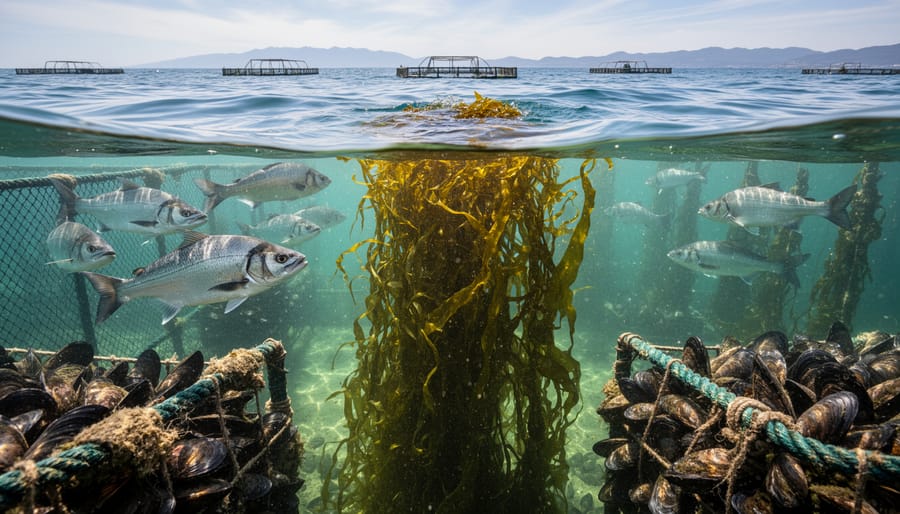
Nature has perfected waste-free systems over millions of years, and Integrated Multi-Trophic Aquaculture (IMTA) takes direct inspiration from these natural blueprints. Instead of farming fish in isolation, IMTA creates a balanced ecosystem where multiple species work together, each playing a crucial role in transforming what would be waste into valuable resources.
Here’s how the system functions: Fish occupy the top trophic level, and their waste outputs—excess feed and nutrient-rich excrement—become inputs for other organisms. Shellfish like mussels and oysters filter the water, capturing organic particles that would otherwise accumulate. Meanwhile, seaweed and other marine plants absorb dissolved nutrients such as nitrogen and phosphorus, naturally purifying the water while growing into harvestable crops themselves.
Dr. Sarah Chen, a marine biologist who has studied IMTA systems in British Columbia for over a decade, explains the beauty of this approach: “We’re not fighting against nature’s processes—we’re working with them. The salmon we farm feed the ecosystem below them, and that ecosystem keeps the water pristine. It’s regenerative by design.”
This symbiotic arrangement eliminates the pollution typically associated with conventional aquaculture. Research shows IMTA systems can reduce nitrogen output by up to 70 percent while producing multiple revenue streams for farmers. The result is healthier fish, cleaner oceans, and additional sustainable seafood products—all without creating waste. It’s aquaculture that actually benefits the marine environment rather than degrading it.
Recirculating Systems: Maximum Efficiency in Minimal Space
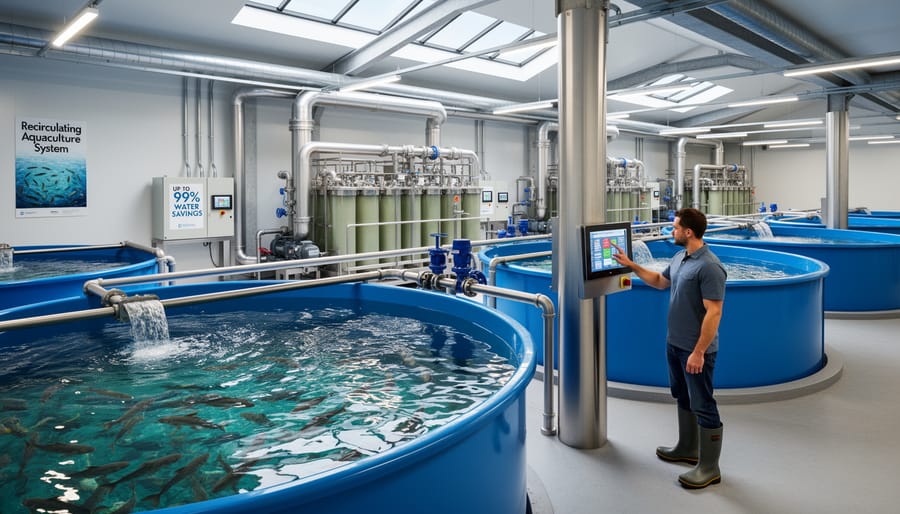
Recirculating Aquaculture Systems, or RAS, represent a revolutionary approach to fish farming that addresses one of aquaculture’s most pressing environmental concerns: water consumption. These innovative systems function like sophisticated life-support mechanisms, continuously filtering and reusing the same water in a closed-loop environment. Through mechanical filtration, biological treatment, and sometimes UV sterilization, RAS technology removes fish waste, uneaten feed, and harmful compounds while maintaining optimal water quality.
The efficiency gains are remarkable. Traditional fish farms require constant water flow, often drawing millions of gallons daily from natural sources. RAS technology reduces this consumption by up to 99%, using only small amounts to replace evaporation and maintain system balance. This dramatic reduction makes fish farming viable even in water-scarce regions or urban settings where space is limited.
Marine biologist Dr. Sarah Chen, who helped establish a RAS facility in Arizona, describes the transformation: “We’re producing thousands of pounds of fish annually in the desert, using less water than a conventional farm uses in a day. It’s not just sustainable; it’s a complete reimagining of what’s possible.”
The systems maintain fish health through precise control of temperature, oxygen levels, and pH. Beneficial bacteria colonies convert toxic ammonia from fish waste into less harmful nitrates, which can then be removed or repurposed as fertilizer for plant cultivation. This closed environment also prevents disease transmission from wild populations and eliminates the risk of farmed fish escaping into natural ecosystems, addressing key conservation concerns.
Success Stories from the Field
Dr. Elena Rodriguez, a marine biologist working with coastal communities in the Philippines, transformed a struggling tilapia farm into a thriving zero waste operation. By integrating black soldier fly larvae to process fish waste and cultivating kelp to absorb excess nutrients, the farm reduced water pollution by 85% within eighteen months. “What excited me most wasn’t just the numbers,” Elena shares, “but watching local fishers realize they could farm profitably while protecting the reef systems they’d grown up with.”
In Norway, researcher Johan Bakke documented how a salmon farm’s partnership with mussel cultivators created a symbiotic system. The mussels filtered nutrients from salmon operations, producing marketable seafood while improving water quality. Dissolved nitrogen levels dropped 60%, and surrounding eelgrass beds began recovering. “Zero waste isn’t just environmental theory,” Johan explains. “It’s practical economics that gives communities hope.”
These pioneers emphasize that success requires patience and community involvement. Their lesson? Start small, measure everything, and celebrate incremental progress with local stakeholders.
The Marine Biodiversity Payoff
Protecting Wild Populations and Their Habitats
Zero waste fish farming represents a powerful tool in our conservation arsenal, directly addressing one of the greatest threats to ocean health: overfishing. By meeting global seafood demand through land-based and coastal aquaculture systems, we reduce pressure on wild populations that have been pushed to the brink of collapse. When implemented responsibly, these systems give depleted ocean ecosystems the breathing room they desperately need to recover.
Consider Atlantic cod, once so abundant off Newfoundland that fishers claimed you could walk across their backs. Decades of industrial fishing devastated these populations, with some stocks collapsing by over 95 percent. Sustainable aquaculture now supplies cod to markets while wild populations slowly rebuild. Similarly, several tuna species facing severe depletion are benefiting from reduced fishing pressure as aquaculture operations scale up production.
The ripple effects extend throughout entire ecosystems. When we stop overharvesting key species, we protect the intricate web of marine biodiversity that depends on them. Predators like dolphins and seabirds regain access to prey populations. Seafloor habitats damaged by bottom trawling can regenerate.
Marine biologist Dr. Elena Rodriguez, who monitors recovery zones off Chile’s coast, shares an inspiring observation: “After transitioning local fishing communities to sustainable aquaculture, we’ve documented remarkable recoveries in species we hadn’t seen in twenty years. It’s proof that ocean ecosystems possess incredible resilience when given the chance.”
This approach transforms aquaculture from a potential environmental threat into a conservation ally, demonstrating that human needs and ocean health can coexist.
Cleaner Oceans, Healthier Ecosystems
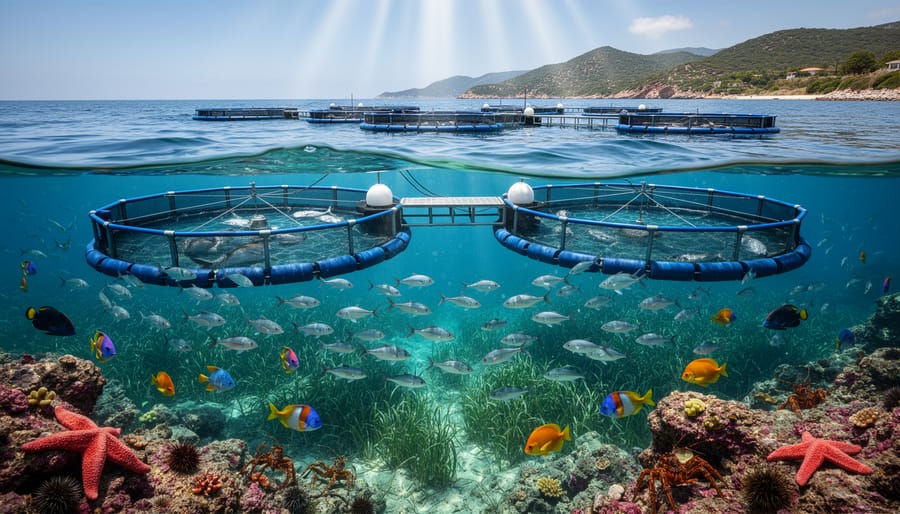
Traditional fish farming has long struggled with environmental challenges, but zero waste systems offer transformative solutions for ocean health. By fundamentally rethinking waste management, these innovative farms dramatically reduce the pollution that has plagued conventional aquaculture for decades.
One of the most significant improvements addresses nutrient pollution. Conventional fish farms release excess nitrogen and phosphorus into surrounding waters, triggering harmful algal blooms that suffocate marine life. Zero waste systems capture these nutrients before they escape, converting fish waste into fertilizer or biogas. Marine biologist Dr. Sarah Chen, who monitors coastal waters near zero waste facilities in Norway, shares an encouraging observation: “We’ve documented a 90% reduction in nitrogen levels compared to traditional operations. The difference in water clarity and ecosystem recovery is remarkable.”
Chemical contamination also drops substantially. These systems minimize antibiotic use through improved water quality and biosecurity, breaking the cycle of disease and treatment that characterizes many conventional farms. Enhanced filtration and recirculation prevent pharmaceutical residues from entering marine environments.
Disease transmission to wild populations decreases as well. Closed-containment designs eliminate direct contact between farmed and wild fish, protecting native species from parasites and pathogens. This protective barrier has proven especially valuable in regions where wild salmon populations interact with farm sites, offering hope for recovering threatened stocks while maintaining sustainable protein production.
Challenges and the Path Forward
What Needs to Change
Transforming aquaculture into a truly zero waste industry requires coordinated action across multiple sectors. First, governments must prioritize policy reforms that incentivize circular practices. This means shifting subsidies away from conventional farming methods toward operations that demonstrate measurable waste reduction. Tax breaks for farms implementing integrated multi-trophic aquaculture or investing in renewable energy infrastructure would accelerate adoption. Regulatory frameworks should also mandate waste audits and set progressive reduction targets, creating accountability while allowing farms time to adapt.
Investment in research and development remains crucial. Universities and marine research institutions need increased funding to refine nutrient recovery technologies, improve species selection for polyculture systems, and develop cost-effective monitoring tools. Marine biologist Dr. Chen Rodriguez, who pioneered seaweed integration techniques in Chilean fish farms, emphasizes that “breakthroughs happen when researchers collaborate directly with farmers, testing solutions in real-world conditions rather than just laboratories.”
The aquaculture industry itself must embrace transparency and knowledge-sharing. Established zero waste operations should mentor emerging farms, creating networks where best practices spread rapidly. Educational institutions can support this transition by developing specialized training programs for aquaculture workers, ensuring the workforce possesses skills in ecosystem management and circular design principles.
Finally, consumers drive change through purchasing decisions. Certification programs identifying genuinely sustainable operations need broader recognition and support. When environmentally conscious shoppers actively seek zero waste products, market forces naturally push the entire industry toward better practices, creating a virtuous cycle of improvement and innovation.
Why There’s Reason for Hope
Despite the challenges, the future of zero waste fish farming is increasingly promising. A wave of emerging technologies is transforming aquaculture, from sensor systems that monitor water quality in real-time to biofilters that convert waste into valuable fertilizers. These innovations are making closed-loop systems more efficient and economically viable than ever before.
Investor interest in sustainable aquaculture has surged dramatically, with venture capital flowing into companies developing integrated multi-trophic systems and land-based recirculating farms. This financial backing is accelerating research and scaling up pilot projects into commercial operations.
Consumer demand tells an equally encouraging story. Surveys consistently show that people are willing to pay premium prices for seafood produced ethically and sustainably. Certification programs for zero waste farms are gaining recognition, helping consumers make informed choices at the market.
Regulatory frameworks are evolving too, with governments worldwide introducing stricter environmental standards for aquaculture while offering incentives for farms that exceed baseline requirements. Marine biologist Dr. Elena Rodriguez, who volunteers with coastal communities implementing these systems, notes that “we’re finally seeing policy catch up with innovation, creating the conditions for truly regenerative fish farming to thrive.”
How You Can Make a Difference
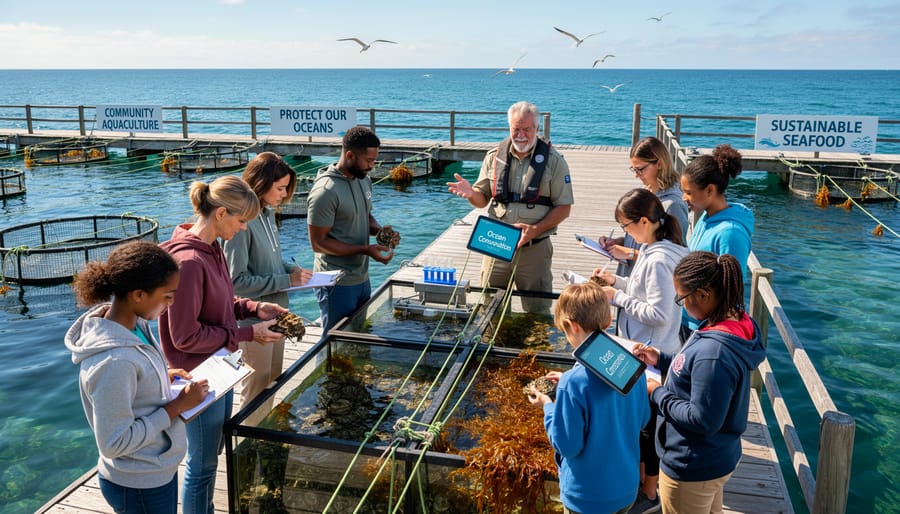
Supporting zero waste fish farming doesn’t require a degree in marine biology—it starts with the everyday choices we make and grows through active engagement with conservation initiatives. By taking deliberate steps, you can become part of the movement toward sustainable aquaculture and healthier ocean ecosystems.
The most immediate impact comes from your purchasing decisions. When shopping for seafood, look for certification labels from organizations like the Aquaculture Stewardship Council or Marine Stewardship Council, which verify sustainable and ethical farming practices. Ask questions at your local fish market about where their products come from and how they were raised. Supporting farms that employ zero waste principles with your wallet sends a powerful market signal that encourages more producers to adopt these methods.
Beyond consumer choices, the Marine Biodiversity Science Center offers hands-on volunteer opportunities that put you directly in touch with conservation work. Dr. Sarah Mitchell, who coordinates our volunteer program, shares: “We’ve seen volunteers transform from curious observers to passionate advocates. One undergraduate student who started volunteering in our aquaculture monitoring program now designs waste reduction systems for commercial fish farms.” Volunteers assist with water quality testing, help maintain biofilter systems, and participate in educational outreach—no prior experience necessary, just enthusiasm for learning.
Educational engagement amplifies your impact exponentially. Attend workshops and seminars on sustainable aquaculture to deepen your understanding and share knowledge within your community. Teachers and educators can incorporate zero waste fish farming case studies into curricula, inspiring the next generation of marine conservationists.
Advocacy creates systemic change. Contact your elected representatives to support legislation that incentivizes sustainable aquaculture practices and provides funding for research into zero waste systems. Join or donate to organizations working on fisheries reform and ocean conservation.
Every action matters. Whether you’re choosing sustainably farmed fish for dinner, spending a Saturday monitoring water samples, or writing to your legislator, you’re contributing to a future where fish farming works in harmony with marine ecosystems rather than against them.
Zero waste fish farming represents more than an innovative aquaculture technique—it embodies a fundamental shift in how we approach food production and environmental stewardship. By closing nutrient loops, eliminating discharge, and integrating multiple species into balanced ecosystems, these systems prove that we can feed a growing global population without compromising the health of our oceans and waterways. The evidence is clear: when designed thoughtfully and managed responsibly, zero waste approaches can produce protein-rich food while actually enhancing biodiversity, improving water quality, and reducing our collective ecological footprint.
Yet technology and innovation alone cannot drive this transformation. Success requires commitment from all of us—researchers advancing the science, farmers implementing these practices, policymakers supporting sustainable infrastructure, educators sharing knowledge, and consumers making conscious choices. Every action matters, from supporting local sustainable aquaculture operations to advocating for stronger environmental protections.
Marine biologist Dr. Elena Torres, who has spent fifteen years developing integrated multi-trophic systems, reminds us that “conservation happens when science meets community action. We have the knowledge; now we need the collective will to apply it everywhere fish are farmed.”
We invite you to be part of this vital movement. Join our e-network to receive updates on breakthrough research, volunteer opportunities at restoration sites, and ways to advocate for sustainable aquaculture in your community. Together, we can ensure that protecting marine biodiversity and nourishing humanity are not competing goals, but complementary achievements within our reach. The future of our oceans depends on the choices we make today.

jessica
Ava Singh is an environmental writer and marine sustainability advocate with a deep commitment to protecting the world's oceans and coastal communities. With a background in environmental policy and a passion for storytelling, Ava brings complex topics to life through clear, engaging content that educates and empowers readers. At the Marine Biodiversity & Sustainability Learning Center, Ava focuses on sharing impactful stories about community engagement, policy innovations, and conservation strategies. Her writing bridges the gap between science and the public, encouraging people to take part in preserving marine biodiversity. When she’s not writing, Ava collaborates with local initiatives to promote eco-conscious living and sustainable development, ensuring her work makes a difference both on the page and in the real world.