Marine Biodiversity Science Center

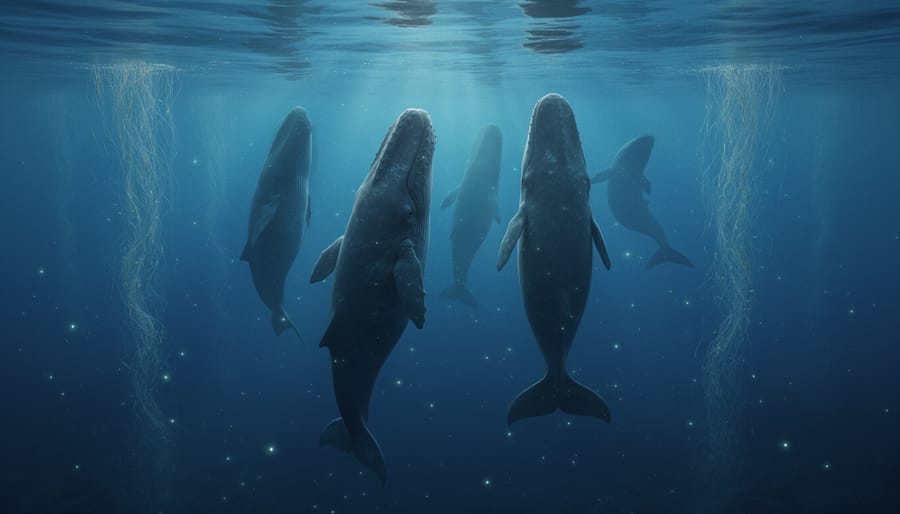
Beneath the ocean’s surface, where sunlight fades to darkness and tidal forces govern existence, marine animals face a puzzle that seems impossible to solve: how do you maintain a sleep schedule in an environment without traditional day-night cues? The answer reveals one of nature’s most remarkable adaptations—biological rhythms that persist even in perpetual twilight, enabling creatures from dolphins to deep-sea fish to balance rest with survival.
Marine sleep challenges everything we assume about rest. Unlike terrestrial animals that simply close their eyes and drift off, ocean dwellers must continue swimming to breathe, maintain buoyancy, or avoid predators. Some species have evolved unihemispheric sleep, resting half their brain while the other half stays alert. Others engage in brief microsleeps lasting mere seconds, stolen between hunting and evading danger. These adaptations aren’t mere curiosities—they’re essential survival mechanisms shaped by millions of years of evolution.
Understanding marine biological rhythms extends far beyond academic interest. As human activities disrupt ocean light pollution through coastal development and deep-sea exploration, artificial illumination interferes with the delicate circadian clocks that guide migration, feeding, and reproduction in countless species. When sea turtles mistake lit beaches for moonlit waves or coral spawning falls out of sync with lunar cycles, entire ecosystems face cascading consequences.
This exploration into marine sleep patterns reveals how animals synchronize internal clocks with environmental cues like tides, bioluminescence, and temperature fluctuations rather than sunlight alone. By examining everything from the vigilant rest of migrating whales to the daily vertical migrations of zooplankton, we uncover not only fascinating biological strategies but also urgent conservation priorities that demand our attention and action.
The Challenge of Sleep in the Ocean
Why Traditional Sleep Doesn’t Work Underwater
For most terrestrial animals, sleep is a relatively straightforward affair—find a safe spot, close your eyes, and let your body rest. But imagine trying to sleep while floating in the middle of the ocean, where the nearest solid ground might be thousands of feet below you. This is the daily reality for countless marine species, and it presents challenges that simply don’t exist on land.
The most immediate danger is the risk of drowning. Unlike land animals, many marine mammals must consciously control their breathing. Whales, dolphins, and seals need to surface regularly to fill their lungs with air. If these animals fell into the deep, unconscious sleep that terrestrial mammals experience, they would sink and suffocate. Dr. Maria Sandoval, a marine biologist who has studied dolphin sleep patterns for over fifteen years, describes it vividly: “When I first observed dolphins at night, I was amazed to see them never fully ‘switching off.’ They’ve evolved something truly remarkable—the ability to rest while remaining aware enough to breathe.”
Beyond the breathing challenge, the open ocean offers virtually no hiding places. A sleeping fish or marine mammal becomes an easy target for predators prowling the waters. Additionally, ocean currents pose another problem—an animal that fully loses consciousness might drift far from feeding grounds, into dangerous waters, or become separated from its pod or school. These combined pressures have driven marine life to develop extraordinary sleep adaptations that allow rest without relinquishing survival.
The Evolutionary Solutions Nature Developed
Evolution has crafted remarkably diverse sleep solutions for marine animals, each tailored to specific environmental pressures and survival needs. These adaptations represent millions of years of fine-tuning, addressing challenges that would seem insurmountable to land-dwelling creatures.
Perhaps the most fascinating innovation is unihemispheric slow-wave sleep, where one brain hemisphere rests while the other remains alert. Dolphins and porpoises pioneered this strategy, allowing them to surface regularly for air while maintaining predator vigilance. Marine biologist Dr. Sarah Chen, who has studied Pacific bottlenose dolphins for over a decade, describes watching dolphins navigate crowded harbors while half-asleep as “witnessing nature’s most elegant multitasking solution.”
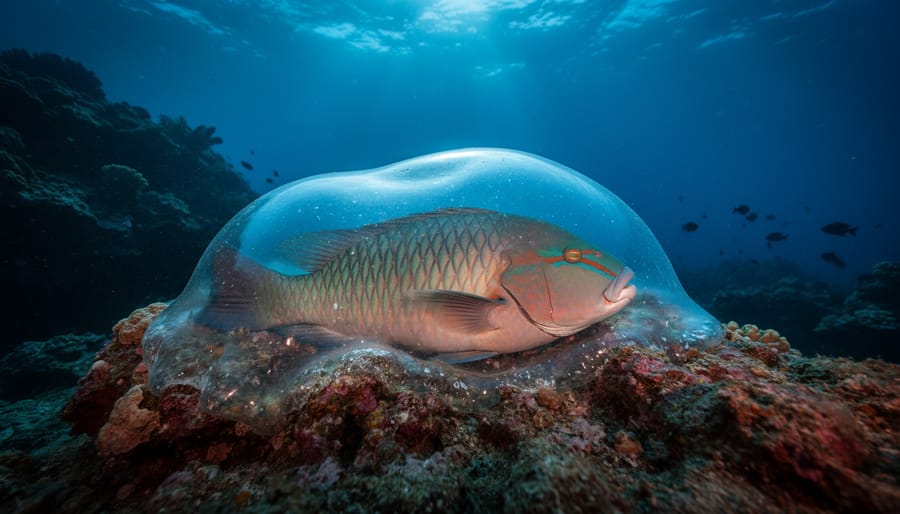
Some species evolved radically different approaches. Parrotfish secrete protective mucus cocoons at night, creating safe sleeping chambers on coral reefs. These bubble-like structures shield them from nocturnal predators while they enter deeper sleep states than most fish. Meanwhile, great white sharks engage in periods of restful swimming, where metabolic activity decreases but movement continues, suggesting a sleep-like state researchers are still working to fully understand.
Marine mammals like walruses demonstrate remarkable flexibility, sleeping both on land and vertically suspended in water, sometimes for extended periods. Sea otters anchor themselves in kelp forests to prevent drifting during rest, showing how species integrate environmental features into their sleep strategies. These varied solutions highlight nature’s creativity in solving the fundamental need for rest in an unforgiving ocean environment.
Remarkable Sleep Strategies Across Marine Species
Unihemispheric Sleep: The Half-Awake Solution
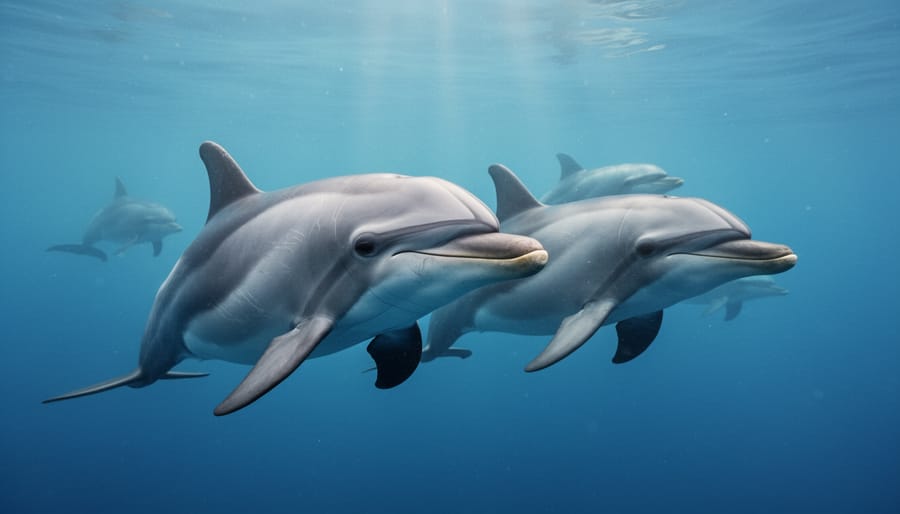
Imagine watching a dolphin glide through moonlit waters, one eye closed in peaceful slumber while the other remains vigilant, scanning for predators. This remarkable phenomenon, known as unihemispheric slow-wave sleep, represents one of nature’s most elegant solutions to an extraordinary challenge: how do air-breathing marine mammals rest while maintaining essential functions like swimming and surfacing to breathe?
Dr. Elena Vasquez, a marine biologist who has spent fifteen years studying Pacific bottlenose dolphins, recalls her first encounter with this behavior. “I was conducting nighttime observations when I noticed a mother dolphin swimming in slow, steady circles. Her left eye was completely closed, but her right eye tracked my research vessel. Every few minutes, she’d surface to breathe without breaking her rhythm. After about two hours, she switched—the right eye closed while the left opened. It was like watching a biological shift change.”
During unihemispheric sleep, one brain hemisphere enters deep sleep while the other remains awake, controlling opposite-side body functions. This adaptation allows dolphins, whales, and certain seal species to rest without drowning or becoming vulnerable to predators. The awake hemisphere maintains their communication systems and monitors their environment, showcasing their remarkable cognitive abilities.
Research suggests each hemisphere sleeps approximately four hours per day, alternating throughout a 24-hour period. Newborn dolphins and whales take this further, remaining almost entirely awake for their first month of life, gradually developing normal sleep patterns as they mature.
This extraordinary adaptation reminds us that evolution crafts unique solutions for survival challenges, inspiring both wonder and a deeper commitment to protecting these intelligent creatures and their ocean home.
Fish That Hover and Hide
Fish have evolved remarkably diverse strategies for achieving rest while managing the constant demands of aquatic life. Unlike mammals with eyelids, fish cannot close their eyes, yet they enter distinct rest states that serve similar restorative functions to sleep.
Among the most fascinating sleepers are parrotfish, which create elaborate mucus cocoons around their bodies each night. This transparent bubble, secreted from glands in their gills, takes up to 30 minutes to construct and serves as a protective barrier. Marine biologist Dr. Sarah Chen, who has spent years studying parrotfish behavior in coral reefs, explains that “the mucus cocoon masks the fish’s scent from nocturnal predators like moray eels, essentially making them invisible to smell-based hunters.” This nightly ritual demonstrates how vulnerable even large reef fish become during rest periods.
Other species adopt different approaches to nighttime safety. Many wrasses and groupers wedge themselves into reef crevices, securing their position against currents and predators. Sharks that must swim continuously to breathe, like great whites, enter states where half their brain rests while the other half maintains swimming functions—a form of unihemispheric sleep similar to dolphins.
Perhaps most visibly, numerous species simply hover motionless in the water column or settle on the seafloor. Researchers can observe reduced metabolic rates and decreased responsiveness to stimuli during these periods, confirming these fish are genuinely resting rather than simply remaining still. Understanding these varied sleep strategies helps scientists assess reef health, as disrupted rest patterns often signal environmental stress or habitat degradation threatening marine ecosystems.
The Sleepless Sharks
Great white sharks and other obligate ram ventilators face a fascinating biological challenge: they must continuously swim to push water over their gills and extract oxygen. This raises an intriguing question—do these perpetual swimmers ever truly sleep?
Research reveals that these sharks don’t experience conventional sleep as land animals do. Instead, they enter restful states while maintaining constant movement. Studies on great white sharks have documented periods of reduced activity where swimming becomes more automatic, similar to how humans can drive while mentally unfocused. During these phases, parts of the shark’s brain appear to rest while others remain alert enough to control basic swimming functions.
Marine biologist Dr. Yannis Papastamatiou shares his experience tracking oceanic whitetip sharks: “We observed clear patterns of reduced responsiveness during certain hours, even as the sharks kept swimming. Their movements became more predictable, almost autopilot-like, suggesting a rest state.”
Understanding these unique adaptations helps conservationists develop better practices for captive shark care and marine protected area management. Organizations studying shark behavior actively seek volunteers for tagging expeditions and data analysis projects, offering opportunities to contribute directly to our understanding of these remarkable creatures and their unusual approach to rest.
Sea Turtles and Marine Mammals: Anchored Sleepers
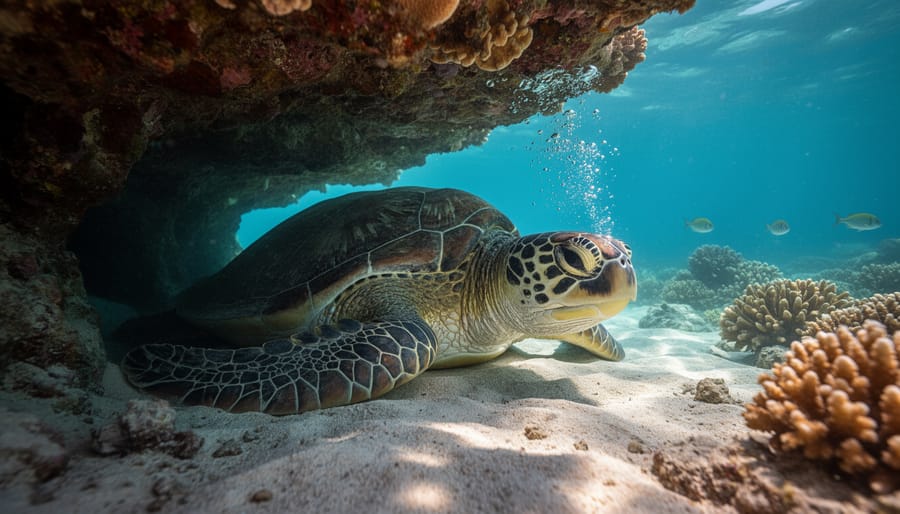
Sea turtles have evolved remarkable sleep strategies to balance rest with survival in their aquatic environment. These ancient mariners often wedge themselves beneath coral ledges or rocky overhangs during rest periods, anchoring their bodies to prevent drifting while remaining semi-alert to predators. This behavior allows them to achieve restorative sleep while maintaining some environmental awareness—a crucial adaptation for air-breathing reptiles that must periodically surface.
Marine mammals face similar challenges but have developed diverse solutions. Seals frequently haul out onto beaches, rocks, or ice floes for extended sleep sessions, where they can fully relax without drowning risk. However, when circumstances require underwater rest, they adopt a different strategy: sleeping in brief bursts lasting just minutes at a time. Between these micro-naps, they surface to breathe, creating a fragmented but functional sleep pattern. Marine biologist Dr. Sarah Chen notes that observing these adaptations firsthand during research expeditions reminds us how evolution shapes behavior in response to environmental pressures. Understanding these sleep patterns helps conservationists identify critical resting habitats that warrant protection, ensuring these species have safe spaces to maintain their essential biological rhythms.
Circadian Rhythms Beneath the Waves
Light as a Timekeeper in Different Ocean Zones
Light penetration in the ocean creates distinct zones, each presenting unique challenges for marine animals attempting to synchronize their biological clocks. In shallow waters where sunlight reaches abundantly, species like coral reef fish rely on predictable day-night cycles to regulate their sleep patterns and daily activities. These creatures have evolved sophisticated sensory adaptations to detect even subtle changes in light intensity, helping them anticipate dawn and dusk with remarkable precision.
As depth increases, the timekeeper role of light becomes more complex. In the twilight zone, where only faint blue light penetrates, many species supplement solar cues with lunar cycles. Marine biologist Dr. Elena Rodriguez, who has spent years studying deep-sea organisms, shares a fascinating observation: “We’ve documented squid and lanternfish that migrate vertically each night, ascending hundreds of meters to feed in shallower waters. They’re not just following food—they’re following an internal lunar clock that helps them navigate safely.”
In the deepest ocean zones where sunlight never reaches, bioluminescence becomes a crucial timing signal. Deep-sea creatures produce their own light displays that can serve as social cues and temporal markers. Some species synchronize bioluminescent flashes to coordinate mating or feeding behaviors, creating living light shows that replace the absent sun.
The moon’s influence extends even to total darkness. Research has revealed that deep-sea corals and benthic organisms respond to lunar cycles, likely detecting subtle changes in water pressure or chemical signals associated with tides. These discoveries highlight the remarkable adaptability of marine life in maintaining biological rhythms despite extreme environmental constraints, offering valuable insights for conservation efforts focused on protecting natural light cycles in our oceans.
Seasonal Variations and Migration Patterns
Marine animals face extraordinary challenges in maintaining their biological rhythms, particularly during long-distance migrations and in polar environments where traditional day-night cycles become unreliable or disappear entirely. These remarkable creatures have evolved sophisticated mechanisms to adapt their circadian rhythms to some of Earth’s most extreme conditions.
Gray whales, which undertake one of the longest migrations of any mammal—traveling up to 12,000 miles between Arctic feeding grounds and Mexican breeding lagoons—must continuously adjust their internal clocks as they cross multiple time zones and varying light conditions. Research suggests these marine giants employ flexible circadian systems that can gradually shift in response to changing environmental cues. Dr. Elena Martínez, a marine biologist who has studied gray whale behavior for over a decade, notes that “these animals demonstrate incredible plasticity in their sleep patterns, often reducing total sleep time during migration and compensating with brief rest periods once they reach their destination.”
In polar regions, where summer brings continuous daylight and winter plunges into constant darkness, marine animals face perhaps the ultimate test of circadian adaptation. Arctic seals and whales maintain their biological rhythms by relying on alternative cues beyond light, including water temperature fluctuations, tidal patterns, and social interactions with other animals. Some species appear to free-run their circadian clocks during extreme seasons, maintaining roughly 24-hour cycles driven primarily by internal mechanisms rather than environmental signals.
Understanding these adaptations has important conservation implications. Climate change is altering migration timing and polar light cycles, potentially disrupting these finely tuned biological rhythms. Conservation organizations now offer volunteer opportunities for citizen scientists to help monitor migration patterns and document behavioral changes, contributing valuable data that helps protect these resilient yet vulnerable species as they navigate our changing oceans.
Daily Activity Patterns: Navigating the 24-Hour Ocean
Diurnal, Nocturnal, and Crepuscular Marine Life
Marine species have evolved distinct activity patterns that align with their feeding strategies, predator avoidance behaviors, and physiological needs. Understanding these rhythms reveals the remarkable diversity of life beneath the waves and highlights why protecting marine habitats around the clock matters for conservation.
Diurnal marine animals are most active during daylight hours, when visual hunting becomes advantageous. Many reef fish, dolphins, and sea turtles fall into this category, using sunlight to navigate, forage, and communicate. These species typically rest in protected areas during nighttime, conserving energy for the next day’s activities. Diurnal patterns work especially well in clear, shallow waters where light penetration supports active hunting and social behaviors.
Nocturnal species come alive after sunset, taking advantage of darkness for protection and feeding opportunities. Octopuses, many shark species, and certain crustaceans emerge from daytime hiding spots to hunt when their prey is most vulnerable. The cover of darkness provides safety from visual predators while allowing these animals to use specialized senses like electroreception and enhanced smell.
Crepuscular marine life peaks in activity during twilight hours at dawn and dusk. This schedule offers a strategic compromise, allowing species like certain rays and groupers to feed during transitional periods when prey movement increases but lighting conditions remain favorable. These twilight periods create unique ecological windows where different communities intersect.
Marine biologist Dr. Sarah Chen, who has studied reef activity patterns for over fifteen years, shares: “Watching the shift change on a coral reef at dusk is like witnessing an entire ecosystem transformation. Understanding these patterns helps us design better marine protected areas that account for species needs throughout the entire daily cycle.”
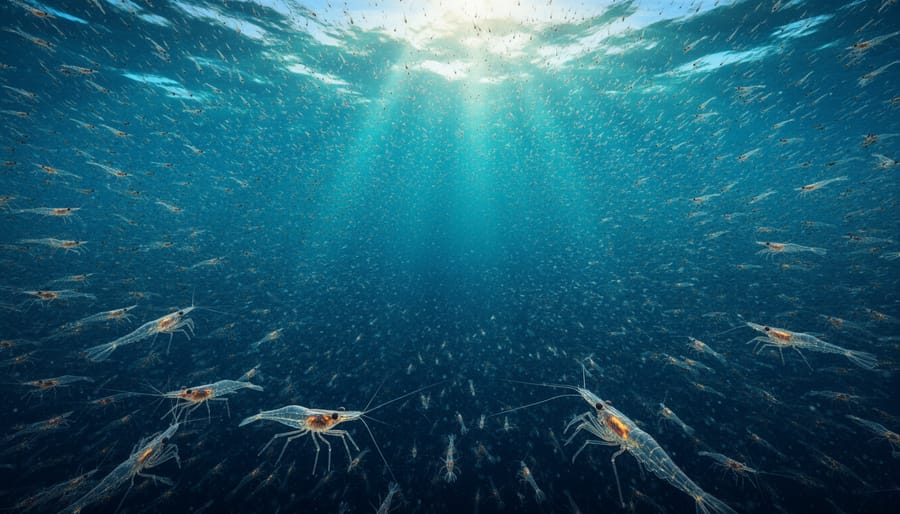
Vertical Migration: The Ocean’s Largest Daily Movement
Every evening as the sun sets, billions of marine creatures embark on the ocean’s largest migration—a vertical journey that dwarfs even the famous wildebeest migration. Zooplankton, krill, small fish, and squid rise from the deep ocean’s twilight zone, ascending hundreds of meters toward the surface under cover of darkness to feed. At dawn, they descend again, retreating to deeper waters where darkness provides refuge from predators.
This diel vertical migration, as scientists call it, is driven by the circadian rhythms of countless species responding to light levels. The sheer biomass involved is staggering—estimates suggest nearly one billion tons of animals participate daily. This synchronized movement creates a ripple effect throughout the entire marine food web, timing when predators hunt and shaping where nutrients concentrate in the water column.
Marine biologist Dr. Sofia Ramirez, who studies this phenomenon using acoustic tracking, describes the experience: “When you see the sonar readings showing this massive layer of life rising through the water column each evening, it’s breathtaking. These tiny creatures are literally connecting the deep ocean to surface waters every single day.”
Understanding these rhythmic patterns helps conservationists predict how climate change and artificial light pollution might disrupt these ancient cycles, potentially destabilizing ocean ecosystems.
Why Understanding Marine Sleep Matters for Conservation
The Impact of Noise Pollution on Marine Rest
The ocean is increasingly becoming a noisy environment, and this sonic pollution poses serious consequences for marine mammals that depend on rest and acoustic communication for survival. Ship traffic has intensified dramatically over recent decades, creating low-frequency rumbles that travel vast distances underwater. These persistent sounds overlap with the frequencies whales and dolphins use to navigate, find food, and stay connected with their pods.
Military sonar operations present particularly acute challenges. Active sonar systems emit powerful pulses that can reach 235 decibels underwater, disrupting the delicate sleep patterns of marine mammals. Studies have documented beaked whales altering their diving behavior and experiencing disorientation following sonar exposure. When animals cannot achieve adequate rest, their stress response mechanisms become chronically activated, compromising immune function and reproductive success.
Underwater construction projects, including offshore wind farms and coastal development, add yet another layer of disturbance. Pile-driving activities generate intense percussive sounds that force marine mammals to abandon critical resting areas. Harbor porpoises, for instance, have been documented avoiding construction zones for days following operations.
Marine biologist Dr. Sarah Chen shares her observations: “I’ve witnessed dolphin pods desperately searching for quiet refuges along increasingly congested coastlines. Their exhaustion is evident in their swimming patterns and social behaviors.”
Fortunately, solutions exist. Quiet ship technologies, seasonal shipping lane adjustments, and marine protected acoustic zones can restore essential rest areas. Organizations like Ocean Conservation Society welcome volunteers to monitor noise levels and advocate for quieter seas, offering everyone a chance to protect marine mammal wellbeing.
Artificial Light and Disrupted Biological Clocks
Coastal development has introduced a significant threat to marine species that depend on natural light-dark cycles: artificial lighting. Sea turtles provide a striking example of how these disruptions affect critical life stages. Female sea turtles nest on beaches at night, guided by the dark horizon and absence of light pollution. However, beachfront lighting from hotels, restaurants, and residential areas can deter nesting mothers from coming ashore or disorient hatchlings attempting to reach the ocean. Hatchlings naturally navigate toward the brightest horizon, which should be the moonlit sea, but artificial lights draw them inland instead, often leading to dehydration, predation, or death.
Coral spawning events, which occur on precise schedules linked to lunar cycles and sunset timing, also face disruption from artificial lighting. These synchronized reproductive events depend on environmental cues that millions of years of evolution have refined. When coastal lighting interferes with these signals, it can reduce spawning success and genetic diversity.
Marine biologist Dr. Sarah Chen shares her observations: “I’ve witnessed entire beaches where not a single hatchling made it to water because of nearby streetlights. But simple solutions like red-spectrum lighting and shielded fixtures can make tremendous differences.”
Conservation organizations welcome volunteers to participate in light pollution surveys and beach monitoring programs, helping document these impacts while advocating for turtle-friendly lighting ordinances in coastal communities.
What You Can Do to Help
You can make a meaningful difference in protecting the biological rhythms of marine life. Start by reducing light pollution in coastal areas—shield outdoor lights, use motion sensors, and choose amber-colored bulbs that are less disruptive to marine species. When visiting beaches at night, minimize flashlight use during nesting seasons for sea turtles and seabirds.
Support marine protected areas that establish quiet zones and limit nighttime activities, allowing marine animals undisturbed rest periods critical for their survival. These conservation efforts help preserve natural day-night cycles in sensitive habitats.
Join the Marine Biodiversity Science Center as a volunteer for citizen science projects monitoring marine animal behavior patterns. Our teams track feeding times, rest periods, and migration rhythms, contributing valuable data to research on how human activities affect marine biological clocks. Whether you’re a student, educator, or ocean enthusiast, your observations help scientists understand and protect the intricate sleep patterns that sustain ocean life.
Current Research and Unanswered Questions
Cutting-Edge Technology Revealing Sleep Secrets
Understanding how marine animals sleep beneath the waves once seemed nearly impossible, but innovative technology is now unveiling these underwater mysteries. Researchers have developed specialized accelerometers—tiny motion sensors that attach to animals without disrupting their natural behavior—to detect the subtle changes in movement that indicate rest periods. These devices record every flip of a fin or adjustment in body position, revealing when dolphins slow their activity or when sea turtles settle into reef crevices for the night.
Video recording systems equipped with infrared cameras now capture marine mammals and fish in their nighttime routines, documenting behaviors invisible to daytime observers. Marine biologist Dr. Elena Torres shares her excitement: “Watching footage of sleeping seals, we’ve discovered they enter slow-wave sleep while floating vertically—something we never could have confirmed without these cameras.”
Perhaps most remarkably, waterproof EEG technology adapted for ocean conditions now measures brain wave patterns in marine mammals, confirming that species like fur seals can sleep with one brain hemisphere at a time. These tools are transforming our understanding of marine sleep, providing data that informs conservation strategies and helps us protect critical resting habitats for ocean wildlife.
Citizen Science and How You Can Contribute
You can play a vital role in advancing our understanding of marine biological rhythms. Our center welcomes citizen scientists of all backgrounds to participate in marine behavior observation programs. Whether you’re a beachgoer, boater, or coastal resident, your observations of marine animals during different times of day help researchers map activity patterns and sleep behaviors across diverse species.
Getting involved is simple. Join our e-network to receive training materials on identifying key behaviors, recording environmental conditions, and submitting your observations through our mobile-friendly platform. Recent contributions from volunteers have helped document previously unknown feeding times in coastal fish populations and nocturnal behaviors in marine mammals.
Current projects include monitoring seal haul-out patterns, tracking sea turtle nesting schedules, and observing changes in coral reef fish activity. No prior scientific experience is necessary—just curiosity and a commitment to careful observation. Many volunteers report that participating deepens their connection to marine ecosystems while contributing meaningful data to conservation efforts.
Sign up through our website to receive monthly observation guides, species identification resources, and updates on how your data supports ongoing research into marine circadian rhythms and sleep patterns.
The extraordinary sleep adaptations of marine animals reveal nature’s remarkable ability to solve complex challenges in unexpected ways. From dolphins maintaining half-awake vigilance to parrotfish cocooning themselves in protective mucus, these diverse strategies demonstrate millions of years of evolutionary innovation. Understanding these biological rhythms isn’t merely an academic exercise—it represents a fundamental piece of the puzzle in maintaining healthy ocean ecosystems.
When we recognize that disrupted sleep patterns in marine species can cascade through entire food webs, affecting predator-prey dynamics, reproductive success, and community stability, the stakes become clear. Light pollution from coastal development, noise from shipping traffic, and climate-driven temperature changes all threaten to destabilize the delicate timing mechanisms that marine life depends upon. Protecting these natural rhythms means safeguarding the intricate balance that sustains ocean biodiversity.
The good news? Each of us can contribute to solutions. Marine biologist Dr. Sarah Chen, who has spent fifteen years studying sea turtle nesting rhythms, emphasizes that citizen science initiatives desperately need volunteers to monitor coastal light pollution and document animal behavior patterns. “Every observation matters,” she explains. “Community members have helped us identify critical nesting sites that we can now protect.”
You can start by educating yourself and others about marine conservation challenges, supporting organizations working to reduce ocean noise and light pollution, and participating in beach cleanups that protect nesting habitats. Consider volunteering with local marine research programs—many welcome enthusiastic participants regardless of scientific background.
The ocean’s biological rhythms have persisted for millennia, but they now face unprecedented pressures. By combining scientific understanding with committed action, we can ensure these natural wonders continue thriving for generations to come. The time to engage is now.

jessica
Ava Singh is an environmental writer and marine sustainability advocate with a deep commitment to protecting the world's oceans and coastal communities. With a background in environmental policy and a passion for storytelling, Ava brings complex topics to life through clear, engaging content that educates and empowers readers. At the Marine Biodiversity & Sustainability Learning Center, Ava focuses on sharing impactful stories about community engagement, policy innovations, and conservation strategies. Her writing bridges the gap between science and the public, encouraging people to take part in preserving marine biodiversity. When she’s not writing, Ava collaborates with local initiatives to promote eco-conscious living and sustainable development, ensuring her work makes a difference both on the page and in the real world.