Marine Biodiversity Science Center

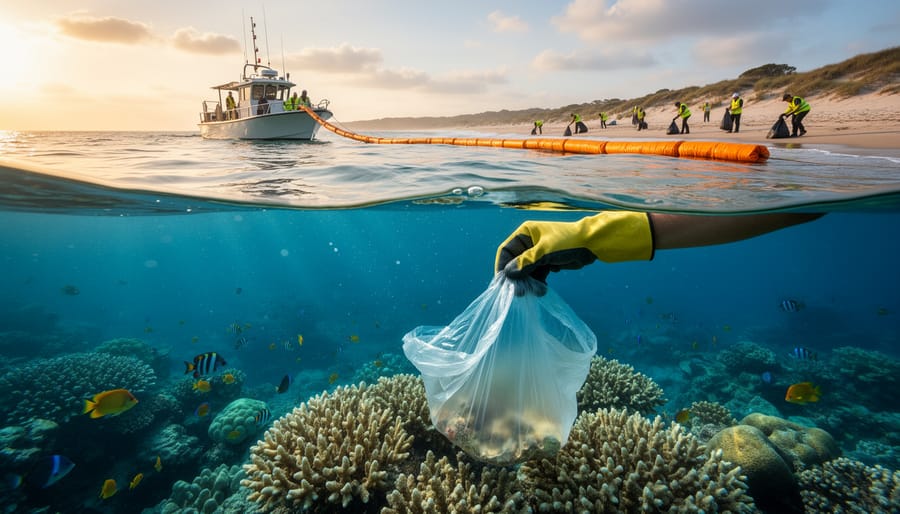
Every minute, the equivalent of one garbage truck of plastic enters our oceans. This staggering reality affects not just distant marine ecosystems, but the very air we breathe and the food on our plates. Ocean pollution threatens over 700 marine species with extinction, disrupts global climate regulation, and compromises the livelihoods of three billion people who depend on coastal and marine resources.
Yet here’s the transformative truth: ocean pollution prevention isn’t just possible, it’s already happening. From innovative cleanup technologies removing tons of debris from the Great Pacific Garbage Patch to coastal communities implementing zero-waste initiatives, solutions are emerging at every level. Marine biologist Dr. Sarah Chen, who has spent fifteen years studying coral reef recovery, shares that “the oceans have remarkable resilience when we give them the chance to heal.”
The path to healthier oceans requires understanding both the scope of the challenge and our power to address it. Pollution sources range from the obvious, like single-use plastics and oil spills, to the invisible threats of microplastics, chemical runoff, and noise pollution that disrupt marine communication. Each source demands targeted prevention strategies, from individual daily choices to international policy reforms.
This isn’t about perfection or overwhelming lifestyle changes. It’s about informed action multiplied across millions of people. Whether you’re a student exploring marine conservation, an educator inspiring the next generation, or simply someone who cares about the future of our blue planet, you hold a piece of the solution. The ocean has sustained humanity for millennia. Now, through science-backed prevention methods and collective commitment, we have the opportunity to return that care.
Understanding the Sources: Where Ocean Pollution Begins
Land-Based Pollution: The 80% Problem
The ocean’s pollution crisis doesn’t begin at sea. Approximately 80% of marine pollution originates from land-based sources, traveling through rivers, streams, and storm drains before reaching our coastlines. This staggering figure reveals a fundamental truth: protecting our oceans means addressing what happens on land.
Agricultural runoff stands as one of the most significant contributors. When farmers apply fertilizers containing nitrogen and phosphorus, rain washes these nutrients into nearby waterways. Picture a Midwestern corn field after a heavy storm—the excess nutrients flow downstream, eventually reaching the Gulf of Mexico where they fuel massive algal blooms that deplete oxygen and create dead zones. Marine biologist Dr. Sarah Chen, who has studied coastal ecosystems for fifteen years, describes witnessing these impacts firsthand: “I’ve seen thriving coral communities suffocate under algal blankets fed by agricultural runoff hundreds of miles away. The connection between a farm field and a dying reef isn’t always visible, but it’s undeniably real.”
Urban pollution adds another layer of complexity. Every time it rains in a city, water rushes across parking lots, streets, and rooftops, collecting motor oil, tire particles, pesticides, and litter. This toxic mixture flows directly into storm drains that empty into rivers and oceans without treatment. Meanwhile, inadequate sewage systems in many coastal communities discharge untreated or partially treated wastewater, introducing pathogens, pharmaceuticals, and microplastics into marine environments.
Understanding these pathways is the first step toward meaningful prevention and collective action.
Plastic and Microplastic Contamination
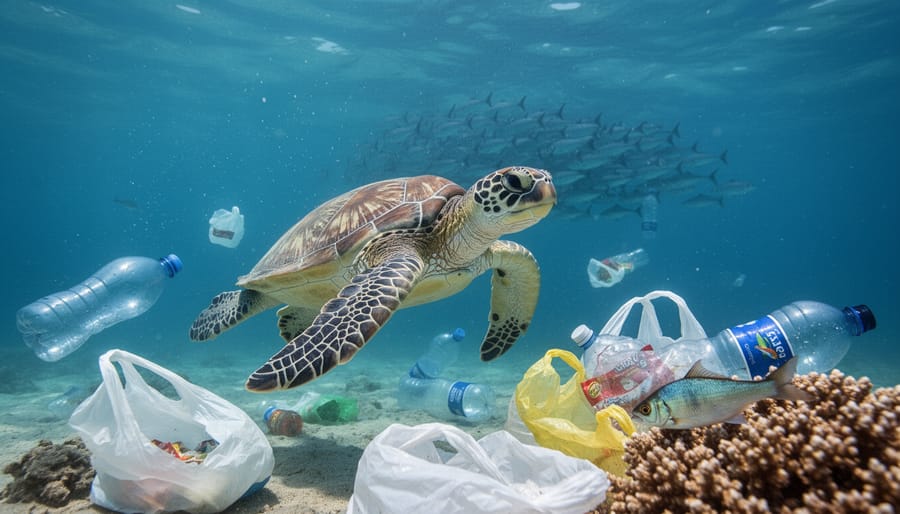
Plastic pollution poses one of the most persistent threats to ocean health, with over 8 million tons entering our waters annually. When plastic waste reaches the ocean, it doesn’t simply disappear. Through exposure to sunlight, wave action, and temperature changes, larger plastic items gradually fragment into smaller pieces called microplastic contamination, defined as particles smaller than 5 millimeters.
These tiny fragments infiltrate marine food webs in alarming ways. Filter-feeding organisms like mussels and oysters mistake microplastics for food particles, ingesting them along with plankton. Recent studies have documented microplastics in over 700 marine species, from tiny zooplankton to apex predators like sharks and whales. When smaller fish consume these particles, the plastics biomagnify up the food chain, ultimately reaching human dinner plates.
Marine biologist Dr. Sarah Chen shares, “During my research expeditions, we’ve found microplastics in the digestive systems of fish from the most remote ocean locations. This isn’t just about protecting marine life anymore; it’s about safeguarding our own health.” The particles can carry toxic chemicals and disrupt hormonal systems in marine organisms, affecting reproduction and survival rates across entire ecosystems.
Chemical and Nutrient Pollution
Industrial chemicals and agricultural runoff create some of the ocean’s most pressing challenges. When excess nutrients like nitrogen and phosphorus wash into coastal waters, they trigger massive algal blooms that consume oxygen as they decompose, creating dead zones where marine life cannot survive. The Gulf of Mexico’s dead zone, spanning thousands of square miles, exemplifies this devastating phenomenon.
Oil spills, though dramatic, represent just one facet of chemical pollution. Persistent organic pollutants from manufacturing, pesticides from farmland, and heavy metals accumulate in marine food webs, threatening both ocean health and human communities that depend on seafood.
Prevention starts upstream. Farmers can adopt precision agriculture techniques that minimize fertilizer runoff, while industries can implement stricter wastewater treatment protocols. Communities near coastlines can establish buffer zones with native vegetation that filters pollutants before they reach waterways.
Marine biologist Dr. Sarah Chen notes that citizen monitoring programs have successfully identified pollution sources in her region, leading to targeted prevention efforts. Volunteer water quality testing offers everyone an opportunity to contribute meaningful data while learning about their local watershed’s connection to ocean health.
Prevention Strategies That Work: From Individual to Global
Individual Actions With Collective Impact
Individual choices ripple outward through communities, creating measurable change when adopted collectively. Understanding which actions generate the most significant impact helps prioritize efforts without overwhelming daily routines.
Start with plastic consumption. Switching to reusable water bottles, shopping bags, and food containers eliminates hundreds of single-use items annually. Dr. Sarah Chen, a marine biologist studying Pacific garbage patches, notes that “when coastal communities reduced plastic bag usage by just 40%, we documented measurable decreases in marine debris within eighteen months.” Choose products with minimal packaging and support companies committed to sustainable practices.
Proper disposal prevents pollution at its source. Never release balloons outdoors—they inevitably reach waterways. Dispose of fishing line, cigarette butts, and microplastics like glitter responsibly. These proven prevention strategies require minimal effort but prevent devastating wildlife entanglement and ingestion.
Participate in coastal cleanups, even if you live inland. Rivers transport waste to oceans, making every waterway cleanup valuable. Organizations worldwide coordinate regular events, offering opportunities to contribute directly while connecting with like-minded individuals.
Consumer advocacy matters. Contact manufacturers about excessive packaging. Support legislation promoting extended producer responsibility. Your voice influences corporate decisions and policy directions.
Marine conservationist James Rodriguez shares: “I’ve witnessed communities transform coastlines through consistent individual action. One person picking up ten pieces of trash doesn’t seem significant, but ten thousand people doing the same creates visible change.”
The mathematics are compelling: if one million people eliminate ten single-use plastics weekly, that prevents over 500 million items from potentially entering oceans annually.
Community-Level Solutions and Coastal Cleanups
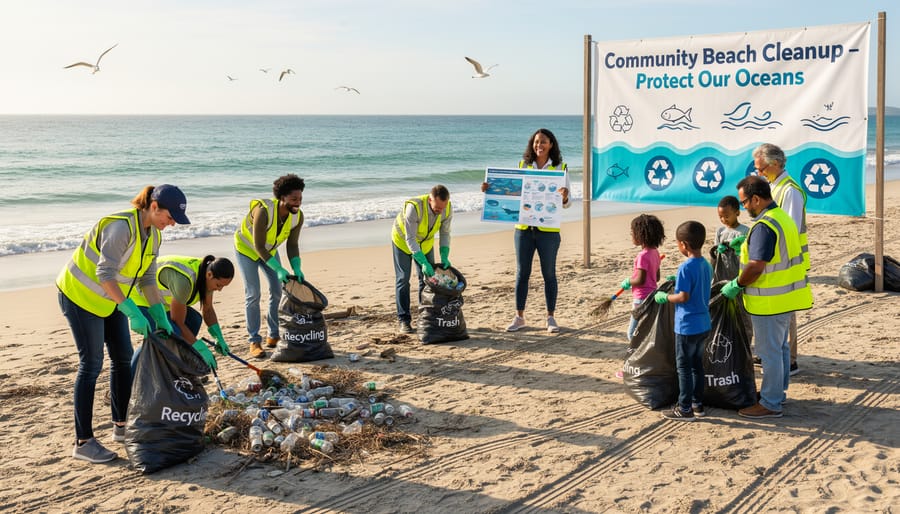
Local communities serve as powerful first lines of defense against ocean pollution, implementing grassroots solutions that create measurable impact. Effective waste management systems, including improved recycling infrastructure and storm drain filtration, prevent trash from reaching waterways. Many coastal towns have established volunteer-led programs that monitor local beaches, organize regular cleanups, and educate residents about proper waste disposal.
Maria Chen, a marine biology graduate student, recalls her first beach cleanup three years ago: “I expected to find mostly plastic bottles, but we collected fishing nets, microplastics, cigarette butts, and even medical waste. What struck me wasn’t just the volume but seeing families working together, teaching children to care for the ocean. That morning, our team of 40 volunteers removed over 300 pounds of debris from a single mile of coastline.”
Successful community programs combine action with education. Schools partner with conservation organizations to teach students about marine ecosystems and pollution impacts. Local businesses participate by reducing single-use plastics and supporting cleanup initiatives. These efforts create lasting behavioral changes that extend beyond individual events.
Getting involved is straightforward. Organizations like Ocean Conservancy and Surfrider Foundation coordinate cleanups worldwide and provide resources for starting local initiatives. Many communities offer monthly cleanup events requiring no special skills, just a commitment of a few hours. Whether you collect data for scientific research, remove debris, or spread awareness on social media, every contribution strengthens the collective effort to protect our oceans.
Policy and Legal Frameworks for Prevention
International agreements form the backbone of ocean pollution prevention efforts worldwide. The MARPOL Convention, adopted by the International Maritime Organization, regulates ship-based pollution from oil, chemicals, sewage, and garbage. This treaty has successfully reduced vessel discharge by establishing strict standards for waste management at sea. Regional agreements like the Barcelona Convention for the Mediterranean and the Helsinki Convention for the Baltic Sea address specific ecosystem needs through customized pollution controls.
Marine Protected Areas serve as powerful prevention tools by restricting harmful activities in vulnerable zones. Currently, over 17,000 designated MPAs worldwide safeguard critical habitats from pollution sources, creating recovery zones where marine life can thrive. These areas often prohibit dumping, limit vessel traffic, and restrict industrial activities.
National regulations complement international frameworks through source control measures. Many countries now ban single-use plastics, mandate wastewater treatment standards, and require environmental impact assessments for coastal development. Extended Producer Responsibility laws make manufacturers accountable for product lifecycle impacts, encouraging design changes that prevent pollution before it reaches waterways.
The success of these frameworks depends on enforcement and community participation. Marine biologist Dr. Sarah Chen notes that the most effective policies combine legal requirements with local stewardship programs, creating shared responsibility for ocean health. Understanding these policies helps citizens advocate for stronger protections and participate meaningfully in prevention efforts.
Corporate Responsibility and Industry Innovation
Industries worldwide are stepping up to address ocean pollution through innovative redesigns that prevent waste at its source. Major corporations like Unilever and Procter & Gamble have committed to making 100% of their plastic packaging reusable, recyclable, or compostable by 2025, fundamentally rethinking how products reach consumers. The fashion industry, responsible for significant microfiber pollution, has seen brands like Patagonia develop washing machine filters and fabric treatments that capture synthetic fibers before they enter waterways.
Packaging innovations offer particularly promising solutions. Loop, a circular shopping platform, partners with major brands to deliver products in durable, returnable containers, eliminating single-use packaging entirely. Similarly, Notpla has created edible and biodegradable packaging from seaweed, already used at major sporting events to replace plastic water bottles.
The fishing industry is embracing change too, with companies developing biodegradable fishing gear and GPS-tracked equipment to prevent ghost nets. Bureo, a skateboard company, collects discarded fishing nets from coastal communities in Chile, recycling them into products while providing economic incentives for proper waste disposal.
These success stories demonstrate that business innovation, when coupled with genuine commitment, can transform industries from pollution contributors to ocean protectors, creating models others can follow.
Breakthrough Innovations Changing the Game
Smart Materials and Biodegradable Alternatives
Materials science is revolutionizing our fight against ocean pollution through groundbreaking innovations that reimagine how we create everyday products. Researchers have developed biodegradable polymers derived from seaweed, cornstarch, and even mushroom mycelium that break down harmlessly in marine environments within months rather than centuries. These ocean-safe materials are already being used for packaging, fishing gear, and food containers.
Dr. Maria Santos, a marine chemist working on biodegradable fishing nets, shares her motivation: “Watching ghost nets destroy coral reefs for decades drove me to find solutions. Now we’re creating nets that dissolve after their useful life, preventing wildlife entanglement while maintaining the strength fishers need.”
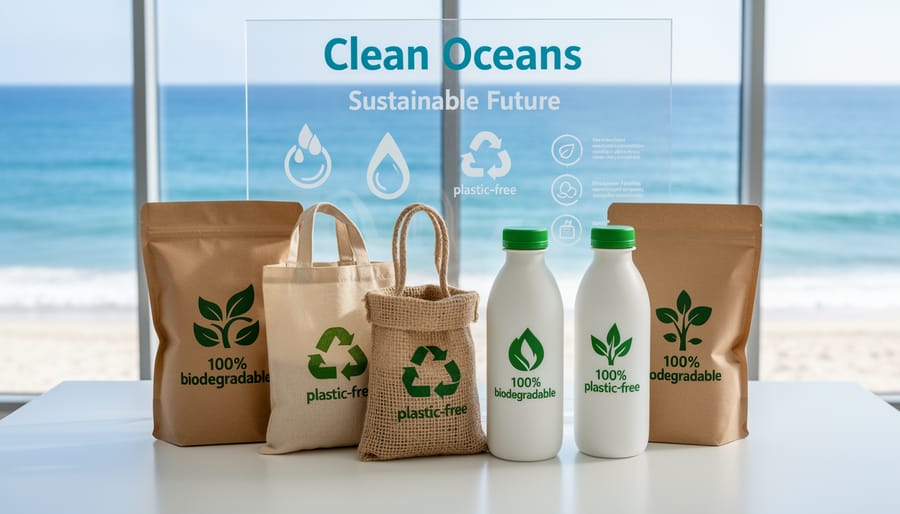
Smart packaging with time-release degradation triggers represents another exciting development. These materials remain stable during use but activate decomposition when exposed to saltwater, ensuring they won’t persist as ocean debris. Companies are also producing edible packaging from seaweed that marine life can safely consume.
You can support these innovations by choosing products made from biodegradable alternatives and participating in citizen science projects that test new materials in real-world conditions. Many research institutions welcome volunteers to help collect data on material breakdown rates in coastal environments.
Advanced Filtration and Cleanup Technologies
Innovative smart cleanup technologies are emerging as crucial tools in our fight against ocean pollution, though they represent only part of the solution. Advanced filtration systems now intercept plastic debris and pollutants at river mouths before they reach marine environments, acting as critical barriers. Technologies like bubble curtains and floating booms capture floating waste, while specialized vessels equipped with fine-mesh nets remove microplastics from surface waters.
Marine biologist Dr. Sarah Chen, who volunteers with cleanup initiatives, emphasizes that while these technologies show promise, “they work best when paired with prevention efforts. We can’t just technology our way out of this problem.” Her team has tested autonomous underwater drones that identify and collect submerged debris using AI recognition systems.
Biofiltration approaches using naturally occurring bacteria and algae show potential for breaking down oil spills and chemical pollutants. However, these technologies require significant investment and can’t address pollution at the scale it enters our oceans. The realistic assessment? They’re valuable tools that buy us time while we implement upstream prevention strategies and reduce pollution at its source.
AI and Monitoring Systems for Early Detection
Technology is revolutionizing our ability to detect and prevent ocean pollution before it causes widespread damage. Artificial intelligence systems now analyze vast amounts of data from multiple sources, identifying patterns that human observers might miss. These AI algorithms can predict potential pollution events by monitoring weather patterns, shipping routes, and industrial activities, allowing authorities to take preventive action.
Satellite monitoring has become an essential tool in tracking ocean health from space. These sophisticated systems detect oil spills, plastic accumulation zones, and harmful algal blooms in real-time, covering areas that would be impossible to monitor from ships alone. When combined with AI analysis, satellites can identify the sources of pollution and track its movement across ocean currents, helping enforcement agencies respond quickly and effectively.
Underwater sensor networks provide another layer of protection. Marine biologist Dr. Sarah Chen, who helped deploy sensor arrays in coastal waters off California, shares her experience: “These sensors act as early warning systems, detecting changes in water chemistry, temperature, and pollutant levels. When we installed them near a major shipping channel, we identified several unreported discharge events within the first month, preventing significant ecosystem damage.”
Citizen scientists and volunteers also contribute to these monitoring efforts through mobile apps that report pollution sightings, creating a global network of ocean guardians. Organizations like the Ocean Conservancy coordinate volunteer monitoring programs, training community members to use simple testing equipment and submit data that feeds into larger tracking systems. This combination of cutting-edge technology and grassroots participation creates a comprehensive shield against ocean pollution.
The Science Behind Successful Prevention
Tracking Pollution From Source to Sea
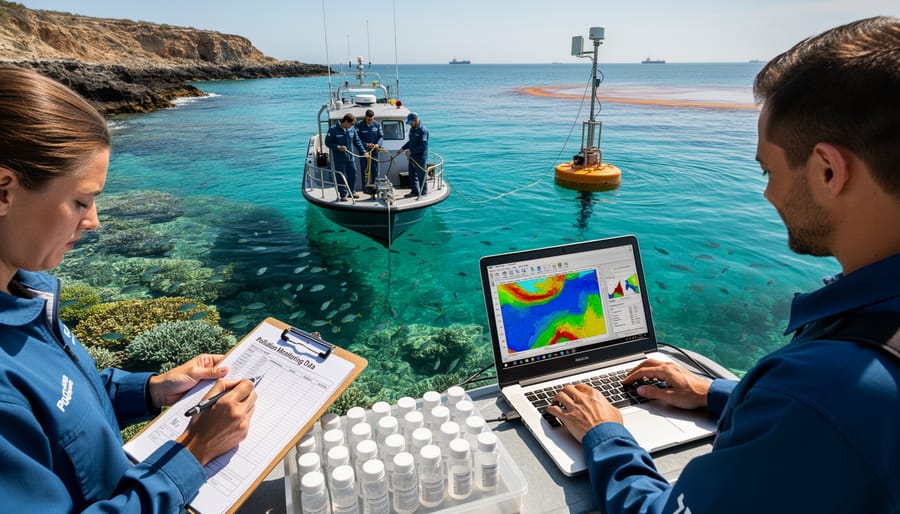
Understanding where ocean pollution originates and how it travels through waterways is essential for developing effective prevention strategies. Marine researchers use sophisticated tracking methods to follow contaminants from their sources—whether agricultural runoff, industrial discharge, or plastic waste—through rivers, estuaries, and ultimately into the ocean. These pollution pathways often reveal surprising connections between inland activities and coastal impacts.
Dr. Sarah Chen, a marine biologist with fifteen years of fieldwork experience, recalls a pivotal project tracing microplastic pollution in the Pacific Northwest. “We deployed GPS-tracked drifters that mimicked plastic debris movement,” she explains. “What we discovered was eye-opening—a single storm drain in Seattle was releasing particles that reached coastal feeding grounds within 72 hours.” Her team combined satellite imagery, water sampling, and chemical fingerprinting to create detailed pollution maps, identifying critical intervention points where prevention efforts would have the greatest impact.
Modern tracking techniques include isotope analysis to identify pollution sources, remote sensing to monitor discharge plumes, and citizen science programs where volunteers collect samples at key locations. This data helps policymakers target regulations and resources where they matter most.
For those inspired by this detective work, volunteer opportunities exist through coastal monitoring programs and community science initiatives. Many research institutions welcome trained volunteers to assist with water quality testing and debris tracking. These hands-on experiences not only contribute valuable data but also deepen our understanding of how individual actions ripple through entire marine ecosystems, reinforcing that prevention truly begins at the source.
Ecosystem Resilience and Recovery Research
Scientific research offers compelling evidence that marine ecosystems possess remarkable capacity for recovery when pollution is reduced. Studies from coastal areas worldwide demonstrate that targeted intervention creates measurable improvements within surprisingly short timeframes.
Dr. Sarah Chen, a marine ecologist studying coral reef recovery in the Philippines, shares an inspiring observation: “We’ve documented 40% increases in coral coverage within five years of implementing strict pollution controls and waste management programs. The resilience of these ecosystems exceeds our initial predictions.”
The Chesapeake Bay provides another powerful example. After decades of agricultural runoff and industrial pollution, coordinated cleanup efforts since the 1980s have resulted in returning seagrass beds, rebounding oyster populations, and improved water clarity. Dissolved oxygen levels in critical habitats have increased by 30%, supporting diverse fish communities that had nearly disappeared.
Research published in marine science journals reveals that plastic pollution reduction initiatives show benefits within months. When beach cleanup programs and better waste management systems were implemented in Southeast Asian communities, scientists observed immediate decreases in microplastic ingestion among seabirds and marine mammals.
These recoveries demonstrate that prevention efforts yield tangible results. Volunteer monitoring programs play crucial roles in documenting these positive changes, offering meaningful ways for citizen scientists to contribute to ongoing research while witnessing ecosystem restoration firsthand. Every action toward pollution prevention strengthens nature’s ability to heal.
Join the Movement: How You Can Make a Difference
Volunteer Opportunities in Ocean Pollution Prevention
Making a tangible difference in ocean health starts with taking that first step into action. Our center offers diverse volunteer pathways suited to various schedules and skill levels. Join our ocean conservation programs where volunteers participate in beach cleanups, collecting valuable data while removing harmful debris from coastal ecosystems. These events happen monthly and welcome families, students, and individuals of all backgrounds.
Citizen science initiatives provide opportunities to contribute meaningful research data. Volunteers monitor water quality, document marine species sightings, and track plastic accumulation patterns along shorelines. Your observations feed directly into ongoing scientific studies, helping researchers identify pollution hotspots and measure conservation effectiveness.
For those seeking deeper involvement, consider becoming a marine conservation educator. After brief training, volunteers lead community workshops, school presentations, and public awareness campaigns. Dr. Sarah Chen, a marine biologist with our center, notes that “volunteers multiply our impact exponentially, reaching communities we couldn’t engage alone.”
Remote volunteers can participate through data analysis projects, social media advocacy, or organizing local initiatives. Whether you have two hours monthly or can commit weekly, your contribution matters in building healthier oceans for future generations.
Education and Advocacy Resources
Empowering communities with knowledge is fundamental to preventing ocean pollution. Educators can access comprehensive curricula through organizations like NOAA’s Ocean Guardian Program and Project AWARE, which offer lesson plans, teaching kits, and virtual field trips that bring marine science into classrooms. These resources break down complex topics into age-appropriate content, making ocean conservation accessible to students from elementary through university levels.
For advocates and community organizers, toolkits from Ocean Conservancy and Surfrider Foundation provide campaign guides, petition templates, and social media strategies to mobilize local action. Many marine research centers, including those involved in environmental health initiatives, offer public workshops and citizen science programs where participants collect valuable pollution data while learning firsthand about marine ecosystems.
Documentary films like “A Plastic Ocean” and “Chasing Coral” serve as powerful conversation starters for community screenings. Meanwhile, marine biologist Dr. Sarah Chen shares, “When I mentor students in beach cleanup data collection, I watch them transform from observers to passionate advocates who educate their families and friends.”
Free webinars, podcasts, and online courses from institutions worldwide make expert knowledge available to anyone with internet access, democratizing ocean conservation education and creating a global network of informed ocean stewards ready to drive prevention efforts forward.
The journey toward cleaner, healthier oceans is not a distant dream but an achievable reality within our grasp. Every piece of plastic picked up from a beach, every sustainable choice at the grocery store, and every conversation that raises awareness creates ripples of positive change across our blue planet. The science is clear: ocean pollution is preventable, and the solutions are available. What we need now is collective commitment and sustained action.
Throughout our research centers, we’ve witnessed the remarkable resilience of marine ecosystems when given the chance to recover. From coral reefs rebounding after protection measures to sea turtle populations increasing through coordinated conservation efforts, nature demonstrates its capacity for renewal when we act as responsible stewards. These success stories prove that our actions matter, and they inspire us to push forward even when challenges seem overwhelming.
Innovation continues to advance at an encouraging pace. New technologies for cleanup, biodegradable materials replacing harmful plastics, and improved waste management systems show that human ingenuity can match the scale of the problem we’ve created. Meanwhile, policy changes and international cooperation are strengthening the framework for lasting protection of our oceans.
But technology and policy alone won’t save our seas. The most powerful force for change is you. Whether you’re a student beginning to explore marine science, an educator shaping future conservationists, or simply someone who loves the ocean, your contribution matters. Join our volunteer programs, participate in beach cleanups, share knowledge with your community, or support research initiatives. Marine biologist Dr. Sarah Chen reminds us: “I’ve seen firsthand how one person’s passion can inspire dozens, then hundreds, to take action. Ocean conservation isn’t about grand gestures; it’s about consistent, collective effort.”
The ocean gave us life. Now, it’s asking for ours in return. Answer the call.

jessica
Ava Singh is an environmental writer and marine sustainability advocate with a deep commitment to protecting the world's oceans and coastal communities. With a background in environmental policy and a passion for storytelling, Ava brings complex topics to life through clear, engaging content that educates and empowers readers. At the Marine Biodiversity & Sustainability Learning Center, Ava focuses on sharing impactful stories about community engagement, policy innovations, and conservation strategies. Her writing bridges the gap between science and the public, encouraging people to take part in preserving marine biodiversity. When she’s not writing, Ava collaborates with local initiatives to promote eco-conscious living and sustainable development, ensuring her work makes a difference both on the page and in the real world.