Marine Biodiversity Science Center


The azure waters surrounding Guam hold secrets that few institutions are better positioned to unlock than the University of Guam Marine Laboratory. For over five decades, this research facility has stood as the Pacific’s sentinel, monitoring coral reefs, tracking typhoon impacts, and documenting how rising ocean temperatures reshape marine ecosystems across Micronesia.
Perched on Piti Bay’s volcanic shores, the Marine Lab represents more than scientific infrastructure. It embodies a bridge between Western research methodologies and indigenous Chamorro knowledge systems that have sustained Pacific communities for millennia. Here, female scientists lead groundbreaking studies on crown-of-thorns starfish predation while simultaneously learning from local fisherwomen whose ancestral understanding of reef cycles spans generations. This convergence creates conservation strategies that honor both data and tradition, recognizing that effective marine stewardship requires voices historically excluded from environmental decision-making.
The laboratory’s significance extends beyond its research outputs. As climate change accelerates and overfishing threatens regional food security, institutions like UOG Marine Lab become training grounds where the next generation of Pacific Islander scientists develop solutions tailored to their communities’ unique challenges. Student researchers here don’t just study abstract ecological concepts; they monitor the same reefs their families depend upon, creating deeply personal stakes in conservation outcomes.
This intersection of gender equity, cultural preservation, and marine science positions the University of Guam Marine Laboratory as a model for inclusive conservation. Understanding how this institution operates, the barriers it addresses, and the opportunities it creates offers crucial insights for anyone committed to protecting our oceans while advancing social justice. The lab’s work demonstrates that saving marine ecosystems and empowering underrepresented voices aren’t separate goals but interconnected imperatives.
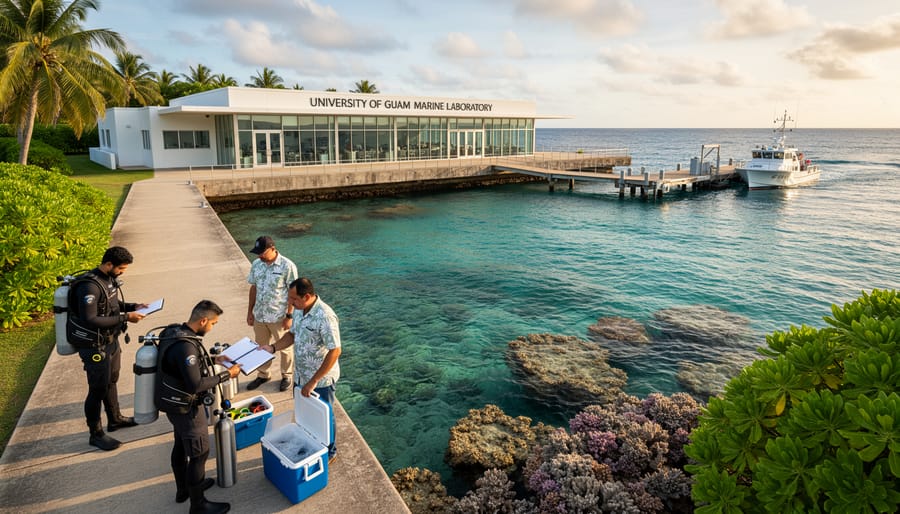
The University of Guam Marine Laboratory: A Pacific Research Hub
Protecting Micronesia’s Marine Resources
The University of Guam Marine Laboratory anchors its mission in protecting the extraordinary marine biodiversity of Micronesia through targeted research and conservation initiatives. The lab’s scientists work directly with endangered species, including sea turtles, giant clams, and various coral species that face mounting pressures from climate change and human activity.
One flagship program focuses on coral reef resilience, studying how these vital ecosystems respond to warming waters and ocean acidification. Researchers monitor reef health across multiple sites, identifying coral populations with natural heat tolerance that could help restore damaged areas. Dr. Laurie Raymundo, a coral disease specialist at the lab, shares how this work connects science with community: “When local fishermen partner with us to document coral bleaching events, they become guardians of the reefs they’ve known their entire lives. That’s when real change happens.”
The lab’s sea turtle conservation program has been tracking nesting populations for over three decades, providing critical data that informs protection policies throughout the region. Graduate students and volunteers participate in nighttime beach patrols, tagging nesting females and monitoring hatchling success rates.
Sustainable fisheries management represents another cornerstone of the lab’s conservation efforts. Scientists collaborate with island communities to develop fishing practices that balance cultural traditions with long-term resource sustainability. This includes research on spawning aggregation sites, traditional ecological knowledge documentation, and community-based monitoring programs.
Volunteer opportunities abound for those passionate about marine conservation, from reef surveys to educational outreach programs. These hands-on experiences transform participants into informed advocates who carry conservation messages back to their communities, multiplying the lab’s impact across the Pacific.
Women at the Forefront: Gender Representation in Pacific Marine Science
Personal Stories from Women Marine Scientists
Dr. Valerie Brown’s journey to becoming a coral reef ecologist at the University of Guam Marine Laboratory began with a childhood fascination with tide pools in her native California. Today, she leads groundbreaking research on coral resilience in warming Pacific waters. “When I first arrived in Guam, I was one of few women leading research expeditions,” she recalls. “Now, I’m proud to mentor the next generation of female marine scientists who are changing the landscape of ocean conservation.”
Dr. Brown’s current project examines how certain coral species adapt to thermal stress, work that has profound implications for reef restoration efforts across Micronesia. Her team has identified three coral varieties with remarkable heat tolerance, discoveries that could guide conservation strategies throughout the Pacific. Despite facing initial skepticism about her youth and gender when securing research funding, she persisted. “The ocean doesn’t care about your credentials or gender. It responds to dedication and sound science,” she says.
Research technician Maria Taitano brings indigenous Chamorro knowledge to the laboratory’s fisheries management program. Growing up in a fishing family, she noticed declining catch sizes and disappearing species. Her work now bridges traditional ecological knowledge with modern scientific methods, creating more culturally relevant conservation approaches. “My grandmother taught me which moon phases signaled fish spawning. That traditional wisdom, combined with population surveys and genetic analysis, helps us understand fish lifecycles more completely,” Maria explains.
Her collaboration with local fishing communities has resulted in voluntary no-take zones that have increased fish populations by 35 percent in three years. The project demonstrates how integrating women’s perspectives and indigenous knowledge strengthens marine resource management.
Dr. Keiko Nomura, a visiting researcher from Japan specializing in deep-sea ecosystems, faced language barriers and cultural adjustment challenges when joining the laboratory. Her perseverance led to the discovery of five previously unknown species in the Mariana Trench. “Science transcends borders and language,” she notes. “The Marine Lab provided mentorship and collaborative opportunities that transformed my career.”
These women represent a growing community of female scientists at UOG Marine Laboratory who are not only advancing marine science but actively dismantling barriers for others. Their research spans coral conservation, fisheries management, and deep-sea exploration, each contributing essential knowledge to protect Pacific marine ecosystems. They regularly host workshops for island high school students, particularly encouraging young women to pursue marine science careers and participate in ongoing research projects as volunteers and interns.
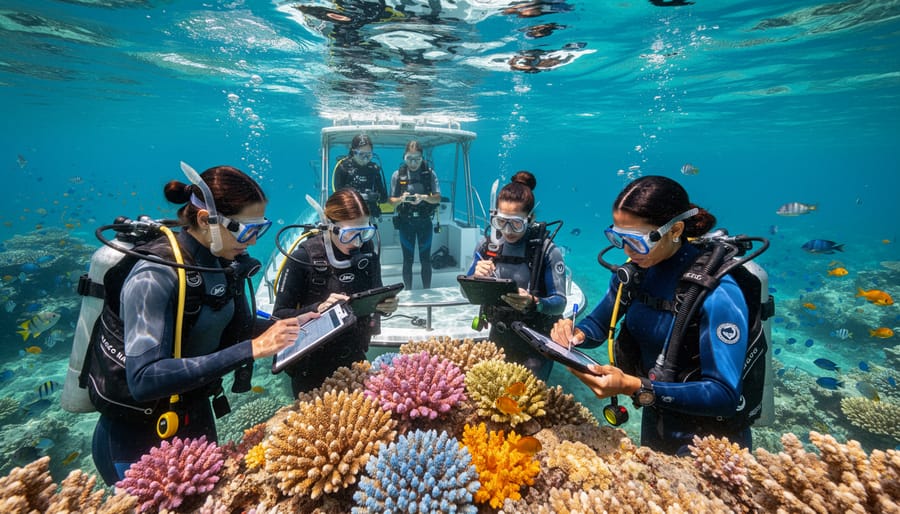
Traditional Knowledge Meets Modern Science: Indigenous Women’s Role
For generations, Pacific Islander women have served as guardians of the ocean, passing down intricate knowledge about lunar cycles, fish behavior, and reef health through oral traditions and daily practice. At the University of Guam Marine Laboratory, this invaluable traditional ecological knowledge is finding new recognition alongside modern scientific methodologies, creating a powerful framework for marine conservation.
Dr. Maria Santos, a marine ecologist at the lab, recalls how collaborating with indigenous women transformed her approach to coral reef monitoring. “I was trained to collect data using standard scientific protocols,” she explains, “but the chamorro women who joined our surveys could identify subtle environmental changes I’d never noticed—shifts in water clarity before storms, or unusual fish aggregations signaling spawning events. Their observations, honed over lifetimes of subsistence fishing and reef gleaning, filled critical gaps in our datasets.”
This integration of cultural heritage in conservation extends beyond data collection. Indigenous women bring holistic perspectives on marine stewardship that challenge Western scientific paradigms. Rather than viewing ocean resources as commodities to be managed, traditional Pacific Islander worldviews emphasize kinship with marine life and reciprocal relationships with ecosystems. Women often hold specialized knowledge about intertidal zones, where they harvest shellfish, seaweed, and other resources while maintaining sustainable practices developed over centuries.
The laboratory has established formal partnerships with community groups led by Pacific Islander women, creating spaces where traditional knowledge holders and university researchers collaborate as equals. These initiatives have produced practical conservation outcomes, including more culturally appropriate marine protected area designs and fishing regulations that respect traditional harvest calendars and taboo systems.
Gender roles in Pacific Islander cultures often position women as nurturers and resource managers within family and community contexts. This responsibility extends to marine environments, where women’s daily interactions with coastal resources provide unique insights into ecosystem health. By honoring these perspectives, the Marine Laboratory demonstrates that effective conservation requires multiple ways of knowing.
Volunteer opportunities exist for those interested in supporting these collaborative research projects. Whether documenting traditional practices, assisting with community-based monitoring programs, or helping translate scientific findings into accessible resources, participants contribute to bridging indigenous wisdom and contemporary science—an essential partnership for protecting Pacific marine biodiversity for future generations.
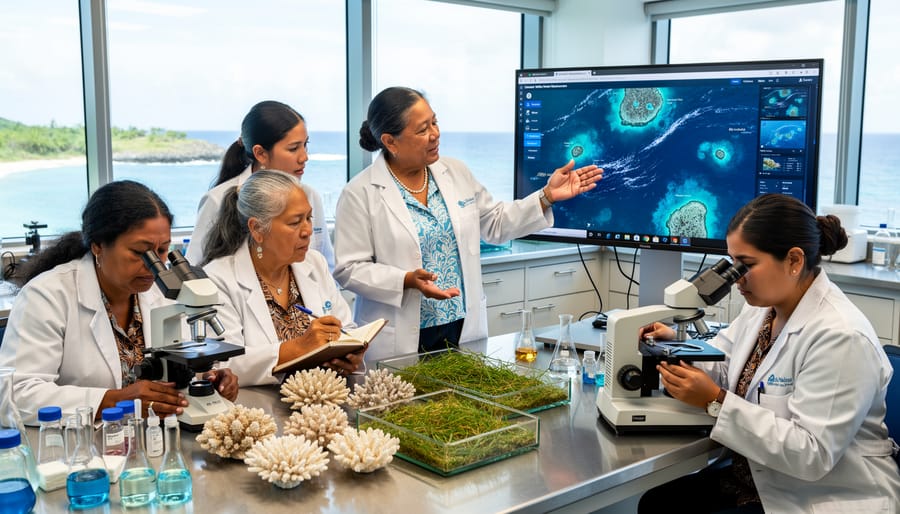
Breaking Down Barriers: Challenges and Progress
Creating Opportunities Through Education and Mentorship
The University of Guam Marine Laboratory demonstrates its commitment to building a diverse and inclusive marine science community through several targeted programs designed to lower barriers for underrepresented groups. The laboratory actively partners with local schools and community organizations to provide hands-on research experiences, particularly for Pacific Islander students who bring invaluable cultural knowledge and perspectives to marine conservation efforts.
Dr. Laurie Raymundo, a coral disease specialist at the lab, mentors undergraduate and graduate students through immersive field research projects. “We intentionally create pathways for students who might not see themselves reflected in traditional marine science careers,” she explains. “When young women and Pacific Islander students work alongside experienced researchers, they realize these opportunities are absolutely within their reach.”
The lab’s internship program offers paid positions to local high school and college students, providing essential financial support that makes participation possible for those from diverse economic backgrounds. These positions include everything from water quality monitoring to coral nursery maintenance, giving participants practical skills and professional connections.
Getting involved is accessible for anyone passionate about marine conservation. Volunteer opportunities include beach cleanup coordination, data collection assistance, and support for marine education programs that reach island communities. Students can apply for semester-long internships through the UOG Marine Laboratory website, while professionals interested in mentoring can contact the lab’s outreach coordinator directly.
Community members can also participate in citizen science initiatives, contributing valuable observations about fish populations, coral health, and marine debris. These programs recognize that meaningful conservation requires diverse voices and experiences, making marine science accessible to everyone committed to protecting our ocean ecosystems.

The Future of Inclusive Marine Conservation
The future of marine conservation in the Pacific depends not just on cutting-edge technology or increased funding, but on who is leading the research and shaping the solutions. At the University of Guam Marine Laboratory, scientists and administrators increasingly recognize that diverse perspectives create more robust, culturally relevant, and effective conservation outcomes.
Dr. Maria Santos, a coral reef ecologist at the lab, explains the practical benefits: “When our research teams include people from different backgrounds and genders, we ask different questions, notice different patterns, and develop solutions that work for more communities.” Her observation reflects growing evidence that gender-diverse teams produce more innovative research and better problem-solving approaches.
For Pacific island communities, where women have historically held significant knowledge about nearshore fisheries and coastal resources, their inclusion in formal marine science strengthens the connection between traditional ecological knowledge and modern research methods. This integration proves essential for community engagement in conservation, ensuring that protection strategies respect both scientific data and cultural practices.
The laboratory’s vision for gender equity extends beyond numbers in the workplace. It encompasses creating mentorship networks for young women scientists, addressing fieldwork safety concerns, developing flexible career pathways, and ensuring that Pacific island women have opportunities to lead conservation initiatives affecting their ancestral waters.
Achieving this vision requires sustained commitment from funding agencies, academic institutions, and conservation organizations. It means examining hiring practices, providing leadership training, and actively recruiting diverse perspectives into decision-making roles. The payoff transcends fairness alone. As ocean ecosystems face unprecedented climate pressures, the marine science community needs every available talent, perspective, and voice working toward sustainable solutions that benefit both people and the ocean they depend upon.
The path to resilient, thriving ocean ecosystems runs directly through gender equity. As we’ve explored, the University of Guam Marine Laboratory stands at the forefront of demonstrating this vital connection, where diverse perspectives drive innovation in conservation strategies and community engagement yields more sustainable outcomes. When women participate fully in marine science and resource management, entire communities benefit from more inclusive decision-making processes that honor both traditional knowledge and cutting-edge research.
The evidence is clear: marine conservation succeeds when it embraces all voices. From the coral restoration projects benefiting from varied approaches to the community education programs that reach broader audiences, gender diversity strengthens every aspect of ocean stewardship. The stories shared by marine biologists working in Micronesia reveal that breaking down barriers doesn’t just create opportunities for individuals; it transforms how we understand and protect our marine environments.
You can be part of this transformative movement. Consider volunteering with the Marine Laboratory’s field research programs, where your contributions directly support groundbreaking conservation work. Educators can integrate lessons about marine biodiversity into their curricula, inspiring the next generation of ocean advocates. Support scholarships and mentorship programs that enable more women to pursue marine science careers. Even sharing the lab’s research findings with your networks amplifies these important messages.
Together, we’re building a future where ocean conservation benefits from humanity’s full potential. Every action, whether through direct engagement or spreading awareness, creates ripples that extend far beyond our shores. The collective impact of supporting women in marine science today will echo through healthier oceans for generations to come.

jessica
Ava Singh is an environmental writer and marine sustainability advocate with a deep commitment to protecting the world's oceans and coastal communities. With a background in environmental policy and a passion for storytelling, Ava brings complex topics to life through clear, engaging content that educates and empowers readers. At the Marine Biodiversity & Sustainability Learning Center, Ava focuses on sharing impactful stories about community engagement, policy innovations, and conservation strategies. Her writing bridges the gap between science and the public, encouraging people to take part in preserving marine biodiversity. When she’s not writing, Ava collaborates with local initiatives to promote eco-conscious living and sustainable development, ensuring her work makes a difference both on the page and in the real world.