Marine Biodiversity Science Center

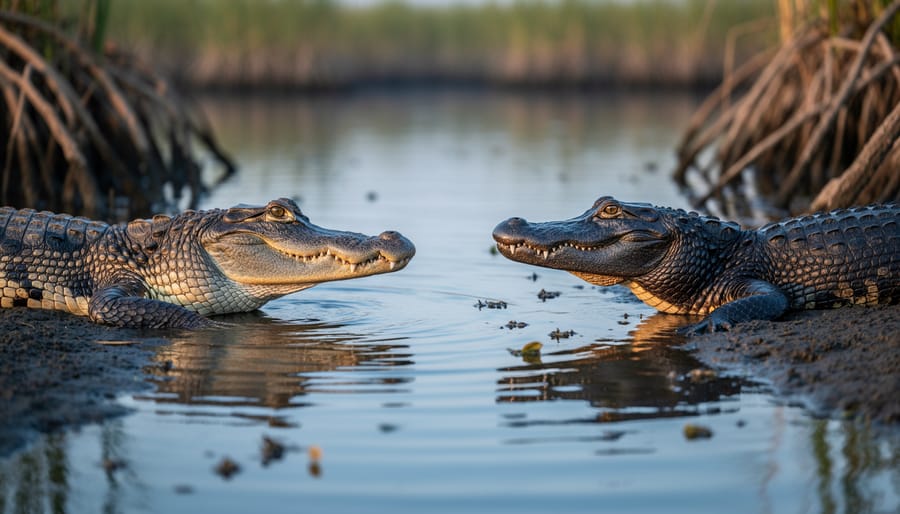
The age-old question of whether an alligator can beat a crocodile captivates our imagination, but the answer isn’t straightforward. In a hypothetical confrontation, the outcome would depend on the specific species involved, their size, and the environment where they meet. Saltwater crocodiles, the largest living reptiles reaching over 20 feet and 2,000 pounds, would likely overpower most alligator species through sheer size and bite force. American alligators, while formidable predators, typically reach smaller dimensions and possess less aggressive temperaments than their crocodilian cousins.
However, this compelling question opens a window into understanding two remarkable ancient lineages that have survived for millions of years. Rather than viewing these animals through the lens of combat, we gain far more by appreciating their ecological roles, evolutionary adaptations, and the conservation challenges they face. Both alligators and crocodiles serve as apex predators in their respective ecosystems, maintaining balance in wetland habitats that support countless other species.
The real battle these creatures face isn’t against each other but against habitat loss, climate change, and human encroachment. By exploring the biological differences between these crocodilians, their behavioral patterns, and their conservation status, we can transform curiosity about a hypothetical fight into meaningful awareness. This understanding empowers us to support protection efforts for these magnificent reptiles and the diverse ecosystems they inhabit, ensuring future generations can marvel at their continued existence.
The Ancient Rivalry: Understanding Crocodilians
Crocodilians represent one of nature’s most remarkable success stories, having survived for over 200 million years through mass extinctions that wiped out the dinosaurs. This ancient order includes 24 living species divided into three families: true crocodiles, alligators and caimans, and gharials. While many people use “crocodile” and “alligator” interchangeably, these creatures exhibit key differences between species that reflect millions of years of divergent evolution across different continents and ecosystems.
These apex predators play an irreplaceable role in maintaining the health of wetlands, rivers, and coastal environments. As ecosystem engineers, crocodilians create and maintain water holes during dry seasons that countless other species depend upon for survival. They control fish populations, prevent overgrazing of aquatic vegetation, and even their nesting mounds provide elevated terrain that benefits other wildlife. In coastal areas, crocodiles help regulate prey species that might otherwise damage critical mangrove forests.
Dr. Sarah Chen, a conservation biologist who has worked with crocodilian populations across three continents, shares this perspective: “Every time I watch an American crocodile basking in a Florida estuary, I’m reminded that we’re looking at a living connection to prehistoric times. Protecting them means protecting entire ecosystems.”
Despite their evolutionary resilience, crocodilians now face unprecedented threats from habitat loss, climate change, and human conflict. Understanding these species goes beyond satisfying curiosity about hypothetical confrontations. It empowers us to recognize their ecological importance and take meaningful action to ensure these ancient survivors continue thriving for another 200 million years.
Key Physical Differences That Matter in a Confrontation
Size and Weight Advantage
When considering a hypothetical confrontation between these ancient reptiles, size becomes a critical factor that could determine the outcome. Saltwater crocodiles hold the title as Earth’s largest living reptiles, with adult males typically reaching 14-17 feet in length and weighing between 1,000-2,200 pounds. Exceptional individuals have been documented exceeding 20 feet and 2,600 pounds. In contrast, American alligators, while still impressive predators, generally measure 10-15 feet with males averaging around 500-1,000 pounds.
This substantial size difference translates directly into raw power and bite force. Larger body mass means more muscle strength for grappling, rolling, and overpowering prey. Marine biologist Dr. Sarah Chen, who has studied crocodilian behavior for over fifteen years, notes that “in territorial disputes between crocodilians, the larger individual almost invariably dominates.” The saltwater crocodile’s superior size provides advantages in reach, jaw strength, and overall combat capability.
However, size alone doesn’t guarantee victory in every scenario. Environmental factors, individual health, and specific circumstances all play roles. Understanding these magnificent creatures’ physical capabilities helps us appreciate why protecting their diverse habitats remains essential for maintaining healthy aquatic ecosystems.
Jaw Strength and Bite Force
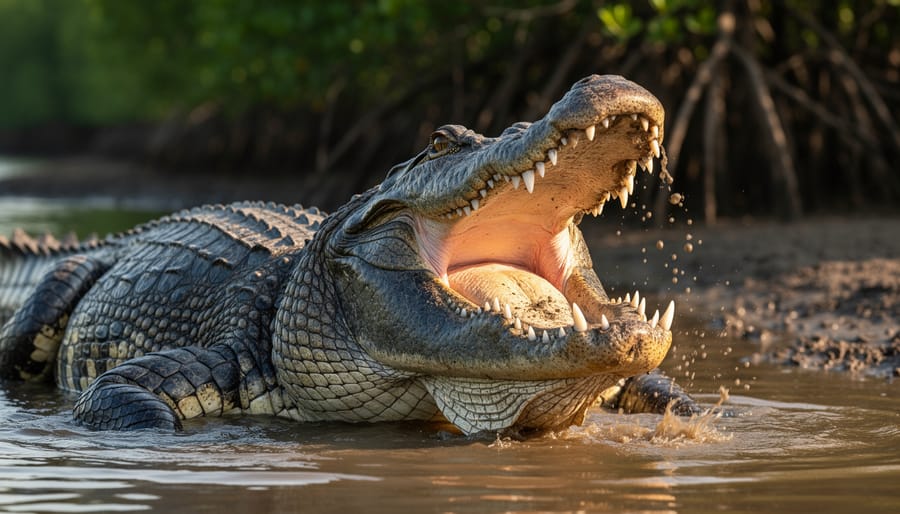
When it comes to raw crushing power, crocodiles hold a remarkable advantage. Saltwater crocodiles have been recorded with bite forces exceeding 3,700 pounds per square inch (psi), making them the strongest biters in the animal kingdom. American alligators produce impressive bite forces around 2,125 psi, which is still formidable but considerably weaker.
This difference stems from the mechanics of their jaw structure. Both animals possess massive jaw-closing muscles that attach to elongated skull bones, creating exceptional leverage. However, crocodiles have proportionally larger skulls and more robust jaw muscles relative to their body size. Marine biologist Dr. Sarah Chen, who studied crocodilian biomechanics in Australia, describes witnessing a saltwater crocodile crush a sea turtle shell “like it was made of cardboard—the sheer power was humbling and reminded me why these ancient predators deserve our respect and protection.”
Interestingly, while their closing force is tremendous, both species have relatively weak jaw-opening muscles. A human hand could theoretically hold an alligator’s or crocodile’s mouth shut, though approaching wild crocodilians is never advisable. Understanding these biomechanical differences helps researchers assess each species’ ecological role and feeding strategies in their respective habitats.
Body Shape and Agility
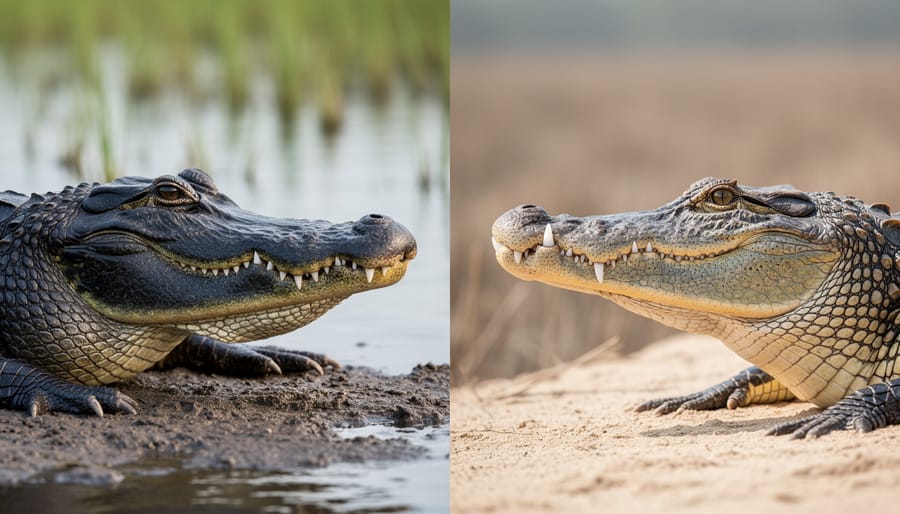
When identifying physical characteristics that influence combat capabilities, skull structure plays a crucial role. Crocodiles sport a V-shaped snout with exposed teeth even when their mouths are closed, creating a vice-like grip optimized for snagging and holding prey in open water. Alligators possess a broader, U-shaped snout designed for crushing power—ideal for breaking through turtle shells and tough prey in their swampy habitats.
Both species boast impressive defensive armor consisting of osteoderms, bony plates embedded in their skin that act as natural shields. However, crocodiles typically have more pronounced osteoderms, providing enhanced protection during territorial disputes. Their tails, which can comprise up to half their body length, serve as powerful weapons capable of delivering devastating blows and propelling rapid strikes through water.
Marine biologist Dr. Sarah Chen, who has studied crocodilian behavior for fifteen years, notes that agility differences are habitat-driven. Crocodiles demonstrate superior maneuverability in deep water environments, while alligators excel in shallow, vegetation-dense wetlands where their stockier build becomes advantageous for ambush tactics and defensive positioning.
Temperament and Aggression: Behavioral Differences
When considering whether an alligator could beat a crocodile, behavioral differences often tip the scales more than physical attributes alone. Scientists who have studied these ancient reptiles in their natural habitats consistently observe that crocodiles display markedly more aggressive and territorial behavior compared to their alligator cousins.
Dr. Sarah Chen, a herpetologist who has spent over fifteen years observing both species across three continents, shares a compelling insight: “In my fieldwork, I’ve witnessed saltwater crocodiles actively patrol their territories and respond to perceived threats with immediate aggression. Alligators, by contrast, tend to avoid confrontation unless cornered or protecting their young.” This fundamental difference in temperament reflects distinct survival strategies shaped by millions of years of evolution.
Crocodiles, particularly species like the Nile and saltwater varieties, are known to defend large territories and compete fiercely for prime hunting grounds. They often display dominance behaviors toward other predators, including fellow crocodilians. Research published in behavioral ecology journals demonstrates that crocodiles are more likely to initiate conflicts and maintain aggressive postures during territorial disputes.
Alligators generally adopt a more tolerant approach to cohabitation. American alligators have been documented sharing basking areas and occasionally even hunting grounds without significant conflict. This doesn’t mean alligators are docile—they’re formidable predators—but their threshold for aggression sits considerably higher than most crocodile species.
These behavioral patterns significantly impact hypothetical confrontation outcomes. A crocodile’s willingness to engage aggressively and sustain combat gives it a psychological advantage. Meanwhile, an alligator might attempt to withdraw from conflict unless absolutely necessary, prioritizing energy conservation over territorial dominance.
Understanding these temperamental differences helps conservation volunteers and researchers predict and manage human-wildlife interactions more effectively. Many marine conservation programs now incorporate behavioral training to help communities recognize warning signs and respond appropriately to crocodilian presence, reducing conflicts while protecting these magnificent reptiles.

Habitat and Territory: Where They’d Actually Meet
The truth is, in nature, alligators and crocodiles almost never cross paths. Understanding their natural habitats and ranges reveals just how separated these ancient reptiles truly are.
American alligators are freshwater specialists, thriving in the southeastern United States—primarily Florida, Louisiana, and neighboring Gulf Coast states. They’ve adapted to lakes, rivers, swamps, and marshes where freshwater dominates. While they can tolerate brief exposures to brackish water, they lack the specialized salt glands that would allow extended saltwater survival.
Crocodiles, particularly American crocodiles, demonstrate greater versatility. They inhabit coastal areas, mangrove swamps, and estuaries where saltwater and freshwater mix. Their range extends from southern Florida through Central America and into northern South America. Those specialized salt glands near their tongues allow them to excrete excess salt, making coastal territories accessible.
The only place these species naturally overlap is southern Florida, specifically in brackish waters around the Everglades and Florida Bay. Even there, encounters remain remarkably rare. Dr. Jennifer Martinez, a herpetologist with 15 years studying Florida’s crocodilians, shares this observation: “I’ve documented hundreds of both species, and true territorial confrontations are extraordinary. They typically occupy slightly different microhabitats even within shared regions—alligators preferring fresher waters while crocodiles stay closer to the coast.”
Geographic separation extends beyond habitat preference. Most crocodile species live in Africa, Asia, and Australia—continents where alligators don’t naturally exist. This separation evolved over millions of years, with each species adapting to distinct ecological niches.
For conservation volunteers monitoring these populations, this separation actually simplifies fieldwork, as habitat type reliably indicates which species you’ll encounter—a practical advantage when protecting both species effectively.
The Verdict: What Science Tells Us About the Matchup
When we examine the evidence, the answer to whether an alligator can beat a crocodile depends heavily on which species we’re comparing. The science points to a clear advantage for certain crocodiles, particularly the saltwater crocodile, though several variables influence any potential encounter.
Size matters tremendously in these matchups. Saltwater crocodiles routinely reach lengths of 17 feet and can exceed 20 feet, while American alligators typically max out around 13-15 feet. This size differential translates directly to combat advantage. Nile crocodiles, another formidable species reaching similar dimensions to salties, would similarly dominate most alligator species through sheer mass and power.
Bite force measurements support this conclusion. Saltwater crocodiles possess the strongest bite force of any living animal, measured at over 3,700 pounds per square inch. American alligators, while impressive at approximately 2,125 psi, simply cannot match this crushing power. In a direct confrontation, the crocodile’s superior bite would likely prove decisive in inflicting fatal wounds.
Temperament adds another layer to the equation. Research by crocodilian biologists, including field observations shared by Dr. Adam Britton who has spent decades studying these animals in their natural habitats, consistently shows that crocodiles display more aggressive territorial behavior than alligators. This heightened aggression, combined with their physical advantages, creates a formidable combination.
However, variables could shift the outcome. A large male American alligator encountering a smaller crocodile species like the freshwater crocodile of Australia might reverse the expected result. Environmental factors matter too—an alligator fighting in its home territory, in familiar waters with optimal temperature conditions, gains advantages that could level the playing field.
The limited documented interactions between these species in captivity have shown mixed results, though controlled environments don’t truly replicate the intensity of territorial disputes in the wild. What we do know is that both animals typically avoid unnecessary conflict, preferring to establish separate territories rather than engage in potentially fatal combat.
The verdict? In a hypothetical battle between comparably-sized adults, a saltwater or Nile crocodile would most likely prevail over an American alligator. But nature rarely presents such straightforward scenarios. Understanding these magnificent predators’ true capabilities helps us appreciate why protecting their distinct habitats matters so profoundly for maintaining healthy ecosystems worldwide.
Beyond the Battle: Why Both Species Need Our Protection
While the hypothetical battle between alligators and crocodiles captures our imagination, the real fight these ancient reptiles face is far more pressing—and it’s one where both species are losing ground. Rather than viewing them as competitors, we must recognize that alligators and crocodiles are vital ecosystem engineers whose survival is intricately linked to the health of our planet’s wetlands and coastal habitats.
Both crocodilians face mounting threats that don’t discriminate between species. Habitat loss remains the most significant challenge, as coastal development, agricultural expansion, and urban sprawl continue to fragment and destroy the wetlands, marshes, and river systems these apex predators call home. Climate change compounds these pressures, altering water temperatures, increasing the frequency of severe weather events, and disrupting the delicate balance of ecosystems that have evolved over millions of years. Rising sea levels particularly threaten saltwater crocodile populations in low-lying coastal regions, while changing precipitation patterns affect freshwater habitats where alligators thrive.
Human-wildlife conflict presents another critical challenge. As human populations expand into crocodilian territories, encounters become more frequent, often resulting in the lethal removal of these misunderstood animals. Yet their ecological importance cannot be overstated. As apex predators, they regulate populations of prey species, preventing overgrazing of vegetation and maintaining biodiversity. Their nesting mounds create elevated refuges for other species during floods, while the gator holes American alligators excavate provide crucial water sources during droughts.
Dr. Sarah Mitchell, a wetland ecologist who has studied crocodilian populations for fifteen years, shares this perspective: “Every time we lose a crocodilian from an ecosystem, we’re pulling out a keystone that holds countless other species together. Their protection isn’t just about saving magnificent predators—it’s about preserving entire ecological communities.”
Conservation efforts require our collective action, from supporting habitat restoration projects to participating in citizen science monitoring programs that track crocodilian populations and health.
How You Can Help Protect Crocodilians
While understanding whether an alligator or crocodile would win in a hypothetical confrontation satisfies our curiosity, the reality is that both species face real threats that require our immediate attention. The good news? Each of us can make a tangible difference in protecting these remarkable ancient reptiles.
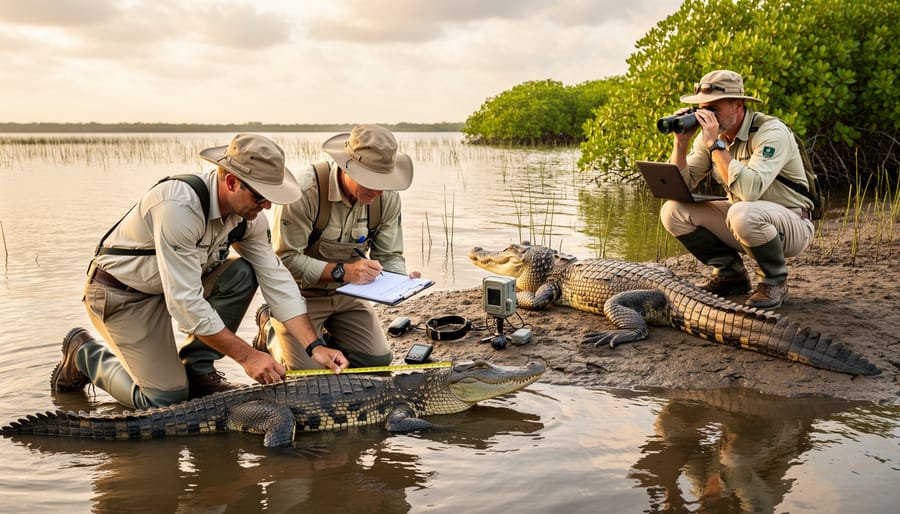
One of the most direct ways to contribute is through volunteer opportunities with the Marine Biodiversity Science Center. Our crocodilian monitoring programs welcome participants of all experience levels, from assisting with population surveys in coastal habitats to helping with educational outreach initiatives. These hands-on experiences not only support vital research but also deepen your understanding of these species and their ecosystems.
Dr. Sarah Chen, a marine biologist who has worked with both American alligators and saltwater crocodiles for over a decade, shares her perspective: “I’ll never forget my first night survey in the Everglades. Seeing hundreds of eye-shines reflecting back from the darkness, I realized these weren’t the mindless predators I’d seen in movies. They were complex animals perfectly adapted to their environment, facing mounting pressures from habitat loss and climate change. That moment transformed my career and showed me how critical conservation efforts are for their survival.”
Supporting established conservation organizations amplifies your impact. Many groups focus on habitat restoration, anti-poaching initiatives, and community education programs in regions where humans and crocodilians coexist. Financial contributions, no matter the size, directly fund research and protection measures.
Finally, promoting coexistence in shared habitats matters enormously. If you live in crocodilian territory, educate yourself about safe practices, never feed wild animals, and report injured or threatened individuals to wildlife authorities. Share accurate information with your community to dispel myths and reduce unnecessary fear.
Every action counts. By transforming curiosity about these prehistoric predators into meaningful conservation participation, we ensure future generations can marvel at both alligators and crocodiles in their natural habitats.
So, can an alligator beat a crocodile? The answer depends entirely on the species involved and their environment. A massive saltwater crocodile would likely overpower an American alligator, while a smaller freshwater crocodile might find itself outmatched. But here’s what truly matters: we should never have to find out.
These ancient reptiles aren’t gladiators meant for our entertainment—they’re vital ecosystem engineers that have survived for over 200 million years. Alligators and crocodiles regulate fish populations, create habitats for dozens of other species through their nesting activities, and maintain the delicate balance of wetland ecosystems. When we lose these apex predators, entire ecological networks collapse.
The real battle these magnificent creatures face isn’t against each other, but against habitat loss, climate change, and human encroachment. Several crocodilian species remain critically endangered despite conservation successes with American alligators and some crocodile populations.
Dr. Maria Chen, a herpetologist who has spent fifteen years studying Nile crocodiles in Kenya, shares this perspective: “Every time someone asks me which crocodilian would win in a fight, I redirect their curiosity toward what we’d lose if both disappeared. These animals are living connections to prehistoric Earth, and protecting them means protecting countless other species.”
You can make a difference. Support wetland conservation initiatives, participate in citizen science programs monitoring local crocodilian populations, or volunteer with organizations working to protect these incredible animals. Their survival depends not on defeating each other, but on our collective commitment to preserving their habitats.

jessica
Ava Singh is an environmental writer and marine sustainability advocate with a deep commitment to protecting the world's oceans and coastal communities. With a background in environmental policy and a passion for storytelling, Ava brings complex topics to life through clear, engaging content that educates and empowers readers. At the Marine Biodiversity & Sustainability Learning Center, Ava focuses on sharing impactful stories about community engagement, policy innovations, and conservation strategies. Her writing bridges the gap between science and the public, encouraging people to take part in preserving marine biodiversity. When she’s not writing, Ava collaborates with local initiatives to promote eco-conscious living and sustainable development, ensuring her work makes a difference both on the page and in the real world.