Marine Biodiversity Science Center

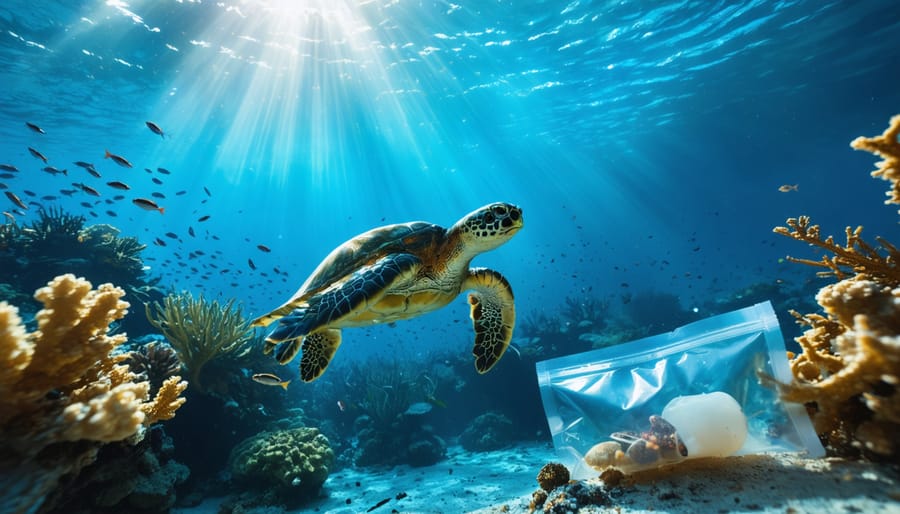
Every year, millions of mylar pouches, plastic containers, and non-biodegradable wrappers from edible cannabis gummies end their journey not in recycling facilities, but in our oceans. As the legal cannabis market surges past $30 billion annually, a hidden environmental crisis is unfolding beneath the waves—one that connects your THC gummy purchase to the survival of sea turtles, dolphins, and entire marine ecosystems.
The problem is starkly simple: cannabis packaging regulations demand child-resistant, opaque, and often single-use containers that rely heavily on multi-layer plastics virtually impossible to recycle. These materials break down into microplastics that marine animals mistake for food, leading to starvation, internal injuries, and toxic accumulation throughout the food chain. Recent coastal cleanup data reveals cannabis packaging now represents a growing percentage of beach litter in states with legalized marijuana, with some California beaches reporting a 300% increase in cannabis-related waste since 2018.
But here’s the encouraging reality: this is a solvable problem. Marine biologist Dr. Sarah Chen, who has spent fifteen years studying plastic pollution impacts on Pacific marine life, emphasizes that “the cannabis industry is young enough to pivot toward sustainability before the damage becomes irreversible.” Innovative companies are already developing ocean-friendly alternatives—compostable hemp-based packaging, reusable container programs, and minimalist designs that satisfy safety requirements without sacrificing environmental responsibility.
This article examines the intersection between cannabis consumption and marine conservation, offering you clear pathways to enjoy cannabis products while protecting the oceans that sustain all life on Earth.
The Cannabis Packaging Problem Nobody’s Talking About
Why THC Gummies Use So Much Plastic
The cannabis industry faces a unique packaging challenge that results in extraordinary amounts of plastic waste. Unlike most food products, THC gummies must meet stringent regulatory requirements designed primarily for child safety and product integrity. These regulations, while well-intentioned, create a packaging nightmare for our oceans.
A typical THC gummy product involves multiple layers of protection. First, each individual gummy often sits in its own plastic wrapper to maintain freshness and prevent accidental consumption. These wrappers then go into a child-resistant container—usually thick, rigid plastic that’s difficult to open. This container is frequently sealed inside yet another layer: a tamper-evident plastic bag or box. Finally, many manufacturers add outer packaging for branding and compliance labeling.
Consider the math: a single package of ten gummies can generate up to five separate pieces of plastic packaging. With the legal cannabis market projected to reach billions in annual sales, we’re talking about millions of pounds of plastic entering the waste stream each year. Marine biologist Dr. Sarah Chen, who studies microplastics in coastal waters, shared with us that she’s increasingly finding cannabis packaging fragments during beach cleanups: “These multi-layer packages don’t break down—they just break apart into smaller pieces that marine life mistakes for food.”
The individual wrapping alone represents a significant portion of this waste. Each tiny plastic sleeve, while keeping gummies separate, adds up to tons of material that could end up floating in our oceans, threatening the very ecosystems we’re working to protect.
From Dispensary to Ocean: The Journey of Cannabis Waste
The path from dispensary shelf to ocean begins with a simple action: tossing THC gummy packaging into the trash. Once discarded, these colorful mylar pouches, plastic containers, and multi-layered wrappers enter municipal waste systems. Despite recycling efforts, most cannabis packaging—often made from mixed materials designed to be child-resistant and preserve freshness—cannot be processed by standard recycling facilities.
Wind and rain carry improperly secured waste from landfills and littered streets into storm drains. These drains connect directly to rivers and streams without filtration, creating highways for plastic waste. Dr. Sarah Chen, a marine biologist studying coastal pollution patterns, shares: “We’ve traced packaging debris back to urban centers hundreds of miles inland. The journey takes months, but plastic is patient.”
As packaging fragments travel downstream, they accumulate in watersheds and eventually reach coastal areas. Ocean currents then distribute these materials across marine ecosystems, contributing to the broader plastic pollution impacts we observe today. Each piece of cannabis packaging joins approximately 8 million metric tons of plastic entering our oceans annually, where it persists for decades.
What Cannabis Packaging Does to Marine Life
Ingestion and Entanglement Risks
The brightly colored packaging of THC gummies poses a deceptive threat to marine life. Sea turtles, particularly vulnerable to plastic ingestion, mistake glossy wrappers for jellyfish—their primary food source. The iridescent quality of mylar packaging mimics the translucent appearance of these prey items, leading to tragic consequences. When ingested, these materials block digestive tracts, causing starvation and often death.
Marine biologist Dr. Sarah Chen recalls finding a juvenile loggerhead turtle during a beach survey in British Columbia. “The necropsy revealed several pieces of cannabis packaging in its stomach,” she shares. “What struck me most was how the turtle had actively selected these items, drawn to their vibrant colors and shapes that resembled natural food.”
Seabirds face similar dangers within the broader marine debris crisis. Albatrosses and gulls collect floating packaging fragments, feeding them to their chicks who cannot distinguish between food and plastic. Studies document that over 90% of seabirds have ingested plastic materials, with cannabis packaging increasingly identified among stomach contents.
Entanglement presents another serious risk. Seals and dolphins become trapped in plastic bags and wrapper materials, restricting movement and causing injuries. Small fish and crustaceans also become ensnared in torn packaging pieces drifting through the water column.
These impacts highlight an urgent need for the cannabis industry to reconsider packaging practices. Volunteers participating in coastal cleanups can help document cannabis-related debris, contributing valuable data that drives industry accountability and regulatory improvements.
Microplastics and Chemical Contamination
When THC gummy packaging enters marine environments, it initiates a slow but devastating transformation. These materials—often multi-layered plastics designed to maintain product freshness and comply with regulations—don’t simply disappear. Instead, they fragment into microplastics, particles smaller than 5 millimeters that persist in ocean ecosystems for hundreds of years.
Dr. Marina Chen, a marine toxicologist who has studied coastal plastic accumulation for fifteen years, explains what happens next: “Cannabis packaging frequently contains specialized barrier films and metallized layers to prevent THC degradation. When these materials break down in saltwater, they release not only microplastic particles but also chemical additives like plasticizers, UV stabilizers, and printing inks.” These substances can leach into surrounding water, creating a chemical cocktail that affects marine organisms at every level.
The impact on the marine food chain is particularly concerning. Microplastics from cannabis packaging are indistinguishable to marine life from natural food sources. Zooplankton, the foundation of ocean food webs, consume these particles, which then bioaccumulate as they move up the chain—from small fish to larger predators, and eventually to the seafood on our plates. Research has shown that microplastics can cause physical harm to digestive systems, reduce nutrient absorption, and introduce endocrine-disrupting chemicals into marine organisms.
Child-resistant packaging, while essential for safety, often incorporates multiple plastic types that are nearly impossible to recycle together. These complex materials persist longer in marine environments and release a broader spectrum of contaminants. Understanding this cycle is crucial—because every piece of improperly disposed cannabis packaging has the potential to become part of this ongoing pollution problem, affecting marine biodiversity for generations to come.
The Scale of the Problem: Numbers That Matter
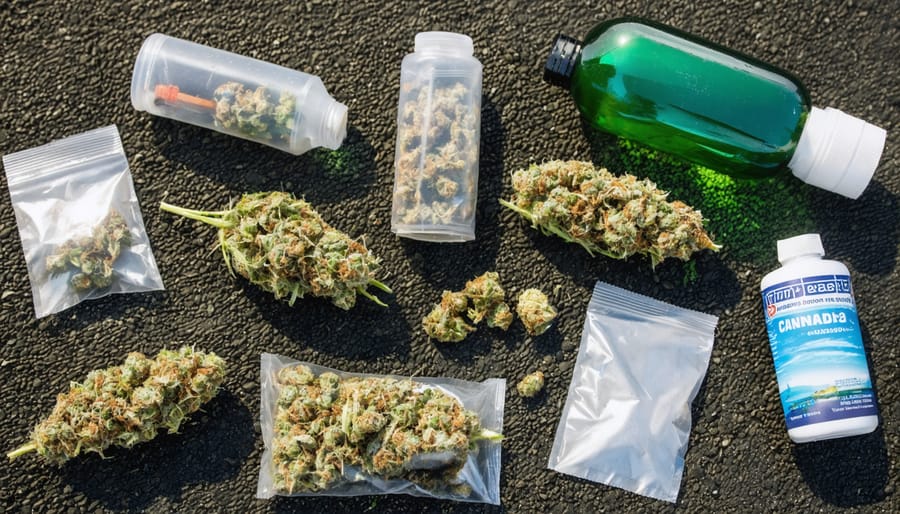
The cannabis industry has experienced explosive growth in recent years, and with it comes a mounting environmental challenge. The legal cannabis market reached $33 billion globally in 2022, with projections suggesting it will exceed $57 billion by 2027. THC gummies now represent approximately 40% of all edible cannabis sales, translating to billions of individually wrapped products entering the market annually.
Each gummy typically requires multiple layers of packaging: individual plastic wrappers, child-resistant containers, and outer boxes. Research indicates that the cannabis industry generates an estimated 150 million tons of packaging waste each year in North America alone. Of this, single-use plastics from edible products like gummies account for roughly 35-40% of the total waste stream.
The connection to ocean pollution becomes clear when we examine waste management patterns. Studies show that approximately 8 million metric tons of plastic enter our oceans annually from all sources, with cannabis packaging representing a growing fraction of this total. In coastal states like California, Washington, and Oregon—where both cannabis legalization and ocean access intersect—researchers have documented cannabis-related packaging materials in beach cleanups and marine debris surveys.
Marine biologist Dr. Sarah Chen, who has spent fifteen years studying ocean plastics, shares her perspective: “During our recent coastal surveys, we’re increasingly finding child-resistant cannabis packaging washed up on shores. These materials don’t biodegrade—they simply break into smaller microplastics that marine life mistakes for food.”
Current projections paint a concerning picture. If packaging practices remain unchanged, cannabis-related plastic waste could triple by 2030, potentially contributing an additional 2-3 million tons of plastic to global waste streams annually. However, this trajectory isn’t inevitable. Understanding these numbers empowers us to demand change and support companies pioneering sustainable alternatives. The scale of the problem is significant, but so is our capacity for collective action.
Solutions Already Making Waves
Companies Leading the Change
Several pioneering cannabis companies are demonstrating that profitable business and environmental stewardship can coexist. Wana Brands, one of North America’s leading edibles manufacturers, recently transitioned to biodegradable packaging made from hemp-based materials. Since implementing this change in 2022, they’ve diverted an estimated 15 tons of plastic from waste streams annually—plastic that might otherwise have reached our oceans.
On the West Coast, Kiva Confections partnered with marine conservation groups to develop their “Ocean-Safe” packaging initiative. Their child-resistant containers now use recycled ocean-bound plastic—material intercepted before reaching waterways—and they’ve committed to carbon-neutral shipping. Marine biologist Dr. Sarah Chen, who consulted on the project, shares: “Working with Kiva showed me how industry innovation can directly protect marine ecosystems. Every container made from recovered plastic represents waste that won’t harm sea turtles or entangle marine mammals.”
Papa & Barkley has taken a different approach, implementing a take-back program where consumers return empty containers for proper recycling or composting. In their first year, they recovered 78% of distributed packaging, preventing approximately 3 tons of waste from entering landfills or oceans.
These companies prove that sustainable packaging isn’t just environmentally responsible—it’s increasingly becoming a competitive advantage. Consumers are voting with their wallets, with 67% of cannabis buyers reporting they’d pay slightly more for products with ocean-friendly packaging.
Emerging Biodegradable Technologies
The cannabis industry is witnessing a revolutionary shift toward ocean-friendly packaging solutions that satisfy both regulatory compliance and environmental responsibility. Hemp-based bioplastics are leading this transformation, utilizing the same plant family as cannabis to create packaging that biodegrades in marine environments within months rather than centuries. These innovative materials maintain the child-resistant features and opaque qualities required by law while breaking down into harmless organic compounds when they reach our oceans.
Marine biologist Dr. Sarah Chen, who has studied plastic degradation patterns in coastal waters for fifteen years, shares an encouraging perspective: “I’ve tested hemp-based packaging samples in controlled ocean conditions, and the difference is remarkable. Traditional plastics fragment into microplastics that persist indefinitely, but these new materials actually decompose without leaving toxic residues.”
Compostable mycelium packaging represents another breakthrough, grown from mushroom roots to create protective, customizable containers. These sustainable alternatives achieve industrial composting certification while meeting stringent cannabis packaging regulations. Several forward-thinking dispensaries in coastal communities have already adopted these technologies, demonstrating that environmental stewardship and regulatory compliance can coexist.
Seaweed-derived films are also emerging as viable options, offering moisture resistance and barrier properties comparable to conventional plastics. These ocean-sourced materials create a circular economy—coming from the sea and safely returning to it. While slightly more expensive than traditional packaging, early adopters report that environmentally conscious consumers actively seek out products using these innovations, often justifying the modest price premium through increased customer loyalty and positive brand recognition.
What You Can Do Today
The good news? Every individual can make a meaningful difference in addressing cannabis packaging pollution, and the solutions are more accessible than you might think.
**For Cannabis Consumers**
Start by choosing products from companies committed to sustainable packaging. Look for THC gummies packaged in biodegradable materials, glass containers, or minimal plastic designs. Many dispensaries now offer recycling programs specifically for cannabis packaging—ask your local shop if they participate. When disposing of packaging at home, thoroughly clean containers to remove residue, then check with your municipality about specialized recycling options. Never dispose of packaging near waterways or storm drains, as these are direct pathways to our oceans. By making eco-friendly choices at the dispensary, you’re sending a powerful market signal to manufacturers.
**For Industry Professionals**
If you work in cannabis retail or production, advocate for packaging redesigns within your organization. Partner with packaging suppliers who prioritize ocean-safe materials. Consider implementing a take-back program where customers can return empty containers for proper disposal or reuse. Marine biologist Dr. Sarah Chen, who studies microplastic impacts on coastal ecosystems, shares: “When I consulted with a cannabis company on their packaging, they were shocked to learn their containers were washing up on beaches. Within six months, they’d completely redesigned their approach.”
**For Advocates and Educators**
Join or organize beach cleanups in your community, specifically documenting cannabis packaging found during these efforts. This data helps researchers understand the scope of the problem. Contact local dispensaries to discuss sustainability initiatives, and support legislation requiring sustainable packaging standards for cannabis products. Share information about this issue on social media to raise awareness among fellow consumers and industry stakeholders.
Join the Movement to Protect Our Oceans
Dr. Sarah Chen spent fifteen years studying coral reef ecosystems before a routine beach cleanup changed her research trajectory. “I collected 47 cannabis product packages in just two hours,” she recalls. “When lab analysis revealed microplastics from THC gummy wrappers in tissue samples from filter-feeding organisms, I realized we were facing an emerging threat that intersected two rapidly growing industries.”
Today, Dr. Chen leads the Marine Biodiversity Science Center’s Cannabis Waste Reduction Initiative, which offers several ways for community members to contribute to meaningful marine conservation efforts.
**Volunteer Opportunities:**
Our monthly Coastal Cleanup Days specifically target cannabis packaging debris, with trained volunteers documenting and properly disposing of these materials. Teams collect data that directly informs policy recommendations to cannabis manufacturers.
The Cannabis-to-Compost Education Program welcomes volunteers to help develop workshops teaching dispensaries and consumers about sustainable disposal practices. No prior experience necessary—just enthusiasm for protecting our oceans.
**Student Research Assistants** can apply for semester-long positions analyzing collected samples and contributing to peer-reviewed publications on emerging contaminants.
“Every volunteer makes a tangible difference,” Dr. Chen emphasizes. “One person removing ten packages prevents approximately 2,000 microplastic fragments from entering marine food webs.”
Getting started is simple: visit our volunteer portal to register for upcoming events, or contact our outreach coordinator to discuss how your unique skills might contribute to reducing cannabis packaging pollution in our oceans.
The choices we make as cannabis consumers ripple far beyond our immediate surroundings, reaching the very depths of our oceans. Every biodegradable wrapper chosen over conventional plastic, every refillable container reused, and every conversation started about sustainable packaging represents a wave of change for marine ecosystems struggling under the weight of human waste.
Marine biologist Dr. Sofia Reyes, who has witnessed firsthand the devastating effects of plastic pollution on sea turtle populations, emphasizes that “individual actions create collective impact—when thousands of consumers demand change, industries respond.” This isn’t about perfection; it’s about progress. Whether you’re selecting products from companies committed to ocean-friendly packaging, properly disposing of cannabis waste, or participating in beach cleanups, your contribution matters.
The urgency is real. Our oceans cannot wait for slow, incremental shifts. But here’s the hopeful truth: the cannabis industry is young and adaptable. Together, we have the power to shape its environmental trajectory before destructive practices become entrenched. Join local conservation groups, advocate for better packaging regulations, and make your purchasing power count. The ocean’s future—and the countless species that call it home—depends on the choices we make today.

jessica
Ava Singh is an environmental writer and marine sustainability advocate with a deep commitment to protecting the world's oceans and coastal communities. With a background in environmental policy and a passion for storytelling, Ava brings complex topics to life through clear, engaging content that educates and empowers readers. At the Marine Biodiversity & Sustainability Learning Center, Ava focuses on sharing impactful stories about community engagement, policy innovations, and conservation strategies. Her writing bridges the gap between science and the public, encouraging people to take part in preserving marine biodiversity. When she’s not writing, Ava collaborates with local initiatives to promote eco-conscious living and sustainable development, ensuring her work makes a difference both on the page and in the real world.