Marine Biodiversity Science Center


In the face of escalating marine pollution, the International Convention for the Prevention of Pollution from Ships (MARPOL) stands as one of the most crucial environmental international agreements protecting our oceans. Adopted in 1973 and modified through the 1978 Protocol, this landmark treaty has fundamentally transformed maritime operations worldwide, preventing the discharge of millions of tons of harmful substances into marine ecosystems.
With six technical annexes covering everything from oil pollution to air emissions, MARPOL has established stringent standards that have become the backbone of maritime environmental protection. The convention’s success lies in its comprehensive approach, combining robust regulatory frameworks with practical implementation guidelines that shipping companies worldwide must follow.
The treaty’s impact extends beyond mere regulation – it has catalyzed innovation in ship design, waste management systems, and operational practices across the maritime industry. From small fishing vessels to massive cargo ships, MARPOL’s requirements have driven the development of cleaner technologies and more sustainable shipping practices, demonstrating how international cooperation can effectively address global environmental challenges.
This story of international collaboration and environmental stewardship continues to evolve, as shipping companies, port authorities, and maritime nations work together to protect our marine environment for future generations.
The Evolution of MARPOL
From Oil Pollution to Comprehensive Protection
The evolution of maritime environmental protection represents a remarkable journey from a singular focus to a comprehensive approach. Initially conceived to address oil pollution in the 1950s, the International Convention for the Prevention of Pollution from Ships underwent a dramatic transformation in the 1970s. The devastating effects of the Torrey Canyon disaster in 1967, which spilled 120,000 tons of crude oil off the English coast, catalyzed this shift in perspective.
The convention’s scope expanded significantly with the 1973 MARPOL treaty and its 1978 Protocol. What began as regulations primarily targeting oil discharge now encompasses six distinct annexes, addressing various forms of marine pollution. These include regulations for chemicals, packaged goods, sewage, garbage, and air emissions from ships.
This evolution reflects growing scientific understanding of marine ecosystems and their vulnerabilities. Modern shipping operations now must consider multiple environmental impacts, from proper waste management to emissions control. The transformation has fostered innovative solutions, such as advanced water treatment systems and cleaner fuel technologies, demonstrating how international cooperation can drive technological progress in marine conservation.

Key Amendments and Updates
Since its adoption in 1973, MARPOL has undergone several significant updates to address emerging environmental challenges. One of the most notable changes came in 1978 with the addition of Protocol I, which established mandatory reporting requirements for oil spill incidents. The 1997 Protocol introduced Annex VI, focusing on air pollution from ships and establishing strict limits on sulfur oxide and nitrogen oxide emissions.
In response to growing environmental concerns, the IMO regulations were strengthened in 2005 to accelerate the phase-out of single-hull tankers. The 2010 revisions to Annex VI marked another milestone, creating Emission Control Areas (ECAs) with stricter emission standards. In 2011, mandatory measures for reducing greenhouse gas emissions from international shipping were adopted, making MARPOL the first global climate change treaty to establish binding energy-efficiency measures.
Recent updates include the 2020 global sulfur cap, reducing allowable sulfur content in ship fuel from 3.5% to 0.5%, significantly improving air quality in coastal areas and protecting marine ecosystems.

MARPOL’s Six Technical Annexes
Oil and Chemical Pollution Prevention
Annexes I and II of MARPOL form the cornerstone of international efforts to prevent marine pollution from oil and hazardous chemicals. Annex I specifically addresses oil pollution, establishing strict regulations for oil tankers and other vessels carrying petroleum products. These regulations include mandatory requirements for double-hull construction in new oil tankers, specialized equipment for monitoring oil discharge, and detailed procedures for cleaning cargo tanks.
The regulations require ships to maintain an Oil Record Book, documenting all oil-related operations and disposal methods. Ships must also carry an International Oil Pollution Prevention Certificate, which verifies compliance with MARPOL standards. Special areas, such as the Mediterranean Sea and Baltic Sea, have even stricter discharge requirements due to their ecological sensitivity.
Annex II focuses on controlling pollution from noxious liquid substances transported in bulk. These substances are categorized into four classes based on their environmental hazard level, with specific discharge criteria for each category. Ships carrying such substances must maintain a Cargo Record Book and follow precise tank washing procedures to minimize environmental impact.
Both annexes mandate that ports maintain adequate reception facilities for ships to properly dispose of oil residues and chemical waste. Regular inspections and audits ensure compliance, while violations can result in substantial fines and legal consequences. These measures have significantly reduced operational oil spills and chemical pollution in marine environments since MARPOL’s implementation.
Packaged Materials and Sewage Regulations
MARPOL’s Annex III sets forth comprehensive guidelines for preventing pollution by harmful substances transported in packaged form at sea. These regulations cover everything from proper packaging and labeling to stowage requirements, ensuring hazardous materials are safely contained during maritime transport. Ships must maintain detailed documentation of these substances and follow strict protocols for their handling to prevent accidental releases into marine environments.
Annex IV addresses ship-generated sewage, a significant source of marine pollution that can harm coastal ecosystems and human health. Under these regulations, ships are required to treat sewage before discharge and must maintain approved sewage treatment systems. The rules specify minimum distances from shore for sewage discharge, with stricter requirements in designated “special areas” where marine ecosystems are particularly vulnerable.
The regulations mandate that vessels over 400 gross tonnage, and those certified to carry more than 15 persons, must be equipped with approved sewage treatment facilities or holding tanks. Ships must also maintain a sewage record book and obtain an International Sewage Pollution Prevention Certificate.
Recent amendments have strengthened these provisions, particularly for passenger ships operating in special areas. The Baltic Sea, for instance, has pioneered stricter sewage discharge standards, requiring advanced wastewater treatment systems that significantly reduce nutrient loads entering these sensitive waters.
Garbage and Air Pollution Controls
MARPOL’s Annex V addresses the critical issue of marine garbage disposal, establishing strict regulations for different types of waste. Ships are prohibited from discharging plastic into the ocean, while other waste materials face varying restrictions based on distance from shore and waste type. The regulations require vessels to maintain detailed garbage record books and implement waste management plans, ensuring proper handling and disposal of all ship-generated waste.
Annex VI, introduced in 1997, tackles the growing concern of air pollution from ships. This groundbreaking addition regulates emissions of sulfur oxides (SOx), nitrogen oxides (NOx), and particulate matter. The annex established Emission Control Areas (ECAs) where stricter emission limits apply, particularly in coastal regions with heavy maritime traffic. A significant milestone was the 2020 global sulfur cap, reducing the maximum sulfur content in ship fuel from 3.5% to 0.5%.
To comply with these regulations, ships must use cleaner fuels or install emission reduction technologies like scrubbers. Regular inspections and certification requirements ensure vessels maintain proper emission control systems. The implementation of these measures has led to measurable improvements in air quality around major ports and shipping lanes, demonstrating the effectiveness of international cooperation in addressing maritime pollution. The success of these annexes has inspired ongoing discussions about further strengthening emission controls and waste management practices in the shipping industry.
Implementation and Enforcement
Port State Control
Port State Control plays a crucial role in enforcing MARPOL regulations, serving as the frontline defense against marine pollution. As part of broader global marine protection policies, ports have the authority to inspect foreign vessels to ensure compliance with international environmental standards.
When ships enter a port’s jurisdiction, trained inspectors can board vessels to examine documentation, equipment condition, and operational procedures. These inspections focus on verifying proper waste management systems, checking oil filtering equipment, and ensuring the presence of required pollution prevention certificates.
Ports can detain non-compliant vessels until deficiencies are corrected, imposing significant financial penalties for violations. This enforcement mechanism has proven particularly effective, as delays in port can cost shipping companies thousands of dollars per day, creating a strong incentive for compliance.
Many ports have also implemented advanced waste reception facilities, allowing ships to properly dispose of oil residues, garbage, and other pollutants. These facilities are essential for enabling vessels to comply with MARPOL requirements, as proper waste disposal at sea often depends on adequate port infrastructure.
Through regional cooperation agreements, ports share information about vessel inspections and violations, creating a comprehensive network that makes it difficult for non-compliant ships to evade detection. This collaborative approach has significantly strengthened MARPOL’s effectiveness in preventing marine pollution.
Compliance Monitoring
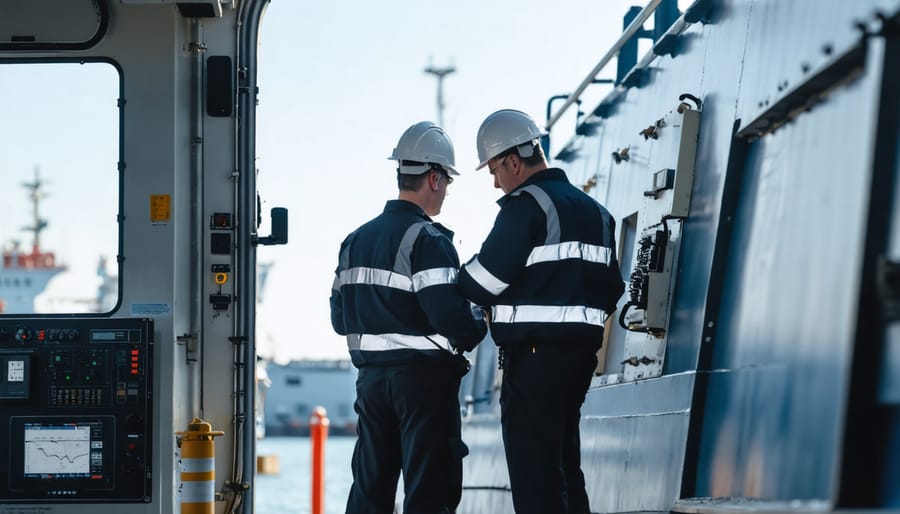
Compliance monitoring under MARPOL involves a comprehensive system of inspections, certifications, and reporting mechanisms to ensure vessels adhere to international pollution prevention standards. Port State Control officers conduct regular ship inspections, examining vessel documentation, equipment maintenance records, and waste management procedures.
Ships must maintain detailed records in their Oil Record Book, Garbage Record Book, and other mandatory logs that document all disposal operations and equipment maintenance. These records are subject to inspection at any port, creating a verifiable trail of compliance.
Modern technology plays a crucial role in monitoring. Satellite surveillance systems can detect oil spills and track vessel movements, while automated identification systems (AIS) help authorities monitor ship traffic and identify potential violators. Some ports have implemented aerial surveillance programs using specialized aircraft equipped with sensors to detect marine pollution.
The Paris Memorandum of Understanding (Paris MoU) and other regional port state control agreements facilitate information sharing between maritime authorities. This coordination helps identify high-risk vessels and ensures consistent enforcement across different jurisdictions.
Violations can result in substantial fines, vessel detention, or criminal prosecution. Many countries have established whistle-blower programs that encourage crew members to report non-compliance, creating an additional layer of oversight within the maritime community.
Recent developments include the implementation of electronic reporting systems and real-time monitoring solutions, making compliance verification more efficient and accurate.
Impact on Marine Biodiversity
Success Stories
The implementation of MARPOL has led to remarkable improvements in marine ecosystem protection worldwide. Since its enforcement, oil pollution has decreased by approximately 75% in major shipping routes, demonstrating the convention’s effectiveness. The Mediterranean Sea, once heavily polluted, has shown significant recovery, with sea turtle populations increasing by 40% between 2000 and 2020.
Notable success has been observed in the North Sea, where strict MARPOL enforcement has resulted in a 90% reduction in plastic waste from ships. The Baltic Sea has experienced a remarkable revival of marine life, with seal populations tripling since the convention’s implementation. Additionally, port state control measures have successfully intercepted and prevented thousands of illegal discharge attempts annually.
The Antarctic waters have particularly benefited from MARPOL’s special area designations, maintaining their pristine condition despite increased shipping traffic. These achievements highlight how international cooperation and stringent regulations can effectively preserve our oceans for future generations.
Ongoing Challenges
Despite MARPOL’s significant achievements, several pressing challenges continue to impact its effectiveness in preventing marine pollution. Enforcement remains a critical issue, particularly in international waters where monitoring vessel compliance becomes increasingly difficult. Many developing nations struggle with implementing the necessary infrastructure for waste reception facilities in ports, creating gaps in the global network of pollution prevention.
The rise of plastic pollution presents a growing concern, as existing MARPOL regulations may not adequately address microplastic contamination from ships. Climate change also poses new challenges, with melting Arctic ice opening new shipping routes that require additional environmental protections and monitoring systems.
Another significant challenge is the need to update regulations to keep pace with technological advances in shipping and emerging pollutants. The increasing size of vessels and growth in maritime traffic intensify the risk of accidental discharges and oil spills. Furthermore, the shipping industry’s transition to cleaner fuels, while necessary, has created new compliance challenges for vessel operators and port authorities.
Addressing these challenges requires enhanced international cooperation, technological innovation, and continued commitment to strengthening MARPOL’s framework.
MARPOL stands as a testament to international cooperation in protecting our marine environments, marking a crucial milestone in global efforts to combat ship-based pollution. Since its implementation, the convention has significantly reduced marine pollution, preventing millions of tons of oil, chemicals, and waste from entering our oceans. The continuous updates and amendments to MARPOL demonstrate its adaptability to emerging environmental challenges and technological advancements.
Looking ahead, MARPOL’s role becomes increasingly vital as global maritime trade expands. The convention’s future effectiveness will depend on strengthening enforcement mechanisms, embracing new technologies for monitoring compliance, and fostering greater cooperation among member states. Emerging challenges, such as microplastic pollution and greenhouse gas emissions from ships, are already being addressed through new amendments and protocols.
The success of MARPOL relies heavily on the commitment of both the maritime industry and national governments. Environmental scientists and marine conservationists continue to work alongside regulatory bodies to enhance the convention’s effectiveness. Through ongoing education, training programs, and technological innovation, MARPOL remains a dynamic instrument for protecting our oceans.
As we face increasing environmental pressures, MARPOL’s framework provides hope and direction for sustainable maritime operations. Its enduring legacy proves that international collaboration can achieve meaningful environmental protection, setting a model for future conservation efforts.

jessica
Ava Singh is an environmental writer and marine sustainability advocate with a deep commitment to protecting the world's oceans and coastal communities. With a background in environmental policy and a passion for storytelling, Ava brings complex topics to life through clear, engaging content that educates and empowers readers. At the Marine Biodiversity & Sustainability Learning Center, Ava focuses on sharing impactful stories about community engagement, policy innovations, and conservation strategies. Her writing bridges the gap between science and the public, encouraging people to take part in preserving marine biodiversity. When she’s not writing, Ava collaborates with local initiatives to promote eco-conscious living and sustainable development, ensuring her work makes a difference both on the page and in the real world.