Marine Biodiversity Science Center

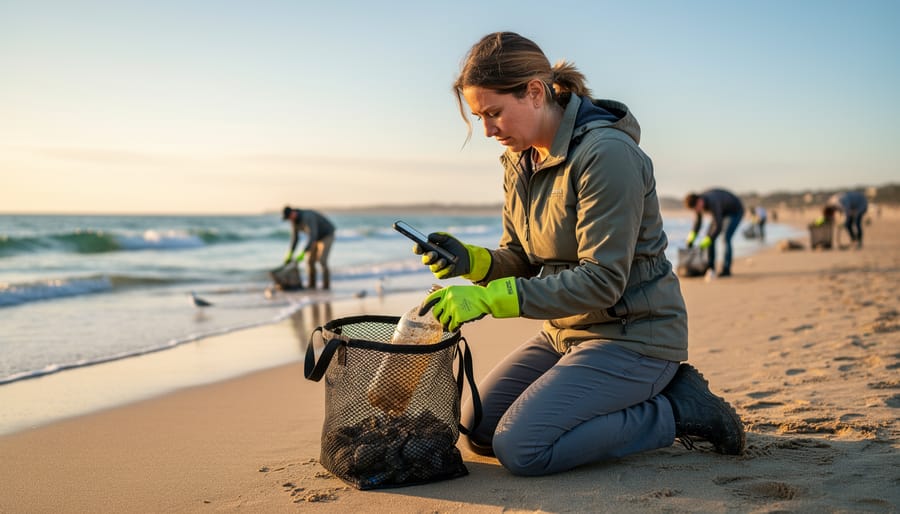
Discover how participating in coastal water quality monitoring programs puts scientific tools directly in your hands while contributing data to national marine databases—projects like the Marine Debris Tracker allow you to log ocean trash findings through a simple smartphone app that researchers use to identify pollution hotspots. Join organized beach surveys during spring and fall migration periods when citizen scientists document shorebird populations, providing critical baseline data that marine biologists use to track species decline and inform conservation policy. Contribute to coral reef health assessments through programs that train snorkelers and divers to identify bleaching events and invasive species, transforming vacation activities into meaningful scientific contributions.
Marine education initiatives bridge the gap between professional research and public engagement, creating a powerful network of ocean advocates equipped with real scientific skills. These programs do more than collect data—they cultivate environmental literacy in communities far removed from traditional academic settings. When a teacher in Kansas joins a virtual plankton classification project or a retiree in Arizona analyzes underwater footage of deep-sea ecosystems, marine education transforms lives while expanding research capacity exponentially.
The urgency driving these initiatives is clear: our oceans face unprecedented threats from climate change, overfishing, and pollution, yet marine scientists represent a fraction of the workforce needed to monitor and protect these vast ecosystems. Citizen science programs multiply research capabilities by training thousands of volunteers to gather observations across geographic scales impossible for small research teams alone. From tracking jellyfish blooms to monitoring sea turtle nesting sites, participants gain firsthand understanding of marine ecosystems while generating datasets that shape conservation strategies and policy decisions affecting our blue planet’s future.
What Makes Marine Citizen Science Different From Traditional Conservation
Marine citizen science represents a fundamental shift in how we approach ocean conservation and research. Unlike traditional conservation methods that rely exclusively on professional scientists and institutions, citizen science opens the laboratory doors to anyone with curiosity and commitment. This democratization of research transforms everyday ocean enthusiasts into active contributors to scientific knowledge, creating a powerful bridge between academic research and public engagement.
The ocean presents unique challenges that make citizen science particularly valuable. Professional marine scientists face significant limitations: research vessels are expensive, ocean coverage is vast, and many marine phenomena occur sporadically across enormous areas. Citizen scientists help fill these critical gaps by expanding the reach of data collection far beyond what any single research team could accomplish. A recreational diver in the Maldives, a beachcomber in Maine, and a fishing enthusiast in Indonesia can all contribute observations that piece together the larger puzzle of marine ecosystem health.
What truly distinguishes marine citizen science is its dual impact. Participants aren’t simply collecting data; they’re undergoing a transformative educational experience. When volunteers monitor coral reef health or track sea turtle nesting sites, they develop intimate knowledge of marine ecosystems that no classroom lecture could provide. This hands-on involvement creates what marine biologist Dr. Sarah Chen calls “conservation through connection.” As she explains, “When people spend time documenting marine life, they begin to notice patterns, understand threats, and feel genuine ownership over protection efforts.”
This two-way benefit creates a sustainable model for conservation. The scientific community gains valuable long-term datasets across geographical scales impossible to achieve otherwise, while participants gain scientific literacy, environmental awareness, and practical skills. They become informed advocates who understand not just that ocean conservation matters, but precisely why and how their individual actions contribute to solutions. This knowledge transforms passive concern into active stewardship, multiplying the impact of conservation efforts exponentially across communities worldwide.
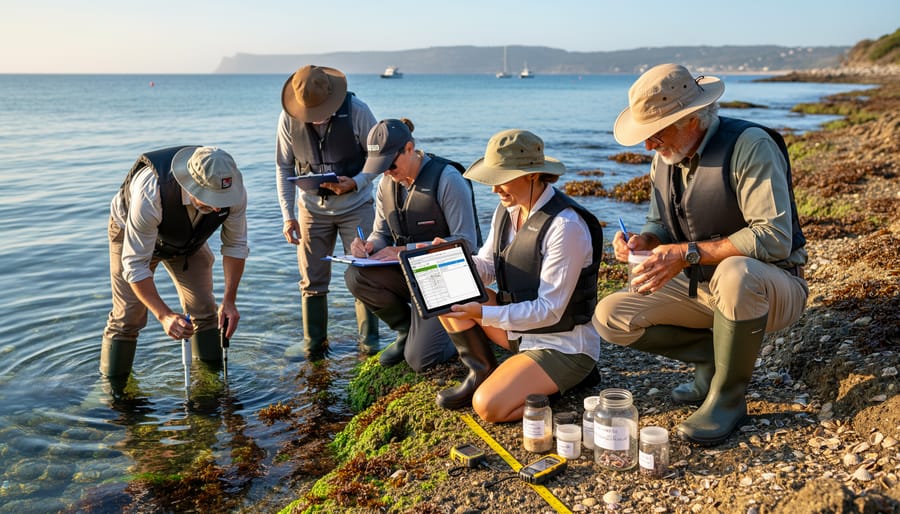
The Core Components of Effective Marine Education Initiatives
Scientific Training That Actually Sticks
The best effective marine education programs recognize that passion, not perfection, drives citizen science success. These initiatives break down complex marine science into manageable, hands-on learning experiences that build confidence progressively.
Training typically begins with visual identification guides featuring clear photographs and distinguishing characteristics. Instead of memorizing Latin names immediately, participants learn to recognize key physical features: the number of arms on a sea star, distinctive color patterns on fish, or the texture of different seaweeds. Field guides use comparison charts and decision trees that mirror how professional scientists work, making the process intuitive rather than intimidating.
Data collection methods emphasize consistency and simplicity. Marine biologist Dr. Sarah Chen explains, “We teach the ‘observe, record, photograph’ approach. Participants document what they see using standardized forms with checkboxes and simple measurements. If they’re uncertain about a species, photos provide verification, turning uncertainty into learning opportunities.”
Ecosystem education comes alive through storytelling. Rather than lectures about food webs, trainers explain how the hermit crab participants just found relies on empty snail shells, which depend on algae for food, which needs healthy water quality. These connections make abstract concepts tangible.
Many programs offer tiered learning paths. Beginners start with basic beach surveys, while experienced volunteers can advance to specialized monitoring like water quality testing or invasive species tracking. This scaffolded approach ensures everyone contributes meaningfully while continuously developing their scientific literacy without feeling overwhelmed.
Technology and Tools That Empower Participants
Modern technology has revolutionized how volunteers participate in marine research, transforming smartphones into powerful scientific instruments. User-friendly apps like iNaturalist and Marine Debris Tracker allow citizen scientists to photograph, identify, and log marine species or pollution with remarkable accuracy. These platforms use artificial intelligence to help users identify organisms, while GPS technology automatically records precise locations, creating valuable datasets that researchers can analyze to track biodiversity patterns and environmental changes.
Digital field guides have replaced bulky manuals, giving beachcombers instant access to identification keys, habitat information, and species behaviors. Many initiatives provide participants with specialized tools like water quality testing kits that sync with mobile apps, uploading pH levels, temperature, and salinity data directly to centralized databases.
Dr. Elena Martinez, a marine ecologist who develops citizen science platforms, shares her perspective: “Technology doesn’t just collect data; it creates a bridge between curiosity and contribution. When someone identifies their first nudibranch using an app, they become invested in protecting that species.”
Cloud-based platforms ensure that volunteer observations from remote coastlines reach research institutions within minutes, democratizing marine science and proving that meaningful conservation work no longer requires expensive equipment or advanced degrees.
Building Communities Around Ocean Conservation
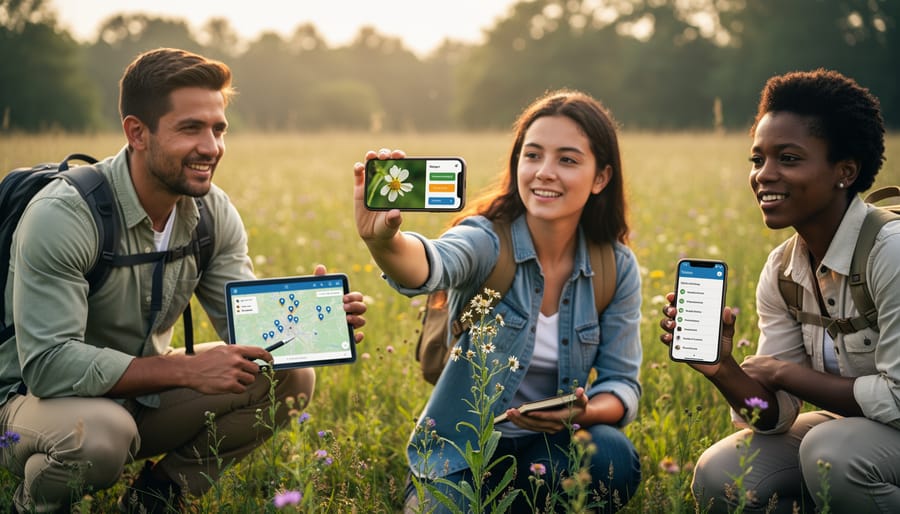
The most impactful marine education initiatives understand that conservation thrives on connection. When participants join beach cleanups or monitoring programs, they’re not just collecting data—they’re becoming part of something larger. Successful programs cultivate this sense of belonging through regular meetups, online forums where volunteers share discoveries, and annual celebrations recognizing contributions.
Take Sarah Chen, a marine biologist who coordinates monthly tide pool surveys in British Columbia. “We started with twelve volunteers,” she recalls. “Five years later, we have over two hundred active members who’ve formed lasting friendships. They organize their own kayaking trips and advocate for marine protection at city council meetings.”
These community-based conservation initiatives create powerful ripple effects. Participants become ambassadors, sharing their experiences with family and friends. Regular events—from species identification workshops to seasonal monitoring expeditions—maintain momentum and deepen expertise. Social media groups allow volunteers to celebrate findings, ask questions, and encourage newcomers.
The shared purpose of protecting marine ecosystems transforms casual participants into dedicated stewards. This collective identity strengthens resolve during challenging times and amplifies impact far beyond individual contributions, creating sustainable conservation movements rooted in genuine community engagement.
Real-World Impact: Where Citizen Science Is Changing Marine Conservation
Tracking Endangered Species Through Community Eyes
Community-based monitoring networks have become invaluable allies in protecting vulnerable ocean inhabitants. From the kelp forests of British Columbia to Caribbean coral reefs, volunteers equipped with smartphones and basic training are filling critical data gaps that professional researchers simply cannot cover alone.
Take the case of leatherback sea turtles along Costa Rica’s Pacific coast. Local fishing communities, once unaware of these gentle giants’ plight, now serve as the first line of defense. Maria Gonzalez, a retired teacher who joined the monitoring program three years ago, recalls her first nighttime beach patrol: “Seeing that massive turtle emerge from the waves changed everything. Now I check the beaches twice weekly and report every sighting through our mobile app.”
Dr. James Chen, a marine biologist coordinating volunteer efforts in the Salish Sea, explains the program’s significance: “Our volunteers have documented over 15,000 observations of marine species at risk in just two years. This data reveals migration patterns and feeding grounds we never knew existed.”
In Australia’s Great Barrier Reef, citizen scientists photograph crown-of-thorns starfish during recreational dives, helping researchers track outbreaks threatening coral communities. University student and volunteer diver Sophie Lin shares, “Contributing real scientific data while doing what I love makes every dive meaningful. We’re not just observers anymore; we’re active participants in conservation.”
These networks demonstrate that protecting marine biodiversity requires eyes everywhere, transforming concerned citizens into essential conservation partners.
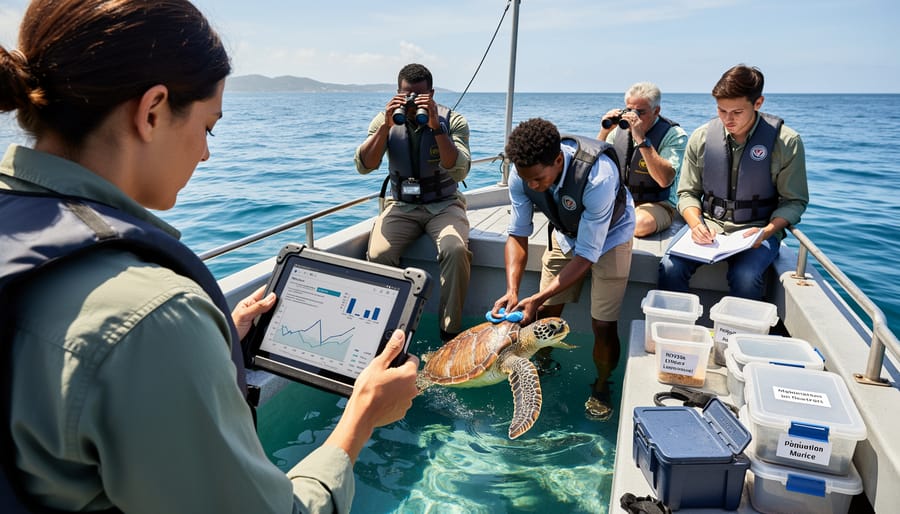
From Data to Action: How Volunteer Observations Influence Policy
The journey from a volunteer’s underwater observation to meaningful conservation action is more direct than many realize. Citizen science data increasingly shapes marine protected areas, fishing regulations, and species recovery programs worldwide.
Consider the case of the seahorse populations in the Philippines. For years, local dive operators and recreational divers logged seahorse sightings through a coordinated monitoring program. This volunteer-collected data revealed declining populations in specific coastal areas, prompting the government to establish new marine sanctuaries and implement stricter fishing regulations. Within three years, seahorse numbers rebounded by over 40 percent in protected zones.
Similarly, the Great Barrier Reef’s Eye on the Reef program transforms tourist observations into actionable intelligence. Marine biologist Dr. Emma Rodriguez explains: “When hundreds of snorkelers and divers report coral bleaching events in real-time, we can immediately alert management authorities. This citizen network serves as an early warning system that no research team could replicate alone.” Their collective observations have directly influenced reef management zones and tourism guidelines.
In California, volunteer kelp forest monitors documented the catastrophic decline of purple sea urchin predators, leading to urchin population explosions that devastated kelp ecosystems. Their meticulously collected data convinced state legislators to allocate emergency funding for urchin removal programs and predator reintroduction efforts.
These examples share common elements: consistent data collection protocols, partnerships between volunteers and scientists, and clear communication channels to policymakers. The credibility of citizen science data depends on proper training and standardized reporting methods, which reputable marine education initiatives prioritize.
Your observations matter because decision-makers need evidence from the waters you explore. Every logged sighting, measured temperature, and photographed specimen contributes to the scientific foundation that supports conservation policies protecting our oceans for future generations.
Getting Started: Your Path to Becoming a Marine Citizen Scientist
Volunteer Opportunities That Match Your Schedule and Skills
Marine education initiatives offer flexible volunteer pathways designed to accommodate diverse schedules and skill sets. Whether you’re a working professional with limited weekday availability or a student eager for hands-on research experience, there’s a meaningful role waiting for you.
Beach and coastal surveys represent the most accessible entry point, typically requiring just a few hours on weekends or evenings. Volunteers walk designated shoreline sections, documenting species sightings, recording water quality data, and collecting marine debris information. These programs often run year-round, allowing you to contribute according to your availability.
For those preferring indoor contributions, virtual data analysis opportunities have expanded significantly. The Marine Biodiversity Science Center and similar organizations need volunteers to process underwater photography, transcribe historical marine records, and classify species from video footage. These tasks can be completed from home during evenings or lunch breaks, making them perfect for busy schedules.
Educators and communication specialists find natural fits in outreach programs, developing educational materials or leading interpretive walks for community groups. Meanwhile, individuals with technical backgrounds contribute through equipment maintenance, database management, or developing data collection apps.
Seasonal programs like turtle nesting surveys or migratory bird monitoring offer intensive short-term commitments, ideal for those wanting concentrated involvement. Many organizations also welcome corporate volunteer groups for team-building beach cleanups or habitat restoration days.
Dr. Elena Martinez, a marine biologist coordinating volunteers, notes that consistency matters more than time commitment: “Even two hours monthly creates valuable longitudinal data and builds your connection to marine ecosystems.”
What You’ll Actually Do (And Why It Matters)
As a citizen scientist in marine education initiatives, your contributions might seem simple, but they create substantial scientific impact. You’ll participate in activities like photographing marine species during beach walks, recording water temperature readings, or documenting wildlife sightings through smartphone apps. These observations aren’t busywork—they become part of genuine research databases that scientists access worldwide.
Consider Maria, a marine biologist studying migration patterns of sea turtles. She explains that citizen-collected data has expanded her research coverage from a handful of monitored beaches to hundreds of coastal areas. “We simply cannot be everywhere at once,” she notes. “Community observers provide the geographic scale we need to understand these animals’ movements.”
Your role requires minimal time commitment—often just a few minutes during activities you already enjoy, like snorkeling or coastal walks. Training is typically straightforward, involving online tutorials or brief workshops that teach species identification and data recording protocols.
The beauty of this participation lies in its accessibility. You don’t need advanced degrees or expensive equipment. Whether you’re a student gaining field experience, an educator seeking curriculum enrichment, or simply someone passionate about ocean health, your observations fill critical knowledge gaps. Scientists use this collective data to identify biodiversity hotspots, track invasive species, and inform conservation policies that protect marine ecosystems for future generations.
The Future of Ocean Conservation Lives in Education
The landscape of ocean conservation is rapidly evolving, with educational initiatives emerging as the cornerstone of effective marine protection strategies. As traditional top-down conservation approaches prove insufficient to address the scale of threats facing our oceans, marine citizen science programs are expanding at an unprecedented rate, transforming how we monitor and safeguard underwater ecosystems.
Recent trends show that technology-enabled monitoring programs are democratizing marine research in remarkable ways. Smartphone applications now allow beachgoers to report marine debris, identify species, and document water quality observations that feed directly into scientific databases. These tools have lowered the barriers to participation, enabling millions of people worldwide to contribute meaningful data while deepening their connection to ocean health.
Dr. Sarah Chen, a marine biologist who has coordinated citizen science projects for over a decade, shares an inspiring perspective: “I’ve witnessed grandparents working alongside grandchildren to monitor tide pools, high school students discovering new migration patterns, and community groups uncovering pollution sources that escaped official monitoring. When people become active observers, they transform from passive bystanders into passionate ocean advocates.”
The expanding role of educational initiatives extends beyond data collection. These programs cultivate scientific literacy, environmental awareness, and a sense of stewardship that ripples through communities. Participants don’t just learn about marine ecosystems; they develop lasting relationships with the ocean that influence their daily choices and civic engagement.
Collective action through informed public participation represents our most promising path forward for protecting marine biodiversity. When thousands of trained volunteers monitor coastlines, report observations, and share knowledge within their networks, we create a powerful conservation force that complements scientific research while building the political will necessary for meaningful policy change. The future of our oceans depends on this growing movement of engaged, educated ocean stewards.
Marine education initiatives represent far more than classroom lessons or weekend beach cleanups. They are catalysts for lasting change, transforming curious observers into informed advocates and creating ripples of conservation action that extend far beyond any single shoreline. Through citizen science programs, we’ve witnessed remarkable transformations: students who once feared the ocean now lead intertidal surveys, retirees who discovered a passion for marine photography now contribute thousands of images to global research databases, and coastal communities that once viewed the sea purely as a resource now champion its protection.
The beauty of marine citizen science lies in its accessibility. You don’t need an advanced degree or specialized equipment to begin making a difference. Dr. Maria Hernandez, a marine biologist who coordinates citizen science projects across three continents, shares this perspective: “Every observation counts. I’ve seen breakthrough discoveries come from first-time volunteers who simply paid attention and recorded what they saw. That’s the power of collective engagement.”
Your journey as an ocean advocate can start today. Consider volunteering with a local beach monitoring program, joining online platforms like iNaturalist to document marine species, or sharing what you’ve learned with friends and family. Attend a tide pool walk, participate in a virtual webinar about coral reefs, or contribute to ocean literacy in your community. The ocean needs champions at every level, and your unique perspective and skills have a place in this movement. Take that first step, and discover how deeply rewarding it is to become part of something larger than yourself—a global community dedicated to understanding and protecting our blue planet.

jessica
Ava Singh is an environmental writer and marine sustainability advocate with a deep commitment to protecting the world's oceans and coastal communities. With a background in environmental policy and a passion for storytelling, Ava brings complex topics to life through clear, engaging content that educates and empowers readers. At the Marine Biodiversity & Sustainability Learning Center, Ava focuses on sharing impactful stories about community engagement, policy innovations, and conservation strategies. Her writing bridges the gap between science and the public, encouraging people to take part in preserving marine biodiversity. When she’s not writing, Ava collaborates with local initiatives to promote eco-conscious living and sustainable development, ensuring her work makes a difference both on the page and in the real world.