Marine Biodiversity Science Center

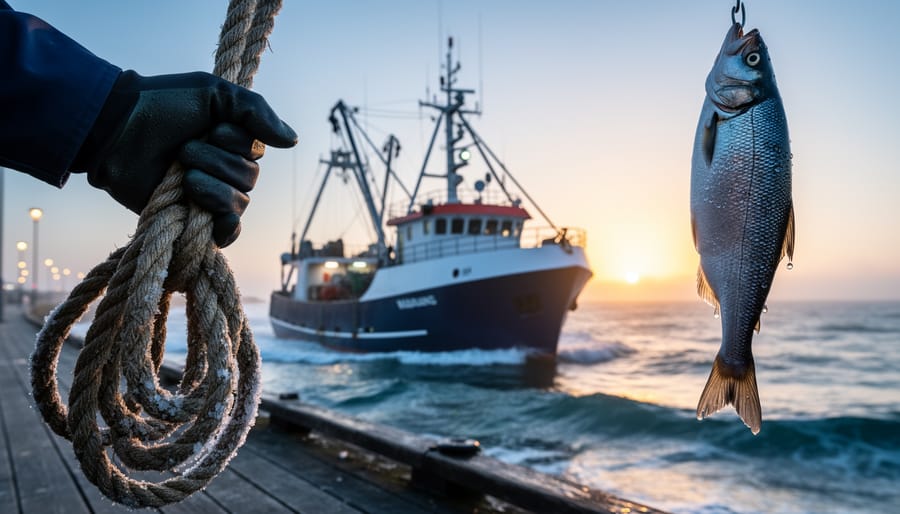
Sustainable fisheries partnerships bring together commercial fishing companies, scientists, environmental organizations, and seafood buyers to rebuild depleted fish populations while maintaining viable fishing operations. These collaborative frameworks work by establishing science-based catch limits, modifying fishing gear to reduce bycatch, protecting critical habitats, and creating transparent supply chains that reward fishers for responsible practices. The approach has proven remarkably effective: as of 2026, partnerships spanning hundreds of fisheries across six continents have helped restore stocks of everything from Alaskan pollock to South African hake, demonstrating that profitability and ocean health can coexist.
The concept emerged from a simple realization: top-down regulation alone rarely succeeds without industry buy-in, and voluntary efforts lack the accountability needed for meaningful change. By aligning economic incentives with conservation goals, these partnerships create a framework where fishers become active stewards rather than adversaries in the recovery process. A trawler captain off the coast of New England described the shift this way: “We went from wondering if our kids would have jobs to knowing they’ll inherit healthier fishing grounds than we started with.”
What makes these collaborations particularly powerful is their flexibility. Each partnership tailors interventions to local conditions, whether that means seasonal closures to protect spawning grounds, real-time monitoring systems that help vessels avoid juvenile fish, or market premiums that offset short-term revenue losses during stock rebuilding. The results speak louder than policy papers ever could. Marine ecosystems gain resilience, fishing communities secure long-term livelihoods, and consumers increasingly access seafood with verified sustainability credentials.
What Makes a Fisheries Partnership Sustainable
The Players: Who Participates in These Partnerships
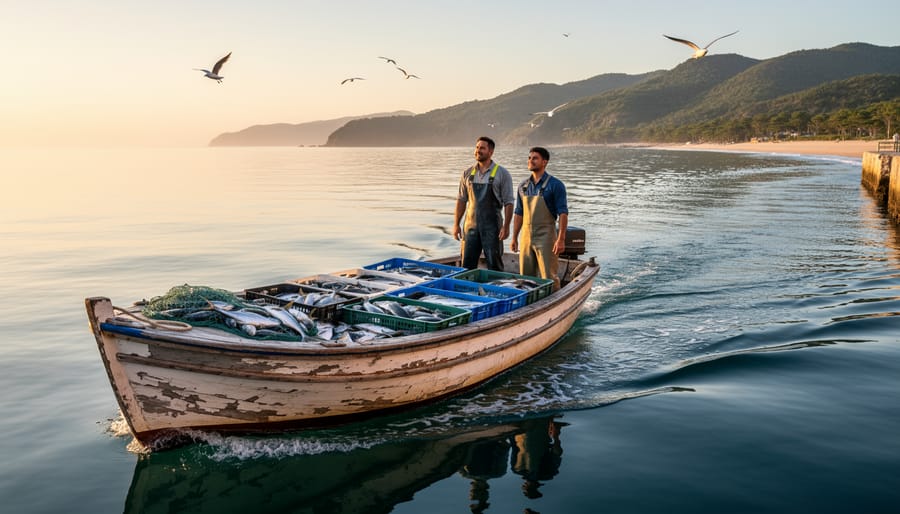
Sustainable fisheries partnerships succeed because they bring together people who rarely share the same table. At the center are the fishing communities themselves, captains, crew members, and processing workers whose livelihoods depend on healthy fish populations. They contribute irreplaceable knowledge about seasonal patterns, migration routes, and changes they’ve observed over decades at sea.
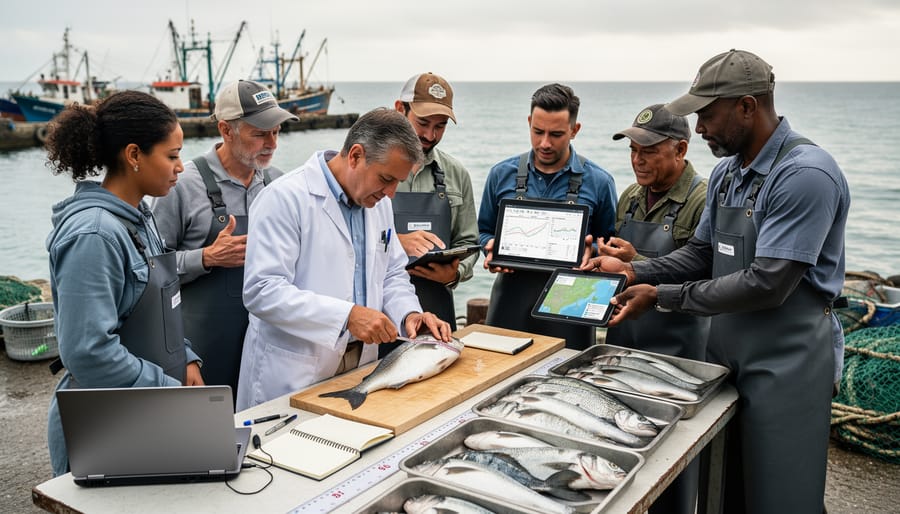
Marine scientists provide the data backbone, conducting stock assessments, tracking ecosystem health, and developing harvest recommendations that balance conservation with economic needs. Their research transforms anecdotal observations into actionable management strategies.
Environmental NGOs like the Marine Stewardship Council and Ocean Conservancy serve as catalysts and mediators, funding research, coordinating stakeholder meetings, and holding partners accountable to sustainability commitments. They often bridge gaps between fishing communities skeptical of outsiders and scientists who may not understand the economic pressures fishers face.
Government agencies set regulations, enforce catch limits, and manage licensing, but in true partnerships, they collaborate with stakeholders rather than simply imposing rules from above. Regional fishery management councils in the U.S., for example, include voting seats for industry representatives alongside scientists and conservationists.
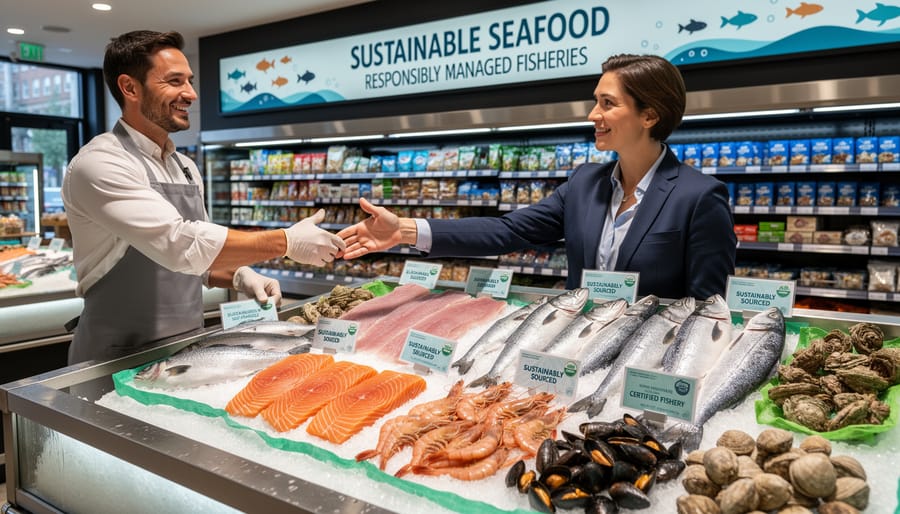
Retailers and seafood buyers increasingly join these collaborations, using their purchasing power to reward sustainable practices and creating market demand that makes conservation economically viable. Finally, consumers play a role by choosing certified sustainable seafood and supporting policies that protect marine resources.
When these diverse voices align around shared goals, transformation becomes possible.
Science as the Foundation
Scientific data isn’t just nice to have in sustainable fisheries partnerships, it’s the entire foundation. Without rigorous research and monitoring, these collaborations would be guessing at best practices rather than implementing proven strategies. That’s why every effective partnership begins with understanding exactly what’s happening beneath the surface.
Stock assessments form the core of this scientific approach. Marine biologists and fisheries scientists systematically track fish populations, examining age structure, reproduction rates, and overall biomass. This detailed information helps partnerships set annual catch limits that allow populations to rebuild while maintaining viable fishing operations. The process involves sophisticated statistical models combined with boots-on-the-ground data collection.
Monitoring programs vary widely but share common elements. Acoustic surveys use sonar technology to estimate fish abundance across vast ocean areas. Observer programs place trained scientists aboard commercial vessels to document catch composition and fishing practices in real time. Tagging studies reveal migration patterns and growth rates. Electronic monitoring systems, increasingly camera-based, provide independent verification of what’s being caught and discarded.
These aren’t isolated academic exercises. The data flows directly into partnership decision-making. When scientists measure declining juvenile recruitment, partnerships respond with adjusted harvest strategies or seasonal closures. When habitat surveys identify critical spawning areas, those zones receive immediate protection. This feedback loop between research and action distinguishes truly sustainable partnerships from mere consultation exercises.
How Partnerships Are Rebuilding Fish Populations
From Collapse to Recovery: Real-World Transformations
The Pacific halibut fishery off the coast of Alaska and British Columbia faced severe depletion by the 1970s, with stocks plummeting to dangerous levels. The turnaround began in 1982 when the International Pacific Halibut Commission brought together U.S. and Canadian fishers, government officials, and scientists to implement strict catch limits based on annual stock assessments. Within fifteen years, halibut populations rebounded dramatically. Today, this fishery stands as a model of recovery, with fishing communities enjoying stable incomes while maintaining healthy fish populations.
On the opposite coast, New England’s Atlantic cod fishery, once so abundant that colonists claimed you could walk across the ocean on their backs, crashed spectacularly by the 1990s. Cod stocks dropped below 10% of sustainable levels. The recovery partnership that formed in 2010 paired fishers with marine biologists to redesign fishing gear that reduced seafloor damage and allowed juvenile cod to escape. They established seasonal closures around critical spawning grounds and implemented real-time monitoring systems. While recovery continues more slowly than hoped, cod populations have increased by 40% since these measures began, demonstrating that even severely depleted fisheries can begin healing.
The Patagonian toothfish (marketed as Chilean sea bass) suffered rampant illegal fishing throughout the 1990s, with catches exceeding sustainable levels by 300%. A 2003 partnership between Chile, conservation groups, and major retailers revolutionized enforcement through satellite vessel tracking and DNA tracing of landed fish. Certified sustainable toothfish now fetches premium prices, and stocks in managed areas have stabilized, proving that combining science, enforcement, and market incentives can rescue even heavily exploited species.
The Ripple Effect: Beyond Fish Stocks to Ocean Health
Protecting Marine Habitats Through Collaborative Action
Sustainable fisheries partnerships recognize that healthy fish populations depend on intact marine environments. These collaborations go beyond catch limits to actively protect the physical spaces fish need to thrive throughout their life cycles.
Many partnerships establish no-take zones in spawning areas, allowing fish populations to reproduce without disturbance during critical periods. In coral reef ecosystems, fishing groups work with marine scientists to identify sensitive areas and implement seasonal closures that give reef structures time to recover from fishing impacts. Bottom-trawling restrictions prevent destruction of fragile habitats that take decades to regrow.
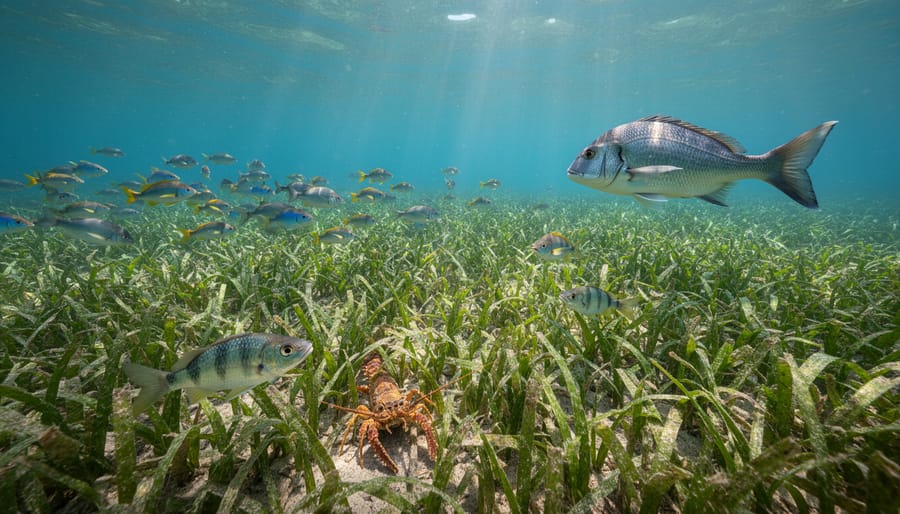
Seagrass meadows, nurseries for countless juvenile fish species, receive special protection through partnership-driven mapping efforts that mark these areas off-limits to damaging fishing gear. Along the Atlantic coast, lobster fishery partnerships modified trap placement to avoid eelgrass beds after research showed these habitats supported higher long-term catches when left undisturbed.
Some partnerships invest directly in habitat restoration projects, funding oyster reef rebuilding or kelp forest recovery that benefits both ecosystems and fisheries. The Chesapeake Bay oyster partnership, for instance, created over 350 acres of restored reef habitat while improving water quality and providing sustainable harvest opportunities for watermen who helped plant the reefs.
Reducing Bycatch and Protecting Non-Target Species
Bycatch, the unintended capture of non-target species, has long been one of commercial fishing’s most damaging consequences. Sustainable fisheries partnerships tackle this challenge head-on by bringing together fishers, marine biologists, and engineers to develop practical solutions. Circle hooks, which dramatically reduce sea turtle captures in longline fisheries, emerged from such collaborations. Turtle excluder devices (TEDs) in shrimp nets now allow sea turtles to escape while retaining catch. Acoustic pingers attached to nets warn marine mammals away from danger zones, cutting dolphin and porpoise deaths significantly.
These partnerships also pioneer dynamic ocean management, using real-time satellite data to identify areas where endangered species concentrate. Fishing fleets receive alerts to avoid these hotspots temporarily, allowing them to protect marine wildlife without abandoning productive grounds entirely. Bird-scaring lines, brightly colored streamers that keep albatrosses and petrels away from baited hooks, have become standard practice in many pelagic fisheries through partnership-driven adoption programs.
The collaborative approach proves essential because fishers possess intimate knowledge of where and when bycatch occurs, while scientists contribute monitoring expertise and technological innovation. NOAA’s partnership programs demonstrate how this combination helps reduce bycatch of protected species while maintaining viable fishing operations.
The Certification and Market Incentive Advantage
Consumer Power: How Your Choices Support Sustainable Partnerships
Every time you choose seafood at the grocery store or order fish at a restaurant, you cast a vote for the kind of ocean you want. Look for certified sustainable seafood labels like the Marine Stewardship Council (MSC) blue checkmark or the Aquaculture Stewardship Council (ASC) seal. These certifications verify that the fish came from fisheries working within sustainable partnerships. Before purchasing, ask your fishmonger about sourcing practices or use smartphone apps like Seafood Watch, which provide instant guidance on the sustainability status of specific species from particular regions. Many retailers now prominently display sustainability information on seafood packaging, making informed choices easier than ever. When dining out, don’t hesitate to ask servers about the origin of their fish, restaurants increasingly partner with verified sustainable sources and appreciate customers who care. Your purchasing power directly supports the economic viability of fisheries that invest in partnerships, proving to the industry that sustainability pays.
Challenges and Obstacles Partnerships Must Overcome
Sustainable fisheries partnerships face formidable obstacles that test even the most committed collaborations. Illegal, unreported, and unregulated fishing undermines years of conservation work, with rogue operators harvesting protected stocks and ignoring catch limits. These shadow fleets operate beyond partnership oversight, making enforcement a constant struggle, particularly in remote ocean areas where monitoring resources are stretched thin.
Funding remains a persistent constraint. Building robust monitoring systems, conducting stock assessments, and training fishing communities require sustained financial investment that often exceeds available grants. Many partnerships operate on shoestring budgets, forced to prioritize immediate needs over long-term research initiatives that could strengthen their scientific foundation.
The accelerating impacts of climate change and ocean acid add unprecedented complexity. Warming waters shift species distributions, disrupting traditional fishing grounds and forcing partnerships to adapt management strategies in real time. Marine heatwaves trigger die-offs that decade-long recovery plans didn’t anticipate. Scientists find themselves updating baseline data constantly, while fishing communities confront uncertainty about whether historic patterns will ever return.
Political resistance can stall progress when governments prioritize short-term economic gains over sustainability commitments. Election cycles sometimes bring leadership changes that reverse hard-won policies. Competing interests among stakeholders occasionally fracture consensus, especially when new regulations affect livelihoods directly.
Yet these challenges haven’t halted the momentum. Partnerships are developing innovative solutions, from satellite monitoring that catches illegal vessels to adaptive management frameworks that build climate resilience into planning. The collaborative model itself proves remarkably flexible, allowing stakeholders to pool expertise and resources when individual efforts would fail. These obstacles are real, but the determination to overcome them grows stronger with each small victory.
How You Can Support and Engage With Fisheries Conservation
You don’t need specialized credentials to contribute meaningfully to fisheries conservation. Start with your shopping basket: download the Seafood Watch app or similar guides to identify certified sustainable options at your local market. Ask fishmongers and restaurant servers about sourcing, your questions signal consumer demand for transparency and accountability.
Citizen science programs offer hands-on involvement that directly supports research. The Marine Biodiversity Science Center runs monthly beach surveys where volunteers collect data on fish populations in tidal zones, helping scientists track ecosystem health. REEF’s fish survey program trains recreational divers and snorkelers to identify and count species, building datasets that inform management decisions across thousands of sites globally. No marine biology degree required, just enthusiasm and a willingness to learn.
Advocacy amplifies your impact. Support organizations working on the ground with fishing communities, such as the Environmental Defense Fund’s Fishery Solutions Center or Ocean Conservancy’s partnership initiatives. Contact your representatives when fishery management plans come up for public comment. These comment periods shape policy, yet most receive minimal input from everyday citizens who care about ocean health.
Educational engagement matters too. Attend public lectures, participate in beach cleanups that also monitor marine debris, or join local conservation groups organizing coastal restoration projects. Many fishing communities welcome volunteers for habitat restoration work, rebuilding oyster reefs, planting seagrass, or removing invasive species that threaten native fisheries.
Share what you learn. When you choose sustainable seafood at a gathering, mention why. Post about volunteer experiences. Small conversations plant seeds that grow into broader cultural shifts toward ocean stewardship.
The transformation of our oceans depends on continued commitment to sustainable fisheries partnerships. These collaborative networks have proven that decline and depletion aren’t inevitable when fishing communities, scientists, conservationists, and policymakers unite around shared goals. From rebuilding collapsed stocks to protecting vital marine habitats, the evidence is clear: science-based cooperation delivers measurable results for both ocean health and coastal livelihoods.
What makes these partnerships so powerful is their foundation in both empirical research and lived experience. When traditional ecological knowledge meets cutting-edge marine science, and when economic incentives align with conservation objectives, we create resilient systems that benefit entire ocean ecosystems, not just individual species.
The challenges ahead remain significant. Climate change continues altering marine environments, illegal fishing persists in many regions, and funding gaps threaten crucial monitoring programs. Yet every successful recovery story demonstrates that informed, coordinated action can reverse damage we once thought permanent.
Your role in this work matters more than you might realize. Whether you’re choosing certified sustainable seafood at the market, participating in citizen science programs, or advocating for stronger marine protections, you’re contributing to a global movement reshaping humanity’s relationship with the ocean. These partnerships succeed when they expand beyond conference rooms into communities, classrooms, and daily choices. The question isn’t whether individual actions make a difference. It’s whether you’re ready to add yours.

jessica
Ava Singh is an environmental writer and marine sustainability advocate with a deep commitment to protecting the world's oceans and coastal communities. With a background in environmental policy and a passion for storytelling, Ava brings complex topics to life through clear, engaging content that educates and empowers readers. At the Marine Biodiversity & Sustainability Learning Center, Ava focuses on sharing impactful stories about community engagement, policy innovations, and conservation strategies. Her writing bridges the gap between science and the public, encouraging people to take part in preserving marine biodiversity. When she’s not writing, Ava collaborates with local initiatives to promote eco-conscious living and sustainable development, ensuring her work makes a difference both on the page and in the real world.