Marine Biodiversity Science Center

Marine climate refers to the long-term patterns of temperature, currents, salinity, light penetration, and nutrient distribution that shape conditions within ocean environments. Unlike terrestrial weather systems that change hour by hour, marine climate operates on scales ranging from seasonal cycles to centuries-long ocean circulation patterns, creating the fundamental conditions that determine which species can survive in different parts of the ocean and how entire ecosystems function.
Understanding marine climate matters now more than ever. Ocean temperatures have risen by an average of 0.9 degrees Celsius since pre-industrial times, with particularly rapid warming occurring in the upper 700 meters where most marine life concentrates. These shifts are reorganizing biodiversity on a global scale. Coral reefs bleach when water temperatures exceed their thermal tolerance by just one or two degrees for extended periods. Cold-water fish populations migrate poleward, sometimes at rates of 70 kilometers per decade. Planktonic communities that form the base of marine food webs shift their seasonal timing, creating mismatches with the species that depend on them.
This article explains how marine climate systems work, from the physical forces that drive ocean circulation to the vertical layers that create distinct climate zones from surface to seafloor. You’ll discover why a reef in the Philippines experiences different climate conditions than a kelp forest in California, even at similar latitudes, and how marine species have evolved remarkable adaptations to thrive within specific climate boundaries. We’ll also examine what marine biologists and conservationists are doing right now to help ecosystems adapt to rapid climate change, including restoration projects you can join as a volunteer and firsthand accounts from researchers working at the frontlines of ocean conservation in 2026.
What Marine Climate Means
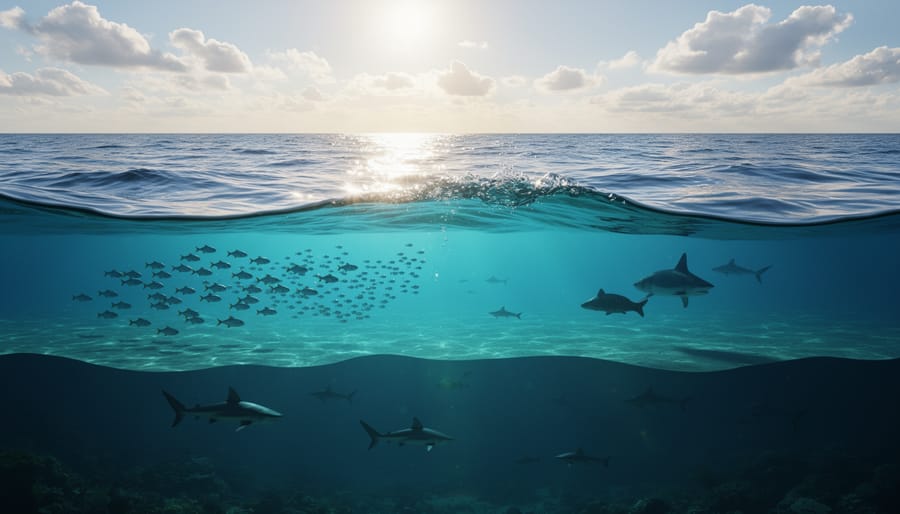
Marine climate refers to the long-term patterns of physical and chemical conditions in ocean waters, patterns that persist across decades and centuries, not days or weeks. Unlike weather, which describes short-term atmospheric conditions, marine climate encompasses the stable trends in temperature stratification, salinity distribution, chemical composition, and water movement that define ocean environments. Where terrestrial climate primarily responds to atmospheric processes and solar heating of land surfaces, marine climate integrates the complex interactions between the ocean’s vast heat capacity, its three-dimensional circulation, and its chemical exchanges with the atmosphere and seafloor.
The ocean’s physical structure creates distinct climate layers rather than the relatively uniform air masses found on land. Temperature decreases with depth in most regions, creating a warm surface layer, a transition zone where temperature drops rapidly, and cold deep waters. Salinity varies both horizontally and vertically, influenced by evaporation, precipitation, river discharge, and ice formation. These gradients create density differences that drive circulation and mixing patterns fundamental to marine climate.
Chemical conditions form another critical dimension. Ocean pH levels, currently averaging around 8.1 but declining due to carbon dioxide absorption, determine which organisms can build shells and skeletons. Dissolved oxygen concentrations vary from supersaturated surface waters to oxygen minimum zones at mid-depths, controlling where marine life can survive. Nutrient availability, particularly nitrogen and phosphorus, fluctuates with upwelling events and seasonal mixing.
Understanding marine climate requires familiarity with several key terms:
- Thermocline
- The layer where ocean temperature decreases rapidly with depth, typically found between 100 and 1,000 meters. This barrier separates warm surface waters from the cold deep ocean.
- Halocline
- A zone where salinity changes sharply with depth, creating a density barrier that affects vertical mixing and nutrient transport.
- Upwelling
- The process where deep, cold, nutrient-rich water rises to the surface, typically along coastlines or at the equator. Upwelling zones are among the ocean’s most productive regions.
- Gyres
- Large circular current systems that dominate ocean basins, driven by wind patterns and Earth’s rotation. The five major subtropical gyres regulate heat distribution across entire ocean regions.
- ENSO
- El Niño-Southern Oscillation, a cyclical climate pattern in the tropical Pacific that influences marine conditions globally through atmospheric teleconnections and ocean circulation changes.
Current systems tie these components together, transporting heat from the equator toward the poles and returning cold water toward the tropics. These circulation patterns operate on timescales from weeks to millennia, creating stability that allows ecosystems to develop specialized communities.
Marine climate operates across vastly different scales than terrestrial climate. A single ocean current can influence conditions across thousands of kilometers, while land-based climate zones shift more abruptly with elevation and latitude. The ocean’s heat capacity means temperature changes occur slowly, buffering against rapid swings. This temporal inertia makes marine climates more stable year-to-year but also means they respond to and recover from disturbances over decades rather than seasons.
How Marine Climate Systems Work
The Role of Ocean Currents
Ocean currents act as the ocean’s circulatory system, moving vast quantities of heat and nutrients across the planet. Surface currents, driven primarily by wind patterns and Earth’s rotation, transport warm water from the equator toward the poles while returning cooler water toward tropical regions. This heat redistribution moderates coastal climates and creates productive fishing grounds where warm and cold currents converge. The California Current, for instance, brings cool, nutrient-rich water southward along the West Coast, supporting kelp forests and abundant marine life.
Beneath the surface, deep-water currents operate on a slower timescale but carry equally important consequences for marine climate. The thermohaline circulation, often called the global conveyor belt, drives this deep circulation through differences in water density created by temperature and salinity variations. Cold, salty water sinks near the poles, flows along the ocean floor toward the equator, then gradually rises and warms before returning poleward at the surface. This process can take centuries to complete a full cycle, yet it profoundly influences climate patterns worldwide by storing and releasing heat over long periods.
The mechanics of how these currents function are explored in detail through resources like ocean currents explained, which clarifies the physical forces at work. Upwelling zones, where deep currents rise to the surface, deliver nutrients that fuel explosive phytoplankton growth, forming the foundation of highly productive ecosystems from Peru to Namibia.
Climate Feedback Loops in the Ocean
Marine climate doesn’t just respond to external forces, it creates powerful feedback loops that can amplify or dampen change. Understanding these mechanisms reveals how ocean systems can accelerate warming or help regulate Earth’s climate, often doing both simultaneously in different ways.
The ice-albedo feedback stands as one of the most dramatic examples. When sea ice melts in polar regions, it exposes darker ocean water beneath. While ice reflects up to 90% of incoming solar radiation back to space, open water absorbs roughly 94% of that energy. This absorption warms the water further, melting more ice and exposing even more dark surface in a self-reinforcing cycle. Antarctic krill and ice-dependent seals face shrinking habitat as this feedback accelerates polar warming at twice the global average rate.
Ocean acidification creates its own feedback loop. As oceans absorb atmospheric CO₂, carbonic acid forms and lowers pH levels. Lower pH reduces the ocean’s capacity to absorb additional CO₂, potentially leaving more greenhouse gas in the atmosphere. Simultaneously, acidification dissolves calcium carbonate structures that many organisms use to build shells and skeletons, releasing stored carbon back into the water column.
Carbon sequestration through the biological pump offers a stabilizing feedback. Phytoplankton absorb CO₂ during photosynthesis, then sink as they die, carrying carbon to the deep ocean for centuries. Warmer surface waters, however, strengthen stratification, the layering that prevents nutrient-rich deep water from rising, which can reduce phytoplankton productivity and weaken this natural carbon removal system.
Types of Marine Climate Zones
Polar Marine Climates
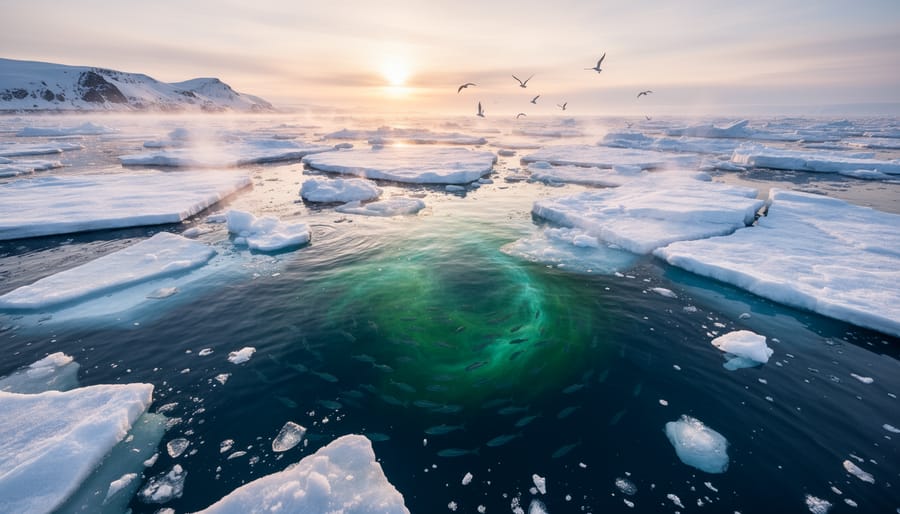
The polar marine climate zones at Earth’s highest latitudes endure some of the ocean’s harshest conditions. Water temperatures hover near or below freezing year-round, typically between -1.8°C and 4°C, with seasonal sea ice advancing and retreating dramatically each year. During winter months, Arctic and Antarctic waters plunge into months of near-total darkness beneath thick ice cover, suppressing photosynthesis and primary production.
Yet when spring arrives, these same waters transform into among the planet’s most productive marine ecosystems. Extended daylight fuels explosive phytoplankton blooms beneath melting ice, creating dense concentrations of nutrients that support massive populations of krill, fish, seabirds, and marine mammals. This seasonal feast drives the entire polar food web, from tiny copepods to blue whales.
The extreme seasonality creates unique adaptations: species must either migrate to exploit brief abundance windows or possess remarkable physiological tolerances. Antarctic krill synchronize reproduction with ice algae blooms, while polar cod produce antifreeze proteins in their blood to survive subzero temperatures throughout the year.
Temperate Marine Climates
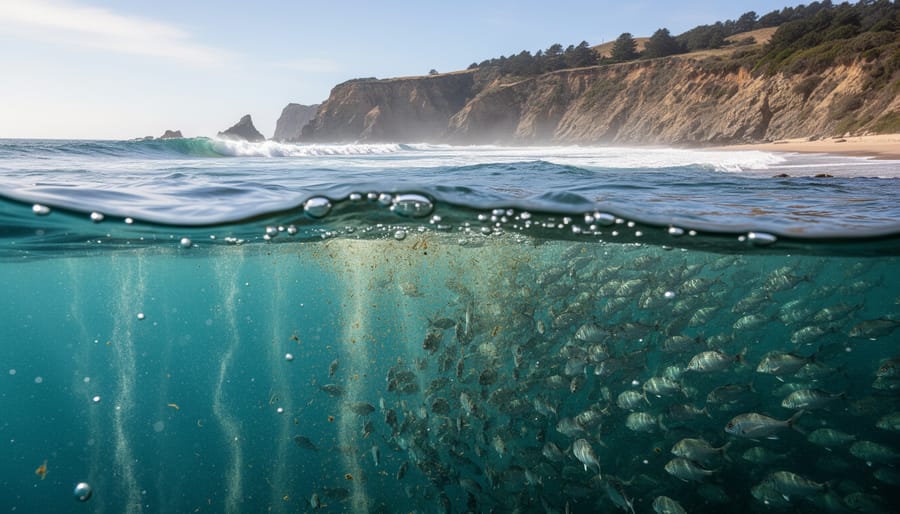
Temperate marine climates stretch across mid-latitude oceans between roughly 30° and 60° north and south, where seasonal change drives dramatic shifts in ocean conditions. Unlike the stability of tropical waters, these regions experience pronounced temperature swings, surface waters can vary by 10-15°C between summer and winter, triggering seasonal migrations and breeding cycles in countless species.
Upwelling systems define many temperate zones, particularly along western continental coasts. When persistent winds push surface waters offshore, cold, nutrient-rich water rises from the depths. These upwelling regions, California’s coast, Peru’s waters, the Canary Current, support some of Earth’s most productive fisheries despite covering less than 1% of ocean area. The nutrient influx fuels phytoplankton blooms that cascade through entire food webs.
This seasonal variability creates extraordinary biodiversity. Temperate seas host kelp forests, seagrass meadows, and mixed-species assemblages that shift composition with the seasons. Migratory species like gray whales and bluefin tuna time their movements to exploit seasonal productivity peaks, while resident species have evolved to withstand the climate swings that would stress tropical specialists.
Tropical Marine Climates
Tropical marine climates occupy the ocean zones between roughly 23°N and 23°S latitude, where year-round warmth and stable conditions create remarkably high biodiversity despite surprisingly low nutrient levels. Surface temperatures typically range from 25°C to 30°C with minimal seasonal variation, allowing species to specialize in narrow thermal niches rather than adapt to temperature swings.
These warm, well-lit waters support coral reef ecosystems, the ocean’s most biodiverse habitats, where symbiotic relationships between corals and algae thrive in nutrient-poor conditions. Coastal mangrove forests flourish in the interface between land and sea, providing nursery habitat for countless species while sequestering substantial carbon.
The apparent paradox of tropical oceans is their “biological desert” characteristic: intense sunlight and stratified water columns prevent nutrient mixing from deeper layers, creating crystal-clear but nutrient-depleted surface waters. Life concentrates around reefs, coastal zones, and rare upwelling areas where nutrients break through. This delicate balance makes tropical marine ecosystems particularly vulnerable to climate disruptions that alter temperature stability or acidify waters, threatening the coral foundations entire food webs depend upon.
Deep-Sea Climate Zones
The deep ocean below 1,000 meters exists in perpetual darkness with temperatures hovering near freezing, typically between 2-4°C regardless of surface conditions above. Pressure increases by one atmosphere every 10 meters, reaching crushing levels of 200-600 atmospheres in the abyssal zones. These extreme conditions create a remarkably stable climate environment where seasonal variations disappear entirely.
Despite this uniformity, hydrothermal vent systems puncture the deep-sea climate with dramatic localized exceptions. Where tectonic plates pull apart, superheated water (up to 400°C) shoots from seafloor fissures, carrying dissolved minerals that precipitate into towering chimneys. These vents create temperature gradients spanning hundreds of degrees within meters, supporting chemosynthetic bacteria that form the base of entirely light-independent food webs.
Cold seeps present another climate microenvironment, where methane and hydrogen sulfide leak steadily from the seafloor at near-ambient temperatures. The deep ocean’s oxygen minimum zones, layers where dissolved oxygen drops below 0.5 ml/L, create yet another distinct climate band, forcing species to develop extreme metabolic adaptations to survive in what amounts to underwater deserts of breathable air.
How Marine Climate Influences Ocean Life
Marine climate acts as the master regulator of life in the ocean, controlling where species can survive, when they reproduce, and how they interact with each other. Temperature alone determines metabolic rates in cold-blooded marine organisms, a fish in tropical waters processes energy twice as fast as the same species would in temperate seas. These fundamental physiological constraints ripple through entire ecosystems, shaping patterns we can observe from satellite imagery and scuba dives alike.
The influence of marine climate on biological processes operates through several interconnected mechanisms:
- Metabolic rates increase with temperature, directly affecting growth, reproduction, and energy demands
- Oxygen availability decreases in warmer water, limiting where large, active species can thrive
- Primary production depends on nutrient upwelling and light penetration controlled by climate conditions
- Habitat structure forms through climate-driven processes like coral growth and kelp forest development
- Species interactions shift as climate determines predator-prey overlap and competitive advantages
These climate controls create distinct ecological niches that species have evolved to exploit. Antarctic krill have antifreeze proteins in their blood that let them survive in waters cold enough to kill most other crustaceans. Meanwhile, reef-building corals thrive only where winter temperatures stay above 18°C and summer peaks don’t exceed their thermal tolerance, a narrow climate window that explains why coral reefs cluster in tropical bands around the equator.
Migration patterns reveal how marine climate shapes animal behavior across vast distances. Gray whales travel 10,000 miles between Arctic feeding grounds and Mexican breeding lagoons, timing their journey to seasonal climate shifts that trigger plankton blooms in cold waters and provide warm, sheltered conditions for vulnerable calves. Pacific salmon navigate thousands of miles to spawn in their natal streams, guided by temperature cues and seasonal climate patterns their ancestors followed for millennia. When climate patterns shift, these ancient migrations can falter, salmon arriving too early or too late miss optimal conditions, reducing survival rates for the next generation.
Breeding cycles across marine species synchronize with climate-driven food availability. Seabirds like puffins time their nesting so chicks hatch when spring upwelling brings nutrients to surface waters, fueling the plankton blooms that feed small fish their chicks need. A two-week shift in upwelling timing can mean starvation for an entire generation of seabird chicks, demonstrating how tightly evolution has coupled reproductive success to specific climate conditions.
Food web dynamics shift dramatically across climate zones because primary production varies by orders of magnitude. Cold polar waters with strong seasonal upwelling support the densest concentrations of life on Earth during summer months, the biomass of Antarctic krill alone exceeds that of all humans. Tropical waters, despite their warmth and clarity, function more like marine deserts where nutrients remain locked in deep water year-round, supporting lower overall productivity but higher species diversity. This climate-driven productivity gradient explains why commercial fisheries concentrate in temperate and polar regions rather than the tropics. Understanding these relationships forms the foundation of marine biodiversity defense as protecting climate-sensitive species and habitats becomes increasingly urgent.
Marine Climate Change and Ecosystem Responses
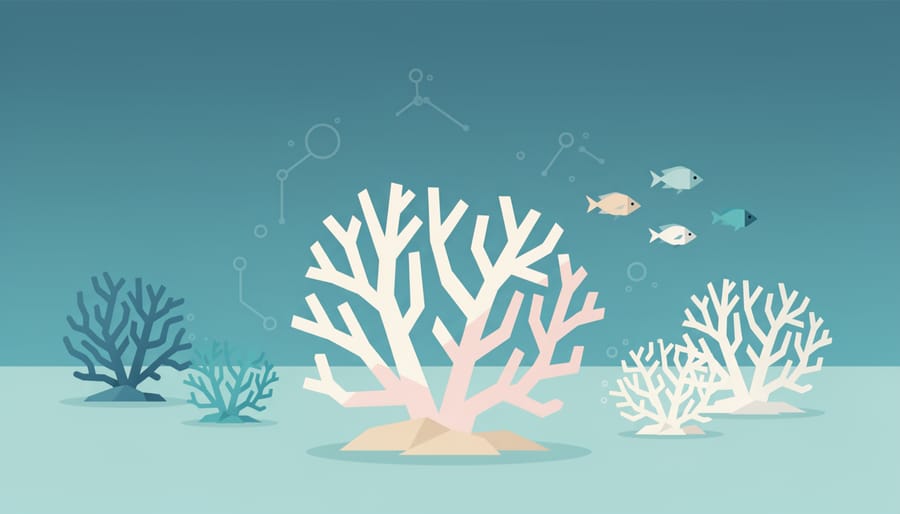
Ocean temperatures have risen approximately 0.9°C since preindustrial times, with warming accelerating in recent decades. Surface waters absorb heat faster than deeper layers, creating thermal stratification that reduces nutrient mixing between ocean zones. This stratification weakens the vertical circulation that brings nutrients from depth to sunlit surface waters where phytoplankton form the base of marine food webs. The warming extends throughout the water column, with the upper 700 meters absorbing most excess heat, fundamentally altering temperature gradients that many marine species rely on for navigation, feeding, and reproduction.
Ocean acidification progresses alongside warming as seawater absorbs carbon dioxide from the atmosphere. The ocean has absorbed roughly 30% of anthropogenic CO2 emissions, causing pH levels to drop by 0.1 units since preindustrial times, a 26% increase in acidity. This chemical shift reduces carbonate ion availability, making it harder for calcifying organisms like corals, mollusks, and some plankton to build and maintain shells and skeletons. In polar regions where cold water holds more dissolved CO2, acidification threatens pteropods and other key species that form critical links in food webs supporting fish, seabirds, and marine mammals.
Deoxygenation creates expanding zones where oxygen levels drop below what most marine life can tolerate. Warmer water holds less dissolved oxygen, while stratification prevents oxygen-rich surface water from mixing downward. The ocean has lost approximately 2% of its oxygen since 1960, with coastal dead zones and open-ocean oxygen minimum zones growing in size and severity. Species compressed between warming surface waters above and oxygen-depleted waters below face shrinking habitat, particularly in tropical regions where organisms already live near their thermal limits.
These chemical and physical changes drive visible ecosystem responses. Coral reefs experience mass bleaching events when prolonged heat stress forces corals to expel their symbiotic algae. The Great Barrier Reef suffered back-to-back bleaching in 2016 and 2017, with subsequent events in 2020 and 2022, leaving insufficient recovery time between stresses. Fish populations shift poleward, tracking temperature ranges they evolved to inhabit, commercial species now appear hundreds of kilometers from historical ranges, disrupting fishing industries and food security in tropical nations.
Phenological mismatches occur when climate cues that once synchronized breeding, migration, and feeding no longer align. Zooplankton populations peak earlier in warming waters, potentially before fish larvae hatch and need food. Seabirds arrive at nesting sites on schedules set by ancient environmental triggers, finding prey distributions already shifted by changing ocean conditions.
These cascading disruptions underscore why developing and implementing effective strategies to help marine ecosystems adapt to changing climate conditions has become critical for conserving ocean biodiversity and the human communities that depend on healthy seas.
How Scientists Study Marine Climate
Understanding marine climate requires a sophisticated toolkit that spans from space-based satellites to the ocean floor. Scientists have developed increasingly precise methods to monitor conditions across vast oceanic regions and at depths once impossible to reach.
Satellite remote sensing provides the broadest view, measuring sea surface temperature, ocean color (which indicates phytoplankton abundance), sea level changes, and ice coverage across entire ocean basins in real time. These instruments detect thermal patterns and circulation changes that would take years to map by ship alone. However, satellites can only see the surface, so researchers deploy autonomous underwater vehicles, torpedo-shaped robots that dive to predetermined depths, collecting temperature, salinity, and chemical data before surfacing to transmit their findings. Some operate for months, creating three-dimensional snapshots of ocean conditions across entire regions.
Moored buoys form the backbone of continuous climate monitoring. Anchored at strategic locations, these floating stations measure temperature, currents, wind, and wave heights around the clock, building datasets that span decades. The tropical Pacific hosts a particularly dense array that tracks El Niño and La Niña patterns critical to global climate predictions.
For longer timescales, scientists turn to natural archives. Coral cores preserve chemical signatures in their annual growth bands, much like tree rings, revealing ocean temperatures and acidity levels reaching back centuries. Sediment cores from the seafloor extend this record even further, documenting climate shifts over millennia.
Marine climate models synthesize all this data, using powerful computers to simulate ocean physics, chemistry, and biology. These models test scenarios for future warming and acidification, projecting where species ranges might shift or which ecosystems face the greatest stress. Conservation planners use these projections to identify resilient areas for protection, design marine reserves that account for species migration, and develop targeted intervention strategies where ecosystems prove most vulnerable to climate change.
Common Questions About Marine Climate
Understanding marine climate can be complex, and many questions arise when people first encounter these concepts. Here are answers to some of the most common queries about how climate functions in ocean environments.
What’s the difference between marine climate and ocean weather?
Marine climate represents long-term patterns spanning decades or centuries, the average conditions that define an ocean region, while weather describes short-term fluctuations over days or weeks, such as a passing storm or a temporary temperature spike. Climate is what you expect; weather is what you get on any given day.
Why does ocean climate change more slowly than climate on land?
Water has a much higher heat capacity than air or soil, meaning oceans absorb and store enormous amounts of heat without rapid temperature changes. This thermal inertia acts as a buffer, slowing both warming and cooling processes and making marine climate systems more stable but also slower to recover once disrupted.
How does marine climate directly affect fisheries and fishing communities?
Marine climate determines where fish species live, when they spawn, and how abundant they become, shifting temperatures can push valuable species into new waters or alter their breeding success. These changes force fishing fleets to travel farther, adapt gear and timing, or face declining catches, directly impacting coastal economies and food security.
Can marine climate systems recover if we reduce emissions?
Recovery is possible but operates on long timescales, decades to centuries for some processes like ocean acidification and deep-water warming. Stopping further damage now gives ecosystems the best chance to adapt and eventually stabilize, though some changes already set in motion will persist for generations regardless of immediate action.
These questions touch on fundamental aspects that often confuse newcomers to marine science. The confusion between climate and weather is particularly common, yet the distinction matters enormously when interpreting ocean data. When you hear about a warm month in coastal waters, that’s weather. When scientists report that the Gulf of Maine has warmed faster than 99 percent of the global ocean over the past decade, that’s climate.
The slower pace of ocean climate change compared to atmospheric warming creates a deceptive lag. Surface air temperatures respond quickly to greenhouse gas increases, but the ocean’s vast heat reservoir means marine ecosystems face a “committed” warming still working through the system from past emissions. This thermal momentum explains why marine species are experiencing stress even in years when air temperatures stabilize temporarily.
For coastal communities worldwide, marine climate isn’t an abstract concept, it shapes livelihoods, cultures, and food sources. A lobsterman in Maine, a coral reef tour operator in the Caribbean, and a subsistence fisher in the Pacific all depend on stable marine climate patterns that have defined their regions for generations. As these patterns shift, adaptation becomes essential not just for marine life but for the millions of people whose lives connect intimately with the sea.
Understanding marine climate is no longer an academic exercise, it’s fundamental to protecting the ocean ecosystems that sustain life on Earth. From regulating global weather patterns to providing food security for billions, the ocean’s climate systems influence every aspect of human well-being. As we’ve explored throughout this article, these intricate systems of temperature, currents, chemistry, and biological cycles create the conditions that allow marine life to flourish in every corner of our blue planet.
The challenges facing marine ecosystems today demand more than awareness. They require coordinated action grounded in solid science and informed by communities who understand these systems intimately. Effective Marine Climate Adaptation Strategies depend on continued monitoring, robust research, and the willingness to adjust our relationship with the ocean as conditions shift. Success stories already exist: marine sanctuaries and research initiatives demonstrate that well-designed conservation efforts can help ecosystems build resilience even under stress.
You don’t need to be a marine scientist to make a difference. Our center offers multiple pathways for engagement, from citizen science programs that collect vital climate data to educational workshops that deepen your understanding of ocean systems. Volunteers contribute to field research, help monitor coastal habitats, and participate in community outreach that spreads knowledge about protect marine life strategies. Whether you can donate a weekend or a career, your involvement strengthens the collective effort to safeguard marine biodiversity for future generations. The ocean’s climate will continue to change, but together we can shape how ecosystems and communities respond.

jessica
Ava Singh is an environmental writer and marine sustainability advocate with a deep commitment to protecting the world's oceans and coastal communities. With a background in environmental policy and a passion for storytelling, Ava brings complex topics to life through clear, engaging content that educates and empowers readers. At the Marine Biodiversity & Sustainability Learning Center, Ava focuses on sharing impactful stories about community engagement, policy innovations, and conservation strategies. Her writing bridges the gap between science and the public, encouraging people to take part in preserving marine biodiversity. When she’s not writing, Ava collaborates with local initiatives to promote eco-conscious living and sustainable development, ensuring her work makes a difference both on the page and in the real world.