Marine Biodiversity Science Center

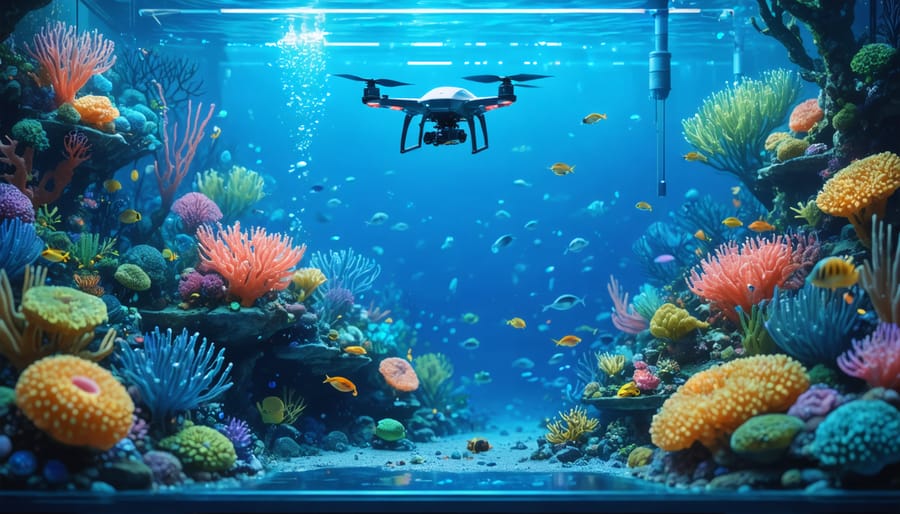
As climate change intensifies, transforming marine ecosystems and threatening coastal communities worldwide, adaptation strategies have become critical for survival and resilience. Scientists and policymakers are rapidly developing innovative solutions that merge traditional knowledge with cutting-edge technology to protect vulnerable species, preserve vital habitats, and safeguard human communities dependent on marine resources.
Recent research from the International Panel on Climate Change (IPCC) demonstrates that successful adaptation requires a multi-faceted approach combining immediate action with long-term planning. From developing heat-resistant coral strains to implementing floating urban infrastructure, these strategies represent our most promising tools for navigating an increasingly unpredictable climate future.
This article explores proven adaptation strategies that communities, governments, and organizations are successfully implementing worldwide. We’ll examine how nature-based solutions, technological innovations, and policy reforms work together to build resilience against rising seas, extreme weather events, and shifting ecosystems. More importantly, we’ll focus on practical, scalable solutions that can be adapted to different contexts and resources levels, ensuring that climate adaptation remains accessible to all stakeholders.
By understanding and implementing these strategies effectively, we can better protect our marine ecosystems while building more resilient communities prepared for the challenges ahead.
Understanding Marine Vulnerability to Climate Change
Temperature and Acidification Impacts
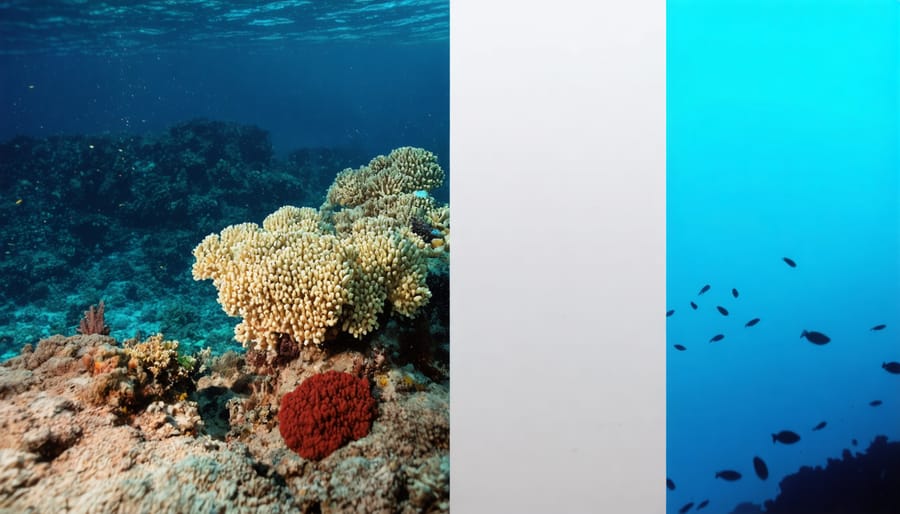
As climate change affects marine ecosystems, two of the most significant impacts are rising ocean temperatures and increasing acidification. Ocean temperatures have risen by approximately 0.13°C per decade since 1901, causing widespread disruption to marine life. This warming leads to coral bleaching, forces species to migrate to cooler waters, and disrupts traditional breeding grounds for many marine species.
Ocean acidification, often called the “evil twin” of global warming, occurs when seawater absorbs excess CO2 from the atmosphere. Since the Industrial Revolution, ocean pH has dropped by 0.1 units, representing a 30% increase in acidity. This change makes it difficult for calcifying organisms like corals, mollusks, and some plankton species to build and maintain their calcium carbonate shells and skeletons.
The combined effects of warming and acidification create a particularly challenging environment for marine life. Species must either adapt quickly to these changing conditions or face potential extinction. Understanding these impacts is crucial for developing effective conservation strategies and protecting marine biodiversity for future generations.
Ecosystem Vulnerability Assessment
Ecosystem vulnerability assessments serve as crucial tools for identifying marine areas and species most at risk from climate change impacts. These assessments combine multiple data sources, including satellite imagery, field surveys, and historical records, to create comprehensive vulnerability maps. Scientists analyze factors such as species distribution, habitat connectivity, and exposure to climate stressors like ocean acidification and temperature changes.
Marine biologists employ standardized frameworks that evaluate three key components: exposure (the degree of climate stress), sensitivity (species’ tolerance to changes), and adaptive capacity (ability to cope with changes). For instance, coral reefs undergo regular monitoring to assess bleaching susceptibility, while seagrass meadows are evaluated for their resilience to rising sea levels.
Advanced modeling techniques help predict future scenarios, allowing conservationists to prioritize protection efforts. These models incorporate both biological factors and socioeconomic considerations, ensuring a holistic approach to vulnerability assessment. Local communities often contribute valuable traditional knowledge, enhancing our understanding of ecosystem changes over time.
Regular reassessment is vital as climate conditions evolve, enabling adaptive management strategies that respond to changing circumstances. This dynamic approach ensures that conservation efforts remain focused on the most vulnerable areas and species.
Successful Marine Protected Area Adaptations
Dynamic Protection Boundaries
Marine Protected Areas (MPAs) are evolving beyond static boundaries to address the challenges of climate change. As ocean temperatures shift and marine species migrate to more suitable habitats, traditional fixed boundaries often fail to provide adequate protection. This has led to the development of dynamic protection boundaries, an innovative approach that allows MPAs to adapt their protected zones based on species movement patterns and changing environmental conditions.
Scientists are using advanced tracking technologies and predictive modeling to monitor species migrations and adjust protection zones accordingly. For example, in the Pacific Ocean, some MPAs now incorporate seasonal boundary shifts to protect whale migration routes that have changed due to warming waters. These flexible boundaries ensure continued protection as species seek cooler waters or follow shifting food sources.
Marine biologist Dr. Sarah Chen, who studies dynamic boundaries in the California Current System, shares: “We’re seeing remarkable success with adaptive protection zones. When we adjust our conservation efforts to match natural movement patterns, we significantly improve species survival rates.”
Implementation of dynamic boundaries relies on real-time data collection from satellite tracking, ocean monitoring systems, and citizen science initiatives. Local communities and fishing industries are actively involved in this process, providing valuable observations and participating in boundary decisions. This collaborative approach ensures that protection measures remain effective while considering the needs of all stakeholders.
The future of MPAs lies in this adaptive management style, where boundaries flex and flow with the changing ocean dynamics, much like the ecosystems they protect.
Resilience-Based Management
Building ecosystem resilience has emerged as a crucial approach in climate change adaptation, focusing on strengthening natural systems to withstand and recover from environmental stresses. This management strategy emphasizes maintaining biodiversity, protecting key species interactions, and preserving ecosystem functions rather than just individual species.
Marine biologist Dr. Sarah Chen explains, “We’re moving beyond traditional conservation methods to create more dynamic and adaptive management systems. It’s like building immune system strength rather than just treating symptoms.”
Key components of resilience-based management include:
– Identifying and protecting climate refugia – areas naturally resistant to climate change impacts
– Maintaining genetic diversity within populations to enhance adaptation potential
– Establishing connected protected area networks that allow species migration
– Reducing non-climate stressors such as pollution and overfishing
– Implementing adaptive monitoring systems to track ecosystem changes
Successful examples include the Great Barrier Reef’s Crown-of-Thorns Starfish Control Program, which combines immediate threat management with long-term resilience building. The program has shown that reducing multiple stressors simultaneously can significantly improve coral reef recovery rates.
Community involvement plays a vital role, with local stakeholders participating in monitoring programs and helping implement management strategies. This collaborative approach ensures better compliance with protection measures while building social resilience alongside ecological resilience.
Coral Reef Conservation Solutions
Assisted Evolution Programs
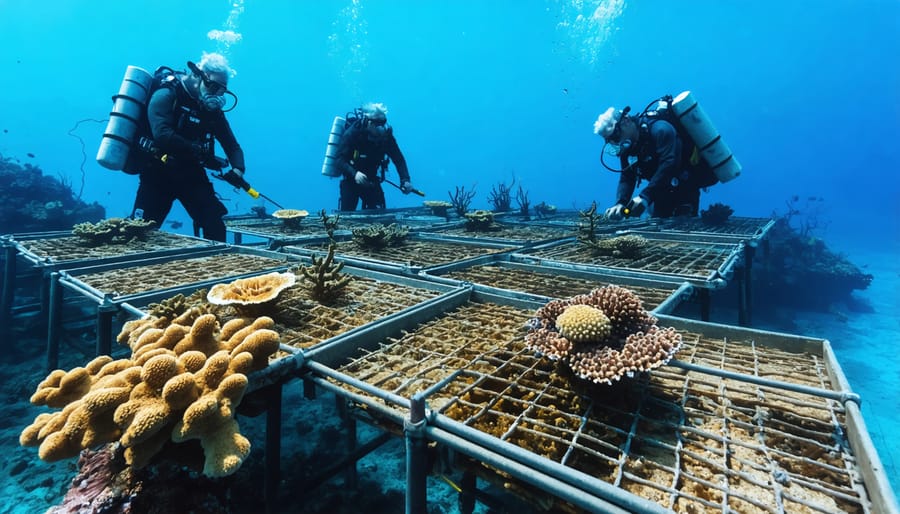
In response to the accelerating threats of climate change, marine scientists have pioneered innovative assisted evolution programs focused on developing heat-resistant coral species. These initiatives combine traditional selective breeding techniques with cutting-edge genetic research to enhance coral resilience against rising ocean temperatures.
At the forefront of this work, researchers are identifying and breeding “super corals” that have naturally survived extreme bleaching events. These corals demonstrate remarkable heat tolerance and are being cultivated in specialized nurseries where conditions simulate future ocean temperatures. Scientists carefully cross-breed different coral colonies, selecting for traits that contribute to thermal resistance while maintaining genetic diversity.
The Great Barrier Reef Foundation’s landmark program has successfully bred corals that can withstand temperatures up to 3°C higher than their predecessors. This breakthrough offers hope for preserving reef ecosystems as global waters continue to warm. Similar projects in Hawaii and the Caribbean are showing promising results, with newly bred coral strains surviving and thriving in warmer conditions.
Marine biologist Dr. Sarah Chen shares, “We’re essentially accelerating natural selection to give corals a fighting chance. While this isn’t a silver bullet, it’s a crucial tool in our adaptation toolkit.” These programs also involve extensive monitoring and documentation, creating valuable data for future conservation efforts.
Community involvement plays a vital role, with volunteer divers assisting in coral nursery maintenance and transplantation efforts, connecting scientific research with practical conservation action.
Local Stress Reduction
Local stress reduction plays a crucial role in enhancing marine ecosystems’ resilience to climate change impacts. By addressing immediate environmental pressures, communities and conservation groups can create better conditions for marine life to adapt and survive in a changing climate.
Key local threats that need management include overfishing, coastal pollution, and habitat destruction. Implementing fishing quotas and creating no-take zones allows fish populations to maintain healthy numbers, making them more resilient to climate-related challenges. Local communities have seen success with seasonal fishing restrictions and the establishment of marine protected areas, which serve as refuges for vulnerable species.
Reducing coastal pollution through improved waste management systems and regular beach clean-ups helps maintain water quality and reduces additional stress on marine organisms. Many coastal cities have implemented strict regulations on plastic use and industrial discharge, while community-led initiatives focus on regular monitoring and cleanup efforts.
Protecting and restoring critical habitats like mangroves, seagrass beds, and coral reefs provides natural buffers against climate impacts. These ecosystems not only shelter marine life but also absorb carbon dioxide and protect coastlines from storms and erosion. Local restoration projects, often led by marine biologists and volunteers, have shown promising results in rebuilding these vital ecosystems.
By managing these local stressors, communities create more favorable conditions for marine ecosystems to withstand and adapt to climate change, demonstrating how local action supports global resilience.
Community-Based Adaptation Initiatives
Indigenous Knowledge Integration
Indigenous communities have developed sophisticated environmental knowledge systems over generations of living in harmony with their local ecosystems. These traditional ecological knowledge (TEK) systems are increasingly recognized as valuable resources for climate change adaptation strategies. Coastal indigenous communities, in particular, possess detailed understanding of marine ecosystem dynamics, species behavior patterns, and environmental indicators that can enhance modern conservation efforts.
Many successful adaptation programs now integrate indigenous knowledge with scientific approaches. For example, in the Pacific Islands, traditional navigation techniques and weather prediction methods are helping communities prepare for extreme weather events. In Arctic regions, Inuit knowledge of sea ice patterns and wildlife migration has become crucial for developing effective conservation strategies.
This integration also promotes more culturally sensitive and sustainable adaptation practices. Indigenous communities often emphasize holistic approaches that consider the interconnectedness of ecosystems, human communities, and cultural practices. By incorporating these perspectives into adaptation planning, conservation efforts become more comprehensive and locally relevant, while also preserving valuable cultural heritage for future generations.
Sustainable Fisheries Management
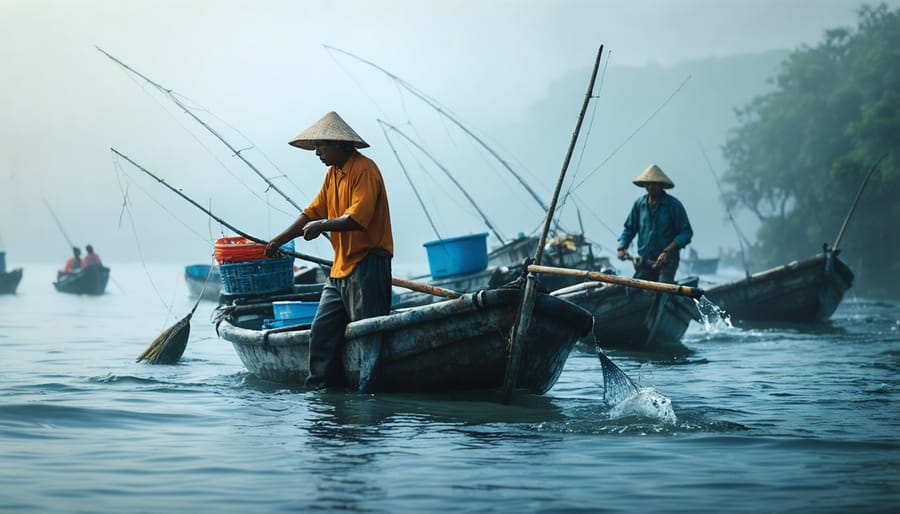
In response to escalating climate pressures on marine ecosystems, community-led approaches to sustainable fisheries management are proving increasingly vital. Local fishing communities are adopting climate-adaptive practices that combine traditional knowledge with modern conservation science. These initiatives include implementing seasonal fishing restrictions, establishing no-take zones during spawning periods, and using more selective fishing gear to reduce bycatch.
Successful examples include the establishment of locally managed marine areas (LMMAs) in the Pacific Islands, where communities monitor fish populations and adjust harvesting practices based on ecological indicators. Fishers are also diversifying their target species, focusing on climate-resilient fish populations while allowing vulnerable species to recover.
Technology plays a crucial role, with communities using mobile apps to track weather patterns and fish movements. This data helps them make informed decisions about when and where to fish, reducing fuel consumption and minimizing environmental impact. Additionally, many fishing communities are developing alternative income sources through sustainable aquaculture and eco-tourism, creating economic resilience while protecting marine resources for future generations.
Technology and Innovation in Marine Adaptation
In recent years, technological solutions have revolutionized our approach to marine adaptation strategies. Advanced sensor networks now monitor ocean temperatures, pH levels, and marine species movements in real-time, providing crucial data for adaptive management decisions. These innovations help marine conservationists respond quickly to environmental changes and protect vulnerable species.
Artificial intelligence and machine learning algorithms analyze vast amounts of oceanographic data, predicting potential threats to marine ecosystems and suggesting targeted intervention strategies. For instance, smart buoys equipped with AI capabilities can detect coral bleaching events early, allowing rapid response teams to implement protection measures before extensive damage occurs.
Drone technology and autonomous underwater vehicles (AUVs) have transformed marine monitoring capabilities. These devices capture high-resolution imagery of marine habitats, track marine mammal migrations, and assess the health of seagrass beds with unprecedented accuracy. Marine biologists like Dr. Sarah Chen have successfully used AUVs to document previously unknown coral reef recovery patterns, leading to more effective restoration techniques.
Biotechnology advances have also yielded promising results in marine adaptation. Scientists are developing heat-resistant coral strains through selective breeding programs, while innovative materials engineering has produced artificial reef structures that better support marine life colonization. These developments offer hope for maintaining biodiversity in warming oceans.
Citizen science applications and mobile technologies enable broader community participation in marine conservation efforts. Through user-friendly apps, volunteers can report marine debris, document species sightings, and contribute to large-scale data collection efforts, making adaptation strategies more inclusive and comprehensive.
The path to protecting our marine ecosystems from climate change impacts requires a multi-faceted approach combining scientific innovation, policy reform, and community engagement. By implementing comprehensive adaptation strategies – from establishing marine protected areas to developing climate-resilient aquaculture – we can build more resilient ocean ecosystems that better withstand environmental pressures.
The success of these initiatives depends heavily on continued research, international cooperation, and sustained community involvement. Every action, whether it’s supporting local conservation projects, participating in citizen science programs, or advocating for stronger marine protection policies, contributes to the larger goal of preserving our ocean’s biodiversity.
As we face increasing climate challenges, the time for action is now. Marine conservation organizations worldwide offer numerous opportunities for individuals to contribute through volunteer programs, educational initiatives, and community-based projects. By combining traditional conservation methods with innovative technological solutions, we can create a more sustainable future for our oceans.
Together, we can build a network of resilient marine ecosystems that continue to support both biodiversity and human communities for generations to come. Your involvement, no matter how small, makes a difference in this crucial effort to protect our blue planet.

jessica
Ava Singh is an environmental writer and marine sustainability advocate with a deep commitment to protecting the world's oceans and coastal communities. With a background in environmental policy and a passion for storytelling, Ava brings complex topics to life through clear, engaging content that educates and empowers readers. At the Marine Biodiversity & Sustainability Learning Center, Ava focuses on sharing impactful stories about community engagement, policy innovations, and conservation strategies. Her writing bridges the gap between science and the public, encouraging people to take part in preserving marine biodiversity. When she’s not writing, Ava collaborates with local initiatives to promote eco-conscious living and sustainable development, ensuring her work makes a difference both on the page and in the real world.