Marine Biodiversity Science Center

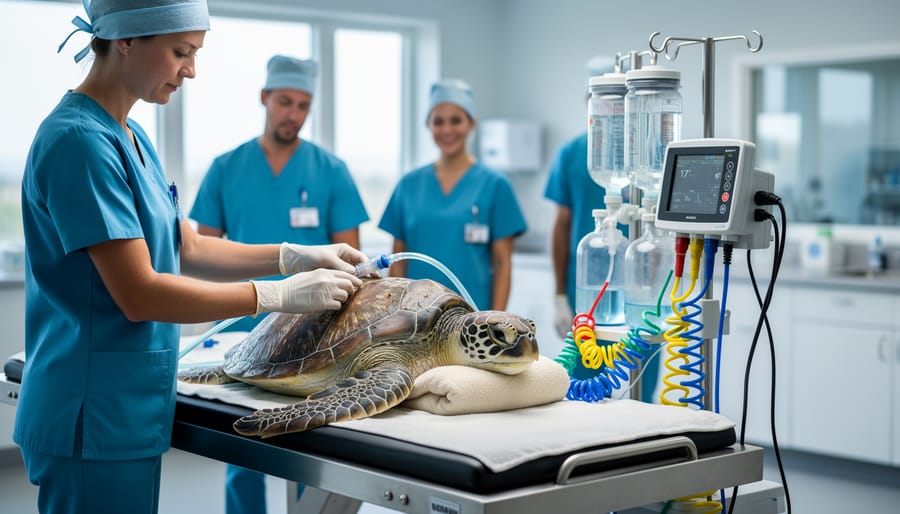
Methadone and anesthesia work together in marine rehabilitation to keep stranded or injured animals comfortable, still, and safe enough to treat. Methadone is a synthetic opioid that blocks pain signals and deepens sedation, which means a seal, sea turtle, or dolphin can receive wound care, surgery, or diagnostics with smaller doses of anesthetic drugs and a calmer recovery. Using less anesthetic matters, because marine animals have unusual physiology. Seals and dolphins slow their heart rate and redirect blood flow when they hold their breath, and turtles can tolerate low oxygen in ways land mammals can’t, so drug effects don’t always follow the textbook.
The protocol is a team effort led by a licensed veterinarian. Dosing, drug choice, and timing are always their call, and this guide doesn’t replace that judgment. What it does is walk you through the full picture: the people, equipment, and authorization involved, the safety checks and stop conditions, the order of steps, and how the team confirms the animal is stable.
Whether you’re a student, a conservation professional, or a curious reader, understanding this process shows how much careful science goes into every rescue. It also shows where volunteers fit in, from monitoring and restraint support to transport and clean-up. Let’s start with what the team needs on hand.
Why Pain Control Shapes a Marine Animal’s Recovery
Pain is not just uncomfortable for a rescued animal. It gets in the way of nearly everything the rehabilitation team is trying to achieve. Unrelieved pain impairs healing, and a hurting seal, sea lion, dolphin or sea turtle often stops eating, holds itself stiffly, and breathes or moves in ways that slow recovery. Stress hormones rise, immune defenses weaken, and wounds, fractures or infections can linger much longer than they otherwise would.
Marine animals add a particular challenge. Many are instinctively good at hiding discomfort, since showing weakness in the wild invites trouble. A quiet patient may not be a comfortable one, which is why teams plan pain relief deliberately instead of waiting for obvious distress.
This is where methadone comes in. It is an opioid analgesic, meaning a medication that dampens the way the nervous system processes pain. Veterinarians value it as one part of a balanced, or multimodal, approach, where several drugs with different jobs work together. Because each contributes a little, the plan can often rely on lower amounts of any single agent.
It helps to keep the roles straight. A sedative calms an animal and reduces fear or movement. A general anesthetic produces unconsciousness so a procedure can be done safely. An analgesic like methadone targets pain itself. An animal can be calm yet still hurting, so pain control has to be planned on purpose.
For a conservation center, this matters beyond the individual patient. An animal that eats well, heals cleanly and stays less stressed is far more likely to pass its release assessment. Every successful release returns a healthy individual to its wild population, and careful pain management is one of the quiet steps that makes that possible.
Tools, Materials and Team You Need Before Sedation Begins
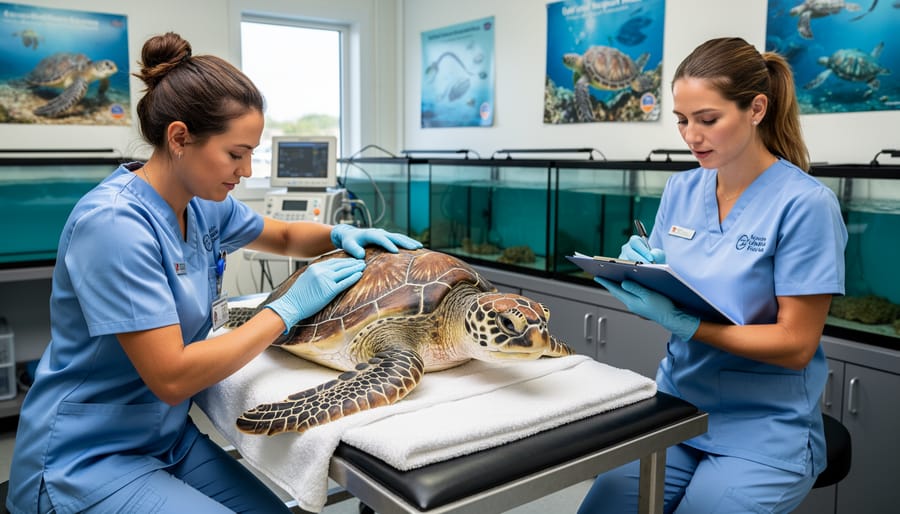
Before anyone draws up a single drug, a rehabilitation facility needs its foundations in place. Think of it as a set of planning categories rather than a recipe. The supervising veterinarian chooses the specific drugs and doses, drawing on current veterinary references and the needs of the individual animal.
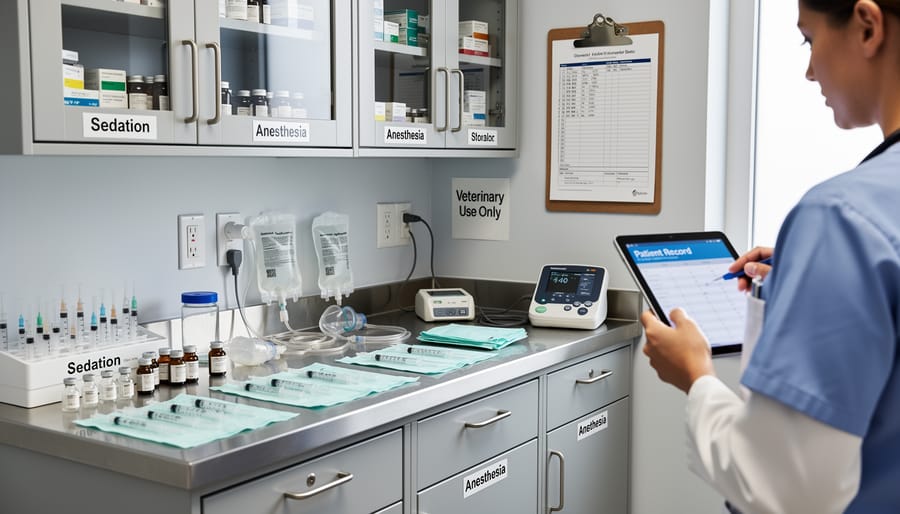
The groundwork starts with paperwork and people. A facility must hold the proper permits to handle protected marine mammals and turtles, and it needs a licensed veterinarian directing the procedure. Controlled substances such as opioids also require locked storage and careful record-keeping, so every vial is accounted for.
Here is a practical checklist to have ready before an anesthetic or sedation event:
- Current legal authorization for handling the species and for holding controlled substances.
- A named supervising veterinarian with a written plan and contingency steps.
- Secure, locked storage for opioids, plus a signed log of use and disposal.
- Species-appropriate sedatives, analgesics and anesthetics, along with the matching reversal agents.
- Monitoring equipment for heart rate, breathing, oxygenation and temperature.
- Airway and ventilation support, including suction, intubation supplies and a way to assist breathing.
- Thermoregulation tools to warm or cool the patient, depending on conditions.
- A trained handling team with assigned roles, from restraint to recording vital signs.
- A clear emergency plan, with emergency drugs and a communication route to the veterinary lead.
Each item matters because marine animals have little margin for error. A seal that overheats on a warm deck, or a turtle whose breathing slows with no ventilation support nearby, can decline quickly. Having everything staged in advance lets the team respond calmly rather than scramble.
Team preparation is just as important as equipment. Everyone present should know their job, understand the stop conditions, and rehearse the plan before the animal is touched. Volunteers often play a valuable role here, helping with towels, water, record-keeping and quiet support under professional direction. If you are curious about how that works, this is exactly the kind of behind-the-scenes teamwork that rehabilitation programs welcome new helpers to learn.
Safety Warnings and Stop Conditions for Opioids in Marine Patients
Opioids bring real benefits to marine patients, but they also change how an animal breathes, and that is where most of the risk sits. Marine mammals are built to hold their breath and breathe in deliberate bursts, so their breathing rhythm can look unusual even in a healthy animal. Opioids and sedatives can slow or weaken that rhythm, a problem called respiratory depression. Because these animals may not take a breath on their own once deeply sedated, teams plan ventilation support before they start.
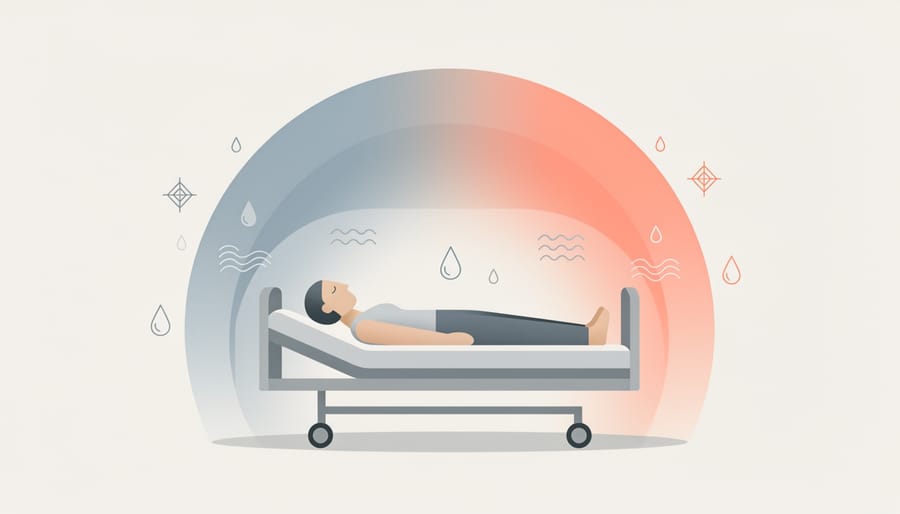
Temperature is another concern. Seals and sea lions can overheat quickly out of the water, especially in warm weather, while sedation can also leave an animal unable to hold its body heat. Aspiration, when stomach contents or fluid enter the airway, is a further risk when an animal’s protective reflexes are dulled. Species, size, health status and stranding history all shift this risk picture. A thin, dehydrated pup is not the same patient as a robust adult, and a recently stranded dolphin differs from a long-term resident.
Human safety matters too. Potent opioids can harm people through accidental exposure, so handlers follow strict controlled-substance rules and use protective practices set by the supervising veterinarian.
The team agrees on stop conditions in advance. They pause or reverse a procedure when breathing becomes too slow or stops, when oxygen levels or heart rate drift outside safe limits, when body temperature moves sharply up or down, or when the animal shows signs of airway trouble. Reversal agents and supportive care are kept ready, and the veterinary lead has the final call to abort. Planning for these moments is what keeps a calm procedure calm.
Step-by-Step: How a Sedation and Analgesia Protocol Unfolds
Planning and Pre-Procedure Assessment
Good planning starts well before any drug is drawn up. When a stranded or injured animal arrives, the team runs an intake evaluation: species, size, body condition, hydration, wounds, and any signs of respiratory or heart trouble. A stranding history matters too, since weeks on a beach changes how an animal handles sedation. Fasting and stabilization decisions come next, and they differ widely. A seal pup may be stabilized with warming and fluids first, while a sea turtle may need different preparation altogether.
The veterinary lead and the team then agree on the goals for the procedure, the monitoring plan, and what happens if things go off script. Specific drugs and amounts are always the veterinarian’s call.
- Confirm permits and veterinary authorization before any procedure is scheduled.
- Complete the intake assessment and record baseline vital signs.
- Review species, condition and stranding history with the veterinary lead.
- Stabilize the animal and set fasting guidance as directed.
- Agree on goals, roles and contingency steps with the whole team.
- Carry out the procedure under continuous monitoring.
- Reassess pain and comfort once the animal has recovered.
Writing the plan down keeps everyone aligned when minutes count.
Where Methadone Fits Alongside Sedatives and Anesthetics
Methadone earns its place in a protocol because it does a job that sedatives and anesthetics do poorly on their own: it treats pain directly. A sedative can quiet an animal without dulling pain, and an anesthetic can hold an animal unconscious while the body still registers a stressful stimulus. Methadone works on the opioid receptors that carry pain signals, so it targets the source of the problem rather than just the animal’s reaction to it.
This is the heart of a balanced, or multimodal, approach. When an opioid is given early in the plan, many patients arrive at induction calmer and easier to handle. Because the pain relief is already working, the veterinarian may need smaller amounts of other agents to reach and maintain the right depth. Lower amounts of those drugs can mean gentler effects on breathing and circulation, which matters for animals that already carry the burden of stranding, dehydration or illness.
None of this is one-size-fits-all. A young pup, an older sea lion and a cold-stunned turtle each process drugs differently, and their health status shifts the risk picture. That is why the supervising veterinarian chooses and adjusts every agent for the individual animal, guided by current veterinary references rather than a fixed recipe.
Monitoring and Recovery
Once the animal is under, monitoring never stops. Teams track breathing rate and depth first, since opioids like methadone can slow respiration, and diving species may hold their breath or breathe irregularly even when stable. Heart rate and rhythm are checked alongside oxygen saturation, while core temperature is watched closely because rescued animals can overheat or chill quickly. Many centers now rely on smart monitoring tools to flag small changes in these readings, though trained eyes remain essential.
If breathing falters or vital signs drift, the veterinarian may use a reversal agent to counter the opioid, paired with ventilation support, oxygen and warming or cooling as needed. During recovery, staff watch for steady breathing, returning alertness and coordinated movement. They also look for signs of comfort, such as relaxed posture and normal interest in surroundings. The animal stays in a quiet, supervised space until it is fully responsive and able to swim, haul out or right itself safely.
Verifying the Protocol Worked and Planning Next Steps
Success is confirmed by evidence, not by how the procedure felt in the room. Teams start with stable vital signs: steady breathing, heart rate, temperature and oxygenation, followed by a smooth, predictable recovery in which the animal regains responsiveness without distress. The work doesn’t end there, though. Over the following days, staff score pain using species-appropriate behavior checklists, and they watch appetite and activity closely, because an animal that eats willingly, rests naturally and engages with its surroundings is usually a comfortable one. Careful post-sedation nutrition also helps the team judge whether pain is under control, since a sudden loss of interest in food can be an early warning sign.
Complete records tie it all together. Every drug, timing, vital-sign trend and recovery note becomes part of the animal’s file, and modern tech-assisted care can make that data easier to capture and compare.
Teams then review what worked and what didn’t, refining their protocols accordingly. Sharing outcomes across rehabilitation networks means one center’s lessons can quickly benefit patients everywhere.

Common Questions About Anesthesia and Methadone in Marine Rehabilitation
Readers often ask the same few things about pain relief for rescued wildlife, so here are straight answers.
Why use opioids like methadone on wild animals?
Pain slows healing, suppresses appetite and raises stress, so relieving it gives a rescued animal a better chance of recovering. Methadone is one tool a veterinarian may choose within a balanced plan, alongside sedatives and anesthetics, always tailored to the individual patient.
Can I give any medication to a stranded animal?
No. Human or over-the-counter drugs can be dangerous to marine mammals and turtles, and controlled substances like opioids are legally restricted to licensed veterinary teams. Keep a safe distance and call your local stranding network instead.
How is pain recognized in marine species?
Animals cannot tell us they hurt, so teams read the signs: changes in breathing, posture, activity, appetite and responsiveness to handling. Staff track these over time and score them, because subtle shifts often reveal discomfort before it becomes obvious.
Does drug use affect when an animal can be released?
Medication is used to support recovery, not to delay it. Before release, veterinarians confirm the animal is healthy, feeding well and behaving normally without ongoing drug support, and many programs follow up with monitoring after release to see how individuals fare in the wild.
If you ever come across an injured or stranded animal, the most helpful thing you can do is stay back, keep pets and people away, and report its location and condition to the proper authorities. Trained responders can then bring the right equipment, permits and veterinary expertise to the scene. Your quick, calm call is often the first step in a long recovery journey, and it carries more weight than any attempt to help directly.
Get Involved in Marine Rehabilitation
Careful pain management is one of the quiet reasons a rescued animal makes it back to the ocean. When a seal, dolphin or sea turtle is comfortable, it eats sooner, heals faster and tolerates the handling that rehabilitation requires. That groundwork is what turns a stranding into a successful release, and every release strengthens a wild population.
You can be part of that outcome. If you find a stranded or injured animal, keep your distance, keep pets and people back, and call your local stranding network or wildlife authority right away. Trained responders have the permits, the veterinary support and the right medications, and a well-meaning attempt to help can harm both you and the animal.
If you want to do more, consider volunteering with the center’s programs, where extra hands support everything from food preparation to pool maintenance and public education. You can also join our online e-network to learn alongside fellow students, scientists and ocean advocates. Small, informed actions add up to real change.

jessica
Ava Singh is an environmental writer and marine sustainability advocate with a deep commitment to protecting the world's oceans and coastal communities. With a background in environmental policy and a passion for storytelling, Ava brings complex topics to life through clear, engaging content that educates and empowers readers. At the Marine Biodiversity & Sustainability Learning Center, Ava focuses on sharing impactful stories about community engagement, policy innovations, and conservation strategies. Her writing bridges the gap between science and the public, encouraging people to take part in preserving marine biodiversity. When she’s not writing, Ava collaborates with local initiatives to promote eco-conscious living and sustainable development, ensuring her work makes a difference both on the page and in the real world.