Marine Biodiversity Science Center

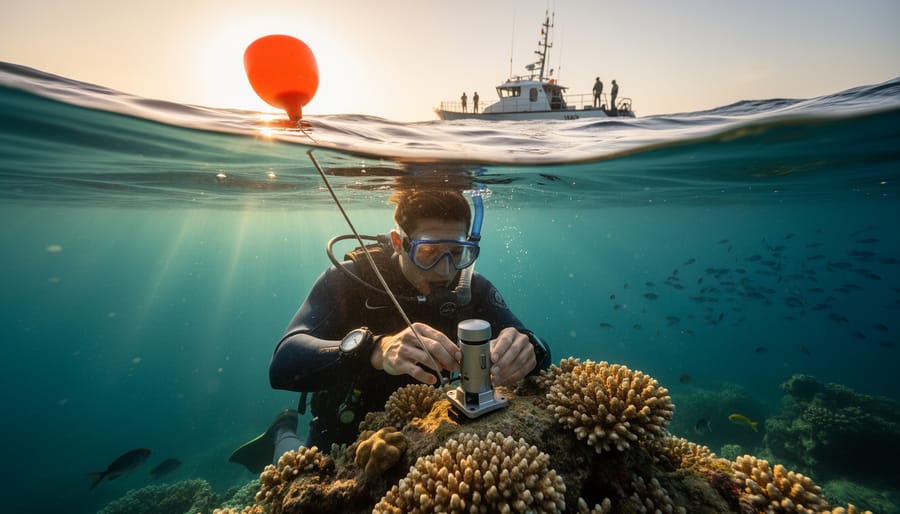
Picture a scientist who can predict where endangered sea turtles will nest next season, identify illegal fishing operations from satellite data patterns, or forecast coral bleaching events weeks before they occur. Marine data scientists are transforming ocean conservation by turning vast streams of underwater sensor readings, satellite imagery, and field observations into actionable insights that protect marine life.
This emerging profession sits at the intersection of marine biology, computer science, and environmental stewardship. These professionals analyze millions of data points from acoustic monitors tracking whale migrations, autonomous underwater vehicles mapping seafloor habitats, and citizen science platforms where volunteers log beach debris or species sightings. They build machine learning models that detect subtle ecosystem changes invisible to the human eye and create visualization tools that help policymakers establish marine protected areas based on evidence rather than guesswork.
The work goes far beyond academic research. Marine data scientists collaborate with fishing communities to optimize sustainable catch strategies, partner with conservation organizations to monitor restoration projects in real-time, and develop early warning systems for environmental disasters like oil spills or harmful algal blooms. Their analyses have led to the discovery of previously unknown migration corridors, informed international fishing regulations, and demonstrated the measurable success of reef restoration efforts.
Whether you’re a student considering this career path, an educator seeking to inspire the next generation of ocean advocates, or simply someone passionate about marine conservation, understanding this field reveals how technology and data literacy have become essential tools in protecting our oceans for future generations.
What Does a Marine Data Scientist Actually Do?
From Ocean Sensors to Conservation Action
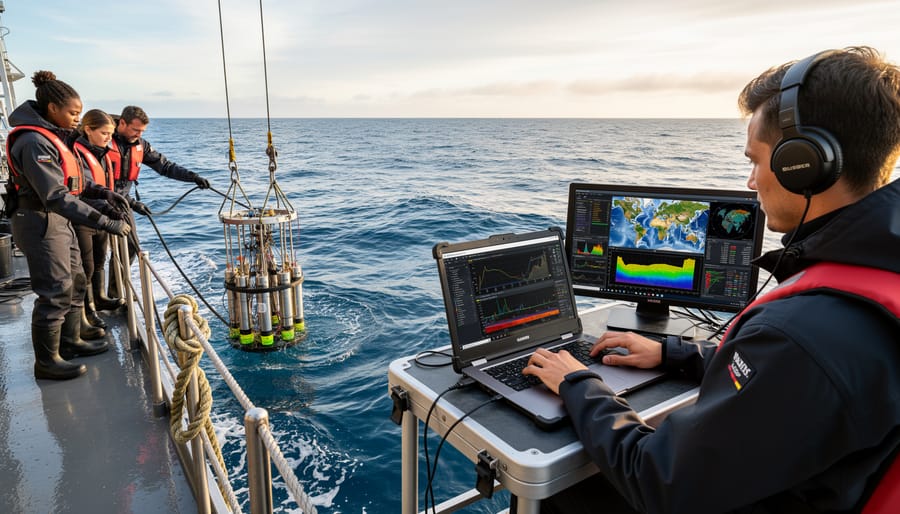
The journey from raw ocean data to meaningful conservation action involves a sophisticated yet fascinating workflow that combines cutting-edge technology with analytical expertise. Marine data scientists serve as the vital bridge between information gathering and real-world environmental protection.
The process begins with data collection from an impressive array of sources. Satellites orbiting Earth continuously monitor sea surface temperatures, ocean color changes that indicate phytoplankton blooms, and even track large marine animals fitted with special tags. Beneath the waves, autonomous underwater vehicles and stationary sensors measure everything from water chemistry to current patterns. Research vessels contribute valuable samples and observations, while increasingly, citizen scientists using smartphone apps and underwater cameras add crucial localized data that would be impossible for researchers to collect alone.
Once gathered, this massive influx of information requires careful analysis. Marine data scientists use specialized software and statistical methods to identify patterns that might otherwise remain invisible. They might discover that certain whale populations consistently appear in specific areas during particular seasons, or detect subtle changes in coral reef health before visible damage occurs. These patterns often reveal connections between different ocean processes, helping scientists understand how changes in one area ripple through entire ecosystems.
The final and perhaps most critical step transforms these analytical insights into actionable recommendations for policymakers and conservation managers. A data scientist might provide evidence supporting the creation of marine protected areas in biodiversity hotspots, recommend fishing restrictions based on population modeling, or identify pollution sources threatening coastal habitats. This translation of complex data into clear guidance ensures that conservation decisions rest on solid scientific foundations rather than guesswork, making every protection effort more effective and targeted.
The Tools of the Trade
Marine data scientists rely on a powerful toolkit that transforms raw ocean information into actionable conservation insights. At the heart of their work are programming languages like Python and R, which serve as the foundation for analyzing vast datasets. Think of these languages as sophisticated calculators that can process millions of data points simultaneously, revealing patterns invisible to the human eye alone.
Python has become particularly popular because of its versatility and user-friendly nature. Marine data scientists use it to clean messy data from oceanographic sensors, create visualizations that communicate findings to policymakers, and build predictive models for everything from fish migration patterns to coral bleaching events. R excels at statistical analysis, helping researchers understand whether changes they observe in marine ecosystems are significant or simply random variations.
Machine learning represents another crucial component, enabling computers to identify patterns and make predictions based on historical data. These algorithms can automatically detect illegal fishing vessels from satellite imagery or predict where endangered species are likely to appear based on environmental conditions.
Geographic Information Systems (GIS) mapping tools allow scientists to visualize ocean data spatially, creating layered maps that combine temperature, salinity, currents, and species distributions. These maps prove invaluable for designing marine protected areas.
Specialized oceanographic databases like the Ocean Biodiversity Information System and NOAA’s archives provide the raw material for analysis. Marine data scientists also increasingly work with acoustic monitoring systems, satellite remote sensing data, and DNA sequencing results, weaving together diverse information sources to understand our changing oceans comprehensively.
Why Ocean Data Analytics Matters for Marine Conservation
Tracking Endangered Species in Real-Time
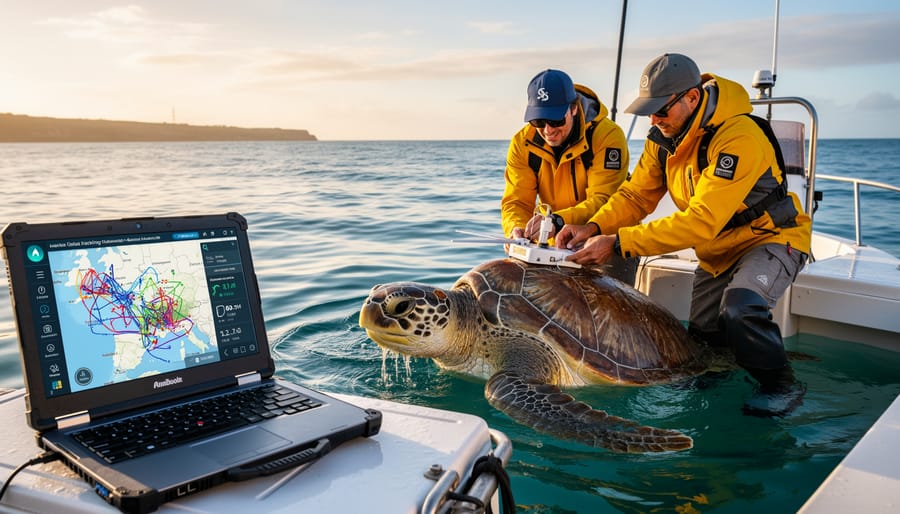
Marine data scientists are revolutionizing how we protect vulnerable ocean inhabitants through sophisticated endangered species tracking systems. By analyzing data from satellite tags, acoustic sensors, and underwater cameras, these professionals create detailed maps of where threatened species like sea turtles, whale sharks, and right whales travel throughout the year.
This real-time monitoring reveals critical information that was previously impossible to obtain. For example, data scientists can identify essential breeding grounds that need immediate protection or pinpoint migration corridors where species face heightened risks from shipping traffic or fishing operations. When population numbers suddenly drop in a specific area, algorithms can alert conservationists to investigate potential threats like pollution events or habitat degradation.
Dr. Sarah Chen, a marine data scientist working with Pacific leatherback turtles, explains how this technology transforms conservation: “We discovered that females were returning to nest on beaches we thought were abandoned. This data helped establish new protected zones just in time to save an entire generation of hatchlings.”
The beauty of modern tracking systems is their accessibility. Many conservation organizations now invite volunteers to help analyze migration data or report sightings through citizen science apps. These contributions feed directly into databases that scientists use to refine protection strategies, making ocean conservation truly collaborative. When we understand where endangered species need our help most, we can focus resources where they will make the greatest difference.
Predicting and Preventing Ecosystem Collapse
Marine data scientists serve as early warning systems for our oceans, using predictive models that can detect threats long before they become catastrophes. By analyzing patterns in water temperature, nutrient levels, and species populations, these professionals identify the subtle shifts that signal impending ecosystem collapse.
Consider coral bleaching events, which have devastated reefs worldwide. Data scientists now track sea surface temperatures alongside historical bleaching data to predict when and where corals face the highest risk. These models incorporate factors like cloud cover, ocean currents, and seasonal patterns, giving reef managers crucial weeks or even months to implement protective measures. Some conservation teams have used these predictions to deploy shade structures or adjust water flow in vulnerable areas, successfully preventing bleaching in at-risk zones.
Harmful algal blooms present another challenge where predictive analytics makes a tangible difference. By monitoring nutrient runoff, water temperature, and wind patterns, marine data scientists can forecast bloom formation days in advance. This allows authorities to close shellfish beds, redirect water intake systems, and alert coastal communities before toxins threaten public health or marine life.
Overfishing detection has also been revolutionized through data analysis. Machine learning algorithms now process satellite imagery, vessel tracking data, and catch reports to identify unsustainable fishing patterns before fish populations crash. Dr. Elena Rodriguez, a marine data scientist working in the Pacific, shares: “We caught signs of illegal trawling activity that would have decimated local grouper populations. Our early intervention saved both the fish and the livelihoods of local fishermen who depend on sustainable catches.”
These predictive tools transform conservation from reactive damage control into proactive protection, offering hope for preserving marine ecosystems for future generations.
Real Stories from the Field: Marine Data Scientists Making a Difference
Dr. Maya Chen still remembers the moment her algorithms revealed something extraordinary. Working with acoustic monitoring data from the Pacific Northwest, she discovered previously unknown humpback whale migration corridors intersecting with shipping lanes. “I was staring at patterns in the data at 2 a.m., and suddenly everything clicked,” she recalls. Her findings led to the rerouting of commercial shipping traffic, reducing whale strikes by 43% in just two years. What motivated her? A childhood memory of seeing a beached whale that had been struck by a vessel. “I knew then that I wanted to prevent that tragedy for other whales.”
Her journey wasn’t without obstacles. The initial challenge was convincing stakeholders that the data was reliable enough to justify changing established shipping routes. “Industry representatives were skeptical,” Maya explains. “I had to translate complex statistical models into clear, visual presentations that showed the collision risk patterns anyone could understand.” Her breakthrough came when she partnered with citizen scientists who validated her predictions through real-time whale sightings, creating an irrefutable case for action.
Across the Atlantic, marine data scientist James Okonkwo faced different challenges. Working on coral reef restoration in the Caribbean, he developed predictive models to identify reef locations with the highest survival potential under climate change scenarios. “The hardest part wasn’t the coding or the analysis,” he shares. “It was accessing quality baseline data. Many reef systems had never been systematically monitored.”
James partnered with local dive clubs and eco-tourism operators, training them to collect standardized reef health data during their regular dives. This volunteer network expanded his dataset exponentially. Within eighteen months, his models identified three priority restoration sites. Today, those reefs show 67% higher coral survival rates compared to earlier restoration attempts in non-optimized locations.
Both scientists emphasize that their work succeeds through collaboration. “Data science gives us powerful tools,” Maya notes, “but the real breakthroughs happen when we combine those tools with local knowledge, community engagement, and the willingness to make our findings accessible.” Their stories demonstrate that marine data science isn’t just about numbers—it’s about translating information into conservation action that protects our oceans for future generations.
The Data Behind Sustainable Fisheries and Marine Protected Areas
Smart Fishing: Balancing Livelihoods and Ocean Health
One of the most critical applications of marine data science lies in achieving a delicate balance: ensuring healthy fish populations while preserving the livelihoods of coastal communities who depend on the sea. Marine data scientists develop sophisticated population models that analyze decades of catch records, satellite tracking data, ocean temperature patterns, and fish reproduction rates to determine how many fish can be safely harvested each season.
These models incorporate complex variables that traditional fisheries management might miss. For instance, data scientists track how warming ocean temperatures are shifting spawning grounds northward, requiring adjusted fishing zones to protect breeding populations. By analyzing acoustic surveys and underwater camera footage processed through machine learning algorithms, they can estimate population sizes with remarkable accuracy, informing sustainable fisheries management policies.
Dr. Maria Santos, a marine data scientist working with fishing cooperatives in Nova Scotia, shares how her work bridges science and community needs: “We don’t just crunch numbers in isolation. I spend time on fishing boats, understanding the challenges these families face. Our models now predict seasonal fish movements so accurately that fishers can target abundant populations while avoiding depleted stocks, improving both their catch quality and conservation outcomes.”
Through establishing sustainable catch limits and science-based seasonal closures, these data-driven approaches are helping fish populations rebound. The North Atlantic cod fishery, once nearly collapsed, is showing signs of recovery thanks to strict quotas informed by predictive models, ultimately supporting fishing communities for generations to come.
How You Can Support Marine Data Science Initiatives
You don’t need a specialized degree to contribute meaningfully to marine data science initiatives. Citizen science programs have revolutionized how researchers collect ocean data, creating opportunities for anyone with curiosity and dedication to support marine conservation efforts.
Several established platforms welcome volunteers to gather critical information. The Marine Biodiversity Observation Network connects citizen scientists with researchers who need assistance tracking species populations and migration patterns. Using simple smartphone apps, participants can log marine life sightings during beach visits or snorkeling trips, contributing to databases that inform conservation policies worldwide. Programs like Seagrass Watch train volunteers to monitor coastal ecosystems, collecting data on seagrass health that helps scientists track climate change impacts.
For those seeking more structured involvement, marine research organizations regularly recruit volunteers for fieldwork and data processing. Many university marine labs accept interns who assist with data collection during research expeditions, requiring only enthusiasm and willingness to learn. The Ocean Conservancy and similar organizations offer virtual volunteering opportunities, including digitizing historical ocean records and analyzing camera trap footage to identify marine species.
Dr. Elena Rodriguez, a marine data scientist who began her career as a volunteer, shares her experience: “I started by participating in weekend beach surveys, recording water quality measurements. That hands-on experience showed me how individual observations become part of larger datasets that drive real policy changes. It ignited my passion for marine data science.”
Educational resources abound for those interested in developing relevant skills. Free online courses through platforms like Coursera and edX cover marine science fundamentals, data analysis, and programming languages used in ocean research. Many marine conservation websites offer webinars introducing data collection protocols and analytical techniques.
Your contributions matter. Every data point collected by citizen scientists strengthens our understanding of ocean health and informs strategies to protect marine ecosystems. Whether you commit an afternoon monthly or dedicate yourself to learning advanced techniques, your participation accelerates progress toward sustainable ocean management.
The Future of Ocean Analytics: What’s Coming Next
The ocean analytics landscape is evolving at an unprecedented pace, opening exciting new frontiers for marine data scientists and conservation efforts alike. Artificial intelligence is revolutionizing how we identify and track marine species, with machine learning algorithms now capable of analyzing thousands of underwater images in minutes—work that once took researchers months to complete. These AI systems are becoming increasingly sophisticated, recognizing individual animals by their unique markings and behavioral patterns.
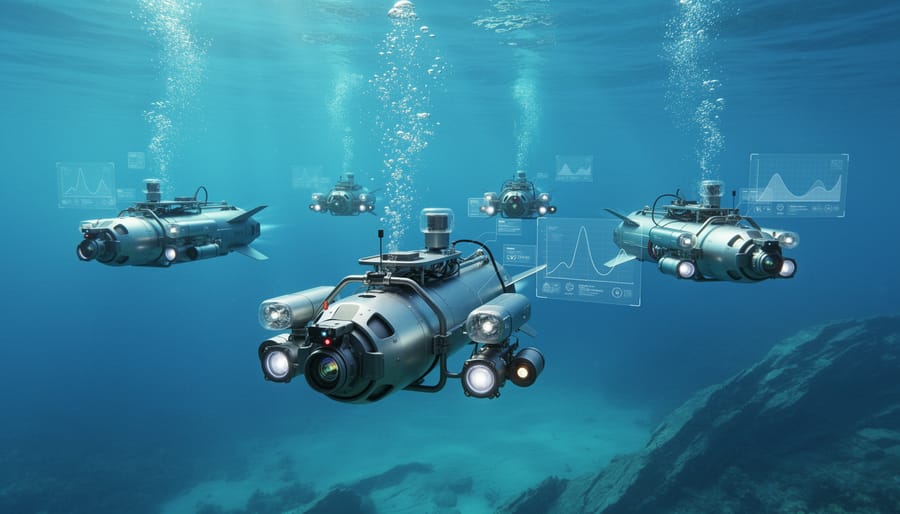
Autonomous underwater vehicles are venturing into previously inaccessible ocean depths, collecting data from environments too dangerous or remote for human exploration. These robotic explorers equipped with advanced sensors gather information on temperature, salinity, biodiversity, and chemical composition, transmitting real-time data to research stations worldwide. Meanwhile, environmental DNA sampling is transforming species monitoring by detecting genetic material organisms leave behind in water samples, allowing scientists to catalog entire ecosystems without ever seeing the creatures themselves.
Perhaps most promising is the emergence of global ocean data sharing networks, breaking down traditional barriers between research institutions and nations. These collaborative platforms enable marine data scientists from different continents to pool their findings, identifying patterns and threats that would be invisible to any single organization. Many of these emerging ocean technologies are creating volunteer opportunities for citizen scientists to contribute observations through mobile apps and community monitoring programs.
This technological convergence holds tremendous promise for ocean conservation. As these tools become more accessible and interconnected, they empower a growing community of marine advocates to protect our blue planet through data-driven action and collaborative discovery.
Marine data scientists stand at the forefront of ocean conservation, transforming vast amounts of information into actionable insights that protect our planet’s most precious ecosystem. Their work bridges the gap between raw numbers and real-world impact, enabling conservationists to make informed decisions that safeguard marine life for generations to come. As our oceans face unprecedented challenges from climate change, pollution, and overfishing, these skilled professionals have become indispensable allies in the fight to preserve marine biodiversity.
The good news? You don’t need to be a data scientist to make a difference. Whether you’re considering a career in marine science, looking for volunteer opportunities with research organizations collecting citizen science data, or simply wanting to support evidence-based ocean policies in your community, there’s a role for everyone. Educators can inspire the next generation of marine scientists, while the general public can participate in beach cleanups that contribute valuable data to ongoing research projects. Every action counts when it comes to protecting our oceans. The question isn’t whether you can help—it’s how you’ll choose to contribute to this vital mission.

jessica
Ava Singh is an environmental writer and marine sustainability advocate with a deep commitment to protecting the world's oceans and coastal communities. With a background in environmental policy and a passion for storytelling, Ava brings complex topics to life through clear, engaging content that educates and empowers readers. At the Marine Biodiversity & Sustainability Learning Center, Ava focuses on sharing impactful stories about community engagement, policy innovations, and conservation strategies. Her writing bridges the gap between science and the public, encouraging people to take part in preserving marine biodiversity. When she’s not writing, Ava collaborates with local initiatives to promote eco-conscious living and sustainable development, ensuring her work makes a difference both on the page and in the real world.