Marine Biodiversity Science Center

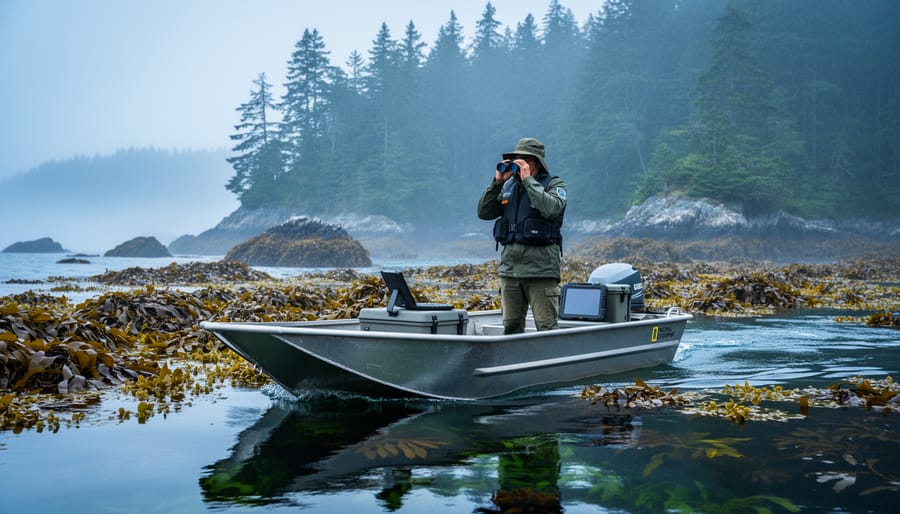
Along the windswept shores of British Columbia’s Great Bear Rainforest, a quiet revolution in conservation is unfolding. Guardian rangers—Indigenous people protecting their ancestral waters—are demonstrating that the most effective approach to marine conservation combines millennia-old wisdom with modern science. These stewards patrol vast territories, monitor endangered species, enforce environmental regulations, and restore damaged ecosystems, achieving conservation outcomes that surpass those of conventional management approaches.
Unlike traditional park rangers who primarily enforce regulations, guardian rangers integrate traditional ecological knowledge passed down through generations with contemporary monitoring techniques. They understand seasonal migration patterns observed by their ancestors, identify subtle ecosystem changes invisible to satellite imagery, and maintain relationships with marine environments spanning thousands of years. This dual expertise makes them uniquely qualified to detect threats early and implement culturally appropriate solutions.
The results speak for themselves. In regions managed by Indigenous Guardian programs, researchers document increased fish populations, healthier kelp forests, and thriving populations of marine mammals. Guardian rangers have successfully restored salmon runs, protected critical spawning habitats, and prevented illegal harvesting activities that threatened species recovery. Their presence creates accountability, builds community engagement, and ensures that conservation decisions reflect both scientific evidence and deep cultural understanding.
This emerging model challenges conventional conservation approaches by recognizing that Indigenous communities are not simply stakeholders in marine protection—they are essential leaders. As climate change accelerates and marine ecosystems face unprecedented pressures, guardian rangers offer a proven pathway forward, one that honors both ecological science and the knowledge systems that sustained these waters for countless generations.
What Are Guardian Rangers?
The Origins of Indigenous Guardian Programs
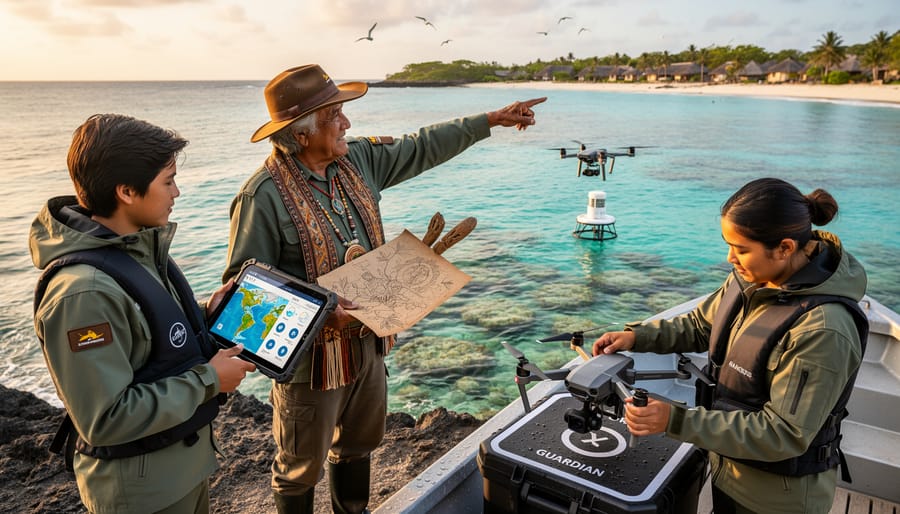
Indigenous Guardian Programs represent a powerful shift in how we approach ecosystem protection, emerging from decades of advocacy by Indigenous communities seeking recognition of their traditional stewardship roles. These programs began gaining momentum in the 1990s and early 2000s, particularly in Australia and Canada, where Indigenous peoples successfully argued that effective conservation required their knowledge, leadership, and rights to be central rather than peripheral.
The movement toward Indigenous-led conservation gained significant traction when studies demonstrated that Indigenous-managed territories often showed better biodiversity outcomes than conventional protected areas. In coastal regions, this recognition became especially urgent as marine ecosystems faced mounting pressures from overfishing, climate change, and pollution.
Australia’s Indigenous ranger programs, launched in 2007, pioneered the model by employing Aboriginal and Torres Strait Islander peoples to manage their traditional lands and seas. Canada followed with the Indigenous Guardians Pilot Program in 2017, which emphasized self-determination and supported communities in designing their own monitoring and protection initiatives.
These programs fundamentally reimagine conservation by acknowledging that Indigenous peoples have successfully managed marine and coastal environments for thousands of years. Rather than imposing external management frameworks, guardian programs empower communities to blend traditional ecological knowledge with modern science, creating more holistic and culturally appropriate approaches to protecting our oceans. This transformation has opened pathways for volunteers and researchers to learn from Indigenous expertise while supporting community-driven conservation goals.
How Community Ranger Networks Operate
Community ranger networks operate through a collaborative framework that bridges local knowledge with regional and national conservation objectives. These networks typically consist of Indigenous marine guardians and community rangers who receive structured training in multiple disciplines, including wildlife monitoring, data collection techniques, emergency response, and conflict resolution. Training programs often blend Western scientific methods with traditional ecological knowledge, creating rangers equipped to address conservation challenges from multiple perspectives.
The organizational structure varies by region but generally includes local ranger teams who maintain day-to-day operations within their territories, coordinating with regional hubs that provide resources, technical support, and data management. These networks collaborate extensively with government agencies, universities, and conservation organizations, sharing information about species populations, habitat health, and emerging threats. This partnership model allows official agencies to extend their reach into remote areas while respecting community autonomy.
Balancing local priorities with broader conservation goals requires ongoing dialogue and adaptive management. Rangers maintain authority over decisions affecting their territories while contributing to larger datasets that inform national and international conservation strategies. Regular network meetings, shared communication platforms, and co-management agreements help align objectives. Success stories from British Columbia’s Coastal Guardian Watchmen Network demonstrate how this balance works effectively, with community rangers documenting critical marine species data while simultaneously addressing local concerns about sustainable fishing practices and cultural site protection.
Traditional Ecological Knowledge Meets Marine Science
Monitoring Marine Species Through a Cultural Lens
Guardian rangers excel at combining traditional practices with modern science to monitor marine species with remarkable effectiveness. Their approach offers unique advantages that complement conventional research methods.
For salmon populations, guardians employ traditional fish fence monitoring techniques alongside modern DNA sampling. In British Columbia’s Great Bear Rainforest, Heiltsuk guardians count returning salmon runs using knowledge passed down through generations, while also collecting tissue samples for genetic analysis. This dual approach has revealed population trends that purely scientific methods missed, including the timing shifts in spawning seasons that elders had observed for years.
Sea turtle monitoring demonstrates similar success. In coastal Australia, Indigenous rangers combine beach patrols during traditional harvest seasons with satellite tagging technology. Their intimate knowledge of nesting sites, accumulated over thousands of years, helps researchers identify critical habitats that might otherwise remain undiscovered. Rangers can distinguish between turtle species by track patterns alone, a skill that takes conventional researchers years to develop.
Marine mammal observation benefits tremendously from traditional ecological knowledge. Inuit guardians in Arctic waters identify narwhal, beluga, and bowhead whale populations through sound recognition and behavioral cues their ancestors taught them. When paired with acoustic monitoring equipment and photo identification databases, this creates comprehensive population assessments.
Guardian rangers also document unusual species sightings and environmental changes in real-time, providing early warning systems for ecosystem shifts. Their constant presence on traditional territories means they notice subtle changes that periodic scientific surveys might overlook, making them invaluable partners in marine conservation efforts.
Sustainable Resource Management Practices
Guardian rangers serve as frontline enforcers of sustainable resource management practices that have sustained coastal communities for generations. These practices represent a careful balance between meeting community needs and maintaining the health of marine ecosystems for future generations.
Traditional harvesting methods form the cornerstone of these management practices. Unlike commercial fishing operations, Indigenous communities have long practiced selective harvesting techniques that allow fish populations to regenerate naturally. Guardian rangers monitor these practices, ensuring that only mature specimens are taken and that spawning grounds remain undisturbed during critical breeding periods. For example, in many coastal First Nations communities, rangers enforce traditional protocols that prohibit harvesting certain species during spawning seasons, giving populations time to reproduce and replenish.
Seasonal restrictions play a vital role in ecosystem protection. Guardian rangers work with community elders to establish and maintain fishing calendars based on both traditional knowledge and contemporary scientific data. These calendars identify when specific areas should remain off-limits to allow recovery periods for depleted stocks or protect vulnerable juvenile populations.
Community-based management systems empower local decision-making while incorporating broader conservation goals. Maria Chen, a marine biologist working alongside guardian rangers in British Columbia, shares: “What makes this approach so effective is the combination of daily monitoring by people who intimately know these waters and scientific validation of traditional practices. The rangers don’t just enforce rules—they’re stewards who understand the ‘why’ behind every restriction.”
This collaborative approach has proven remarkably successful in maintaining biodiversity while supporting sustainable livelihoods, demonstrating that conservation and community well-being can thrive together.
Guardian Rangers on the Front Lines of Marine Conservation
Protecting Critical Marine Habitats
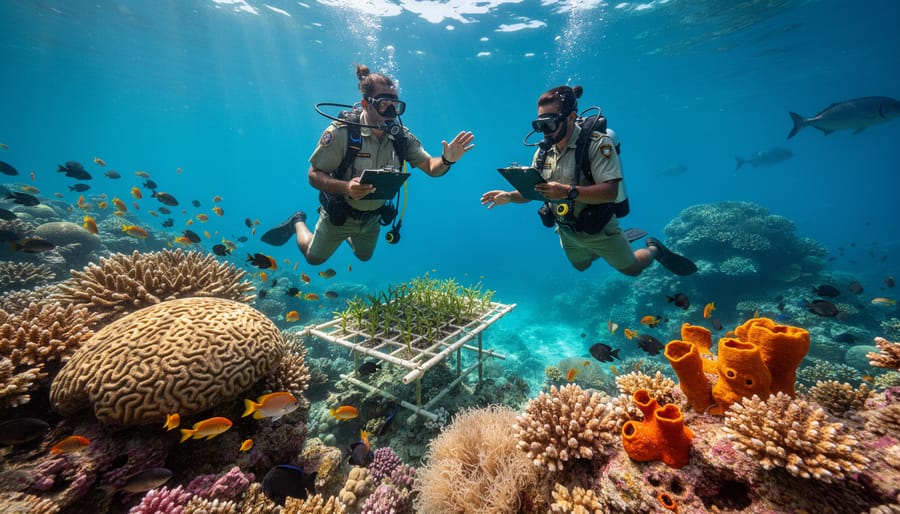
Guardian rangers serve as the frontline defenders of some of the ocean’s most vulnerable ecosystems, conducting regular patrols across coral reefs, mangrove forests, seagrass meadows, and coastal breeding grounds. Their work combines traditional ecological knowledge with modern conservation techniques to monitor ecosystem health, document biodiversity, and prevent destructive activities like illegal fishing, coastal development, and pollution.
In the Great Barrier Reef region, Indigenous guardian rangers from the Wuthathi and Meriam Nation communities have successfully restored degraded reef sections by removing invasive crown-of-thorns starfish and monitoring coral bleaching events. Their intimate knowledge of seasonal patterns helps identify early warning signs of ecosystem stress that might escape conventional monitoring methods.
Mangrove protection efforts have yielded particularly impressive results. In Canada’s Pacific Northwest, Coastal First Nations guardians have mapped and protected over 2,000 hectares of critical mangrove-like estuarine habitat, serving as nursery grounds for salmon populations. These guardians discovered previously undocumented spawning areas by integrating ancestral knowledge of fish migration patterns with GPS tracking technology.
Marine biologist Dr. Sarah Chen, who works alongside guardian programs in the Salish Sea, shares that “guardian rangers notice subtle changes in seagrass bed density and species composition that our quarterly surveys might miss. Their daily presence provides continuous protection and data collection that’s simply impossible with conventional staffing models.”
Coastal breeding ground protection has been equally transformative. Guardian teams in Australia’s Torres Strait monitor and protect sea turtle nesting sites, leading to a 40 percent increase in successful hatchings over five years. They also engage local communities in beach cleanups and nest monitoring, creating broader conservation awareness.
Combating Illegal Fishing and Poaching
Guardian rangers serve as frontline defenders against illegal fishing and poaching activities that devastate marine ecosystems. Their intimate knowledge of local waters, seasonal patterns, and wildlife behavior makes them uniquely effective at detecting unauthorized activities that might escape traditional enforcement efforts. Unlike conventional patrols that follow predetermined routes, guardian rangers apply generations of environmental awareness to identify unusual vessel movements, recognize signs of illegal harvesting, and monitor vulnerable species during critical periods.
The enforcement challenges are significant. Many Indigenous territories span vast coastal areas with limited resources for constant surveillance. Guardian rangers often work in remote locations with unpredictable weather and must balance monitoring duties with evidence collection for legal proceedings. Maria Santos, a guardian ranger in the Pacific Northwest, recalls discovering an illegal gill net operation: “We documented everything carefully, took GPS coordinates, and immediately contacted fisheries officers. Our traditional knowledge helped us understand the full impact on salmon runs that spawn in these waters.”
Successful enforcement requires collaborative partnerships between guardian rangers and government authorities. Rangers typically have authority to monitor and report but rely on fisheries officers, coast guard, and conservation officers for prosecution powers. This partnership model has proven effective, with many programs reporting significant reductions in illegal activities within their territories. Some guardian programs have established rapid-response protocols using satellite phones and GPS technology, enabling real-time coordination with enforcement agencies.
Community engagement strengthens these efforts considerably. Guardian rangers conduct educational outreach, explaining sustainable harvesting practices and the long-term consequences of poaching, transforming potential violators into conservation allies through relationship-building and shared stewardship values.
The Ripple Effect: Benefits Beyond Conservation
Guardian ranger programs create waves of positive change that extend far beyond protecting ecosystems. These initiatives generate meaningful economic opportunities in communities that have historically faced limited employment options. Indigenous guardians receive fair wages, training, and professional development, creating stable jobs in regions where such opportunities are scarce. This employment keeps community members on their traditional lands rather than forcing migration to urban centers for work.
The economic benefits ripple outward. Guardian programs require boats, equipment, and supplies, supporting local businesses. Some communities have developed eco-tourism ventures led by guardians, who share their traditional knowledge and conservation work with visitors. These tourism dollars flow directly into community coffers, funding schools, health services, and cultural programs.
Perhaps most profoundly, guardian ranger programs fuel cultural revitalization. Elders work alongside younger guardians, passing down traditional ecological knowledge that was at risk of being lost. Languages spoken during patrols become living, working languages again. Traditional harvesting practices and seasonal rounds are documented and preserved. One Haida guardian shared how her role reconnected her with stories her grandmother told, creating an unbroken chain of knowledge spanning generations.
Youth engagement represents another powerful benefit. Young people see conservation as a viable career path rooted in their heritage. Guardian programs often include youth training components, where teenagers learn both traditional practices and modern scientific monitoring techniques. This dual education builds confidence and cultural pride while developing practical skills.
The health benefits prove equally significant. Guardians spend extensive time on the land and water, engaging in physical activity that combats rising rates of diabetes and heart disease in Indigenous communities. The mental health impacts are equally important. Working as environmental stewards provides purpose and connection to culture, addressing isolation and depression. Guardians consistently report increased wellbeing, describing their work as healing for both the land and themselves.
These interconnected benefits demonstrate that effective conservation naturally supports thriving human communities, creating sustainable models that honor both ecological and social wellbeing.
How You Can Support Guardian Ranger Initiatives
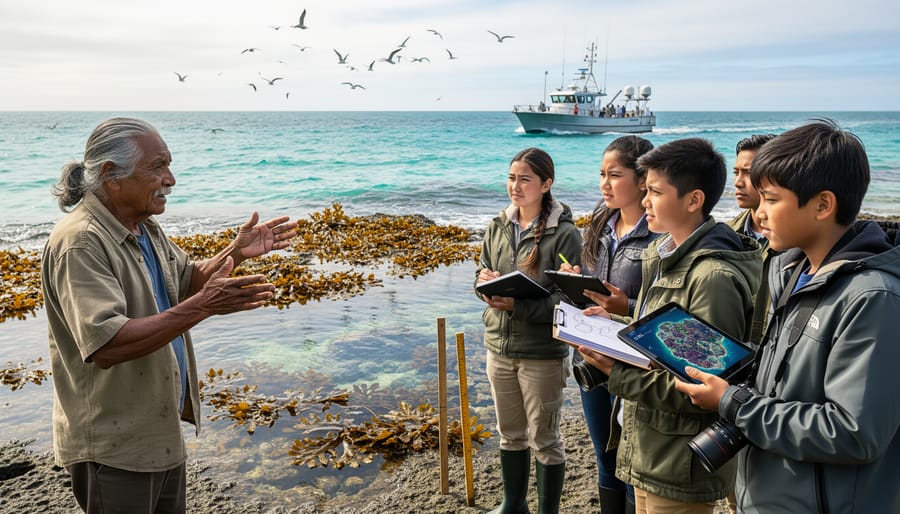
Supporting Guardian Ranger initiatives represents one of the most meaningful ways to contribute to effective, long-term conservation while honoring Indigenous rights and knowledge systems. Whether you’re a conservation professional, educator, or concerned citizen, numerous pathways exist to make a tangible difference.
Direct engagement begins with organizations that partner with Indigenous Guardian Programs. Groups like the Indigenous Leadership Initiative in Canada and the Indigenous Guardians Toolkit in Australia actively seek volunteers with skills ranging from ecological monitoring to data management and educational outreach. Marine biologist Dr. Rachel Torres spent three months volunteering with a coastal Guardian Program in British Columbia, where she helped develop water quality monitoring protocols. “The experience completely transformed my understanding of conservation,” she reflects. “I learned as much from the Guardians as I hopefully contributed to their work.”
Educational advocacy plays an equally vital role. Familiarize yourself with the United Nations Declaration on the Rights of Indigenous Peoples, particularly articles addressing traditional territories and resource management. Share Guardian Ranger success stories through social media, highlighting how these programs achieve measurable conservation outcomes while supporting Indigenous self-determination. Many local conservation opportunities now incorporate Indigenous knowledge frameworks, creating bridges between traditional and contemporary approaches.
Financial support makes Guardian work sustainable. Organizations like the Indigenous Circle of Experts accept donations specifically designated for Guardian Programs, ensuring funds directly support Indigenous-led conservation. Consider redirecting traditional conservation donations toward these initiatives.
Most importantly, amplify Indigenous voices rather than speaking for them. Attend webinars hosted by Guardian Programs, cite Indigenous-led research in academic and professional settings, and advocate for policy frameworks that recognize Indigenous governance in protected area management. True support means creating space for Indigenous communities to lead their own conservation futures.
Guardian rangers represent far more than a conservation strategy—they embody a transformative approach to protecting our ocean ecosystems that recognizes Indigenous peoples as essential leaders in marine stewardship. The success stories emerging from these programs demonstrate that when traditional ecological knowledge merges with contemporary science, and when communities have both authority and resources to manage their ancestral waters, marine biodiversity flourishes in remarkable ways.
However, these programs remain critically underfunded and underrecognized in mainstream conservation efforts. Indigenous-led conservation initiatives protect some of the planet’s most biodiverse marine areas, yet they receive a fraction of global conservation funding. This disparity must change. Supporting guardian ranger programs isn’t just environmentally sound—it’s a matter of honoring Indigenous rights, respecting millennia of ecological wisdom, and choosing the most effective path forward for ocean conservation.
The future of our marine ecosystems depends on collaborative approaches that value diverse knowledge systems and empower those with the deepest connections to the sea. As marine biologist Dr. Sarah Chen shared earlier, guardian rangers are creating blueprints for conservation that work—we simply need to scale them up.
You can make a difference today. Support organizations funding Indigenous-led conservation programs, advocate for policies that recognize Indigenous marine tenure, and if you’re near coastal guardian programs, explore volunteer opportunities to contribute your skills. Share these stories within your networks, educate others about this vital work, and push for increased governmental and philanthropic investment in guardian ranger initiatives. Our oceans need guardians, and those guardians need our support.

jessica
Ava Singh is an environmental writer and marine sustainability advocate with a deep commitment to protecting the world's oceans and coastal communities. With a background in environmental policy and a passion for storytelling, Ava brings complex topics to life through clear, engaging content that educates and empowers readers. At the Marine Biodiversity & Sustainability Learning Center, Ava focuses on sharing impactful stories about community engagement, policy innovations, and conservation strategies. Her writing bridges the gap between science and the public, encouraging people to take part in preserving marine biodiversity. When she’s not writing, Ava collaborates with local initiatives to promote eco-conscious living and sustainable development, ensuring her work makes a difference both on the page and in the real world.