Marine Biodiversity Science Center

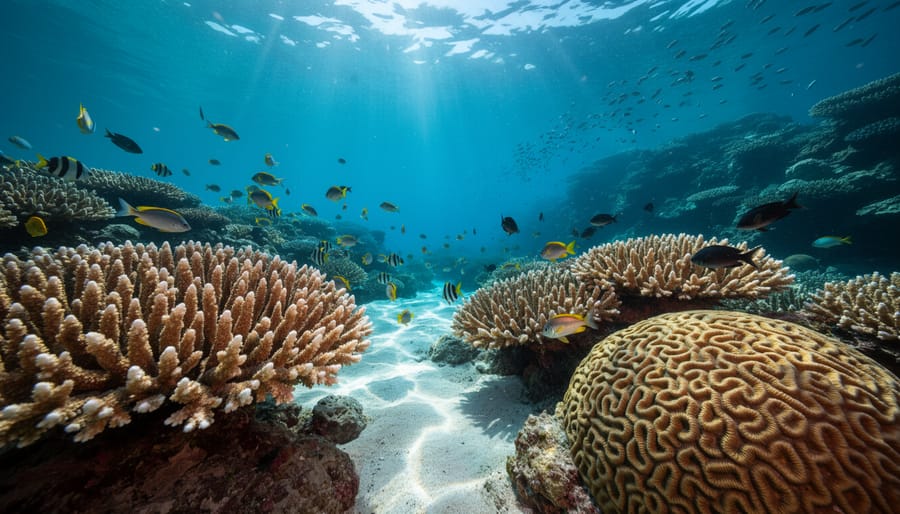
A coral reef ecosystem is a complex, interconnected community of living organisms and their physical environment, centered around calcium carbonate structures built by tiny coral polyps over thousands of years. These underwater cities rank among Earth’s most biodiverse habitats, supporting roughly 25% of all marine species despite covering less than 1% of the ocean floor.
Understanding how coral reef ecosystems function as complete ecological units matters now more than ever. Global reef coverage has declined by nearly half since the 1950s, with warming oceans, pollution, and destructive fishing practices accelerating the damage. Yet these systems remain critical not only to marine life but to human communities worldwide, providing food security, coastal protection, and livelihoods for over 500 million people.
This article breaks down the science behind coral reef ecosystems in accessible terms. You’ll learn what defines these systems beyond the physical coral structures themselves, discover how energy and nutrients flow through reef communities, explore the main types of reefs found in tropical and subtropical waters, and understand their practical applications in everything from medical research to tourism economies. We’ll examine the symbiotic relationships that make reefs possible, the zones that create distinct habitats within a single reef, and the cascade of interactions that keep these systems resilient.
Whether you’re a student building foundational knowledge, an educator seeking clear explanations for your classroom, or simply curious about one of nature’s most spectacular achievements, this guide offers the scientific framework you need. The conservation challenges are real, but so are the solutions. By understanding how these ecosystems work as integrated wholes, we can better protect them and participate in restoration efforts that are already showing promising results in waters around the globe.
What Coral Reef Ecosystems Really Are
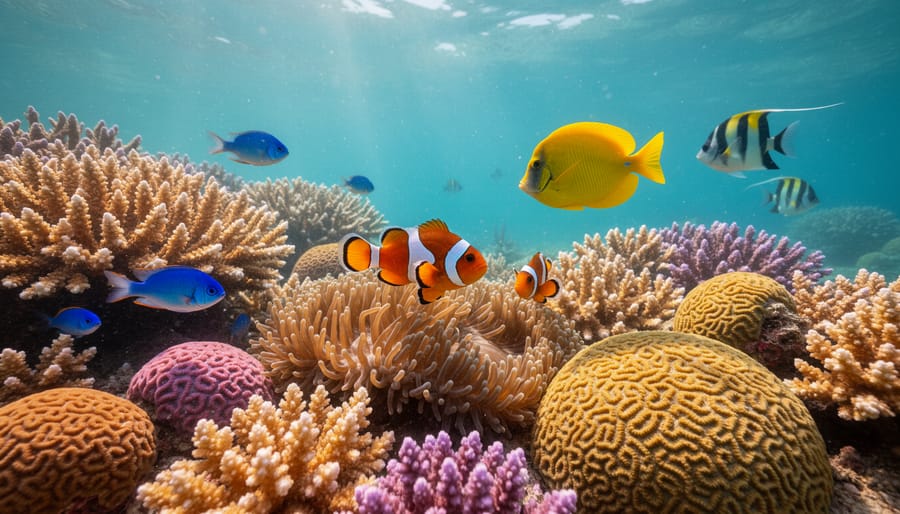
A coral reef ecosystem is far more than a collection of colorful underwater rocks. It’s a living metropolis built by millions of tiny animals called coral polyps, each no larger than a pencil eraser, working together over centuries to create structures that rival cities in their complexity and bustle.
The physical reef itself forms when coral polyps secrete calcium carbonate skeletons, which accumulate over time into massive limestone formations. But the ecosystem encompasses everything that lives on, in, and around these structures, from microscopic algae to sharks, from sea sponges to sea turtles. Think of the reef structure as the architecture, while the ecosystem represents the entire community of residents, their relationships, and the life-support systems that keep everything running.
Understanding these components helps clarify what makes coral reef ecosystems unique:
- Corals (polyps)
- Soft-bodied animals related to jellyfish that form colonies and build the reef’s calcium carbonate skeleton. Individual polyps extend tentacles at night to capture plankton while housing algae during the day.
- Zooxanthellae
- Microscopic algae living inside coral tissue that photosynthesize and provide up to 90% of the coral’s energy. This partnership gives healthy corals their vibrant colors.
- Calcium carbonate
- The chemical compound (limestone) that corals extract from seawater to build their hard skeletons. These accumulating structures create the reef’s foundation over thousands of years.
- Reef zones
- Distinct vertical and horizontal areas of the reef with different environmental conditions, from shallow crest to deep slope. Each zone supports specialized communities adapted to varying light, wave action, and depth.
- Biodiversity hotspots
- Areas supporting exceptional species diversity despite covering less than 0.1% of the ocean floor. Coral reefs host roughly 25% of all marine species.
The biological dimension extends beyond the corals themselves to encompass fish, invertebrates, algae, bacteria, and countless other organisms living in tight interdependence. Geologically, the reef represents centuries of skeletal accumulation shaped by ocean currents, storms, and tectonic forces. Chemically, the ecosystem operates as a finely tuned system managing calcium, carbon, nitrogen, and other elements through constant cycling.
What distinguishes reef ecosystems from other marine habitats is this three-dimensional architecture created by living organisms. The complex structure provides countless niches and hiding spots, allowing reef zonation patterns where different species occupy specific depth ranges and microhabitats. This architectural complexity, combined with warm, clear, sunlit waters, creates conditions for unmatched biodiversity in the ocean.
How Coral Reef Ecosystems Function
The Coral-Algae Partnership
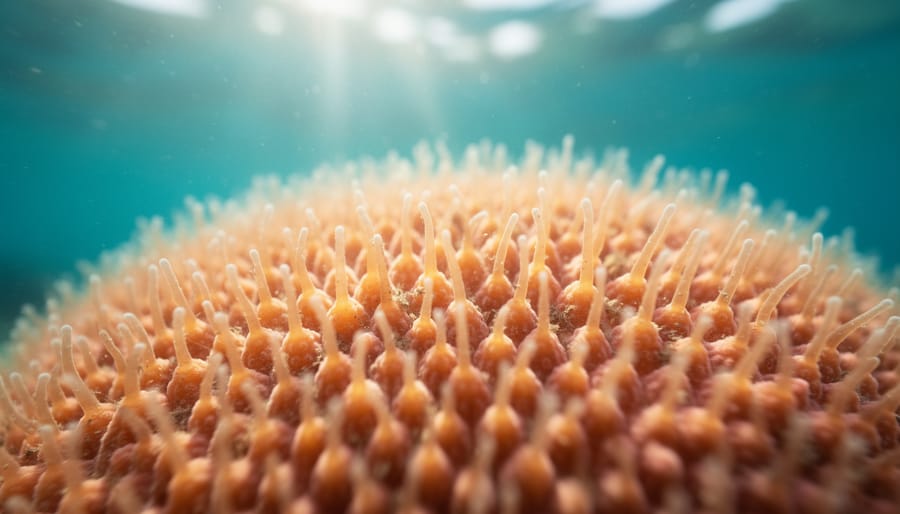
At the heart of every thriving reef lies a remarkable coral-algae partnership between tiny coral polyps and microscopic algae called zooxanthellae. These single-celled algae live inside coral tissue, using sunlight to photosynthesize and produce sugars and oxygen. In return, the coral provides the algae with shelter and access to compounds needed for photosynthesis. This exchange is astonishingly efficient: zooxanthellae supply up to 90% of the energy coral polyps need to survive, grow, and build their calcium carbonate skeletons.
Without this partnership, coral growth would slow to a crawl. The energy from photosynthesis allows corals to deposit limestone at rates fast enough to construct the massive reef structures that support entire ecosystems. Zooxanthellae also give corals their vibrant colors, from golden browns to vivid greens and purples.
But this relationship is fragile. When water temperatures rise just one or two degrees Celsius above normal seasonal highs, corals become stressed and expel their zooxanthellae in a process called bleaching. Without their algal partners, corals lose both their color and their primary food source. They can survive for weeks in this bleached state, but prolonged stress leads to starvation and death. Ocean acidification, pollution, and excessive light can also disrupt this delicate balance, threatening the foundation of the entire reef ecosystem.
Energy Flow and Nutrient Cycling
Coral reefs exist in what scientists call “marine deserts”, crystal-clear tropical waters that look pristine precisely because they contain very little free-floating nutrients. Yet these ecosystems support more species per square meter than almost anywhere else in the ocean. They accomplish this apparent paradox through extraordinarily tight recycling loops that capture and reuse nearly every scrap of energy and matter.
The process starts with sunlight feeding zooxanthellae algae inside coral polyps, which then share sugars with their hosts. This primary production forms the base, but energy quickly spreads outward. Herbivorous fish graze on algae covering dead coral surfaces. Small invertebrates filter plankton from the water column. Predatory fish hunt the grazers. At each step, some energy transfers upward through the food web while much more gets locked in bodies, waste, and eventually death.
Here’s where the magic happens: unlike open ocean ecosystems where dead material sinks away into the abyss, reef debris stays trapped in the reef’s porous structure. Bacteria, fungi, sponges, worms, and countless other organisms break down this detritus, releasing nutrients back into forms that algae can absorb. This is how decomposers keep reefs functioning in nutrient-starved waters, they transform death back into growth with almost no waste escaping the system. A single nitrogen atom might cycle through dozens of organisms before finally washing away, allowing reefs to build massive structures from nearly nothing.
Biodiversity and Interconnections
A single coral reef can support thousands of species in an intricate web of dependencies that rivals any rainforest. This remarkable ocean biodiversity exists because reef organisms have evolved highly specialized relationships over millions of years.
Predator-prey dynamics maintain population balance throughout the reef. Groupers hunt smaller fish that feed on algae-eating invertebrates, creating a cascade effect that prevents any single species from dominating. Meanwhile, cleaning stations demonstrate cooperation: small wrasses and shrimp remove parasites from larger fish like moray eels, gaining a meal while their “clients” enjoy better health. These partnerships are so reliable that predators won’t eat their cleaners, even when hungry.
The reef structure itself creates countless microhabitats. Branching corals shelter juvenile fish, crevices hide octopuses and lobsters, and the sand patches between coral heads host burrowing creatures that aerate the substrate. When one species disappears, the effects ripple outward in unexpected ways.
Marine biologist Dr. Sarah Chen recalls watching a Nassau grouper return to the same cleaning station daily for weeks. “The wrasses knew exactly where to find parasites behind its gills. One morning, the grouper arrived with a fish hook embedded in its jaw. The cleaners worked around it carefully, still performing their service. That moment showed me how these relationships transcend simple instinct, there’s genuine interdependence happening.”
Different Types of Coral Reef Ecosystems
Coral reef ecosystems come in several distinct forms, each shaped by geological history and environmental conditions. Understanding these types helps reveal how reef systems adapt to different settings and support varied marine communities.
Fringing Reefs grow directly along coastlines, forming narrow platforms that extend from the shore into the sea. These are the most common reef type globally and typically the youngest, often found bordering volcanic islands or continental landmasses. The reef flat, the shallow area between shore and reef crest, may expose partially at low tide, creating tide pools teeming with small fish, crabs, and anemones. Fringing reefs experience greater variation in water conditions than offshore reefs because of freshwater runoff, sediment from land, and temperature fluctuations in shallow water. This variability creates a distinctive ecosystem where only hardy coral species thrive close to shore, while more sensitive species dominate the outer edge where oceanic water brings clearer conditions and more stable chemistry.
Barrier Reefs parallel coastlines but sit farther offshore, separated from land by a lagoon that can span from a few hundred meters to many kilometers wide. The Great Barrier Reef represents this type at its most spectacular scale, stretching over 2,300 kilometers along Australia’s coast. These reefs form when fringing reefs grow upward and outward as the coastline subsides or sea levels rise, creating the characteristic lagoon. The protected waters within barrier reef lagoons become nurseries for countless juvenile fish and invertebrates, offering calmer conditions than the wave-battered outer reef. The barrier itself acts as a breakwater, dissipating ocean swells before they reach shore. Ecologically, barrier reefs support exceptional biodiversity because they provide multiple habitat zones: the sheltered lagoon, the reef flat, the dynamic reef crest where waves break, and the steep outer slope dropping into deep water.
Atolls are ring-shaped reefs encircling a central lagoon, with no land mass inside the ring except perhaps small coral islands called cays. Charles Darwin first explained their formation: they begin as fringing reefs around volcanic islands, then become barrier reefs as the island subsides, and finally form atolls when the original island sinks completely below sea level, leaving only the living reef rim. The Maldives and countless Pacific island chains showcase this process in various stages. Atoll lagoons create unique ecosystems, semi-enclosed marine environments where water circulates through channels in the reef. These lagoons often harbor seagrass beds and different coral communities adapted to the calmer, sometimes warmer waters inside the atoll.
Patch Reefs are isolated coral formations rising from lagoon or shelf floors, scattered like marine oases across sandy or rubble bottoms. Unlike the continuous structures of other reef types, patch reefs form individual coral towers or mounds, each developing its own micro-ecosystem. They serve as stepping stones for species dispersal and provide crucial habitat in areas where continuous reef cannot develop.
Ecological Roles and Real-World Applications
Coral reef ecosystems deliver tangible benefits that extend far beyond their beauty, supporting both marine biodiversity and human welfare in measurable ways. These underwater structures function as natural infrastructure, protecting coastlines from wave energy and storm damage that would otherwise erode beaches and threaten coastal development. A healthy reef can reduce wave energy by 97%, saving millions in disaster recovery costs and preventing the displacement of communities living near the shore.
For fisheries, reefs serve as irreplaceable nurseries and hunting grounds. Roughly 25% of all marine fish species depend on coral reefs at some point in their life cycle, despite reefs covering less than 1% of the ocean floor. Commercial fisheries targeting snapper, grouper, and countless other species rely on these ecosystems to produce the protein that feeds over a billion people globally. The economic value of reef fisheries alone reaches tens of billions of dollars annually, supporting livelihoods from small-scale artisanal fishing to larger commercial operations.
The pharmaceutical and biomedical applications emerging from reef research hold enormous promise. Scientists have isolated compounds from coral reef organisms that inform treatments for cancer, arthritis, bacterial infections, and Alzheimer’s disease. The unique chemical defenses developed by sponges, soft corals, and other reef dwellers represent millions of years of evolutionary problem-solving, offering blueprints for medicines we haven’t yet imagined.
Coral reefs deliver essential ecosystem services that sustain both nature and human communities:
- Storm surge buffering that protects infrastructure and reduces coastal erosion
- Nursery habitat for commercial fish species that support global food security
- Biomedical research sources yielding treatments for serious diseases
- Carbon sequestration through calcification and integration with broader ocean processes
- Economic benefits to coastal communities through tourism, recreation, and fisheries income
Tourism revenue from reef-related activities contributes over $35 billion annually to the global economy, funding jobs for millions of people in countries where alternative employment opportunities may be scarce. This economic engine depends entirely on maintaining healthy, vibrant reef ecosystems that attract divers, snorkelers, and coastal visitors.
While kelp ecosystems provide similar coastal protection and biodiversity support in temperate waters, tropical coral reefs remain unmatched in their combination of species richness and concentrated ecosystem services. The interconnected nature of these benefits means that reef degradation doesn’t just harm marine life, it undermines coastal security, food systems, medical research, and economic stability for communities worldwide.
Threats Facing Coral Reef Ecosystems
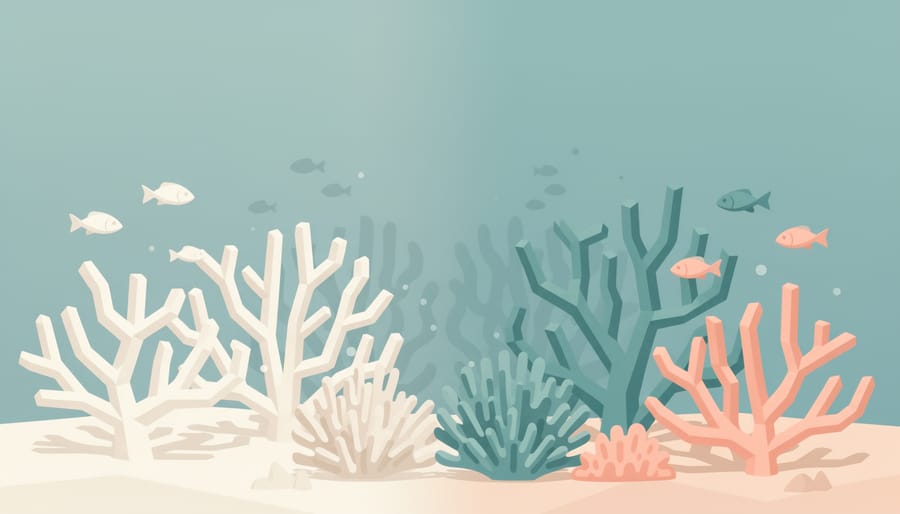
Coral reef ecosystems face real, urgent challenges, but understanding these threats is the first step toward solving them. While the situation demands attention, reefs have shown remarkable resilience when we give them the chance to recover.
Climate change and ocean warming top the list of concerns. When water temperatures rise just 1-2°C above normal summer maximums, corals expel their zooxanthellae partners in a stress response called bleaching. The coral turns ghostly white and, without its algae, begins to starve. Repeat bleaching events weaken entire reef systems. The good news? Corals can recover if temperatures drop quickly enough, and scientists are identifying heat-tolerant coral strains that offer hope for restoration efforts.
Ocean acidification works more quietly but just as dangerously. As seawater absorbs excess atmospheric carbon dioxide, it becomes more acidic, making it harder for corals to build their calcium carbonate skeletons. Growth slows, and existing structures become more brittle. Reducing carbon emissions tackles this threat at its source, while local reef management can help buffer some acidification effects.
Pollution arrives in many forms: agricultural runoff carrying fertilizers that fuel algae blooms, plastic debris smothering coral, and sediment from coastal development blocking sunlight. These stressors weaken coral immunity and favor algae over coral growth. Improved land management, better wastewater treatment, and reducing plastic use all make measurable differences.
Overfishing disrupts the delicate balance that keeps reefs healthy. Remove too many herbivorous fish, and algae overgrows the coral. Take out too many predators, and prey populations explode, throwing the food web off balance. Marine protected areas and sustainable fishing practices allow fish populations to rebuild, restoring ecosystem function.
Physical destruction from anchors, careless divers, destructive fishing methods, and coastal construction directly damages reef structure that took centuries to build. Education, proper mooring systems, and careful dive practices prevent most accidental harm.
These threats often work together, making reefs more vulnerable. A coral weakened by pollution can’t handle warming as well. But the flipside matters too: protecting reefs from local stressors, pollution, overfishing, physical damage, makes them more resilient to global challenges like warming oceans. Every action counts, and success stories from around the world prove that focused conservation efforts genuinely work.
How You Can Support Coral Reef Conservation
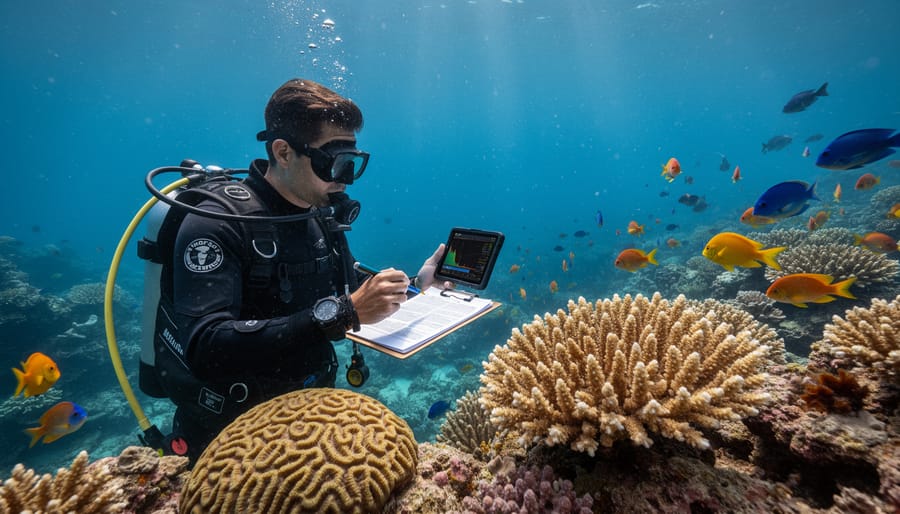
You don’t need specialized training or expensive equipment to make a meaningful difference for coral reefs. Conservation organizations worldwide are building networks of everyday people who contribute to reef protection through hands-on programs that welcome beginners.
The Marine Biodiversity Science Center offers several entry points for aspiring reef advocates. Their citizen science program trains volunteers to identify fish species, monitor coral bleaching events, and document reef health during guided snorkel surveys. These observations feed into global databases that scientists use to track ecosystem changes over time. Even a single weekend of data collection adds valuable information to conservation efforts.
If you live far from coastal waters, remote opportunities exist. You can help classify underwater photos through online platforms, transcribe historical reef research documents, or join virtual advocacy campaigns that influence policy decisions. Many organizations need grant writers, social media coordinators, and outreach volunteers who work entirely from home.
Sarah Chen, a software engineer from Denver, started volunteering with reef monitoring programs during annual vacations to Hawaii. “I thought I’d feel like a tourist playing scientist,” she says, “but after training, I realized my observations actually mattered. Last year, I documented an early bleaching event that prompted researchers to study heat stress patterns in that area. Knowing my two hours of snorkeling contributed to real research changed how I see my role in conservation.”
Beyond organized programs, individual choices compound into collective impact. Reducing carbon emissions through transportation and energy choices directly addresses the climate change threatening reefs. Choosing reef-safe sunscreen prevents chemical damage during beach visits. Supporting sustainable seafood removes pressure from reef fish populations.
Political advocacy amplifies your voice. Contact elected officials about marine protected area expansion, attend public comment periods on coastal development projects, or donate to legal funds defending reef ecosystems. Every email, signature, and contribution shifts the political calculus toward conservation.
Start small with one action, then build from there. Momentum matters more than perfection.
How The Coral Reef Ecosystem Works
Think of a coral reef ecosystem as a bustling underwater city where every resident has a job that keeps the whole place running. The process starts with sunlight penetrating the shallow waters, which the zooxanthellae algae living inside coral tissues capture and convert into energy through photosynthesis. This energy feeds the coral polyps, which use it to build their calcium carbonate skeletons, adding to the reef structure bit by bit, year after year.
As the reef grows, it creates thousands of nooks and hiding spots that attract fish, crustaceans, and other creatures. These animals bring nutrients into the system through their waste and by feeding in surrounding waters then returning to the reef. Bacteria and decomposers break down dead matter, recycling nutrients back into a form the corals and algae can use again.
The whole mechanism operates on tight loops: nothing goes to waste. Predators control prey populations, preventing any one species from dominating. Cleaner fish and shrimp remove parasites from larger fish, keeping everyone healthy. Storm damage creates rubble that eventually becomes new habitat for different species, maintaining the cycle of growth, disturbance, and renewal that has sustained these ecosystems for millions of years.
Common Questions About Coral Reef Ecosystems
The questions people ask about coral reef ecosystems often reveal the gap between what we see on a snorkeling trip and the slow, intricate processes happening beneath the surface. Understanding these timescales and mechanisms helps us appreciate both the fragility and surprising resilience of these systems.
How long does it take for a coral reef to form?
Coral reefs grow incredibly slowly, typically adding just a few millimeters to a few centimeters per year depending on species and conditions. A substantial reef structure can take thousands to millions of years to develop, with some of the world’s largest barrier reefs representing millions of years of continuous growth and calcium carbonate deposition.
Can damaged coral reefs recover on their own?
Reefs can recover from disturbances if conditions improve and the damage isn’t catastrophic, but recovery is painfully slow. Minor bleaching events may see coral bounce back within months to a few years, while severe physical damage or repeated stress events can take decades or longer, and some reefs may never fully return to their original state without intervention.
What makes some coral reefs more resilient than others?
Reef resilience depends on biodiversity, genetic diversity within coral populations, water quality, connectivity to other reefs for larval recruitment, and the presence of herbivorous fish that control algae growth. Reefs with high species diversity and strong ecological connections tend to recover faster because they have more functional redundancy when individual species decline.
Do my individual actions really matter for reef health?
Yes, individual choices accumulate into collective impact. Reducing your carbon footprint helps slow ocean warming and acidification, choosing reef-safe sunscreen prevents chemical damage, supporting sustainable seafood reduces fishing pressure, and participating in conservation programs directly protects reef habitats, every action contributes to the larger effort keeping these ecosystems functional.
The connection between personal choices and reef health isn’t always obvious when you’re hundreds or thousands of miles from the nearest coral reef. Yet climate change, the primary threat to reefs globally, is driven by cumulative emissions from billions of daily decisions. Similarly, the demand for unsustainable seafood, products containing harmful chemicals, and poorly planned coastal development all trace back to consumer choices and civic engagement.
What encourages many marine biologists is that we’re learning more about reef resilience every year. Some coral populations show genetic adaptations to warmer water, certain reef configurations naturally resist bleaching, and restored reefs sometimes develop greater resilience than their degraded predecessors. This knowledge informs smarter conservation strategies, but only if we give reefs the breathing room they need by addressing the stressors we can control now.
Standing before a thriving coral reef, a kaleidoscope of colors, movements, and life, you witness one of Earth’s most sophisticated natural systems. These ecosystems represent millions of years of evolutionary refinement, where countless species have learned to cooperate, compete, and coexist in ways that continue to astound marine scientists. The complexity we’ve explored throughout this article barely scratches the surface of what reefs accomplish daily: transforming sunlight into shelter, converting nutrients into abundance, and supporting more biodiversity per square meter than almost anywhere else on our planet.
The challenges facing coral reefs are real and documented. Yet the story doesn’t end with bleaching events or acidification. Around the world, reefs demonstrate remarkable resilience when given the chance. Protected areas show recovery. Community-led conservation efforts yield measurable improvements. Marine protected zones see fish populations rebound within years, not decades. These successes prove that informed action makes a tangible difference.
Your connection to coral reef ecosystems matters, regardless of how far you live from tropical waters. The choices you make, from the seafood you purchase to the organizations you support, ripple through economic and ecological systems that directly affect reef health. The Marine Biodiversity Science Center offers multiple pathways for meaningful involvement: citizen science programs that contribute to research, monitoring initiatives that track reef recovery, and volunteer opportunities that put you alongside marine biologists working to understand and protect these systems.
Coral reefs have survived ice ages, sea level changes, and countless natural upheavals. With collective commitment, they’ll thrive through this human-influenced era too. The question isn’t whether reefs can endure, it’s whether we’ll join the effort to ensure they do.

jessica
Ava Singh is an environmental writer and marine sustainability advocate with a deep commitment to protecting the world's oceans and coastal communities. With a background in environmental policy and a passion for storytelling, Ava brings complex topics to life through clear, engaging content that educates and empowers readers. At the Marine Biodiversity & Sustainability Learning Center, Ava focuses on sharing impactful stories about community engagement, policy innovations, and conservation strategies. Her writing bridges the gap between science and the public, encouraging people to take part in preserving marine biodiversity. When she’s not writing, Ava collaborates with local initiatives to promote eco-conscious living and sustainable development, ensuring her work makes a difference both on the page and in the real world.