Marine Biodiversity Science Center

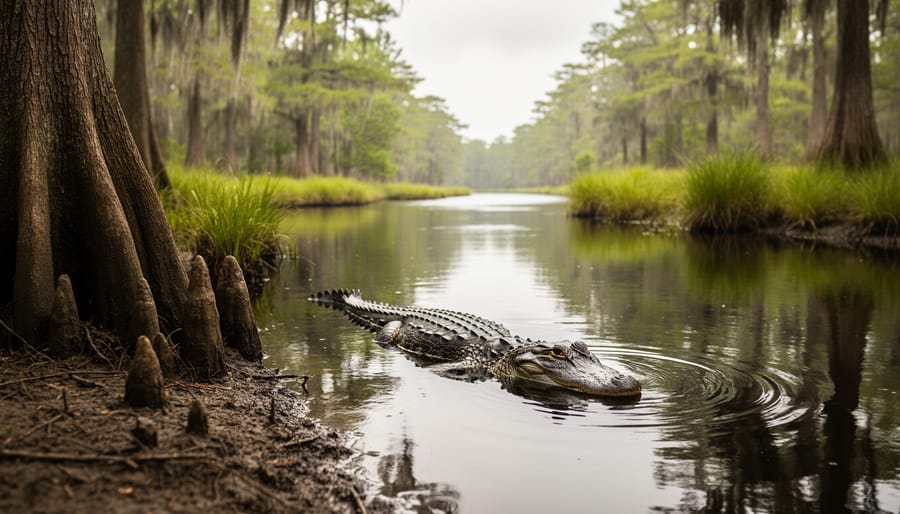
American alligators inhabit the southeastern United States, from North Carolina to Texas, thriving in freshwater environments including swamps, marshes, rivers, lakes, and coastal wetlands. These powerful reptiles require warm climates, slow-moving or still waters, and access to both aquatic and terrestrial habitats to complete their complex life cycle.
Understanding where alligators live matters for more than academic curiosity. These apex predators shape entire wetland ecosystems creating “gator holes” that provide crucial drought refuges for fish, turtles, wading birds, and countless other species. When we protect alligator habitat, we safeguard biodiversity hotspots that filter water, buffer coastlines, and sequester carbon.
The geographic footprint of American alligators spans approximately 750,000 square miles, concentrated in states where January temperatures rarely dip below freezing for extended periods. While their range has fluctuated throughout history due to hunting pressure and habitat loss, conservation efforts since the 1970s have allowed populations to rebound dramatically. Today, an estimated five million alligators inhabit their native range, a conservation success story that demonstrates what coordinated protection can achieve.
But alligator habitat faces mounting pressures. Coastal development fragments wetlands, sea level rise intrudes saltwater into freshwater marshes, and altered hydrology disrupts the seasonal water fluctuations these reptiles depend on. The next decade will prove critical as climate patterns shift and human populations expand into traditional alligator territory.
This exploration reveals not just where alligators live, but why those specific environments matter and how we can participate in preserving them. From the cypress swamps of Louisiana to the tidal rivers of Georgia, alligator habitat tells a larger story about wetland conservation and our relationship with apex predators that have survived for millions of years.
Geographic Range and Distribution
The American alligator inhabits a distinct coastal crescent stretching across the southeastern United States, with its alligator range extending from North Carolina’s coastal plains southward through Florida and westward to the Rio Grande in Texas. This distribution follows the Atlantic and Gulf coastal plains, where warm temperatures and abundant freshwater habitats create ideal conditions for these ectothermic reptiles.
North Carolina marks the northern edge of established populations, though occasional sightings occur farther north during warmer years. The species becomes increasingly abundant moving southward, with Florida hosting the densest concentrations. Louisiana rivals Florida in total numbers, supporting robust populations across its extensive wetland systems. From there, the range continues west through coastal Mississippi, Alabama, and into eastern Texas, where the Edwards Plateau effectively forms the western boundary.
| State | Estimated Population (2026) | Primary Habitat Types | Conservation Status |
|---|---|---|---|
| Florida | 1.3 million | Everglades, lakes, marshes | Stable, fully recovered |
| Louisiana | 2 million | Coastal marshes, swamps | Stable, expanding |
| Georgia | 200,000 | Okefenokee Swamp, rivers | Stable |
| Texas | 400,000 | Gulf marshes, bayous | Recovering, increasing |
| South Carolina | 100,000 | Coastal wetlands, rivers | Stable |
Climate plays the controlling role in limiting distribution. American alligators require extended warm seasons for proper metabolism, growth, and reproduction. They cannot survive prolonged freezing conditions, which explains why populations thin dramatically north of coastal South Carolina. The species tolerates brief cold snaps by entering dens or employing a remarkable survival technique: freezing in place with their snouts protruding above ice to maintain breathing.
Population densities vary considerably even within states. Coastal regions with extensive wetland networks support far higher numbers than inland areas. Florida’s lake country and Louisiana’s coastal parishes represent peak density zones, sometimes exceeding 10 alligators per acre in prime habitat. Conversely, the western portions of Texas and Oklahoma’s southeastern corner see only scattered individuals.
Human development has reshaped distribution patterns in recent decades. Urban expansion has eliminated some traditional habitats while creating new ones through golf course ponds and stormwater systems. This has led to surprising population increases in suburban areas, particularly across central and south Florida, where alligators now thrive alongside human communities in ways unimaginable fifty years ago.
Primary Habitat Types
Freshwater Marshes and Swamps
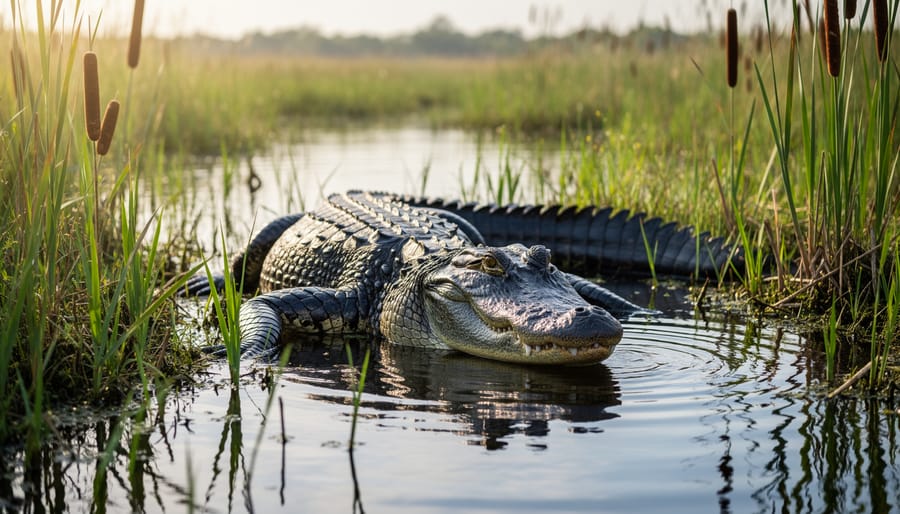
Freshwater marshes and swamps represent the quintessential American alligator habitat, offering everything these reptiles need to thrive. These slow-moving wetlands maintain water depths typically ranging from six inches to several feet, creating the perfect balance for hunting, thermoregulation, and movement. Alligators favor areas where they can easily transition between shallow margins for basking and deeper channels for cooling off or escaping danger.
The Florida Everglades stands as the most iconic alligator marsh system, supporting the highest density of these reptiles anywhere in their range. This vast “river of grass” provides millions of acres of interconnected sloughs, sawgrass prairies, and tree islands. Similarly important are Louisiana’s Atchafalaya Basin, Georgia’s Okefenokee Swamp, and the coastal marshes stretching across the Gulf states, each hosting robust alligator populations.
Vegetation plays a critical role in making these habitats suitable. Dense stands of cattails, rushes, and sawgrass provide cover for hunting and nesting, while cypress trees and tupelo gums offer shade along deeper channels. Alligators actively shape these environments by creating “gator holes”, depressions they excavate and maintain that hold water during dry seasons, becoming vital refuges for fish, turtles, and wading birds.
Seasonal water level fluctuations dramatically affect habitat use. During wet summers, alligators disperse across broad marshes to feed and establish territories. As winter dry seasons concentrate water into channels and permanent ponds, alligators congregate in these shrinking pools, sometimes densely packed until spring rains return.
Lakes, Ponds, and Reservoirs
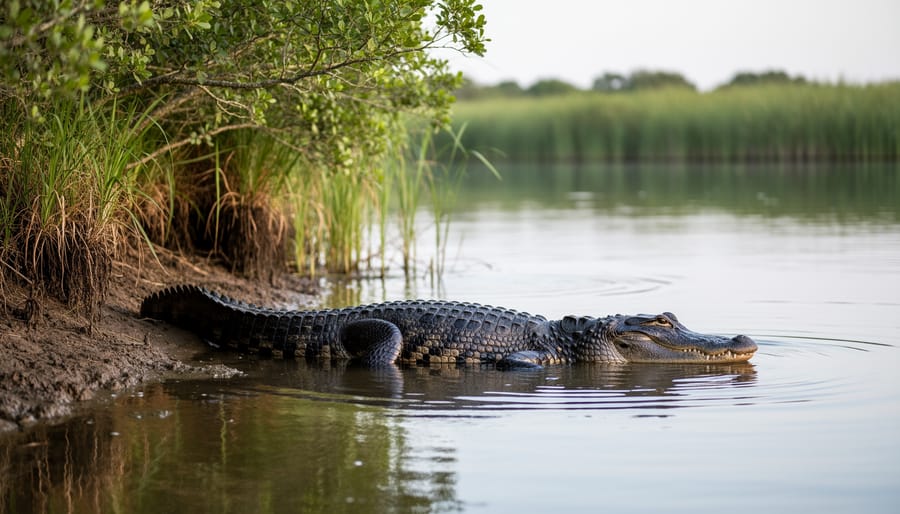
American alligators demonstrate remarkable adaptability in their use of standing water bodies, from small farm ponds to expansive reservoirs covering thousands of acres. Unlike flowing waterways, these still-water environments provide stable territories where alligators can establish long-term residency, often remaining in the same lake or pond system for years.
Size matters less than habitat quality. A two-acre pond with dense shoreline vegetation and adequate prey can support several adult alligators, while a barren 50-acre reservoir might host only a few. What draws them to these waters is the presence of shallow areas for basking, sufficient depth to escape extreme temperatures, and a healthy prey base of fish, turtles, and waterfowl.
Shoreline vegetation proves critical for successful occupation. Dense stands of cattails, sawgrass, and cypress along the water’s edge offer concealment for hunting, shade during summer heat, and protected zones for juveniles to escape predation. Female alligators specifically seek vegetated banks for constructing their mound nests, which require both proximity to water and elevation above typical water levels.
Man-made reservoirs and farm ponds have actually expanded available habitat in some regions. These artificial water bodies, when properly vegetated and maintained, can function as valuable secondary habitat, particularly in areas where natural wetlands have been lost to development.
Rivers and Streams
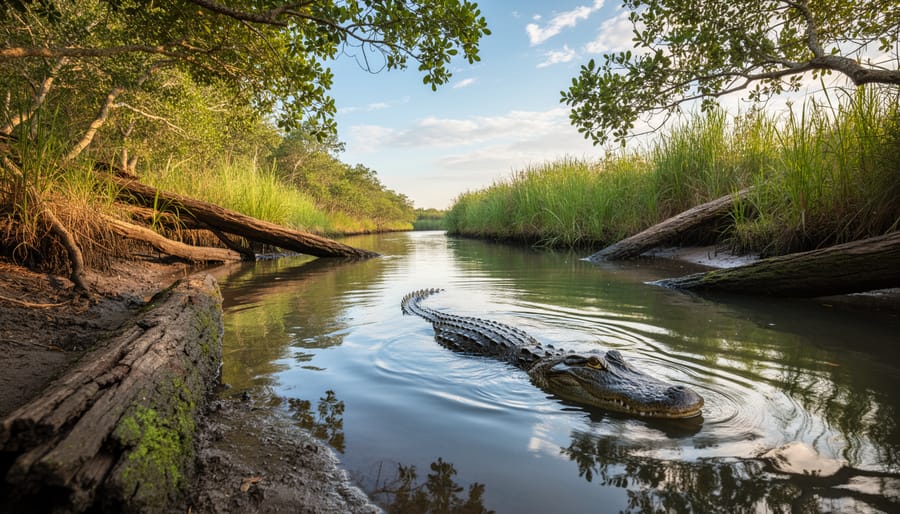
American alligators inhabit rivers and streams across their range, but they show a strong preference for slow-moving waterways with minimal current. You’ll find them in coastal rivers, sluggish tributaries, and oxbow channels where gentle water flow allows them to conserve energy while hunting. Fast-flowing water presents several challenges: it makes thermoregulation difficult, increases the energy required for swimming, and disperses prey populations that alligators rely on.
One remarkable feature of alligators is their tolerance for brackish water, though they aren’t true saltwater dwellers. Coastal rivers and tidal creeks where fresh and salt water mix can support alligator populations, particularly in the lower reaches of river systems. Alligators possess specialized salt glands on their tongues, but these aren’t as efficient as those in crocodiles. They can survive brief periods in brackish conditions and occasionally venture into estuarine environments, especially during dispersal or when seeking new territory.
Rivers provide crucial corridors connecting different wetland habitats. During droughts, alligators concentrate in deeper river pools, and these waterways serve as pathways for younger alligators dispersing from natal areas. The vegetated banks and sandbars along slow rivers offer ideal basking sites and access to nesting grounds.
Urban and Suburban Waterways
American alligators have proven remarkably adaptable to human-modified landscapes, increasingly establishing themselves in urban and suburban water features across the Southeast. Golf course ponds have become particularly popular habitats, offering calm water, abundant prey in the form of fish and waterfowl, and well-maintained shorelines with minimal disturbance. Retention basins and stormwater management ponds, originally designed purely for flood control, now support thriving alligator populations in cities like Orlando, Charleston, and Houston. These artificial wetlands often provide ideal conditions: consistent water levels, vegetated edges for basking and nesting, and a steady food supply drawn to these green spaces.
Urban canals and drainage systems also host alligators, especially in South Florida where centuries-old waterways crisscross residential neighborhoods. The reptiles navigate these concrete-lined channels with ease, sometimes appearing in swimming pools or backyard ponds after heavy rains raise water levels and blur territorial boundaries. This growing overlap between alligator habitat and human development requires new management approaches.
Wildlife authorities now conduct regular relocations from high-traffic areas, though many municipalities have adopted “learn to coexist” educational programs recognizing that alligators help control rodent and invasive species populations. Their successful colonization of suburban waterways demonstrates both their ecological flexibility and the unintended wildlife corridors created by modern stormwater infrastructure.
Essential Habitat Features
Water Quality and Temperature Requirements
American alligators demonstrate remarkable tolerance for varying water conditions, though they thrive best within specific parameters. Water temperature directly governs their activity levels, metabolism, and overall survival. These ectothermic reptiles prefer water temperatures between 82°F and 92°F (28°C to 33°C) for optimal function, though they tolerate a much broader range. Below 70°F (21°C), their metabolism slows significantly, and they become lethargic. When water temperatures drop below 55°F (13°C), alligators enter a state of dormancy in their dens, barely moving for weeks or months until conditions improve.
Temperature also determines reproductive success. Eggs require sustained nest temperatures between 86°F and 93°F (30°C to 34°C) to develop properly, with the specific temperature during incubation determining hatchling sex, a critical factor in population dynamics. Warmer nests produce males, while cooler temperatures yield females.
Water quality parameters show similar flexibility. Alligators tolerate pH levels from 6.5 to 8.5, though neutral to slightly alkaline conditions support healthier populations. Dissolved oxygen levels above 5 mg/L prove sufficient, as alligators surface regularly to breathe. They handle moderate salinity, up to 10 parts per thousand for short periods, allowing temporary forays into brackish estuaries, though prolonged saltwater exposure causes dehydration.
The survival secrets that allow alligators to endure harsh winters and droughts include selecting den sites in deeper water pockets that maintain stable temperatures and retain moisture even when surrounding wetlands dry up. These adaptations explain their persistence through environmental fluctuations that eliminate less hardy species.
Nesting and Denning Sites
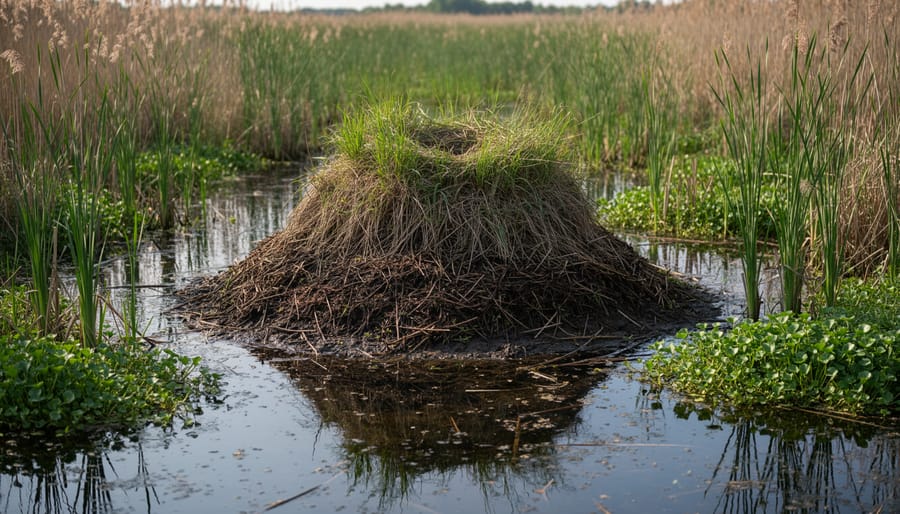
American alligators display remarkable precision when selecting sites for reproduction and seasonal refuge. Female alligators construct nesting mounds during June and early July, building elevated platforms from vegetation, mud, and organic debris. These mounds typically rise 2 to 3 feet above the surrounding water level, protecting eggs from flooding while the decomposing plant material generates heat for incubation. Ideal nesting sites feature dense vegetation such as sawgrass, cattails, or phragmites near the water’s edge, providing both construction material and concealment from potential predators.
The substrate beneath nesting mounds matters significantly. Females prefer areas with well-drained soil that won’t become waterlogged during summer rains, yet remains moist enough to support vegetation growth. Many choose elevated banks or hummocks within wetlands, natural levees along water bodies, or dense patches of emergent vegetation in shallow marshes. The mother remains nearby throughout the two-month incubation period, fiercely defending her nest.
During cooler months, particularly when water temperatures drop below 70°F, alligators excavate or occupy dens for thermoregulation. These burrows extend into muddy banks or peat deposits, creating underground chambers that maintain more stable temperatures than surface conditions. Den entrances typically open below the waterline, allowing submerged access while the tunnels slope upward to a dry chamber above flood level.
Prime denning sites occur along sloped shorelines with clay-rich or peat soils that won’t collapse easily. Alligators often return to the same dens annually, sometimes enlarging them over multiple seasons. These excavations serve dual purposes, providing critical dry-season water refuges that benefit numerous other wetland species when surface water recedes.
Seasonal Habitat Use and Behavior
American alligators are highly responsive to seasonal temperature changes, adjusting their behavior and habitat use throughout the year to optimize survival and reproduction. Unlike true hibernators, these reptiles enter a state called brumation during colder months, significantly reducing their activity while remaining somewhat alert to environmental conditions.
As water temperatures drop below 70°F in late fall and winter, alligators retreat to muddy dens they’ve excavated in banks or beneath root systems. These burrows maintain more stable temperatures than open water and provide refuge during occasional freezes. In northern parts of their range, alligators may remain in dens for weeks at a time, emerging only during brief warm spells. They’ve been observed allowing their snouts to freeze into surface ice while keeping their nostrils exposed, a remarkable adaptation that allows them to breathe even when ponds freeze over.
Spring brings dramatic shifts in habitat use. As water temperatures climb past 70°F, males become increasingly active and begin establishing breeding territories in shallow marshes and pond edges. Dominant bulls patrol these areas aggressively from April through June, producing low-frequency bellows that carry across wetlands to attract females and warn rival males. During this period, alligators concentrate in specific breeding sites, sometimes traveling several miles from their usual ranges.
Summer finds alligators widely dispersed across available habitat. They spend considerable time basking on banks to thermoregulate, alternating between sun exposure and water immersion to maintain optimal body temperature. Females remain near nest sites throughout the 65-day incubation period, a behavior unique among crocodilians.
Drought conditions trigger nomadic behavior regardless of season. Alligators may walk considerable distances overland searching for permanent water, sometimes appearing in unexpected locations. This movement pattern demonstrates their ability to adapt habitat use to environmental pressures, though it increases vulnerability to vehicle strikes and human encounters.
Habitat Threats and Conservation Challenges
Despite the American alligator’s recovery from near-extinction in the 1970s, the wetland ecosystems they depend on face mounting pressures that threaten their long-term survival. Understanding these challenges is essential for maintaining both alligator populations and the countless other species that share their habitat.
Wetland loss remains the most significant threat to alligator habitat across the Southeast. Since the 1780s, the United States has lost more than half its original wetlands, with Florida alone losing approximately 44% of its wetlands to drainage, development, and agricultural conversion. Coastal marshes face particularly intense pressure from urban expansion, with salt marsh loss accelerating in areas where alligators utilize brackish environments. Every acre drained reduces breeding habitat, eliminates critical denning sites, and forces alligators into smaller, fragmented patches where disease transmission increases and genetic diversity declines.
Water quality degradation compounds habitat loss. Agricultural runoff introduces excessive nutrients that trigger algal blooms, depleting oxygen levels and killing the fish and invertebrates alligators prey upon. Industrial contaminants and heavy metals accumulate in sediments, affecting reproductive success and immune function. Pesticide exposure has been linked to abnormal sexual development in young alligators, particularly in Florida’s Lake Apopka, where chemical contamination caused long-lasting population impacts.
Climate change introduces new uncertainties for alligator distribution and behavior. Rising sea levels inundate freshwater marshes with saltwater, converting prime habitat into less suitable brackish zones. Temperature increases may expand their northern range but could also skew sex ratios during incubation, as nest temperatures determine hatchling gender. Extended droughts force alligators to abandon drying wetlands, increasing human-wildlife conflicts as they seek alternative water sources in canals and retention ponds.
Yet ongoing monitoring programs provide hope. State wildlife agencies track population trends through systematic surveys, nesting counts, and nuisance call data that reveal habitat health patterns. Scientists use satellite tracking to map movement corridors, identifying critical wetlands that require protection. These efforts inform adaptive management strategies, allowing conservationists to respond quickly when threats emerge and prioritize restoration projects where they’ll deliver the greatest ecological benefit.
Conservation and Restoration Efforts
The American alligator stands as one of conservation’s greatest success stories, recovering from near extinction in the 1960s to stable populations today. This remarkable turnaround resulted from coordinated federal protection, strict habitat preservation mandates, and sustained wetland restoration across the southeastern United States.
The 1973 Endangered Species Act proved instrumental in safeguarding critical alligator breeding grounds and feeding areas. State wildlife agencies partnered with federal programs to establish protected zones throughout the coastal plain, restricting development in key wetland corridors. Today, these same legislative frameworks continue protecting over 4.5 million acres of alligator habitat across Florida alone, with similar protections extending through Louisiana, Georgia, and the Carolinas.
Major restoration initiatives have revitalized degraded wetland systems where alligator populations had declined. The Comprehensive Everglades Restoration Plan, launched in 2000, represents the world’s largest environmental restoration project, aiming to restore natural water flow patterns across 18,000 square miles of south Florida ecosystems. Early results show improved nesting success and increased juvenile survival rates in restored marshes.
Louisiana’s Coastal Master Plan addresses both habitat loss and sea-level rise through marsh creation projects that benefit alligators and dozens of other wetland species. Since 2007, the state has rebuilt over 25,000 acres of coastal marsh, providing new hunting territories and nesting sites for recovering alligator populations.
Dr. Sarah Chen, a wetland ecologist with the Mississippi Coastal Rivers Program, describes witnessing transformation firsthand. “When we began restoring the Pascagoula River basin in 2015, we documented fewer than twenty nesting females in degraded sections,” she recalls. “After removing invasive vegetation, reestablishing native plants, and reconnecting isolated wetland pockets, we’ve counted over sixty active nests. Watching alligators reclaim these restored marshes validates everything we work toward.”
Volunteer opportunities abound for those passionate about wetland conservation. Organizations like the National Wildlife Federation and local Audubon chapters coordinate marsh monitoring programs, invasive species removal events, and citizen science initiatives tracking alligator nesting activity. The Coastal Conservation Association offers hands-on restoration workdays planting native vegetation in degraded wetlands.
These collective efforts demonstrate that dedicated conservation action, supported by sound science and community engagement, can reverse habitat degradation. The ongoing recovery of American alligator populations proves that protecting wetland ecosystems creates ripple effects benefiting entire biological communities for generations to come.
Common Questions About Alligator Habitats
Can alligators live in saltwater?
American alligators can tolerate brackish water and venture into coastal estuaries, but they lack efficient salt glands and cannot survive prolonged exposure to full-strength seawater. They typically retreat to freshwater sources to regulate their salt balance.
How far from water do alligators travel?
Most alligators stay within 50 feet of water’s edge, though juveniles seeking new territory may travel over a mile across land, particularly during wet weather. Adults rarely venture far from aquatic habitat except during breeding season or drought conditions when searching for new water sources.
What states have wild alligator populations?
Wild American alligators inhabit Florida, Louisiana, Georgia, Alabama, Mississippi, South Carolina, North Carolina, Texas, Arkansas, and Oklahoma. Florida and Louisiana support the largest populations, with hundreds of thousands of alligators in each state.
Can alligators survive freezing temperatures?
Alligators cannot survive extended freezing conditions but can endure brief cold snaps by entering a state called brumation in underground dens. During rare freezing events, they’ve been observed with snouts protruding through ice to breathe while their bodies remain submerged.
How do you know if a body of water has alligators?
Look for slide marks on muddy banks, floating eyes and snouts near the surface at dawn or dusk, and large oval depressions along shorelines where alligators rest. Freshwater or brackish wetlands with abundant vegetation and shallow edges in southeastern states are most likely to harbor alligators.
Understanding the answers to these questions helps you appreciate the specific environmental needs that shape where alligators can thrive. Their sensitivity to salinity, temperature extremes, and distance from water explains why they concentrate in particular regions and habitat types rather than spreading across a broader range.
When exploring potential alligator habitat, remember that these reptiles are adaptable but not unlimited in their tolerance. A shallow, vegetated pond in central Florida represents ideal conditions, while a deep, clear mountain lake in Tennessee does not. The presence of slow-moving water, warm temperatures for most of the year, and abundant prey like fish and turtles creates the foundation for alligator presence. Wetland systems that maintain these characteristics year-round support the densest populations, which is why conservation efforts focus so heavily on preserving and restoring the southeastern coastal plain’s unique hydrology.
The survival of American alligators depends entirely on healthy wetland ecosystems, and protecting these habitats creates ripple effects that extend far beyond a single species. When we conserve the marshes, swamps, and slow-moving waterways where alligators thrive, we’re simultaneously safeguarding critical ecosystems that support hundreds of native plants, fish, amphibians, birds, and mammals. The alligator holes these reptiles dig become vital refuges during droughts, sustaining entire biological communities when other water sources disappear.
Wetlands that support alligator populations provide essential services we can’t afford to lose. They filter pollutants from water before it reaches our coastal zones, buffer shorelines against storm surges and flooding, sequester massive amounts of carbon that would otherwise contribute to climate change, and serve as nurseries for commercially important fish species. Every acre of wetland habitat we protect delivers tangible benefits to both wildlife and coastal communities.
The good news is that conservation success stories prove we can reverse habitat loss when we act deliberately. Wetland restoration projects across the Southeast have demonstrated that damaged ecosystems can recover, bringing alligators and countless other species back to areas where they’d vanished. These victories happened because people chose to get involved.
You can be part of this conservation momentum. Support organizations working to acquire and restore wetland habitats. Participate in citizen science programs that monitor alligator populations and water quality, contributing valuable data that guides management decisions. Volunteer with local wetland restoration projects where you’ll work alongside conservation scientists making real differences. Every action matters. The habitats that sustained alligators for millions of years need our protection now, and the future of these ancient reptiles, and the irreplaceable ecosystems they call home, depends on choices we make today.

jessica
Ava Singh is an environmental writer and marine sustainability advocate with a deep commitment to protecting the world's oceans and coastal communities. With a background in environmental policy and a passion for storytelling, Ava brings complex topics to life through clear, engaging content that educates and empowers readers. At the Marine Biodiversity & Sustainability Learning Center, Ava focuses on sharing impactful stories about community engagement, policy innovations, and conservation strategies. Her writing bridges the gap between science and the public, encouraging people to take part in preserving marine biodiversity. When she’s not writing, Ava collaborates with local initiatives to promote eco-conscious living and sustainable development, ensuring her work makes a difference both on the page and in the real world.