Marine Biodiversity Science Center

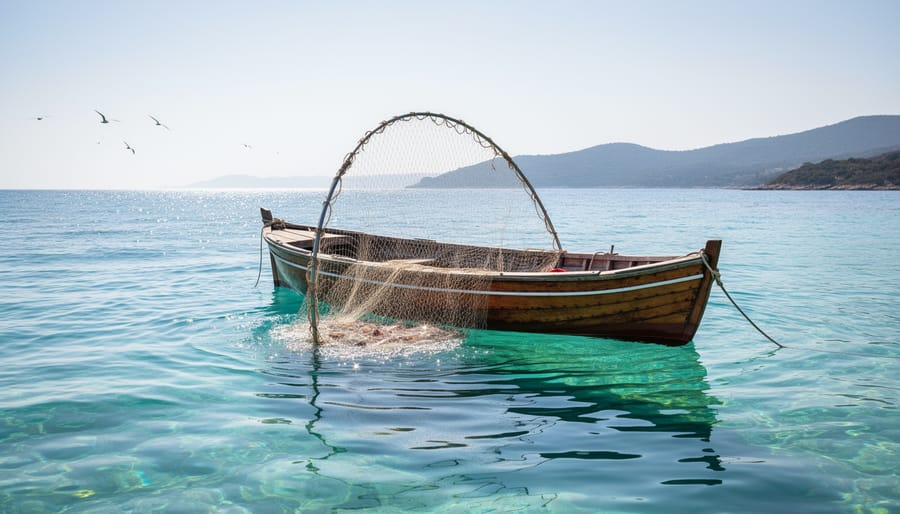
A sustainable fishery operates at a level that allows fish populations to reproduce and replenish themselves naturally while supporting long-term economic and social benefits for fishing communities. This balance between harvest and regeneration ensures ocean ecosystems remain healthy and productive for generations to come.
The stakes couldn’t be higher. Global fish stocks face unprecedented pressure, with recent assessments showing that rebuilding overfished populations requires coordinated action across scientific research, policy enforcement, and community engagement. Yet sustainable fisheries prove that we can meet human food needs without destroying marine ecosystems. From the Pacific halibut fishery’s science-based quota systems to community-managed coral reef fisheries in the Philippines, proven models demonstrate that careful management works.
Understanding sustainable fisheries means grasping how biological limits, ecosystem health, and human livelihoods intersect. The concept extends beyond simple catch limits to encompass habitat protection, bycatch reduction, and the economic viability of fishing communities. When a fishery operates sustainably, it maintains the abundance of target species, minimizes impacts on non-target species and habitats, and supports the people whose lives depend on healthy oceans.
This article breaks down what makes a fishery truly sustainable, examining the scientific principles and management tools that prevent overfishing while maintaining productive fisheries. You’ll discover the key components that differentiate sustainable operations from extractive ones, explore real-world examples of successful fishery management, and learn how marine biologists and communities work together to monitor and protect these vital resources.
What Sustainable Fisheries Really Means
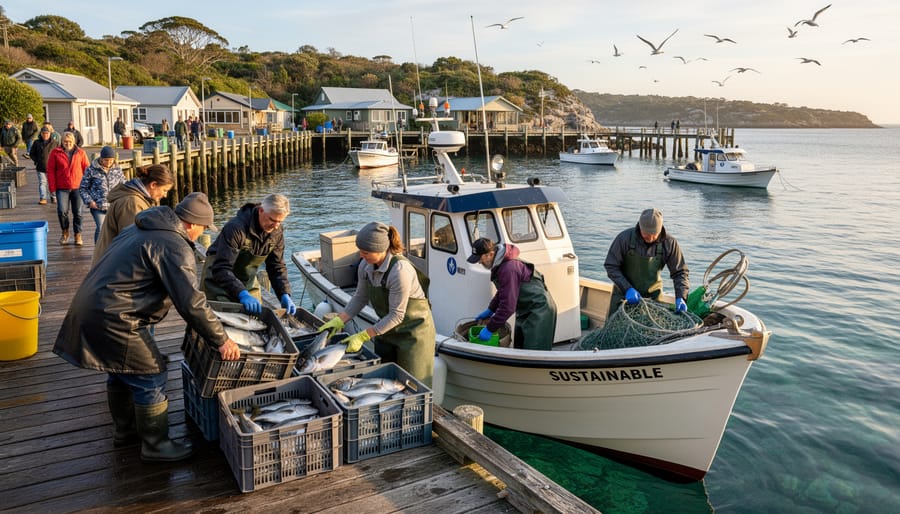
Sustainable fisheries operate on a deceptively simple principle: take only what the ocean can replace. When fishing pressure stays below the rate at which fish populations naturally reproduce and grow, those populations remain healthy and productive. This biological balance forms the foundation of sustainability, but it’s just one piece of a more complex picture.
The concept rests on three interconnected pillars. First, biological sustainability ensures that harvesting doesn’t outpace nature’s ability to replenish fish stocks. Scientists calculate what’s called Maximum Sustainable Yield, the largest catch that can be taken year after year without depleting the population. Stay within those limits, and fish populations stabilize at levels that support continued harvesting indefinitely.
Second, sustainable fisheries protect the entire marine environment, not just the species being caught. This means using fishing methods that minimize damage to seafloor habitats like coral reefs and seagrass beds, reducing bycatch of non-target species including sea turtles and dolphins, and preserving the predator-prey relationships that keep ecosystems functioning. A trawl that scrapes the ocean floor might catch plenty of fish today, but it destroys the habitat those fish need to spawn tomorrow.
Third, truly sustainable fisheries support the people who depend on them. Coastal communities have fished for generations, and sustainability means preserving both their livelihoods and their cultural traditions. When fisheries collapse from overharvesting, entire communities lose their economic foundation and food security.
These principles translate into tangible outcomes. In regions where sustainable practices have been implemented, depleted fish stocks have rebounded, sometimes dramatically. The story isn’t about stopping all fishing, it’s about fishing smarter, with an eye toward what the ocean can provide tomorrow, next year, and for our grandchildren.
How Sustainable Fisheries Management Works
Science-Based Stock Assessments
Marine scientists use stock assessments to determine how many fish can be safely caught without jeopardizing future populations. This process starts with gathering data through multiple methods: research surveys that capture and count fish across different depths and habitats, analysis of commercial catch records, and tagging studies that track fish movement and survival rates.
Scientists examine age structure by reading growth rings in fish scales or ear bones called otoliths, much like counting tree rings. This reveals how many young fish are entering the population and whether enough adults are surviving to reproduce. They also measure reproduction rates by studying spawning biomass, the total weight of mature fish capable of producing offspring.
Environmental factors play a crucial role too. Water temperature, ocean currents, and prey availability all affect fish populations, so assessments incorporate ecosystem conditions alongside fish counts. Scientists use computer models to simulate different fishing scenarios, projecting how populations might respond to various catch levels over time.
This combination of field data and modeling produces recommendations for harvest levels that maintain healthy breeding populations while supporting fishing communities.
Implementing Catch Limits and Quotas
Once scientists determine safe harvest levels, those numbers must become binding rules that fishing fleets actually follow. Fisheries managers translate stock assessment data into total allowable catches (TACs), specific tonnage limits for each species, and then divide these among fishing sectors through quota systems. Some fisheries use individual transferable quotas, allocating specific shares to vessels or companies, which creates economic incentive to maximize value rather than volume. Others employ competitive quotas where the fishery closes once the total limit is reached, though this can trigger dangerous “race for fish” behavior.
Seasonal restrictions complement catch limits by protecting spawning aggregations or juvenile nurseries during critical periods. For instance, cod fisheries might close during peak spawning months, allowing reproduction to occur undisturbed. Modern enforcement increasingly relies on electronic reporting technologies that track catch in real time, reducing the lag between harvest and data analysis. When managers detect that a quota is nearly exhausted, they can close the fishery within days rather than waiting for paper reports. This rapid response prevents overshoot and gives fish populations the breathing room they need to regenerate.
Monitoring and Enforcement
Modern sustainable fisheries rely on sophisticated monitoring systems that combine satellite tracking, onboard observers, and electronic monitoring cameras to document fishing activity in real time. Vessel monitoring systems transmit location data continuously, allowing managers to verify that boats operate within designated areas and respect closed zones. Port inspections and catch documentation schemes create paper trails that trace seafood from ocean to market, deterring illegal fishing and misreporting. When data reveals unexpected changes in fish populations or ecosystem conditions, managers can quickly adjust quotas or implement temporary closures. This adaptive approach transforms enforcement from reactive policing into proactive stewardship, using technology and transparency to protect both fish stocks and the livelihoods that depend on them.
Key Components of Sustainable Fisheries
Ecosystem-Based Approaches
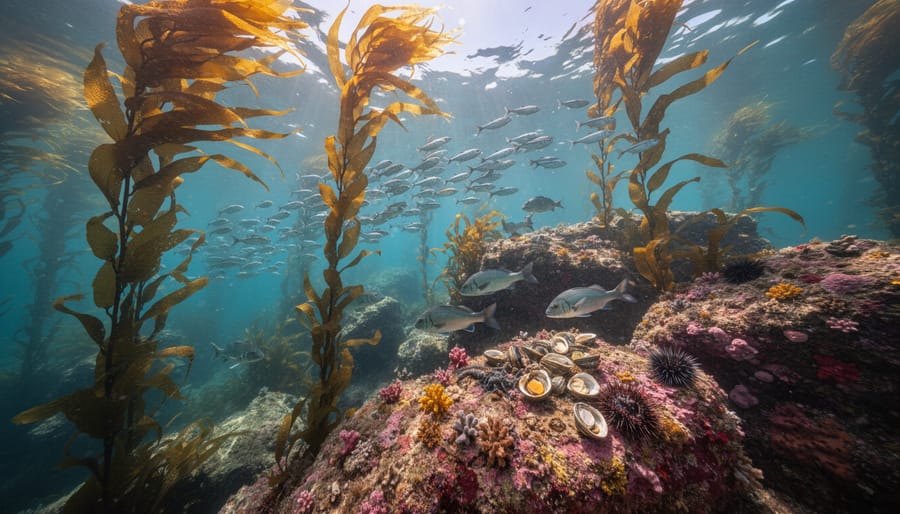
Traditional fisheries management focused narrowly on individual fish stocks, setting catch limits for single species without considering the broader marine environment. Ecosystem-based fisheries management represents a fundamental shift in thinking. This approach recognizes that removing large quantities of one species affects everything else in the ocean, from the tiny plankton those fish eat to the larger predators that depend on them for food.
When managers adopt ecosystem-based approaches, they examine predator-prey relationships across multiple species. If cod populations decline, for instance, the herring they normally consume may increase, which then affects the zooplankton herring feed on. By understanding these connections, sustainable fisheries can set harvest levels that maintain balance throughout the food web rather than optimizing catches for a single target species.
Protecting critical habitats forms another cornerstone of ecosystem-based management. Spawning grounds, nursery areas, and essential feeding zones receive special protection because healthy habitats support robust fish populations. Habitat restoration efforts work hand-in-hand with fishing regulations to rebuild degraded areas like seagrass beds and kelp forests that serve as fish nurseries.
This holistic perspective extends to bottom habitats as well. Ecosystem-based fisheries avoid trawling in sensitive areas with deep-sea corals or rocky reefs that take decades to recover from damage. By maintaining the physical structure of marine environments alongside fish populations, these approaches create resilience that benefits both ocean health and long-term fishing productivity.
Selective Fishing Gear and Techniques
Modern fishing gear has evolved dramatically to target specific species while letting others swim free. Circle hooks, for example, reduce sea turtle bycatch by up to 90% compared to traditional J-hooks because their curved design makes it harder for non-target species to swallow them. Turtle excluder devices (TEDs) in shrimp trawls create escape routes for sea turtles while retaining the catch, and similar bycatch reduction devices help juvenile fish slip through mesh panels.
Net modifications work too. Larger mesh sizes allow young fish to escape before reaching harvest size, ensuring they survive to reproduce. Some fisheries now use LED lights on nets, certain wavelengths repel sea turtles and dolphins but do not affect target species. Bottom trawls fitted with rollers or raised footropes glide over sensitive corals and sponges instead of crushing them.
These innovations carry upfront costs, which is why financial incentives and technical support prove essential. When governments subsidize gear upgrades or provide training, fishing operations adopt selective techniques without sacrificing their livelihoods. The result is healthier ecosystems and more predictable catches over time, proving that economic and environmental goals can align when fishers have the right tools.
Community and Stakeholder Participation
Sustainable fisheries succeed when the people who depend on them have a real voice in how they’re managed. Fishing communities bring generations of practical knowledge about fish behavior, seasonal patterns, and ecosystem changes that scientific data alone can miss. Indigenous peoples, in particular, hold centuries of ecological wisdom about sustainable harvest practices and the interconnected health of marine environments.
Collaborative management models bring together fishers, scientists, government agencies, and conservation groups to develop policies that work in practice, not just on paper. These fisheries partnerships recognize that communities with economic stakes in fish populations often become the most effective stewards when they’re empowered with clear management authority and secure fishing rights. Co-management arrangements in countries like Japan, Iceland, and Canada have demonstrated that when local knowledge informs science-based quotas, compliance improves and stocks recover faster. The most successful sustainable fisheries treat stakeholder engagement not as consultation after decisions are made, but as genuine power-sharing throughout the entire process.
Where Sustainable Fisheries Make a Difference
The real benefits of sustainable fisheries extend far beyond theory, creating measurable improvements in ocean health and human livelihoods across the globe. When fisheries adopt science-based management and ecosystem protections, the results reshape marine environments and the communities that depend on them.
Perhaps the most dramatic impact is the recovery of fish populations once thought irreversibly damaged. The U.S. Atlantic sea scallop fishery, for example, rebounded from severe depletion in the 1990s to become one of the most valuable fisheries in North America. Scientists and fishers worked together to establish rotating closures that allowed scallops to reproduce and grow, transforming the fishery from near-collapse to abundance within two decades. These recoveries prove that even heavily exploited species can bounce back when given the chance.
Coastal economies gain stability when fisheries are managed for the long term rather than short-term profit. Communities with sustainable practices experience more consistent catches year after year, reducing the boom-and-bust cycles that devastate fishing families and local businesses. Jobs remain secure, infrastructure investments make sense, and the next generation sees a viable future in fishing. In Iceland, strict quota systems have helped maintain both fish stocks and fishing communities for decades, showing that conservation and economic prosperity can coexist.
Several fisheries worldwide demonstrate what’s possible when sustainability becomes the guiding principle:
- Alaska’s pollock fishery, managed with rigorous quotas and observer programs, consistently ranks as one of the world’s best-managed fisheries while supporting thousands of jobs
- New Zealand’s individual transferable quota system, established in 1986, has rebuilt multiple fish stocks while creating economic incentives for conservation
- Community-based programs in the Philippines empower local fishers to manage their own marine protected areas, leading to increased fish abundance and income
- Belize’s managed access system gives traditional fishers exclusive rights to specific zones in exchange for following sustainable practices, reducing overfishing and illegal activity
Marine biodiversity thrives under sustainable management because these systems protect more than just target species. When fisheries use selective gear, establish marine reserves, and limit bottom trawling, entire ecosystems benefit. Seabirds have more fish to feed their chicks, marine mammals face less competition for food, and coral reefs avoid the destruction of destructive fishing methods. The ripple effects reach species that never end up on a dinner plate but play crucial roles in ocean health.
Certification and Consumer Choices
When you stand in front of a seafood counter, the choices you make ripple through entire marine ecosystems. Certification programs translate complex fisheries science into simple labels that help you support sustainable practices with your wallet.
The Marine Stewardship Council (MSC) operates the most widely recognized certification system, putting its blue label on seafood from fisheries that meet strict standards for healthy fish populations, minimal ecosystem impact, and effective management. Independent auditors assess everything from stock health to bycatch rates before granting certification. Similar programs like the Aquaculture Stewardship Council and Best Aquaculture Practices verify sustainable farming operations. These labels aren’t marketing fluff, they represent years of data collection, third-party verification, and ongoing monitoring.
Look for certified sustainable seafood when shopping, but also ask questions. Where was this fish caught? How was it harvested? Many forward-thinking retailers now provide detailed traceability information, sometimes with QR codes that trace a fillet back to the specific vessel and fishing ground. This transparency creates accountability throughout the supply chain.
Your purchasing power drives real change. When consumers consistently choose certified options, retailers pressure suppliers to meet sustainability standards. Fisheries that once operated with little oversight now invest in stock assessments and gear modifications to earn certification and access premium markets. One study found that MSC-certified fisheries showed measurable improvements in management practices within three years of entering the program.
Consumer demand for sustainability has transformed the seafood industry from the market up, proving that informed choices at the dinner table can rebuild fish populations thousands of miles away.
Common Questions About Sustainable Fisheries
How can I tell if fish is sustainably caught?
Look for certification labels from reputable organizations like the Marine Stewardship Council (MSC) or the Aquaculture Stewardship Council (ASC) on packaging. Many grocery stores and restaurants now provide sustainability ratings or information about where and how fish was caught, and smartphone apps like Seafood Watch offer real-time guidance on sustainable choices.
Is wild-caught fish always better than farmed fish?
Not necessarily. While well-managed wild fisheries can be highly sustainable, some wild populations remain overfished, and certain fishing methods cause significant habitat damage. Conversely, responsibly farmed fish from operations that minimize pollution, disease, and feed impacts can be an excellent sustainable choice. The key is looking at specific certifications and practices rather than making blanket assumptions.
Can depleted fish populations actually recover?
Yes, with proper management. Striped bass along the U.S. Atlantic coast and various Pacific rockfish species have rebounded dramatically after fishing restrictions were implemented. Recovery timelines vary by species, but when harvest pressure is reduced and habitats are protected, most fish populations show remarkable resilience.
How do climate change and sustainable fisheries relate?
Climate change is altering fish distribution patterns, ocean temperatures, and ecosystem dynamics, making adaptive management essential. Sustainable fisheries must now account for shifting populations, changing reproduction cycles, and ocean acidification when setting catch limits and designing conservation strategies.
Understanding these fundamentals helps consumers make informed decisions and sets realistic expectations about ocean recovery. The relationship between individual choices and global fish populations might seem abstract, but collective consumer demand for certified sustainable seafood creates powerful market incentives that drive fishing industries toward better practices. When millions of people choose certified products, fisheries invest in the technology, training, and monitoring systems needed to meet sustainability standards.
Your choices extend beyond the seafood counter. Supporting policies that fund fisheries science, participating in beach cleanups that protect marine habitats, and joining citizen science programs that monitor coastal ecosystems all contribute to healthier oceans. Marine conservation isn’t just the work of scientists and policymakers. It requires an engaged public willing to ask questions, demand transparency, and recognize that ocean health ultimately depends on how we interact with these systems today.
Getting Involved: From Knowledge to Action
Understanding sustainable fisheries matters most when it translates into action. You don’t need a marine biology degree to make a meaningful difference, your everyday choices and engagement can directly support healthier oceans.
Start in the seafood aisle. Look for Marine Stewardship Council or Aquaculture Stewardship Council certification labels, which verify that the fish comes from well-managed sources. Download the Seafood Watch app to check which species are sustainable choices in your region. When dining out, ask restaurants about their sourcing practices, consumer questions prompt businesses to prioritize sustainability.
Dr. Elena Martinez, a fisheries biologist who’s spent fifteen years monitoring Pacific rockfish populations, emphasizes the power of citizen involvement: “The most successful fisheries recovery I’ve witnessed happened because recreational anglers reported their catches through a citizen science app. That data filled critical gaps in our stock assessments and led to management changes that rebuilt the population ahead of schedule.”
Volunteer opportunities abound for those wanting deeper engagement. The Marine Biodiversity Science Center runs regular coastal monitoring programs where volunteers help survey intertidal zones, document species abundance, and collect water quality data that informs fisheries management decisions. These programs welcome participants of all experience levels and provide training.
Join online advocacy campaigns when fisheries legislation comes up for review. Organizations like Oceana and Ocean Conservancy make it simple to contact policymakers about protecting marine habitats and supporting science-based catch limits. Attend public comment sessions for regional fishery management councils, your voice matters in these democratic processes.
Consider participating in beach cleanups to reduce marine debris that damages fish habitats, or support conservation organizations financially if time constraints limit hands-on involvement. Every action, from choosing certified seafood to volunteering on research boats, contributes to the collective effort that keeps fisheries sustainable for future generations.
The health of our oceans depends on how we fish today. Sustainable fisheries are not theoretical goals locked in research papers. They are working realities in communities around the world, proving that we can harvest seafood while protecting marine ecosystems for future generations.
The path forward combines rigorous science, adaptive management, and genuine collaboration. When marine biologists provide accurate stock assessments, policymakers craft evidence-based regulations, and fishing communities embrace selective gear and responsible practices, entire ecosystems begin to recover. We have seen depleted fish populations rebound, damaged habitats regenerate, and coastal economies strengthen when stakeholders commit to long-term sustainability over short-term gains.
Your choices matter in this equation. Every purchase of certified sustainable seafood sends a market signal. Every conversation about ocean health raises awareness. Every hour volunteered with marine conservation organizations builds the collective capacity we need to protect our blue planet.
The Marine Biodiversity Science Center offers hands-on opportunities to contribute directly to fisheries research and monitoring. Whether you analyze water samples, participate in fish counts, or help educate others about sustainable practices, your involvement accelerates progress.
Ocean health is not someone else’s responsibility. It belongs to all of us. The science is clear, the solutions exist, and the momentum is building. Join the movement toward sustainable fisheries and help create oceans that thrive for generations to come.

jessica
Ava Singh is an environmental writer and marine sustainability advocate with a deep commitment to protecting the world's oceans and coastal communities. With a background in environmental policy and a passion for storytelling, Ava brings complex topics to life through clear, engaging content that educates and empowers readers. At the Marine Biodiversity & Sustainability Learning Center, Ava focuses on sharing impactful stories about community engagement, policy innovations, and conservation strategies. Her writing bridges the gap between science and the public, encouraging people to take part in preserving marine biodiversity. When she’s not writing, Ava collaborates with local initiatives to promote eco-conscious living and sustainable development, ensuring her work makes a difference both on the page and in the real world.