Marine Biodiversity Science Center

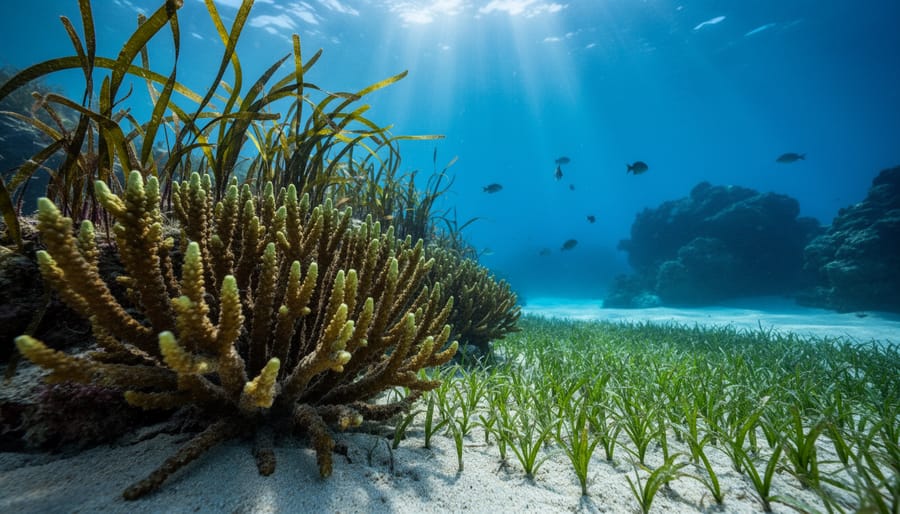
Coral reef vegetation refers to the diverse community of photosynthetic organisms living within and around coral reefs, including symbiotic algae inside coral tissues, macroalgae (seaweeds), seagrasses, and microscopic phytoplankton. These organisms form the photosynthetic foundation of Coral Reef Ecosystems converting sunlight into energy that supports the extraordinary biodiversity found in these underwater habitats.
Understanding what qualifies as reef vegetation and how it functions is essential to grasping why coral reefs thrive in nutrient-poor tropical waters. The zooxanthellae, microscopic dinoflagellates living within coral polyps, provide their hosts with a substantial portion of their energy needs through photosynthesis. Meanwhile, free-living seaweeds and phytoplankton contribute significantly to the reef’s overall primary production, feeding countless herbivores and filtering nutrients from the water column.
This photosynthetic partnership creates a delicate balance. When environmental stressors disrupt these relationships, entire reef systems can collapse. Rising ocean temperatures, pollution, and physical damage all threaten the vegetation that keeps reefs functioning. Yet there’s reason for optimism: understanding these photosynthetic communities gives us clear targets for conservation action.
Throughout this article, we’ll explore the definition of coral reef vegetation, explain how photosynthesis operates in the unique underwater environment, categorize the main types of organisms involved, and examine their ecological roles. You’ll discover why the health of these often-overlooked plants and algae matters deeply to reef survival, and learn how volunteer monitoring programs help scientists track vegetation changes in real time. Dr. Sarah Chen, a marine botanist who has studied Indo-Pacific reefs for over a decade, shares insights from her field research on how these photosynthetic communities respond to conservation interventions.
Defining Coral Reef Vegetation: More Than Just Plants
When you picture vegetation, you probably imagine trees, flowers, or grass rooted in soil. Coral reefs challenge this land-based definition. The photosynthetic life that fuels these underwater ecosystems includes microscopic algae living inside coral tissues, leafy seaweeds attached to reef structures, fuzzy algal films coating surfaces, and even seagrass meadows in adjacent sandy areas. Together, these diverse organisms constitute coral reef vegetation, a broader category than plants alone.
What makes reef vegetation different from terrestrial vegetation is the dominance of algae and the prevalence of symbiotic relationships. On land, most vegetation consists of independent plants with roots, stems, and leaves. On reefs, much of the photosynthetic work happens through partnerships. Microscopic algae live within coral polyps, producing food for their hosts while receiving shelter and access to sunlight. These symbiotic algae form the foundation of reef productivity, yet they remain invisible to casual observers.
The term reef vegetation encompasses both these hidden symbionts and the visible free-living photosynthetic organisms that grow independently. Understanding this distinction matters because each type plays a different ecological role:
- Zooxanthellae
- Microscopic algae that live symbiotically inside coral tissues, producing energy through photosynthesis and sharing it with their coral hosts. This partnership provides corals with much of their nutritional needs.
- Macroalgae
- Larger seaweeds visible to the naked eye, ranging from delicate branching forms to thick leathery blades. These free-living organisms provide food for herbivores and contribute to reef primary production.
- Turf Algae
- Short filamentous algae forming thin mats on reef surfaces, often appearing as fuzzy coatings on rocks and dead coral. These communities support grazing fish and invertebrates while contributing to nutrient cycling.
- Coralline Algae
- Pink or purple crusty algae that deposit calcium carbonate, helping cement reef structures together. These calcifying organisms play a structural role alongside their photosynthetic function.
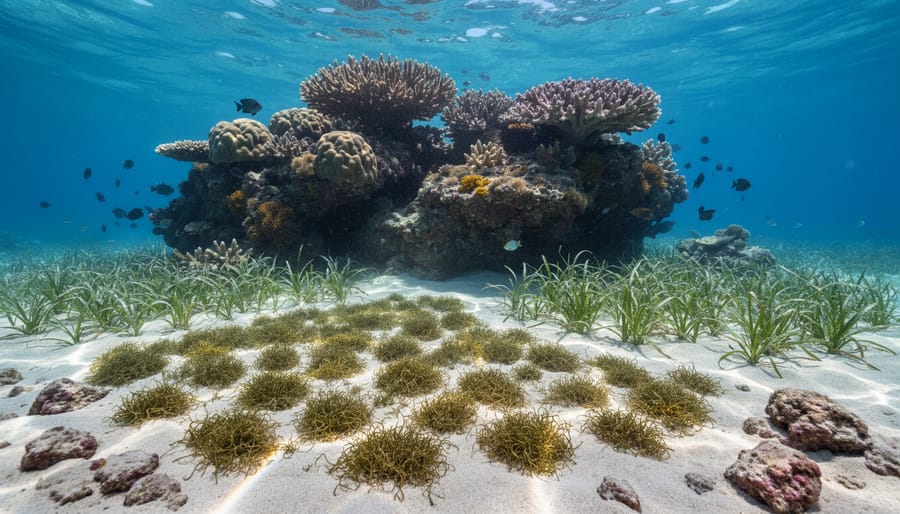
Seagrasses technically qualify as true plants with roots and vascular tissue, but they typically grow in sandy areas bordering reefs rather than on the reef structure itself. Still, their proximity and ecological connections make them part of the broader reef vegetation community, providing nursery habitat and filtering nutrients that might otherwise fuel excessive algal growth on the reef proper.
This diversity of photosynthetic life, from the single-celled symbionts to multicellular seaweeds, creates a complex web of energy production that supports the remarkable biodiversity coral reefs are known for. The balance between these different vegetation types determines whether a reef thrives or declines.
How Coral Reef Vegetation Powers the Ecosystem
The Zooxanthellae Partnership
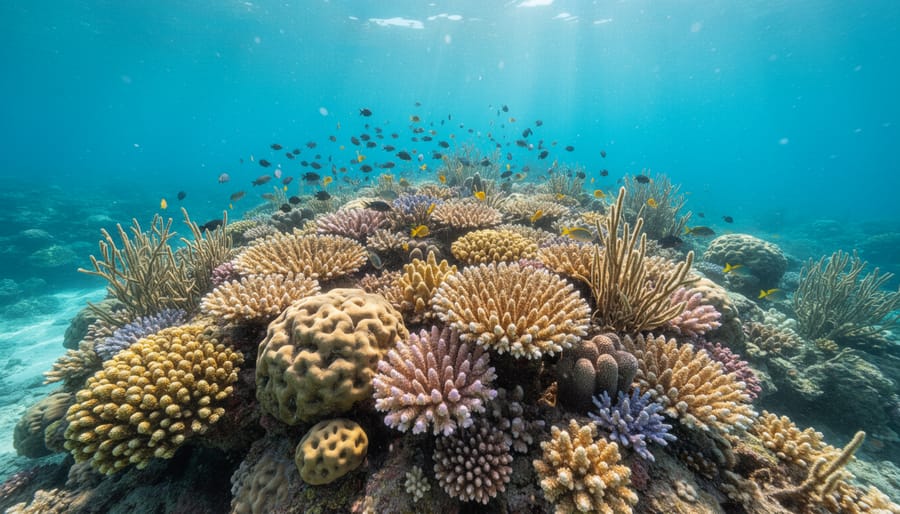
The microscopic algae living inside coral polyps, known as zooxanthellae, form one of nature’s most elegant coral-algae partnerships. These single-celled dinoflagellates reside within the coral’s tissues, where they conduct photosynthesis using sunlight that filters through the shallow water. In return for this protected home, the algae share the sugars and other organic compounds they produce with their coral hosts. This exchange provides corals with a substantial portion of their daily energy needs, allowing them to thrive in nutrient-poor tropical waters where food is scarce.
The coral reciprocates by supplying the zooxanthellae with carbon dioxide, nitrogen, and phosphorus, metabolic waste products from the coral polyp that serve as essential nutrients for the algae. The relationship runs so deep that the algae also give many corals their vibrant colors; without them, the coral tissue appears white or pale, revealing the calcium carbonate skeleton beneath.
When water temperatures rise or other stressors intensify, this partnership breaks down. The corals expel zooxanthellae from their tissues in a process called bleaching, leaving the coral vulnerable and deprived of its primary energy source, a disruption that can prove fatal if conditions don’t improve quickly.
Free-Living Photosynthetic Organisms
Beyond the zooxanthellae living inside coral polyps, a diverse community of free-living photosynthetic organisms operates independently across reef surfaces. Macroalgae, the larger, visible seaweeds including species of Sargassum, Halimeda, and leafy red algae, grow attached to dead coral skeletons and rocky substrate. These organisms pump oxygen into the water and serve as direct food for parrotfish, surgeonfish, rabbitfish, and sea urchins. In healthy reef systems, herbivores keep macroalgae cropped short, preventing it from smothering corals. Turf algae, by contrast, form thin, carpet-like films across rock surfaces, comprising hundreds of microscopic filamentous species that turn over rapidly as grazers consume them. This constant growth-and-grazing cycle channels substantial energy into the food web. Seagrass beds, where they border reef systems in shallow lagoons, add another photosynthetic layer, stabilizing sediment and providing nursery habitat. Together, these independent photosynthesizers contribute significantly to the reef’s total primary production, converting sunlight into biomass that fuels everything from tiny amphipods to large predatory fish, while also replenishing dissolved oxygen that mobile animals need to breathe.
The Main Components of Reef Vegetation
Symbiotic Algae Within Corals
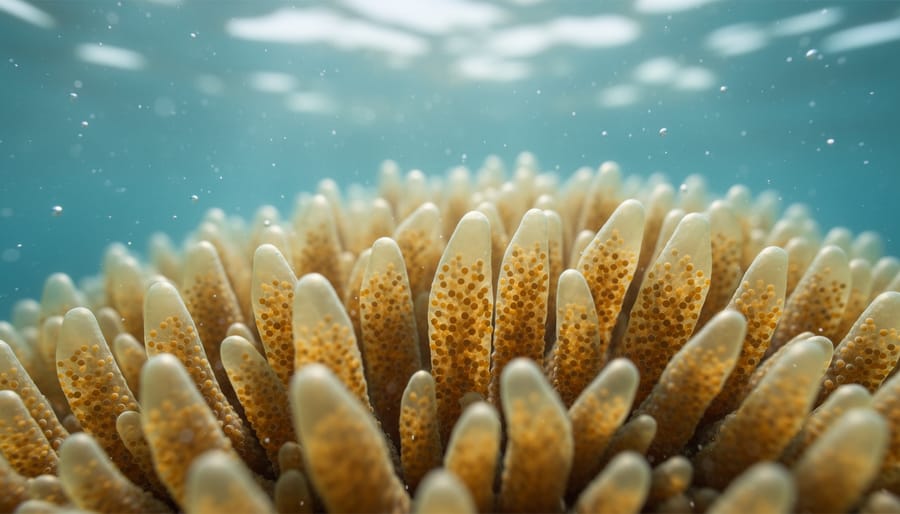
Zooxanthellae are microscopic dinoflagellate algae that live within coral tissues, residing in cells just beneath the coral’s surface. Each coral polyp hosts thousands of these single-celled organisms in a mutually beneficial arrangement. The algae receive a protected environment and access to carbon dioxide and other compounds from the coral’s metabolic processes. In return, they photosynthesize and share the sugars and organic compounds they produce, providing corals with much of their nutritional needs, a significant energy source that allows corals to build their calcium carbonate skeletons and thrive in nutrient-poor tropical waters. This partnership gives healthy corals their characteristic colors, as different zooxanthellae species display golden, brown, or greenish hues. Just as seagrass safeguards oceans by supporting coastal ecosystems, zooxanthellae sustain coral reefs from within.
Macroalgae and Seaweeds
Macroalgae represent the larger, visible algae species on reefs, the kelp-like fronds, leafy forms, and branching structures you can see swaying in the current. These organisms play valuable roles in healthy reef ecosystems: they provide food for herbivorous fish, sea urchins, and turtles; offer shelter for juvenile fish and invertebrates; and contribute oxygen through photosynthesis. Species like Halimeda even produce calcium carbonate, adding to reef structure over time. However, macroalgae can become problematic when the balance shifts. Overfishing removes herbivorous fish that normally keep algae in check, while nutrient pollution from agricultural runoff or sewage fuels excessive algal growth. When this happens, fast-growing macroalgae can smother corals, blocking the sunlight they need and preventing new coral larvae from settling on the reef. A reef overtaken by fleshy macroalgae signals an ecosystem under stress, one that has shifted from coral-dominated to algae-dominated, often proving difficult to reverse without addressing the underlying pressures.
Turf Algae and Microscopic Communities
These microscopic communities form a thin, fuzzy carpet across dead coral skeletons, rubble, and other hard surfaces, often going unnoticed beneath the reef’s more conspicuous features. Turf algae, composed of tiny filamentous species rarely taller than a centimeter, trap sediment particles and organic matter, creating microhabitats that support bacteria, fungi, and microscopic grazers. These communities contribute substantially to the reef’s photosynthetic output, converting sunlight into energy that enters the food web through small herbivores like amphipods and juvenile fish. Unlike the larger structures found in seagrass meadows adjacent to many reefs, turf algae grow rapidly and respond quickly to changes in nutrient levels or grazing pressure. When herbivorous fish populations remain healthy, they keep turf algae cropped short, maintaining space for coral larvae to settle and grow into new colonies.
How Reef Vegetation Supports Marine Life
Reef vegetation forms the foundation of one of nature’s most complex feeding networks. Zooxanthellae living within coral tissues transform sunlight into sugars, which corals use to build their calcium carbonate skeletons and sustain their growth. This energy flows upward as the corals themselves become food for species like butterflyfish and crown-of-thorns starfish.
Free-living algae, from the macroalgae swaying in currents to the thin turf covering dead coral surfaces, serve as primary food sources for an array of herbivores. Parrotfish scrape algae from rock surfaces with their beak-like teeth, grinding up coral skeleton in the process and eventually excreting fine sand. Surgeonfish, rabbitfish, and sea urchins graze continuously on algal films and larger seaweeds. When healthy populations of these grazers are present, herbivores limit algae growth enough to prevent it from smothering corals, maintaining the balance that allows both organisms to coexist.
The physical structure created by algae and seagrasses in adjacent habitats offers shelter for juvenile fish and invertebrates. Young snappers, groupers, and spiny lobsters hide among macroalgae stands and seagrass beds during their vulnerable early stages before moving to the main reef. Branching algae create microhabitats where small shrimp, crabs, and gastropods find refuge from larger predators.
All photosynthetic organisms on the reef produce oxygen as a byproduct, enriching the water and supporting the respiration of fish, corals, sponges, and countless other animals. During daylight hours, healthy reefs release oxygen into surrounding waters, helping sustain dense communities of life in relatively nutrient-poor tropical seas. This daily pulse of oxygen production, coupled with the constant availability of food and shelter, allows reefs to support remarkably diverse communities despite occupying relatively small ocean areas.
When the Balance Shifts: Algal Overgrowth and Coral Bleaching
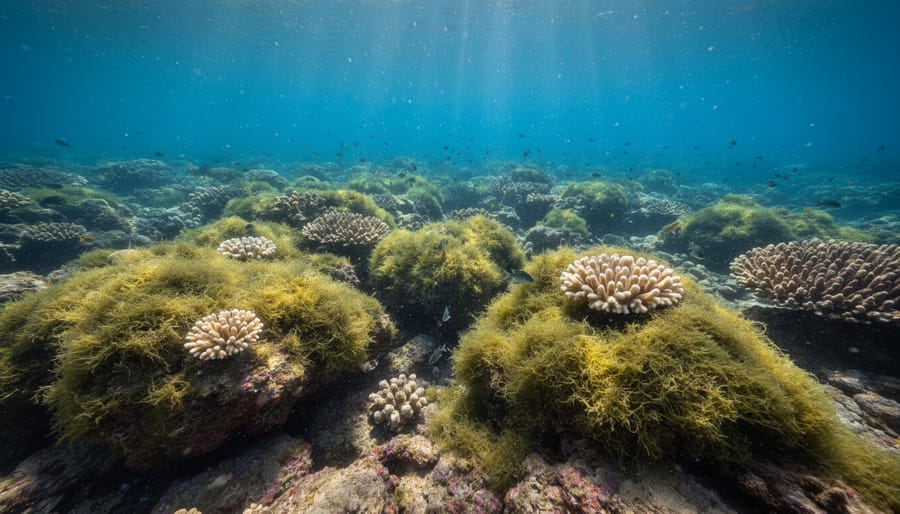
Healthy coral reefs maintain a delicate equilibrium between coral growth and algal presence, but this balance can collapse when stressors tip the scales. Two distinct but often interrelated disruptions, algal overgrowth and coral bleaching, represent major threats to reef ecosystems worldwide.
Algal overgrowth occurs when macroalgae and other fast-growing algae blanket reef surfaces, smothering corals and preventing new coral larvae from settling. This shift typically stems from nutrient pollution washing off land, excess nitrogen and phosphorus from agricultural runoff, sewage, or coastal development act as fertilizer for algae. Simultaneously, when overfishing removes herbivorous fish like parrotfish and surgeonfish, there’s nothing to keep the algae in check. The result is a runaway growth that transforms vibrant coral gardens into algae-dominated zones.
Coral bleaching follows a different but equally devastating path. When water temperatures rise or other stressors intensify, the symbiotic partnership between corals and zooxanthellae breaks down. Corals expel their algal partners, losing both their color and their primary energy source. Without zooxanthellae producing food through photosynthesis, corals begin to starve. If conditions improve quickly, corals can recover and take in new algal symbionts. Prolonged stress, however, leads to widespread coral death.
Dr. Elena Vasquez, a marine biologist who has monitored Caribbean reefs for fifteen years, witnessed this transition firsthand. “I returned to a reef in Jamaica that I’d surveyed five years earlier,” she recalls. “Where I’d once swum through branching coral formations teeming with fish, I found fields of brown macroalgae swaying in the current. The structural complexity was gone, and with it, most of the reef’s residents. It wasn’t a sudden event, it was a creeping takeover, year by year, as the system lost its ability to bounce back.”
These phase shifts from coral-dominated to algae-dominated states can persist for decades, fundamentally altering the ecosystem and the communities that depend on it.
How Coral Reef Vegetation Works
Reef vegetation works through a continuous cycle of light capture, energy conversion, and nutrient exchange that keeps the entire ecosystem running. When sunlight penetrates clear shallow waters, photosynthetic organisms throughout the reef absorb that light energy. Zooxanthellae inside coral tissues convert it into sugars through photosynthesis, then transfer much of that energy directly to their coral hosts, this partnership allows corals to build massive calcium carbonate skeletons in nutrient-poor tropical waters where most organisms would struggle.
Meanwhile, free-living algae coating reef surfaces and larger seaweeds in surrounding areas conduct their own photosynthesis, producing oxygen and organic matter that feeds countless herbivorous fish and invertebrates. These grazers prevent any single algal species from dominating while recycling nutrients back into the water column through their waste. Those nutrients get taken up again by photosynthetic organisms, creating a closed loop.
The system depends on balance. Healthy populations of herbivorous fish keep fast-growing algae in check, preventing them from smothering corals. Clear water allows sufficient light penetration for photosynthesis at depth. Stable temperatures maintain the delicate symbiosis between corals and their algae. When any of these factors shifts, excess nutrients, fewer grazers, warming seas, the machinery can break down, often rapidly.
Common Questions About Coral Reef Vegetation
Are corals themselves plants? This question comes up constantly, and the answer surprises many people. Corals are animals, specifically, invertebrates related to jellyfish and sea anemones. Each coral polyp has a mouth surrounded by stinging tentacles used to capture prey. However, the confusion makes sense because most reef-building corals host photosynthetic algae inside their tissues, giving them plant-like abilities to harness sunlight for energy. The coral animal provides a protected home and access to sunlight, while the algae contribute vital nutrients through photosynthesis. This partnership blurs the line between animal and plant functions, creating one of nature’s most successful collaborations.
The role of algae on reefs raises another common question: how can algae be both essential and harmful? The answer lies in balance and type. Symbiotic zooxanthellae living within coral tissues are crucial partners, supplying significant energy that allows corals to build the massive calcium carbonate structures supporting entire ecosystems. Small amounts of turf algae and certain macroalgae species also play beneficial roles as food sources and contributors to reef productivity. Problems arise when this balance shifts. Excessive algae growth, often triggered by nutrient pollution from agricultural runoff or sewage, can smother corals, block sunlight, and prevent coral larvae from settling. When herbivorous fish populations decline from overfishing, algae can grow unchecked and eventually dominate reef surfaces where corals once thrived.
Are corals plants or animals?
Corals are animals related to jellyfish, but they host photosynthetic algae inside their tissues. This partnership gives them plant-like abilities to use sunlight for energy while remaining carnivorous invertebrates.
Can algae harm coral reefs?
While symbiotic algae within corals are essential, excessive free-living algae growth from pollution or overfishing can smother corals and prevent new coral settlement. Balance is key, some algae supports the ecosystem, but overgrowth threatens it.
What makes zooxanthellae so important?
These symbiotic algae live inside coral tissues and convert sunlight into nutrients that corals use to grow and build reef structures. Without this partnership, most reef-building corals cannot survive in nutrient-poor tropical waters.
How does water temperature affect reef vegetation?
Rising temperatures stress the coral-algae partnership, causing corals to expel their zooxanthellae in a process called bleaching. Prolonged heat also alters the types of algae that can thrive on reefs, potentially favoring species less beneficial to the ecosystem.
Reef colors also spark curiosity. Healthy reefs display vibrant browns, greens, and golden hues primarily from the zooxanthellae living within coral tissues. Different algae species and densities produce varying shades, brown corals typically contain one algae type, while greens may host different strains or higher concentrations. When corals bleach and expel their algae, the white calcium carbonate skeleton shows through, creating the ghostly appearance that signals coral stress. Free-living algae also contribute to reef coloration, with thick green or brown algal mats sometimes indicating nutrient problems rather than reef health.
Climate change compounds these vegetation dynamics in troubling ways. Warming ocean temperatures disrupt the delicate coral-zooxanthellae relationship, triggering widespread bleaching events that can leave corals starving without their photosynthetic partners. Ocean acidification makes it harder for both corals and calcifying algae to build their structures. These stressors don’t just affect individual organisms, they reshape entire reef communities, potentially shifting ecosystems toward algae dominance and away from the coral-rich habitats that support extraordinary marine biodiversity.
Conservation Action: Protecting Reef Vegetation Balance
Understanding how reef vegetation works gives us powerful tools to protect these ecosystems. Conservation efforts focus on maintaining the delicate balance that keeps reefs healthy and resilient.
Monitoring programs form the foundation of effective protection. Scientists and volunteers track vegetation changes over time, documenting shifts from coral-dominated systems to algae-dominated ones before they become irreversible. These surveys record species composition, cover patterns, and early warning signs of stress. The Marine Biodiversity Science Center coordinates citizen science initiatives where trained volunteers conduct regular reef surveys, contributing valuable data that informs local management decisions. You don’t need advanced degrees to participate, just commitment and basic training in visual assessment techniques.
Reducing nutrient runoff addresses one of the primary drivers of harmful algal overgrowth. When agricultural fertilizers, sewage, and stormwater carry excess nitrogen and phosphorus into coastal waters, they fuel explosive algae growth that smothers corals. Communities can implement buffer zones along coastlines, upgrade wastewater treatment systems, and promote sustainable farming practices that minimize runoff. These interventions work, and they work relatively quickly when properly implemented.
Protecting herbivorous fish populations maintains natural algae control. Parrotfish, surgeonfish, and other grazers keep vegetation in check, preventing the kind of unchecked algal growth that outcompetes corals. Marine protected areas that prohibit fishing allow these populations to recover and perform their ecological role. Even partial protections help, seasonal closures during spawning periods or gear restrictions that reduce bycatch.
Restoration projects actively rebuild vegetation balance in degraded areas. Teams remove invasive algae, transplant native seagrasses to adjacent habitats, and reintroduce herbivores where populations have collapsed. These hands-on efforts demonstrate what’s possible when we combine scientific understanding with collective action, turning knowledge about reef vegetation into tangible recovery on the seafloor.
Understanding coral reef vegetation means recognizing that these ecosystems thrive through intricate partnerships between corals and photosynthetic organisms. The zooxanthellae living within coral tissues, the macroalgae coating reef surfaces, and the microscopic algal communities all work together to create one of Earth’s most productive environments. When these relationships function in balance, reefs support extraordinary biodiversity and provide essential services to both marine life and coastal communities.
That balance, however, remains fragile. Nutrient pollution can trigger algal overgrowth that smothers corals. Rising ocean temperatures force zooxanthellae from their coral hosts, leading to bleaching events that weaken entire reef systems. Overfishing removes the herbivores that naturally control algal growth. These disruptions demonstrate how quickly vegetation dynamics can shift from beneficial to harmful when environmental conditions change.
The encouraging reality is that informed action makes a measurable difference. Reducing coastal runoff, protecting herbivorous fish populations, and monitoring reef health all contribute to maintaining the vegetation balance that healthy reefs require. Restoration projects continue to show promise where local communities engage in protection efforts. Citizen science initiatives create opportunities for anyone to participate in reef monitoring and contribute valuable data.
Each person who understands how reef vegetation functions becomes better equipped to support conservation through daily choices and community involvement. The reefs we protect in 2026 will continue supporting marine biodiversity for generations ahead. Your engagement matters, and collective action creates lasting impact.

jessica
Ava Singh is an environmental writer and marine sustainability advocate with a deep commitment to protecting the world's oceans and coastal communities. With a background in environmental policy and a passion for storytelling, Ava brings complex topics to life through clear, engaging content that educates and empowers readers. At the Marine Biodiversity & Sustainability Learning Center, Ava focuses on sharing impactful stories about community engagement, policy innovations, and conservation strategies. Her writing bridges the gap between science and the public, encouraging people to take part in preserving marine biodiversity. When she’s not writing, Ava collaborates with local initiatives to promote eco-conscious living and sustainable development, ensuring her work makes a difference both on the page and in the real world.