Marine Biodiversity Science Center

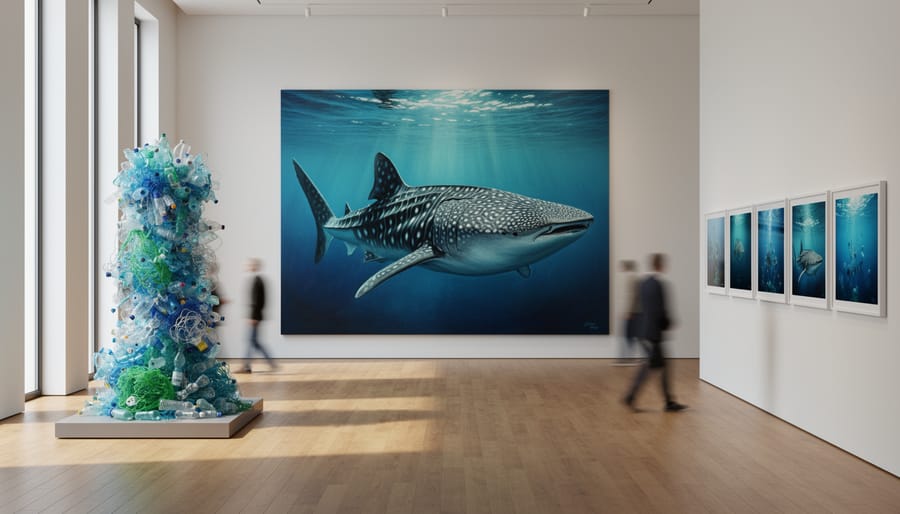
Marine art galleries are dedicated exhibition spaces that showcase artistic works inspired by oceans, marine life, and coastal environments, serving as unique intersections where creative expression meets scientific appreciation and conservation advocacy. Unlike traditional art galleries that might feature occasional ocean-themed pieces or marine education centers focused primarily on scientific displays, these specialized venues curate comprehensive collections that celebrate the sea through painting, sculpture, photography, mixed media, and increasingly, digital installations.
These galleries exist along a spectrum. Coastal communities often host intimate studios where local artists display seascapes and marine wildlife portraits alongside working conservation photographers documenting endangered species. Major metropolitan museums maintain marine-focused wings featuring historical maritime paintings and contemporary ocean advocacy art. Some galleries operate within aquariums or research institutions, creating powerful dialogues between living specimens and artistic interpretations. Others function as fully independent establishments, curating traveling exhibitions that bring ocean awareness to landlocked regions.
What sets marine art galleries apart is their dual mission. They provide aesthetic experiences while advancing ocean literacy and conservation messaging. A single exhibition might feature breathtaking coral reef photography that documents bleaching events, sculptures crafted from ocean plastics recovered during beach cleanups, or paintings by marine biologists who translate their research into visual narratives. Dr. Sarah Chen, a marine ecologist who began painting her research subjects after fieldwork in the Pacific, notes that “art communicates the urgency of marine conservation in ways raw data cannot. When someone stands before a life-sized painting of a whale shark they’ve helped me track, the emotional connection transforms abstract statistics into personal investment.”
For visitors planning gallery experiences, expect more than passive viewing. Many marine art galleries incorporate interactive elements, artist talks with conservation scientists, and volunteer opportunities connecting art appreciation directly to ocean protection efforts.
What Makes Marine Art Galleries Unique
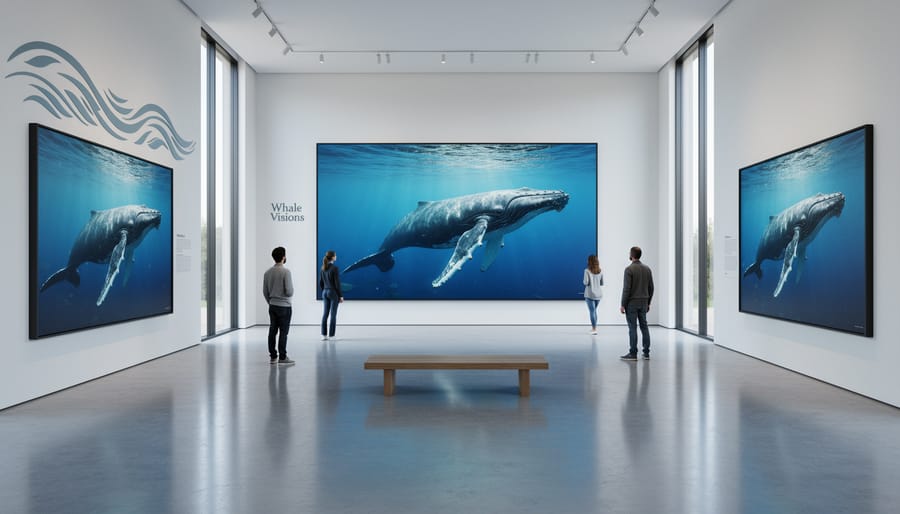
Marine art galleries occupy a distinct niche in the cultural landscape, setting themselves apart through their unwavering commitment to oceanic subject matter. Unlike traditional art spaces that showcase diverse themes and styles across multiple genres, these specialized venues curate collections exclusively centered on marine environments, coastal ecosystems, and the creatures inhabiting our oceans. Every piece, whether a hyperrealistic depiction of a coral reef system or an abstract interpretation of wave dynamics, anchors visitors to the aquatic world.
The most defining characteristic is their dual mission. Marine art galleries don’t simply display beautiful imagery; they function as conservation education hubs where aesthetic appreciation serves environmental advocacy. Exhibitions are deliberately designed to spark emotional connections that translate into conservation awareness. A gallery might feature a stunning series of whale portraits alongside data about declining populations, or showcase sculptures crafted from recovered ocean plastics to illustrate pollution’s impact. This intentional pairing of artistry with environmental messaging creates a powerful educational experience that general galleries rarely attempt.
The curation philosophy reflects this hybrid identity. Gallery directors often collaborate directly with marine biologists, oceanographers, and conservation organizations to ensure scientific accuracy and relevance. They prioritize artists who demonstrate genuine understanding of marine ecosystems, whether through direct field experience or partnerships with researchers. This results in exhibitions that educate while they inspire, explaining bioluminescence through abstract light installations, or documenting threatened species with photographic precision that rivals scientific documentation.
Community engagement patterns also differ markedly. Marine art galleries frequently host conservation-focused events, artist talks featuring scientists as co-presenters, and workshops connecting creative practice with environmental stewardship. They serve as gathering spaces for ocean advocates, creating networks that extend beyond typical gallery audiences to include divers, educators, and coastal community members invested in marine protection.
The Intersection of Art and Marine Conservation
Visual Storytelling for Species Protection
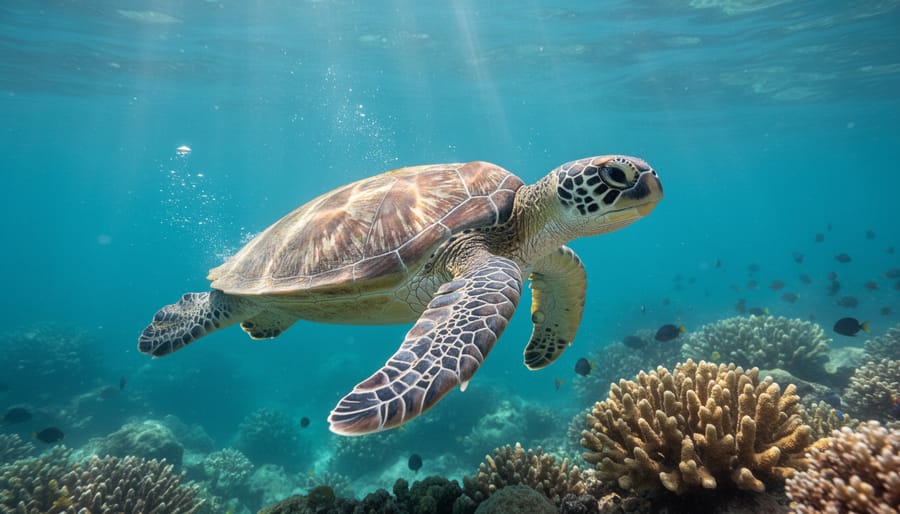
Artists possess a unique ability to transform cold conservation data into visceral emotional experiences. When a painter captures the translucent grace of a critically endangered hawksbill sea turtle gliding through coral gardens, viewers connect with the individual creature rather than viewing it as one of 25,000 remaining specimens. This emotional bridge transforms passive awareness into active concern.
Marine artists working with conservation themes deliberately balance beauty with vulnerability. A sculpture of a North Atlantic right whale might emphasize the gentle curve of its body while incorporating rope scars from fishing gear entanglement. The viewer simultaneously appreciates the animal’s magnificence and confronts the human-caused threats it faces. This dual perspective makes conservation urgent without relying on shock tactics.
The scale and detail artists bring to their work matters profoundly. A life-sized painting of a vaquita porpoise forces viewers to acknowledge the small cetacean’s existence rather than letting it remain an abstract statistic about the world’s most endangered marine mammal. Similarly, hyperrealistic renderings of coral bleaching document environmental damage with scientific accuracy while creating lasting visual memories that statistics alone cannot achieve.
Through careful observation and intimate portrayal, marine artists help endangered species become individuals worth protecting rather than numbers on a declining population chart.
Translating Science into Art
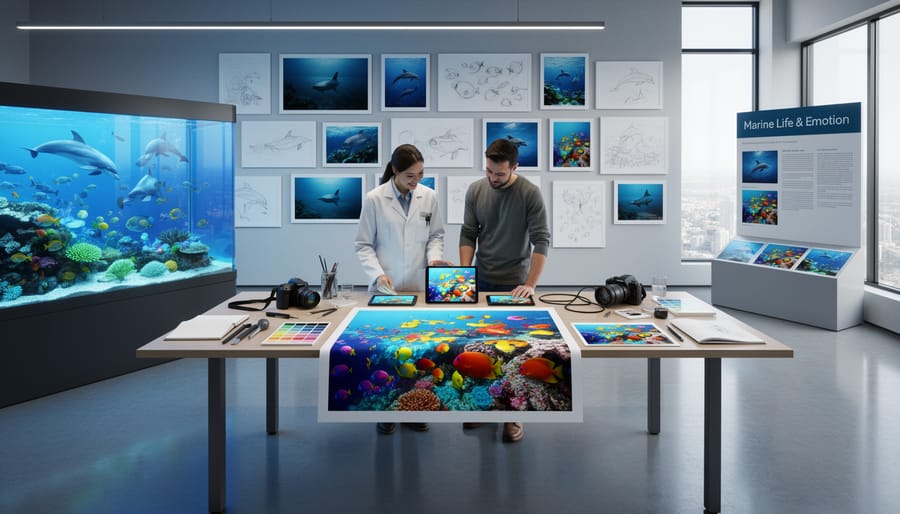
When marine biologist Dr. Sarah Chen first partnered with watercolor artist Marcus Liu for a kelp forest exhibition, she worried the scientific accuracy would get lost in artistic interpretation. Instead, she discovered how art could illuminate her research in ways data tables never could. “Marcus spent weeks diving with me, observing how sunlight filters through the kelp canopy at different times of day,” Chen recalls. “His paintings captured the dynamic movement of the ecosystem, something my research notes described but couldn’t convey viscerally.”
This collaborative process typically begins with artists immersing themselves in the scientist’s world: joining research expeditions, reviewing specimen collections, studying behavior footage, and learning the anatomy and ecology of their subjects. Marine biologists provide reference materials, answer endless questions about scale and coloration, and review drafts for accuracy. Artists then translate this knowledge into visual narratives that make complex concepts, like coral symbiosis or plankton food webs, immediately graspable.
The most successful collaborations balance scientific rigor with emotional resonance. A technically perfect illustration of ocean acidification means little if viewers walk past unmoved. When artists capture both the chemistry and the consequences, bleached coral skeletons where vibrant reefs once thrived, they create understanding that sticks. These partnerships transform abstract threats into tangible losses, motivating conservation action in ways peer-reviewed papers rarely achieve.
Types of Marine-Inspired Artwork and Exhibitions
Traditional Marine Art
Traditional marine art forms the foundation of most marine art galleries, encompassing paintings, watercolors, and illustrations that capture the ocean’s majesty while advancing conservation narratives. These works range from sweeping seascapes that reveal the interconnectedness of ocean systems to intimate portraits of individual species threatened by habitat loss or overfishing.
Unlike purely decorative marine artwork, gallery pieces typically embed conservation messaging into their composition. A watercolor of a sea turtle might incorporate subtle plastic debris in the background, while an oil painting of a vibrant coral reef could juxtapose healthy ecosystems with bleached sections affected by warming waters. Many artists work from field sketches made during research expeditions, lending their pieces both artistic merit and scientific authenticity.
The enduring appeal of traditional media lies in their accessibility. Viewers need no special technology or prior knowledge to appreciate a beautifully rendered whale breaching or a delicate pen-and-ink study of microscopic plankton, yet these works can spark conversations about migration patterns, food web dynamics, and the cascading effects of ocean acidification.
Contemporary and Multimedia Exhibitions
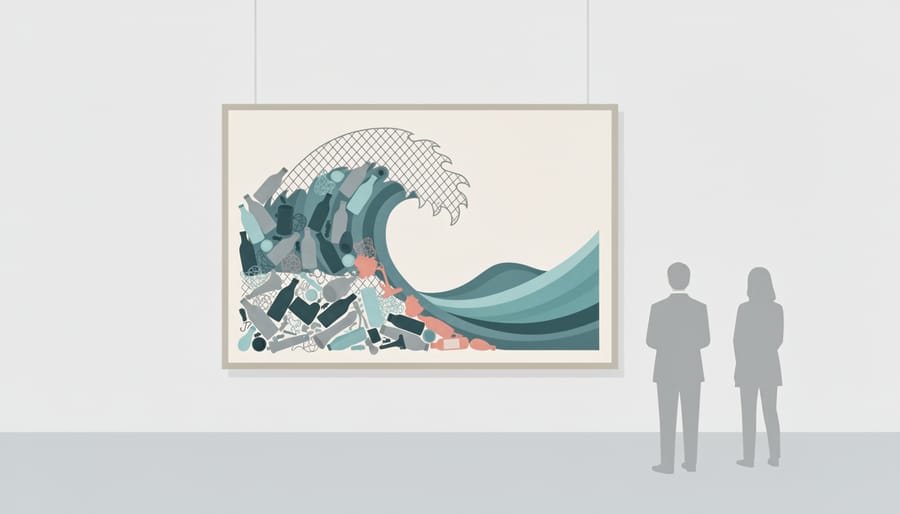
Contemporary marine art galleries increasingly push beyond canvas and frame, embracing technology and unconventional materials to immerse visitors in ocean environments. Virtual reality headsets transport viewers beneath the waves to witness coral bleaching firsthand or swim alongside migrating whales, creating visceral connections that static images cannot match. 3D art installations transform entire gallery spaces into underwater worlds, while projection mapping turns walls into living tide pools that respond to visitor movements.
Many venues now showcase art made from recycled plastic collected during beach cleanups, turning ocean pollution into striking sculptures of the marine life it threatens. Video artists capture rarely-seen deep-sea creatures in their natural habitats, screening footage that rivals traditional cinema in its production quality. Some galleries even integrate performance art hosting live interpretive dance inspired by jellyfish movement or theatrical presentations about ocean acidification.
The materials matter as much as the message. Artists collaborate with sustainable fashion designers to create wearable art from kelp-based textiles, while others build installations using nothing but abandoned fishing nets retrieved from the ocean.
Scientific Art and Data Visualization
Scientific art transforms complex marine research into visually striking work that bridges the gap between data and understanding. These pieces often feature anatomical cross-sections of marine organisms, revealing the intricate structures that enable survival in ocean environments, the counter-current heat exchange systems in tuna, the bioluminescent organs in deep-sea fish, or the filtering apparatus of baleen whales rendered in precise detail.
Data visualization projects turn ocean health metrics into compelling visual narratives. Artists collaborate with oceanographers to create installations showing temperature changes across coral reef zones, migration patterns of endangered sea turtles tracked through satellite data, or the accumulation of microplastics in marine food webs. Color gradients, three-dimensional models, and time-lapse sequences make these abstract datasets tangible.
Some galleries showcase scientific illustration that documents newly discovered species or captures field research in remote locations. These works maintain scientific rigor while demonstrating aesthetic consideration, each line and shade serving both accuracy and visual impact, making marine biology accessible to audiences who might never read a research paper.
Notable Marine Art Galleries and Exhibition Spaces
Museum-Based Marine Art Collections
Museum-based collections integrate marine art into larger institutional missions of scientific education and species preservation. Natural history museums often house permanent galleries featuring historical maritime paintings alongside contemporary artist residencies that document changing ocean ecosystems. These institutions leverage their scientific credibility to contextualize artwork within broader conservation narratives, pairing a watercolor of coral bleaching with live specimens or research data that validates the artistic interpretation.
Aquariums increasingly dedicate exhibition spaces to marine-inspired artwork, creating immersive experiences where visitors encounter artistic representations before or after viewing living marine organisms. This sequencing deepens emotional connections, a sculpture of a sea turtle becomes more poignant when displayed near rehabilitation tanks housing recovering individuals. Maritime museums anchor their marine art collections in cultural heritage, showcasing how human relationships with oceans have evolved from exploitation toward stewardship, with contemporary pieces challenging viewers to consider their role in that trajectory.
The marine museum model demonstrates how diverse institutional frameworks can successfully integrate conservation messaging through visual arts, making ocean protection relevant to varied audience interests, whether scientific curiosity, aesthetic appreciation, or historical understanding.
Dedicated Marine Art Venues
Standalone galleries devoted solely to marine art create immersive environments where every wall, sculpture, and installation centers on ocean themes. These specialized venues curate deeper, more focused collections than broader institutions can offer, allowing visitors to spend hours surrounded exclusively by marine-inspired creativity.
The best dedicated venues function as both gallery and conservation hub. They host artist talks where painters and sculptors discuss their fieldwork alongside marine scientists, run workshops teaching ocean-themed techniques, and organize annual exhibitions that spotlight specific conservation challenges like coral bleaching or shark protection. Many maintain artist residency programs that send creators on research expeditions, bringing back work informed by direct marine ecosystem observation.
These galleries typically feature rotating exhibitions that follow seasonal ocean patterns, migration cycles, or urgent conservation issues. Their gift shops stock sustainable, ocean-friendly products, and proceeds often fund specific marine projects. Look for venues that clearly communicate where your admission fee or artwork purchase goes, connecting your visit directly to measurable conservation outcomes.
Coastal Community Galleries
Coastal community galleries emerge as vital hubs where regional marine identity meets artistic expression. These intimate spaces showcase the specific ecosystems, species, and conservation challenges of their surrounding waters, from Pacific Northwest kelp forests to Gulf Coast wetlands. Unlike larger institutions, they prioritize local artists who live alongside these environments daily, translating firsthand coastal experiences into deeply authentic work.
What distinguishes these galleries is their embedded community role. They partner directly with nearby marine research stations, fishing communities, and regional conservation groups. A gallery in a small fishing village might feature works depicting declining local fish populations alongside information about sustainable harvest practices. Artists often source materials from their immediate environment, driftwood sculptures, prints using seaweed-based inks, or installations incorporating beach-combed debris.
These venues serve dual purposes: celebrating regional marine heritage while addressing place-specific threats like coastal development, water quality issues, or invasive species. The result is marine art that resonates personally with local residents while introducing visitors to conservation stories they won’t encounter elsewhere.
How Marine Art Galleries Support Conservation Action
Educational Outreach and School Programs
Marine art galleries transform traditional classroom learning into immersive experiences that spark students’ curiosity about ocean conservation. Many venues offer specialized school programs where students examine brushwork depicting coral reef ecosystems, then discuss with educators how these habitats face bleaching and degradation. Guided tours pair artwork with storytelling, sometimes drawing connections to marine folklore that has shaped cultural relationships with the sea, helping children understand that oceans inspire both creativity and responsibility.
Hands-on workshops let students create their own marine-themed art using watercolors, recycled materials, or clay while learning about specific species. A workshop might focus on sea turtles: children sculpt turtle forms while discussing nesting behaviors, migration patterns, and plastic pollution threats. Curriculum-aligned programs connect gallery visits to science standards, offering pre-visit lesson plans and post-visit activities that reinforce concepts like food webs, adaptation, and human impacts.
These programs cultivate emotional connections that statistics alone can’t achieve. When a student paints a humpback whale and learns it nearly went extinct, that personal investment often translates into lifelong environmental awareness and action.
Volunteer and Community Engagement Opportunities
Marine art galleries create meaningful entry points for conservation involvement that welcome diverse skill sets and schedules. Docent programs train community members to lead gallery tours, helping visitors connect emotionally with marine artwork while sharing conservation context about threatened species and ocean ecosystems. These roles suit retirees, students, and working professionals who can commit to a few hours monthly. Beyond the gallery walls, many venues organize artist-led beach cleanups where participants collect marine debris that later becomes raw material for recycling-focused installations or educational displays about ocean plastic pollution.
Citizen science initiatives linked to exhibitions offer hands-on research participation. For example, galleries hosting exhibitions on coral reef decline may partner with marine biologists to train volunteers in reef monitoring techniques, underwater photography for species documentation, or data collection during organized dive trips. These programs make scientific research accessible while strengthening the connection between artistic representation and real-world conservation outcomes.
Exhibition installation periods often need volunteers for practical tasks like artwork handling (under supervision), promotional material distribution, and event setup for artist talks or fundraising auctions. Educational workshops require assistants to help children and adults with marine-themed art projects that teach ecosystem concepts. Dr. Sarah Chen, a marine biologist who collaborates with coastal galleries, notes that volunteer programs “transform passive art appreciation into active stewardship, giving people concrete ways to contribute to the ocean’s future while discovering their own creative connection to marine life.”
Planning Your Visit to a Marine Art Gallery
Planning a visit to a marine art gallery offers more than passive viewing, it’s an opportunity to deepen your connection with ocean conservation through creative expression. Start by researching galleries online, checking their websites for current exhibitions, artist talks, and special events. Many venues schedule openings around ocean awareness dates or conservation campaigns, which often include scientist presentations or artist-curator discussions that enrich the experience.
Before your visit, review the exhibition themes and featured artists. Understanding whether you’ll encounter traditional seascapes, scientific visualizations, or installations addressing specific threats like coral bleaching helps you arrive with relevant questions. Some galleries offer downloadable guides or apps that provide background on both the artistic techniques and the conservation context behind each piece.
During your visit, take time with individual works rather than rushing through the space. Read the artist statements and curatorial notes, they often reveal the research, field observations, or conservation partnerships that informed the artwork. Don’t hesitate to ask gallery staff about the stories behind pieces; many docents have deep knowledge about both the art and the marine science it represents.
Engage meaningfully by attending guided tours or workshops when available. These programs frequently connect artistic interpretation with current conservation challenges, offering perspectives you won’t get from labels alone. Consider purchasing artwork or gallery merchandise if your budget allows, many venues direct proceeds to specific marine projects or research initiatives. Even small purchases support the gallery’s educational mission.
Finally, share your experience. Post thoughtfully about exhibitions on social media, bring friends on return visits, or inquire about volunteer opportunities at the gallery itself. Your engagement amplifies the conservation message and helps sustain these vital cultural spaces.
Frequently Asked Questions About Marine Art Galleries
What’s the difference between a marine art gallery and an aquarium?
While aquariums display living marine animals in recreated habitats, marine art galleries showcase artistic interpretations of ocean life and ecosystems through paintings, sculptures, photography, and installations. Galleries focus on visual storytelling and creative expression to convey conservation messages, whereas aquariums emphasize direct observation of living organisms.
Are marine art galleries appropriate for children?
Most marine art galleries welcome families and offer child-friendly programming, including hands-on art workshops, scavenger hunts, and guided tours designed for young visitors. The visual nature of the artwork makes complex conservation topics accessible to children while sparking their curiosity about ocean life.
How does purchasing artwork support marine conservation?
Many marine art galleries donate a percentage of artwork sales directly to ocean conservation organizations, research initiatives, or local marine protection projects. Some galleries operate as nonprofits themselves, meaning your purchase directly funds their educational programs and conservation advocacy work.
Do I need art knowledge to enjoy marine art galleries?
No specialized art expertise is required. These galleries typically provide context cards, guided tours, or audio guides that explain both the artistic techniques and the marine science behind each piece, making the experience enriching for visitors at any knowledge level.
How can I find marine art galleries near me?
Check natural history museums and aquariums in your region, as many host marine art exhibitions. Search online for coastal galleries specializing in ocean themes, or contact local conservation organizations who often partner with galleries for special exhibitions and events.
Beyond these common questions, you might wonder about accessibility features at marine art galleries. Most established venues offer wheelchair access, large-print labels, and tactile elements for visually impaired visitors. Call ahead if you have specific accessibility needs, as staff can often arrange special accommodations or private viewings.
If you’re traveling to coastal regions, marine art galleries make meaningful additions to your itinerary. They offer respite from beach activities while deepening your connection to the local marine environment. Unlike quick museum visits, plan to spend at least an hour engaging with the artwork, reading artist statements, and exploring any interactive components. The experience becomes more rewarding when you allow time for reflection on how the art changes your perception of ocean conservation challenges.
Marine art galleries stand at a powerful intersection where creativity becomes conservation, transforming the invisible crisis beneath our waves into something we can see, feel, and act upon. These venues accomplish what data alone cannot: they make the vastness of ocean challenges personal and immediate. When you stand before a painting of a bleached coral reef or a sculpture crafted from recovered fishing nets, abstract statistics about marine biodiversity loss become visceral truths that demand response.
The beauty of this approach is its accessibility. You don’t need a science degree to understand the message in a photographer’s image of a sea turtle entangled in plastic, or to feel the urgency in an artist’s interpretation of disappearing kelp forests. Marine art galleries democratize conservation, inviting everyone into the conversation through the universal language of visual expression.
As you seek out these venues in your community or travels, remember that your engagement matters. Every gallery visit, every conversation sparked by an exhibition, and every creative project inspired by marine themes contributes to the cultural shift we desperately need. Consider how you might integrate creative expression into your own conservation efforts, whether through supporting marine artists, participating in gallery programs, or simply sharing what moves you with others.
The collaboration between artists and scientists working within these galleries offers genuine hope. Together, they’re building bridges between knowledge and emotion, beauty and urgency, inspiration and action. Our oceans need both the precision of research and the power of art to survive. Marine art galleries provide the space where both can thrive.

jessica
Ava Singh is an environmental writer and marine sustainability advocate with a deep commitment to protecting the world's oceans and coastal communities. With a background in environmental policy and a passion for storytelling, Ava brings complex topics to life through clear, engaging content that educates and empowers readers. At the Marine Biodiversity & Sustainability Learning Center, Ava focuses on sharing impactful stories about community engagement, policy innovations, and conservation strategies. Her writing bridges the gap between science and the public, encouraging people to take part in preserving marine biodiversity. When she’s not writing, Ava collaborates with local initiatives to promote eco-conscious living and sustainable development, ensuring her work makes a difference both on the page and in the real world.