Marine Biodiversity Science Center

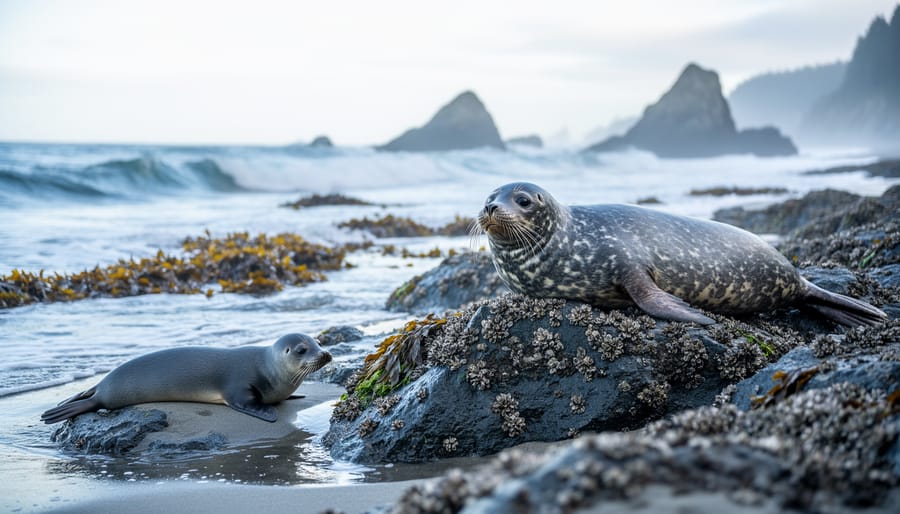
Harbor seals employ a remarkably efficient reproductive strategy characterized by delayed implantation, short lactation periods, and strategic timing that allows females to give birth, nurse, and mate within a compressed annual cycle. This specialized approach to reproduction enables these marine mammals to maximize pup survival in coastal environments where food availability fluctuates seasonally and terrestrial predators pose constant threats during the vulnerable nursing period.
Understanding how harbor seals reproduce reveals fundamental patterns common to many pinnipeds and demonstrates how evolutionary pressures shape marine life cycles across different ocean habitats. Harbor seals have perfected a system where females delay embryo implantation for several months after mating, synchronizing births with optimal spring conditions when prey abundance peaks and weather becomes more favorable. This temporal precision means pups are born precocious and well-developed, nursing for just three to four weeks before becoming independent swimmers.
Dr. Elena Vasquez, a marine mammal researcher who has spent fifteen years monitoring harbor seal populations along the Pacific coast, describes the strategy as “beautifully calibrated efficiency.” She notes that females undergo one of the shortest lactation periods among seals, pouring energy-rich milk into rapid pup development while simultaneously preparing for the next mating cycle. This compressed timeline creates intense physical demands on mothers but allows populations to thrive in temperate waters where environmental windows for successful reproduction remain narrow.
This article explores the biological mechanisms driving harbor seal reproduction, from the hormonal triggers controlling delayed implantation to the behavioral variations among regional populations. You’ll discover how these reproductive adaptations connect to broader conservation challenges and learn about current research efforts tracking reproductive success in changing ocean conditions.
What Harbor Seal Reproductive Strategy Means
Harbor seal reproductive strategy refers to the suite of biological and behavioral adaptations these marine mammals use to successfully produce and raise offspring in challenging ocean environments. At its core, this strategy revolves around capital breedinga reproductive approach where females build up energy reserves before pregnancy and rely on stored body fat to fuel both fetal development and milk production, rather than feeding extensively during these demanding periods. This allows harbor seals to compress their reproductive activities into narrow seasonal windows when conditions favor pup survival.
To understand harbor seal reproduction fully, it helps to define several key concepts:
- Capital breeding
- A reproductive strategy where females accumulate energy reserves (body fat) before giving birth and use these stores to fuel pregnancy and lactation, minimizing feeding during the nursing period.
- Delayed implantation
- A phenomenon where the fertilized embryo remains in suspended development for several months before attaching to the uterine wall, allowing precise timing of birth regardless of when mating occurred.
- Phocid seals
- The family of true seals (including harbor seals) that lack external ear flaps and have adapted specialized reproductive strategies for life in marine environments.
- Annual cycle
- The yearly reproductive pattern where females give birth, nurse their pup, mate again, and then undergo a long gestation period before the cycle repeats.
- Aquatic parturition
- Birth that occurs in or very near water, requiring pups to be born relatively developed and capable of swimming shortly after delivery.
These reproductive patterns didn’t arise by chance. Over millions of years, environmental pressures sculpted harbor seal reproduction into its current form. Seasonal food availability in temperate and subarctic waters created strong selective pressure for synchronized pupping during spring and early summer, when prey fish congregate in coastal areas and mothers can rebuild energy reserves after weaning. Predation risk from orcas, sharks, and terrestrial predators pushed seals toward haul-out sites that offer both refuge and quick escape routes, influencing where and when they give birth.
Harbor seals exemplify broader trends in marine mammal reproductive ecology. Like many phocids, they’ve evolved to maximize energy transfer during brief but intensive nursing periods, enabling mothers to return to foraging quickly while pups develop the fat reserves needed for independent survival. This compressed, high-stakes approach contrasts sharply with land mammals of similar size and reflects the unique demands of raising young in an aquatic realm.
How Harbor Seal Reproduction Works
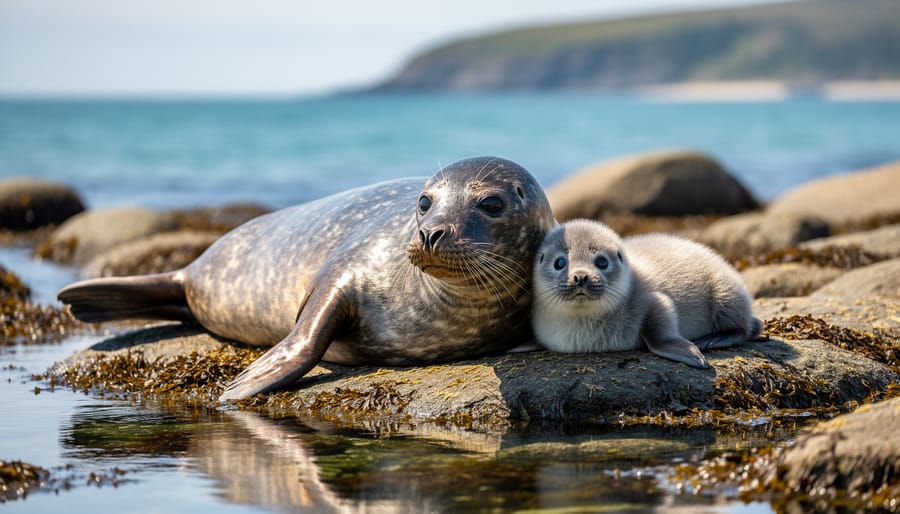
The Annual Reproductive Cycle
Harbor seals follow a tightly synchronized annual reproductive cycle, with most populations pupping in spring to early summer when marine productivity peaks and water temperatures begin to rise. The precise timing varies by latitude and local conditions, Pacific harbor seals in California may pup from March through May, while northern populations along the Alaskan coast typically pup in June. This coordination is driven by photoperiod (day length) and sea surface temperature, which trigger cascading hormonal changes that prepare females for birth and males for breeding readiness. The pupping season timing across a population creates protective clusters of mothers and pups on haul-out sites, reducing individual predation risk.
The reproductive cycle unfolds in distinct, overlapping phases:
- Pupping season: synchronized births concentrated over 4-6 weeks
- Lactation period: intensive nursing for 3-6 weeks with extremely rich milk
- Weaning: abrupt separation as pups reach nutritional independence
- Mating season: post-partum estrus allows females to conceive days after weaning
- Gestation with delayed implantation: 9-11 months total, including 2-3 months of embryonic diapause
Pups develop at remarkable speed. Born with a sleek coat (having molted their lanugo in utero), they can swim within hours and gain weight rapidly on milk that contains 45-60% fat. Mothers remain closely bonded to their pups, recognizing them by scent and vocalization even in crowded haul-outs. Remarkably, females enter estrus and mate shortly before or just after weaning, often while still nursing. This tight overlap between lactation and the next conception maximizes reproductive output, ensuring that the fertilized embryo enters diapause and will implant months later, perfectly timed for the next spring’s optimal pupping window.
Delayed Implantation: A Survival Mechanism
Harbor seals employ a remarkable reproductive strategy known as embryonic diapause, a mechanism that puts the developing embryo on pause in seals for several critical months. After successful mating, the fertilized egg does not immediately implant in the uterine wall. Instead, it enters a state of suspended development, floating freely in the uterus for approximately 2-3 months while cell division essentially stops. This biological pause button allows the embryo to wait in a dormant state until conditions become favorable for active gestation to begin.
The adaptive advantage of this strategy becomes clear when considering the constraints of life in a seasonal marine environment. Harbor seals typically mate shortly after females wean their pups, often in late spring or early summer when adults are congregated at haul-out sites. Without delayed implantation, pups would be born in the middle of winter, a disastrous timing given scarce food resources and harsh weather conditions. By suspending embryonic development, seals effectively time-shift the birth of their young to coincide with peak prey availability and milder temperatures, regardless of when conception occurred.
The physiological trigger for implantation involves complex hormonal signals tied to seasonal cues, particularly changes in daylight length that influence the pineal gland and reproductive hormones. As autumn approaches and photoperiod shortens, hormonal changes signal the embryo to resume development and attach to the uterine wall. This reactivation begins the active gestation period of approximately 7-8 months, resulting in pups born the following spring when mothers can access abundant food to support the energetically demanding lactation period. This timing ensures newborns enter the world when their chances of survival are highest.
Maternal Investment and Pup Development
Harbor seal mothers invest extraordinary metabolic resources into their pups during a compressed lactation window that lasts just three to four weeks. From birth, pups rely on milk with staggering fat content, milk is about 50% fat and can reach concentrations as high as 60% fat as weaning approaches. This energy-dense formula fuels explosive growth: a newborn weighing around 24 pounds can more than double its weight by weaning, gaining up to two pounds per day. The thick blubber layer deposited during nursing provides insulation and buoyancy, essential for independent survival in cold coastal waters.
Pups are born precocial, entering the world with open eyes, a full coat of fur, and the ability to swim within hours. This readiness contrasts sharply with many terrestrial mammals. Mothers and pups form a tight bond immediately after birth, with vocal recognition allowing them to locate each other even in crowded haul-out sites where dozens of seals gather. The mother-pup pair spends most of the lactation period in the water, nursing frequently while the pup practices diving and staying afloat.
Weaning happens abruptly. Mothers cease nursing and abandon their pups, typically around 24 days postpartum, forcing immediate independence. Newly weaned pups face a critical transition: they must learn to hunt while living off stored blubber reserves accumulated during the nursing period. Survival hinges on those early weeks of rapid growth and the motor skills developed while swimming alongside their mothers. This brief but intense maternal investment maximizes reproductive output while minimizing the energetic cost to females, who must recover quickly to prepare for the next breeding cycle.
Mating Systems and Male Competition
Harbor seals employ an aquatic mating system that sets them apart from many other pinniped species. Males don’t haul out on land to battle for territory; instead, they patrol underwater near female haul-out sites, using elaborate displays to compete for breeding access. These displays include rhythmic vocalizations, underwater roars, growls, and clicks, paired with visual performances like bubble-streams and exaggerated swimming patterns. Males rely heavily on their marine senses to detect receptive females and assess rival males. Rather than engaging in violent physical combat that characterizes elephant seals or fur seals, harbor seal males compete through persistence and display intensity. A dominant male may mate with multiple females during the brief post-partum estrus window, but the system remains relatively fluid compared to the harems seen in land-breeding species. This underwater strategy reduces energy expenditure and injury risk while allowing females greater mobility during the critical nursing period.
Types of Harbor Seal Reproductive Behaviors
Haul-Out Site Selection
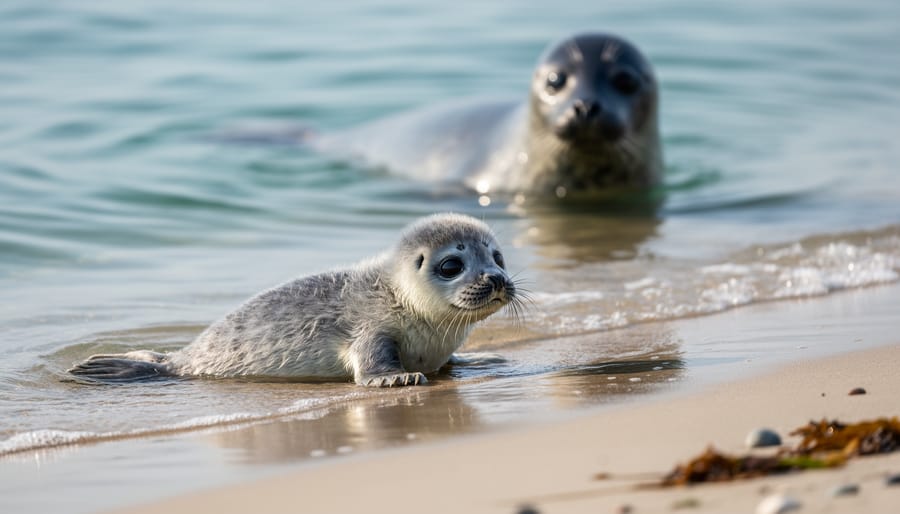
Female harbor seals choose pupping sites with extraordinary care, balancing competing survival pressures that directly influence whether their pups thrive or perish. Rocky shores, sandbars, and tidal flats dominate as preferred locations, each offering distinct advantages. Sandbars provide isolation from terrestrial predators like coyotes and bears, while rocky outcrops offer quick escape routes to water if aerial predators approach. In Arctic regions, stable ice floes serve as nursery platforms, though climate-driven ice loss increasingly forces populations toward terrestrial alternatives.
Site fidelity runs strong in harbor seal reproductive strategy. Females return year after year to successful pupping locations, sometimes to the exact same haul-out zone within a larger site. This fidelity reflects learned knowledge of predator patterns, tidal rhythms, and proximity to productive foraging waters. A mother must nurse intensively while simultaneously maintaining her own condition, so haul-out sites within a few kilometers of rich feeding grounds prove critical. Sites too distant from prey concentrations force mothers into longer absences, reducing pup supervision and milk delivery frequency.
The trade-off between safety and food access shapes reproductive success across populations. Isolated sites minimize disturbance but may require extended foraging trips. Females negotiate this balance differently depending on local conditions, demonstrating the adaptive flexibility underlying harbor seal reproduction strategies.
Population-Specific Adaptations
Harbor seal populations across the Northern Hemisphere have evolved distinct reproductive patterns that reflect their local environments. Pacific harbor seals in warmer California waters typically pup from March through May, while populations in Alaska and British Columbia delay births until June or July, synchronizing with peak prey abundance and optimal coastal conditions. This timing variation demonstrates how reproductive strategies serve seasonal survival needs specific to each region.
Arctic and sub-Arctic populations have developed particularly specialized adaptations. Seals in glacial fjords and ice-dominated habitats often use ice floes as pupping platforms, providing protection from terrestrial predators and stable surfaces for nursing. These populations face shorter lactation windows due to ice breakup patterns, leading to even richer milk composition and accelerated pup development compared to temperate populations.
European harbor seals in the Wadden Sea navigate tidal extremes by timing births to neap tides, giving pups maximum exposure to sandbar haul-outs during their vulnerable first weeks. Each population’s reproductive calendar reveals how environmental pressures shape the fundamental mechanics of seal reproduction across diverse marine ecosystems.
How Understanding Harbor Seal Reproduction Is Used in Conservation
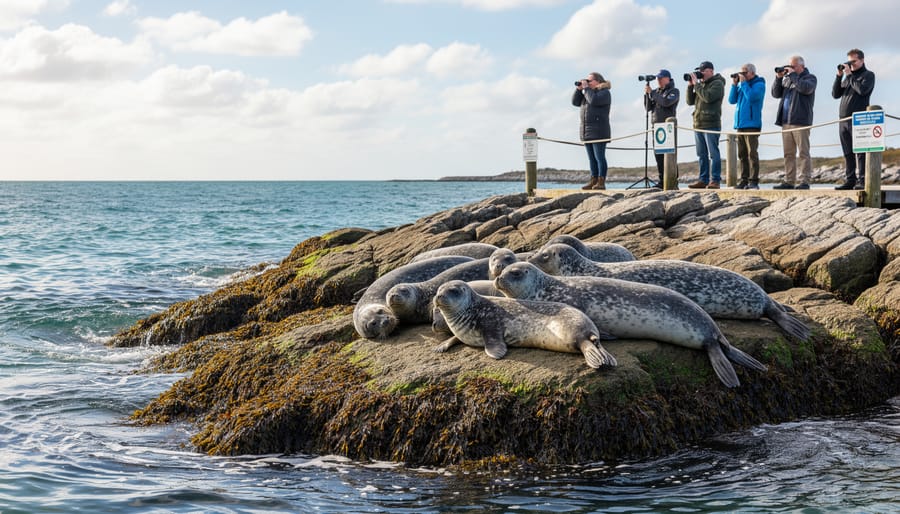
Understanding harbor seal reproduction isn’t just academic, it’s the foundation for effective conservation decisions that protect entire populations. Scientists translate reproductive data into concrete management strategies, from setting seasonal closures to predicting how environmental changes will affect future generations.
Reproductive biology informs multiple conservation tools:
- Population monitoring programs that track pupping success, pup survival rates, and maternal condition as early warning indicators of ecosystem health
- Seasonal area closures protecting critical haul-out sites during the pupping and nursing period, typically May through July in most regions
- Disturbance guidelines establishing minimum approach distances for boats, kayakers, and beachgoers to prevent mothers from abandoning pups
- Climate change impact assessments examining how shifting prey availability and warming waters affect maternal nutrition and pup growth rates
- Oil spill response planning that accounts for heightened vulnerability during lactation when females cannot relocate and pups cannot survive independently
When harbor seals flush into the water during the nursing period, even a single disturbance interrupts the energy transfer pups desperately need. Repeated disturbances, from unleashed dogs, drone flights, or approaching vessels, can cause mothers to wean early or abandon sites altogether. Research shows pups born in heavily disturbed areas weigh significantly less at weaning, directly reducing their survival odds.
Critical habitat designation relies on mapping where seals consistently pup and which sites produce the healthiest offspring. Biologists analyze decades of reproductive data to identify essential haul-outs, then work with coastal communities to balance human use and seal protection. Some regions implement voluntary no-entry zones, while others use regulatory buffers around documented pupping beaches.
Reproductive timing data also reveals ecosystem shifts. When seals pup earlier than historical norms, it often signals changing prey phenology, the seasonal availability of fish that nursing mothers depend on. These patterns help scientists understand cascading effects throughout the food web, from phytoplankton blooms to hidden predators that regulate marine populations, connecting seal reproduction to broader ocean health.
Population models incorporate reproductive rates, age at first reproduction, and pup survival to forecast trends under different scenarios. Managers use these projections to set sustainable disturbance limits, evaluate development proposals near seal habitat, and allocate resources for long-term monitoring programs that catch declines before they become critical.
Current Research and What We’re Learning
Marine biologists continue to uncover surprising insights about how harbor seals navigate the delicate balance between energy demands and reproductive success. Long-term studies tracking individual seals have revealed that maternal body condition before pregnancy predicts not just pup survival but also milk composition, with well-fed mothers producing fattier milk that accelerates pup growth. Researchers are also documenting shifts in pupping phenology, some populations now give birth up to two weeks earlier than historical records show, a change likely driven by warming ocean temperatures and altered prey availability.
Dr. Sarah Chen, who has spent fifteen seasons studying harbor seals along the Pacific coast, describes the intensity of reproductive research firsthand. “We arrive before dawn during pupping season, identifying individual mothers by their unique spot patterns,” she explains. The team uses telephoto lenses from respectful distances, recording nursing bouts and monitoring pup weight gain through visual assessment techniques refined over decades. One breakthrough came when Chen’s team deployed time-depth recorders on post-partum females, discovering that lactating mothers make remarkably short, shallow dives to conserve energy, essentially fasting while nursing. “Watching a mother lose a third of her body weight in three weeks drives home the extraordinary metabolic cost of reproduction,” Chen notes.
Climate change poses complex questions for the reproductive strategy of harbor seals. Warmer waters may force prey species deeper or farther from traditional pupping sites, requiring mothers to travel greater distances and potentially reducing milk delivery frequency. Researchers are investigating whether earlier spring conditions disrupt the synchronized timing between peak pup development and abundant prey for newly weaned juveniles. Nutritional stress appears particularly acute in populations facing combined pressures from ocean warming and human disturbance, including boat traffic near haul-out sites and coastal development that eliminates traditional pupping beaches.
Human activity during the critical nursing period can trigger mother-pup separation, and scientists are working to quantify disturbance thresholds that cause permanent abandonment. Studies using remote cameras and acoustic monitoring help identify how different types of human presence affect reproductive success without adding researcher disturbance.
Citizen scientists play an essential role in this research through beach monitoring programs that document pupping timing, haul-out site use, and disturbance events across broad geographic ranges. Volunteers trained in marine mammal observation protocols contribute thousands of data points annually, creating datasets impossible for professional researchers to gather alone. Many programs welcome participants regardless of experience, providing training in species identification and ethical observation practices that support both science and conservation.
Common Questions About Harbor Seal Reproduction
How long are harbor seals pregnant?
Harbor seals have a total gestation of about 11 months, but this includes a 2-3 month period of delayed implantation when the embryo remains dormant. Active fetal development lasts approximately 8-9 months after the embryo implants in the uterine wall.
Do harbor seals mate for life?
No, harbor seals don’t form long-term pair bonds. Males compete for mating opportunities with multiple females each season, and females may mate with different males across their reproductive years.
Why do mother seals leave their pups alone on the beach?
Mothers routinely leave pups on shore while they forage at sea, sometimes for several hours. This is completely normal behavior, the pup is not abandoned, and the mother will return to nurse.
When should I call a marine mammal rescue center about a pup?
Contact trained responders if a pup appears injured, emaciated, continuously crying for more than several hours, or if the mother hasn’t returned after 24 hours. Never touch or approach the pup yourself.
One of the most persistent misconceptions involves pup “abandonment.” Well-meaning beachgoers often assume a lone pup is orphaned and attempt rescue, when in reality the mother is simply feeding offshore. This interference can genuinely separate mother and pup, as human scent and disturbance may prevent the female from returning. If you encounter a pup on the beach, observe from at least 150 feet away and look for signs of distress rather than simply absence of the mother.
Harbor seals reach sexual maturity between three and seven years of age, with females typically breeding annually once mature. A healthy female can reproduce into her mid-twenties or beyond, potentially producing 15-20 pups over her lifetime. However, reproductive success varies with environmental conditions, food availability, and individual health status.
During pupping season, responsible observation means maintaining significant distance, keeping dogs leashed and away from haul-out sites, and never positioning yourself between a seal and the water. Disturbance causes seals to flush into the ocean prematurely, interrupting critical rest periods and mother-pup bonding. Females stressed by human presence may abandon nursing sites entirely, forcing pups to wean early with reduced survival chances. Quiet observation from designated viewing areas allows you to witness these remarkable animals without compromising their reproductive success.
Understanding the reproductive strategy of harbor seals reveals how millions of years of evolution have fine-tuned these marine mammals to thrive in dynamic coastal environments. From delayed implantation timing birth to optimal conditions, to intensive maternal energy transfer through extraordinarily rich milk, every aspect of their reproductive cycle demonstrates remarkable adaptation to the challenges of marine life. These biological mechanisms aren’t just fascinating examples of natural selection at work, they’re essential knowledge for protecting seal populations in an era of rapid environmental change.
Conservation success depends on this understanding. When we know that pupping season represents the most vulnerable period in a seal’s life, we can time beach closures appropriately. When we recognize that haul-out sites serve critical functions for nursing mothers, we can designate protected zones that give families the space they need. Population monitoring programs rely on reproductive data to assess whether communities are thriving or facing nutritional stress, guiding management decisions that affect entire ecosystems.
You can be part of this conservation work. Respecting posted distances during pupping season, reporting stranded animals to trained responders rather than approaching them, and participating in citizen science beach surveys all contribute directly to seal protection. The Marine Biodiversity Science Center connects volunteers with monitoring programs and research opportunities year-round. Whether you’re documenting haul-out use, learning field observation techniques, or simply spreading awareness about responsible wildlife viewing, your involvement strengthens the collective effort to ensure harbor seals continue their ancient reproductive rhythms for generations to come. Join our e-network to discover how you can contribute to marine conservation in your community.

jessica
Ava Singh is an environmental writer and marine sustainability advocate with a deep commitment to protecting the world's oceans and coastal communities. With a background in environmental policy and a passion for storytelling, Ava brings complex topics to life through clear, engaging content that educates and empowers readers. At the Marine Biodiversity & Sustainability Learning Center, Ava focuses on sharing impactful stories about community engagement, policy innovations, and conservation strategies. Her writing bridges the gap between science and the public, encouraging people to take part in preserving marine biodiversity. When she’s not writing, Ava collaborates with local initiatives to promote eco-conscious living and sustainable development, ensuring her work makes a difference both on the page and in the real world.