Marine Biodiversity Science Center

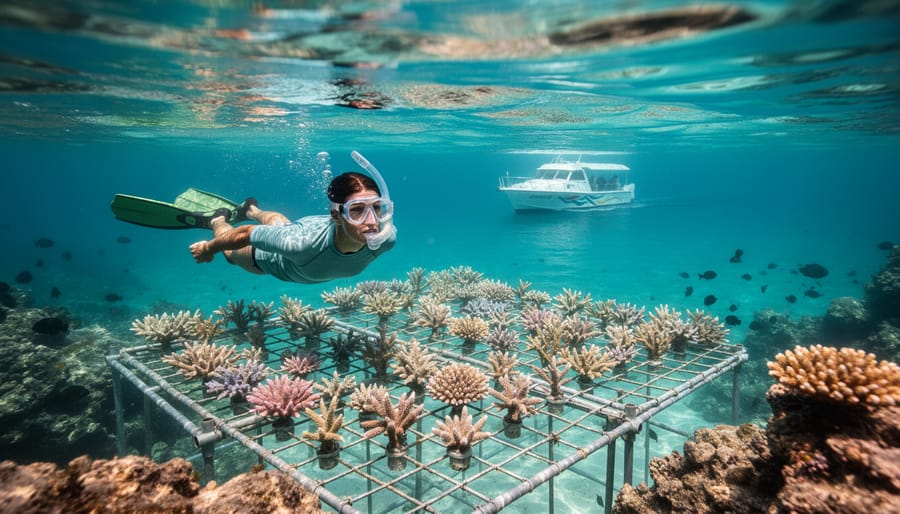
Regenerative tourism describes travel experiences designed to leave destinations healthier than they were before visitors arrived, actively restoring ecosystems rather than simply minimizing harm. Unlike sustainable tourism, which aims for a neutral footprint, regenerative approaches treat travelers as participants in ecosystem recovery, with every snorkel trip, dive, or coastal stay contributing measurably to habitat restoration, species recovery, or community resilience.
This distinction matters urgently for marine ecosystems. The ocean absorbs a quarter of all carbon dioxide we produce and generates half the oxygen we breathe, yet coral reefs have declined by 50% since the 1950s and mangrove forests continue disappearing at alarming rates. Traditional eco-tourism promised to do no harm, but even well-meaning visitors create cumulative stress on fragile marine environments through boat anchors, sunscreen chemicals, and sheer numbers. The model has proven insufficient.
Regenerative tourism flips the equation. Marine biologist Dr. Sofia Chen, who spent three years coordinating reef restoration in Indonesia, describes the shift this way: “We stopped asking how to reduce tourist impact and started asking how tourists could become the restoration workforce. Within eighteen months, visitors had outplanted 12,000 coral fragments and removed six tons of marine debris. The reef didn’t just survive tourism; it expanded because of it.”
This article explains how regenerative tourism functions in practice, the specific mechanisms that enable ocean recovery, and the types of projects currently delivering measurable results. You’ll learn how these initiatives differ from conventional volunteering, which real-world examples demonstrate the concept’s potential, and how you can participate as a traveler, educator, or conservation professional seeking hands-on restoration work in 2026 and beyond.
What Regenerative Tourism Means for Our Oceans
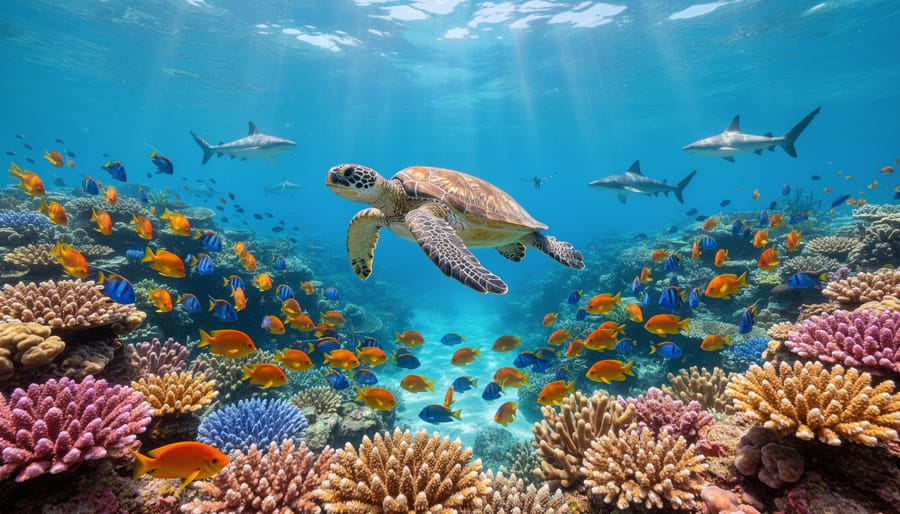
Regenerative tourism fundamentally reimagines the relationship between travel and the natural world. Rather than asking how we can reduce our footprint, it challenges us to actively improve the places we visit, especially the oceans that cover 71% of our planet.
At its core, regenerative tourism in marine settings means that every visit, every dive, every coastal experience should leave the ecosystem healthier than it was before. This represents a profound shift from traditional sustainable tourism, which aims to maintain the status quo and minimize damage. Regenerative approaches go further: they seek to reverse existing harm, rebuild degraded habitats, and strengthen the resilience of marine life.
- Regenerative Tourism
- Travel that actively restores and enhances ecosystems, communities, and cultures rather than simply minimizing negative impacts.
- Net-Positive Impact
- A measurable improvement in ecosystem health resulting from tourism activities, where benefits outweigh any residual harm.
- Ecological Restoration
- The process of assisting the recovery of damaged, degraded, or destroyed ecosystems to their former health and biodiversity.
- Carrying Capacity
- The maximum number of visitors an ecosystem can support while maintaining its ability to regenerate and thrive.
- Marine Stewardship
- The responsible management and care of ocean resources, balancing human use with long-term ecological health.
Marine ecosystems possess a remarkable quality that makes them ideal candidates for regenerative tourism: resilience. When given the right support, protection from overfishing, reduction in pollution, physical habitat restoration, ocean environments can recover with surprising speed. Coral reefs that were bleached and barren can regain their color and biodiversity within years. Coastal mangroves, once replanted, sequester carbon and shelter juvenile fish within a single growing season.
This natural capacity for regeneration, combined with the economic power of tourism, creates a unique opportunity. Visitors don’t just observe these ecosystems; they become active participants in their recovery, funding restoration work and contributing hands-on labor that accelerates the healing process.
How Regenerative Marine Tourism Works in Practice
The Science of Marine Restoration Through Tourism
Marine ecosystems possess a remarkable capacity for self-repair when given the right conditions, and regenerative tourism leverages this inherent resilience through scientifically grounded interventions. At the core of restoration success lies the principle of trophic cascades, the domino effect that occurs when key species are protected or reintroduced. When tourism activities support the recovery of apex predators like sharks or groupers, these species regulate smaller predator populations, which in turn allows herbivorous fish to control algae growth on reefs. This cascading balance creates healthier ecosystems capable of supporting greater biodiversity.
Habitat regeneration forms another pillar of marine restoration science. Coral reefs, mangroves, and seagrass beds function as foundational structures that countless marine species depend upon. When tourism programs actively restore these habitats, through coral transplantation, mangrove planting, or seagrass bed protection, they’re rebuilding the physical architecture that supports entire food webs. Research demonstrates the connection between habitat restoration and trophic recovery showing how structural improvements trigger biological rebounds.
Biodiversity recovery accelerates when these principles work together. Protected areas where tourism funding removes invasive species, reduces fishing pressure, and monitors ecosystem health consistently show increases in species richness and abundance. The science is clear: marine environments respond positively to interventions that address both habitat quality and species interactions, transforming degraded areas into thriving ecosystems within years rather than decades.
Community-Led Conservation Models
Local fishing communities possess generations of ecological knowledge that proves invaluable when designing community-led conservation tourism projects. Rather than imposing external restoration models, effective partnerships begin by listening, understanding traditional fishing grounds, seasonal migration patterns, and cultural connections to specific marine species that outsiders might miss.
This collaborative approach yields restoration strategies that respect sacred sites, avoid culturally important fishing periods, and incorporate local expertise about which habitats need priority attention. A coastal village in the Philippines, for instance, redesigned a coral restoration tourism program after elders pointed out that the original transplant sites would disrupt traditional navigation routes used during annual festivals.
Economically, these partnerships work when communities receive direct benefits beyond entry-level jobs. Successful models establish local ownership stakes in tourism operations, create micro-enterprises for boat services and handicrafts, and ensure restoration budgets pay fair wages to community members as project leads and monitors. This financial structure transforms residents from passive recipients into invested stakeholders who champion long-term ecosystem health because their livelihoods depend on it, creating a self-reinforcing cycle where thriving reefs attract more responsible tourism, which funds deeper restoration work.
Measuring Regenerative Impact
Tracking real ecosystem improvement requires rigorous science, not vague promises. Regenerative marine tourism projects rely on standardized monitoring systems that measure tangible change over time.
Biodiversity indices count species abundance and variety at regular intervals, a healthy reef shows increasing fish populations and coral species diversity year after year. Water quality testing measures nutrient levels, pH, and turbidity to detect pollution reduction and ecosystem recovery. Habitat coverage assessments use underwater photography and satellite imagery to document expanding coral fields, seagrass beds, or mangrove forests.
The Marine Biodiversity Science Center trains volunteers to conduct these surveys alongside researchers, creating datasets that prove whether tourism activities genuinely restore ocean health. Projects publish annual impact reports with baseline comparisons, showing percentage increases in live coral cover or fish biomass. This transparency separates authentic regeneration from greenwashing, giving participants confidence their efforts create measurable environmental gains.
Types of Regenerative Marine Ecosystem Projects in Tourism
Coral Reef Restoration Tourism
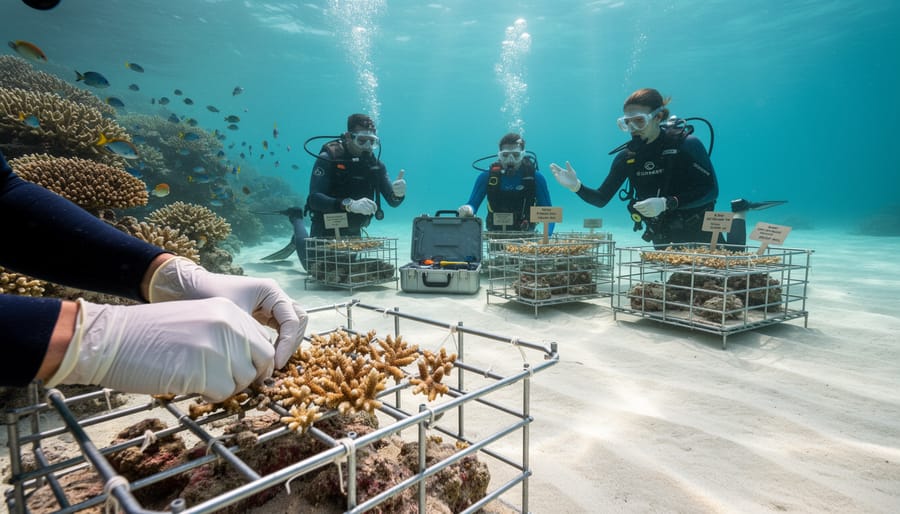
Coral gardening transforms visitors into reef restoration practitioners. Tourists work alongside marine biologists to fragment healthy corals, attach them to underwater nurseries, and monitor their growth over weeks or months. The science relies on coral’s natural asexual reproduction: a single branch, when properly secured to a substrate, develops into a genetically identical colony that eventually fuses with neighboring fragments to create continuous reef structure.
Visitor involvement accelerates recovery in ways science teams alone cannot achieve. A single restoration dive removes invasive algae from nursery corals, cleans debris that would smother young polyps, and documents growth rates through underwater photography. Programs in the Caribbean and Southeast Asia report that tourist-supported projects can out-plant thousands of coral fragments monthly, compared to dozens in researcher-only initiatives. Each participant contributes labor while funding continues beyond their visit.
The transplantation phase moves nursery-grown corals to degraded reef sites. Tourists secure fragments to reef substrate using marine epoxy or cable ties, positioning them to maximize survival based on current patterns and light exposure. Post-transplant monitoring, often conducted by returning visitors, tracks colony health and documents fish recruitment to restored areas. Reefs treated through these programs show measurable biodiversity increases within eighteen months, with structural complexity returning as corals mature and merge.
Mangrove and Seagrass Rehabilitation Programs
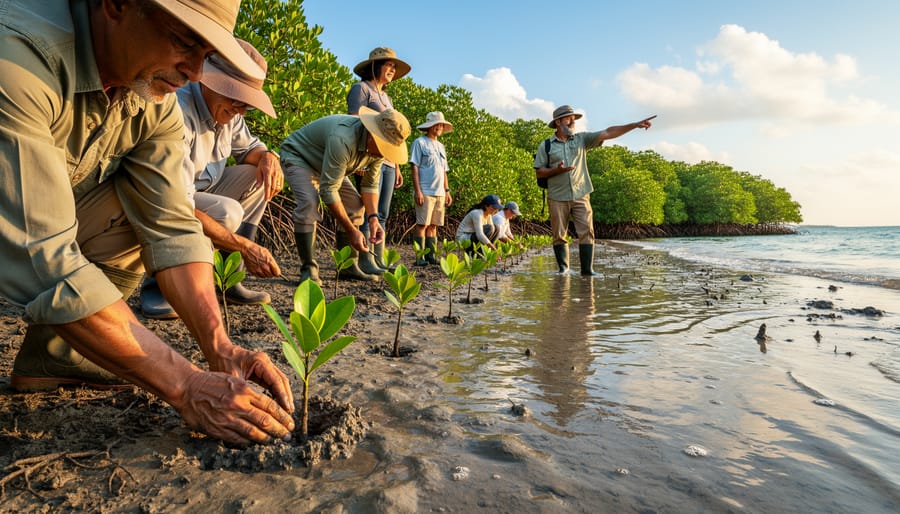
Mangrove and seagrass rehabilitation programs offer hands-on restoration experiences in coastal nurseries that serve as the ocean’s carbon sinks and fish nurseries. Tourists work alongside marine scientists to plant mangrove seedlings in degraded coastal zones, carefully positioning propagules in tidal areas where root systems will stabilize shorelines and filter runoff. These forests sequester up to four times more carbon per acre than tropical rainforests while creating protective nurseries for juvenile fish, shrimp, and crabs.
Seagrass restoration involves transplanting shoots or spreading seeds across barren seafloor patches, often damaged by boat anchors or coastal development. Participants learn to identify healthy donor beds, harvest sustainably, and monitor growth rates through repeat surveys. The Bahamas’ seagrass initiative has restored 12 hectares since 2021, with visitor contributions funding both planting and long-term monitoring.
These programs demonstrate immediate impact: newly planted mangroves visibly trap sediment within weeks, and fish populations increase measurably within months. Tourism revenue supports nursery maintenance, local employment, and expansion into additional degraded sites.
Marine Species Recovery Initiatives
Sea turtle conservation projects exemplify how tourism can directly fund species recovery. In Mexico’s coastal communities, visitors pay to monitor nesting beaches at night, record clutch data, and protect hatchlings from predators during their journey to the ocean. This revenue sustains year-round patrols that have increased local loggerhead populations by 40% over five years, a recovery impossible without consistent tourist funding.
Endangered fish breeding programs take a different approach. The grouper restoration initiative in the Florida Keys allows snorkelers to observe spawning aggregations while researchers collect data on breeding success. Tourism fees maintain protected spawning sites and fund juvenile release programs that have reintroduced thousands of Nassau groupers to depleted reef systems.
Marine mammal protection often combines research with visitor experiences. Whale shark tourism in the Philippines generates income that supports population monitoring and habitat protection, while strict interaction protocols prevent disturbance. Tourists become citizen scientists, photographing distinctive spot patterns that help researchers track individual animals and migration routes across the Pacific.
Regenerative Dive and Snorkel Operations
Dive centers pioneering regenerative models now embed restoration tasks directly into every underwater excursion. Before descending, divers receive briefings on target activities, removing abandoned fishing nets, collecting invasive lionfish, or photographing specific coral health indicators for ongoing research databases. The dive itself becomes a working session where recreation and restoration happen simultaneously, transforming passive observation into active ecosystem repair.
Many operations provide specialized equipment bags for debris collection, turning marine waste removal into a standard component of the dive experience rather than an optional add-on. Guides train participants to identify and safely extract ghost gear entangling reefs, document unusual species sightings through citizen science apps, and monitor water temperature at designated depths. Surface intervals include data logging sessions where divers upload photographs and observations to collaborative research platforms, contributing to long-term ecosystem monitoring that would be impossible without tourist participation.
The economic model works because divers pay premium rates for meaningful engagement. Revenue funds full-time marine biologists who analyze the collected data, maintain restoration sites between tourist visits, and develop new intervention strategies based on patterns the citizen scientists help identify.
Where Regenerative Marine Tourism Is Being Applied
Transforming Degraded Reefs into Thriving Ecosystems
Several coral reef systems once written off as beyond saving now teem with life again, thanks to regenerative tourism programs that turned visitors into restoration agents.
In Indonesia’s Gili Islands, severe blast fishing and anchor damage had reduced reef cover to less than 5% by the early 2000s. The Gili Eco Trust launched a program where dive tourists install biorock structures, metal frames carrying low-voltage electrical currents that accelerate coral growth fivefold. Over 15 years, participating divers have deployed more than 300 structures, boosting coral cover to 45% and bringing back reef shark populations that had vanished for decades.
The Philippines’ Apo Island presents another striking turnaround. After dynamite fishing devastated its reefs in the 1970s, the community partnered with marine biologists to create a marine sanctuary funded entirely by diver fees. Tourist snorkelers now participate in weekly reef health surveys, creating a citizen science database spanning 25 years. Fish biomass has increased 850%, and visiting tourists generated enough revenue to support 30 full-time marine rangers who patrol against illegal fishing while guiding restoration dives where participants transplant coral fragments onto damaged sections.
Coastal Communities as Conservation Partners
Traditional fishing villages once dependent on declining catches are discovering a powerful alternative: becoming stewards of the very marine resources that tourism needs to thrive. In the Philippines, former dynamite fishers in Danajon Bank now earn stable incomes as coral restoration guides, teaching visitors proper transplantation techniques while rebuilding the reefs their grandparents once knew. Their intimate knowledge of local currents, fish behavior, and seasonal patterns, previously used for extraction, now informs sophisticated restoration strategies that outperform external conservation programs.
This transition works because it addresses economics and identity simultaneously. A coastal community in Belize replaced declining lobster income with seagrass nursery tourism, where visitors pay to help plant shoots while local fishers manage the program. Within three years, juvenile fish populations tripled, providing spillover benefits that improved remaining sustainable fishing yields. The fishers didn’t abandon their heritage; they evolved it into active ecosystem management.
The most successful partnerships share decision-making power. Communities determine which restoration projects align with their cultural values, which areas remain off-limits to tourism, and how revenue gets distributed. When a Thai village declined reef-walking tours despite financial incentives, citing spiritual connections to untouched coral, the partnership instead developed mangrove kayaking routes, respecting local wisdom while still generating restoration funding.
Marine Protected Areas Enhanced by Tourism
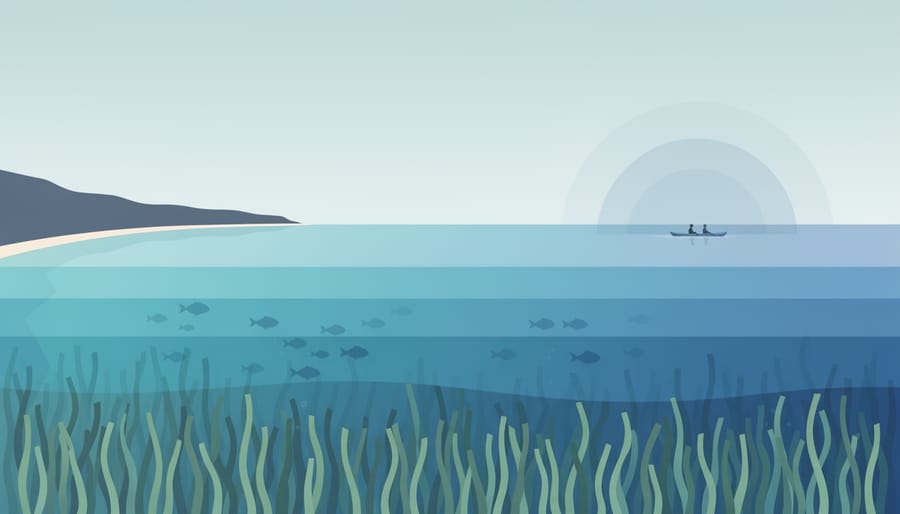
Marine Protected Areas often struggle with inadequate funding and enforcement, creating what conservation biologists call “paper parks”, protected in name but not in practice. Regenerative tourism addresses these challenges by transforming visitors into active MPA stakeholders. In locations like the Medes Islands Marine Reserve in Spain, dive tourism generates entrance fees that directly fund ranger patrols and scientific monitoring. Tourists participate in reef surveys using standardized protocols, exponentially expanding the data collection capacity beyond what park staff alone could accomplish. This visitor involvement creates what researchers term “social fencing”, when enough people care about an area’s health, they become informal guardians who report violations and advocate for stronger protections. The financial support and expanded surveillance network mean MPAs can enforce regulations more effectively while building public constituencies that defend conservation budgets.
Getting Involved: Opportunities for Everyone
You don’t need specialized degrees or extensive marine biology training to contribute to ocean restoration through tourism. Whether you’re planning your next vacation, considering a career shift, or simply passionate about marine conservation, multiple entry points exist for meaningful participation.
As a Travelerseek out tour operators and accommodations that demonstrate genuine regenerative commitments. Look for programs offering hands-on restoration activities, coral transplantation workshops, mangrove planting excursions, or beach cleanup dives, rather than passive observation. Ask specific questions: What measurable restoration outcomes has the program achieved? How does local community benefit? Many regenerative resorts and dive centers provide training on-site, requiring only basic swimming ability and enthusiasm.
Volunteer opportunities offer deeper immersion in restoration work. Marine education centers and conservation organizations worldwide host programs ranging from weekend workshops to months-long placements. At the Marine Biodiversity Science Center, volunteers assist with reef monitoring, species identification, data collection, and community outreach, gaining practical field skills while contributing to ongoing research. No previous experience is required for many positions, though marine science students and career-changers in conservation will find specialized tracks available.
Researchers and educators can partner with regenerative tourism operators to design monitoring protocols, analyze impact data, or develop educational programming. These collaborations ensure scientific rigor while making research accessible to public audiences.
Local community members in coastal regions can explore training programs that prepare residents to lead regenerative tourism initiatives in their own waters. Many successful projects actively recruit local guides, restoration technicians, and community coordinators, creating employment while preserving traditional ecological knowledge.
The most important qualification is commitment to leaving marine ecosystems healthier than you found them. Start where you are, with whatever time and resources you have available.
Common Questions About Regenerative Marine Tourism
How is regenerative tourism different from ecotourism?
While ecotourism aims to minimize harm and avoid destroying ecosystems regenerative tourism goes further by actively improving them. Regenerative programs measure success by documented ecosystem recovery, not just reduced impact.
Does regenerative marine tourism cost more than regular travel?
Initial costs may be slightly higher because programs fund restoration work and employ local conservation staff. However, many volunteer-based regenerative experiences offer comparable pricing to standard dive trips while including meaningful conservation activities.
How can I spot greenwashing versus genuine regenerative programs?
Look for programs that publish measurable restoration outcomes, partner with recognized marine research institutions, and employ local marine biologists. Genuine regenerative operators share specific data on coral transplants, habitat coverage increases, or species population recoveries rather than vague environmental claims.
Do I need special qualifications to participate?
Most regenerative marine tourism programs welcome participants of all skill levels, from complete beginners to experienced divers. Basic programs require no prior experience, while specialized activities like coral transplantation might need dive certification and additional training provided on-site.
Can regenerative tourism really reverse existing damage?
Yes, when properly implemented with scientific guidance and long-term commitment. Documented cases show degraded reefs recovering biodiversity within 3-5 years and mangrove restoration creating nursery habitat for commercially important fish species.
These questions reflect concerns marine biologists and conservationists hear regularly from prospective participants. The distinction between minimizing harm and creating positive change represents a fundamental shift in how we think about ocean travel. Traditional marine tourism, even when conducted responsibly aboard eco ships operates on a sustainability model focused on maintaining the status quo.
Regenerative approaches recognize that many marine ecosystems are already compromised and need active intervention. The economic question matters because restoration work requires investment in trained staff, monitoring equipment, and nursery infrastructure. However, the cost difference often disappears when you compare regenerative programs to high-end dive resorts that offer less meaningful engagement.
The greenwashing concern is valid and important. The marine tourism industry has learned that environmental messaging sells, leading some operators to rebrand without changing practices. Authentic regenerative programs demonstrate transparency through partnerships with universities, regular ecosystem health reporting, and community involvement that extends beyond token gestures. They can tell you exactly how many coral fragments were transplanted, what percentage survived, and how fish populations responded.
The shift from minimizing harm to actively healing our oceans represents more than an evolution in tourism, it’s a fundamental reimagining of our relationship with marine environments. Regenerative tourism proves that travel doesn’t have to extract value from coastal communities and ecosystems. Instead, every reef dive, beach visit, and snorkeling trip can contribute to measurable ecological recovery, from expanded coral coverage to rebounding fish populations.
What makes this approach particularly powerful is that it doesn’t require waiting for government policy or corporate initiatives. Individual choices matter. When you select a regenerative dive operator over a conventional one, participate in a mangrove planting program during your coastal holiday, or volunteer with a coral restoration project, you become part of the solution. These aren’t token gestures, they’re documented contributions to ecosystem health that scientists can measure in biodiversity indices and habitat recovery rates.
The marine conservation community has spent decades fighting to slow degradation. Regenerative tourism offers something different: the opportunity to reverse it. Ocean ecosystems possess remarkable resilience when given proper support, and tourism can provide that support at scale, bringing funding, workforce, public awareness, and sustained engagement to restoration efforts that would otherwise struggle for resources.
Your next travel decision is an opportunity to participate in ocean recovery. Whether through choosing regenerative operators, dedicating time to volunteer programs, or simply learning enough to recognize genuine restoration efforts, you can help write a new chapter in marine conservation where tourism heals rather than harms.

jessica
Ava Singh is an environmental writer and marine sustainability advocate with a deep commitment to protecting the world's oceans and coastal communities. With a background in environmental policy and a passion for storytelling, Ava brings complex topics to life through clear, engaging content that educates and empowers readers. At the Marine Biodiversity & Sustainability Learning Center, Ava focuses on sharing impactful stories about community engagement, policy innovations, and conservation strategies. Her writing bridges the gap between science and the public, encouraging people to take part in preserving marine biodiversity. When she’s not writing, Ava collaborates with local initiatives to promote eco-conscious living and sustainable development, ensuring her work makes a difference both on the page and in the real world.