Marine Biodiversity Science Center

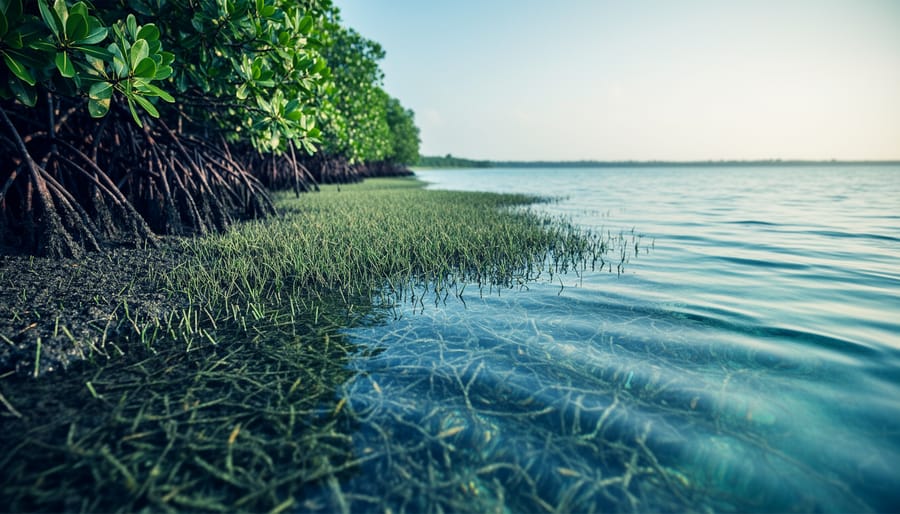
Blue carbon credits are financial instruments that represent verified reductions or removals of carbon dioxide achieved through the protection, restoration, or sustainable management of coastal and marine ecosystems. These credits allow organizations and individuals to offset their carbon emissions by investing in projects that harness the extraordinary carbon storage capacity of mangroves, salt marshes, and seagrass meadows.
Why do these credits matter so profoundly? Coastal ecosystems sequester carbon up to 40 times faster than terrestrial forests, yet they’re disappearing at an alarming rate. When these habitats are destroyed or degraded, centuries of stored carbon floods back into the atmosphere. Blue carbon credits create a financial incentive to reverse this trend, channeling climate finance directly into marine conservation efforts that would otherwise struggle for funding.
The mechanism is straightforward but powerful. Project developers restore or protect coastal habitats, measure the carbon sequestered or prevented from release, and sell verified credits on voluntary or compliance carbon markets. Buyers, ranging from corporations seeking to meet net-zero targets to individuals wanting to reduce their carbon footprint, purchase these credits knowing their investment supports tangible ecosystem recovery. The beauty of this system is its dual benefit: every credit purchased simultaneously fights climate change and revives critical marine habitat that supports fisheries, protects coastlines from storms, and nurtures biodiversity.
This article unpacks how blue carbon credits function from initial project design through verification and sale. You’ll discover which coastal ecosystems qualify, learn what distinguishes high-quality credits from questionable ones, and explore real-world projects already making waves. Whether you’re a conservation professional considering blue carbon as a funding mechanism, a student seeking to understand marine climate solutions, or simply someone curious about where climate finance meets ocean protection, understanding blue carbon credits opens doors to one of conservation’s most promising frontiers.
What Blue Carbon Credits Mean for Ocean Conservation
Blue carbon credits represent a market-based approach to protecting some of the planet’s most productive carbon sinks: our coastal and marine ecosystems. At their core, these credits monetize the carbon storage services provided by mangrove forests, seagrass meadows, salt marshes, and other coastal habitats, creating financial incentives to restore and conserve these vital environments rather than destroy them.
The term “blue carbon” refers specifically to carbon dioxide captured and stored by ocean and coastal ecosystems, distinguishing it from the “green carbon” sequestered by terrestrial forests and vegetation. While both are essential for climate regulation, blue carbon ecosystems punch far above their weight. Despite covering less than 2% of the ocean floor, coastal vegetation can sequester carbon at rates up to forty times faster than tropical rainforests, with the captured carbon often remaining stored in sediments for millennia.
Understanding how this natural process becomes a tradable financial instrument requires familiarity with several key concepts:
- Blue carbon
- Carbon dioxide captured and stored by coastal and marine ecosystems, primarily in plant biomass and the sediments beneath them.
- Carbon sequestration
- The process by which living organisms remove CO2 from the atmosphere and store it in biomass or sediments for long-term retention.
- Carbon offset
- A reduction in greenhouse gas emissions or increase in carbon storage that compensates for emissions made elsewhere, often purchased as a tradable credit.
- Mangroves
- Salt-tolerant trees and shrubs growing in tropical and subtropical coastal zones, capable of storing three to five times more carbon per hectare than terrestrial forests.
- Seagrass meadows
- Underwater flowering plants that form dense beds in shallow coastal waters, trapping carbon in their root systems and the sediments they stabilize.
- Salt marshes
- Coastal wetlands dominated by salt-tolerant grasses and plants, accumulating carbon-rich sediment layers that can persist for thousands of years.
When a conservation project protects or restores these habitats, it prevents CO2 from being released into the atmosphere and enables ongoing carbon capture. The measurable tons of carbon dioxide sequestered or emissions avoided can then be verified, certified, and sold as blue carbon credits. Each credit typically represents one metric ton of CO2 equivalent.
This system connects ocean conservation directly to climate finance. Companies, governments, or individuals seeking to offset their carbon footprints can purchase blue carbon credits, channeling funds toward coastal ecosystem protection. The coastal blue carbon efficiency of these habitats makes them particularly attractive for climate mitigation strategies, offering dual benefits: reduced atmospheric carbon and thriving marine biodiversity.
How Blue Carbon Credits Work
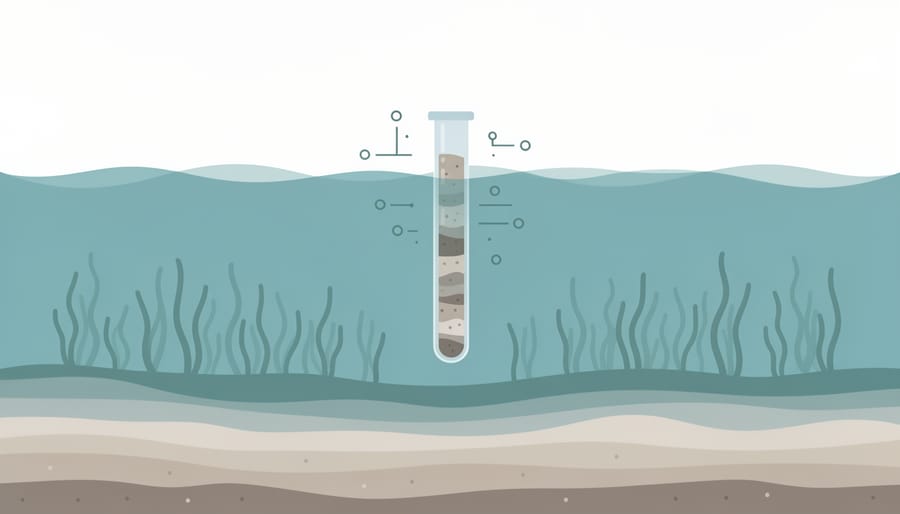
The journey from a flourishing seagrass meadow to a verified carbon credit involves several rigorous steps that bridge marine science and climate finance. Understanding this process reveals how coastal conservation transforms into measurable climate action.
Project Development and Baseline Assessment
Everything starts with identifying a coastal ecosystem suitable for blue carbon credit generation, whether that’s restoring degraded mangroves, protecting existing salt marshes, or rewetting drained tidal wetlands. Project developers must establish a baseline: how much carbon would the ecosystem store without intervention? This requires measuring current carbon stocks in both the vegetation and the sediment below, often drilling core samples several meters deep. Historical data, satellite imagery, and field surveys paint a picture of what would happen if the ecosystem continued degrading versus what restoration could achieve.
Measurement and Monitoring
Here’s where marine science gets precise. Scientists measure carbon storage using methods ranging from sediment core analysis to above-ground biomass surveys. They calculate how much CO2 the ecosystem captures annually and how much remains locked away in soils, sometimes for centuries. Mangroves might sequester 3-5 tons of carbon per hectare yearly, while seagrass meadows store most carbon in sediments that accumulate over millennia. These measurements occur repeatedly throughout the project’s lifetime, typically spanning 20-30 years or longer.
Third-Party Verification and Certification
Raw data isn’t enough. Independent verifiers audit the project’s methodology, reviewing everything from field measurements to carbon accounting calculations. They confirm the project follows established protocols, often the Verra blue carbon standards or similar frameworks like Plan Vivo. These standards ensure additionality (the carbon storage wouldn’t happen without the project), permanence (safeguards protect against reversal), and accurate quantification. Verification bodies check that local communities participate fairly and that biodiversity benefits extend beyond carbon.
Credit Issuance
Once verified, the project receives carbon credits, each representing one metric ton of CO2 sequestered or prevented from release. A 100-hectare mangrove restoration might generate 15,000 credits over its first decade. These credits enter registries that track ownership and prevent double-counting. Think of it as a transparent ledger showing exactly which credits exist, who owns them, and whether they’ve been retired.
Purchase and Retirement
Companies, governments, or individuals buy these credits to offset their emissions. When a corporation purchases 1,000 blue carbon credits to balance out unavoidable emissions from operations, those credits get “retired”, permanently removed from circulation. The money flows back to the project, funding ongoing restoration work, community programs, and long-term monitoring. Unlike traditional carbon offsets from industrial projects, blue carbon credits simultaneously protect marine biodiversity, support coastal communities, and build climate resilience against rising seas.
Coastal Ecosystems That Generate Blue Carbon Credits
Mangrove Forests
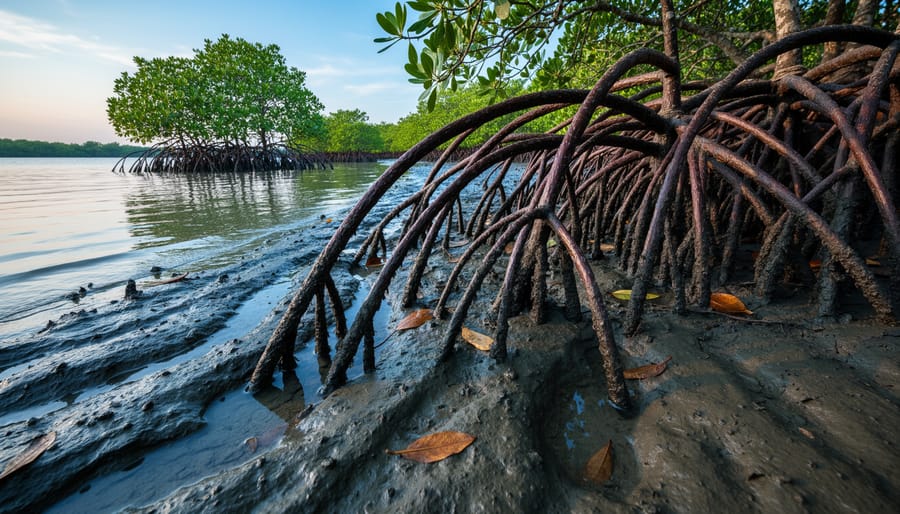
Mangrove forests rank among the most carbon-dense ecosystems on Earth, storing up to ten times more carbon per hectare than terrestrial forests. Their secret lies below the waterline: waterlogged soils slow decomposition, allowing carbon to accumulate in sediments for millennia. A single hectare of healthy mangroves can sequester 1,000 tons of carbon in the top meter of soil alone.
Beyond carbon storage, mangroves serve as vital nurseries for over 75% of commercial fish species in tropical regions. Their tangled root systems shelter juvenile snappers, groupers, and shrimp from predators, supporting both marine biodiversity and coastal livelihoods.
Restoration potential is significant. Indonesia, home to 23% of the world’s mangroves, has launched large-scale replanting initiatives that generate blue carbon credits while rebuilding habitat. When mangroves are restored, they begin sequestering carbon within the first year, though reaching full storage capacity takes two to three decades. Their dual role as climate allies and biodiversity hotspots makes mangrove projects particularly attractive in blue carbon markets.
Seagrass Meadows
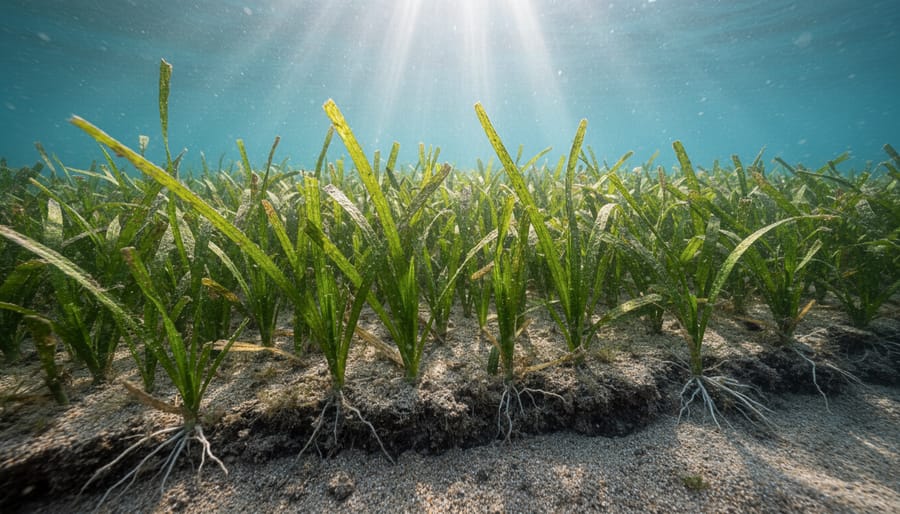
Seagrass meadows trap carbon in the sediments below them through a remarkable process: their dense root systems slow water movement, allowing organic matter to settle and accumulate in oxygen-poor conditions where decomposition happens slowly. Over centuries, this creates thick carbon-rich layers that can store up to twice as much carbon per hectare as terrestrial forests. Unlike trees, which release stored carbon when they die, seagrass sediments lock carbon away for millennia.
These underwater prairies also provide critical habitat for endangered species. Sea turtles graze on seagrass blades, while dugongs depend almost entirely on these meadows for food, an adult dugong consumes up to 40 kilograms of seagrass daily. The beds serve as nurseries for commercially important fish species and stabilize coastlines against erosion.
Yet seagrass ecosystems face severe threats. Coastal development, dredging, and nutrient pollution from agricultural runoff cloud the water, blocking the sunlight seagrasses need for photosynthesis. We’ve lost approximately 29% of global seagrass coverage since the late 1800s, with current losses exceeding 7% per year in some regions.
Tidal Salt Marshes
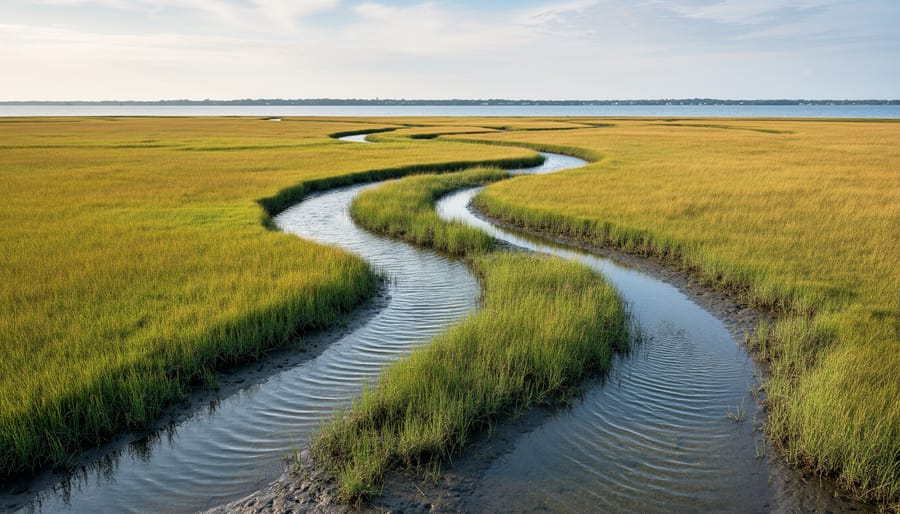
Salt marshes accumulate carbon at rates comparable to mangroves, trapping organic matter and sediment in waterlogged soils where decomposition slows to a crawl. A single hectare can store 200-400 metric tons of carbon in its sediments, built up over centuries of tidal flooding and plant growth. Beyond carbon storage, these marshes act as living breakwaters, absorbing wave energy during storms and reducing coastal flooding, a service worth millions in property protection. Successful restoration efforts in California’s San Francisco Bay and Louisiana’s Gulf Coast have reconnected drained marshlands to tidal flow, allowing native cordgrass and pickleweed to recolonize. Within five years, restored marshes begin accumulating carbon again while providing nursery habitat for commercially important fish and shorebird nesting grounds.
How Blue Carbon Credits Are Used in Climate Finance
Blue carbon credits flow into climate finance through several interconnected channels, each turning coastal ecosystem protection into measurable economic value. Corporations purchase these credits to offset unavoidable emissions from their operations, meeting sustainability targets while directly funding the restoration of mangrove forests, seagrass beds, and salt marshes. Airlines, shipping companies, and technology firms have emerged as major buyers, recognizing that protecting marine habitats offers a tangible way to compensate for carbon footprints that can’t yet be eliminated through operational changes alone.
National governments incorporate blue carbon credits into their climate commitments under the Paris Agreement, using conserved and restored coastal ecosystems to meet greenhouse gas reduction targets. Countries with extensive coastlines, from Indonesia to Kenya to Ecuador, have begun integrating blue carbon into their Nationally Determined Contributions, creating policy frameworks that value standing mangroves and thriving seagrass meadows as climate infrastructure. This recognition transforms coastal wetlands from “wasteland” into national assets worth protecting.
The revenue from blue carbon credits supports diverse conservation and development goals:
- Corporate emissions offsetting programs that reduce net carbon footprints
- National climate commitments and Paris Agreement targets
- Conservation project funding for habitat restoration and protection
- Community livelihood programs providing sustainable income
- Biodiversity protection finance safeguarding endangered species
- Coastal resilience investments strengthening storm defenses
Community-based initiatives represent perhaps the most transformative application. Revenue from blue carbon credits flows to coastal communities engaged in restoration work, creating jobs for planting mangrove seedlings, monitoring ecosystem health, and protecting regenerating habitats from damage. In the Rufiji Delta of Tanzania, for example, villagers earn income through mangrove restoration while maintaining traditional fishing grounds that depend on healthy coastal forests. This model aligns economic incentives with conservation outcomes, communities prosper when ecosystems thrive.
Blue carbon finance also enables integrated coastal management approaches that address multiple challenges simultaneously. A single blue carbon project might restore storm barriers, sequester carbon, create fish nurseries, filter pollutants, and provide sustainable livelihoods. The credits monetize benefits that markets traditionally ignored, making it financially viable to choose conservation over conversion to shrimp farms or coastal development.
The Interdisciplinary Approach: Science Meets Finance
Blue carbon credit projects succeed only when marine biologists, climate scientists, economists, policy experts, and local communities work hand-in-hand. A marine ecologist might measure seagrass carbon storage rates, but without an economist to structure that data into credible offset units, or a policy specialist to navigate international carbon standards, the project stalls before a single credit is issued. This collaboration isn’t optional, it’s fundamental to the entire system.
Consider the Mikoko Pamoja project in Kenya, which became the world’s first blue carbon initiative to sell verified credits. Marine biologists assessed mangrove growth rates and carbon accumulation. Climate scientists validated baseline carbon stocks and projected sequestration over decades. Meanwhile, economists developed benefit-sharing agreements ensuring 60% of revenue flows directly to village cooperatives, while policy experts secured government recognition and international certification under the Verified Carbon Standard. Community leaders shaped the project’s design, identifying restoration priorities and establishing monitoring protocols that employ local fishers as carbon stewards.
Marine data science now accelerates this integration by combining satellite imagery, underwater sensors, and AI-powered analysis to track ecosystem health in real time. In Australia’s Great Barrier Reef region, interdisciplinary teams merge remote sensing data with traditional ecological knowledge from Indigenous rangers, creating carbon monitoring systems that honor both cutting-edge technology and millennia of coastal stewardship.
The equity challenge demands equally diverse expertise. Social scientists help structure projects so coastal communities gain decision-making power, not just token consultation. Legal specialists draft contracts preventing land grabs disguised as conservation. Financial analysts ensure credit pricing reflects true restoration costs rather than undercutting local value. When one discipline dominates, projects fail, either scientifically unsound, economically unviable, or socially unjust. Success requires genuine partnership across all these fields.
Benefits and Challenges of Blue Carbon Markets
Blue carbon markets offer a promising way to channel investment into marine ecosystems that desperately need protection. When done right, these markets create powerful financial incentives for conservation rather than destruction. Coastal wetlands that might otherwise be drained for development suddenly have measurable economic value, not just for the carbon they store, but for the entire ecosystem services they provide. This funding mechanism has already supported restoration of thousands of hectares of mangrove forests in Southeast Asia, protected seagrass meadows in the Mediterranean, and helped rebuild salt marshes along North American coastlines.
The benefits extend well beyond carbon accounting. Blue carbon projects typically protect critical habitat for fish nurseries, sea turtles, migratory birds, and countless invertebrate species. Coastal communities gain employment through restoration work, monitoring programs, and ecotourism opportunities tied to healthier marine environments. These projects often strengthen natural coastal defenses against storms and sea-level rise, protecting human infrastructure and lives. As climate solutions, blue carbon credits address multiple environmental challenges simultaneously, offsetting emissions from sources like shipping emissions while rebuilding ecosystems that support marine biodiversity.
Yet serious challenges complicate this optimistic picture. Measuring carbon stored in marine sediments remains technically difficult and expensive compared to terrestrial forests. Verification requires specialized expertise in marine ecology, and monitoring must continue for decades to ensure permanence. Salt marshes can erode, seagrass can decline from pollution, and restored mangroves face ongoing threats from coastal development. Who bears the cost if carbon storage is reversed?
Equity concerns loom large in many blue carbon projects. Coastal communities have protected these ecosystems for generations, often without formal land titles or recognition. When carbon credits create new economic value, there’s real risk that outside investors or national governments capture the benefits while local people lose access to traditional fishing grounds or harvesting areas. Some projects have been accused of greenwashing, allowing corporations to continue high emissions while claiming carbon neutrality through questionable offset purchases.
The permanence problem is particularly vexing for marine ecosystems facing accelerating climate impacts. Rising seas and changing ocean chemistry create uncertainty about whether today’s blue carbon projects will still be sequestering carbon in 2050 or 2100. Verification standards are still evolving, with different certification bodies applying varying levels of rigor. Without careful oversight and genuine community partnership, blue carbon markets risk becoming another extractive industry rather than a conservation tool that truly serves both ocean health and coastal peoples.
Getting Involved in Blue Carbon Conservation
You don’t need specialized credentials to contribute to blue carbon conservation. Coastal restoration projects regularly welcome volunteers for planting mangroves, removing invasive species from salt marshes, and maintaining seagrass nurseries. These hands-on opportunities let you directly support ecosystem recovery while learning from marine biologists leading the work.
Citizen science programs offer another accessible entry point. Organizations like the Marine Biodiversity Science Center coordinate monitoring initiatives where volunteers collect data on seagrass health, track mangrove growth, or document wildlife using restored habitats. Your observations feed into the measurement systems that verify carbon sequestration and guide adaptive management decisions.
Here are concrete ways to get involved:
- Join local coastal restoration volunteer days through conservation groups or marine centers
- Participate in seagrass or salt marsh monitoring programs as a citizen scientist
- Support blue carbon research through donations or crowdfunding campaigns
- Engage with policy advocacy by contacting representatives about coastal protection funding
- Connect with the Marine Biodiversity Science Center’s e-network for project updates and collaboration
- Share knowledge about blue carbon ecosystems with your community through presentations or social media
Educational outreach amplifies impact beyond your direct participation. Giving talks at schools about how coastal ecosystems fight climate change, organizing beach cleanups that protect nearshore habitats, or writing about local blue carbon projects raises awareness and builds public support for conservation funding.
Many organizations working on blue carbon initiatives also need non-field support: grant writing assistance, website maintenance, social media management, or data entry. If human activities threaten coastal ecosystems in your region, joining or supporting groups that develop blue carbon projects creates both environmental and economic arguments for protection. The Marine Biodiversity Science Center’s programs specifically bridge science and community action, offering pathways whether you have an afternoon or ongoing time to commit.
Frequently Asked Questions About Blue Carbon Credits
How do blue carbon credits differ from traditional forest carbon offsets?
Blue carbon credits come from coastal and marine ecosystems like mangroves and seagrass meadows, which store carbon at rates up to ten times higher per hectare than terrestrial forests. These ecosystems also sequester carbon in sediments that can remain locked away for thousands of years, unlike forest biomass that releases carbon when burned or decayed.
Do blue carbon credits actually reduce atmospheric CO2?
Yes, when projects protect existing ecosystems from destruction or restore degraded habitats, they prevent massive carbon releases and create new carbon sinks. The key is verification, certified projects must demonstrate measurable, additional carbon storage that wouldn’t have occurred without the conservation intervention.
Who owns the credits generated from restored coastal ecosystems?
Ownership depends on local laws and project agreements, but best-practice projects ensure coastal communities retain rights to credits or receive direct financial benefits. Equitable benefit-sharing arrangements typically give local stakeholders decision-making power and a percentage of credit revenues.
What certification standards ensure blue carbon projects deliver real benefits?
The Verified Carbon Standard and Plan Vivo are the primary frameworks that establish rigorous measurement protocols, require third-party audits, and verify additionality and permanence. These standards also increasingly incorporate social safeguards to protect community rights and livelihoods.
Beyond the basics covered above, questions often arise about accessibility and integration with broader conservation efforts. Individual purchases of blue carbon credits remain limited compared to corporate buyers, though some platforms now offer smaller credit bundles for personal offsetting. The more impactful individual action involves supporting organizations working directly on coastal restoration or participating in volunteer monitoring programs that strengthen project verification.
The effectiveness of blue carbon credits compared to other conservation funding depends on context. They work best when paired with strong legal protections and community stewardship, not as standalone solutions. Emerging approaches combine blue carbon finance with marine biotechnology innovations that enhance restoration success rates, creating more robust and verifiable conservation outcomes. The credits provide ongoing revenue streams that can sustain long-term habitat protection, something traditional grants rarely achieve, but they require careful governance to avoid displacing local communities or prioritizing carbon storage over biodiversity.
Blue carbon credits represent more than a financial instrument, they’re a bridge connecting ocean health to global climate stability. By placing measurable value on the carbon stored in coastal ecosystems, these credits transform conservation from a cost into an investment that benefits the climate, marine biodiversity, and coastal communities simultaneously.
What makes blue carbon particularly promising is its inherently collaborative nature. Marine biologists measure carbon sequestration rates. Climate scientists validate carbon accounting methods. Economists design fair market mechanisms. Policymakers create supportive frameworks. Most importantly, local communities steward the ecosystems that make it all possible. This convergence of expertise and effort shows how solving complex environmental challenges requires us to work across traditional boundaries.
The ocean has absorbed roughly a third of human-caused CO2 emissions, buffering our planet from even more severe climate impacts. Now we have pathways to support the coastal ecosystems performing this critical service while protecting the incredible biodiversity they harbor, from juvenile fish finding shelter in mangrove roots to sea turtles grazing seagrass meadows.
You don’t need to be a scientist or financial expert to contribute. Join a local salt marsh restoration day. Participate in seagrass monitoring programs. Support organizations protecting coastal habitats. Share what you’ve learned about blue carbon with others. Every action, however small, strengthens the network of people committed to keeping our coasts healthy and our oceans thriving for generations to come.

jessica
Ava Singh is an environmental writer and marine sustainability advocate with a deep commitment to protecting the world's oceans and coastal communities. With a background in environmental policy and a passion for storytelling, Ava brings complex topics to life through clear, engaging content that educates and empowers readers. At the Marine Biodiversity & Sustainability Learning Center, Ava focuses on sharing impactful stories about community engagement, policy innovations, and conservation strategies. Her writing bridges the gap between science and the public, encouraging people to take part in preserving marine biodiversity. When she’s not writing, Ava collaborates with local initiatives to promote eco-conscious living and sustainable development, ensuring her work makes a difference both on the page and in the real world.