Marine Biodiversity Science Center

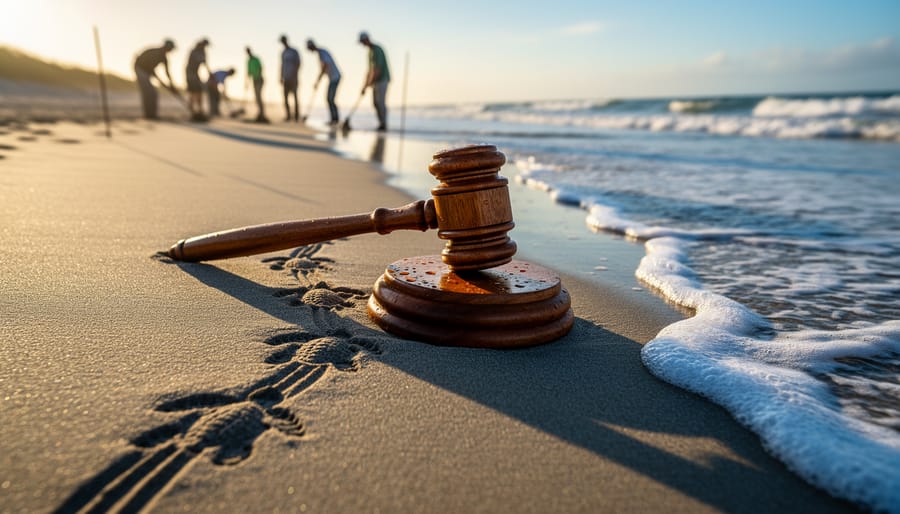
When a single sea turtle nest was destroyed by illegal beach development in 2019, attorneys armed with the Endangered Species Act secured not only $2.3 million in penalties but also permanent protective measures for 40 miles of critical nesting habitat. This victory illustrates the extraordinary power of environmental legal defense funds: specialized organizations that wield courtrooms as conservation tools, transforming scientific evidence into enforceable protections for our oceans.
Environmental legal defense funds serve as the judicial guardians of marine ecosystems, bridging the gap between environmental law and ocean conservation. These organizations employ attorneys who specialize in environmental legislation, working alongside marine biologists to build cases that protect everything from coral reef systems to migratory whale corridors. Unlike traditional conservation groups that focus solely on research or public awareness, legal defense funds take direct action through litigation, policy advocacy, and regulatory enforcement to stop harmful practices before irreversible damage occurs.
The ocean faces unprecedented threats from overfishing, plastic pollution, coastal development, and climate change. While scientific research identifies these problems and proposes solutions, legal mechanisms provide the enforcement power to turn recommendations into requirements. Environmental legal defense funds leverage statutes like the Marine Mammal Protection Act, Clean Water Act, and National Environmental Policy Act to challenge permit violations, demand environmental impact assessments, and hold corporations and governments accountable for ocean degradation.
Their work produces tangible results: protected marine sanctuaries, reversed drilling permits, restored wetlands, and saved species. For anyone passionate about ocean conservation, understanding how these legal warriors operate opens pathways to meaningful engagement, whether through financial support, volunteer assistance with case research, or collaboration between scientific and legal communities. The courtroom has become an essential frontier in the fight for healthy oceans.
What Environmental Legal Defense Funds Actually Do for Marine Conservation
Environmental legal defense funds serve as specialized guardians of our oceans, wielding the power of law to protect marine ecosystems from threats ranging from pollution to overfishing. These nonprofit organizations employ teams of environmental attorneys, scientists, and policy experts who work together to enforce existing environmental laws and push for stronger protections when current regulations fall short.
At their core, these funds operate on a straightforward principle: environmental laws only work when they’re properly enforced. When government agencies fail to regulate harmful activities or when corporations violate pollution standards, legal defense funds step in to hold them accountable through litigation. They file lawsuits to stop destructive projects, challenge inadequate environmental reviews, and ensure that threatened marine species receive the protections they deserve under laws like the Endangered Species Act and the Marine Mammal Protection Act.
Beyond the courtroom, these organizations engage in policy advocacy, working with legislators to craft stronger environmental regulations and testifying before government bodies about the scientific need for marine protections. Their legal expertise transforms complex scientific data about ocean acidification, habitat loss, and species decline into compelling legal arguments that courts and policymakers cannot ignore.
The structure of environmental legal defense funds typically includes several key components. Legal teams handle litigation and regulatory advocacy, while staff scientists ensure that all legal arguments rest on solid scientific foundations. Communications specialists help translate legal victories into public awareness, and development teams work to secure funding through donations and grants.
Marine conservation represents a major focus area for many of these funds because ocean ecosystems face unique challenges. Maritime boundaries complicate jurisdiction, offshore activities often escape public scrutiny, and marine species migration patterns cross multiple legal territories. Legal defense funds navigate these complexities, protecting everything from coral reefs and coastal wetlands to whales, sea turtles, and commercially important fish populations. By combining legal action with scientific research and public engagement, these organizations create lasting protections that benefit entire ocean ecosystems and the communities that depend on them.
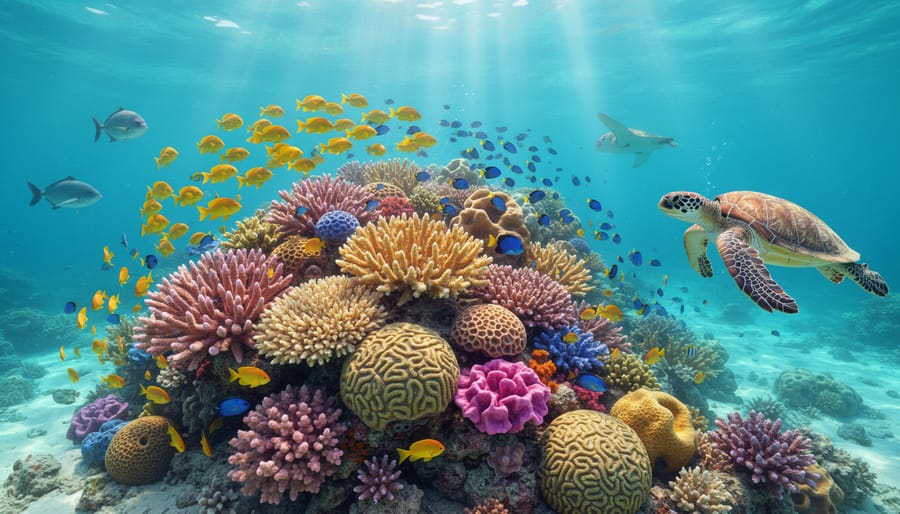
The Legal Arsenal: Key Frameworks That Empower Ocean Protection
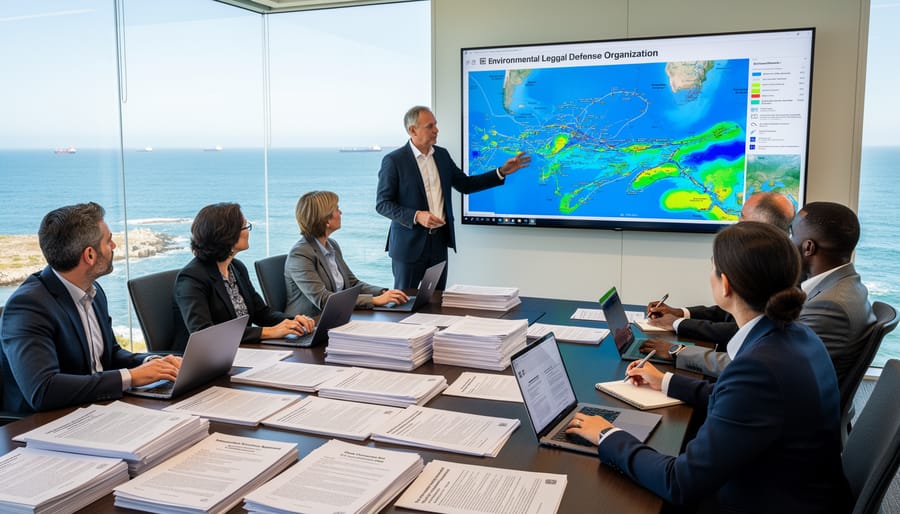
International Maritime Law and Ocean Treaties
The foundation for marine conservation legal action rests upon several key international frameworks, with the United Nations Convention on the Law of the Sea (UNCLOS) serving as the cornerstone. Often called the “Constitution for the Oceans,” UNCLOS establishes the legal framework for all marine activities, defining territorial waters, exclusive economic zones, and the high seas. This 1982 treaty provides environmental legal defense funds with the fundamental authority to challenge harmful practices and advocate for ocean protection across international boundaries.
Beyond UNCLOS, international environmental agreements like the Convention on Biological Diversity and regional treaties create additional layers of protection. The recently adopted High Seas Treaty, formally known as the Biodiversity Beyond National Jurisdiction agreement, represents a groundbreaking achievement. This treaty enables the establishment of marine protected areas in international waters, areas that cover nearly half of Earth’s surface yet have historically lacked comprehensive protection.
These treaties provide legal advocates with powerful tools to hold governments and corporations accountable. Marine biologist Dr. Sarah Chen, who has worked alongside legal teams on several cases, shares: “When we document illegal fishing in protected waters, these international agreements give us the legal standing to demand action. They transform scientific evidence into enforceable obligations.”
For those passionate about ocean conservation, understanding these frameworks illuminates how international cooperation translates into tangible protection. Volunteer opportunities with organizations monitoring treaty compliance offer meaningful ways to contribute to global marine conservation efforts.
National Environmental Protection Acts
Environmental legal defense funds rely on a robust framework of domestic legislation to protect marine ecosystems and the species that inhabit them. These laws provide the legal foundation necessary to challenge harmful activities, hold violators accountable, and ensure government agencies fulfill their conservation mandates.
The Endangered Species Act stands as one of the most powerful conservation tools available, prohibiting actions that harm threatened or endangered marine species and their critical habitats. Legal defense funds frequently invoke this law to protect sea turtles, whales, salmon, and countless other vulnerable species. When government agencies approve projects that could harm listed species without proper safeguards, environmental attorneys can file lawsuits requiring thorough scientific review and protective measures.
The Marine Mammal Protection Act provides comprehensive protection for all marine mammals in U.S. waters, making it illegal to harass, hunt, capture, or kill these animals without authorization. Legal teams use this legislation to challenge offshore oil drilling, Navy sonar testing, and fishing practices that endanger dolphins, seals, and whales.
The National Environmental Policy Act requires federal agencies to assess environmental impacts before approving major projects. Environmental lawyers leverage this requirement to ensure thorough review of activities affecting marine ecosystems, from coastal development to offshore energy exploration.
Marine biologist Dr. Sarah Chen explains, “These laws transform scientific knowledge into legal protection. When our research shows a fishing technique harms sea turtles, legal defense funds can use that evidence to demand regulatory changes.” By connecting scientific findings with legal action, these laws become powerful instruments for ocean conservation, offering opportunities for concerned citizens to support enforcement through advocacy and volunteer legal monitoring programs.
Marine Protected Areas and Sanctuary Legislation
Marine protected areas (MPAs) represent one of the most powerful tools for ocean conservation, but their success depends entirely on robust legal frameworks and consistent enforcement. These designated zones safeguard critical marine habitats from destructive activities like overfishing, oil drilling, and coastal development. Environmental legal defense funds play a pivotal role in establishing MPAs by working with government agencies to draft protective legislation, ensuring that boundaries are scientifically justified and regulations are legally sound.
Once established, these legal teams defend MPAs against challenges from industries seeking to exploit protected waters. They monitor compliance, investigate violations, and pursue legal action when necessary. Marine biologist Dr. Sarah Chen recalls how legal intervention saved a Pacific coral reef sanctuary when commercial fishing vessels repeatedly entered restricted zones. The legal defense fund secured injunctions and penalties that finally brought meaningful enforcement.
These organizations also advocate for expanding MPA networks, pushing governments to meet international conservation targets. They understand that protecting 30 percent of our oceans by 2030 requires not just political will, but ironclad legal protections that withstand economic pressures and changing administrations.
Real Victories: When Legal Action Saved Marine Species
Protecting Endangered Sea Turtles Through Litigation
When loggerhead sea turtles began washing ashore along the Atlantic coast in alarming numbers during the early 2000s, marine biologists traced many deaths to commercial fishing gear. Shrimp trawls were inadvertently capturing and drowning turtles, while longline fishing operations endangered multiple species. Environmental legal teams responded with targeted litigation that fundamentally changed fishing practices across U.S. waters.
Dr. Elena Martinez, a marine biologist who has studied sea turtle populations for over fifteen years, witnessed the transformation firsthand. “Before the legal interventions, we’d document dozens of turtle strandings each season,” she recalls. “The courts mandated turtle excluder devices on shrimp nets and established strict bycatch limits. Within three years, mortality rates dropped by nearly 60 percent in our monitoring areas.”
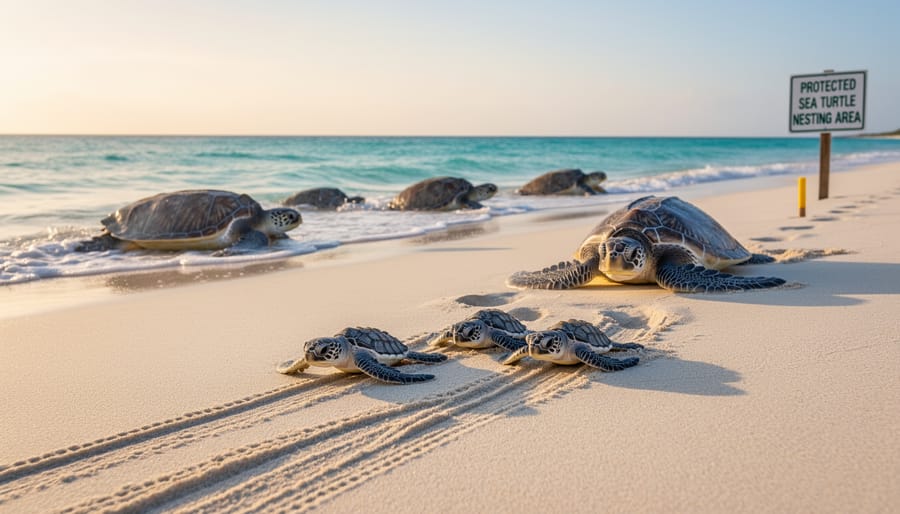
The litigation extended beyond fishing gear modifications. Legal teams successfully challenged coastal development projects threatening critical nesting beaches in Florida and the Carolinas, securing protective buffers around nesting sites. These court orders preserved over 200 miles of essential habitat where female turtles return annually to lay eggs.
The legal framework established through these cases created precedents now applied to protect other marine species. Courts recognized that existing environmental laws, when properly enforced, could mandate concrete changes in industrial practices. This approach demonstrated how litigation serves as a vital complement to scientific research and conservation fieldwork, translating ecological knowledge into enforceable protection measures that safeguard vulnerable species for future generations.
Stopping Destructive Fishing Practices in Critical Habitats
In 2018, environmental legal advocates achieved a landmark victory by challenging bottom trawling operations within the fragile kelp forests off California’s coast. Bottom trawling, a fishing method that drags heavy nets across the seafloor, was devastating these underwater ecosystems that serve as critical nurseries for commercially important fish species and habitat for sea otters, rockfish, and countless invertebrates.
The legal team built their case on comprehensive scientific evidence gathered by marine biologists who documented the extent of habitat destruction. Dr. Sarah Chen, a marine ecologist who testified in the proceedings, recalls surveying the damaged areas: “We found sections of kelp forest completely scraped bare, with recovery times estimated at decades. The data was heartbreaking but undeniable.”
Using provisions within the Magnuson-Stevens Fishery Conservation and Management Act, attorneys filed suit arguing that federal agencies had failed to prevent overfishing and protect essential fish habitat as required by law. The court agreed, resulting in the permanent closure of over 3,000 square miles of sensitive habitat to bottom trawling.
Today, these protected zones show remarkable recovery. Fish populations have rebounded, and the kelp forests are regenerating. This case demonstrates how legal action, when combined with solid scientific research, can reverse ecological damage and create lasting protection for marine ecosystems that benefit both wildlife and fishing communities.
Defending Marine Sanctuaries From Industrial Threats
In 2019, environmental legal defense funds achieved a landmark victory when they successfully blocked proposed oil drilling operations adjacent to the Channel Islands National Marine Sanctuary off California’s coast. The legal team, working alongside marine biologists like Dr. Sarah Chen who had documented critical breeding grounds for blue whales in the area, demonstrated that industrial activities would violate federal sanctuary protection laws and endanger endangered species.
The case set a powerful precedent for protecting marine sanctuaries nationwide. Legal experts argued that existing protections weren’t merely suggestions but enforceable regulations with real consequences for violators. Their strategy combined scientific evidence showing potential harm to kelp forest ecosystems and marine mammal populations with constitutional law arguments about federal sanctuary designations.
Similar legal interventions have protected sanctuaries from commercial shipping route expansions in the Stellwagen Bank National Marine Sanctuary and prevented seabed mining near the Papahānaumokuākea Marine National Monument. These victories demonstrate how legal frameworks, when properly enforced, serve as shields for vulnerable ocean ecosystems.
For those inspired by these successes, many organizations offer volunteer opportunities in legal research, public comment campaigns, and community education. Even non-lawyers can participate by attending public hearings, submitting scientific observations, or supporting legal funds financially. Each contribution strengthens the protective barrier around our ocean sanctuaries.
How Legal Defense Funds Work Alongside Scientific Research
The relationship between legal advocacy and scientific research forms the backbone of effective marine conservation. When marine conservation lawyers collaborate closely with marine biologists and oceanographers, they create a powerful force for protecting ocean ecosystems.
Scientific evidence serves as the foundation for compelling legal arguments. When environmental legal defense funds challenge harmful industrial practices or petition for species protections, they rely on peer-reviewed studies, population surveys, and ecosystem assessments to build their cases. For instance, when advocating for critical habitat designations, lawyers present detailed mapping data, species distribution models, and research on migration patterns. This scientific rigor transforms legal arguments from abstract principles into concrete, evidence-based demands that courts and regulatory agencies cannot easily dismiss.
Dr. Maria Santos, a marine biologist who has testified in numerous coastal protection cases, explains the dynamic: “My research on coral reef degradation gained real-world impact when legal teams used our findings to halt destructive coastal development. The courtroom became an extension of our laboratory, where data could drive meaningful change.”
Conversely, legal protections enable more effective scientific research. When legal defense funds successfully establish marine protected areas or secure injunctions against pollution, they create stable environments where researchers can conduct long-term studies. Protected waters allow scientists to observe natural ecosystem processes without interference, establishing baselines that help us understand how healthy oceans should function.
This partnership also accelerates conservation outcomes. Legal victories can mandate government agencies to fund additional research or require industries to share environmental monitoring data. These requirements often reveal crucial information that independent researchers might struggle to access otherwise.
For students and aspiring conservationists, this intersection offers exciting career opportunities. Many environmental legal defense funds recruit volunteers to assist with data analysis, literature reviews, and field research that supports ongoing litigation. These experiences provide hands-on learning while contributing directly to ocean protection efforts.
The synergy between law and science demonstrates that protecting our oceans requires diverse expertise working in concert. Neither discipline alone can achieve what they accomplish together: transforming scientific knowledge into enforceable protections that safeguard marine biodiversity for future generations.
The Challenges: Why Ocean Protection Still Needs More Legal Support
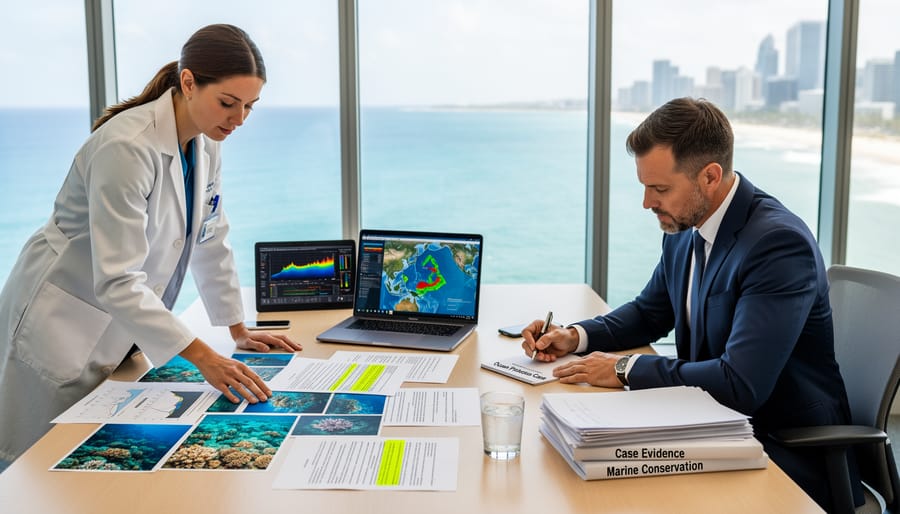
Despite significant progress in marine conservation law, substantial gaps remain in our ability to protect ocean ecosystems comprehensively. Understanding these challenges helps us appreciate why continued legal advocacy remains essential for safeguarding marine biodiversity.
One of the most pressing issues involves jurisdictional complexity in international waters. The high seas, which cover nearly half our planet’s surface, fall outside any single nation’s authority. While the United Nations Convention on the Law of the Sea provides a framework, enforcement remains problematic. Dr. Maria Santos, a marine conservation attorney, recalls a frustrating case: “We documented illegal fishing vessels destroying deep-sea coral gardens hundreds of miles offshore, but determining which country had authority to prosecute became a legal maze that allowed the perpetrators to escape consequences.”
Funding limitations significantly constrain legal defense organizations dedicated to ocean protection. Unlike well-funded industrial interests that can afford extensive legal teams, conservation groups often operate on shoestring budgets. This disparity means potentially groundbreaking cases sometimes go unfiled simply because organizations lack resources for lengthy litigation.
Enforcement presents another critical challenge. Even when strong environmental laws exist, inadequate monitoring and weak penalties undermine their effectiveness. Many countries lack sufficient coast guard vessels, satellite monitoring systems, and trained personnel to detect violations across vast ocean territories. When violations are caught, fines often amount to mere operating costs for large commercial entities, failing to deter future infractions.
The rapidly evolving nature of marine threats also outpaces legal frameworks. Emerging issues like deep-sea mining, microplastic pollution, and ocean acidification weren’t contemplated when many current laws were written. Updating legislation requires years of political negotiation, while environmental damage accelerates.
Additionally, proving causation in marine cases presents unique difficulties. Unlike terrestrial ecosystems where impacts are more visible, ocean damage often occurs underwater and across vast distances, making it challenging to gather evidence that meets legal standards.
These obstacles underscore why supporting legal defense organizations through volunteering, donations, or professional expertise remains vital. Every contribution helps bridge the gap between the ocean protection we need and the legal capacity we currently have.
How You Can Support Legal Efforts to Protect Marine Life
You don’t need to be a lawyer to make a meaningful difference in protecting our oceans through legal channels. Environmental legal defense organizations depend on diverse forms of public engagement to build strong cases and create lasting change for marine life.
One powerful way to contribute is through citizen science programs that directly support litigation efforts. By participating in coastal water quality monitoring, documenting marine wildlife sightings, or recording evidence of pollution, you help create the scientific foundation that legal teams need to build compelling cases. Organizations like Earthjustice and the Natural Resources Defense Council often partner with community scientists to gather data that becomes critical evidence in court proceedings. These programs typically require minimal training and can fit into your schedule whether you have an afternoon or can commit to regular monitoring.
If you have research skills, consider volunteering to assist with legal research projects. Environmental legal defense teams frequently need help reviewing scientific literature, compiling regulatory histories, or organizing case documentation. Law students and scientists often collaborate on these projects, but motivated volunteers from any background can contribute valuable support.
Financial contributions remain essential for sustaining long-term legal campaigns. Marine protection lawsuits can span years and require substantial resources for expert witnesses, scientific studies, and court fees. Even modest monthly donations help organizations maintain the capacity to respond quickly when new threats emerge to ocean ecosystems.
Public comment periods offer another accessible entry point for engagement. When government agencies propose new marine policies or regulations, they must accept public input. Your comments, especially when backed by scientific information or personal observations, become part of the official record and can influence final decisions. Legal defense organizations often provide templates and guidance to make this process straightforward.
Advocacy amplifies legal victories by building political will for stronger protections. Sharing information about ongoing cases through social media, writing to elected representatives, and attending public hearings all contribute to creating an environment where effective ocean advocacy strategies can flourish.
Marine biologist Dr. Sarah Chen notes that her most rewarding experience came from training community volunteers to monitor sea turtle nesting sites. “The data they collected became instrumental in our successful lawsuit to protect critical habitat,” she explains. “It showed me that everyone has a role in ocean conservation, and legal protection works best when communities actively participate.”
The future of our oceans depends on the powerful combination of scientific understanding, legal protection, and engaged communities working together. Environmental legal defense funds stand as essential guardians in this effort, translating our growing knowledge of marine ecosystems into enforceable protections that can withstand economic and political pressures. These organizations prove that the law, when wielded with expertise and dedication, becomes one of our most effective conservation tools.
Throughout this article, we’ve seen how legal advocacy has protected critical habitats, secured stronger regulations for endangered species, and held polluters accountable. From the recovery of whale populations once on the brink of extinction to the establishment of marine protected areas that serve as underwater sanctuaries, these victories demonstrate what’s possible when legal frameworks align with scientific evidence. The marine biologists who partner with environmental attorneys, the citizen scientists who document ecosystem changes, and the volunteers who attend public hearings all contribute to this success.
The encouraging reality is that each of us can participate in this movement. Whether you’re an environmental scientist providing expert testimony, a student joining beach cleanup initiatives that inform legal cases, or simply a concerned citizen supporting these organizations, your involvement matters. The oceans face unprecedented challenges, but they also benefit from unprecedented advocacy.
By supporting environmental legal defense funds, staying informed about marine conservation issues, and adding your voice to public comment periods, you become part of a collective force for change. Together, legal protection, scientific research, and public engagement create the foundation for healthy oceans that will sustain life for generations to come.

jessica
Ava Singh is an environmental writer and marine sustainability advocate with a deep commitment to protecting the world's oceans and coastal communities. With a background in environmental policy and a passion for storytelling, Ava brings complex topics to life through clear, engaging content that educates and empowers readers. At the Marine Biodiversity & Sustainability Learning Center, Ava focuses on sharing impactful stories about community engagement, policy innovations, and conservation strategies. Her writing bridges the gap between science and the public, encouraging people to take part in preserving marine biodiversity. When she’s not writing, Ava collaborates with local initiatives to promote eco-conscious living and sustainable development, ensuring her work makes a difference both on the page and in the real world.