Marine Biodiversity Science Center

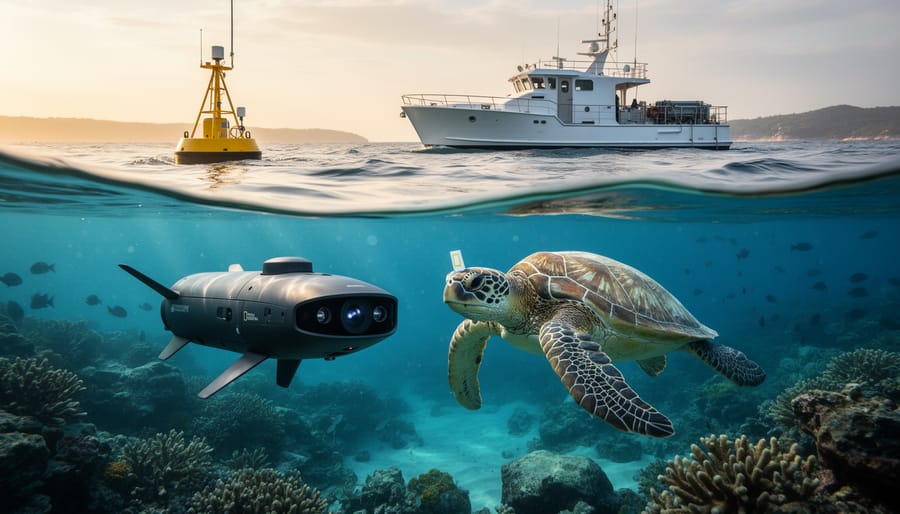
Beneath every wave, currents carry data that can revolutionize how we protect our oceans. Ocean science analytics transforms vast streams of information—from satellite imagery tracking coral bleaching to acoustic sensors monitoring whale migrations—into actionable insights that guide conservation decisions. This fusion of marine biology, technology, and data science now enables researchers to predict harmful algal blooms before they devastate ecosystems, identify critical habitats requiring immediate protection, and measure the effectiveness of marine protected areas with unprecedented precision.
The power of ocean analytics lies in its ability to reveal patterns invisible to the naked eye. When marine biologists collect water samples, tag sea turtles, or deploy underwater cameras, each observation becomes part of a larger puzzle. Advanced algorithms process these datasets to uncover migration corridors, breeding hotspots, and ecosystem health indicators that inform everything from fishing regulations to climate change adaptation strategies.
Yet technology alone cannot save our seas. The most successful ocean analytics programs combine cutting-edge tools with human expertise and community engagement. Citizen scientists contribute millions of observations annually, from documenting beach plastic pollution to recording whale sightings, creating datasets that complement professional research. Marine biologists like Dr. Sarah Chen describe this collaboration as essential: “Every shore walk, every photo shared, every data point logged helps us understand ocean health in real-time.”
This article explores how ocean science analytics bridges the gap between raw data and meaningful marine conservation action.
What Ocean Science Analytics Really Means for Marine Conservation
Imagine trying to protect a forest you’ve never fully seen. That’s the challenge marine conservationists have faced for decades. Ocean science analytics changes this dynamic by transforming how we understand and protect our seas. At its core, ocean science analytics is the systematic collection, processing, and interpretation of marine data to inform sustainable management decisions—think of it as creating a comprehensive health report for our oceans.
Just as your fitness tracker collects data about your heart rate, steps, and sleep patterns to help you make better health choices, ocean analytics gathers information about water temperature, species populations, chemical composition, and ocean currents. Marine data scientists then process this raw information, looking for patterns and connections that might otherwise remain invisible beneath the waves.
The process involves three essential steps. First, data collection happens through various methods: satellite imagery tracking ocean temperatures, underwater sensors measuring pH levels, acoustic monitoring recording whale songs, and even citizen science observations from volunteer divers. Second, this massive influx of information gets processed using sophisticated computer algorithms that can identify trends across years or even decades. Finally, interpretation transforms numbers into actionable insights—revealing where coral reefs face the greatest bleaching risk, identifying critical migration corridors for endangered species, or pinpointing areas where fishing practices need adjustment.
Dr. Sarah Chen, a marine biologist working with coastal communities in British Columbia, explains it simply: “We’re giving ocean managers the tools to make informed decisions rather than educated guesses. When we can show exactly where sea otter populations are recovering and why, we can replicate those conditions elsewhere.”
The Data Sources Revolutionizing How We Understand Our Oceans
Satellite Technology and Remote Sensing
Satellites orbiting hundreds of miles above Earth have revolutionized our ability to monitor the ocean’s health in near real-time. These technological marvels use specialized sensors to track vital ocean parameters across vast areas that would be impossible to study from ships alone.
Temperature mapping happens through infrared sensors that detect heat radiating from the ocean surface, revealing warming patterns linked to climate change and helping scientists predict coral bleaching events before they occur. Ocean color sensors measure how light reflects off the water, identifying chlorophyll concentrations that indicate phytoplankton abundance—the foundation of marine food webs. These measurements help researchers understand productivity patterns and detect harmful algal blooms early.
Satellite altimetry tracks sea level height with remarkable precision, revealing ocean currents and circulation patterns that transport heat, nutrients, and marine larvae across vast distances. This data proves invaluable for understanding ecosystem connectivity and planning marine protected areas.
Marine biologist Dr. Sarah Chen describes the transformation: “Twenty years ago, we could only sample a handful of ocean locations. Now satellites give us a complete picture, helping us identify critical habitats and respond to environmental changes within days rather than months.”
This technology democratizes ocean monitoring, with data freely available to researchers worldwide, enabling collaborative conservation efforts and empowering coastal communities to protect their marine resources through informed decision-making.
Underwater Sensors and Autonomous Vehicles
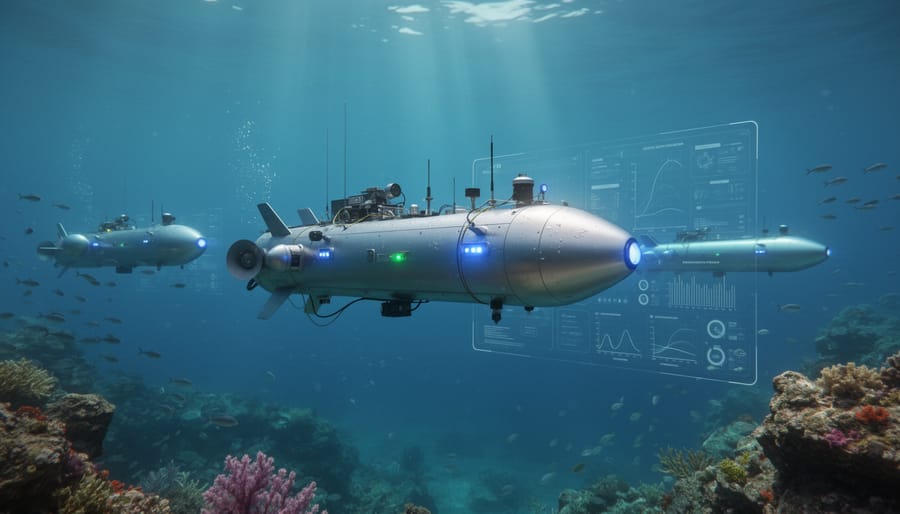
The ocean’s vastness once made comprehensive monitoring seem impossible, but modern technology has transformed how we collect marine data. Today’s underwater sensors and autonomous vehicles act as our eyes and ears beneath the waves, gathering information that helps scientists and conservationists make informed decisions.
Moored buoys equipped with sensors continuously measure ocean temperature, salinity, wave height, and even chemical composition. These stationary sentinels transmit real-time data via satellite, creating detailed pictures of ocean conditions across vast regions. Meanwhile, remotely operated vehicles (ROVs) allow researchers to explore deep-sea environments too dangerous or remote for human divers, capturing high-resolution video and collecting samples from ocean trenches and underwater volcanoes.
Autonomous underwater vehicles (AUVs) take exploration further by operating independently along pre-programmed routes. These robotic explorers can survey coral reefs, map the seafloor, and track water quality without constant human control. Marine biologist Dr. Sarah Chen describes her work with AUVs as “having tireless research assistants that never need to surface for air.”
Acoustic monitoring systems add another dimension by recording underwater sounds. These hydrophones help scientists track whale migrations, study fish populations, and detect changes in marine ecosystems. Volunteers can even participate in analyzing these sound recordings through citizen science programs, helping researchers process the massive amounts of data these systems generate daily.
Citizen Science and Community Data Collection
Ocean science no longer belongs solely to researchers in white coats and expensive laboratories. Across the globe, volunteers are becoming essential contributors to marine data collection, dramatically expanding our understanding of ocean health. Recreational divers document coral bleaching events and unusual species sightings through platforms like iNaturalist. Commercial fishermen share catch data and water temperature readings from their daily routes, providing information from remote areas scientists rarely access. Coastal communities monitor local beach conditions, track plastic pollution, and observe shifting marine life patterns in their waters.
This citizen science movement generates massive datasets that would be impossible for academic institutions to collect alone. These observations feed directly into ocean analytics systems, enhancing species distribution models and early warning systems for environmental changes. Organizations like the Marine Biodiversity Science Centre offer training programs that transform interested individuals into skilled data collectors.
Ready to contribute? Beach cleanup organizations need volunteers to categorize collected debris, providing crucial data on marine pollution sources. Whale watching groups welcome observers to log sightings, helping track migration patterns. Even smartphone photos of jellyfish or unusual fish can advance marine research when submitted to dedicated apps, turning every ocean encounter into a valuable scientific contribution.
From Raw Numbers to Life-Saving Decisions: How Analytics Works
Tracking Migration Patterns and Critical Habitats
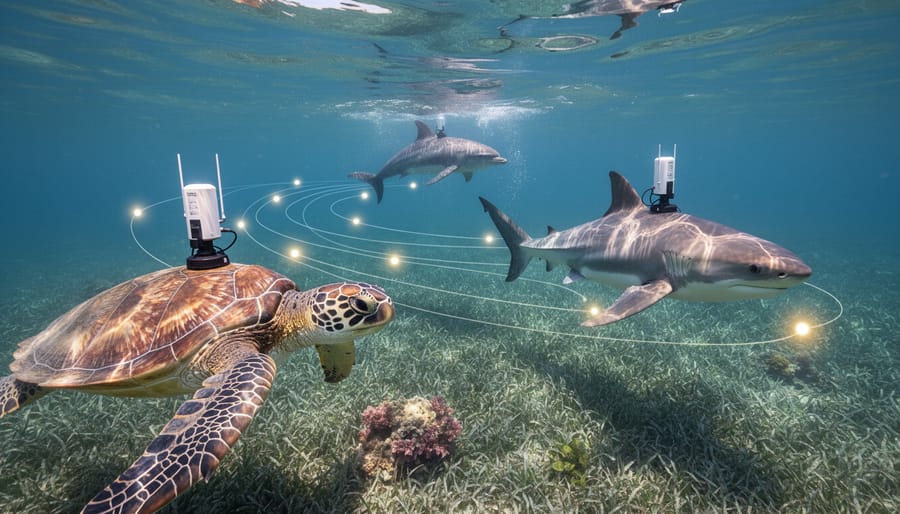
Advanced data analytics has revolutionized our understanding of marine animal movements, transforming scattered observations into comprehensive migration maps. By combining satellite tagging, acoustic monitoring, and oceanographic data, scientists can now track individual animals across entire ocean basins. These technologies reveal critical information about breeding grounds, feeding areas, and migratory corridors that were previously invisible to researchers.
The insights gained are proving essential for protecting threatened marine species. For example, tracking data has identified precise locations where sea turtles congregate to nest, allowing conservationists to establish protected zones during vulnerable periods. Similarly, analyzing whale migration patterns has helped shipping industries adjust routes to reduce potentially fatal vessel strikes.
Dr. Sarah Mitchell, a marine biologist working with tagged gray whales, shares her experience: “When we overlaid twenty years of tracking data with ocean temperature patterns, we discovered that warming waters were shifting their feeding grounds northward. This information helped establish new marine protected areas exactly where the whales needed them.”
These analytical approaches enable evidence-based conservation, ensuring protection efforts focus where they matter most. Anyone passionate about marine conservation can participate through citizen science programs that contribute sighting data to these vital tracking databases.
Predicting Threats Before They Strike
Ocean science analytics serves as an invaluable early warning system, helping us anticipate and prevent marine threats before they escalate. For harmful algal blooms, satellite sensors combined with water quality data can predict outbreaks days in advance, giving coastal communities time to protect drinking water supplies and shellfish harvests. Dr. Sarah Chen, a marine biologist monitoring the Pacific Northwest, shares how these systems saved local oyster farms: “We detected unusual nutrient patterns and warned farmers three days before a toxic bloom hit. They harvested early and avoided devastating losses.”
Temperature monitoring networks now track marine heatwaves that stress coral reefs and disrupt fish migrations, enabling fisheries to adapt their practices. Real-time pollution sensors identify oil spills and chemical discharge immediately, triggering rapid response protocols. Perhaps most importantly, analytics support sustainable fisheries management by detecting overfishing patterns through vessel tracking and catch data analysis, allowing authorities to adjust quotas before fish populations crash. These predictive capabilities transform ocean conservation from reactive damage control into proactive protection, giving marine ecosystems the breathing room they desperately need to thrive.
Measuring What’s Working (And What Isn’t)
Conservation efforts require constant evaluation to determine what truly makes a difference. Ocean science analytics provides this feedback loop, transforming guesswork into evidence-based decision-making. By comparing baseline data with post-intervention measurements, researchers can quantify whether marine protected areas are actually increasing fish populations, if artificial reefs are attracting biodiversity, or whether pollution reduction strategies are improving water quality.
Dr. Maria Santos, a marine ecologist working on coral restoration in the Caribbean, explains how analytics changed her approach: “We were investing heavily in one restoration technique until our monitoring data revealed another method was three times more effective. Without those analytics, we’d still be wasting resources.” This adaptive management approach allows conservation teams to pivot quickly, redirect funding to successful strategies, and abandon methods that aren’t delivering results. Real-time dashboards now enable managers to track multiple indicators simultaneously, from species recovery rates to habitat quality metrics, creating a comprehensive picture of ecosystem health that guides smarter conservation investments.
Real Success Stories: When Data Saves Species
Dr. Elena Martinez still remembers the exact moment she realized their data was working. Standing aboard a research vessel off the coast of Baja California, she watched a pod of vaquita porpoises—one of the world’s most endangered marine mammals—surface near their monitoring equipment. “We had fewer than 30 individuals left,” she recalls. “But our acoustic monitoring network gave us the precise locations where they congregated, allowing us to establish protected corridors that fishermen could avoid.” Three years later, population decline has stabilized, offering fragile hope for a species once on the brink.
This victory represents just one example of how ocean science analytics transforms conservation from guesswork into precision action. In the Mediterranean, researchers used satellite tracking data combined with oceanographic models to identify critical feeding grounds for loggerhead sea turtles. By sharing this information with commercial fishing operations, they reduced bycatch by 68% in targeted zones—without significantly impacting fishing yields. The key was showing fishermen alternative areas where target species congregated but turtle presence was minimal.
Off Australia’s coast, machine learning algorithms analyzing underwater acoustic data identified previously unknown breeding grounds for endangered southern right whales. This discovery led to the establishment of seasonal shipping lane modifications, reducing vessel strikes by 54% during critical calving periods. The analytics platform processes millions of data points daily, distinguishing whale calls from ocean noise with 94% accuracy—a task impossible for human observers alone.
Perhaps most inspiring is the Caribbean coral restoration project where predictive analytics identified reef systems most likely to survive warming waters. Scientists prioritized these resilient areas for coral transplantation efforts, achieving survival rates exceeding 80% compared to previous 40% rates using traditional selection methods. This data-driven approach means limited conservation resources go further, protecting biodiversity while supporting communities dependent on healthy reefs for tourism and sustainable fishing.
“What changed everything was making the data accessible,” Dr. Martinez explains. “When local communities, fishermen, and policymakers can see real-time information about marine populations, they become partners in protection.” Her team now trains citizen scientists to help monitor ocean health, creating engagement opportunities that turn data into collective action. These successes demonstrate that informed ocean-friendly choices, guided by solid analytics, genuinely save species from extinction.
The Challenges We Still Face in Ocean Data Analytics
Despite remarkable progress, ocean data analytics still faces significant hurdles that researchers and conservationists must navigate. Understanding these challenges helps us appreciate both the complexity of marine science and the innovative solutions emerging to address them.
One of the most pressing issues is the sheer vastness of data gaps. Our oceans cover 71% of Earth’s surface, yet we’ve explored less than 20% of them. Many critical regions, particularly deep ocean ecosystems and remote polar areas, remain chronically under-sampled. Dr. Maria Santos, a marine biologist who has spent fifteen years studying Pacific biodiversity, puts it simply: “We’re trying to complete a puzzle with most of the pieces still missing.”
The cost barrier presents another substantial challenge. Advanced monitoring equipment, satellite systems, and autonomous underwater vehicles require significant investment. Many developing nations with rich marine ecosystems lack resources to deploy these technologies, creating troubling inequities in global ocean monitoring.
Data sharing remains frustratingly fragmented across institutions, countries, and research groups. Different organizations use varying formats, protocols, and standards, making it difficult to combine datasets for comprehensive analysis. Imagine trying to solve a mystery with clues written in dozens of different languages—that’s the reality many ocean scientists face daily.
Standardization efforts are underway, with international collaborations working to establish common frameworks. The good news? Organizations worldwide recognize these challenges and are actively developing solutions. Open-source platforms are lowering technology costs, while citizen science initiatives are helping fill data gaps through volunteer monitoring programs. These grassroots efforts prove that collective action can overcome even the most daunting obstacles.
The path forward requires patience, collaboration, and continued innovation—but the ocean science community has never been more committed to meeting these challenges head-on.
How You Can Contribute to Ocean Data Collection
You don’t need a research vessel or advanced degree to contribute meaningfully to ocean science analytics. Citizen science programs have democratized marine research, transforming everyday ocean enthusiasts into valuable data collectors whose observations directly inform conservation strategies.
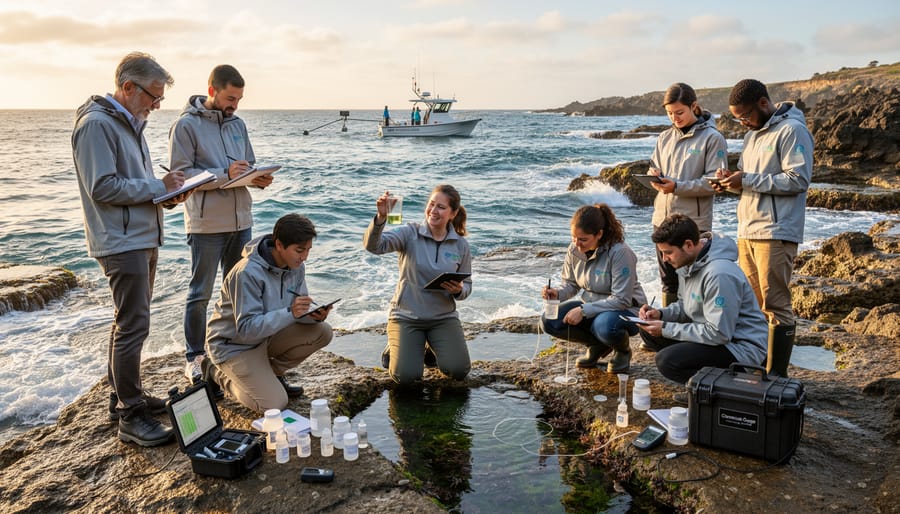
The Marine Biodiversity Science Center offers several hands-on volunteer opportunities that feed directly into analytical databases. Beach monitoring programs train volunteers to document and photograph marine debris, recording location, type, and quantity using standardized protocols. These seemingly simple observations, when aggregated across hundreds of participants, reveal pollution patterns that guide cleanup priorities and policy recommendations.
Mobile applications like iNaturalist and Marine Meter enable real-time species reporting. When you photograph a sea turtle, unusual jellyfish bloom, or coral bleaching event, you’re contributing georeferenced data points that scientists integrate into biodiversity tracking systems. Dr. Sarah Chen, a marine biologist at the center, shares, “Last year, citizen scientists submitted over 15,000 verified observations that helped us identify shifting species distributions related to warming waters. This data would be impossible to collect through traditional research methods alone.”
For deeper involvement, consider joining the center’s monthly shore surveys, where trained volunteers collect water samples and document intertidal species. These consistent, long-term datasets are invaluable for detecting environmental changes over time.
Educational institutions can partner with the center to establish student monitoring programs, turning field trips into meaningful scientific contributions. Every observation matters—your eyes on the ocean help build the comprehensive datasets that power effective conservation decisions.
At its core, ocean science analytics is about empowering people—researchers, conservationists, policymakers, and communities—to make informed decisions that protect our marine environments. The sophisticated sensors, satellite systems, and algorithms we’ve explored are simply tools that amplify human wisdom and dedication. When marine biologist Dr. Elena Rodriguez reflects on two decades of conservation work, she notes that technology hasn’t replaced the passionate individuals who care deeply about ocean health; it has given them the evidence and efficiency needed to create meaningful change.
The future of our oceans depends on collaboration across boundaries. Citizen scientists contribute valuable observations through coastal monitoring programs. Indigenous communities share traditional ecological knowledge that complements modern data collection. Students analyze datasets as part of their coursework, discovering patterns that inform marine protected area design. This interconnected web of participation, powered by accessible analytics platforms, creates a comprehensive understanding no single entity could achieve alone.
We stand at a pivotal moment. The same oceans that face unprecedented challenges from climate change, pollution, and overfishing also benefit from unprecedented analytical capabilities. Data-informed management isn’t a distant aspiration—it’s happening now in marine sanctuaries, fisheries, and coastal communities worldwide.
Your involvement matters. Whether you contribute observations, support conservation organizations, pursue marine science education, or simply share knowledge within your community, you become part of the solution. Together, equipped with better tools and united by shared commitment, we can ensure thriving, resilient oceans for generations to come. The data shows us the path forward—now we must walk it together.

jessica
Ava Singh is an environmental writer and marine sustainability advocate with a deep commitment to protecting the world's oceans and coastal communities. With a background in environmental policy and a passion for storytelling, Ava brings complex topics to life through clear, engaging content that educates and empowers readers. At the Marine Biodiversity & Sustainability Learning Center, Ava focuses on sharing impactful stories about community engagement, policy innovations, and conservation strategies. Her writing bridges the gap between science and the public, encouraging people to take part in preserving marine biodiversity. When she’s not writing, Ava collaborates with local initiatives to promote eco-conscious living and sustainable development, ensuring her work makes a difference both on the page and in the real world.