Marine Biodiversity Science Center

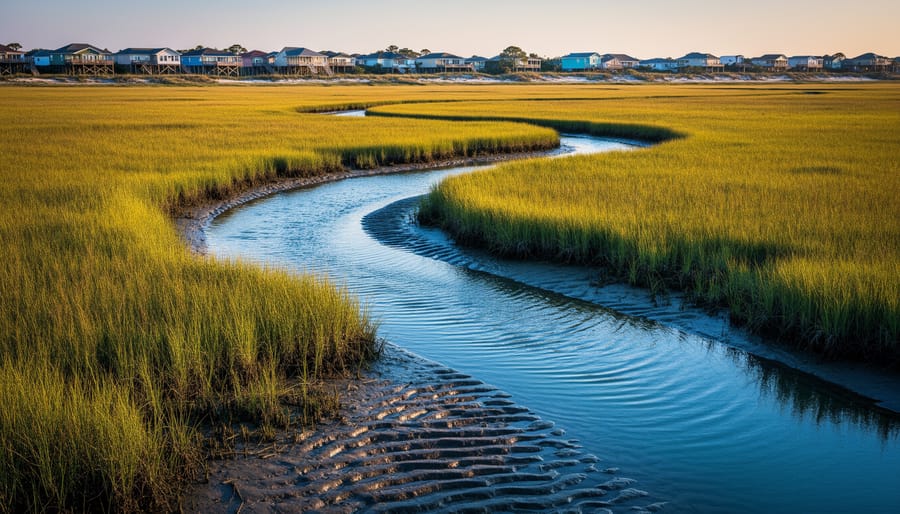
Where land meets sea, coastal salt marshes stand as nature’s unsung guardians—ribbons of cordgrass and sedge that shimmer gold in autumn light, pulse with tidal rhythms, and quietly perform some of Earth’s most critical ecological work. These seemingly simple landscapes, flooded twice daily by ocean tides and rooted in oxygen-poor mud, rank among our planet’s most productive ecosystems, rivaling tropical rainforests in their ability to capture carbon and support life.
Yet for generations, we dismissed these wetlands as wastelands—draining them for development, filling them for farmland, treating them as convenient dumping grounds. We’ve lost more than half of the world’s salt marshes, and with them, invaluable storm protection, water filtration, and nursery habitat for countless marine species. The blue crabs scuttling through marsh creeks, the diamondback terrapins nesting in sandy banks, the young striped bass hiding among spartina roots—all depend on these tidal ecosystems for survival.
The encouraging news: salt marshes are remarkably resilient when given the chance to recover. From Massachusetts to California, restoration efforts are bringing these ecosystems back to life, and the results are transforming our understanding of what’s possible. Marine biologist Dr. Elena Santos, who has spent fifteen years restoring degraded marshes, describes the moment when fiddler crabs first reappear in restored mud as “watching hope take physical form.”
Understanding coastal salt marshes—their intricate ecological functions, the threats they face, and how we can protect them—has never been more urgent. These wetlands offer solutions to our most pressing environmental challenges, from climate change to biodiversity loss, if we choose to listen.
What Makes Salt Marshes So Special?
The Plants That Thrive Where Others Can’t
Salt marsh plants are evolutionary marvels, having developed ingenious strategies to survive in conditions that would quickly kill most terrestrial vegetation. These specialized species don’t just tolerate salt—they’ve turned a hostile environment into their competitive advantage.
Smooth cordgrass (Spartina alterniflora) dominates the low marsh zones that flood twice daily with each tide. This hardy grass has evolved special glands in its leaves that actively excrete excess salt, leaving behind visible white salt crystals on the blade surfaces. Its extensive root system, reaching depths of over six feet, anchors sediment while storing oxygen for survival during submersion. Dr. Elena Martinez, a coastal ecologist who has studied Atlantic salt marshes for fifteen years, describes cordgrass as “nature’s coastal engineer—it builds the very ground it stands on by trapping sediment and organic matter with each tidal cycle.”
Higher in the marsh, where flooding occurs less frequently, you’ll find glasswort (Salicornia species), also called pickleweed. These succulent plants store salt water in their fleshy, jointed stems, diluting salt concentrations to manageable levels. Their bright green summer color transforms to brilliant red in autumn, creating stunning seasonal displays across the marsh landscape.
Salt marsh hay (Spartina patens) and black needlerush (Juncus roemerianus) fill the high marsh zones, each adapted to specific salinity ranges and flooding frequencies. Together, these plants create a gradient of vegetation zones that support diverse wildlife communities while protecting coastlines from erosion and storm surge.
A Landscape Shaped by Tides
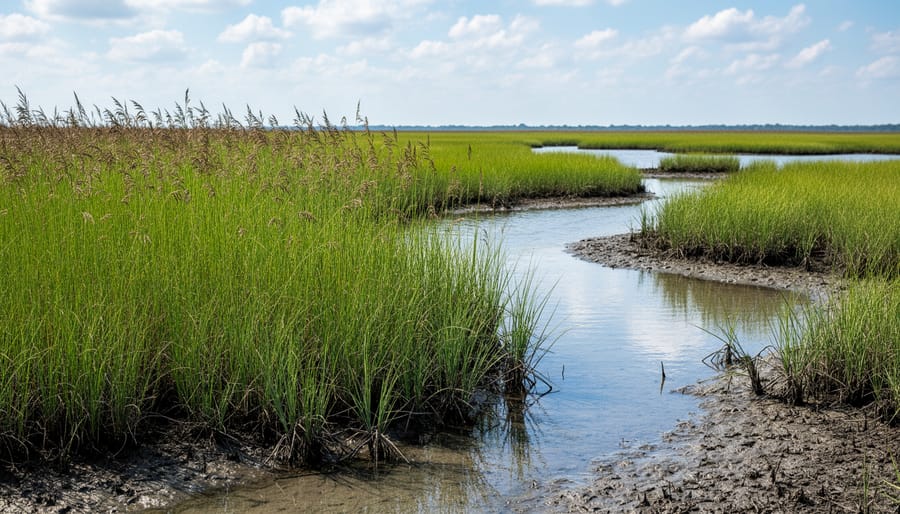
Twice daily, the ocean’s rhythmic pulse sculpts one of Earth’s most productive coastal ecosystems. As tides rise and fall, they transform salt marshes into a dynamic gradient of habitats, each shaped by its relationship with seawater.
The low marsh, flooded during most high tides, remains closest to the water’s edge. Here, hardy cordgrasses dominate, their roots submerged in oxygen-poor mud for hours each day. Moving inland, the mid-marsh experiences less frequent flooding, supporting a greater diversity of salt-tolerant plants. The high marsh, touched only by extreme high tides, hosts plants that can survive both occasional saltwater inundation and longer dry periods.
This tidal architecture creates distinct ecological zones within just a few hundred feet. Marine biologist Dr. Sarah Chen describes her first marsh survey: “Watching the tide creep across the landscape, I realized these aren’t static habitats but living gradients, constantly breathing with the ocean’s rhythm.”
Understanding this tidal influence helps us appreciate why protecting entire marsh systems, not just fragments, matters for conservation success.
Nature’s Coastal Defense System
Storm Surge Buffers That Save Lives and Property
When hurricanes and coastal storms strike, salt marshes serve as one of nature’s most effective natural coastal defenses. The dense network of marsh vegetation acts like a natural sponge, absorbing and dissipating wave energy before it reaches inland communities. Studies show that healthy salt marshes can reduce wave heights by up to 70% and lower storm surge levels by as much as one foot for every mile of marsh.
The magic lies in the marsh’s physical structure. Thick stands of cordgrass and other marsh plants create friction that slows incoming water, while the marsh’s spongy sediment absorbs and temporarily stores floodwaters. During Hurricane Sandy in 2012, researchers documented how New Jersey communities protected by salt marshes experienced significantly less property damage compared to areas with degraded or absent marshes. In one striking example, coastal properties behind healthy marshes saw flood damages reduced by an average of $625 per year.
Marine biologist Dr. Sarah Chen, who has studied Gulf Coast marshes for two decades, recalls surveying areas after Hurricane Harvey: “Properties with even a narrow strip of marsh between them and open water fared remarkably better. The marsh had trapped debris, reduced water velocity, and prevented erosion that devastated unprotected shorelines.”
This natural infrastructure provides protection valued at approximately $23 billion annually across U.S. coastlines alone, making marsh conservation not just an environmental priority but an economic necessity for vulnerable coastal communities.
Fighting Erosion One Root at a Time
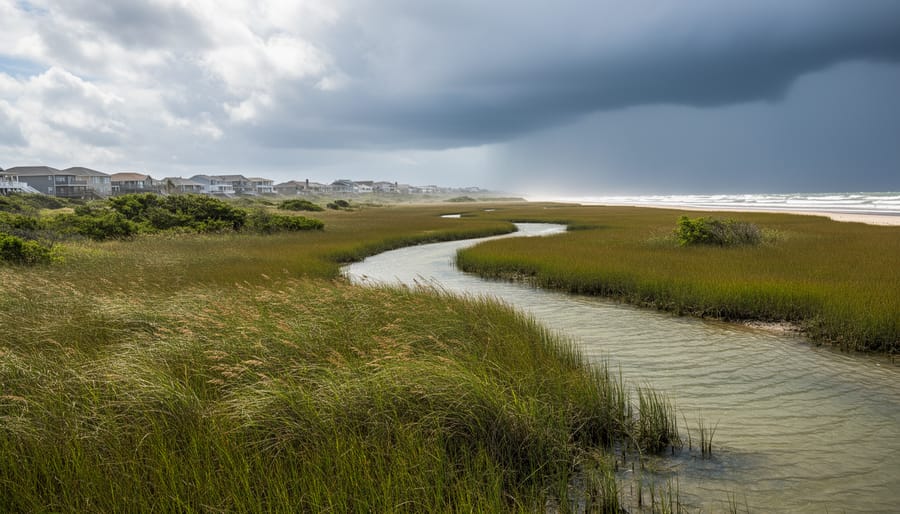
Beneath the waving grasses lies the marsh’s secret defense system: an intricate network of roots and rhizomes that acts like natural rebar, holding precious sediment in place against powerful tides and storm surges. These underground structures can extend several feet deep, creating a living foundation that prevents coastal erosion and land loss.
The contrast between protected and unprotected coastlines tells a dramatic story. Where salt marshes thrive, shorelines remain stable even during major storms, with root systems dissipating wave energy and trapping sediment that actually builds land over time. In areas where marshes have been destroyed, coastlines can erode at rates exceeding three feet per year, with communities losing not just land but also the natural buffer that once protected homes and infrastructure.
Marine biologist Dr. Elena Rodriguez has witnessed this difference firsthand during her fifteen years studying Atlantic coastal marshes. “I’ve seen properties where one side has healthy marsh and zero erosion, while the neighboring property with cleared marsh has lost thirty feet of shoreline,” she explains. “The roots create this incredibly resilient three-dimensional matrix that flexes with waves rather than breaking apart.”
The numbers are striking: a single square meter of healthy salt marsh can contain over 10,000 feet of root material, binding sediment with a grip stronger than most artificial erosion controls. This natural infrastructure doesn’t just prevent loss; it actively builds coastlines by capturing sediment and organic matter, creating a self-reinforcing system that grows more effective over time.
Biodiversity Hotspots Hidden in Plain Sight
Nurseries for the Ocean’s Future
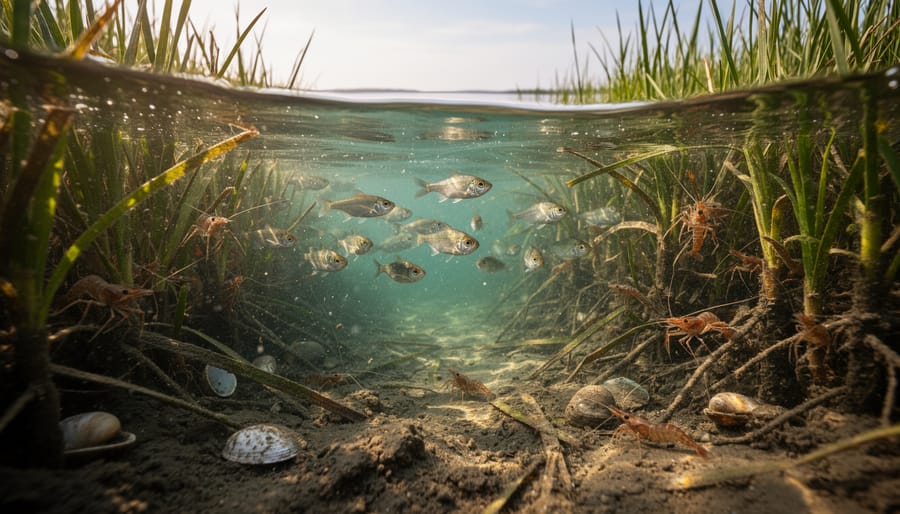
Beneath the waving cordgrass and within the labyrinth of tidal channels, salt marshes serve as nature’s nurseries, sheltering the ocean’s youngest and most vulnerable inhabitants. These coastal wetlands provide critical habitat for juvenile fish, crabs, shrimp, and countless other species during their most precarious life stages, when they’re too small to survive in open waters but require abundant food and protection from predators.
The shallow, vegetated waters offer an ideal refuge. Young striped bass, flounder, menhaden, and blue crabs find safety among the marsh grasses while feeding on the rich buffet of small invertebrates, algae, and organic matter. The complex root systems create hiding spots from larger predators, while the constantly fluctuating water levels naturally limit access by many marine hunters. This protective environment allows juvenile populations to grow rapidly, building the strength and size needed for survival in deeper waters.
Marine biologist Dr. Sarah Chen, who has studied salt marsh nursery functions for over fifteen years, recalls her first survey of juvenile fish abundance: “We pulled our nets through a small marsh creek and found ourselves surrounded by thousands of glass-sized fish. That moment crystallized how these seemingly quiet places are actually bustling with life that will sustain our ocean ecosystems and fisheries for generations.”
The connection to human communities runs deep. Commercial and recreational fishing industries depend heavily on species that spend their juvenile stages in salt marshes. Studies estimate that up to 75 percent of commercially harvested fish and shellfish rely on coastal wetlands at some point in their life cycle, making marsh conservation not just an environmental priority but an economic necessity for coastal communities worldwide.
A Feast for Migrating Birds
Coastal salt marshes serve as essential refueling stations and breeding grounds for millions of migratory birds traveling along major flyways. Each spring and fall, shorebirds like sandpipers, plovers, and yellowlegs descend upon these wetlands to feast on the abundant invertebrates hiding in the mud and marsh grasses. The high-protein diet of snails, crabs, and insects allows these long-distance travelers to rebuild energy reserves before continuing journeys that can span entire continents.
Beyond serving as rest stops, salt marshes provide critical nesting habitat for waterfowl and wading birds. Clapper rails construct their nests deep within cordgrass stands, while great egrets and snowy egrets establish rookeries in shrubs along marsh edges. The dense vegetation offers protection from predators, while the surrounding waters teem with small fish and crustaceans to feed growing chicks.
Marine biologist Dr. Elena Rodriguez, who has studied bird populations in Georgia’s coastal marshes for fifteen years, notes that healthy marshes can support over 100 bird species throughout the year. “When we protect salt marshes, we’re safeguarding entire migration networks,” she explains. Local Audubon chapters frequently organize marsh bird surveys, offering volunteers the chance to contribute valuable data while witnessing these remarkable seasonal gatherings firsthand.
The Invisible Workers: Crabs, Snails, and Microbes
Beneath the waving cordgrass, an army of tiny workers transforms the marsh. Fiddler crabs excavate hundreds of burrows per square meter, aerating oxygen-depleted soil and accelerating decomposition by shredding dead plant matter. Their tireless activity can process up to 50% of surface vegetation. Periwinkle snails graze on algae and fungi, preventing overgrowth that would smother marsh plants, while marsh crabs consume detritus and regulate insect populations.
The real powerhouses, though, are invisible to the naked eye. Microscopic bacteria and fungi break down organic matter into nutrients that fuel the entire food web. These decomposers recycle nitrogen and phosphorus, making them available to marsh grasses and phytoplankton. One marine microbiologist I spoke with described discovering a new sulfur-processing bacterium during a community science day, noting how even casual observers can contribute to understanding these hidden communities. Want to explore this microscopic world yourself? Many coastal research stations offer volunteer opportunities where you can help collect samples and learn laboratory techniques for studying these essential organisms.
Salt Marshes as Climate Warriors
Blue Carbon Champions
Salt marshes function as nature’s carbon vaults, performing a remarkable feat that rivals even rainforests in their climate-fighting capacity. Through a process marine biologists call “blue carbon sequestration,” these coastal wetlands capture atmospheric carbon dioxide and lock it away in their waterlogged sediments for centuries—sometimes millennia.
Think of a salt marsh like a multilayered safety deposit box. As marsh grasses photosynthesize, they pull carbon from the air and incorporate it into their roots, stems, and leaves. When these plant materials die, instead of decomposing rapidly and releasing carbon back into the atmosphere, they settle into the oxygen-poor mud below. This anaerobic environment acts as a preservative, slowing decomposition to a crawl.
Dr. Maria Santos, a coastal ecologist who has studied Atlantic salt marshes for fifteen years, explains it this way: “Imagine wrapping vegetables in plastic and storing them in your refrigerator versus leaving them on your counter. The marsh sediment works like that cold, sealed environment—it dramatically slows breakdown.”
The numbers are impressive. Salt marshes sequester carbon at rates up to fifty times greater per acre than terrestrial forests. Even more remarkably, while forests eventually reach carbon saturation, salt marshes continue accumulating carbon-rich sediment vertically as sea levels rise, essentially growing their storage capacity over time. Similar to seagrass meadows, these blue carbon ecosystems provide critical climate regulation services that extend far beyond their physical boundaries.
The Cost of Losing These Carbon Sinks
When coastal salt marshes are destroyed through development, pollution, or rising sea levels, they transform from carbon sinks into carbon sources—releasing centuries of stored carbon dioxide and methane back into the atmosphere. This process, known as remineralization, occurs rapidly once marsh soils are exposed to oxygen or eroded away. Scientists estimate that disturbed coastal wetlands can release up to 1 billion tons of carbon dioxide annually worldwide, equivalent to the emissions from hundreds of coal-fired power plants.
Dr. Maria Chen, a wetland ecologist who has studied marsh loss along the Gulf Coast for two decades, describes the impact vividly: “We’re essentially unlocking ancient carbon vaults. When a marsh drowns or gets bulldozed, that stored carbon doesn’t just disappear—it enters the atmosphere, contributing to the very climate change that threatens remaining marshes.”
This creates a dangerous feedback loop: climate change accelerates marsh loss through sea level rise and intensified storms, while marsh destruction releases more greenhouse gases, further accelerating climate change. The losses extend beyond carbon—destroyed marshes no longer filter pollutants, buffer storm surges, or provide nursery habitat for commercially important fish species, compounding the environmental and economic consequences for coastal communities.
Why Salt Marshes Are Vanishing
Despite their remarkable resilience, coastal salt marshes are disappearing at an alarming rate. Scientists estimate that we’ve lost between 25% and 50% of the world’s salt marshes over the past century, with some regions experiencing even more dramatic declines. Understanding why these vital ecosystems are vanishing is the first step toward protecting what remains.
Coastal development stands as one of the most significant threats to marine ecosystems, and salt marshes are particularly vulnerable. From the Gulf Coast to the Atlantic seaboard, marshes have been drained and filled to make way for housing developments, marinas, and commercial infrastructure. In San Francisco Bay, for example, more than 90% of historic tidal marshes have been lost to urban expansion. The Chesapeake Bay region tells a similar story, where centuries of conversion to agriculture and development have dramatically reduced marsh extent.
Pollution compounds these pressures. Agricultural runoff carrying excess nutrients causes algal blooms that block sunlight from reaching marsh grasses. Heavy metals and chemical contaminants from industrial sources accumulate in marsh sediments, affecting both plant health and the wildlife that depends on these habitats. In Louisiana’s marshes, oil and gas infrastructure has left a legacy of contamination that continues to impact ecosystem function decades later.
Invasive species pose another serious challenge. Non-native plants like common reed (Phragmites australis) outcompete native marsh grasses, creating dense monocultures that provide less value to wildlife. In the Gulf Coast, feral hogs root through marsh sediments, destroying vegetation and accelerating erosion. These biological invasions fundamentally alter marsh structure and function.
Perhaps most concerning is the combined effect of sea-level rise and altered hydrology. As ocean levels climb, marshes need space to migrate inland, but coastal development often blocks this natural retreat. Meanwhile, dams, levees, and drainage systems have disrupted the natural flow of sediments that marshes need to build elevation and keep pace with rising seas. The Mississippi River Delta exemplifies this crisis, losing approximately 25 square miles of marsh annually due to sediment starvation and subsidence.
Dr. Maria Chen, a coastal ecologist who has studied Louisiana’s marshes for two decades, observes that “we’re not dealing with single threats operating in isolation. It’s the convergence of multiple stressors that makes marsh loss so difficult to reverse.” This interconnected nature of threats means that effective conservation requires equally comprehensive solutions, engaging communities, scientists, and policymakers working together toward marsh recovery.
How Scientists and Communities Are Fighting Back
Restoration Success Stories That Inspire Hope
Across the globe, dedicated teams are proving that damaged salt marshes can bounce back with remarkable resilience. These success stories demonstrate what’s possible when science meets community action.
In San Francisco Bay, the South Bay Salt Pond Restoration Project has transformed over 15,000 acres of former industrial salt ponds back into thriving tidal marsh. Beginning in 2003, this collaboration between federal agencies, local scientists, and community volunteers has restored natural water flow and reintroduced native vegetation. Within just a decade, endangered species like the California clapper rail returned to nest in areas where they’d been absent for generations. Marine biologist Dr. Sarah Chen, who monitors the site quarterly, shares that “watching juvenile fish crowd the restored channels during high tide never gets old. These marshes are literally rebuilding the bay’s food web before our eyes.”
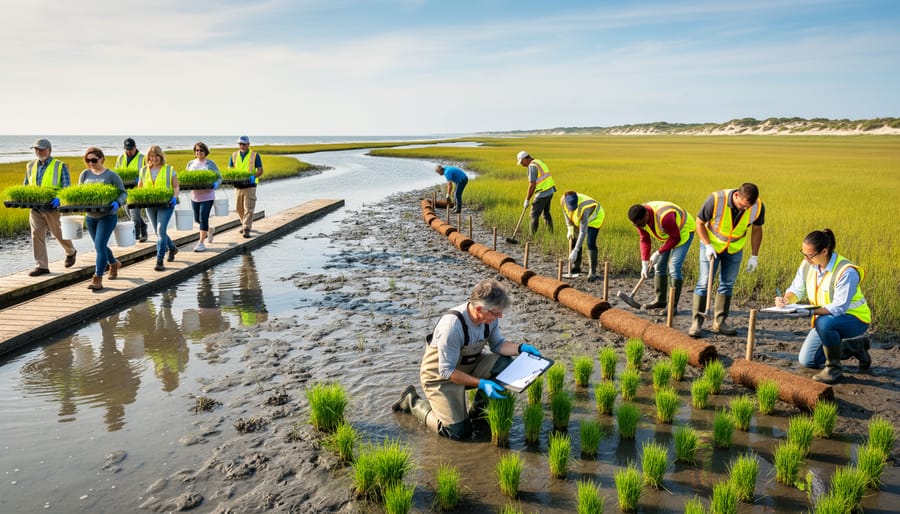
On the Atlantic coast, Connecticut’s Great Marsh restoration showcases the power of local engagement. Coastal communities partnered with university researchers to remove invasive Phragmites and replant native cordgrass across 200 acres. Resident volunteers contributed over 5,000 hours, hand-planting spartina seedlings in mudflats. Within three years, measurements showed a 300% increase in blue crab populations and the return of diamondback terrapins.
These projects share a common thread: they succeed when communities take ownership. From monitoring water quality to hosting school field trips, local residents become marsh stewards, ensuring long-term protection extends far beyond initial restoration work.
Voices from the Field: A Marine Biologist’s Perspective
I still remember my first day wading into a salt marsh seven years ago as a graduate student. The initial surprise wasn’t the mud swallowing my boots or the pungent sulfur smell, it was the sheer abundance of life in what appeared, from shore, to be just grass and water. Fiddler crabs scuttled everywhere, juvenile fish darted through tidal pools, and a great egret stalked through the Spartina stands just meters away.
Now, as a restoration ecologist, I’ve watched degraded marshes transform back into thriving ecosystems. Our team recently completed a five-year project where we removed invasive Phragmites and replanted native cordgrass. Within two years, we documented a 300 percent increase in small fish populations and the return of diamondback terrapins that hadn’t nested there in decades.
What keeps me motivated is knowing this work is achievable. You don’t need a PhD to make a difference. Our volunteer monitoring program trains community members to collect water quality data and track vegetation health. These citizen scientists have become some of our most passionate marsh advocates, proving that when people connect directly with these ecosystems, they become invested in protecting them for future generations.
Innovative Solutions for a Changing Climate
Scientists and coastal managers are pioneering innovative techniques to help salt marshes survive accelerating sea-level rise. Sediment augmentation involves strategically adding mineral-rich sediment to marsh surfaces, giving them the raw materials needed to build elevation naturally. A particularly promising approach called thin-layer deposition spreads sediment in shallow layers across the marsh, mimicking natural sediment delivery while allowing vegetation to grow through. These interventions work with natural processes rather than against them.
Early results from pilot projects along the Atlantic coast show marshes treated with thin-layer deposition gaining elevation at rates that match or exceed local sea-level rise. Marine biologist Dr. Sarah Chen, who leads restoration efforts in Massachusetts, shares her optimism: “We’re essentially giving these ecosystems a helping hand during a critical period. The marshes respond remarkably well when we provide the building blocks they need.”
These solutions offer hope, but they require community support and continued research to scale up effectively across vulnerable coastlines.
How You Can Help Protect Salt Marshes
Protecting salt marshes doesn’t require specialized equipment or advanced degrees—it simply requires caring individuals willing to take action at whatever level fits their lifestyle and interests.
For those seeking hands-on involvement, the Marine Biodiversity Science Center offers regular volunteer opportunities in salt marsh monitoring and restoration projects. “Our volunteers become the eyes and ears of these ecosystems,” shares Dr. Patricia Mendez, who coordinates the center’s community science programs. “Last year alone, volunteers contributed over 2,000 hours to marsh restoration, helping us plant native cordgrass and remove invasive species.” Whether you can commit to monthly outings or just one weekend, your participation makes a tangible difference.
Citizen science programs provide another accessible entry point. Apps like iNaturalist allow you to document marsh wildlife during casual visits, contributing valuable data to ongoing research. The center’s Marsh Watch initiative trains participants to monitor water quality and wildlife populations, transforming recreational marsh visits into meaningful scientific contributions. These programs welcome beginners and provide all necessary training.
If you prefer supporting from afar, responsible coastal recreation practices protect marshes during your visits. Stay on designated trails and viewing platforms to avoid trampling sensitive vegetation. Keep pets leashed and remove all trash, as even biodegradable items can harm marsh inhabitants. When boating, maintain no-wake zones near marsh edges to prevent erosion from wave action.
Advocacy matters tremendously. Contact local representatives to support wetland protection legislation and oppose development projects that threaten marsh habitats. Attend public hearings on coastal zone management—decision-makers need to hear that constituents value these ecosystems.
Finally, share what you learn. The Marine Biodiversity Science Center offers free educational resources, including downloadable guides and virtual tours perfect for classroom use or community presentations. When more people understand salt marshes’ extraordinary value, from storm protection to carbon storage, the collective will to preserve them grows stronger. Every action, no matter how small, contributes to safeguarding these irreplaceable coastal treasures for future generations.
The future of coastal salt marshes—and by extension, the communities that depend on them—rests in our collective hands. These remarkable ecosystems don’t just exist in isolation; they form the living infrastructure that protects our shores, filters our water, nurtures fisheries, and stores carbon that would otherwise contribute to climate change. When salt marshes thrive, coastal communities flourish alongside them, benefiting from natural storm protection, abundant seafood, recreational opportunities, and the irreplaceable beauty of these tidal landscapes.
The encouraging news is that we’ve learned how to restore damaged marshes and protect existing ones. Communities worldwide are witnessing remarkable recoveries when science-based restoration meets local stewardship. Dr. Maria Santos, a restoration ecologist who has worked on marsh recovery projects for over fifteen years, often reminds her volunteers that “every hour spent removing invasive species or replanting native cordgrass creates ripples of positive change that extend far beyond what we can see.”
You can be part of this transformation. Whether you’re a student exploring career paths in marine science, an educator seeking hands-on learning opportunities for your class, or simply someone who cares about coastal health, there’s a meaningful role waiting for you. Join our e-network to receive the latest research updates, restoration success stories, and opportunities to connect with fellow conservation enthusiasts. Explore our volunteer programs, where you’ll work alongside marine biologists and local communities to make tangible differences in marsh health. Together, we’re proving that informed action, multiplied across thousands of engaged individuals, creates the powerful force needed to preserve these invaluable ecosystems for generations to come.

jessica
Ava Singh is an environmental writer and marine sustainability advocate with a deep commitment to protecting the world's oceans and coastal communities. With a background in environmental policy and a passion for storytelling, Ava brings complex topics to life through clear, engaging content that educates and empowers readers. At the Marine Biodiversity & Sustainability Learning Center, Ava focuses on sharing impactful stories about community engagement, policy innovations, and conservation strategies. Her writing bridges the gap between science and the public, encouraging people to take part in preserving marine biodiversity. When she’s not writing, Ava collaborates with local initiatives to promote eco-conscious living and sustainable development, ensuring her work makes a difference both on the page and in the real world.