Marine Biodiversity Science Center

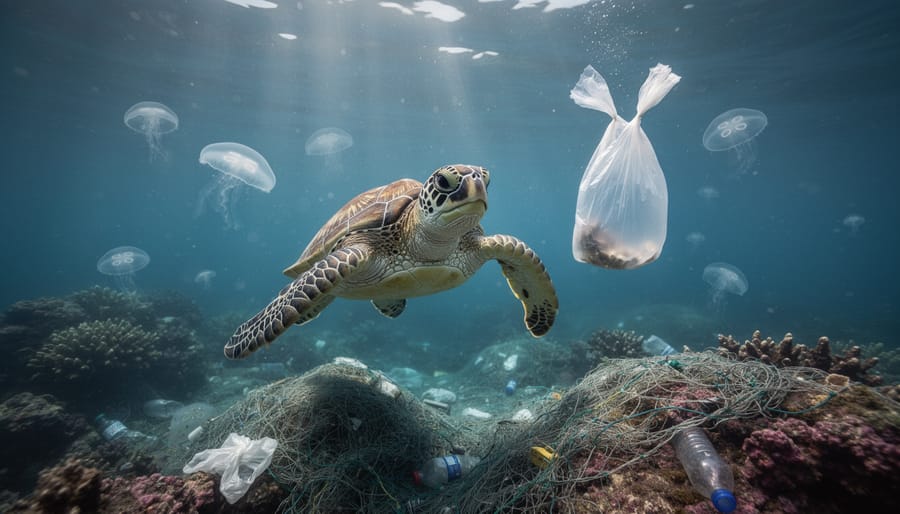
Every minute, the equivalent of one garbage truck full of plastic enters our oceans. This staggering reality translates to approximately 8 million metric tons annually, creating what scientists now call a “plastisphere” that permeates every corner of marine environments from surface waters to the deepest ocean trenches. The consequences reach far beyond unsightly beaches and entangled wildlife, fundamentally altering marine ecosystems at molecular, organism, and population levels.
Marine biodiversity faces an unprecedented crisis as plastic waste infiltrates food webs, disrupts reproductive systems, and transforms habitats in ways we are only beginning to understand. Sea turtles mistake plastic bags for jellyfish, their primary food source, leading to intestinal blockages and starvation. Seabirds feed plastic fragments to their chicks, filling tiny stomachs with indigestible material that provides no nutrition. Coral reefs, already stressed by warming waters, become smothered by plastic debris that introduces pathogens and blocks essential sunlight.
The problem extends beyond visible plastic. Microplastics, particles smaller than 5 millimeters, now contaminate every marine habitat studied, from Arctic ice to deep-sea sediments. These particles absorb toxic chemicals, act as vectors for harmful pollutants, and accumulate in tissues as they move up the food chain, ultimately affecting the fish that millions of people depend on for protein and livelihoods.
Yet this story need not end in despair. Understanding the specific mechanisms through which plastic harms marine life empowers us to develop targeted solutions, support effective policies, and take meaningful action. Through collaborative efforts between scientists, conservationists, policymakers, and engaged citizens, we can reverse this tide and restore ocean health for generations to come.
The Scope of Ocean Plastic Pollution
Where Does All This Plastic Come From?
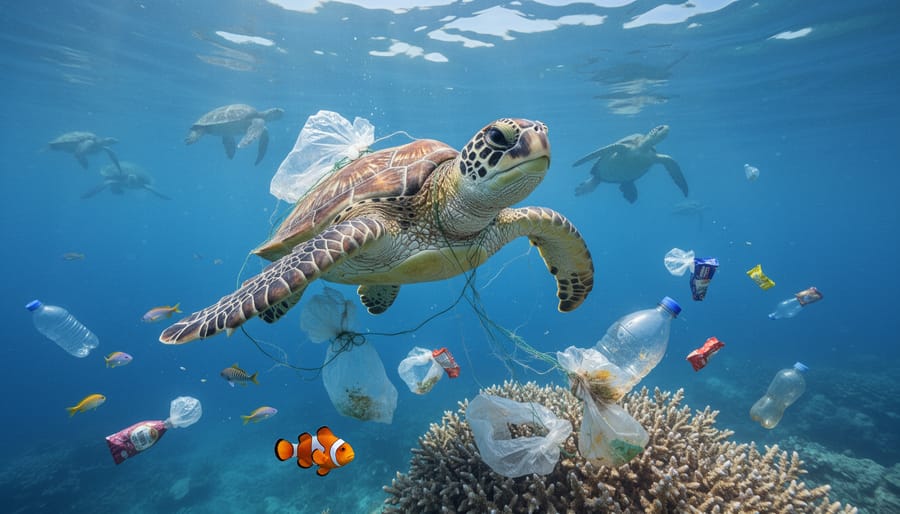
The journey of plastic from our hands to the ocean is often more direct than we might imagine. According to recent research, approximately 80% of ocean plastic originates from land-based sources, while the remaining 20% comes from marine activities. Understanding these pathways helps us recognize how our daily choices ripple outward to affect marine ecosystems thousands of miles away.
Rivers act as conveyor belts, carrying plastic waste from inland areas to coastal waters. Inadequate waste management systems, particularly in rapidly developing regions, allow plastic to escape into waterways during rainstorms and floods. That plastic bottle discarded near a storm drain in your neighborhood can eventually make its way downstream, joining millions of tons of debris flowing into the ocean each year. Urban runoff represents one of the most significant contributors, with microplastics from tire wear, synthetic clothing fibers from laundry, and fragments from larger items all washing into drainage systems.
The fishing industry contributes substantially to marine plastic pollution through abandoned, lost, or discarded fishing gear, collectively known as “ghost gear.” These nets, lines, and traps continue catching and killing marine life long after being lost or intentionally discarded. Marine biologist Dr. Sarah Chen, who has spent fifteen years documenting ocean debris, shares a sobering observation: “During our research expeditions, we’ve found ghost nets stretching hundreds of meters, creating deadly traps for sea turtles, seals, and countless fish species. One net we recovered had been ‘fishing’ for an estimated decade.”
Coastal tourism and recreational activities also play a role, with beachgoers leaving behind single-use plastics, food wrappers, and beverage containers. Additionally, illegal dumping from vessels, though internationally regulated, continues to deposit waste directly into marine environments.
The connection between consumer behavior and ocean health becomes clear when we trace these pathways backward. Every plastic item we use carries the potential to become marine debris.
The Problem with Microplastics
When you think of ocean plastic pollution, you might picture bottles or bags floating on the surface. But the reality is far more insidious. Microplastics—tiny plastic fragments smaller than five millimeters—represent one of the most pervasive microplastic threats to marine life today.
These particles form through a process called photodegradation, where sunlight, waves, and salt gradually break down larger plastic debris into smaller and smaller pieces. Imagine a plastic bottle being tumbled in the ocean like a rock in a river—except instead of becoming smooth, it shatters into thousands of microscopic fragments. Some microplastics also enter the ocean already small, shed from synthetic clothing fibers, tire dust, or personal care products.
The danger lies in their size and abundance. Marine biologist Dr. Sarah Chen, who has spent fifteen years studying ocean pollutants, explains it this way: “If regular plastic debris is like boulders blocking a stream, microplastics are like toxic sand—they infiltrate every layer of the ecosystem.” These particles are consumed by organisms at every level of the food chain, from plankton to whales, accumulating toxins and disrupting biological processes as they move upward through marine food webs.
Direct Physical Harm to Marine Species
Entanglement and Injury
Every year, countless marine animals become entangled in plastic debris, suffering injuries that range from minor wounds to fatal consequences. Abandoned fishing gear, known as “ghost nets,” poses one of the most significant threats. These nets continue catching wildlife long after being discarded, creating deadly traps that can remain functional for decades. Six-pack rings, plastic bags, and packaging materials also contribute to this crisis, wrapping around flippers, beaks, and bodies with devastating results.
Sea turtles frequently mistake plastic bags for jellyfish and become entangled while feeding. Marine biologist Dr. Sarah Chen recalls rescuing a green sea turtle off the California coast with a plastic shopping bag so tightly wound around its front flipper that circulation had been cut off for weeks. “The flipper couldn’t be saved, but the turtle’s determination to survive was remarkable,” she shares. “After rehabilitation, we released her back into the ocean, where she adapted surprisingly well to life with three flippers.”
Seals and sea lions often swim through loops of plastic packaging or discarded fishing line, which tightens as they grow, cutting into their flesh and causing infections. Whales face similar dangers from larger debris, with humpback and right whales particularly vulnerable to rope entanglement from fishing gear.
Seabirds also suffer extensively, becoming trapped in plastic netting while diving for fish or scavenging at the surface. Studies estimate that entanglement affects over 700 marine species worldwide, with populations of endangered species experiencing the most severe impacts.
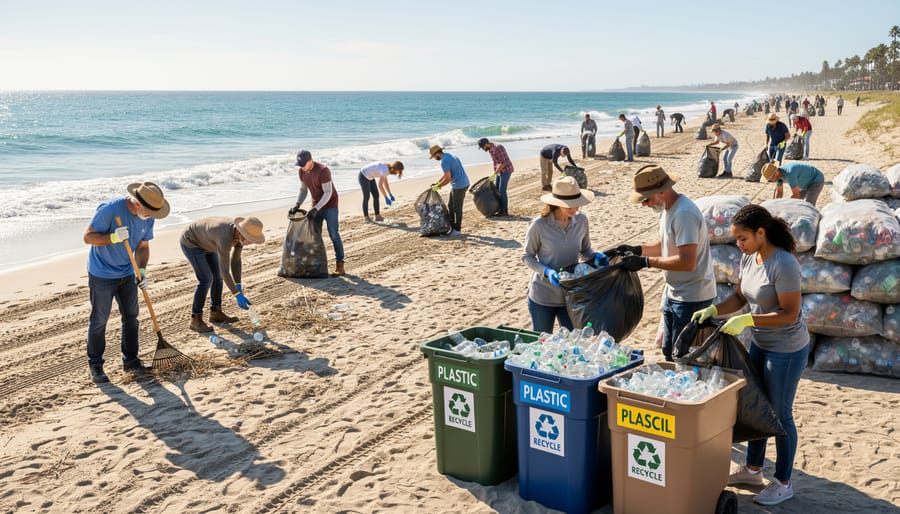
Volunteers participating in coastal cleanup programs play a vital role in removing these hazards before they reach the ocean, directly preventing entanglement incidents and saving marine lives.
Ingestion and Internal Damage
Marine animals encounter plastic debris throughout the water column, and tragically, many mistake it for prey. Sea turtles confuse floating plastic bags with jellyfish, their natural food source, while seabirds snatch colorful plastic fragments that resemble fish and squid. Filter feeders like baleen whales inadvertently consume microplastics while gulping massive volumes of water, and even tiny zooplankton ingest microscopic particles they cannot digest.
The consequences of plastic ingestion range from immediately fatal to slowly debilitating. When animals consume larger plastic items, these objects can create physical blockages in their digestive systems, preventing the passage of actual food. This leads to a false sense of satiation—the animal’s stomach feels full, but it receives no nutrition. Over time, this results in malnutrition and starvation, even as the creature continues eating plastic. Internal injuries also occur when sharp plastic edges puncture stomach linings or intestinal walls, causing infections and internal bleeding.
Beyond physical damage, ingested plastics release toxic chemicals as they break down inside animal tissues. These substances, including phthalates and bisphenol A, can disrupt hormonal systems, impair reproduction, and weaken immune responses. Persistent organic pollutants that accumulate on plastic surfaces in seawater become concentrated in animal tissues through biomagnification, affecting entire food chains.
Marine biologist Dr. Sarah Chen, who has studied seabird populations in the Pacific for fifteen years, shares a sobering observation: “We’ve examined deceased albatross chicks and found their stomachs containing bottle caps, cigarette lighters, and plastic fragments—items their parents fed them believing they were nutritious prey.” Her research reveals that approximately 90 percent of seabirds have ingested plastic at some point.
Species particularly vulnerable to plastic ingestion include sea turtles (all seven species), more than 180 seabird species, marine mammals like dolphins and whales, and countless fish species. Understanding these impacts motivates volunteers worldwide to participate in beach cleanups and citizen science projects, directly preventing plastics from entering marine food webs while contributing valuable data to conservation efforts.
Chemical Contamination and Ecosystem Disruption
Toxic Chemicals Leaching into Marine Environments
Beyond the visible damage of entanglement and ingestion, plastic waste introduces a more insidious threat to marine ecosystems: chemical contamination. Plastics aren’t chemically inert materials. They contain and release a cocktail of toxic additives and absorbed pollutants that silently poison ocean waters and the creatures living within them.
When plastics enter marine environments, they begin leaching chemicals including bisphenol A (BPA), phthalates, and polychlorinated biphenyls (PCBs). BPA, commonly used to make plastics more flexible and durable, disrupts endocrine systems in marine animals. Think of endocrine systems as the body’s chemical messaging service, controlling everything from growth to reproduction. When BPA interferes with these messages, the consequences ripple through an organism’s entire physiology. Phthalates, another group of plasticizers, create similar disruptions, particularly affecting reproductive development in fish and marine mammals.
The situation becomes even more complex because plastic debris acts like a toxic sponge. As plastic particles drift through contaminated waters, they absorb existing pollutants like PCBs and heavy metals from the surrounding seawater, concentrating these toxins to levels hundreds of times higher than the water itself.
At the cellular level, these chemicals wreak havoc. Marine biologist Dr. Sarah Chen, who has studied chemical impacts on coral reef fish populations for over a decade, explains that exposed fish show altered hormone levels, compromised immune systems, and damaged liver function. Reproductive effects are particularly alarming: reduced fertility, abnormal egg development, and offspring with developmental deformities have been documented across numerous species, from tiny zooplankton to large marine mammals.
Bioaccumulation Through the Food Web
Plastic pollution doesn’t just affect individual marine animals—it sets off a dangerous chain reaction that magnifies toxic effects throughout entire ocean ecosystems. When small organisms ingest microplastics laden with pollutants, they become the first link in a troubling process called biomagnification. These toxins, including persistent organic pollutants like PCBs and DDT, accumulate in fatty tissues and concentrate as they move upward through the food web.
Here’s how it works: A tiny zooplankton consumes plastic particles carrying absorbed toxins. Small fish eat hundreds of these zooplankton, concentrating the chemicals in their bodies. Larger predatory fish then consume dozens of smaller fish, further concentrating the pollutants. Top predators like tuna, sharks, and marine mammals can accumulate toxin levels thousands of times higher than the surrounding seawater. This phenomenon of bioaccumulation in marine species poses severe health risks across the entire food chain.
Dr. Sarah Chen, a marine toxicologist who studies ocean pollutants, shares a striking observation: “When we analyze tissue samples from apex predators, we’re essentially reading a history of plastic pollution. These animals become living repositories of decades of marine contamination.”
The implications extend directly to human health. Communities that depend on seafood face increased exposure to these concentrated toxins, which have been linked to reproductive issues, immune system dysfunction, and developmental problems. A recent study found microplastics in over 90 percent of commercial fish species tested.
This interconnected impact demonstrates why protecting even the smallest ocean creatures matters—their health directly influences the entire marine ecosystem and our own well-being.
Impact on Critical Marine Habitats
Coral Reefs Under Plastic Stress
Coral reefs, often called the rainforests of the sea, face a particularly devastating threat from plastic pollution. These vibrant ecosystems, which support approximately 25% of all marine species despite covering less than 1% of the ocean floor, are experiencing unprecedented stress as plastic debris accumulates in reef environments worldwide.
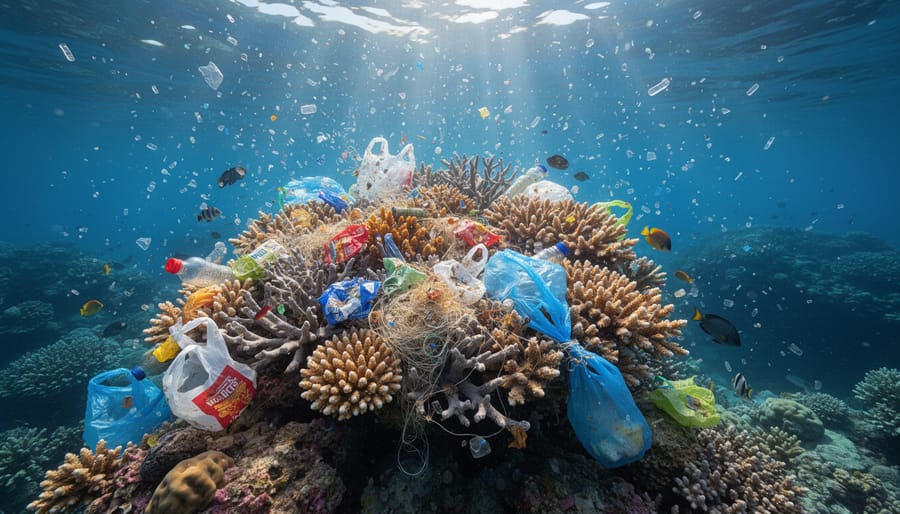
When plastic items settle on coral structures, they create a suffocating blanket that prevents the corals from accessing essential sunlight needed for photosynthesis by their symbiotic algae. This smothering effect can lead to coral bleaching and eventual death. Research has documented that corals in contact with plastics show an 89% likelihood of disease compared to just 4% for plastic-free corals. The physical contact introduces pathogens while creating dark, oxygen-depleted microenvironments where harmful bacteria thrive.
Marine biologist Dr. Elena Vasquez, who has studied Caribbean reefs for over a decade, shares her observations: “I’ve watched plastic bags drape over brain corals like shrouds, blocking the light these animals desperately need. Within weeks, the tissue beneath begins to decay, creating wounds that spread throughout the colony.”
The ripple effects extend far beyond the corals themselves. As reef structures degrade, the countless species that depend on them for shelter, breeding grounds, and food sources face displacement. This biodiversity loss affects everything from tiny reef fish to larger predators, disrupting entire food webs.
Volunteer reef monitoring programs offer opportunities for concerned citizens to contribute to coral conservation efforts while witnessing these impacts firsthand, transforming awareness into meaningful action.
Coastal Ecosystems at Risk
Coastal ecosystems serve as critical nurseries for marine life, yet they face devastating impacts from plastic pollution that often go unnoticed. Mangroves, estuaries, and seagrass beds harbor juvenile fish, crustaceans, and countless invertebrates during their most vulnerable life stages, making these habitats essential for maintaining healthy ocean populations.
Plastic debris accumulates in these shallow, sheltered waters at alarming rates. Microplastics settle into sediments where filter-feeding organisms like oysters and clams ingest them, introducing toxins into the food web from its foundation. Larger plastics entangle mangrove roots and smother seagrass beds, blocking sunlight necessary for photosynthesis and disrupting the oxygen production these ecosystems provide.
Marine biologist Dr. Sarah Chen has spent fifteen years studying Florida’s coastal ecosystems. “I’ve watched plastic bags ghost through seagrass meadows like deadly jellyfish,” she shares. “Young sea turtles mistake them for food, and the consequences are heartbreaking. But when volunteers join our monthly cleanup efforts, we’ve removed over 5,000 pounds of debris from a single estuary, giving these breeding grounds a fighting chance.”
The ripple effects extend far beyond these coastal zones. Species that depend on healthy mangroves and estuaries for reproduction face population declines, affecting both ocean biodiversity and the fishing communities that rely on these resources for their livelihoods.
The Ripple Effect: Biodiversity Loss and Ecosystem Collapse
When a single sea turtle mistakes a plastic bag for a jellyfish or a seabird feeds microplastics to its chicks, the consequences extend far beyond that individual animal. These isolated incidents connect to create a ripple effect that threatens the very foundation of ocean ecosystems. Understanding this interconnectedness is crucial to grasping the full scope of plastic pollution’s impact on our oceans.
Marine ecosystems function like intricate webs, where each species plays a specific role in maintaining balance. When plastic pollution removes or weakens key species, the entire system begins to unravel. Consider zooplankton, microscopic organisms that form the base of the marine food web. Recent research shows these tiny creatures ingest microplastics, reducing their feeding efficiency and reproductive success. As zooplankton populations decline, the effects cascade upward through every level of the food chain, from small fish to apex predators like sharks and orcas.
Dr. Maria Chen, a marine ecologist who has spent fifteen years studying coral reef ecosystems, shares a sobering observation: “We’re seeing reef fish populations crash not just because they’re ingesting plastics directly, but because their prey species have already been compromised. It’s like watching dominos fall in slow motion.” Her team’s research documents how plastic debris smothers coral reefs, blocking sunlight and preventing the symbiotic algae that corals depend on from photosynthesizing. When corals die, the countless species that rely on reef habitats for shelter, breeding, and feeding lose their homes, creating ghost reefs where biodiversity once thrived.
The loss of apex predators due to plastic ingestion particularly concerns scientists because these species regulate entire ecosystems. Sharks, for instance, control prey populations and maintain genetic health by removing sick or weak individuals. Their decline allows certain species to overpopulate, disrupting the delicate balance that has evolved over millennia.
The encouraging news is that restoring ocean health remains possible. Marine ecosystems demonstrate remarkable resilience when given the chance to recover. Organizations worldwide offer volunteer opportunities for concerned citizens to participate in beach cleanups, citizen science projects monitoring plastic pollution, and educational programs that spread awareness. Every piece of plastic removed from our waterways represents one less threat to the interconnected web of marine life that sustains our planet’s health.
What Science Is Revealing: Recent Research and Findings
Recent scientific investigations are unveiling alarming discoveries about plastic pollution’s reach into every corner of marine ecosystems. A 2023 study published in Nature Communications documented microplastics in the tissues of over 386 fish species across all ocean depths, from surface dwellers to creatures inhabiting the Mariana Trench. These particles accumulate in digestive systems, gills, and even brain tissue, disrupting biological functions at cellular levels.
Dr. Sarah Chen, a marine biologist with fifteen years of field experience, shares a particularly sobering observation: “When we examined coral reef systems in the Caribbean, we found that 89% of coral polyps contained microplastic fibers. These particles interfere with the corals’ feeding mechanisms and their ability to expel waste, essentially slowly starving them while their tissues become inflamed.”
Emerging research from the University of Plymouth reveals that nanoplastics—particles smaller than previously detected—can cross the blood-brain barrier in marine mammals. This groundbreaking discovery explains behavioral changes observed in dolphin populations, including disorientation and disrupted hunting patterns.
Perhaps most concerning, recent genomic studies demonstrate that plastic pollution triggers epigenetic changes in marine species. Scientists documented altered gene expression in sea turtle embryos exposed to plastic-contaminated sand, potentially affecting future generations’ resilience to environmental stressors.
The interconnected nature of these impacts underscores why proven marine pollution strategies must address multiple ecosystem levels simultaneously. Dr. Chen emphasizes hope alongside concern: “Understanding these mechanisms allows us to design targeted interventions. The ocean conservation efforts we implement today, informed by this research, can reverse trends we’re seeing—but timing matters critically.”
These findings illuminate not just damage, but pathways toward restoration when science guides action.
Collective Action Is Making a Difference
How You Can Join the Fight
The good news is that protecting our oceans from plastic pollution doesn’t require a marine biology degree. Every individual can contribute to meaningful change through conscious daily choices and community engagement.
Start by examining your personal plastic consumption. Replace single-use items with reusable alternatives: carry a water bottle, bring cloth bags for shopping, choose products with minimal packaging, and opt for biodegradable materials when possible. These small adjustments accumulate into significant impact when adopted widely.
Beach and waterway cleanups offer hands-on opportunities to make an immediate difference while connecting with like-minded individuals. Many coastal communities organize regular cleanup events, and even removing a few pieces of debris prevents them from fragmenting into microplastics that harm marine life. Dr. Sarah Chen, a marine biologist who has participated in dozens of cleanups, shares: “There’s something powerful about physically removing trash from the environment. It connects you to the problem in a tangible way and reminds you that solutions exist.”
Supporting environmental legislation amplifies your impact beyond individual actions. Contact your representatives about policies addressing plastic production, waste management infrastructure, and ocean protection. Your voice matters in shaping regulatory frameworks that create systemic change.
Consider volunteering with conservation organizations like the Marine Biodiversity Science Center, which offers opportunities ranging from citizen science projects to educational outreach. These organizations depend on community involvement to conduct research, raise awareness, and implement conservation programs. Whether you contribute a few hours monthly or pursue deeper engagement, your participation strengthens the collective effort to protect marine ecosystems for future generations.
Join Our Community of Ocean Advocates
The challenge of ocean plastic pollution requires collective action, and we invite you to become part of the solution. Our Marine Biodiversity Science Center offers multiple pathways for engagement, whether you’re a seasoned researcher, student, or concerned citizen passionate about protecting our oceans.
Join our volunteer programs and contribute directly to ongoing research initiatives. Our volunteers participate in beach cleanup efforts, assist with microplastic monitoring projects, and help catalog marine debris data that informs policy decisions. Marine biologist Dr. Sarah Chen shares: “Our volunteers aren’t just collecting trash—they’re gathering crucial scientific data that helps us understand plastic distribution patterns and their effects on local wildlife. One volunteer discovered a tagged sea turtle that had been previously rescued from plastic entanglement, giving us valuable insights into recovery rates.”
Connect with our global e-network to access cutting-edge research, participate in virtual seminars with leading ocean scientists, and collaborate on citizen science projects from anywhere in the world. Members receive quarterly newsletters featuring personal stories from fieldwork, emerging research findings, and practical tips for reducing plastic consumption in daily life.
Explore our comprehensive educational resources, including downloadable teaching materials, interactive webinars, and documentary films that bring ocean conservation into classrooms and homes. Every action counts, from sharing knowledge to advocating for policy change. Together, we can turn the tide on plastic pollution and safeguard marine biodiversity for future generations.
The ocean’s plastic pollution crisis demands our immediate attention, yet the path forward is illuminated by remarkable progress already underway. While the statistics remain sobering—millions of tons of plastic entering our oceans annually, countless species affected, and ecosystems altered—we stand at a pivotal moment where collective action can reshape this narrative. The science is clear about the problems we face, but equally clear about the solutions within our reach.
Every choice we make ripples outward, creating waves of change far beyond what we might imagine. Marine biologist Dr. Elena Rodriguez, who has spent fifteen years studying coral reef ecosystems, recently shared an inspiring observation: “I’ve watched communities transform their relationship with plastic in just five years. Beach cleanups that started with a dozen volunteers now mobilize hundreds. Local businesses have eliminated single-use plastics. The ocean is resilient—when we give it a chance, recovery begins almost immediately.”
This resilience offers genuine hope, but only if we act now. The Marine Biodiversity Science Center connects passionate individuals with meaningful conservation work, offering volunteer opportunities ranging from coastal monitoring programs to citizen science projects that contribute directly to marine research. Whether you’re a student seeking hands-on experience, an educator looking to inspire the next generation, or simply someone who cares deeply about our oceans, there’s a role for you in this movement.
Your journey toward ocean conservation can begin today. Start by reducing your personal plastic consumption, choosing reusable alternatives, and supporting businesses committed to sustainable practices. Join a local beach cleanup or participate in our research initiatives. Share what you’ve learned with friends, family, and your community—education multiplies impact exponentially.
The ocean has sustained life on Earth for millennia, and now it needs our protection. Together, we can turn the tide on plastic pollution and ensure thriving marine ecosystems for generations to come. Will you answer the call?

jessica
Ava Singh is an environmental writer and marine sustainability advocate with a deep commitment to protecting the world's oceans and coastal communities. With a background in environmental policy and a passion for storytelling, Ava brings complex topics to life through clear, engaging content that educates and empowers readers. At the Marine Biodiversity & Sustainability Learning Center, Ava focuses on sharing impactful stories about community engagement, policy innovations, and conservation strategies. Her writing bridges the gap between science and the public, encouraging people to take part in preserving marine biodiversity. When she’s not writing, Ava collaborates with local initiatives to promote eco-conscious living and sustainable development, ensuring her work makes a difference both on the page and in the real world.