Marine Biodiversity Science Center

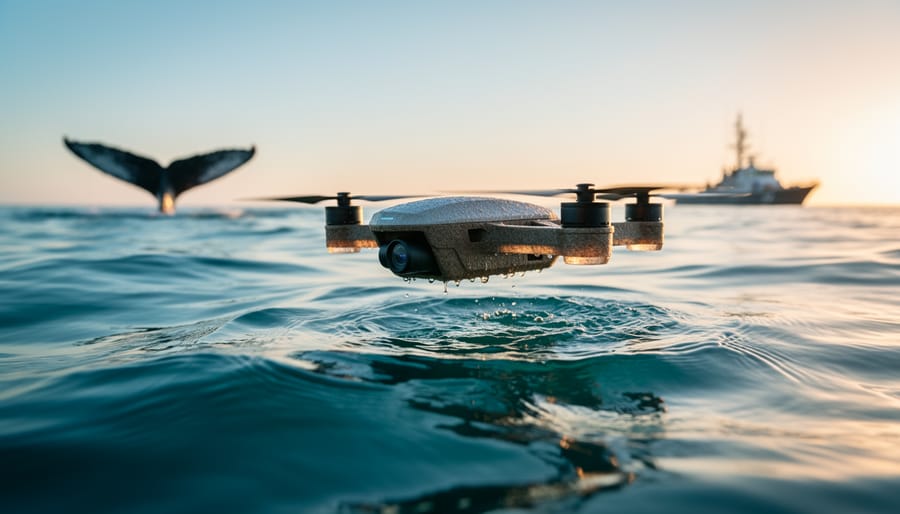
Silent and efficient, a biodegradable drone glides just meters above the ocean’s surface, its sensors scanning for illegal fishing vessels while simultaneously monitoring whale migration patterns. Within weeks of completing its mission, the device dissolves harmlessly into the marine environment, leaving no trace of its surveillance work. This isn’t science fiction—it’s the cutting edge of environmental monitoring technology that’s transforming how we protect our oceans.
Traditional marine surveillance faces formidable challenges: manned aircraft are expensive to operate, satellites lack real-time responsiveness, and conventional drones risk adding to ocean plastic pollution if lost at sea. Enter biodegradable drones—a breakthrough innovation that combines advanced monitoring capabilities with environmental responsibility. These remarkable devices can track coral bleaching events across vast reef systems, identify marine debris accumulation zones, monitor endangered species populations, and detect illegal fishing activities, all while posing zero long-term threat to the ecosystems they protect.
Marine biologist Dr. Sarah Chen recalls the moment she first deployed a biodegradable drone to survey a remote atoll: “We covered in three hours what would have taken our research vessel three days, and we did it without disturbing a single nesting seabird. When the drone developed a fault and crashed into the lagoon, instead of panicking about retrieval, we knew it would safely decompose.”
The implications extend far beyond research convenience. For conservation organizations operating on limited budgets, these drones offer unprecedented access to critical environmental data. Volunteers with minimal training can deploy them to monitor coastal erosion, track microplastic concentrations, or document habitat recovery after restoration efforts. As ocean health faces mounting pressures from climate change and human activity, this technology represents both practical innovation and philosophical evolution—proving that effective environmental monitoring need not compromise the very ecosystems we’re working to save.
The Problem With Traditional Marine Surveillance Drones
For years, marine scientists have relied on traditional drones to monitor ocean ecosystems, track wildlife populations, and assess environmental threats. These aerial platforms promised a non-invasive way to observe marine life without disturbing delicate habitats. Yet there’s a troubling paradox at the heart of this technology: the very tools designed to protect our oceans may be contributing to their degradation.
Dr. Sarah Chen, a marine biologist who has worked with coastal monitoring programs for over a decade, recalls a sobering moment during a coral reef survey: “We were documenting plastic pollution impacts when our drone malfunctioned and crashed into the water. The irony wasn’t lost on us—we’d just added more plastic to the problem we were studying.”
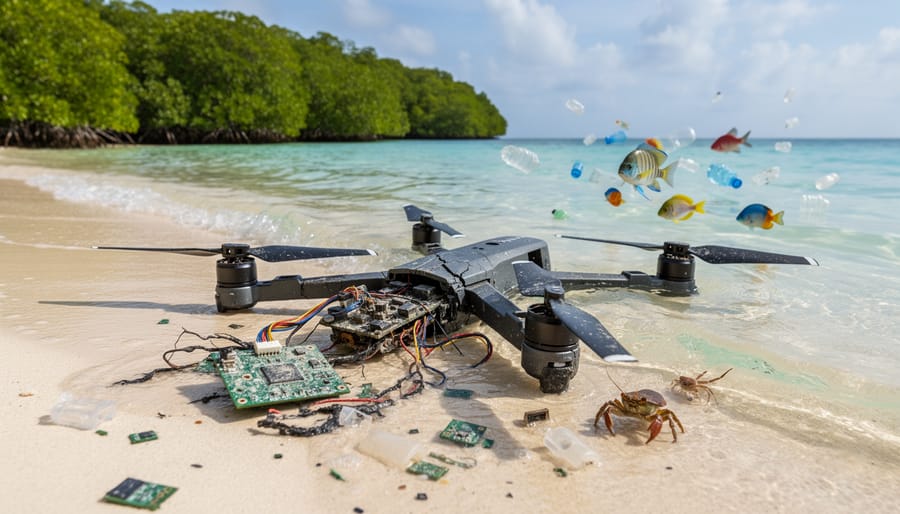
Traditional surveillance drones are constructed primarily from petroleum-based plastics, carbon fiber composites, and other synthetic materials that persist in marine environments for decades, even centuries. When these devices crash—and they do, with some studies suggesting failure rates of 5-15% in challenging maritime conditions—they introduce foreign materials into the very ecosystems researchers aim to protect. Wind gusts, salt spray corrosion, and electromagnetic interference from coastal installations all contribute to operational failures.
The environmental burden extends beyond physical debris. Lithium-ion batteries powering conventional drones contain toxic heavy metals including cobalt, nickel, and manganese. When exposed to seawater, these batteries can leach harmful chemicals that affect marine organisms at multiple trophic levels. Electronic components add another layer of concern, contributing to the growing problem of e-waste in our oceans.
Perhaps most troubling is the cumulative effect. As marine monitoring programs expand globally—a necessary response to escalating environmental threats—the number of drones operating over water increases correspondingly. Each crashed device, each lost component, each deteriorating battery adds to an accumulating toll on marine ecosystems.
This creates an ethical dilemma for conservationists: How can we justify using tools that potentially harm the environments we’re trying to save? The question has sparked important conversations within the scientific community about developing more sustainable alternatives.
How Biodegradable Drones Actually Work
Materials That Return to Nature
The development of environmentally responsible drones represents a significant leap forward in biodegradable monitoring technology. These innovative devices incorporate materials specifically engineered to decompose safely when exposed to marine conditions, eliminating the environmental hazard posed by traditional drone components.
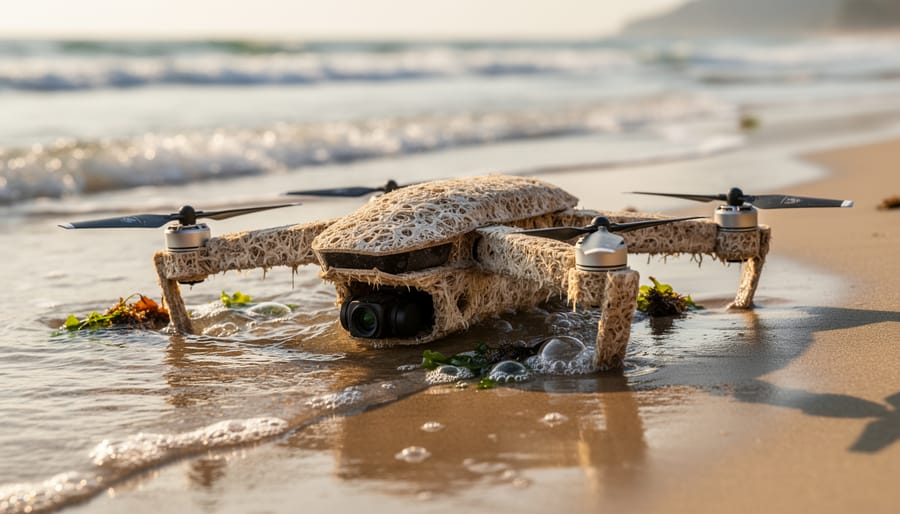
Mycelium composites form the structural backbone of many biodegradable drone designs. These materials, grown from fungal networks, offer surprising strength and rigidity while remaining completely organic. When a mycelium-based drone encounters seawater, enzymes and microorganisms naturally present in the ocean begin breaking down the material within weeks, leaving no toxic residue behind.
Bioplastics derived from algae, corn starch, or sugarcane provide flexible components for wiring insulation and protective casings. Unlike petroleum-based plastics that persist for centuries, these alternatives degrade through microbial action, typically decomposing within six months in marine environments. Marine biologist Dr. Sarah Chen, who has deployed these drones in Pacific coral reef surveys, notes that even when devices are lost during storms, teams can rest assured they won’t contribute to ocean pollution.
Organic polymers handle the more delicate electronic housing needs. These materials protect sensitive equipment during operation but surrender to natural decomposition processes once submerged. This careful material selection ensures that if a drone fails during a monitoring mission over open water, it becomes food for marine microorganisms rather than another piece of persistent debris threatening ocean ecosystems.
Technology That Doesn’t Compromise Performance
The promise of environmentally friendly drones becomes meaningful only when these innovations deliver the surveillance capabilities researchers need in the field. Fortunately, biodegradable drones achieve this balance remarkably well, maintaining the performance standards essential for marine conservation work.
Modern eco-friendly drones carry the same sophisticated camera systems and sensors as conventional models. High-resolution cameras capture detailed imagery of marine ecosystems, while thermal sensors detect temperature variations in ocean waters. Multispectral sensors identify algal blooms and track water quality changes, providing data critical for understanding ecosystem health. Marine biologist Dr. Elena Martinez, who has deployed biodegradable drones in Caribbean reef surveys, shares: “I was skeptical at first, but these drones recorded the same quality of data as our traditional equipment. The camera resolution let us identify individual coral species from 50 meters up.”
Flight duration typically ranges from 25 to 45 minutes per charge, sufficient for most coastal monitoring missions. The biodegradable materials prove lightweight yet structurally sound, with some models utilizing mycelium-based composites that match traditional drone strength while remaining completely compostable.
Data transmission systems operate seamlessly through standard wireless protocols, allowing real-time streaming to research vessels or shore-based stations. The environmental materials don’t interfere with electronic components, as designers carefully isolate sensitive equipment in protective compartments.
Perhaps most importantly, these drones maintain stability in coastal wind conditions, enabling consistent monitoring schedules. This reliability transforms them from experimental novelties into practical conservation tools that researchers can depend on for critical environmental surveillance work.
Tracking Marine Life Without Leaving a Trace
Monitoring Endangered Species Populations
Drones are transforming how researchers monitor endangered species by providing a non-invasive observation platform that minimizes stress and behavioral disruption. Marine biologist Dr. Elena Rodriguez recalls her first experience using drones to survey leatherback sea turtles in Costa Rica: “We could count nesting females from 30 meters above without casting shadows or leaving footprints that might deter them. The difference was remarkable—the turtles showed no signs of disturbance.”
For whale populations, advanced tracking technology mounted on drones enables researchers to assess body condition, identify individuals through distinctive markings, and monitor calf development without the noise and proximity issues of boat-based surveys. Graduate student Marcus Chen describes tracking gray whales along the Pacific coast: “We captured respiratory rates and diving patterns that would have been impossible to document otherwise. The whales continued their natural behaviors as if we weren’t there.”
Seabird colonies present another success story. Researchers monitoring albatross populations in remote island habitats can now conduct comprehensive nest counts and chick survival assessments in hours rather than days, reducing the risk of trampling nests or disturbing breeding birds. Conservation educator Sarah Kim notes, “Drone footage also becomes powerful educational material. When students see real-time population data collection, they understand how technology serves conservation.”
This approach generates crucial baseline data while respecting wildlife welfare, demonstrating how innovation and compassion can work together in conservation science.
Mapping Coral Reef Health
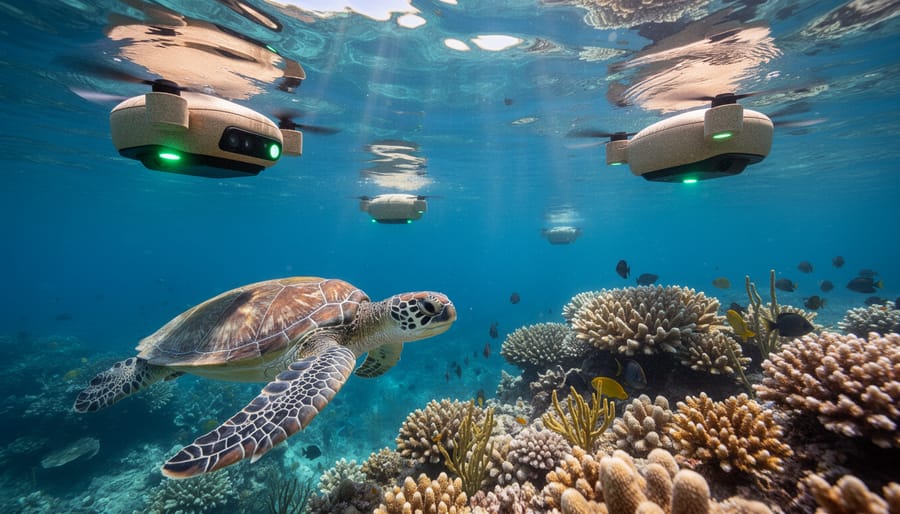
Coral reefs face unprecedented threats from warming oceans, with bleaching events devastating these vital ecosystems at alarming rates. Traditional monitoring methods rely heavily on scuba divers, limiting coverage to small areas and requiring significant time and resources. Biodegradable drones are transforming this challenge by surveying vast reef systems quickly and efficiently.
These specialized drones equipped with high-resolution cameras and multispectral sensors can map hundreds of acres in a single day, capturing detailed images that reveal bleaching patterns, structural damage, and biodiversity changes. Unlike divers who might cover only a few hundred meters per dive, drone-based reef monitoring provides comprehensive baseline data across entire reef systems, enabling scientists to track ecosystem health over time.
Marine biologist Dr. Sarah Chen, who uses biodegradable drones in the Caribbean, shares her experience: “We can now monitor remote reef sections that were previously inaccessible. The biodegradable design means if a drone fails over water, it won’t add to marine pollution—a crucial consideration when working above fragile ecosystems.”
The efficiency gains are remarkable. What once required weeks of dive surveys now takes days, allowing faster response to bleaching events and more frequent monitoring intervals that capture seasonal changes and recovery patterns.
Detecting Illegal Fishing and Pollution
Drones have become powerful allies in protecting our oceans from illegal activities and environmental crimes. These aerial guardians patrol vast marine protected areas that would be impossible to monitor effectively by traditional means, detecting unauthorized fishing vessels operating in restricted zones and identifying pollution events as they occur.
Marine conservationists working along the Pacific coast have shared compelling accounts of how drones help them document illegal trawling in sensitive habitats. Dr. Elena Martinez, a marine enforcement officer, recalls discovering a ghost fishing net spanning three hectares within a protected coral reef area. “Without the drone’s thermal imaging capabilities, we would never have spotted it in time,” she explains. The technology enables rapid response teams to act before irreversible damage occurs.
Beyond monitoring illegal fishing, drones equipped with specialized sensors can identify oil spills, chemical discharge, and plastic accumulation in real-time. This immediate detection capability allows authorities to trace pollution back to its source and implement containment measures swiftly.
For those passionate about marine protection, opportunities exist to support drone-assisted enforcement programs through citizen science initiatives. Many conservation organizations now welcome volunteers to help analyze drone footage, turning everyday observers into active guardians of our marine ecosystems.
The Science Behind Better Conservation Data
Less Disturbance, More Accurate Results
Traditional monitoring methods often disrupt the very ecosystems researchers aim to study. Large survey vessels create noise and visual disturbances that cause marine animals to flee or alter their behavior, leading to skewed data that doesn’t reflect natural patterns. Dr. Sarah Chen, a marine biologist with fifteen years of field experience, recalls countless instances where dolphin pods changed direction or dove deeper upon detecting her research boat. “We were trying to document their feeding behavior,” she explains, “but our presence was preventing them from feeding naturally.”
Biodegradable drones solve this challenge through their remarkably quiet operation and minimal visual footprint. Flying at appropriate altitudes with whisper-soft propulsion systems, these devices observe wildlife without triggering stress responses. Marine mammals continue their natural activities—feeding, socializing, nursing young—providing researchers with authentic behavioral data that was previously difficult to capture.
This reduced disturbance proves especially valuable when establishing baseline environmental data. Conservation efforts depend on understanding what “normal” looks like in healthy ecosystems. When animals behave naturally, scientists can accurately document population sizes, movement patterns, and habitat usage. One coastal monitoring project found that silent drone surveys recorded 40% more seal haul-out activity compared to boat-based counts, revealing that previous assessments had significantly underestimated local populations. Such accuracy transforms conservation planning, ensuring protective measures address actual conditions rather than artificially altered observations.
Accessing Remote Marine Habitats
Biodegradable drones offer unprecedented access to remote marine environments that have historically challenged researchers. These lightweight aircraft can launch from small vessels or coastal stations, eliminating the need for expensive infrastructure like landing strips or deep-water ports. Marine biologist Dr. Sarah Chen recalls her first drone deployment to monitor seabird colonies on the Aleutian Islands: “We could survey nesting sites without disturbing sensitive habitats or investing weeks in boat travel through treacherous waters.”
The technology proves particularly valuable in rough sea conditions where traditional boat surveys risk crew safety. Drones can navigate through challenging weather windows, flying low over whitecaps to collect data when manned vessels must remain in port. Their minimal acoustic footprint also allows researchers to approach sensitive breeding grounds without triggering stress responses in marine mammals and seabirds.
Remote island ecosystems, often biodiversity hotspots with fragile vegetation, benefit enormously from drone surveillance. Rather than establishing paths or research stations that damage plant communities, scientists can conduct comprehensive surveys from above. When combined with underwater drone technology, researchers gain complete ecosystem perspectives from surface to seafloor without leaving permanent footprints.
Volunteer programs now train citizen scientists in drone operation for remote monitoring projects, democratizing access to conservation research in previously unreachable locations.
Current Limitations and What’s Coming Next
While biodegradable drones represent an exciting advancement for marine conservation, it’s important to acknowledge the challenges that researchers and practitioners currently face. Understanding these limitations helps us appreciate the ongoing work needed to make this technology more accessible and effective.
Cost remains a significant barrier to widespread adoption. Biodegradable drones equipped with specialized sensors for water quality analysis or marine species identification can range from several thousand to tens of thousands of dollars. This price point often places them beyond the reach of smaller conservation organizations, coastal community groups, and educational institutions that could benefit most from the technology. However, as production scales up and more manufacturers enter the market, costs are expected to decrease, much like we’ve seen with consumer drones over the past decade.
Flight time and battery limitations pose practical challenges for marine surveillance missions. Most current biodegradable drone models offer 20 to 40 minutes of operational time per battery charge, which restricts the area they can effectively monitor. Marine biologist Dr. Sarah Chen, who uses biodegradable drones to track sea turtle nesting sites along the Gulf Coast, explains: “We often need to plan multiple flights to cover our research area, which requires careful coordination and additional equipment. But the environmental benefits still outweigh these operational hurdles.”
Weather resistance continues to be refined, particularly for devices designed to eventually biodegrade. Strong coastal winds, salt spray, and sudden weather changes can interrupt monitoring missions or compromise equipment. Engineers are actively developing improved materials that maintain structural integrity during operation while still breaking down safely afterward.
The encouraging news is that research institutions worldwide are addressing these obstacles. Advances in solar-assisted charging, more efficient biodegradable materials, and AI-powered flight optimization promise to extend operational capabilities. Universities are also establishing drone lending programs and training workshops, making the technology more accessible to conservation groups with limited budgets. These collaborative efforts suggest that today’s limitations are temporary stepping stones toward more robust, affordable solutions for protecting our oceans.
How You Can Support This Technology
Volunteer Opportunities in Marine Surveillance
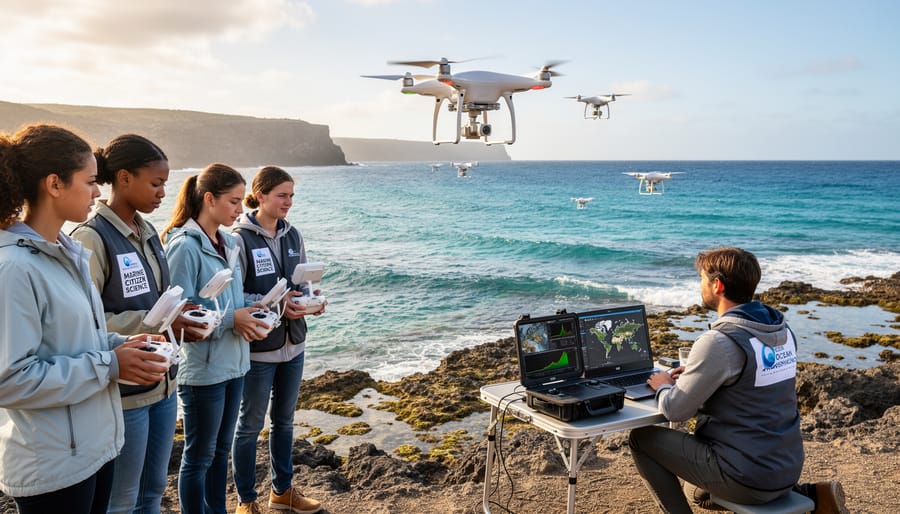
The center welcomes volunteers at various skill levels to contribute to drone-assisted marine surveillance programs. If you have piloting experience, you can join certified operators during coastal monitoring missions, helping track marine mammal populations, document habitat changes, and survey nesting sites. These hands-on opportunities provide invaluable field experience while directly supporting conservation efforts.
For those without flight experience, data analysis roles offer equally important contributions. Volunteers review aerial footage to identify species, count individuals, and detect environmental changes like coral bleaching or plastic accumulation. The center provides training in image analysis software and species identification, making this accessible even to beginners passionate about marine conservation.
Citizen science initiatives extend participation beyond the coast. Remote volunteers worldwide can process drone imagery through online platforms, contributing to databases that inform conservation decisions. Educational outreach volunteers help demonstrate drone technology at community events, inspiring the next generation of environmental stewards. Marine biology student Sarah Chen shares, “Analyzing drone footage revealed patterns I’d never see from shore. It transformed my understanding of coastal ecosystems and launched my research career.” Whether contributing hours weekly or monthly, every volunteer strengthens our collective monitoring capacity.
Spreading Awareness and Supporting Research
You can play a vital role in advancing biodegradable drone technology for marine conservation. Start by supporting organizations actively developing these innovations through donations or by sharing their research on social media platforms. Many research institutions welcome volunteers to assist with pilot programs, beach cleanups where drones collect data, or citizen science projects that analyze drone-captured imagery.
Dr. Maria Santos, a marine biologist working with experimental drone programs, shares: “When communities understand how this technology protects their local waters, they become powerful advocates. We’ve seen fishing villages help fund drone surveys after witnessing how the data improved their catch sustainability.”
Contact your local marine conservation groups to inquire about drone monitoring initiatives in your area. Educators can integrate case studies of this technology into curricula, inspiring the next generation of environmental scientists. Write to policymakers advocating for increased research funding and streamlined regulations that support biodegradable drone deployment.
Stay informed by following scientific journals and conservation organizations on social media. Every share, signature on petitions supporting marine technology research, or conversation with friends amplifies awareness. Your engagement today accelerates the development of solutions protecting our oceans tomorrow.
The emergence of biodegradable drones represents more than just a technological advancement—it signals a fundamental shift in how we approach marine conservation. These innovative tools demonstrate that environmental monitoring and ecological preservation can work hand in hand, proving that our surveillance methods need not add to the pollution problems we’re trying to solve. As we’ve explored throughout this article, biodegradable drones offer marine conservationists a powerful way to track endangered species, monitor ocean health, and respond to environmental threats while minimizing our technological footprint on fragile marine ecosystems.
But technology alone cannot save our oceans. The true transformative potential of these drones lies in how we collectively choose to deploy and support them. Every breakthrough in marine conservation requires passionate individuals willing to contribute their time, expertise, and voices to the cause. Whether you’re a seasoned environmental scientist or someone who simply cares about ocean health, there’s a meaningful role for you in this movement.
The Marine Biodiversity Science Center invites you to become part of this exciting chapter in marine conservation. Join our volunteer programs to assist with drone-based monitoring projects, contribute to data analysis, or help educate your community about sustainable conservation technologies. Connect with our e-network to receive updates on the latest developments in biodegradable drone technology and engage with marine biologists who are pioneering these methods in real-world applications. Together, we can ensure that future generations inherit oceans as vibrant and diverse as those we’ve been privileged to study today.

jessica
Ava Singh is an environmental writer and marine sustainability advocate with a deep commitment to protecting the world's oceans and coastal communities. With a background in environmental policy and a passion for storytelling, Ava brings complex topics to life through clear, engaging content that educates and empowers readers. At the Marine Biodiversity & Sustainability Learning Center, Ava focuses on sharing impactful stories about community engagement, policy innovations, and conservation strategies. Her writing bridges the gap between science and the public, encouraging people to take part in preserving marine biodiversity. When she’s not writing, Ava collaborates with local initiatives to promote eco-conscious living and sustainable development, ensuring her work makes a difference both on the page and in the real world.