Marine Biodiversity Science Center

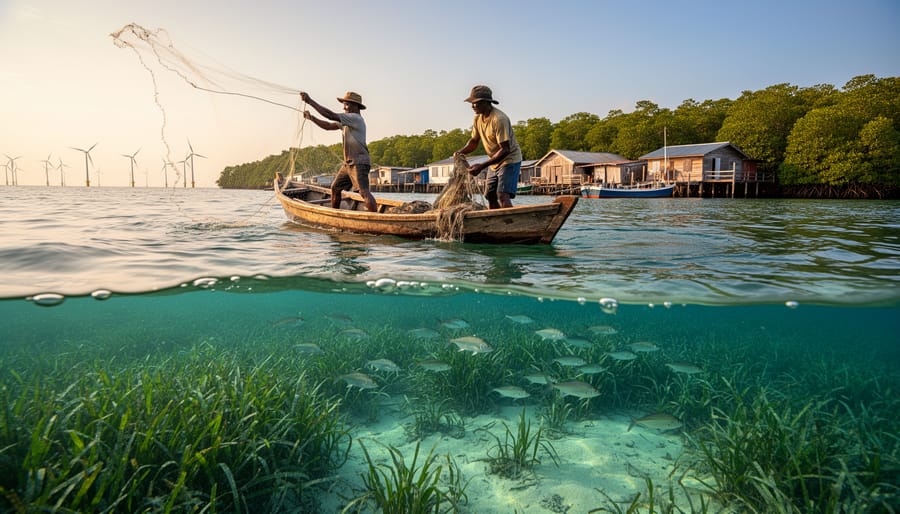
The world’s oceans generate over $1.5 trillion annually in economic activity, yet coastal communities—particularly in developing nations—often see little benefit while bearing the greatest environmental costs. Equitable economic development in the blue economy demands that we restructure how ocean resources create prosperity, ensuring that fishing communities, indigenous populations, and marine ecosystems themselves receive fair consideration in policy decisions.
Consider the stark reality: industrial fishing fleets can extract millions of dollars in value from territorial waters while local artisanal fishers struggle to maintain their livelihoods as fish stocks decline. This pattern repeats across sectors from tourism to offshore energy, where economic gains concentrate in distant corporate headquarters while pollution, habitat destruction, and resource depletion remain local problems. Breaking this cycle requires intentional frameworks that distribute both economic benefits and decision-making power more justly.
Equitable economic development differs fundamentally from traditional growth models. Rather than measuring success solely through GDP increases or job creation numbers, it evaluates whether coastal communities gain meaningful economic opportunities, whether indigenous knowledge informs resource management, and whether marine biodiversity thrives alongside human prosperity. This approach recognizes that healthy ocean ecosystems form the foundation of sustainable economic activity—not an obstacle to overcome.
The urgency intensifies as climate change, overfishing, and pollution accelerate. Without equity-centered policies, blue economy expansion risks repeating historical patterns of exploitation, displacing vulnerable populations while degrading the very marine resources future generations depend upon. Yet promising examples worldwide demonstrate that alternative pathways exist, where community-led initiatives, fair benefit-sharing mechanisms, and ecosystem protection converge to create genuinely sustainable ocean economies that serve both people and planet.
What Makes Blue Economy Development ‘Equitable’?
Beyond Profit: Measuring Success in Human and Environmental Terms
Traditional economic metrics like Gross Domestic Product tell us how much money flows through an economy, but they reveal little about whether coastal communities are thriving or marine ecosystems are healthy. When we measure blue economy success solely by profit margins, we miss the bigger picture of whether development is truly equitable and sustainable.
Progressive frameworks now incorporate broader indicators that capture what really matters. The Genuine Progress Indicator, for instance, accounts for environmental costs like fishery depletion and pollution alongside economic gains. Social well-being metrics track community health outcomes, educational access, and whether local residents maintain cultural connections to the ocean. These measurements help policymakers understand if development benefits everyone or concentrates wealth among a few stakeholders.
Dr. Maria Santos, a marine ecologist working with fishing cooperatives in the Philippines, shares how this shift transformed her community’s approach: “We started measuring success by how many young people could afford to stay in fishing, whether our reef health was improving, and if families felt secure about their future. Suddenly, some ‘profitable’ ventures looked problematic, while circular economy approaches that seemed less lucrative created lasting value.”
Ecosystem health indicators like biodiversity indices, water quality measurements, and habitat restoration rates provide essential data points. Community resilience metrics assess whether populations can withstand climate shocks, economic disruptions, and environmental changes. Together, these measurements create a comprehensive picture of whether ocean-based development truly serves both people and planet for generations to come.
Voices from the Coast: Why Community Inclusion Matters
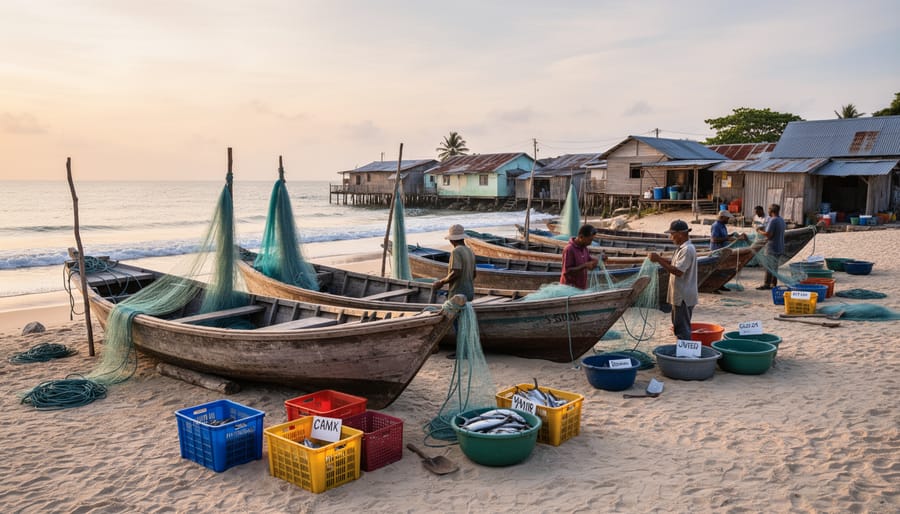
When fishing communities have a voice in economic policy, the results speak for themselves. Maria Santos, a third-generation fisherman from the Philippines, watched her coastal village transform when local authorities began including community representatives in marine spatial planning decisions. “For years, large commercial operations received permits without consulting us,” she explains. “Our traditional fishing grounds disappeared overnight. But when the new blue economy framework mandated community participation, everything changed. We now have designated artisanal fishing zones, and our catches have actually improved because we helped design sustainable quotas based on generations of local knowledge.”
The contrast couldn’t be starker in neighboring regions where such inclusion never occurred. Dr. James Chen, a marine biologist working in Southeast Asia, has documented the outcomes. “I’ve studied two nearly identical coastal ecosystems just fifty kilometers apart. One embraced participatory governance, the other prioritized rapid industrial development without local input. Five years later, the inclusive community maintained 70% of its coral reef health and stable fish populations, while the other lost half its marine biodiversity and saw traditional fishing families displaced entirely.”
These aren’t isolated examples. In West Africa, women who process and sell fish successfully advocated for cold storage facilities and market access programs after gaining seats on regional economic planning committees. Their inclusion didn’t just preserve livelihoods; it strengthened the entire seafood supply chain while maintaining sustainable harvest practices.
The lesson is clear: when those closest to marine ecosystems help shape economic policies, both people and oceans thrive. Inclusive frameworks create resilient coastal communities that become active stewards rather than passive victims of development decisions.
The Policy Framework Building Blocks
Legal Protections That Actually Protect
Effective legal frameworks serve as the foundation for ensuring coastal communities can earn sustainable livelihoods while protecting the marine environments they depend upon. Marine spatial planning (MSP) has emerged as a powerful tool that designates specific ocean areas for different uses, from fishing grounds to conservation zones, reducing conflicts and providing certainty for small-scale fishers about where they can operate.
In the Philippines, marine biologist Dr. Elena Santos witnessed firsthand how MSP transformed tensions between industrial fishing fleets and artisanal fishers in her hometown. “When we mapped out exclusive zones for municipal fishers within 15 kilometers of shore, families who’d been struggling to compete suddenly had protected access to their traditional grounds,” she explains. “Catches improved within two years because we also established no-take zones that replenished fish stocks.”
Tenure rights represent another critical protection. Customary fishing rights, when formally recognized through law, give communities the authority to manage their coastal resources and exclude damaging external activities. In Madagascar, community fishing associations holding legal tenure agreements have successfully prevented destructive bottom trawling while maintaining their own sustainable practices.
Resource access laws must include preferential treatment for small-scale operators who employ environmentally sound methods. Quota systems that reserve portions of fish stocks specifically for artisanal fishers prevent large corporations from monopolizing marine resources. Norway’s coastal fishing fleet receives guaranteed quotas that acknowledge both their economic needs and their historically lower environmental impact.
These protections work best when coastal communities participate directly in policy development. Volunteer opportunities with organizations developing MSP initiatives offer citizens meaningful ways to contribute local knowledge. Legal frameworks built on such collaboration create genuine security, allowing fishing families to invest in sustainable gear and practices knowing their access rights won’t disappear tomorrow.
Bridging Science and Policy
Effective blue economy policies emerge when scientists and policymakers work together, translating complex ecological data into actionable strategies that protect marine ecosystems while supporting coastal communities. This collaboration has produced remarkable success stories worldwide.
In the Philippines, scientific assessments of coral reef health directly shaped the establishment of marine protected areas that now support both fish populations and local fishing livelihoods. Researchers documented spawning patterns and migration routes, enabling policymakers to designate no-take zones during critical breeding periods while maintaining fishing access at other times. The result? Fish catches increased by 40% within five years, demonstrating that conservation and economic benefits can flourish together.
Marine biologist Dr. Elena Santos, who participated in this project, recalls meeting fishers initially skeptical of the restrictions. “Once they saw the science—the data showing juvenile fish thriving in protected zones—they became our strongest advocates,” she explains. “They understood the research meant securing their children’s futures.”
Similar ecosystem-based approaches now guide sustainable fisheries certification programs globally, where stock assessments and ecosystem monitoring inform catch limits and fishing methods. Iceland’s fisheries management exemplifies this integration, using real-time scientific data to adjust quotas and protect spawning grounds.
For those interested in participating, many research institutions welcome citizen scientists to help collect oceanographic data. These volunteer opportunities strengthen the science-policy bridge while connecting communities to marine conservation efforts, creating informed advocates who champion evidence-based ocean policies.
When Development Threatens Marine Biodiversity
The Real Cost of Unsustainable Fishing and Tourism
When blue economy activities operate without proper regulation, the environmental costs compound quickly—threatening both marine ecosystems and the communities that depend on them. Unsustainable fishing practices like bottom trawling destroy critical seafloor habitats that take decades to recover, while overfishing depletes fish populations faster than they can reproduce. Scientists have documented how removing apex predators triggers cascading effects throughout food webs, disrupting entire ecosystems.
Tourism, though economically valuable, can similarly damage marine environments when poorly managed. Coral reefs—which support 25% of all marine species despite covering less than 1% of the ocean floor—suffer physical damage from boat anchors, excessive diving, and coastal development. Research shows that just a single cruise ship can discharge thousands of gallons of wastewater daily, introducing harmful nutrients that fuel algae blooms and suffocate marine life.
Dr. Maria Santos, a marine biologist working in Southeast Asia, shares a sobering observation: “I’ve watched thriving reef systems become ghost towns within five years of unregulated tourism expansion. The fish disappear first, then the corals bleach and die.”
These impacts disproportionately harm coastal communities, particularly in developing nations where local fishers lack the political influence to protect their waters. When industrial fleets deplete fish stocks or tourism developments restrict traditional fishing grounds, small-scale fishers lose both their livelihoods and food security—illustrating why equitable policies must balance economic growth with ecosystem protection.
Smart Solutions That Work for Everyone
Around the world, innovative communities are proving that protecting marine life and building thriving local economies aren’t competing goals—they’re complementary ones. These success stories offer blueprints for equitable development that others can adapt and implement.
In Madagascar’s Velondriake Marine Protected Area, fishing communities transformed from resource extractors to ocean stewards through locally managed marine areas. By establishing seasonal fishing closures and no-take zones, octopus populations rebounded by 600% within three years. This allowed fishers to harvest larger, more valuable catches during open seasons, increasing their income by 30% while ensuring long-term sustainability. The key? Communities maintained decision-making power over their own waters, with technical support from marine biologists who lived among them and understood their needs.
Marine biologist Dr. Anjara Saloma, who worked directly with Velondriake communities, shares: “The fishers taught us as much as we taught them. They possessed generations of ecological knowledge we needed to understand. Our role was facilitating science-backed management that aligned with their cultural practices and economic realities.”
Costa Rica’s Osa Peninsula demonstrates how sustainable eco-tourism creates alternatives to destructive fishing practices. Former fishers now guide snorkeling tours, earning comparable income while protecting coral reefs. The regional tourism cooperative ensures profits stay local, funding education and healthcare alongside conservation patrols.
In the Philippines, seaweed farming provides steady income for coastal communities while improving water quality and creating habitat for juvenile fish. Unlike extractive industries, this regenerative aquaculture actually enhances marine ecosystems. Women comprise 70% of seaweed farmers, gaining economic independence and voice in community decisions—a crucial equity component often overlooked in conservation planning.
These models share common elements: local control, fair benefit-sharing, scientific collaboration, and recognition that people protecting resources deserve to prosper from them.
Who Gets Left Out—and How to Change That
Power Imbalances in Ocean Governance
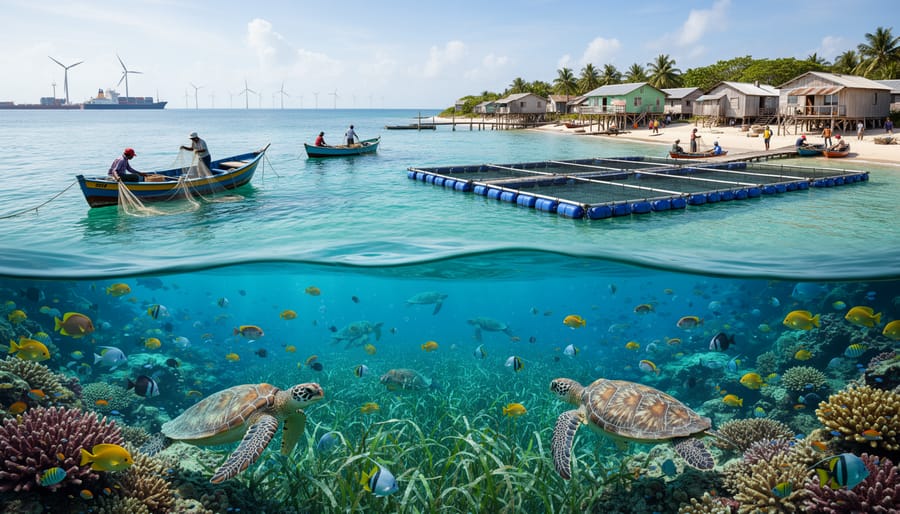
Despite ocean resources being a shared global heritage, decision-making power often concentrates in the hands of wealthy nations, large corporations, and established fishing industries. Small-scale fishing communities, indigenous peoples, and developing coastal nations frequently find themselves excluded from policy discussions that directly affect their livelihoods and marine ecosystems they’ve stewarded for generations.
Language barriers, lack of funding for meaningful participation, and complex bureaucratic processes create invisible walls around international forums where blue economy policies take shape. Marine biologist Dr. Patricia Kalenzi from Tanzania shares her experience: “When I attended my first ocean governance meeting, I realized how many voices were missing. The fishers who intimately know our coastal waters had no seat at the table, yet decisions were being made about their fishing grounds.”
This exclusion perpetuates cycles of inequality where policies favor industrial-scale operations over traditional practices that often prove more sustainable. Women, who comprise half of the seafood sector workforce in many regions, face particular marginalization in leadership roles. Additionally, the technical expertise required to navigate environmental impact assessments and licensing procedures disadvantages communities without access to legal or scientific resources, effectively locking them out of participating in resource management decisions that shape their futures and the health of marine ecosystems.
Mechanisms for Fair Benefit-Sharing
Transforming blue economy aspirations into reality requires concrete mechanisms that ensure ocean wealth reaches coastal communities rather than concentrating in corporate hands. Several proven approaches are reshaping how benefits flow from marine resources.
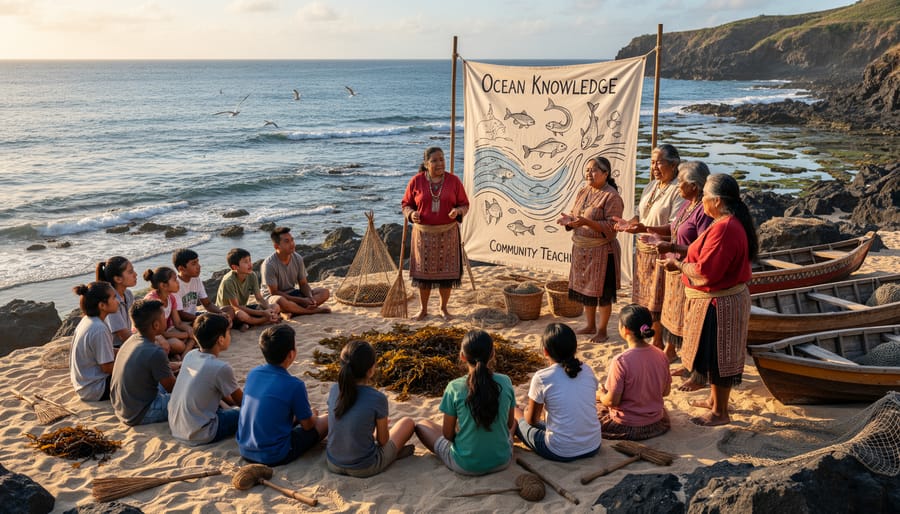
Community-managed marine areas (CMMAs) represent a powerful bottom-up model where local communities gain legal authority over nearby waters. In Fiji, over 400 villages now manage their own marine zones, controlling fishing access and establishing protected areas. These communities have documented fish stock recoveries of up to 300 percent while maintaining sustainable harvests. Marine biologist Dr. Sangeeta Mangubhai, who works with Pacific Island communities, shares that “when communities have genuine control, they become the ocean’s most dedicated guardians. I’ve witnessed villages voluntarily creating no-take zones because they understand their children’s future depends on healthy reefs.”
Profit-sharing agreements offer another pathway, particularly for larger commercial operations like tourism or offshore renewable energy. In South Africa, some marine tourism operators allocate revenue percentages directly to local communities, funding schools and healthcare while providing employment opportunities. These agreements work best when communities have legal representation and transparent accounting mechanisms.
Capacity-building programs address the knowledge gap that often excludes coastal residents from blue economy opportunities. Training initiatives in sustainable aquaculture, eco-tourism management, and marine monitoring create pathways for communities to participate as skilled professionals rather than low-wage laborers. Organizations worldwide seek volunteers to support these programs, from teaching business skills to mentoring emerging marine entrepreneurs.
The key to all these mechanisms is meaningful community participation from the earliest planning stages, ensuring that benefit-sharing isn’t an afterthought but the foundation of ocean economic development.
Making It Happen: Implementation Strategies
Multi-Stakeholder Collaboration Models
Effective blue economy policies emerge when governments, businesses, conservation organizations, and coastal communities unite around shared goals. These multi-stakeholder partnerships create economic opportunities while safeguarding marine ecosystems that millions depend upon.
Government agencies provide regulatory frameworks and funding, while private industry brings innovation and market access. NGOs contribute scientific expertise and community connections, and local communities offer traditional ecological knowledge and stewardship. When these sectors collaborate genuinely, results can be transformative.
The Seychelles Blue Bond initiative exemplifies this approach. The government partnered with conservation organizations, international financial institutions, and fishing communities to restructure debt while protecting 30 percent of its waters. Fishing cooperatives gained secure access rights, marine scientists established monitoring programs, and sustainable seafood enterprises flourished. Marine biologist Dr. Sarah Frazier, who participated in the planning process, recalls how fishers’ input fundamentally shaped protected area boundaries: “Their knowledge of fish nurseries and migration patterns proved as valuable as our satellite data.”
In Belize, a similar coalition of tourism operators, conservation groups, and indigenous communities restored mangrove forests while creating eco-tourism jobs. Community members became certified guides, sharing their ancestral connection to these coastal forests with visitors while earning sustainable income.
These partnerships succeed when power dynamics are addressed honestly and all voices receive genuine consideration, particularly those of indigenous peoples and small-scale fishers whose livelihoods connect directly to ocean health. Transparent communication, shared decision-making authority, and equitable benefit distribution form the foundation of lasting collaboration.
For those interested in supporting such initiatives, many organizations welcome volunteers to assist with stakeholder engagement workshops, community mapping projects, and partnership facilitation activities.

Monitoring and Accountability Systems
Effective monitoring and accountability systems transform blue economy commitments from paper promises into tangible benefits for coastal communities and marine ecosystems. These systems rely on transparent data collection, community participation, and regular progress assessments.
Community-based monitoring programs have emerged as powerful tools for tracking both economic and environmental outcomes. In the Philippines, local fishers trained in data collection methods now document fish populations while monitoring their own income changes, creating dual accountability for conservation and livelihoods. Marine biologist Dr. Elena Rodriguez shares how this approach builds trust: “When communities gather their own data, they become invested in the results and hold policymakers accountable in ways external audits never could.”
Digital platforms now enable real-time tracking of key indicators like employment rates in sustainable ocean industries, marine protected area effectiveness, and equitable distribution of blue economy benefits across different community groups. Satellite monitoring combined with on-the-ground verification helps identify when policies fall short.
Successful accountability requires independent oversight bodies with authority to recommend policy adjustments. Annual public reporting, accessible to all stakeholders, ensures transparency. Volunteer opportunities exist through citizen science programs that contribute monitoring data, making everyone part of the solution. These systems create feedback loops where communities, scientists, and policymakers collaborate to refine approaches, ensuring blue economy initiatives deliver measurable improvements for both people and ocean health.
How You Can Support Equitable Ocean Economies
Creating equitable ocean economies requires collective action, and there are meaningful ways you can contribute to this vision regardless of your background or expertise. Start by examining your own consumption habits, particularly your sustainable seafood choices. Look for certifications from organizations like the Marine Stewardship Council or Ocean Wise, which verify that products come from fisheries practicing fair labor standards and ecosystem-friendly methods.
Volunteering offers hands-on opportunities to support marine conservation while learning from experienced professionals. Many coastal organizations need help with beach cleanups, citizen science projects monitoring fish populations, or educational programs for local communities. Marine biologist Dr. Sarah Chen shares: “Our volunteer coral restoration team includes teachers, students, and retirees who’ve become passionate advocates after seeing firsthand how conservation creates local jobs while protecting reefs.”
Advocacy amplifies your impact significantly. Contact your elected representatives to support policies that prioritize small-scale fishers, protect marine habitats, and ensure equitable resource distribution. Join campaigns demanding transparency in fishing supply chains to combat labor exploitation. Consider supporting or donating to organizations working directly with coastal communities to develop sustainable livelihoods.
Educational engagement matters too. Share information about equitable ocean economies through social media, host community discussions, or integrate these topics into classroom curricula. Every conversation plants seeds for systemic change, building the collective understanding necessary to transform how we interact with our oceans.
The journey toward equitable economic development within blue economy frameworks reveals a powerful truth: the health of our oceans and the wellbeing of coastal communities are inseparably linked. When we invest in fair wages for fishing communities, protect traditional maritime knowledge, and ensure that ocean-based economic benefits reach marginalized populations, we simultaneously create stronger advocates for marine conservation. Healthy ecosystems support thriving economies, and economically secure communities become empowered stewards of the seas they depend upon.
The path forward requires each of us to engage meaningfully with these interconnected challenges. Marine biologist Dr. Sofia Reyes, who has worked with coastal cooperatives for over a decade, often reminds her team that lasting conservation success happens when local communities see themselves as beneficiaries, not bystanders. Her work demonstrates that when fishers receive equitable compensation and participate in management decisions, they become passionate protectors of marine biodiversity.
Whether you’re an environmental professional shaping policy, an educator inspiring the next generation, or simply someone who cares about our oceans, your voice matters. Consider volunteering with organizations that bridge conservation and community development, supporting businesses committed to fair ocean practices, or continuing to learn about these vital connections. The transformation we need is already beginning in communities worldwide, powered by collective action and shared commitment. Together, we can build a blue economy that serves both people and planet, ensuring vibrant oceans for generations to come.

jessica
Ava Singh is an environmental writer and marine sustainability advocate with a deep commitment to protecting the world's oceans and coastal communities. With a background in environmental policy and a passion for storytelling, Ava brings complex topics to life through clear, engaging content that educates and empowers readers. At the Marine Biodiversity & Sustainability Learning Center, Ava focuses on sharing impactful stories about community engagement, policy innovations, and conservation strategies. Her writing bridges the gap between science and the public, encouraging people to take part in preserving marine biodiversity. When she’s not writing, Ava collaborates with local initiatives to promote eco-conscious living and sustainable development, ensuring her work makes a difference both on the page and in the real world.