Marine Biodiversity Science Center

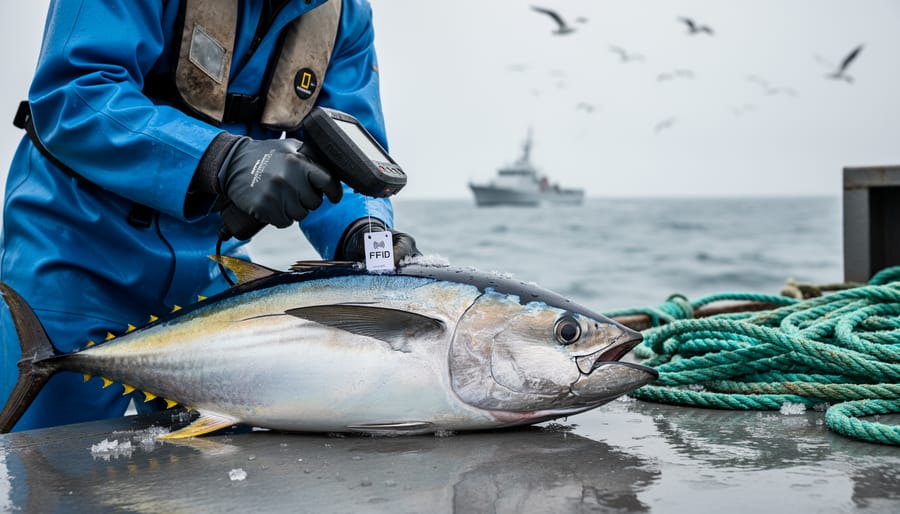
The ocean’s most valuable resources—from tuna populations to coral reef ecosystems—are disappearing at alarming rates, largely because we lack transparent, trustworthy systems to track what’s being caught, where it comes from, and whether fishing practices follow sustainable standards. Blockchain technology, the same digital ledger system underlying cryptocurrencies, is now emerging as a powerful tool to combat illegal fishing, verify sustainable seafood claims, and protect marine biodiversity through unprecedented traceability and accountability.
Unlike traditional paper-based tracking systems that are easily falsified or lost, blockchain creates permanent, tamper-proof digital records that follow seafood products from ocean to plate. When a fishing vessel captures tuna in the Pacific, for instance, blockchain can record the exact location, date, species, and fishing method, then track that fish through every subsequent handler—processor, distributor, retailer—creating an unbreakable chain of custody. This transparency makes it nearly impossible for illegally caught fish to enter legitimate markets, directly addressing the estimated 20% of global seafood that comes from unreported or unregulated fishing operations.
Several pioneering projects are already demonstrating blockchain’s real-world impact. In Indonesia, fishers use mobile apps to log their catches directly onto blockchain networks, giving buyers confidence they’re supporting legal, sustainable operations. Pacific Island nations are exploring blockchain systems to monitor their exclusive economic zones and combat the billion-dollar illegal fishing industry devastating tuna stocks.
Yet blockchain isn’t a silver bullet. The technology faces significant challenges, from requiring reliable internet connectivity in remote ocean locations to ensuring accurate data entry at the initial capture point. Understanding both blockchain’s genuine potential and its practical limitations is essential for marine conservationists, policymakers, and concerned citizens working to protect our ocean’s future.
The Crisis in Marine Resource Management
Why Traditional Systems Fail
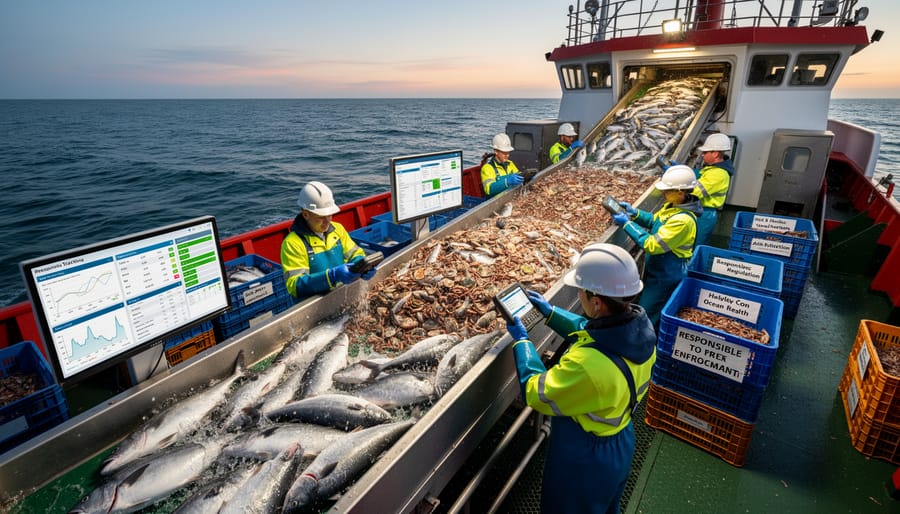
For decades, the seafood industry has relied on paper-based documentation to track fish from ocean to plate. This antiquated system creates numerous vulnerabilities that allow illegal, unreported, and unregulated (IUU) fishing to thrive. Paper certificates can be easily forged, altered, or lost entirely, making it nearly impossible to verify a fish’s true origin or the methods used to catch it.
Dr. Sarah Chen, a marine biologist who spent years investigating seafood fraud, shares a sobering reality: “I’ve seen shipments where documentation changed three times as products moved through different ports. Each intermediary could modify records, and there was no way to trace back to the original source.” This fragmentation means that fish caught using destructive methods or from protected waters can be laundered into legitimate supply chains through false paperwork.
The problem extends beyond simple fraud. Different countries maintain separate tracking systems that don’t communicate with each other. When seafood crosses borders, critical information disappears into data silos. Inspectors at ports often receive incomplete documentation, making verification extremely time-consuming or impossible. This patchwork approach undermines efforts toward ecosystem-based fisheries management, as accurate data about fishing pressure and stock health remains elusive.
The consequences are staggering. Studies estimate that up to 30 percent of seafood in global markets may be mislabeled or illegally caught. Traditional systems simply weren’t designed for today’s complex, globalized supply chains, leaving our oceans vulnerable to continued overexploitation.
The Real Cost to Marine Biodiversity
The consequences of inadequate fisheries management reach far beyond depleted fish stocks. When illegal, unreported, and unregulated fishing goes unchecked, entire marine ecosystems face collapse. Consider the vaquita porpoise in the Gulf of California, with fewer than 10 individuals remaining largely due to bycatch in unregulated gillnet fisheries. Similarly, sea turtles, sharks, and marine mammals frequently become unintended victims of poorly monitored fishing operations.
Ecosystem disruption extends throughout the food web. Overfishing of predatory species like tuna and groupers causes prey populations to explode unnaturally, while removing too many small fish starves larger predators and seabirds. Coral reefs suffer when herbivorous fish disappear, allowing algae to smother coral colonies. These cascading effects can take decades to reverse, if recovery proves possible at all.
The economic toll is staggering. The World Bank estimates illegal fishing costs the global economy up to $23.5 billion annually, directly undermining legitimate fishing communities who follow regulations. Small-scale fishers, who depend on healthy stocks for their livelihoods, watch their catches dwindle while illegal operators profit. This creates a vicious cycle where desperation may push even law-abiding fishers toward unsustainable practices, further accelerating biodiversity loss.
What Blockchain Actually Means for Ocean Conservation
The Core Features That Matter
At its heart, blockchain technology offers three fundamental characteristics that make it particularly valuable for tracking marine resources: transparency, immutability, and decentralization. Understanding what these mean in practical terms helps clarify why this technology has captured attention in conservation circles.
Transparency means that every participant in the network can view transaction records. For marine resource management, this translates to unprecedented visibility across the entire supply chain. When a fishing vessel records a catch, that information becomes accessible to regulators, buyers, certification bodies, and even consumers. Dr. Maria Santos, a marine biologist working with fishing cooperatives in Southeast Asia, shares how this openness has transformed local operations: “Fishers who follow sustainable practices can now prove their compliance instantly. There’s no hiding unsustainable catches, but there’s also no questioning legitimate ones.”
Immutability ensures that once information is recorded, it cannot be altered or deleted. This permanence creates a reliable historical record of where fish were caught, by whom, and under what conditions. If someone attempts to falsify catch locations or species data, the original entry remains visible, creating accountability that paper-based systems simply cannot match.
Decentralization distributes record-keeping across multiple computers rather than relying on a single authority. This structure reduces vulnerability to data manipulation or system failures. For remote fishing communities with limited infrastructure, this means their catch documentation remains secure even when central databases might be inaccessible or compromised.
Together, these features create a foundation for trust and verification that addresses long-standing challenges in marine resource monitoring.
Separating Hype from Reality
Blockchain isn’t a magic solution for every conservation challenge. While proponents tout its revolutionary potential, marine scientists must approach it with clear-eyed pragmatism. Blockchain excels at creating transparent, tamper-proof records for fisheries supply chains and tracking marine protected area compliance, but it cannot monitor ocean health independently or enforce regulations without human oversight.
The technology works best when combined with other tools. For example, blockchain databases paired with marine artificial intelligence can verify sustainable fishing practices more effectively than either technology alone. However, blockchain requires significant energy, technical expertise, and buy-in from all stakeholders to function properly.
Common misconceptions include believing blockchain eliminates the need for traditional monitoring or that it automatically prevents illegal fishing. In reality, data quality depends entirely on accurate initial input. As Dr. Elena Martinez, a marine policy researcher, explains: “Blockchain is a powerful verification tool, but conservation still requires boots on the ground, community engagement, and strong governance frameworks.”
Understanding these limitations helps conservationists deploy blockchain strategically where it genuinely adds value to marine protection efforts.
Blockchain in Action: Tracking Fish from Ocean to Plate
Recording the Catch
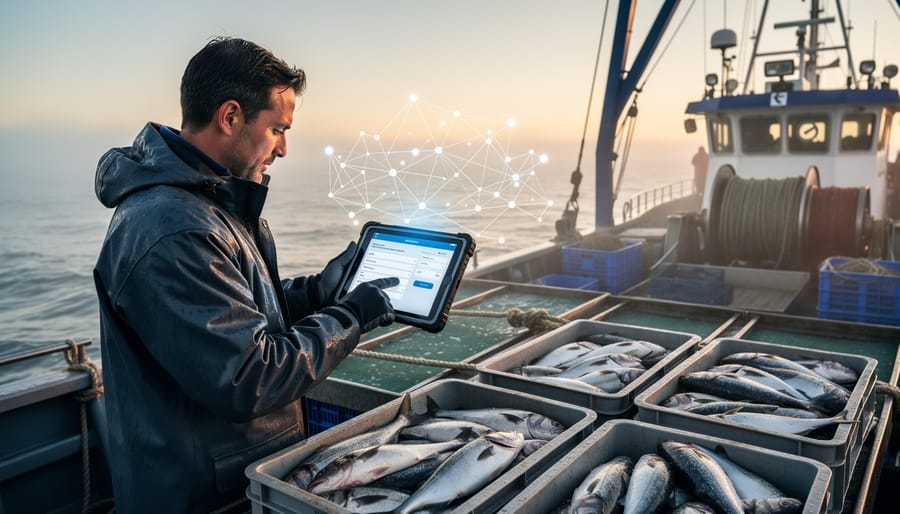
The journey from ocean to marketplace begins the moment a fish is caught. At this critical first step, fishers use mobile applications on smartphones or tablets to record essential information about their catch. This data includes the exact GPS coordinates of where the fish was harvested, the species caught, the quantity or weight, and the unique identification of the fishing vessel. Some advanced systems incorporate sensors and IoT devices that automatically capture water temperature, depth, and time of catch, reducing the potential for human error or intentional misreporting.
Marine biologist Dr. Sarah Chen, who has worked with fishing cooperatives in Southeast Asia, shares that “the technology is surprisingly user-friendly. Even fishers with limited technical experience quickly adapt to the apps, especially when they understand how documentation protects their livelihoods and the ocean’s future.” Many programs now offer the apps in multiple languages with intuitive interfaces designed for use in challenging conditions at sea.
Once entered, this data is immediately encrypted and added to the blockchain, creating a permanent, time-stamped record that cannot be altered retroactively. This transparency helps combat illegal, unreported, and unregulated fishing while building consumer confidence in sustainably sourced seafood.
Following the Journey
Once a fish is caught, blockchain technology creates a permanent digital record that follows it through every stage of its journey to consumers. When fishers make their initial catch, they log essential details into the system: species identification, catch location with GPS coordinates, date, time, and vessel information. This creates the first immutable block in the chain.
As the fish moves to processing facilities, handlers scan the product and add their verified data: weight, quality assessments, processing methods, and facility certifications. Cold storage operators record temperature logs, ensuring the cold chain remains unbroken. Distributors document transport conditions and timestamps, while wholesalers verify quantities received. Finally, retailers can display this complete history to consumers through simple QR code scans.
Each participant in the supply chain must authenticate their identity through the blockchain network before adding information, preventing fraudulent entries. This transparency works similarly to marine monitoring systems that track ocean conditions, but focuses specifically on product movement. If any handler attempts to alter previous records or introduce illegally caught fish, the system flags these discrepancies immediately. This creates accountability at every touchpoint, making it nearly impossible for illegally harvested seafood to enter legitimate markets undetected.
Empowering Consumers and Regulators
Blockchain transforms seafood transparency by putting verification power directly into consumers’ hands. Using smartphone apps, shoppers can scan QR codes on seafood packaging to instantly access the complete journey of their purchase—from the fishing vessel that caught it, through processing facilities, to the retail counter. This digital trail reveals whether the fish was harvested sustainably, came from legal fishing zones, and met labor standards throughout the supply chain.
For regulatory agencies, blockchain provides unprecedented surveillance capabilities. Authorities can monitor catch data in real-time, immediately flagging suspicious patterns that might indicate illegal, unreported, or unregulated fishing. When enforcement officers inspect shipments at ports, they can verify documentation against blockchain records within seconds, making it exponentially harder for illegally caught seafood to slip through inspection points. This technology essentially creates a digital net that captures fraudulent claims before they reach consumers, protecting both ocean ecosystems and legitimate fishing operations that follow the rules.

Real-World Success Stories
Personal Insights from Marine Scientists
Dr. Maria Santos, a marine biologist with the Pacific Islands Conservation Initiative, recalls her initial skepticism about blockchain technology entering her field. “I thought it was just another tech buzzword that would distract from actual conservation work,” she admits. “But after participating in a tuna traceability pilot program in 2022, I witnessed how it could genuinely empower small-scale fishers.” The program allowed local fishing communities to prove their sustainable practices directly to buyers, eliminating middlemen who previously undervalued their catch.
Conservation technologist James Omondi shares a different perspective from his work with Kenya’s mangrove restoration projects. “Our blockchain-based carbon credit system created transparency we’d never achieved before,” he explains. “Community members could see exactly how their restoration efforts translated into verified credits and payments. However, we learned the hard way that reliable internet connectivity is non-negotiable. Our first three months were frustrating.”
Dr. Lin Chen, who leads a coral reef monitoring program in Southeast Asia, emphasizes the importance of simplicity. “We initially designed an overcomplicated data entry system that required extensive training. Fishers and volunteers simply stopped using it,” she notes. “Our breakthrough came when we simplified everything to smartphone photo uploads with GPS tagging. The blockchain handles the complexity in the background.”
These scientists agree that blockchain isn’t a silver bullet, but rather a tool that works best when designed with end-users from the start, combining technological innovation with traditional ecological knowledge and community needs.
Managing Marine Protected Areas with Blockchain
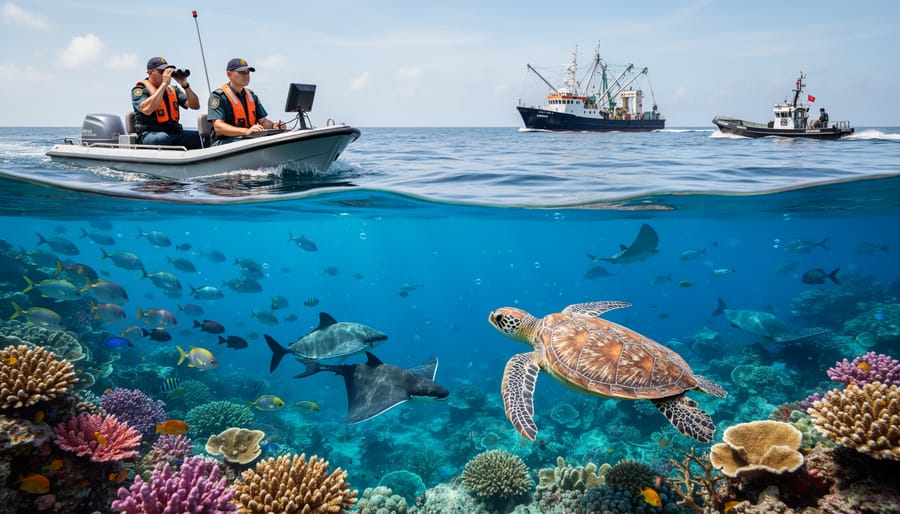
Marine Protected Areas (MPAs) face significant enforcement challenges, from illegal fishing to unauthorized vessel traffic. Blockchain technology offers innovative solutions to these persistent problems by creating transparent, tamper-proof records that can be accessed by multiple stakeholders across international boundaries.
One of the most promising applications involves tracking vessel movements within protected zones. Traditional monitoring systems often rely on fragmented databases that different agencies maintain separately. With blockchain, each vessel’s Automatic Identification System (AIS) data can be recorded on a shared ledger, creating an unchangeable timeline of movements. When a vessel enters an MPA, this activity is automatically logged and visible to all authorized parties—from local enforcement officers to international monitoring bodies. This transparency makes it significantly harder for vessels to operate illegally without detection.
Research permits present another area where blockchain excels. Dr. Maria Santos, a marine biologist working in the Coral Triangle, shares how blockchain-based permitting has transformed her work: “We used to spend weeks tracking down approval documents from different agencies. Now, all permits are stored on a blockchain system that researchers, government officials, and conservation organizations can access instantly. It’s eliminated confusion about who’s authorized to work where.”
The technology also facilitates international cooperation on conservation efforts. Marine ecosystems don’t recognize political boundaries, yet managing them typically requires coordination between multiple countries with different legal systems and languages. Blockchain creates a common platform where nations can share data about species populations, pollution levels, and enforcement actions without concerns about data manipulation or political interference.
For those interested in contributing to these initiatives, several organizations offer volunteer opportunities to help input historical data into new blockchain systems or assist with community education programs. These roles don’t require technical expertise—just dedication to protecting our oceans and willingness to learn about emerging conservation tools.
Challenges We Still Need to Solve
While blockchain holds tremendous promise for marine resource management, we need to be honest about the hurdles that remain. Understanding these challenges helps us work toward meaningful solutions rather than accepting technology as a silver bullet.
One significant barrier is technological access. Many fishing communities in developing nations, particularly in Southeast Asia and the Pacific Islands, lack reliable internet connectivity and the devices needed to participate in blockchain systems. These are often the very communities where illegal fishing runs rampant and where transparent supply chains could make the biggest difference. Marine biologist Dr. Elena Rodriguez, who has worked extensively with small-scale fishers in the Philippines, shares that “even basic smartphone access isn’t universal, and training people to use complex digital systems requires time and resources many communities simply don’t have.”
Energy consumption remains a legitimate environmental concern. Some blockchain networks require substantial computing power, creating a carbon footprint that seems contradictory for conservation efforts. While newer, more efficient blockchain protocols are emerging, we must continue prioritizing energy-conscious solutions that align with our environmental values.
Perhaps the most critical limitation is what tech experts call the “garbage in, garbage out” problem. Blockchain creates an unchangeable record, but that doesn’t guarantee the initial data entry is accurate. If someone falsely logs farmed salmon as wild-caught at the source, blockchain preserves that lie permanently. We still need human verification, independent audits, and monitoring systems at the collection point.
Finally, transparency threatens those profiting from current opacity. Companies engaged in illegal fishing, seafood fraud, or labor abuses have financial incentives to resist blockchain adoption. Regulatory frameworks must evolve to require participation, but creating enforceable international standards takes time and political will.
These challenges aren’t insurmountable, but addressing them requires continued collaboration between technologists, conservationists, fishing communities, and policymakers working together toward equitable, practical solutions.
How You Can Support Blockchain-Based Conservation
Volunteer Opportunities in Marine Technology
You can make a meaningful difference in blockchain-enabled marine conservation through several accessible pathways. Citizen science programs increasingly rely on volunteers to collect and verify data that feeds into blockchain-based supply chain tracking systems. By documenting seafood purchases, photographing fishing activities, or reporting suspected illegal catches through mobile apps, you directly contribute to transparent, tamper-proof records that help combat overfishing and fraud.
Educational opportunities abound for those wanting to spread awareness about blockchain’s role in ocean protection. Consider organizing community workshops, creating social media content explaining how blockchain traceability works, or partnering with local schools to teach students about technology-driven conservation solutions. Your voice matters in making these complex systems understandable to broader audiences.
For those with technical skills, numerous conservation organizations seek volunteers to help develop blockchain applications, improve data visualization tools, or test new platforms designed for fisheries monitoring. Even without coding experience, you can participate in beta testing programs that evaluate user-friendliness of blockchain-based seafood tracking apps.
Advocacy represents another powerful contribution avenue. Support policies requiring blockchain transparency in seafood supply chains by contacting representatives, signing petitions, and participating in public comment periods. Your engagement helps create the regulatory frameworks necessary for these technologies to achieve their conservation potential at scale.
Blockchain technology represents one promising tool in our expanding conservation toolkit, but its true power emerges when integrated with broader efforts to protect our oceans. While blockchain can enhance transparency in fishing supply chains and improve data management for marine protected areas, technology alone cannot solve the complex challenges facing marine biodiversity. The future of ocean conservation depends on collective action that weaves together innovative technologies, robust policy frameworks, community engagement, and passionate advocacy.
We’ve seen how blockchain applications are already making waves in fisheries management and marine resource tracking, yet these successes remind us that technology serves people, not the other way around. The most effective conservation strategies combine digital innovation with traditional ecological knowledge, scientific research, and the dedication of marine biologists working on the front lines of ocean protection.
This is where each of us has a role to play. Whether you’re an environmental scientist exploring blockchain applications, a student considering marine conservation careers, or someone simply passionate about protecting our blue planet, your engagement matters. Consider participating in citizen science initiatives, supporting sustainable seafood choices, or volunteering with marine conservation organizations in your community.
The vision ahead is encouraging: imagine transparent supply chains that eliminate illegal fishing, democratized data systems that empower coastal communities, and collaborative networks connecting conservationists worldwide. By embracing both technological innovation and timeless conservation principles, we can build a future where healthy, thriving oceans sustain generations to come.

jessica
Ava Singh is an environmental writer and marine sustainability advocate with a deep commitment to protecting the world's oceans and coastal communities. With a background in environmental policy and a passion for storytelling, Ava brings complex topics to life through clear, engaging content that educates and empowers readers. At the Marine Biodiversity & Sustainability Learning Center, Ava focuses on sharing impactful stories about community engagement, policy innovations, and conservation strategies. Her writing bridges the gap between science and the public, encouraging people to take part in preserving marine biodiversity. When she’s not writing, Ava collaborates with local initiatives to promote eco-conscious living and sustainable development, ensuring her work makes a difference both on the page and in the real world.