Marine Biodiversity Science Center

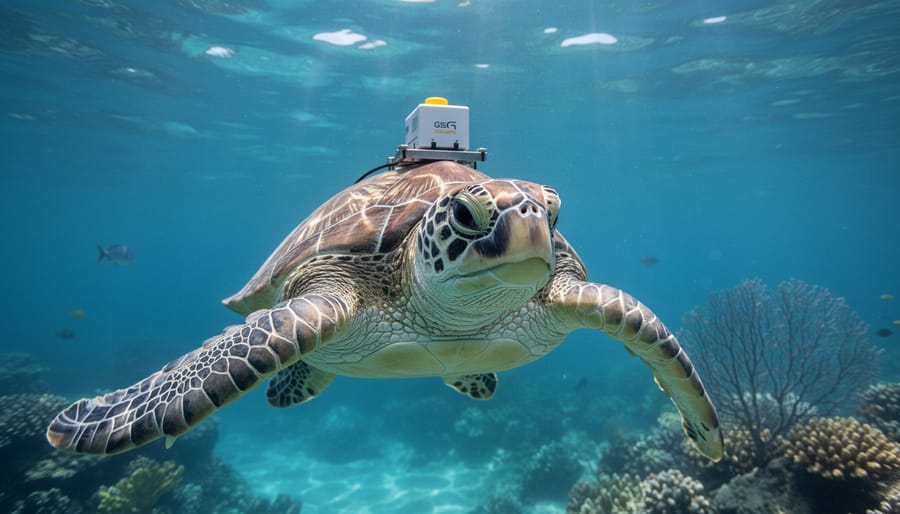
Beneath the ocean’s surface, a tiny technological marvel no bigger than a matchbox is revolutionizing how we understand marine life movement, migration, and behavior. G-sensors, or accelerometers, measure gravitational forces and acceleration in three dimensions, capturing every twist, turn, dive, and feeding motion of ocean animals with remarkable precision. Originally developed for smartphones and gaming devices, these sensors now serve as vital conservation tools, revealing the hidden lives of sea turtles navigating thousands of miles, dolphins hunting in coordinated patterns, and sharks patrolling their territories.
Marine biologists attach these lightweight devices to animals using non-invasive methods, collecting data that was impossible to obtain just decades ago. The sensors record up to 400 measurements per second, creating detailed behavioral signatures that help scientists identify critical feeding grounds, breeding sites, and migration corridors requiring protection. This technology has already contributed to establishing marine protected areas and modifying fishing practices to reduce bycatch.
What makes g-sensors particularly powerful is their ability to operate for months underwater, storing millions of data points that paint comprehensive pictures of animal energy expenditure, stress responses, and habitat use. As ocean ecosystems face mounting pressures from climate change and human activity, understanding these patterns becomes essential for effective conservation strategies. The insights gained from g-sensor research directly inform policy decisions and inspire community-based conservation efforts, transforming raw data into tangible protection for marine biodiversity.
What Is a G-Sensor and Why Does It Matter for Our Oceans?
A g-sensor, short for gravitational sensor or accelerometer, is a remarkably versatile device that measures acceleration forces and changes in orientation. Think of it as a tiny instrument that detects movement in three-dimensional space, recording not just speed but also direction and intensity of motion. While many of us unknowingly carry g-sensors in our smartphones (they’re what allow your screen to rotate automatically), these same sensors are revolutionizing how we study and protect our oceans.
In marine contexts, g-sensors work by detecting subtle shifts in gravitational pull and acceleration. When attached to marine animals or deployed on underwater equipment, they create detailed records of movement patterns that were previously impossible to capture. For example, a g-sensor attached to a sea turtle can record every stroke, dive angle, and resting period throughout its migration journey. This data becomes a window into behaviors that occur far beneath the surface, beyond human observation.
The technology matters profoundly for ocean conservation because it provides objective, continuous data about how marine life actually lives. Traditional observation methods, like visual surveys from boats or occasional tagging studies, give us only snapshots. G-sensors, however, record the full story. They reveal feeding patterns, breeding behaviors, response to environmental changes, and how animals interact with their habitats. This information is essential for creating effective marine protected areas, understanding the impact of human activities like shipping or fishing, and predicting how species might respond to climate change.
Marine biologist Dr. Elena Rodriguez, who has used g-sensors to study whale shark behavior in the Gulf of California, explains: “These sensors showed us that whale sharks weren’t just passing through our study area—they were actually performing complex feeding dives we’d never documented before. That discovery completely changed our conservation recommendations for the region.”
For oceanographic research, g-sensors transform our understanding from educated guesses to data-driven insights, making them indispensable tools in the fight to preserve marine biodiversity.
The Evolution of Ocean Monitoring: From Ships to Smart Networks
For over a century, oceanographers ventured onto research vessels, lowering instruments on cables to capture snapshots of ocean conditions. These expeditions, while groundbreaking, offered limited spatial coverage and required significant resources. Each voyage could sample only a handful of locations, leaving vast stretches of ocean unmeasured and mysterious.
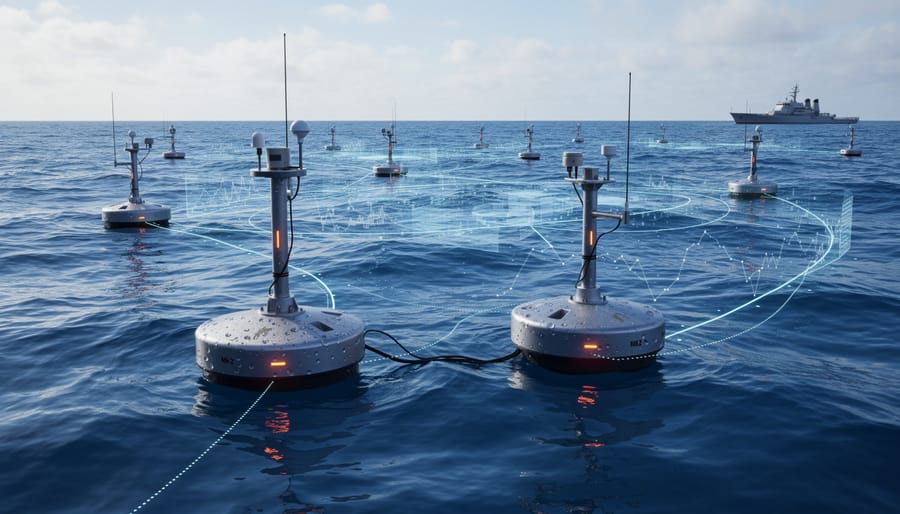
The 1970s brought a significant shift with the deployment of moored buoys and autonomous floats, which collected data continuously from fixed locations. The Argo program, launched in the early 2000s, revolutionized ocean monitoring by deploying thousands of free-drifting profiling floats worldwide, creating an unprecedented dataset of temperature and salinity measurements. Yet gaps remained. Traditional sensors excelled at measuring physical parameters but struggled to capture the biological richness of marine ecosystems.
Enter the era of smart sensor networks. Today’s ocean monitoring combines satellite imagery, marine robots, and sophisticated sensor arrays that communicate in real-time. G-sensors, or genomic sensors, represent the latest frontier in this evolution. Unlike their predecessors that measured only temperature, salinity, or currents, g-sensors can detect and identify marine organisms through environmental DNA sampling.
This breakthrough addresses a critical limitation: the ability to monitor biodiversity remotely and continuously. Marine biologist Dr. Sarah Chen recalls her early career spent identifying plankton samples under microscopes for weeks on end. “G-sensors accomplish in hours what once took us months,” she explains. “We’re finally seeing the ocean’s biological pulse in near real-time.”
By integrating g-sensors into existing monitoring networks, scientists can now track species distributions, detect harmful algal blooms early, and identify biodiversity hotspots worth protecting, all while significantly reducing the need for invasive sampling methods.
How G-Sensors Are Revolutionizing Marine Research
Tracking Marine Animal Behavior With Unprecedented Detail
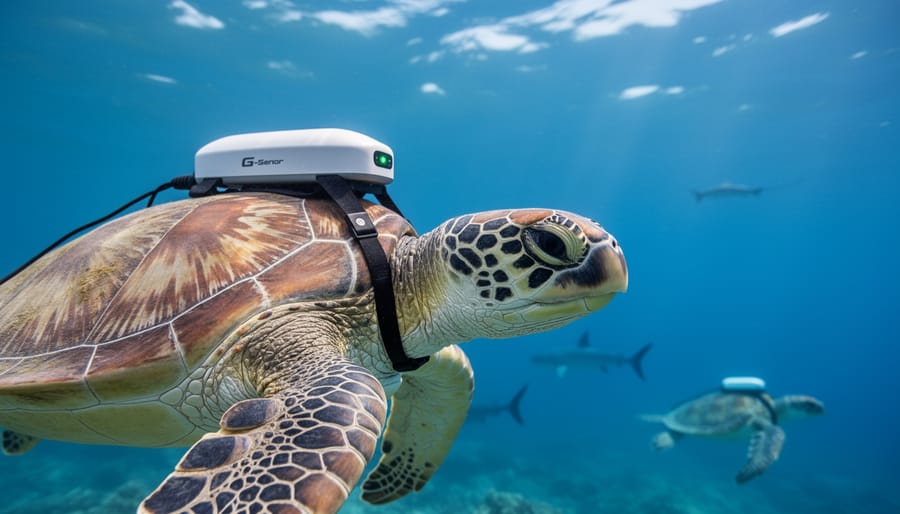
G-sensors, also known as accelerometers, are revolutionizing our understanding of how marine animals navigate their underwater world. These tiny devices, often no larger than a USB drive, attach to everything from sea turtles to great white sharks, recording three-dimensional movement data dozens of times per second. The result is an unprecedented window into behaviors that have remained hidden beneath the waves for millennia.
When attached to loggerhead sea turtles, g-sensors reveal intricate feeding strategies as the animals dive to the ocean floor. Scientists analyzing the data can distinguish between different types of head movements—the gentle probing for buried prey versus the forceful strikes at jellyfish. Dr. Maria Chen, a marine biologist studying turtle behavior off the California coast, describes the technology as transformative: “We can now see exactly when and how these animals are feeding throughout their migration routes. It’s like having a diary of their daily lives.”
The technology has proven equally valuable for studying larger predators. G-sensors attached to blue whales have captured the mechanics of lunge-feeding, showing how these giants accelerate toward krill patches and expand their massive throat pleats. With humpback whales, the sensors document the precise choreography of bubble-net feeding, where coordinated movements create underwater curtains that trap fish.
For conservation efforts, this detailed behavioral data helps identify critical feeding habitats and migration corridors that require protection, directly informing marine sanctuary boundaries and fishing regulations.
Monitoring Ocean Currents and Wave Dynamics
G-sensors, or accelerometers, are transforming how scientists monitor ocean currents and wave dynamics by detecting even subtle water movements with remarkable precision. These compact sensors measure acceleration in three dimensions, capturing the complex motion patterns that characterize our ocean systems. When deployed on buoys, moorings, or autonomous underwater vehicles, g-sensors continuously record how water masses shift and flow, providing invaluable data about circulation patterns that influence global climate.
Understanding these movement patterns is essential for predicting climate impacts. Ocean currents act as conveyor belts, distributing heat and nutrients across the planet. By analyzing g-sensor data alongside information from radar networks, researchers can map how warming waters alter traditional circulation routes, affecting everything from regional weather patterns to marine species migration.
Dr. Sarah Chen, a physical oceanographer, shares her experience: “G-sensors have revealed microchanges in wave behavior that signal larger ecosystem shifts. We’ve documented altered upwelling patterns that directly impact nutrient availability for marine life.” These insights help conservationists identify vulnerable areas and develop targeted protection strategies.
The data collected also benefits coastal communities by improving storm surge predictions and understanding erosion patterns. For those interested in contributing to ocean monitoring efforts, many research stations welcome volunteers to assist with sensor deployment and data collection.
Early Warning Systems for Marine Environmental Threats
Advanced sensor networks equipped with g-technology are revolutionizing how we detect and respond to marine environmental threats. These sophisticated systems continuously monitor multiple parameters simultaneously—temperature, salinity, chemical composition, and movement patterns—creating a comprehensive picture of ocean health. When anomalies occur, whether from pollution events, harmful algal blooms, or sudden changes in water chemistry, g-sensors immediately flag the disruption and transmit alerts to researchers and conservation managers.
Dr. Elena Martinez, a marine biologist working with sensor arrays off British Columbia’s coast, shares how this technology transformed their response capabilities: “We detected an unusual temperature spike and oxygen drop within hours rather than weeks. This early warning allowed us to investigate quickly and identify an invasive species bloom before it spread throughout the ecosystem.”
The real-time nature of g-sensor networks means conservation teams can mobilize responses while threats are still manageable. Automated alert systems notify relevant authorities, triggering coordinated action plans. For coastal communities and marine protected areas, this represents a shift from reactive damage control to proactive ecosystem protection, dramatically improving our ability to safeguard marine biodiversity against both natural and human-caused disturbances.
Collecting Data in Extreme and Remote Locations
G-sensors have revolutionized our ability to monitor previously inaccessible ocean regions, from crushing deep-sea environments to ice-covered polar waters. These robust devices withstand extreme pressure, freezing temperatures, and corrosive saltwater while operating autonomously for months or even years. Marine biologist Dr. Sarah Chen recalls deploying g-sensors beneath Antarctic ice shelves: “We’re finally gathering data from regions we could only dream about studying before. These sensors continue recording animal movements and environmental changes throughout the polar winter when human presence is impossible.” Their durability means researchers can track whale migrations across entire ocean basins, monitor deep-sea biodiversity in hydrothermal vent systems, and study how climate change affects remote marine ecosystems. This autonomous data collection provides crucial baseline information for conservation efforts in Earth’s most vulnerable and least understood marine habitats.
Real-World Success Stories: G-Sensors in Action
G-sensors are revolutionizing how researchers track and protect vulnerable marine species across our oceans. These success stories demonstrate the tangible impact this technology brings to ocean conservation projects worldwide.
Off the coast of South Africa, marine biologist Dr. Sarah Chen and her team at the White Shark Research Institute have deployed g-sensors on great white sharks to understand their hunting behaviors and migration patterns. “What amazed us most was discovering that these sharks make rapid vertical dives reaching 4G acceleration when pursuing seals,” Dr. Chen explains. “This data helped us identify critical feeding zones that needed protection from commercial fishing.” The project has directly influenced the establishment of two new marine protected areas, safeguarding 450 square kilometers of ocean habitat. Dr. Chen notes that without g-sensor data showing the precise acceleration patterns during hunting, “we would have missed these vital ecological hotspots entirely.”
In the Antarctic Peninsula, researchers are using g-sensors attached to Adélie penguins to monitor how climate change affects their foraging success. Dr. Marcus Rodriguez, lead researcher on the project, shares a breakthrough moment: “We noticed unusual acceleration signatures that indicated the penguins were struggling to catch krill—diving more frequently but with less successful capture attempts.” The g-sensor data revealed a 23% decrease in foraging efficiency over three years, providing concrete evidence of ecosystem stress. “These tiny devices give us early warning signals about marine food web changes that would otherwise take years to detect through traditional methods,” Dr. Rodriguez emphasizes.
A collaborative project in the Coral Triangle is using g-sensors on sea turtles to map their nesting beach approaches and identify dangerous interaction zones with fishing vessels. Marine conservation coordinator Lisa Patel describes the human element: “Local fishermen are now partners in our research. When they see turtles with sensors, they report sightings through our mobile app, creating a community-based monitoring network.” This integration of technology with local knowledge has reduced turtle bycatch by 35% in participating fishing communities, demonstrating how g-sensors can bridge scientific research and grassroots conservation action.
The Network Effect: Why Connected Sensors Change Everything
Individual g-sensors provide valuable snapshots of ocean conditions, but their true power emerges when they work together as a network. Think of it like this: a single sensor might detect a temperature anomaly, but a network of connected sensors can reveal whether that anomaly represents a localized event or part of a larger oceanographic pattern affecting an entire ecosystem.
When multiple g-sensors communicate across a region, they create a comprehensive monitoring system that captures the ocean’s complexity in unprecedented detail. These networks continuously share data on gravity variations, water density changes, and seafloor movements, building a real-time picture of ocean dynamics that would be impossible to achieve with isolated measurements.
The magic happens through data integration and advanced analytics. AI-powered monitoring systems process information from networked g-sensors, identifying patterns that human observers might miss. For instance, subtle gravity changes detected across multiple sensors can reveal deep ocean currents carrying nutrients to critical feeding grounds, or predict upwelling events that support marine life hotspots.
Dr. Sarah Chen, a marine physicist working with sensor networks off British Columbia, shares an illuminating example: “We deployed fifteen g-sensors across a 200-kilometer stretch of coastline. Individually, they showed interesting data points. Together, they revealed a previously unknown current system supporting a major salmon migration route.”
This networked approach also enables early warning systems for environmental changes. When sensors detect coordinated shifts in gravity fields, scientists can alert conservation teams to investigate potential threats before they impact vulnerable species. The bigger picture emerging from these connected systems transforms our understanding of ocean processes, moving from fragmented observations to cohesive, actionable intelligence that drives effective conservation strategies.
Challenges and the Path Forward
While g-sensors offer tremendous promise for marine research, several practical challenges currently limit their widespread deployment. Cost remains a significant barrier, particularly for smaller research institutions and conservation organizations. A single high-quality g-sensor tag can cost several thousand dollars, and many studies require multiple units to gather meaningful data across populations. Additionally, the sheer volume of data these devices generate presents storage and analysis challenges. A single tag recording at high frequencies can produce gigabytes of information over weeks or months, requiring substantial computational resources and specialized expertise to process.
Battery life continues to constrain deployment duration. Most g-sensor tags operate for several weeks to a few months, limiting long-term behavioral studies. For deep-diving species or animals in remote locations, retrieving tags for data download or battery replacement becomes logistically complex and expensive. Marine biofouling, where organisms colonize the tag’s surface, can affect sensor accuracy and hydrodynamic drag on the animal.
However, innovations are actively addressing these hurdles. Engineers are developing lower-cost sensors without sacrificing data quality, making the technology more accessible. Machine learning algorithms now streamline data analysis, automatically identifying behavioral patterns from massive datasets. Solar-powered tags and energy-harvesting technologies promise extended deployment periods. Researchers like Dr. Maria Santos have pioneered anti-fouling coatings that keep sensors functioning accurately in challenging marine environments. These advances, combined with growing collaborative networks sharing data and resources, suggest a future where g-sensor technology becomes an increasingly powerful and accessible tool for understanding and protecting our ocean’s remarkable biodiversity.
How You Can Support Ocean Sensor Research
The advancement of g-sensor technology and ocean monitoring depends not just on researchers, but on engaged citizens like you. Whether you’re a scientist, educator, student, or simply someone who cares about marine life, there are meaningful ways to contribute to this vital work.
Citizen science programs offer hands-on involvement in data collection. Organizations like Ocean Networks Canada and the Marine Biological Association run volunteer initiatives where participants help monitor coastal waters, document marine species, and even assist in maintaining shallow-water sensor equipment. These programs require no advanced degree—just curiosity and commitment. Dr. Sarah Chen, a marine biologist who started as a volunteer, recalls: “I began by helping catalog fish species near sensor sites. That experience showed me how technology and human observation work together, ultimately inspiring my career in marine conservation.”
Educational engagement provides another powerful avenue. Many research institutions offer free online courses about ocean sensing technology and marine ecosystems. Teachers can access curriculum materials that bring g-sensor data directly into classrooms, helping students understand real-time ocean changes. These resources transform abstract concepts into tangible learning experiences.
Financial support amplifies research capabilities. Contributing to organizations deploying sensor networks—such as the Ocean Tracking Network, Monterey Bay Aquarium Research Institute, or regional marine conservation groups—directly funds equipment maintenance, data analysis, and expanded monitoring coverage. Even modest donations help sustain long-term observation programs essential for understanding ocean health.
Finally, advocacy matters. Share information about ocean monitoring technology with your community, support policies protecting marine environments, and encourage local institutions to invest in conservation infrastructure. Every voice strengthens the collective effort to understand and preserve our oceans for future generations.
The transformative potential of g-sensor networks extends far beyond technological innovation—these tools represent our commitment to understanding and protecting the ocean’s intricate web of life. By detecting gravitational variations that reveal seafloor features, underwater currents, and geological changes, g-sensors provide marine conservationists with unprecedented insights into habitats that have long remained mysterious. This technology empowers us to map critical breeding grounds, identify vulnerable ecosystems before they’re damaged, and monitor the health of marine environments in real-time.
The future of ocean conservation depends on our collective willingness to embrace such innovations and support their continued development. Every data point collected contributes to a growing picture of marine biodiversity, informing protection strategies that can reverse declining populations and restore damaged ecosystems. Whether you’re a researcher, educator, or concerned citizen, your engagement matters profoundly.
Consider how you can contribute to this vital mission. Support marine research initiatives, participate in citizen science programs that collect oceanographic data, or advocate for policies that prioritize marine habitat protection. Share what you’ve learned about g-sensor technology with your community—awareness creates momentum for change. Together, we can ensure that future generations inherit oceans teeming with life, where coral reefs flourish, migratory species thrive, and the delicate balance of marine ecosystems remains intact. The ocean’s future is in our hands.

jessica
Ava Singh is an environmental writer and marine sustainability advocate with a deep commitment to protecting the world's oceans and coastal communities. With a background in environmental policy and a passion for storytelling, Ava brings complex topics to life through clear, engaging content that educates and empowers readers. At the Marine Biodiversity & Sustainability Learning Center, Ava focuses on sharing impactful stories about community engagement, policy innovations, and conservation strategies. Her writing bridges the gap between science and the public, encouraging people to take part in preserving marine biodiversity. When she’s not writing, Ava collaborates with local initiatives to promote eco-conscious living and sustainable development, ensuring her work makes a difference both on the page and in the real world.