Marine Biodiversity Science Center


Artificial intelligence now monitors 71% of our ocean’s surface through satellite imaging, identifies individual whales by their unique fluke patterns, and predicts coral bleaching events weeks before they occur. This technological revolution promises unprecedented capabilities for marine conservation—but it also raises urgent questions about data ownership, algorithmic bias in species protection, and whether machines should make life-or-death decisions about ocean ecosystems.
The ethical stakes are remarkably high. When AI systems determine which marine habitats receive protection funding, or when facial recognition technology tracks endangered sea turtles without established consent frameworks, we enter uncharted moral territory. A recent deployment of AI-powered fishing monitors in the Pacific inadvertently disadvantaged small-scale fishers while benefiting industrial operations—a stark reminder that technology designed to help can inadvertently harm vulnerable communities.
Yet dismissing AI entirely would mean abandoning tools that could save species from extinction. Marine biologist Dr. Sarah Chen, who uses machine learning to track declining shark populations, puts it simply: “AI allows us to see patterns across millions of data points that human researchers would miss. But we must remain the decision-makers, not delegate our responsibility to algorithms.”
This intersection of technology and marine conservation demands we ask critical questions: Who controls the data collected from our oceans? How do we ensure AI systems don’t perpetuate existing inequalities in resource allocation? Can we harness AI’s power while maintaining the human judgment, cultural knowledge, and ethical frameworks essential to protecting marine life? The answers will shape not just how we use technology, but whether our oceans survive the coming decades.
How Artificial Intelligence Is Already Transforming Marine Science
AI-Powered Species Monitoring and Data Collection
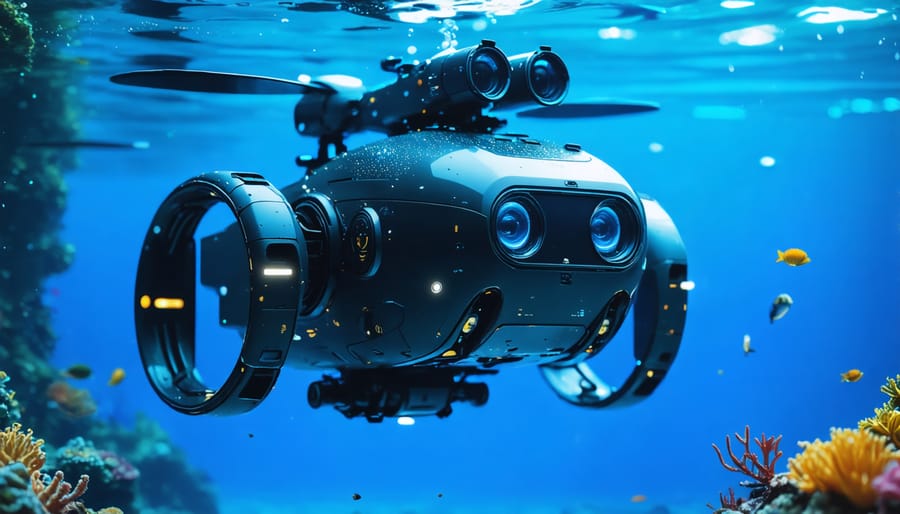
Artificial intelligence has transformed how scientists monitor marine species, making conservation efforts more efficient and comprehensive than ever before. Advanced AI algorithms now analyze thousands of hours of underwater video footage, identifying individual animals, tracking their movements, and even recognizing specific behaviors that would take researchers years to catalog manually.
In the acoustic realm, AI systems listen to the ocean’s soundscape, distinguishing between the clicks of dolphins, the songs of humpback whales, and the calls of endangered vaquitas. Marine biologist Dr. Sarah Chen recalls how AI helped her team detect a previously unknown population of beaked whales off the California coast: “We had acoustic data sitting in our archives for years. Within weeks, the AI identified patterns we’d completely missed—it was like discovering a hidden community in our own backyard.”
Satellite imagery analysis represents another breakthrough. AI processes vast datasets to track algal blooms, monitor coral reef health, and identify illegal fishing activities in protected areas. These systems can detect changes in ocean color that indicate ecosystem stress, alerting conservationists to problems before they become catastrophic.
What makes this technology particularly promising for marine conservation is its scalability. Volunteer citizen scientists can now contribute underwater photos and videos that AI processes automatically, creating massive databases of marine life observations. This democratizes ocean research, allowing anyone with a smartphone to contribute meaningful data while AI handles the complex analysis—turning passion into practical conservation action.
Predictive Models for Ocean Health
Machine learning algorithms are revolutionizing how we understand and protect our oceans by processing vast amounts of environmental data that would be impossible for humans to analyze alone. These predictive models help scientists forecast ocean temperature changes, track harmful algal blooms before they devastate coastal ecosystems, and identify areas most vulnerable to coral bleaching events. AI systems can analyze decades of migration data to predict how marine species might shift their ranges as waters warm, enabling conservationists to establish protected areas where animals are likely to move rather than where they currently live.
Perhaps most critically, these tools help us recognize early warning signs of ecosystem collapse. Marine biologist Dr. Sarah Chen shares how AI models at her research station successfully predicted a seagrass die-off three months in advance, allowing her team to mobilize restoration efforts and minimize damage. By integrating satellite imagery, ocean sensors, and historical patterns, machine learning creates increasingly accurate forecasts that give us precious time to act. For those interested in supporting this work, volunteer opportunities exist to help classify underwater imagery that trains these life-saving algorithms—your contributions directly improve the models protecting our ocean’s future.
The Core Ethical Questions We Must Answer
Can Algorithms Truly Understand Ocean Complexity?
Marine ecosystems operate as intricate webs where countless species interact through relationships we’re only beginning to understand. AI algorithms, however sophisticated, process data through patterns and correlations—a fundamentally different approach from grasping true ecological relationships. When machine learning models analyze ocean data, they may miss subtle behavioral cues, seasonal variations, or the cascading effects one species has on another.
Dr. Maria Chen, a marine biologist working with AI conservation tools, shares her concern: “Algorithms excel at identifying what they’ve been trained to see, but oceans constantly surprise us with unexpected connections. A model might optimize for one conservation goal while inadvertently recommending actions that harm interconnected species.”
The risk of oversimplification becomes particularly acute when AI informs policy decisions. An algorithm might suggest harvesting certain fish stocks based on population data alone, without accounting for their role in nutrient cycling or as prey for endangered species. These limitations mirror ethical challenges in other emerging fields, like marine genetic engineering ethics, where technological capability must be balanced with ecological wisdom. Marine conservationists increasingly advocate for “AI-assisted” rather than “AI-driven” approaches, ensuring human expertise and ocean knowledge remain central to decision-making.
Who Controls the Data—And Who Benefits?
AI systems analyzing our oceans depend on vast datasets—but who owns this information, and who profits from it? Currently, wealthy nations and large technology corporations control most ocean monitoring infrastructure and the AI trained on its data. This creates a troubling imbalance: developing island nations and coastal communities most vulnerable to ocean changes have the least access to AI-powered insights about their own waters.
Dr. Maria Santos, a marine biologist working in the Philippines, shares her frustration: “We provide the data through local observations, yet we must pay premium prices to access the AI analysis tools built with our own information.” This raises fundamental questions about fairness and sovereignty in ocean research.
There’s also concern about corporate dominance. When private companies control the algorithms that predict fish populations or identify endangered species habitats, they effectively hold power over conservation decisions. Without transparent data-sharing agreements and open-source AI tools, we risk creating a two-tiered system where only well-funded institutions can harness ocean intelligence.
Building equitable partnerships and supporting open-access AI initiatives ensures that ocean conservation benefits everyone, not just those with the deepest pockets. This democratization of technology is essential for truly global marine protection efforts.
The Problem of Algorithmic Bias in Marine Decision-Making
AI systems learn from historical data, but what happens when that data reflects decades of uneven research attention? In marine conservation, AI trained on existing datasets may inadvertently prioritize charismatic megafauna like dolphins and sea turtles while overlooking less-studied invertebrates or deep-sea ecosystems. Dr. Maria Chen, a marine biologist working with coastal communities in Southeast Asia, discovered this firsthand when an AI monitoring system consistently flagged temperate species as “high priority” while dismissing tropical reef fish—simply because the training data came predominantly from well-funded Northern Hemisphere research stations.
This algorithmic bias can perpetuate a troubling cycle: under-researched regions receive less AI-driven attention, leading to fewer conservation resources, which results in even less data collection. Coral reefs in remote Pacific islands or the biodiversity hotspots along Africa’s coastlines may be systematically undervalued by AI decision-support tools. The consequences extend beyond missed opportunities—they can misallocate limited conservation funding and volunteer efforts toward already well-protected areas. Recognizing these patterns is the first step toward building more equitable AI systems that truly serve global ocean health.
When AI Conservation Goes Wrong: Real Risks to Marine Life
Automation Without Accountability
When AI systems make conservation decisions without adequate human oversight, the consequences can be devastating—and often, no one is held responsible. Consider an algorithm that misidentifies a critically endangered vaquita porpoise as a common dolphin, leading conservation funds to be redirected elsewhere. Or imagine automated fishing zone recommendations that inadvertently push vessels into sea turtle nesting areas. These aren’t hypothetical scenarios; they represent real risks as we increasingly delegate complex ecological decisions to machines.
The challenge intensifies because AI systems often function as “black boxes,” making decisions through processes even their creators struggle to explain. When an algorithm fails and a species suffers, who bears responsibility? The programmers who built it? The conservationists who deployed it? The organizations that funded it? This accountability vacuum creates unintended conservation consequences that can ripple through entire ecosystems.
Dr. Elena Martinez, a marine biologist working in the Gulf of California, emphasizes this concern: “Human judgment incorporates decades of field experience, local knowledge, and ethical considerations that AI simply cannot replicate. We need technology to augment our decisions, not replace the wisdom gained from years of direct species observation.”
The solution requires maintaining meaningful human involvement in all critical conservation choices, ensuring clear accountability chains, and establishing rapid-response protocols when AI systems produce harmful recommendations.
The Energy Cost of Ocean Intelligence
Training AI models for ocean conservation comes with a surprising paradox: the very technology designed to protect marine ecosystems carries its own environmental footprint. Large-scale AI systems require enormous computational power, consuming significant electricity and generating substantial carbon emissions. A single AI model training session can produce as much carbon dioxide as five cars over their entire lifetimes.
For marine applications, this creates an ethical tension. When AI systems analyze vast amounts of ocean data to identify illegal fishing or track whale migrations, are we trading one environmental cost for another? The answer isn’t straightforward, but emerging research suggests the benefits often outweigh the costs when AI is deployed thoughtfully.
Dr. Sarah Chen, a marine data scientist who volunteers with Pacific whale monitoring programs, explains: “We optimize our AI models to run efficiently, using renewable energy sources whenever possible. The key is balancing computational intensity with conservation impact. A well-designed AI system that prevents illegal trawling in sensitive habitats can offset its carbon footprint within months.”
Progressive approaches include using smaller, more efficient neural networks specifically designed for ocean monitoring tasks, running computations during off-peak energy hours, and partnering with data centers powered by renewable energy. Some research institutions now calculate a “conservation return on investment” that weighs AI’s energy consumption against measurable environmental benefits—like square kilometers of habitat protected or species populations stabilized.
The path forward requires transparency about these energy costs while continuously improving AI efficiency, ensuring our technological solutions truly serve ocean health.
Finding Balance: Ethical Frameworks for Marine AI
Transparency and Open-Source Ocean Data
The marine science community increasingly recognizes that transparency builds trust in AI applications. The Ocean Biodiversity Information System (OBIS) exemplifies this commitment, maintaining one of the world’s largest open-access databases of marine species distributions with over 100 million observations. Researchers worldwide contribute and access this data freely, enabling AI models to learn from genuinely comprehensive datasets rather than limited proprietary information.
Similarly, initiatives like the Marine Geospatial Ecology Tools (MGET) provide open-source software that marine biologists can use without expensive licensing fees. These platforms democratize AI technology, allowing small research stations and conservation organizations in developing nations to participate equally in cutting-edge marine monitoring.
The Global Fishing Watch partnership demonstrates how transparency transforms ocean governance. By making vessel tracking data publicly available and incorporating ethical decision-making frameworks into their AI algorithms, they’ve created accountability mechanisms that individual nations couldn’t achieve alone.
Volunteers can contribute to these efforts through platforms like iNaturalist, where citizen scientists help train AI identification systems by submitting and verifying marine species photos. Your observations become part of the training data that improves conservation tools for everyone.

Keeping Humans in the Loop
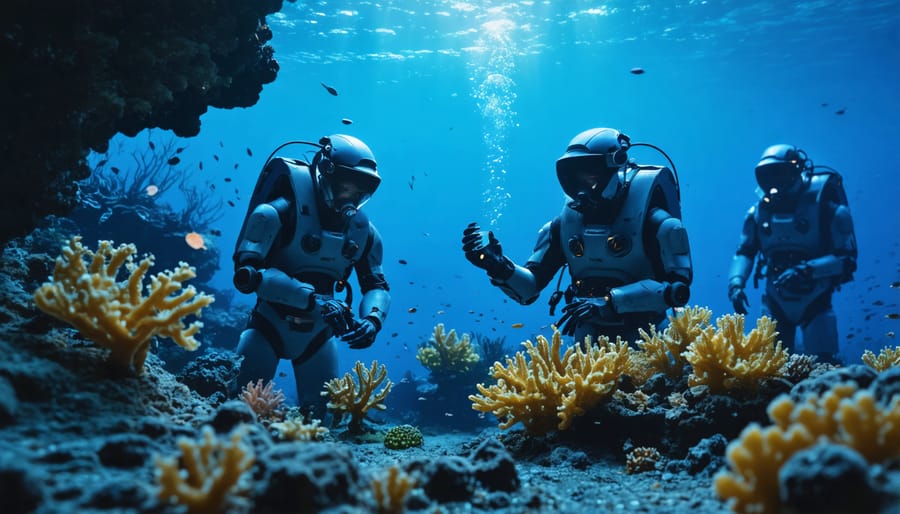
AI technologies should enhance, not replace, the irreplaceable insights that come from human experience and expertise in marine conservation. While algorithms can process vast datasets and identify patterns invisible to the human eye, they cannot replicate the intuition developed through years of fieldwork or the ethical judgment required in complex conservation decisions.
Dr. Sarah Chen, a coral reef ecologist working in the Philippines, describes her relationship with AI as a partnership rather than a replacement. “When our AI system flags potential coral bleaching events from satellite imagery, I still need to verify those findings in the water,” she explains. “The algorithm might detect temperature anomalies, but I observe the fish behavior, water clarity, and local conditions that give context to those numbers. That human perspective is essential.”
Marine biologist Marcus Thompson emphasizes that AI tools work best when they amplify human capacity. “Our AI-powered acoustic monitoring system can listen to whale songs 24/7, something our small team could never do manually,” he notes. “But interpreting those patterns, understanding what behavioral changes mean for population health, and deciding on conservation interventions—that requires human judgment informed by ecological knowledge and community relationships.”
This collaborative approach ensures that technology serves conservation goals while respecting the complexity of marine ecosystems and the communities that depend on them.
Building AI That Respects Indigenous Ocean Knowledge
Ethical marine AI begins with listening. Coastal Indigenous communities have observed ocean patterns for thousands of years, developing sophisticated understanding of fish migrations, weather changes, and ecosystem health. When AI systems for fisheries management or marine monitoring are built without this knowledge, they miss crucial context that satellites and sensors cannot capture alone.
Dr. Maya Littlebear, a marine biologist working with Pacific Northwest tribes, shares how incorporating traditional ecological knowledge transformed predictive models: “Elders noticed behavioral changes in salmon runs that our algorithms initially dismissed as noise. Integrating their observations improved our forecasting accuracy by 40%.”
Forward-thinking projects now establish data sovereignty frameworks, ensuring Indigenous communities control how their knowledge is used in AI systems. These partnerships respect cultural protocols while enhancing ethical ocean conservation planning. Rather than extracting information, ethical AI co-creates solutions with knowledge-holders as equal partners.
For those interested in supporting these initiatives, many coastal conservation programs welcome volunteers to help document traditional practices and assist with community-led monitoring efforts that feed into responsible AI development.
How You Can Support Ethical AI in Ocean Conservation
Citizen Science and AI Training Data
The ethical development of AI for marine conservation depends on diverse, representative data—and you can help build it. Citizen science projects now invite the public to contribute to AI training datasets through initiatives like photo validation programs, where volunteers review images captured by underwater cameras or drones to verify species identifications. Your participation helps correct algorithmic biases and improves accuracy across different ocean regions and conditions.
Marine conservation organizations increasingly seek volunteers to label underwater footage, identify marine species in sonar data, or validate AI-generated predictions about coral health. These contributions are particularly valuable because they incorporate local knowledge and diverse perspectives that professional researchers might miss. Programs like reef monitoring apps allow snorkelers and divers to submit geotagged observations, directly feeding into AI models that track biodiversity changes.
By participating in these projects, you’re not just providing data—you’re actively shaping how AI systems understand and protect our oceans. Many platforms offer training modules to help you get started, regardless of your scientific background. This collaborative approach ensures AI tools reflect the collective wisdom of communities who know and care about marine ecosystems, making conservation technology more ethical, accurate, and inclusive.
Supporting Transparent Marine Research Initiatives
Supporting ethical AI in marine conservation begins with backing organizations committed to transparency and accountability. Look for research initiatives that openly share their data collection methods, algorithmic decision-making processes, and potential limitations. Reputable marine conservation groups increasingly publish AI ethics guidelines on their websites, detailing how they protect marine ecosystems and vulnerable species while using technology.
You can make a tangible difference through several engagement opportunities. Many coastal research stations welcome volunteers to help validate AI-generated data—comparing automated species identification against human observations, for instance. This hands-on work ensures accuracy while deepening your understanding of marine life. Consider joining citizen science programs where your smartphone photos of marine species help train AI models responsibly, with clear consent about data usage.
Dr. Rachel Chen, a marine biologist working with ethical AI projects, shares: “Our most valuable volunteers are those who ask questions—who want to understand not just what the technology does, but whether it serves the ocean’s best interests.”
Support organizations that prioritize community consultation, especially those involving Indigenous coastal communities whose traditional knowledge complements AI insights. Attend public forums, webinars, or town halls where marine researchers discuss their AI implementation. Your informed participation helps shape responsible technology use, ensuring artificial intelligence becomes a true ally in protecting our oceans for future generations.
The journey toward ethical AI in marine conservation isn’t a solitary expedition—it’s a collaborative voyage that requires all hands on deck. Just as our opening scenario illustrated the promise of AI-powered coral reef monitoring, the resolution lies not in the technology alone, but in how we choose to develop and deploy it. When marine biologists, data scientists, local communities, and conservation organizations work together with shared ethical principles, AI becomes a powerful ally rather than a concerning unknown.
The optimistic reality is that ethical AI is entirely achievable. We’ve seen how transparency in algorithms, diverse development teams, community-centered data governance, and robust accountability frameworks can transform AI from a potential risk into a trusted conservation tool. These aren’t theoretical concepts—they’re practices already being implemented by forward-thinking organizations worldwide, yielding both scientific insights and social benefits.
Your role in this future matters. Whether you’re a researcher considering AI applications, an educator sharing these concepts with students, or simply someone passionate about ocean health, staying informed and engaged makes a difference. Question how AI tools are developed, advocate for inclusive practices, and support initiatives that prioritize both marine ecosystems and the communities that depend on them.
The Marine Biodiversity Science Center remains committed to exploring these technologies responsibly, sharing our learnings openly, and creating opportunities for you to participate in shaping ethical AI practices. Together, we can ensure that artificial intelligence serves not just scientific progress, but justice, equity, and the thriving ocean ecosystems our planet desperately needs.

jessica
Ava Singh is an environmental writer and marine sustainability advocate with a deep commitment to protecting the world's oceans and coastal communities. With a background in environmental policy and a passion for storytelling, Ava brings complex topics to life through clear, engaging content that educates and empowers readers. At the Marine Biodiversity & Sustainability Learning Center, Ava focuses on sharing impactful stories about community engagement, policy innovations, and conservation strategies. Her writing bridges the gap between science and the public, encouraging people to take part in preserving marine biodiversity. When she’s not writing, Ava collaborates with local initiatives to promote eco-conscious living and sustainable development, ensuring her work makes a difference both on the page and in the real world.