Marine Biodiversity Science Center

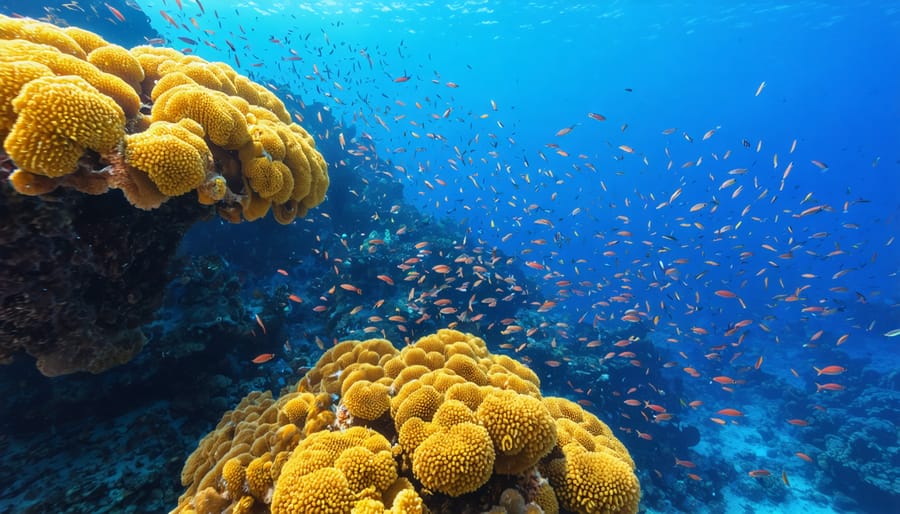
Coral reefs, nature’s underwater cities, stand at a critical crossroads as climate change and human activities threaten their survival. Yet amid these challenges, innovative coastal ecosystem restoration techniques are offering hope for these vital marine ecosystems. From cutting-edge coral gardening methods that achieve survival rates exceeding 80% to breakthrough assisted evolution programs developing climate-resistant coral species, scientists and conservationists are pioneering remarkable solutions. These restoration efforts, combining traditional knowledge with modern technology, have already rehabilitated over 5,000 acres of reef systems worldwide. As communities, researchers, and organizations unite in this crucial mission, we’re witnessing a transformation in how we approach reef conservation. This article explores the most effective and innovative restoration methods being deployed globally, examining their impacts, challenges, and the promising future they represent for our ocean’s most diverse ecosystems.
Active Restoration Techniques
Coral Gardening and Farming
Coral gardening and farming represent cornerstone techniques in reef restoration, combining traditional agricultural principles with marine science. At the heart of these methods are coral nurseries, which function as underwater gardens where coral fragments are cultivated until they’re ready for transplantation to degraded reef areas.
The process begins with coral fragmentation, a technique that takes advantage of corals’ natural ability to reproduce asexually. Small pieces are carefully broken from healthy donor colonies, typically measuring 3-5 centimeters in length. These fragments are then attached to specialized nursery structures, which can be either fixed to the seafloor or suspended in the water column.
Mid-water floating nurseries have become increasingly popular, as they protect growing corals from sediment accumulation and predators while providing optimal water flow. These structures often resemble “coral trees” – PVC pipes with branches from which coral fragments hang on monofilament lines. Fixed nurseries, meanwhile, use tables or frames anchored to the seafloor, particularly suitable for massive coral species.
Growth monitoring is essential throughout the farming process. Marine biologists and trained volunteers regularly measure growth rates, assess health indicators, and document survival rates. Modern technology, including underwater photography and 3D mapping, helps track progress and identify potential issues early.
After 6-12 months of nurturing, when fragments have grown to suitable sizes, they’re transplanted to degraded reef areas. The success of coral gardening is evident in projects worldwide, with some nurseries achieving survival rates above 80%. This method not only helps restore reef ecosystems but also provides opportunities for community involvement, as local volunteers can participate in maintenance and monitoring activities under expert guidance.
Artificial Reef Structures
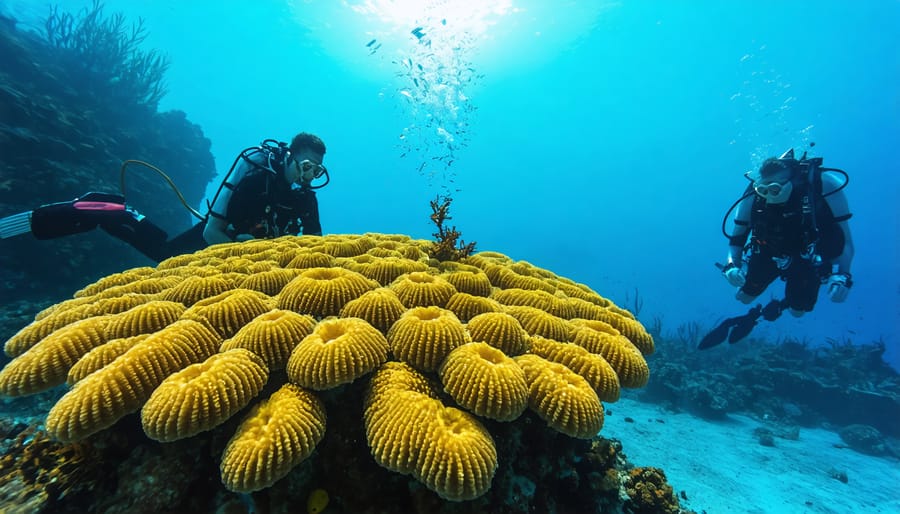
Artificial reef structures serve as the foundation for coral reef restoration by providing stable surfaces where coral fragments can grow and marine life can thrive. These structures come in various materials and designs, each offering unique benefits for reef rehabilitation.
Concrete modules remain among the most widely used materials due to their durability, cost-effectiveness, and similar pH levels to natural coral limestone. These structures often feature textured surfaces and multiple chambers, creating diverse microhabitats for marine organisms. Recent innovations include eco-friendly concrete mixtures enhanced with calcium carbonate, which promote faster coral recruitment.
Metal frameworks, particularly steel and aluminum structures, offer excellent structural integrity and can be designed in complex configurations. While these materials eventually corrode in seawater, this process can actually benefit reef development by releasing iron, an essential nutrient for coral growth. Modern designs often incorporate protective coatings to control corrosion rates.
3D-printed reef structures represent the cutting edge of artificial reef technology. These precisely engineered structures can mimic natural reef formations with unprecedented accuracy, creating optimal conditions for coral growth and fish habitat. Researchers can customize designs based on specific species requirements and local environmental conditions.
Natural materials like limestone and ceramic also play important roles in reef restoration. These substances closely resemble natural reef compositions and typically integrate well with existing ecosystems. Some projects successfully utilize recycled materials, such as cleaned and treated shells from sustainable seafood operations, demonstrating innovative approaches to eco-friendly reef construction.
Innovative Biotechnology Solutions
Selective Breeding Programs
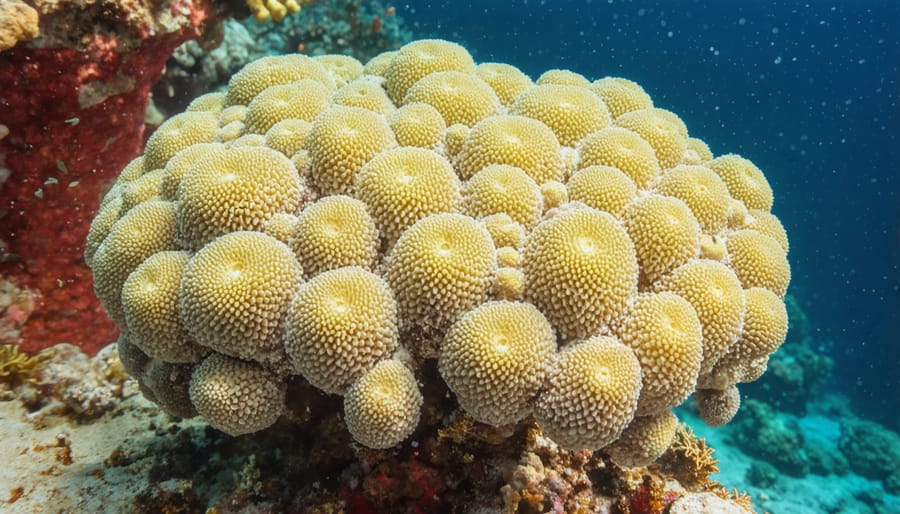
Selective breeding programs represent a cutting-edge approach to coral reef restoration, focusing on developing more resilient coral strains that can withstand rising ocean temperatures and ocean acidification impacts. Marine scientists are identifying and cultivating coral colonies that demonstrate natural heat resistance, carefully crossbreeding them to create hardier generations.
These programs typically begin by monitoring wild coral populations during bleaching events, identifying specimens that survive extreme conditions. Researchers collect fragments from these resilient corals and study their genetic makeup to understand the mechanisms behind their enhanced survival rates. Through controlled breeding in specialized laboratories, scientists can combine desirable traits from different coral species and populations.
Dr. Sarah Martinez, a leading coral geneticist, explains: “We’re essentially accelerating natural selection to help corals adapt to rapidly changing ocean conditions. It’s like giving evolution a helping hand.” The process involves maintaining precise environmental conditions in laboratory settings, where researchers can control temperature, light, and water chemistry to optimize breeding success.
Early results from selective breeding initiatives have shown promising outcomes, with some bred colonies showing up to 50% higher heat tolerance compared to their wild counterparts. These enhanced corals are carefully introduced to degraded reef systems through strategic outplanting programs, creating stronger, more resilient reef communities for the future.
Larval Enhancement
Larval enhancement represents a cutting-edge approach to coral reef restoration that focuses on supporting coral reproduction and settlement during their most vulnerable life stages. This method involves collecting coral gametes during mass spawning events, facilitating fertilization in controlled laboratory conditions, and nurturing the resulting larvae until they’re ready to settle.
Marine biologists carefully monitor water quality, temperature, and light conditions to maximize larval survival rates. Once the larvae reach their settlement phase, typically after 5-7 days, they are introduced to specially prepared settlement substrates. These substrates often feature specific chemical cues and beneficial bacteria that encourage larval attachment and metamorphosis into juvenile corals.
Recent innovations in this field include the development of settlement devices that can be deployed directly on degraded reefs. These devices protect the vulnerable coral recruits during their early development stages while allowing them to adapt to natural conditions. Scientists have also discovered that using crustose coralline algae as a settlement substrate significantly increases survival rates.
Success stories from the Great Barrier Reef demonstrate the method’s potential, with some projects achieving settlement rates up to 100 times higher than natural recruitment. While resource-intensive, larval enhancement offers unique advantages in genetic diversity preservation and can be scaled up to restore large reef areas when combined with other restoration techniques.
This approach particularly benefits slow-growing coral species that struggle to recover naturally from disturbances, helping maintain reef biodiversity for future generations.
Community-Based Restoration
Citizen Science Initiatives
Citizen science has emerged as a powerful force in coral reef restoration, enabling researchers to collect vast amounts of data while fostering community engagement. Programs like Reef Check and CoralWatch have trained thousands of recreational divers to monitor reef health, creating a global network of volunteer scientists who contribute valuable data to conservation efforts.
These initiatives often involve local communities, particularly in coastal areas, who participate in reef monitoring, coral gardening, and restoration activities. Volunteers learn to identify coral species, assess reef health indicators, and assist in transplanting coral fragments. Many programs also incorporate educational components, teaching participants about marine ecology and the importance of reef conservation.
Digital platforms and mobile apps have revolutionized citizen science participation. Through underwater photography and standardized reporting protocols, volunteers can document reef conditions, track bleaching events, and monitor recovery progress. The NOAA’s Reef Smart program, for example, allows citizen scientists to submit observations directly through their smartphones, creating a comprehensive database of reef health indicators.
Success stories abound, with citizen scientists contributing to breakthrough discoveries and helping identify resilient coral species. These programs not only advance scientific understanding but also create a sense of stewardship and environmental responsibility within communities, making them crucial partners in reef restoration efforts.
Local Management Programs
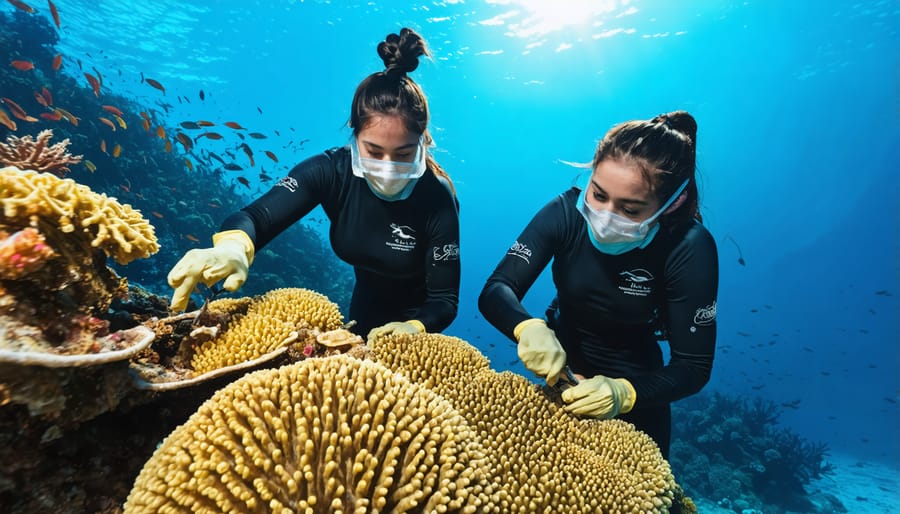
Local communities play a vital role in coral reef restoration through grassroots initiatives and collaborative marine conservation strategies. These programs often combine traditional ecological knowledge with modern scientific approaches, creating sustainable and culturally appropriate restoration solutions.
Community-led projects typically involve local fishermen, dive operators, and residents who understand their marine environment intimately. They participate in activities such as coral gardening, crown-of-thorns starfish removal, and regular reef monitoring. These initiatives often include educational components, where experienced community members train others in restoration techniques and marine stewardship.
Many successful local management programs operate through a co-management approach, where communities work alongside government agencies and scientific institutions. For example, in the Philippines, local fishing communities have established marine protected areas (MPAs) that they actively patrol and maintain, resulting in increased fish populations and healthier coral ecosystems.
These programs often incorporate sustainable tourism elements, where visitors can participate in restoration activities while learning about reef conservation. This approach not only provides funding for continued restoration efforts but also builds global awareness and support for coral reef protection. The success of these community-based initiatives demonstrates that local stewardship is essential for long-term reef recovery and preservation.
Measuring Success
Ecological Indicators
Monitoring the success of coral reef restoration projects requires careful observation of various ecological indicators. Scientists and marine conservationists use multiple metrics to assess reef health and biodiversity, ensuring their efforts align with sustainable marine practices.
Key indicators include coral coverage percentage, which measures the amount of living coral tissue present on the reef structure. Researchers track coral growth rates through regular measurements of colony size and calcification rates. Species diversity serves as another crucial metric, with successful restoration sites showing increased numbers of both coral species and associated marine life.
Fish population surveys provide valuable data about ecosystem health, as healthy reefs support abundant and diverse fish communities. Scientists monitor indicator species – organisms particularly sensitive to environmental changes – to gauge overall reef condition. These might include certain butterfly fish species that feed exclusively on coral polyps.
Water quality parameters, including temperature, pH levels, and turbidity, are regularly measured to ensure optimal conditions for coral growth. Researchers also assess coral resistance to environmental stressors by monitoring bleaching events and disease occurrence rates.
Modern technology has enhanced monitoring capabilities through underwater photography, 3D mapping, and genetic analysis of coral populations. These tools help track restoration progress and adapt methods based on observed outcomes.
Long-term Monitoring
Long-term monitoring is crucial for evaluating the success of coral reef restoration projects and adapting management strategies accordingly. Scientists and restoration teams employ various methods to track reef health and development over periods ranging from months to decades.
Photography and videography form the backbone of monitoring efforts, with teams conducting regular underwater surveys using standardized quadrat sampling techniques. These visual records help track coral growth rates, species diversity, and colony survival rates. Advanced photogrammetry techniques allow researchers to create detailed 3D models of restored reefs, enabling precise measurements of structural complexity and spatial changes over time.
Water quality monitoring is conducted through regular testing of parameters such as temperature, pH levels, salinity, and nutrient content. Automated data loggers deployed at restoration sites provide continuous environmental data, helping teams identify potential stressors and optimize restoration conditions.
Biological indicators are closely monitored, including coral recruitment rates, fish population dynamics, and the presence of key invertebrate species. Citizen science programs often contribute valuable data through organized monitoring activities, where trained volunteers assist in regular surveys and data collection.
Disease surveillance and bleaching monitoring are integral components, particularly during vulnerable periods. Teams maintain detailed records of coral health incidents and recovery patterns, which helps in developing more resilient restoration strategies and understanding long-term ecosystem dynamics.
Success metrics are standardized across projects to facilitate comparison and knowledge sharing within the global restoration community. This data-driven approach ensures continuous improvement of restoration techniques and helps secure ongoing support for conservation efforts.
The restoration of coral reefs represents one of our most crucial environmental challenges, but the diverse methods and approaches discussed demonstrate that we have powerful tools at our disposal. From traditional coral gardening and fragment transplantation to cutting-edge genetic techniques and artificial reef structures, each method contributes uniquely to reef recovery. The success of these efforts depends not only on scientific advancement but also on the dedication of communities, organizations, and individuals working together.
What’s particularly encouraging is that anyone can contribute to coral reef restoration. Whether you’re a marine biology student, a diving enthusiast, or simply someone who cares about ocean conservation, there are numerous ways to get involved. Many organizations offer volunteer programs where you can assist in coral nursery maintenance, participate in monitoring activities, or help with community education initiatives.
The future of coral reef restoration lies in combining these various approaches while continuing to innovate and adapt to changing environmental conditions. As climate change continues to threaten reef ecosystems, our restoration efforts must evolve and intensify. By supporting research, participating in local conservation efforts, or simply spreading awareness about reef protection, each of us can play a vital role in preserving these underwater treasures for future generations.
Remember that successful reef restoration is a long-term commitment that requires patience, dedication, and collaboration. Together, we can help ensure the survival and revival of these essential marine ecosystems that support countless species and provide invaluable services to human communities worldwide.

jessica
Ava Singh is an environmental writer and marine sustainability advocate with a deep commitment to protecting the world's oceans and coastal communities. With a background in environmental policy and a passion for storytelling, Ava brings complex topics to life through clear, engaging content that educates and empowers readers. At the Marine Biodiversity & Sustainability Learning Center, Ava focuses on sharing impactful stories about community engagement, policy innovations, and conservation strategies. Her writing bridges the gap between science and the public, encouraging people to take part in preserving marine biodiversity. When she’s not writing, Ava collaborates with local initiatives to promote eco-conscious living and sustainable development, ensuring her work makes a difference both on the page and in the real world.