Marine Biodiversity Science Center

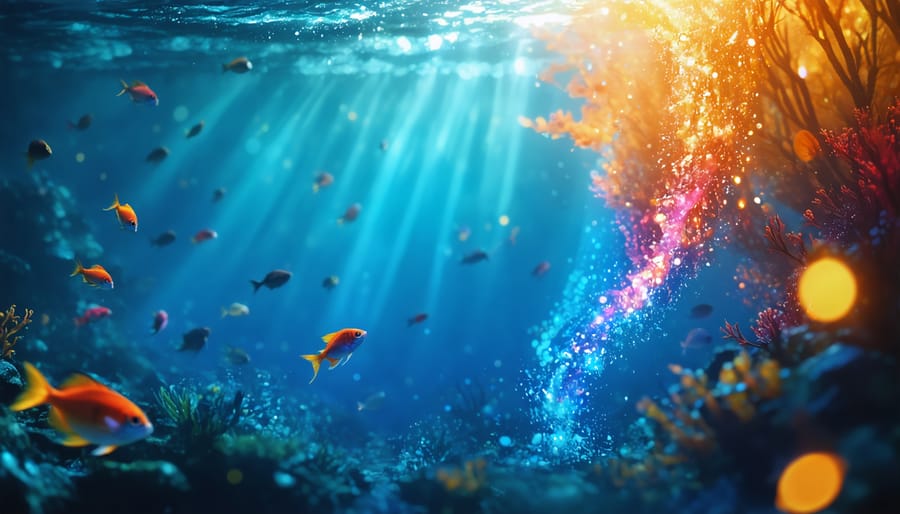
In the vast underwater world, chemical signals serve as nature’s most ancient and sophisticated form of sensory communication in marine life. Every day, countless marine organisms engage in an intricate dance of molecular messages, releasing and detecting chemical compounds that convey critical information about food, danger, reproduction, and social status. This remarkable system of olfactory communication has evolved over millions of years, enabling creatures from the tiniest plankton to the largest whales to navigate their complex marine environments with remarkable precision.
Unlike the visual and auditory signals that dominate human perception, chemical signals can persist in the environment for extended periods, traveling vast distances through ocean currents and providing vital information long after their initial release. These molecular messengers play a crucial role in maintaining marine ecosystems, influencing everything from predator-prey relationships to spawning aggregations and territorial behavior.
Recent scientific breakthroughs have revealed the extraordinary sophistication of these chemical conversations, demonstrating how marine organisms can detect and respond to chemical signals at concentrations as low as a few molecules per billion. This growing understanding of olfactory communication not only enhances our appreciation of marine life but also offers valuable insights for conservation efforts and the development of sustainable fishing practices.
The Science Behind Underwater Scent Communication
Chemical Signals in Water
The aquatic environment presents unique challenges and opportunities for chemical communication. Unlike air, water’s density and viscosity significantly affect how chemical signals disperse and persist. These properties create what marine biologists often refer to as “chemical landscapes” or “odorscapes” in marine environments.
Chemical signals in water can travel both through diffusion and via water flow signals, creating complex patterns of information transfer. Ocean currents and turbulence play crucial roles in distributing these chemical messages, sometimes carrying them for remarkable distances while maintaining their integrity.
The persistence of chemical signals in water varies significantly based on environmental conditions. Temperature, salinity, and pH levels all influence how long these chemical messages remain detectable. In colder waters, chemical signals typically persist longer due to slower molecular movement and reduced bacterial degradation. Meanwhile, warmer waters tend to accelerate the breakdown of chemical compounds.
Marine animals have evolved sophisticated mechanisms to detect even minute concentrations of these chemical signals. Many species can perceive chemical gradients as low as one part per trillion, equivalent to detecting a single drop of substance in an Olympic-sized swimming pool. This remarkable sensitivity allows them to track potential mates, locate food sources, and identify predators even in vast ocean expanses.
Fish Sensory Systems
Fish possess remarkably sophisticated olfactory organs that enable them to detect and process chemical signals in their aquatic environment. Located in their nostrils, or nares, these organs contain specialized sensory cells called olfactory receptor neurons, which are arranged in a folded tissue structure known as the olfactory epithelium.
Unlike humans, fish have two pairs of nostrils on each side of their head. Water flows in through the anterior nostril and out through the posterior one, creating a continuous stream across the sensory tissue. This design allows fish to constantly sample their chemical environment, even when stationary.
The olfactory epithelium contains millions of receptor cells capable of detecting dissolved chemical compounds at incredibly low concentrations – often as little as one part per billion. These receptors are particularly sensitive to amino acids, bile salts, and other organic compounds that might signal the presence of food, predators, or potential mates.
When chemical molecules bind to these receptors, they trigger electrical signals that travel via the olfactory nerve to the fish’s brain. The olfactory bulb, a specialized region of the brain, processes these signals and integrates them with other sensory information to guide the fish’s behavior.
This sophisticated system allows fish to navigate their environment, locate food sources, identify members of their own species, detect predators, and coordinate reproductive activities – all through chemical detection.

Social Communication Through Scent
Mating and Reproduction
In the complex underwater world, chemical signals play a crucial role in fish reproduction and mate selection. Fish release specific pheromones that communicate essential information about their reproductive status, genetic quality, and readiness to spawn. These chemical cues help potential mates make informed decisions about compatibility and timing.
Female fish often release specialized hormones that signal their reproductive readiness to males. These chemical messages can trigger behavioral and physiological changes in males, including increased hormone production and the development of breeding colors. Males, in turn, may release pheromones that demonstrate their fitness as potential mates.
During spawning seasons, many species use olfactory signals to coordinate their reproductive timing. For example, salmon use their acute sense of smell to identify their natal streams and find suitable spawning partners. The chemical signatures in the water help ensure that fish congregate in the right place at the right time for successful reproduction.
Some species exhibit fascinating adaptations in their olfactory communication during mating. The male three-spined stickleback, for instance, can detect specific compounds that indicate a female’s egg quality and readiness to spawn. This chemical assessment helps males invest their energy in the most promising reproductive opportunities.
Environmental factors can significantly impact olfactory communication during mating. Changes in water chemistry, temperature, or pollution levels may interfere with these essential chemical signals, potentially disrupting reproductive success. This highlights the importance of maintaining healthy aquatic environments for successful fish reproduction and population sustainability.
Scientists continue to study these complex chemical interactions, revealing new insights into how fish populations maintain genetic diversity and adapt to changing environments through selective mate choice based on chemical cues.
Territory and Social Hierarchy
In the complex underwater environment, chemical signals play a vital role in establishing and maintaining social hierarchies and territorial boundaries. Fish use these olfactory cues much like terrestrial animals use scent marking, creating invisible but potent chemical territories that inform others about ownership, dominance, and reproductive status.
Similar to coral reef fish communication through visual signals, chemical markers help establish social order within fish populations. Dominant individuals release specific pheromones that signal their status to others, reducing the need for physical confrontations and conserving energy. These chemical signatures can persist in the water for extended periods, creating lasting territorial markers.
Many species use specialized glands to produce these chemical signals. For example, some cichlids release compounds that indicate their breeding readiness and territorial claims. Subordinate fish can detect these signals and adjust their behavior accordingly, often avoiding areas marked by dominant individuals or showing submissive behaviors when encounters occur.
The complexity of these chemical territories varies among species. Some maintain exclusive territories with clear chemical boundaries, while others create overlapping zones with graduated concentrations of chemical signals. This chemical landscape helps maintain social stability and reduces aggressive encounters within populations.
Interestingly, these chemical signals can also indicate population density, food availability, and potential threats. When resources become scarce, the chemical signatures may intensify, leading to more defined territories and stronger hierarchical structures. This dynamic system allows fish populations to adapt their social organization based on environmental conditions and resource availability.
Survival Strategies
Predator Detection
Fish possess remarkable predator detection systems that rely heavily on their acute sense of smell. When predators are nearby, they release chemical substances into the water, known as kairomones, which prey species can detect even in extremely diluted concentrations. These chemical cues trigger immediate defensive responses in prey fish, demonstrating the critical role of olfactory communication in survival.
Research has shown that many fish species can detect predator odors from several meters away, giving them crucial time to implement escape strategies. When exposed to these chemical signals, prey fish typically exhibit behavioral changes such as increased shoaling, reduced movement, or seeking shelter. Some species even release their own alarm substances to warn nearby conspecifics of danger.
What’s particularly fascinating is that fish can learn to recognize new predator scents through experience. Young fish often acquire this knowledge by observing the reactions of more experienced individuals in their group. This learning process, combined with innate recognition abilities, creates a sophisticated defense mechanism that enhances survival rates in complex marine environments.
The effectiveness of chemical predator detection varies depending on environmental conditions such as water temperature, pH levels, and current patterns. Understanding these mechanisms has important implications for marine conservation, particularly in areas where human activities might interfere with these natural chemical communication channels.
Food Location
Chemical signals play a crucial role in helping marine organisms locate food sources, with many species evolving sophisticated olfactory mechanisms for detecting prey and identifying feeding opportunities. Fish can detect dissolved amino acids, proteins, and other organic compounds released by potential food sources, often from considerable distances.
Many predatory fish species possess highly developed chemosensory organs that can detect prey-specific molecules in extremely dilute concentrations – sometimes as low as one part per billion. This remarkable sensitivity allows them to track food sources even in murky waters or complete darkness, where visual hunting would be ineffective.
Sharks are particularly well-known for their exceptional ability to detect blood and other feeding-related chemical cues, thanks to their highly developed olfactory bulbs and specialized sensory organs called ampullae of Lorenzini. These electroreceptors work in conjunction with their sense of smell to create a comprehensive picture of potential food locations.
Schools of smaller fish often use chemical cues to locate plankton blooms or other food sources. When some individuals in the school discover food, they release specific chemical signals that attract other members of their species, leading to more efficient group feeding behavior.
The effectiveness of chemical food location can be significantly impacted by environmental factors such as water temperature, currents, and pH levels. Understanding these chemical communication pathways is crucial for marine conservation efforts, particularly in areas where human activities might disrupt these natural signaling systems.
Conservation Implications
The increasing human impact on marine environments poses significant challenges for olfactory communication among aquatic species. Ocean acidification, chemical pollution, and changes in water temperature all affect how chemical signals travel through water and how marine organisms interpret these crucial messages.
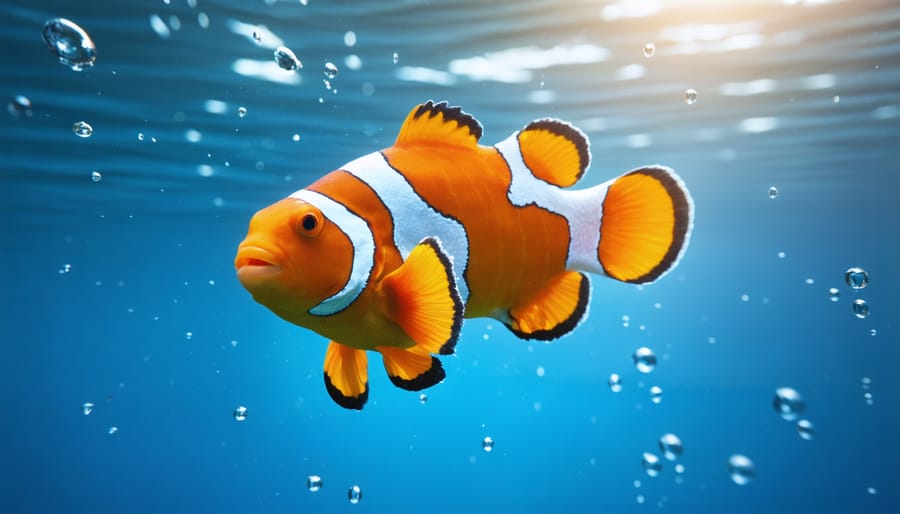
Rising CO2 levels in our oceans are particularly concerning, as the resulting acidification can interfere with fish’s ability to detect and respond to chemical cues. This disruption affects various vital behaviors, from predator avoidance to mate selection, potentially impacting entire marine ecosystems. For instance, clownfish larvae in acidified waters struggle to detect suitable habitat cues, affecting their survival rates and population distribution.
Chemical pollution from agricultural runoff, industrial waste, and pharmaceutical compounds creates additional challenges. These contaminants can mask natural chemical signals or alter their composition, making it difficult for marine organisms to communicate effectively. Some species are showing signs of adaptation, but many remain vulnerable to these changes.
Conservation efforts are now incorporating our understanding of olfactory communication into habitat protection strategies. Marine protected areas are being designed with consideration for chemical corridors – routes where water flow patterns help maintain the integrity of chemical signals. Scientists are also developing new monitoring techniques to assess the impact of environmental changes on chemical communication networks.
Community engagement plays a crucial role in these conservation efforts. Citizen science projects help track changes in fish behavior and distribution patterns, while educational programs raise awareness about the importance of maintaining healthy marine chemical environments. Local initiatives to reduce chemical pollution and control agricultural runoff are showing promising results in preserving these essential communication channels.
By protecting the chemical messaging systems that marine life depends on, we’re not just preserving individual species – we’re maintaining the complex web of interactions that keeps our oceans healthy and resilient. The success of these conservation efforts relies on continued research, public awareness, and collective action to reduce human impacts on marine environments.
Chemical communication in marine environments represents a complex and vital network of interactions that sustains ocean ecosystems. Throughout this exploration of olfactory communication, we’ve seen how fish and other marine organisms rely on chemical signals for survival, reproduction, and social behavior. These intricate chemical dialogues, developed over millions of years of evolution, are now facing unprecedented challenges from ocean acidification, pollution, and habitat destruction.
Protecting marine environments isn’t just about preserving beautiful coral reefs or charismatic marine species – it’s about safeguarding the invisible yet essential chemical messages that orchestrate life beneath the waves. The disruption of these chemical signals could have far-reaching consequences for marine biodiversity, fisheries, and ecosystem stability.
As marine scientists and conservationists continue their research, every individual can contribute to protecting these vital communication channels. Supporting marine protected areas, reducing chemical pollution, and making sustainable choices in our daily lives all help preserve the delicate chemical balance of our oceans. By understanding and protecting these invisible messages, we ensure the continued survival of countless marine species and the health of our global ocean ecosystem.

jessica
Ava Singh is an environmental writer and marine sustainability advocate with a deep commitment to protecting the world's oceans and coastal communities. With a background in environmental policy and a passion for storytelling, Ava brings complex topics to life through clear, engaging content that educates and empowers readers. At the Marine Biodiversity & Sustainability Learning Center, Ava focuses on sharing impactful stories about community engagement, policy innovations, and conservation strategies. Her writing bridges the gap between science and the public, encouraging people to take part in preserving marine biodiversity. When she’s not writing, Ava collaborates with local initiatives to promote eco-conscious living and sustainable development, ensuring her work makes a difference both on the page and in the real world.