Marine Biodiversity Science Center

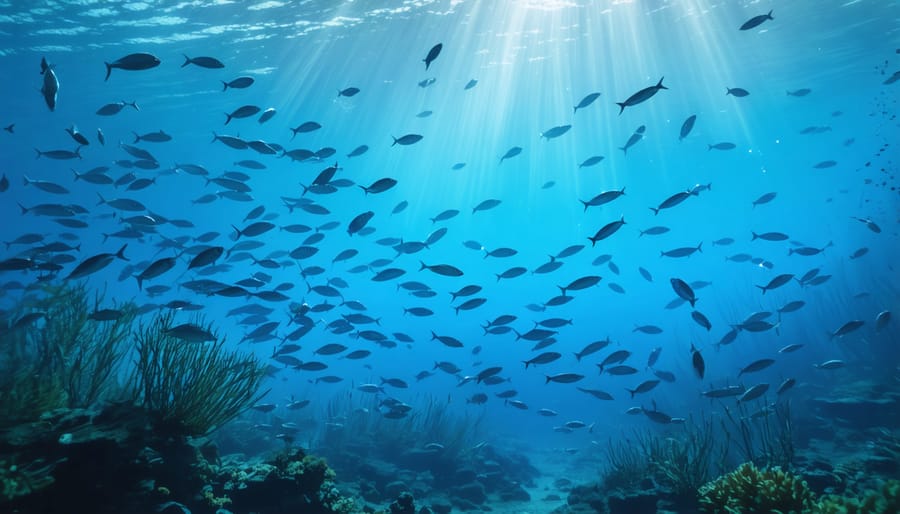
As our oceans face an unprecedented global fisheries crisis, sustainable fishery management emerges as our most powerful tool for protecting marine ecosystems while ensuring food security for billions. The delicate balance between harvesting marine resources and maintaining healthy fish populations requires sophisticated scientific understanding, innovative technology, and unwavering commitment to conservation principles.
Modern fishery management combines satellite monitoring, real-time data analytics, and community-based initiatives to transform how we protect and harvest from our oceans. By implementing science-based catch limits, establishing marine protected areas, and employing selective fishing gear, forward-thinking communities worldwide are proving that profitable fishing can coexist with environmental stewardship.
From small-scale artisanal fisheries in coastal communities to industrial operations on the high seas, sustainable management practices are revolutionizing the fishing industry. These approaches not only preserve marine biodiversity but also secure livelihoods for the 820 million people who depend on fisheries for income and nutrition. The success stories emerging from well-managed fisheries demonstrate that when science, policy, and community action align, marine ecosystems can recover while supporting robust fishing economies.
The Science Behind Sustainable Fishing
Population Dynamics and Stock Assessment
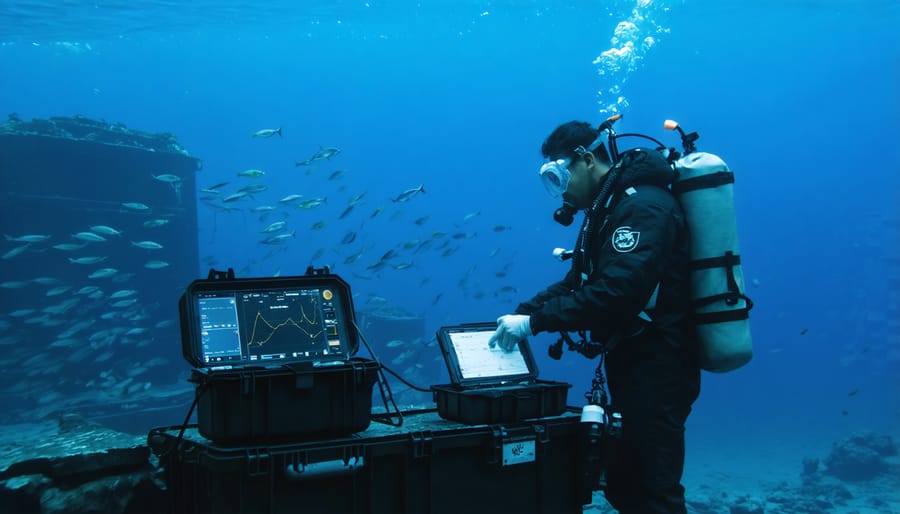
Scientists employ a combination of sophisticated monitoring techniques and data analysis to assess fish populations and establish sustainable catch limits. Through underwater surveys, satellite tracking, and catch data analysis, researchers can estimate population sizes, growth rates, and distribution patterns of different fish species.
Key assessment methods include mark-recapture studies, where fish are tagged and released to track their movements and survival rates, and acoustic surveys that use sound waves to detect fish schools. Advanced genetic sampling helps determine population diversity and connectivity between different groups.
Stock assessment models integrate multiple data sources to predict how fish populations will respond to various fishing pressures. These models consider factors such as reproduction rates, natural mortality, and environmental conditions. Scientists use this information to calculate the Maximum Sustainable Yield (MSY) – the largest catch that can be taken from a species’ stock over an indefinite period without depleting the population.
Regular monitoring allows researchers to detect early warning signs of population decline and adjust management strategies accordingly. For example, when surveys indicate declining numbers of reproductive-age fish, catch limits may be reduced to allow populations to recover.
Citizen science programs increasingly contribute valuable data to these assessments. Recreational fishers and diving enthusiasts can participate in fish counting programs and report their observations, creating a broader network of population monitoring while fostering community engagement in conservation efforts.
Ecosystem-Based Management Approaches
Ecosystem-based management (EBM) represents a paradigm shift in fishery management, moving beyond single-species approaches to consider the intricate web of relationships within marine environments. This holistic strategy recognizes that fish populations are part of complex systems where changes in one component can ripple throughout the entire ecosystem.
At its core, EBM integrates scientific knowledge about ecological interactions, marine ecosystem services, and human activities to develop comprehensive management plans. This approach considers multiple factors simultaneously, including predator-prey relationships, habitat conditions, climate impacts, and socioeconomic needs of coastal communities.
Key elements of EBM include:
– Protecting essential fish habitats and spawning grounds
– Maintaining food web dynamics
– Considering climate change impacts
– Managing bycatch across multiple species
– Preserving biodiversity hotspots
Marine biologists and fishery managers implementing EBM use advanced modeling tools to predict ecosystem responses to various management scenarios. These models help identify potential cascade effects and guide decision-making processes. For instance, when managing herring populations, managers must consider not only the direct impact on herring stocks but also the effects on predatory species like cod and seabirds, as well as the broader ecosystem stability.
Success stories from regions implementing EBM demonstrate its effectiveness in balancing conservation goals with sustainable resource use, showing promise for the future of fishery management worldwide.
Effective Regulatory Frameworks
Quota Systems and Catch Shares
Quota systems and catch shares represent a cornerstone of modern sustainable fishing practices, offering a structured approach to resource management. These systems allocate specific portions of the total allowable catch to individual fishers, fishing vessels, or fishing communities.
Individual Transferable Quotas (ITQs) have emerged as particularly effective tools, giving fishers a guaranteed share of the catch that can be bought, sold, or leased. This approach creates a sense of ownership and responsibility, encouraging long-term stewardship of marine resources. Studies have shown that fisheries using ITQs are less likely to experience collapse and more likely to maintain stable fish populations.
Community-based quota systems offer another promising model, particularly in coastal regions with traditional fishing communities. These systems distribute quotas among community members, fostering collective responsibility and preserving local fishing heritage. In Alaska, for example, the Community Development Quota program has successfully balanced conservation goals with indigenous communities’ economic needs.
Catch share programs have demonstrated remarkable success in preventing overfishing while maintaining economic viability. In the Pacific halibut fishery, the implementation of catch shares extended the fishing season from just three days to eight months, significantly reducing dangerous racing behavior and improving market stability.
However, effective quota management requires robust monitoring systems, accurate scientific data, and strong enforcement mechanisms. Regular assessments of fish populations, coupled with adaptive management strategies, ensure that quotas remain appropriate and responsive to environmental changes. Success stories from New Zealand, Iceland, and parts of the United States demonstrate that well-designed quota systems can effectively balance conservation goals with commercial fishing interests.
International Cooperation and Agreements
The complex nature of marine ecosystems and fish migration patterns necessitates international cooperation in fishery management. Several landmark agreements have shaped today’s global approach to sustainable fishing practices. The United Nations Convention on the Law of the Sea (UNCLOS) serves as the foundation for international marine resource management, establishing exclusive economic zones and guidelines for sustainable exploitation of marine resources.
The UN Fish Stocks Agreement of 1995 strengthened international cooperation by implementing conservation measures for straddling and highly migratory fish stocks. Regional Fisheries Management Organizations (RFMOs) play a crucial role in coordinating these efforts, bringing together fishing nations to establish and enforce conservation measures in specific geographical areas.
Notable examples of successful international cooperation include the International Commission for the Conservation of Atlantic Tunas (ICCAT) and the Commission for the Conservation of Antarctic Marine Living Resources (CCAMLR). These organizations have implemented quota systems, monitoring programs, and conservation measures that have helped recover several threatened fish populations.
The Port State Measures Agreement (PSMA), which came into force in 2016, represents a significant step forward in combating illegal, unreported, and unregulated (IUU) fishing. It requires participating countries to strengthen port controls and prevent illegally caught fish from entering international markets.
Emerging partnerships between developed and developing nations have also proven effective, with knowledge sharing, technology transfer, and capacity building helping to improve fishery management practices globally. These collaborative efforts demonstrate that sustainable fishery management requires not just national action but sustained international commitment and cooperation.
Technology and Innovation in Fishery Management

Monitoring and Surveillance Systems
Modern marine monitoring technologies have revolutionized how we track and protect fish populations. Vessel Monitoring Systems (VMS) and Automatic Identification Systems (AIS) now provide real-time data on fishing vessel locations and activities, making it increasingly difficult for illegal fishing operations to go undetected.
Satellite technology plays a crucial role in surveillance, offering comprehensive coverage of vast ocean areas. Advanced imaging systems can identify vessels operating in restricted zones or using prohibited fishing methods. These tools are complemented by drone technology, which provides cost-effective monitoring solutions for coastal areas and marine protected zones.
Electronic monitoring systems, including onboard cameras and sensors, document fishing activities, catch composition, and bycatch incidents. This data helps verify compliance with quotas and regulations while providing valuable information for scientific research and stock assessments.
Emerging technologies like machine learning algorithms are being deployed to analyze surveillance data more efficiently. These systems can automatically detect suspicious fishing patterns and alert authorities to potential violations. Mobile apps and digital reporting systems enable fishers to submit catch data in real-time, improving transparency and accountability throughout the supply chain.
Community-based monitoring programs involve local fishers in surveillance efforts, creating a collaborative approach to enforcement while building trust between regulators and fishing communities. This combination of high-tech solutions and grassroots participation has proven effective in deterring illegal fishing and promoting sustainable practices.
Selective Fishing Gear
Modern sustainable fisheries increasingly rely on innovative gear designed to minimize unintended catch while maximizing target species efficiency. These selective fishing technologies represent a crucial advancement in marine conservation efforts, helping to protect vulnerable species and maintain ecosystem balance.
One of the most successful developments is the Turtle Excluder Device (TED), which has reduced sea turtle mortality in shrimp trawls by up to 97%. This simple but effective device creates an escape hatch for larger marine animals while retaining the target catch. Similarly, acoustic pingers attached to gillnets emit sounds that warn dolphins and porpoises away from fishing nets, significantly reducing cetacean bycatch.
Circle hooks have revolutionized longline fishing by decreasing the likelihood of accidentally catching sea turtles and sharks while maintaining catch rates for target species. These hooks are designed to catch fish in the corner of the mouth rather than being swallowed, making it easier to release unintended catch alive.
Modified trawl nets incorporating sorting grids and escape panels allow juvenile fish and non-target species to escape while retaining marketable catch. LED lights attached to nets have shown promising results in reducing bycatch of endangered species by making nets more visible to certain marine animals.
Real-time mapping technology helps fishers avoid areas with high concentrations of non-target species, while underwater cameras provide immediate feedback on gear performance and species interactions, allowing for quick adjustments to fishing practices.

Success Stories and Future Directions
The success of sustainable fishery management is evident in several remarkable recovery stories worldwide. The North Atlantic swordfish population stands as a shining example, having rebounded from near collapse in the 1990s to reach healthy levels by 2009, thanks to strict catch limits and international cooperation. Similarly, the Pacific halibut fishery has demonstrated how science-based management can transform an overfished species into a sustainable resource.
In California, the groundfish fishery’s recovery showcases the effectiveness of rights-based management approaches. After being declared a federal disaster in 2000, the implementation of catch shares and protected areas led to a dramatic turnaround, with several species reaching sustainable population levels by 2016. This success involved close collaboration between fishermen, scientists, and regulators.
Emerging management strategies are revolutionizing how we approach fishery sustainability. Advanced satellite monitoring systems now allow real-time tracking of fishing vessels, helping combat illegal fishing while providing valuable data for population assessments. Genetic monitoring techniques are enabling more accurate stock assessments and helping identify distinct populations requiring specialized management approaches.
The future of sustainable fishery management lies in adaptive strategies that respond to climate change impacts. Countries like Norway and Iceland are pioneering climate-informed management plans that consider shifting fish migration patterns and changing ocean conditions. Community-based management systems, particularly successful in Pacific Island nations, are being adapted for use in other regions, combining traditional knowledge with modern scientific approaches.
Artificial intelligence and machine learning are emerging as powerful tools for predicting fish stock movements and optimizing harvest strategies. These technologies, combined with improved understanding of marine ecosystems, are helping managers make more informed decisions about catch limits and protection measures.
These success stories and innovations demonstrate that with proper management, scientific guidance, and stakeholder cooperation, depleted fisheries can recover and thrive, ensuring both marine ecosystem health and sustainable seafood production for future generations.
The journey toward sustainable fishery management is an ongoing commitment that requires collaboration between scientists, policymakers, fishing communities, and consumers. Through the implementation of science-based catch limits, marine protected areas, and innovative monitoring technologies, we’ve seen remarkable recoveries in previously depleted fish populations worldwide. These success stories demonstrate that with proper management and dedication, we can maintain healthy marine ecosystems while supporting fishing communities.
However, the work is far from complete. Climate change, illegal fishing, and growing global demand for seafood continue to challenge our oceans’ resilience. To secure the future of our marine resources, we must strengthen international cooperation, enhance enforcement mechanisms, and invest in sustainable aquaculture practices.
As individuals, we all have a role to play in supporting sustainable fisheries. By making informed seafood choices, supporting local fishing communities that practice sustainable methods, and staying educated about marine conservation issues, we can contribute to positive change. Consider joining citizen science projects, participating in beach cleanups, or supporting organizations working to protect marine ecosystems.
The future of our oceans depends on the choices we make today. By embracing sustainable fishing practices and working together across sectors and borders, we can ensure that future generations will continue to benefit from the bounty of healthy, productive seas. Let’s commit to being active stewards of our marine resources and advocates for sustainable fishery management.

jessica
Ava Singh is an environmental writer and marine sustainability advocate with a deep commitment to protecting the world's oceans and coastal communities. With a background in environmental policy and a passion for storytelling, Ava brings complex topics to life through clear, engaging content that educates and empowers readers. At the Marine Biodiversity & Sustainability Learning Center, Ava focuses on sharing impactful stories about community engagement, policy innovations, and conservation strategies. Her writing bridges the gap between science and the public, encouraging people to take part in preserving marine biodiversity. When she’s not writing, Ava collaborates with local initiatives to promote eco-conscious living and sustainable development, ensuring her work makes a difference both on the page and in the real world.