Marine Biodiversity Science Center

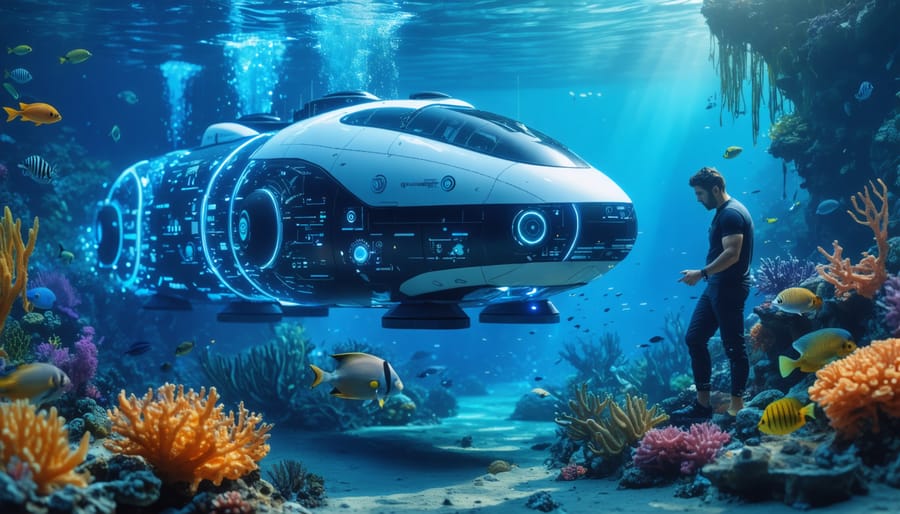
Beneath the ocean’s surface, a groundbreaking alliance of marine technologists, scientists, and conservation experts is revolutionizing marine protected area management. The Undersea Technology Innovation Consortium (UTIC) represents a pioneering collaboration between leading research institutions, technology companies, and environmental organizations, working to develop and deploy cutting-edge solutions for ocean conservation.
By combining advanced robotics, artificial intelligence, and sensor networks, this collaborative initiative is transforming our ability to monitor, protect, and understand marine ecosystems. From autonomous underwater vehicles that track endangered species to sophisticated environmental DNA sampling techniques, the consortium’s innovations are providing unprecedented insights into ocean health and biodiversity.
The urgency of marine conservation has never been greater, with climate change and human activities threatening delicate underwater ecosystems worldwide. Through strategic partnerships and shared resources, UTIC members are accelerating the development of sustainable solutions that bridge the gap between technological capability and conservation needs. Their work demonstrates how collective expertise and innovative thinking can create powerful tools for protecting our oceans’ future.
This article explores how this groundbreaking consortium is reshaping marine conservation through technology, highlighting key innovations, success stories, and the passionate scientists and engineers working to safeguard our underwater world.
The Power of Collaborative Innovation
Bringing Together Industry Leaders
The consortium brings together an impressive array of organizations committed to advancing undersea technology for marine protected areas. Leading the initiative is Ocean Dynamics, contributing their expertise in autonomous underwater vehicles and advanced sonar systems. Their collaboration with WaveNet Technologies has revolutionized underwater communication networks, enabling real-time data transmission across vast oceanic distances.
Marine Solutions International brings their pioneering work in biodegradable sensors and eco-friendly monitoring equipment, while DeepSea Analytics contributes cutting-edge artificial intelligence algorithms for processing complex marine data. The partnership also includes contributions from academic institutions, with the Maritime Research Institute providing essential research facilities and the Ocean Conservation Foundation offering crucial environmental impact assessments.
What makes this consortium unique is how each member’s specialized knowledge complements the others. For instance, when Ocean Dynamics’ vehicles collect data, WaveNet’s communication systems transmit it efficiently to DeepSea Analytics’ processing centers, creating a seamless technological ecosystem for marine conservation efforts. This synergy has already led to breakthrough developments in coral reef monitoring systems and marine mammal tracking technologies.
Shared Resources, Enhanced Results
By pooling resources and expertise, consortium members create a multiplier effect that dramatically accelerates marine technology innovation. Instead of individual organizations working in isolation, members share specialized equipment, research vessels, and testing facilities that would be cost-prohibitive for a single entity. This collaborative approach has already reduced development timelines for new underwater monitoring systems by an average of 40%.
The shared knowledge base is equally valuable. When marine biologists, engineers, and data scientists work together, they bring diverse perspectives that lead to breakthrough solutions. For example, one member’s expertise in artificial intelligence combined with another’s understanding of marine mammal behavior resulted in a more accurate whale detection system.
Financial resources are also optimized through this model. Joint funding enables larger-scale projects and reduces redundant spending across organizations. Members report that every dollar invested in shared resources generates approximately three dollars in research value through economies of scale and enhanced efficiency. This resource multiplication allows the consortium to tackle more ambitious projects while maintaining cost-effectiveness, ultimately accelerating the pace of marine technology innovation.
Breakthrough Technologies in Action
Advanced Underwater Monitoring Systems
The consortium’s advanced underwater monitoring systems represent a significant leap forward in marine ecosystem monitoring, combining cutting-edge sensor networks with intelligent data processing capabilities. At the heart of this innovation are autonomous underwater vehicles (AUVs) equipped with high-definition cameras and environmental sensors that continuously track water quality, temperature variations, and marine species movements.
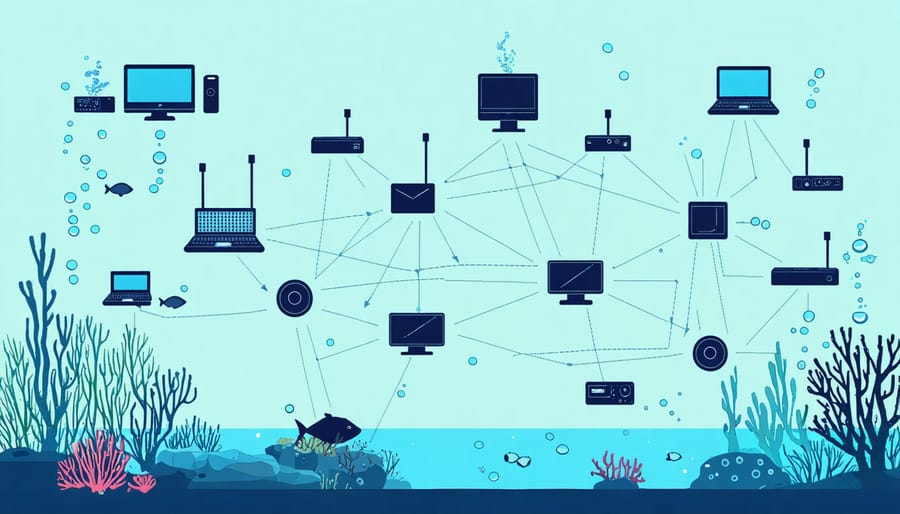
These systems employ a mesh network of interconnected acoustic sensors that can detect and track vessel movements, marine mammal communications, and unusual underwater activities. The network’s smart algorithms can differentiate between natural phenomena and potential threats, enabling rapid response to environmental emergencies.
Recent deployments include deep-sea thermal imaging cameras that operate in complete darkness, providing unprecedented visibility of nighttime marine activity. These cameras work alongside advanced sonar systems that create detailed 3D maps of the seafloor while minimizing impact on marine life.
Data transmission occurs through a combination of underwater acoustic communications and surface buoys equipped with satellite uplinks, ensuring real-time monitoring capabilities. The consortium has also implemented machine learning algorithms that analyze this data stream, identifying patterns in marine life behavior and early warning signs of ecosystem stress.
This integrated approach has already improved our understanding of marine protected areas, helping conservation teams respond more effectively to challenges like illegal fishing and coral bleaching events.
AI-Powered Species Tracking
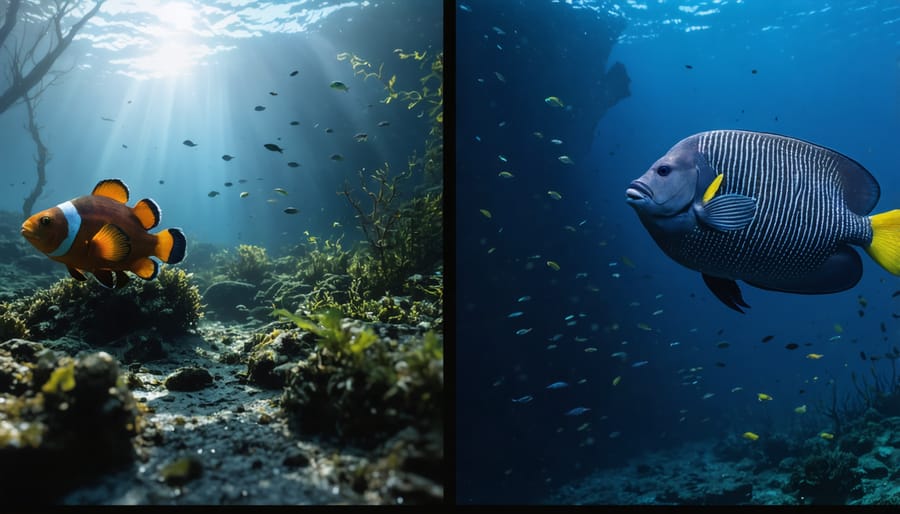
Recent advancements in artificial intelligence have revolutionized how we monitor and protect marine species. Machine learning algorithms, trained on vast databases of underwater imagery and acoustic recordings, can now identify and track marine life with unprecedented accuracy. These AI systems process data from underwater cameras, hydrophones, and environmental sensors in real-time, allowing researchers to monitor species movement patterns and population dynamics more effectively than ever before.
The consortium’s AI platform incorporates deep learning models that can distinguish between thousands of marine species, from the smallest fish to the largest whales. What makes this technology particularly remarkable is its ability to learn and improve over time. As more data is collected and analyzed, the system becomes increasingly accurate at species identification and behavior prediction.
Marine biologist Dr. Sarah Chen, who leads the AI development team, explains: “Our algorithms can now detect subtle changes in species distribution and behavior that might indicate environmental stress or ecosystem changes. This early warning system is crucial for conservation efforts.”
The technology has already yielded impressive results. In one pilot project, the AI system identified previously unknown breeding grounds for endangered hawksbill turtles by analyzing patterns in thermal imaging data. Citizen scientists can also contribute through a mobile app that allows them to upload their underwater photographs, which are then processed by the AI to expand the species database and improve identification accuracy.
Looking ahead, the consortium plans to integrate these AI capabilities with autonomous underwater vehicles, creating a network of smart sensors that can continuously monitor marine protected areas.
Real-time Data Collection Networks
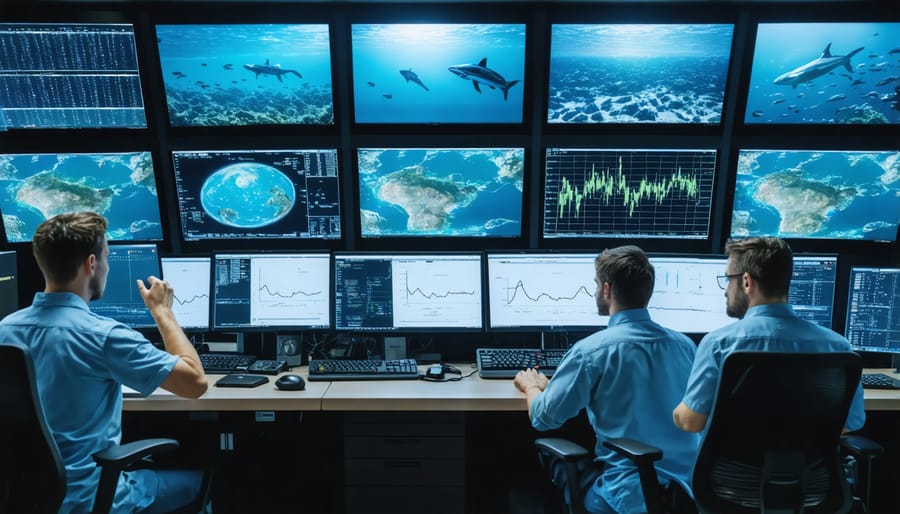
The consortium’s real-time data collection networks represent a groundbreaking advancement in marine observation and protection. These integrated systems combine various sensors, autonomous vehicles, and communication nodes to create a comprehensive view of underwater environments. By linking multiple data sources, scientists can monitor everything from water temperature and salinity to marine mammal movements and underwater sound patterns simultaneously.
The network’s strength lies in its ability to process and transmit data instantly to research stations and monitoring centers worldwide. Environmental scientists can track sudden changes in ocean conditions, detect unauthorized vessel activity, and monitor coral reef health without delay. This immediate access to information has proven crucial for rapid response to environmental emergencies and illegal fishing activities.
One of the network’s most innovative features is its adaptive sampling capability. When unusual patterns are detected, the system automatically adjusts its monitoring focus, deploying additional resources to areas of interest. For instance, during unusual temperature fluctuations that might indicate coral bleaching events, the network increases data collection frequency in affected areas.
The impact of these networks extends beyond scientific research. Local communities and conservation groups use real-time data to make informed decisions about marine resource management. Educational institutions have also integrated live data feeds into their curricula, helping students understand marine ecosystems through actual, current observations rather than historical data alone.
Through standardized data protocols and open-source sharing platforms, these networks foster unprecedented collaboration among research institutions, creating a global perspective on ocean health and marine biodiversity.
Conservation Impact and Success Stories
Protecting Endangered Species
Recent technological innovations have led to remarkable conservation success stories in protecting endangered marine species. The consortium’s efforts have particularly benefited the critically endangered vaquita porpoise in the Gulf of California, where advanced acoustic monitoring systems helped reduce illegal fishing activities by 70% in protected areas.
In the Great Barrier Reef, automated underwater vehicles equipped with AI-powered cameras have revolutionized coral monitoring and protection. These devices can identify crown-of-thorns starfish with 99% accuracy and deploy targeted elimination measures, helping preserve essential habitat for numerous endangered species.
The Hawaiian monk seal population has shown promising recovery thanks to satellite tracking systems and drone surveillance. These technologies enable researchers to monitor breeding patterns and identify potential threats in real-time, leading to a 3% annual population increase since 2014.
Another breakthrough came from the Mediterranean, where smart buoy networks helped track and protect loggerhead turtle nesting sites. The system alerts local conservationists when turtles approach nesting beaches, allowing for immediate protection measures. This initiative has increased hatchling survival rates by 45% in monitored areas.
These achievements demonstrate how collaborative technological solutions can create tangible conservation impacts, offering hope for endangered marine species worldwide.
Ecosystem Health Monitoring
The consortium’s enhanced monitoring capabilities have revolutionized our understanding of marine ecosystem health. Through a network of advanced sensors, autonomous vehicles, and AI-powered data analysis, researchers can now track vital indicators in real-time, providing unprecedented insights into ocean biodiversity and environmental changes.
Recent deployments have shown remarkable results in detecting early warning signs of coral bleaching events, monitoring fish population dynamics, and identifying unauthorized fishing activities. In the Great Barrier Reef pilot program, smart buoys equipped with multi-spectral cameras detected temperature anomalies three weeks earlier than traditional methods, allowing for rapid response measures that helped protect vulnerable coral communities.
Water quality monitoring has become more comprehensive, with distributed sensor networks measuring parameters such as dissolved oxygen, pH levels, and microplastic concentrations across vast marine areas. This data has enabled marine park managers to make informed decisions about resource allocation and conservation strategies.
The integration of machine learning algorithms has dramatically improved species identification and behavior tracking. During a recent pilot study in the Mediterranean, the system successfully identified and tracked 94% of native fish species, while also detecting several previously undocumented migration patterns.
These monitoring advances have fostered greater collaboration between research institutions and local communities, with citizen scientists now able to contribute meaningful data through user-friendly mobile applications. This democratization of marine science has created a more robust and responsive ecosystem management framework, ensuring that conservation efforts are both data-driven and community-supported.
Future Horizons
The future of undersea technology holds incredible promise for marine conservation and research. Building on current successes, the consortium is developing next-generation autonomous vehicles capable of longer deployments and deeper exploration. These advanced vehicles will feature improved artificial intelligence systems for better decision-making and adaptive sampling in dynamic underwater environments.
One of the most exciting developments is the integration of quantum sensors, which will dramatically improve our ability to detect minute changes in ocean chemistry and temperature. These sensors, combined with advanced machine learning algorithms, will provide unprecedented insights into marine ecosystem health and climate change impacts.
The consortium is also investing in breakthrough communication technologies that could revolutionize underwater data transmission. New optical communication systems using advanced laser technology promise to increase data transfer rates by up to 1000 times compared to current acoustic methods, enabling real-time streaming of high-definition video from the ocean depths.
Biomimetic robots, inspired by marine creatures like octopi and fish, are another frontier being explored. These robots will be able to navigate complex underwater environments more efficiently and conduct delicate sampling operations without disturbing sensitive marine ecosystems.
Looking further ahead, the consortium envisions creating a permanent network of interconnected underwater observation posts, forming a comprehensive “Internet of Underwater Things.” This network will provide continuous monitoring of marine environments, early warning systems for environmental threats, and valuable data for scientific research.
These innovations aren’t just technological achievements – they represent hope for better understanding and protecting our oceans. As these technologies mature, they will enable more effective conservation strategies and help us address critical challenges facing marine ecosystems.
In the face of increasing marine environmental challenges, technology consortiums have emerged as powerful catalysts for ocean conservation efforts. By bringing together diverse stakeholders – from research institutions and technology companies to conservation organizations and government agencies – these collaborative networks are revolutionizing our approach to protecting marine ecosystems.
The success of undersea technology consortiums demonstrates that no single organization can solve complex marine conservation challenges alone. Through shared resources, expertise, and innovation, these partnerships are developing more effective solutions for ocean monitoring, species protection, and habitat preservation. The collaborative nature of these consortiums enables faster development of new technologies, more comprehensive data collection, and broader implementation of conservation strategies.
Looking ahead, technology consortiums will play an increasingly vital role in marine conservation. As ocean threats become more complex and interconnected, the need for coordinated technological solutions grows more pressing. These partnerships are uniquely positioned to respond to emerging challenges, from climate change impacts to illegal fishing activities, with innovative and scalable solutions.
For those interested in marine conservation, supporting and engaging with technology consortiums offers a meaningful way to contribute to ocean protection. Whether through citizen science initiatives, research partnerships, or technology development, these collaborative platforms provide opportunities for individuals and organizations to participate in securing the future of our oceans.

jessica
Ava Singh is an environmental writer and marine sustainability advocate with a deep commitment to protecting the world's oceans and coastal communities. With a background in environmental policy and a passion for storytelling, Ava brings complex topics to life through clear, engaging content that educates and empowers readers. At the Marine Biodiversity & Sustainability Learning Center, Ava focuses on sharing impactful stories about community engagement, policy innovations, and conservation strategies. Her writing bridges the gap between science and the public, encouraging people to take part in preserving marine biodiversity. When she’s not writing, Ava collaborates with local initiatives to promote eco-conscious living and sustainable development, ensuring her work makes a difference both on the page and in the real world.