Marine Biodiversity Science Center

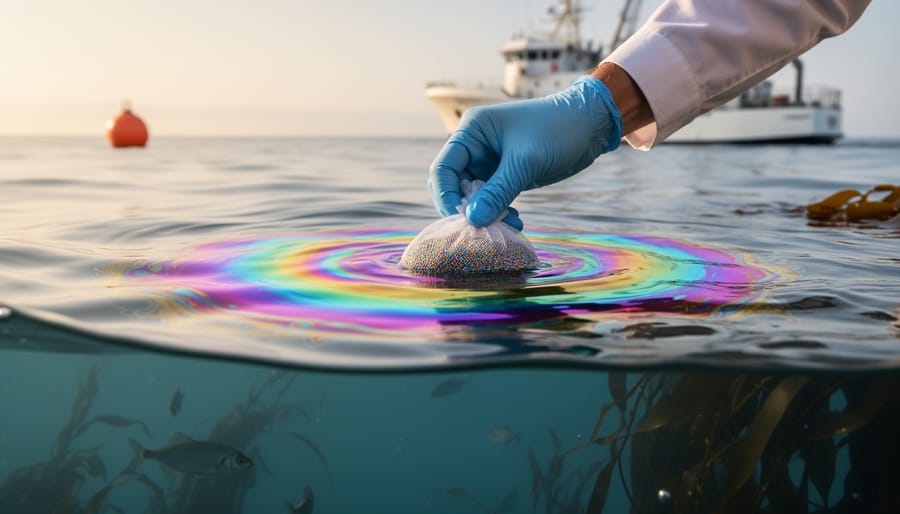
Tiny particles measuring one-billionth of a meter are revolutionizing how we tackle ocean pollution, yet their microscopic size raises critical questions about environmental safety that demand honest examination. Nanotechnology has emerged as a promising tool in marine conservation, with nanoparticles designed to absorb oil spills, break down microplastics, and detect harmful algal blooms. However, these same particles can potentially accumulate in marine food webs, interact with ocean chemistry in unpredictable ways, and persist in ecosystems for decades.
The safety debate centers on a fundamental paradox: the properties that make nanomaterials effective for pollution cleanup—their massive surface area, chemical reactivity, and ability to penetrate biological membranes—may also pose risks to the very ecosystems we aim to protect. Current research reveals both encouraging and cautionary findings. Laboratory studies show certain nanoparticles can disrupt cellular function in marine organisms, while field trials demonstrate successful pollution remediation with minimal ecological impact when properly designed and deployed.
Dr. Elena Martinez, a marine toxicologist who has spent fifteen years studying nanoparticle interactions in coastal ecosystems, emphasizes the importance of evidence-based assessment. Through her research expeditions, she has witnessed both the devastating effects of unchecked plastic pollution and the careful consideration required when introducing novel technologies into marine environments.
This article examines the scientific evidence surrounding nanotechnology safety in ocean conservation, exploring peer-reviewed research, real-world applications, ongoing monitoring efforts, and the regulatory frameworks emerging to govern these powerful tools. Understanding the balance between innovation and precaution enables informed decisions about whether and how nanotechnology should advance our mission to protect marine biodiversity for future generations.
How Nanotechnology Is Already Cleaning Our Oceans
Nanoparticles That Hunt Down Pollutants
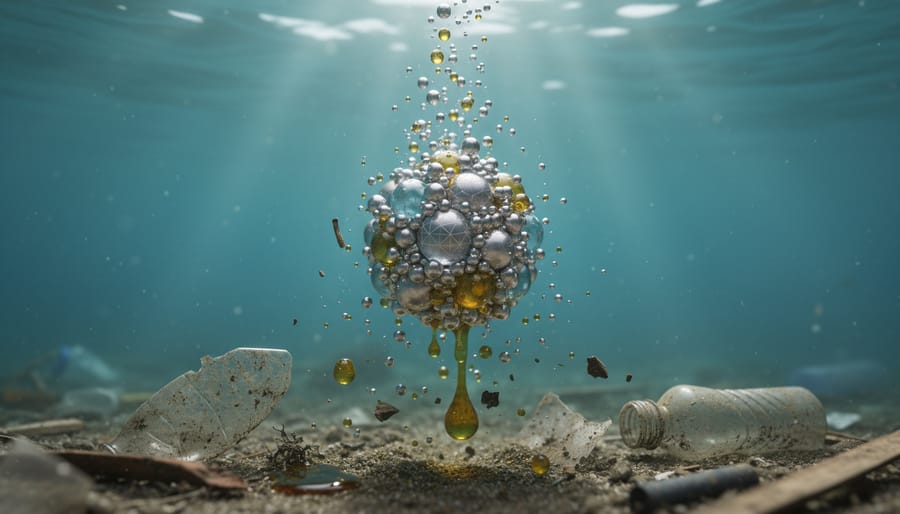
Engineered nanoparticles represent a promising frontier in marine pollution management, functioning like microscopic cleanup crews that actively seek out and neutralize specific contaminants. These tiny particles, typically measuring between 1 and 100 nanometers, can be designed with specialized surfaces that attract particular pollutants, making them remarkably efficient at targeting environmental threats.
Among the most exciting developments are photocatalytic nanoparticles, particularly titanium dioxide nanoparticles, which harness sunlight to break down organic contaminants in seawater. When exposed to UV light, these particles generate reactive oxygen species that chemically decompose petroleum-based pollutants, industrial chemicals, and even pharmaceutical residues. Similar to natural oil spill cleanup processes but at an accelerated rate, this photocatalytic action offers a way to address persistent contaminants that resist traditional cleanup methods.
Iron oxide nanoparticles provide another innovative approach, particularly for removing heavy metals like mercury and lead from marine environments. Their magnetic properties allow for easy recovery after deployment, addressing concerns about introducing new materials into ecosystems. Dr. Sarah Chen, a marine chemist working with these technologies, shares that early trials show impressive results: “We’ve seen contamination levels drop by 80% in controlled settings, with the nanoparticles successfully captured and removed before they pose secondary risks.”
While these technologies show tremendous potential, researchers emphasize the importance of thorough testing to ensure the nanoparticles themselves don’t create unintended environmental consequences.
The Technology Behind Microplastic Capture
Scientists have developed innovative nanotechnology solutions to tackle one of our oceans’ most pervasive problems: microplastic pollution. These microscopic plastic particles, often invisible to the naked eye, pose serious threats to marine life and ecosystem health. Two promising approaches are leading the charge in cleanup efforts.
Nano-filters represent the first line of defense. These ultra-fine membranes contain pores measuring just nanometers across, small enough to trap microplastic particles while allowing water and beneficial nutrients to pass through. Think of them as incredibly sophisticated sieves, catching pollution at a molecular level. Several research teams have successfully deployed these filters in pilot programs, demonstrating removal rates exceeding 90 percent in controlled environments.
The second breakthrough involves magnetic nanoparticles. These tiny particles are designed to bind specifically to microplastics in seawater. Once attached, scientists can use magnets to pull both the nanoparticles and their captured microplastics from the water. Dr. Sarah Chen, a marine chemist who has worked on this technology for five years, shares her enthusiasm: “Watching these particles attract and remove microplastics feels like witnessing nature’s own cleanup crew, enhanced by human ingenuity.”
Both technologies are still being refined for large-scale ocean deployment. Current research focuses on ensuring these nanoparticles themselves don’t harm marine organisms, understanding their long-term environmental fate, and developing cost-effective methods for widespread use. Volunteers at several coastal research stations are helping monitor these pilot programs, contributing valuable data that shapes the technology’s future development.
The Safety Question Scientists Are Racing to Answer
What Makes Nanoparticles Different (And Potentially Risky)
To understand why nanotechnology raises unique safety questions in marine environments, we need to explore what happens when materials shrink to the nanoscale. Nanoparticles measure between 1 and 100 nanometers—roughly one-thousandth the width of a human hair. At this incredibly small size, materials behave quite differently than their larger counterparts, and these changes have important implications for marine life.
The most significant difference lies in surface area. When you break a material into nanoparticles, you dramatically increase the surface area available for chemical reactions. Imagine cutting an apple into smaller and smaller pieces—eventually, nearly every molecule sits at the surface, ready to interact with its surroundings. This increased reactivity means nanoparticles can participate in chemical processes that the same material, in bulk form, simply couldn’t. In marine environments, this heightened reactivity can affect everything from nutrient cycling to how pollutants behave in seawater.
Nanoparticles also possess remarkable mobility. Their tiny size allows them to travel through biological barriers that would normally protect organisms. Marine biologist Dr. Sarah Chen, who studies nanoparticle uptake in filter-feeding organisms, explains: “We’ve observed titanium dioxide nanoparticles crossing cell membranes in oysters and accumulating in tissues. These particles can reach places that larger contaminants cannot, potentially affecting cellular function in ways we’re still working to understand.”
This enhanced bioavailability means nanoparticles can be absorbed more readily by marine organisms, from microscopic plankton to large fish. They can enter through gills, digestive systems, and even directly through cell walls. Once inside, their behavior becomes unpredictable—some particles may be harmlessly eliminated, while others might accumulate, potentially moving up the food chain in ways that require careful monitoring and research.
The Challenge of Tracking Tiny Particles in Vast Oceans
Imagine trying to find a handful of sand grains scattered across the entire Pacific Ocean. That’s essentially the challenge scientists face when monitoring nanomaterial fate in marine environments. These particles, measuring less than 100 nanometers, are incredibly difficult to detect and track once released into ocean waters.
Current research methods struggle with several key limitations. Traditional water sampling techniques often miss these tiny particles entirely, while advanced imaging equipment like electron microscopes can only examine minuscule volumes of water at a time. Dr. Sarah Chen, a marine toxicologist studying nanomaterial behavior, explains: “We’re working with particles so small they behave differently than anything we’ve tracked before. They can change form, bind to other materials, or be consumed by organisms within hours of entering the water.”
Ocean currents further complicate tracking efforts, dispersing nanoparticles across vast distances. This makes it nearly impossible to predict long-term accumulation patterns or identify contamination hotspots. Scientists are developing innovative detection methods, including specialized sensors and molecular markers, but comprehensive monitoring systems remain years away from widespread deployment.
What We Know About Impacts on Marine Life
Effects on Microscopic Marine Organisms
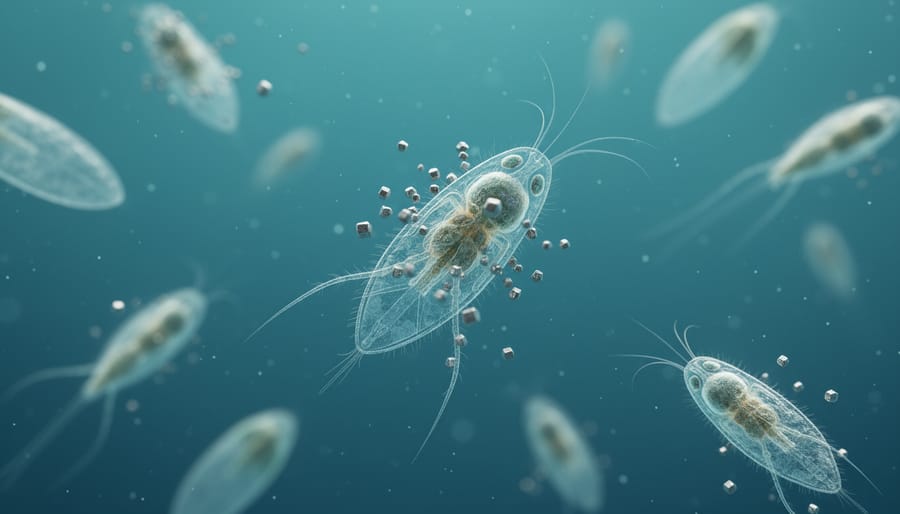
Research on microscopic marine organisms reveals both concerning impacts and important knowledge gaps regarding nanoparticle exposure. Studies show that titanium dioxide and silver nanoparticles, commonly found in sunscreens and consumer products, can reduce photosynthesis rates in marine phytoplankton by up to 45% at high concentrations. These tiny organisms form the foundation of ocean food webs, producing roughly half of Earth’s oxygen.
Marine biologist Dr. Sarah Chen, who has studied nanoparticle impacts for over a decade, shares an encouraging perspective: “While laboratory studies show potential harm, we’re finding that natural ocean conditions—including organic matter and salinity—often reduce nanoparticle toxicity significantly.” Her research team discovered that certain algae species can actually adapt their protective mechanisms when exposed to low nanoparticle concentrations over time.
Zooplankton, which feed on phytoplankton, face additional risks through bioaccumulation. Experiments demonstrate that nanoparticles can accumulate in their digestive systems, potentially affecting reproduction and growth rates. However, the concentrations used in most studies far exceed current environmental levels.
The key challenge lies in understanding real-world exposure scenarios. Citizen scientists can contribute to this research through volunteer monitoring programs that track coastal water quality, helping scientists establish baseline data for future nanoparticle studies and protection strategies.
What Happens When Fish and Marine Mammals Encounter Nanoparticles
As nanoparticles move up the food chain, fish and marine mammals face increasingly complex exposure scenarios. Research has documented several concerning patterns worth understanding, though scientists emphasize that we’re still learning about long-term effects.
Fish exposed to titanium dioxide and silver nanoparticles have shown behavioral changes including altered swimming patterns and reduced predator avoidance responses. Dr. Marina Chen, a marine toxicologist studying Pacific salmon populations, shares an illuminating observation: “We’ve seen fish exposed to certain nanomaterials taking 30% longer to respond to threat stimuli. In the wild, those milliseconds matter for survival.”
Bioaccumulation studies reveal that nanomaterials can concentrate in fish tissues, particularly in gills, liver, and brain tissue. A multi-year study on Atlantic cod found that nanoparticles accumulate differently than conventional pollutants, sometimes crossing the blood-brain barrier and affecting neurological function.
Marine mammals present additional concerns. Their longer lifespans and position as apex predators mean greater accumulation potential. Research on dolphins has detected various nanomaterials in tissue samples, though scientists are still determining threshold levels for toxicity.
The encouraging news? These studies are guiding safer nanotechnology design. Volunteers participating in tissue sampling programs contribute valuable data to these research efforts. By understanding how marine life responds to nanomaterials, scientists can advocate for protective regulations and develop ocean-safe alternatives before widespread environmental release occurs. This proactive approach offers hope for preventing another persistent pollutant crisis in our oceans.
The Coral Reef Question
Coral reefs, often called the rainforests of the sea, serve as critical testing grounds for understanding nanotechnology’s environmental safety. These delicate ecosystems are particularly vulnerable to environmental changes, making them sensitive indicators of potential harm. Recent research has examined how nanoparticles used in pollution cleanup might affect coral polyps, the tiny animals that build these magnificent structures.
Studies from marine research institutions show mixed results. Some nanoparticles designed to absorb pollutants can accumulate in coral tissues, potentially interfering with their ability to photosynthesize through their symbiotic algae. Dr. Maria Santos, a marine biologist who has spent fifteen years studying Caribbean reefs, shares her perspective: “We’ve observed that certain nano-sized titanium dioxide particles can stress corals at high concentrations, but properly designed nanomaterials show promise when applied responsibly.”
The key lies in rigorous testing before deployment. Researchers are now developing reef-safe nanotechnologies specifically engineered to target pollutants without harming marine life. These innovations undergo extensive laboratory and field trials to ensure they break down safely and don’t bioaccumulate in the reef ecosystem, offering hope for protecting these vital underwater habitats.
Safety Measures That Make the Difference
Green Nanotechnology: Designing Safety from the Start
Recognizing the potential risks associated with nanotechnology, researchers are pioneering a proactive approach called green nanotechnology. This innovative field focuses on designing safer nanomaterials from the outset, rather than addressing problems after they emerge. The core principle is simple yet powerful: create nanomaterials that are effective for their intended purpose while minimizing environmental and health impacts throughout their entire lifecycle.
Green nanotechnology draws inspiration from nature itself. Scientists are developing bio-based nanomaterials using components like plant extracts, algae, and even marine organisms. These naturally-derived materials often biodegrade more readily than synthetic alternatives, reducing the risk of long-term accumulation in ocean ecosystems. For example, researchers have successfully created nanoparticles from chitosan, a substance found in crustacean shells, which effectively removes pollutants from water while breaking down naturally over time.
Dr. Maria Santos, a marine nanotechnology researcher, shares her enthusiasm: “Working with bio-inspired materials feels like partnering with the ocean rather than imposing foreign substances on it. We’re learning from millions of years of evolution to create solutions that work with marine ecosystems, not against them.”
This design-first safety approach extends beyond material selection. Green nanotechnology also emphasizes energy-efficient production methods, reduced use of toxic chemicals during manufacturing, and careful consideration of how nanomaterials will behave when released into marine environments. By prioritizing safety from the drawing board, scientists are building a foundation for nanotechnology applications that truly serve ocean conservation goals.
Testing Protocols Before Ocean Deployment
Before nanomaterials can enter our oceans as pollution management tools, they must undergo rigorous testing protocols designed to protect marine ecosystems. These multi-phase assessments begin in controlled laboratory settings, where researchers evaluate how nanoparticles interact with seawater chemistry, temperature variations, and different salinity levels. Scientists then test these materials on representative marine organisms, from microscopic phytoplankton to fish species, monitoring for toxicity, bioaccumulation, and behavioral changes.
Marine biologist Dr. Sarah Chen shares her experience: “We spend months observing how nanomaterials behave in simulated ocean conditions before considering real-world trials. It’s painstaking work, but essential for protecting the ecosystems we’ve dedicated our careers to understanding.”
The next phase involves mesocosm studies, which are large-scale controlled environments that mimic natural marine conditions. Here, researchers can observe interactions across entire food webs and measure long-term effects. Advanced marine monitoring systems track particle distribution and environmental impacts in real-time.
Only after passing these comprehensive assessments can nanomaterials advance to small-scale field trials in designated marine areas, with continuous monitoring ensuring any unexpected effects are immediately detected and addressed.
Real Scientists Working on Real Solutions
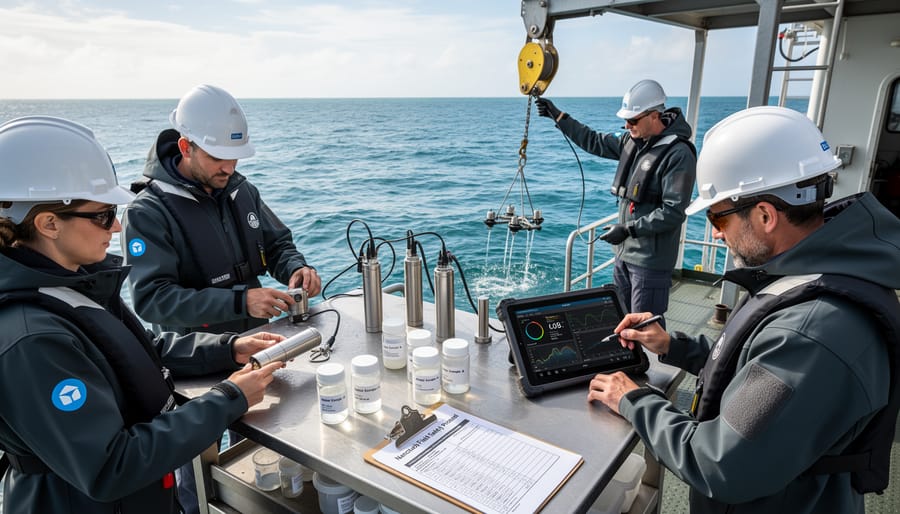
Dr. Maria Chen still remembers the moment that changed her research direction. While studying microplastic accumulation in Pacific seabirds five years ago, she realized that simply documenting the problem wasn’t enough. “I wanted to be part of the solution,” she explains from her laboratory at the Coastal Research Institute. Today, Maria leads a team developing iron oxide nanoparticles that can bind to microplastics in marine environments, making them easier to capture before they enter the food chain.
Her work exemplifies a growing movement of scientists who approach nanotechnology with both innovation and caution. Maria’s team doesn’t just engineer new materials in isolation. They collaborate directly with marine biologists, toxicologists, and environmental chemists to test every particle’s impact on living organisms before field trials begin. “We run exhaustive safety protocols,” she notes. “Every nanomaterial undergoes testing with phytoplankton, zooplankton, and fish species to understand potential effects across multiple trophic levels.”
Across the country, Dr. James Okafor combines his background in materials science with his passion for coral reef conservation. His research focuses on developing biodegradable nanofilters that can remove pharmaceutical pollutants from coastal waters without leaving harmful residues. What makes James’s approach unique is his commitment to community engagement. He regularly brings volunteers into the laboratory to learn about nanotechnology safety testing and involves citizen scientists in water quality monitoring programs that track the effectiveness of new remediation technologies.
These researchers understand that public trust depends on transparency. Both Maria and James maintain open data repositories where other scientists can review their safety testing results. They also participate in public forums, explaining their work to concerned citizens and answering questions about environmental risks.
For those interested in contributing to this intersection of innovation and safety, many research institutions offer volunteer positions in environmental monitoring programs. These opportunities allow participants to work alongside scientists, collecting samples and observing firsthand how rigorous safety testing protects our oceans while advancing solutions to plastic pollution.
The Path Forward: Balancing Innovation with Precaution
The future of nanotechnology in marine conservation hinges on our commitment to responsible innovation. Rather than abandoning this promising technology, the global scientific community is working toward frameworks that prioritize both environmental protection and technological advancement.
Current regulatory landscapes vary significantly across nations, creating both challenges and opportunities. The European Union’s REACH regulation and the United States’ Toxic Substances Control Act are being updated to address nanomaterials specifically, requiring comprehensive safety data before commercial deployment. However, marine environments cross international boundaries, making cooperation essential. Organizations like the International Union for Conservation of Nature are developing guidelines specifically for nanomaterial use in aquatic ecosystems.
Dr. Elena Martinez, a marine toxicologist who has studied nanoparticle behavior in coastal waters for over a decade, offers an encouraging perspective: “We’re seeing a fundamental shift in how nanotechnology is being developed. Ten years ago, environmental impact was an afterthought. Today, it’s built into the design process from day one.” This approach, known as “safe by design,” involves creating nanomaterials with environmental safety as a primary consideration, including developing particles that degrade into harmless components or can be easily recovered from water systems.
International research collaborations are accelerating our understanding. The Horizon Europe program funds cross-border studies examining long-term environmental impacts, while citizen science initiatives allow volunteers to participate in monitoring programs that track nanoparticle presence in local waterways. These efforts democratize research while building crucial baseline data.
The path forward requires ongoing dialogue between scientists, regulators, industry, and conservation organizations. By maintaining rigorous testing protocols, supporting transparent research, and engaging communities in monitoring efforts, we can harness nanotechnology’s potential while safeguarding the ocean ecosystems we’re trying to protect.
How You Can Support Safe Marine Conservation Technology
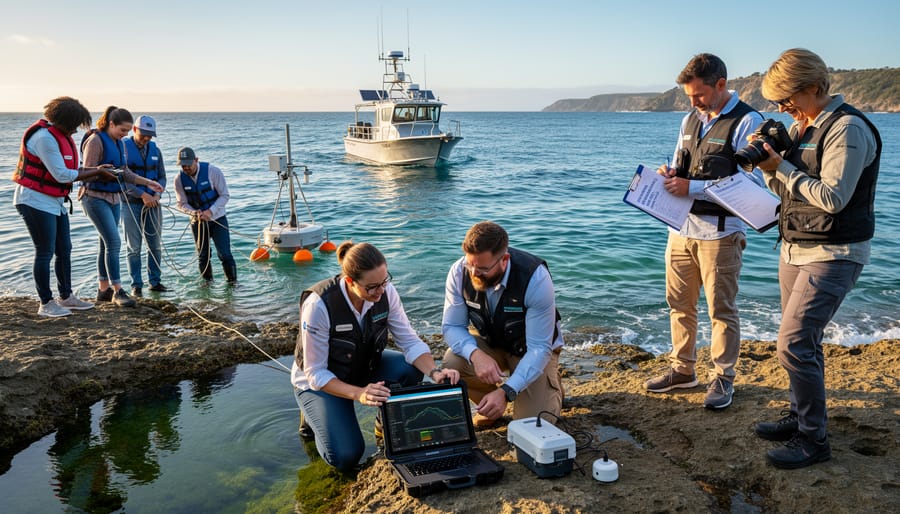
You can play a vital role in ensuring that nanotechnology and other emerging conservation technology develops safely for our oceans. Start by supporting research institutions conducting safety assessments of nanomaterials in marine environments. Many universities and conservation centers welcome donations specifically earmarked for studying long-term environmental impacts.
Consider joining citizen science initiatives that monitor ocean health. Programs like those tracking microplastic accumulation often need volunteers to collect water samples or document marine life observations. These contributions provide researchers with crucial data about baseline conditions before new technologies are widely deployed.
Marine conservation centers regularly seek volunteers for hands-on work. Dr. Sarah Chen, a marine biologist at Pacific Ocean Research Station, shares: “Our volunteer program connects everyday people with cutting-edge research. Last year, volunteers helped us test water quality monitoring systems that will eventually incorporate nanotechnology sensors. Their involvement ensures we stay grounded in real-world concerns.”
Stay informed by subscribing to e-networks focused on marine technology and conservation. Organizations like the Marine Technology Society and Ocean Conservation Network provide regular updates about safety research, policy developments, and opportunities for public input on emerging technologies.
Attend public forums where scientists present their findings and regulatory agencies seek community feedback. Your voice matters in shaping how these technologies are tested and implemented, ensuring that innovation serves ocean protection rather than creating new risks.
So, is nanotechnology safe for marine pollution management? The answer, as with many emerging technologies, is both yes and no—it depends entirely on how we choose to develop and deploy it. The science clearly shows us that nanotechnology holds remarkable promise for addressing some of our ocean’s most pressing challenges, from microplastic removal to oil spill remediation. Yet we’ve also seen that without proper oversight, testing protocols, and long-term monitoring, these same tools could introduce new environmental complications.
The good news is that we’re not navigating these waters blindly. Marine biologists like Dr. Sarah Chen have demonstrated that with rigorous testing and responsible application, nanotechnology can become a powerful ally in our conservation efforts. The key lies in maintaining robust regulatory frameworks, demanding comprehensive environmental impact assessments before widespread deployment, and fostering transparent collaboration between scientists, policymakers, and communities.
This is where each of us plays a vital role. Whether you’re an environmental scientist contributing to safety research, an educator sharing knowledge about emerging technologies, or a concerned citizen asking important questions, your engagement matters. Consider joining volunteer monitoring programs in coastal areas where nanomaterial-based cleanup efforts are underway, or support organizations demanding stronger testing requirements for new technologies.
Our oceans deserve both innovation and caution. With continued vigilance, evidence-based decision-making, and collective commitment to responsible development, nanotechnology can indeed become a valuable addition to our marine conservation toolkit—one that protects rather than compromises the biodiversity we’re working so hard to preserve.

jessica
Ava Singh is an environmental writer and marine sustainability advocate with a deep commitment to protecting the world's oceans and coastal communities. With a background in environmental policy and a passion for storytelling, Ava brings complex topics to life through clear, engaging content that educates and empowers readers. At the Marine Biodiversity & Sustainability Learning Center, Ava focuses on sharing impactful stories about community engagement, policy innovations, and conservation strategies. Her writing bridges the gap between science and the public, encouraging people to take part in preserving marine biodiversity. When she’s not writing, Ava collaborates with local initiatives to promote eco-conscious living and sustainable development, ensuring her work makes a difference both on the page and in the real world.