Marine Biodiversity Science Center

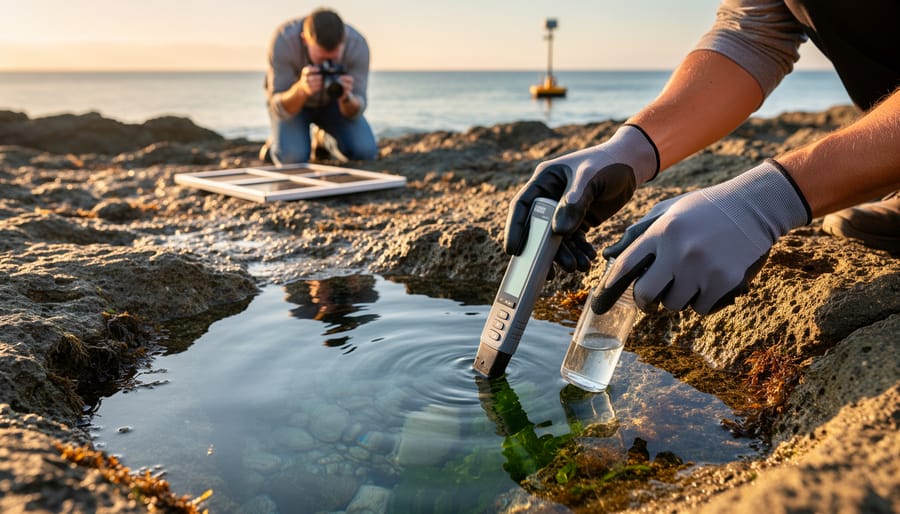
Establish baseline measurements before launching any monitoring program by documenting current conditions through photographs, species counts, and water quality parameters at your study site. Without this initial snapshot, you cannot measure change over time or detect meaningful trends in ecosystem health.
Design standardized data collection protocols that every team member follows identically, including specific measurement techniques, sampling locations, timing, and recording formats. A volunteer recording water temperature at the surface while another measures at depth creates incomparable datasets that undermine your entire monitoring effort.
Implement real-time validation checks as data enters your system rather than discovering errors months later during analysis. Simple measures like setting acceptable ranges for pH values, flagging duplicate entries, and requiring photographic evidence for rare species observations catch mistakes when memory is fresh and corrections are possible.
Train all participants using hands-on field sessions where they practice identification, measurement, and recording techniques under supervision until they achieve consistent results. Research shows that identification accuracy improves dramatically when volunteers work alongside experienced naturalists who can correct misidentifications immediately.
The quality of data flowing through marine biodiversity observation networks determines whether we can detect population declines, identify pollution sources, or measure conservation success. Poor quality data is worse than no data at all because it leads to misguided management decisions and wasted conservation resources.
Consider this: when citizen scientists monitoring the Pacific coast discovered anomalous temperature readings, their rigorous quality protocols helped researchers identify a previously unknown warm water current affecting salmon migration. That discovery emerged only because the team had established clear standards, conducted thorough training, and built verification systems into their workflow from day one.
Quality monitoring transforms scattered observations into powerful evidence that drives marine protection forward.
What Makes Marine Monitoring Data Different
The Ocean’s Hidden Variables
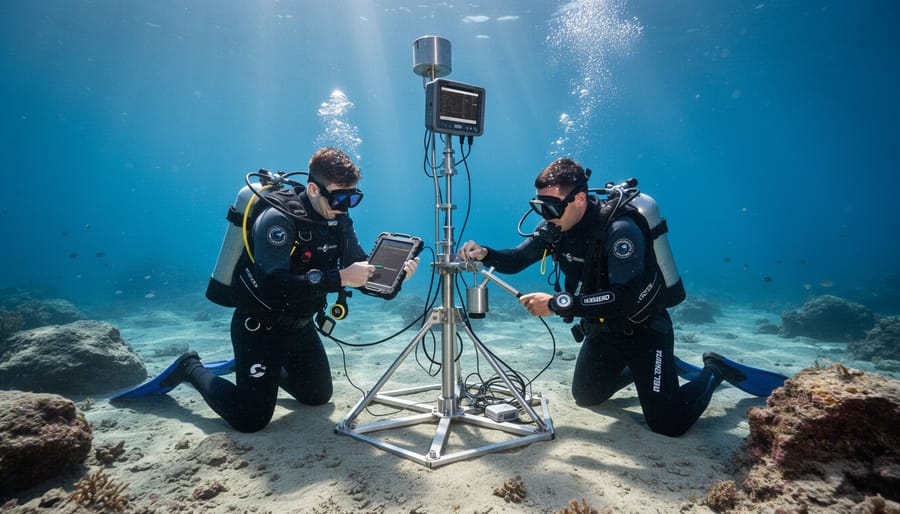
The ocean is constantly in motion, and this dynamic environment presents unique challenges for collecting accurate monitoring data. Ocean currents can transport marine organisms far from their typical habitats, potentially skewing population counts if researchers assume species are sedentary. Temperature fluctuations, whether daily or seasonal, dramatically influence fish behavior and distribution patterns—a reef bustling with activity during summer surveys might appear nearly barren in winter months.
Salinity changes, particularly near river mouths or after heavy rainfall, create invisible boundaries that affect where species can survive and thrive. These variations mean that a single survey snapshot rarely tells the complete story. Marine biologist Dr. Elena Rodriguez shares her experience: “During our coral reef assessments, we initially couldn’t understand why our fish counts varied so wildly. Once we started recording water temperature and current strength alongside our observations, patterns emerged that completely changed our understanding of local biodiversity.”
For volunteer monitors, this complexity isn’t a barrier—it’s an opportunity to contribute valuable context. By noting environmental conditions during each survey, citizen scientists help researchers distinguish between actual population changes and natural environmental variation, making every observation more meaningful for conservation efforts.
Technology Under Pressure
Underwater monitoring equipment faces extraordinary challenges that can significantly compromise data quality. The ocean environment is inherently harsh, with corrosive saltwater, intense pressure at depth, and constant biological activity creating a perfect storm for equipment issues.
Sensor drift represents one of the most insidious problems. Over time, instruments measuring temperature, salinity, pH, or oxygen levels gradually lose their calibration accuracy. Without regular maintenance, these tiny measurement shifts accumulate, potentially leading researchers to draw incorrect conclusions about ecosystem health. Marine biologist Dr. Elena Martinez recalls discovering a dissolved oxygen sensor that had drifted by 15% over just three months, which would have painted an artificially optimistic picture of water quality conditions.
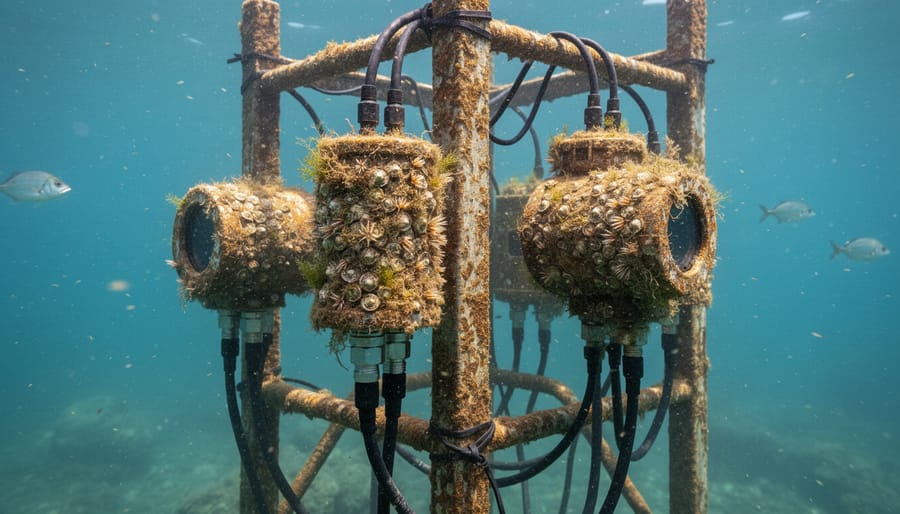
Biofouling compounds these technical challenges. Algae, barnacles, and bacterial films eagerly colonize any surface submerged in the ocean, coating sensors and blocking their ability to accurately measure their surroundings. Even sophisticated anti-fouling coatings only delay the inevitable.
Physical damage from storms, curious marine life, or debris further threatens data continuity. A single severed cable or cracked housing can result in weeks of missing data, creating critical gaps in long-term monitoring records that may mask important ecological changes.
Understanding these vulnerabilities helps researchers and volunteers design more resilient monitoring programs and interpret data with appropriate caution.
Common Data Quality Issues in Marine Monitoring
Missing Data and Sampling Gaps
Missing data represents one of the most common challenges in marine monitoring programs, often stemming from factors beyond our control. Storms can prevent research vessels from reaching monitoring sites, while equipment malfunctions underwater may go undetected for days or weeks. Seasonal access limitations, particularly in polar regions or areas with monsoon patterns, create inevitable gaps in long-term datasets.
These gaps create cascading effects that ripple through analysis and decision-making. A single missed sampling period might seem minor, but repeated absences can obscure important trends, such as the gradual recovery of a coral reef or the seasonal migration patterns of marine species. Statistical analyses require consistent data intervals, and gaps can reduce confidence in findings or necessitate complex interpolation methods.
Marine biologist Dr. Chen Martinez shares her experience: “During my research on kelp forest dynamics, equipment failure cost us three months of data during a critical spawning season. We had to adjust our entire analysis approach and acknowledge the limitations openly in our findings.”
For volunteer monitoring programs, weather-related cancellations are particularly common. Organizations address this by building redundancy into sampling schedules and training multiple volunteer teams. If you’re interested in contributing to data collection efforts while learning about these challenges firsthand, consider joining a local marine monitoring program where consistent participation helps fill these crucial gaps.
Measurement Errors and Calibration Drift
Monitoring equipment isn’t perfect, and understanding its limitations helps us maintain reliable data collection. Two main types of errors affect measurements: systematic errors, which consistently skew readings in one direction (like a pH sensor that always reads 0.2 units too high), and random errors, which vary unpredictably due to environmental interference or electronic noise.
Over time, sensors experience degradation that gradually shifts their accuracy. A water temperature probe exposed to saltwater corrosion might drift from its original calibration, while an oxygen sensor’s membrane can become fouled by algae growth. Dr. Sarah Chen, a marine biologist monitoring coral reef health in Indonesia, shares: “We discovered our nutrient sensors had drifted significantly after six months of deployment. Regular calibration checks revealed the issue before it compromised our dataset.”
Calibration is essential to maintain accuracy. This involves comparing sensor readings against known standards at regular intervals. For citizen science volunteers, this might mean checking a handheld salinity meter against standardized seawater samples before each monitoring session. Research programs typically calibrate equipment monthly or quarterly, depending on deployment conditions.
Establishing calibration schedules and documenting all adjustments creates a transparent record that helps identify when data quality issues began, protecting the integrity of long-term monitoring efforts.
Human Error and Observation Bias
Even experienced marine scientists face challenges in collecting consistent, accurate data. Species identification remains one of the most common error sources—distinguishing between similar fish species underwater or correctly identifying juvenile organisms requires specialized training. Dr. Maria Chen, a coral reef ecologist, recalls a volunteer program where well-intentioned participants initially confused Nassau groupers with other grouper species, skewing population estimates until targeted training sessions corrected the issue.
Observer bias introduces another layer of complexity. Different individuals may estimate fish school sizes differently or measure coral colonies using slightly varied techniques. One observer might consistently record measurements from the widest point of a coral colony, while another measures from a different reference point. These inconsistencies compound over time, making temporal comparisons unreliable.
Data entry errors, though seemingly minor, can dramatically affect datasets. Transposed numbers, misplaced decimal points, or incorrect date entries all undermine data integrity. During a seagrass monitoring project in Florida, researchers discovered that a single typo—recording depth as 35 meters instead of 3.5 meters—created impossible habitat conditions that nearly corrupted their entire spatial analysis.
Addressing these challenges requires standardized protocols, regular training refreshers, and robust verification systems where multiple observers cross-check observations before finalizing records.
Understanding Uncertainty in Marine Data
Types of Uncertainty You’ll Encounter
When you’re collecting ocean data, you’ll encounter three main types of uncertainty that can affect your measurements. Understanding these helps you interpret your findings more accurately and contribute more effectively to marine conservation efforts.
Measurement uncertainty stems from the limitations of your monitoring tools themselves. Imagine using a thermometer to measure water temperature at a coral reef. Even the best equipment has a margin of error, perhaps plus or minus 0.2 degrees Celsius. While this seems small, it matters when tracking subtle temperature changes that trigger coral bleaching events. Similarly, when volunteers count fish species during reef surveys, differences in visibility, observer experience, and identification skills create natural measurement variations.
Natural variability represents the ocean’s inherent changeability. Picture monitoring dolphin populations in a coastal bay. Some days you might spot twenty individuals, other days just five, not because the population crashed, but because dolphins move between feeding areas. Seasonal patterns, tidal cycles, and weather conditions all create legitimate variations in what you observe. Marine biologist Dr. Sarah Chen, who coordinates citizen science programs, notes that “recognizing natural variability prevents us from mistaking normal ocean rhythms for concerning trends.”
Model uncertainty emerges when scientists use data to predict future conditions or estimate populations. If you’re calculating total fish abundance from sample counts, your statistical model makes assumptions that introduce uncertainty. These predictions become especially important when informing conservation decisions, making it crucial to understand and communicate the confidence levels behind our projections.
Why Uncertainty Isn’t the Enemy
In marine conservation, uncertainty doesn’t signal failure—it provides crucial insights that strengthen our work. When we acknowledge what we don’t know about our data, we make smarter decisions about resource allocation and conservation priorities. A marine biologist working on coral reef monitoring in the Caribbean shares: “Initially, I worried that admitting uncertainty would undermine our credibility. Instead, transparently reporting confidence levels helped secure additional funding because managers appreciated our honesty about what conclusions were solid versus preliminary.”
Uncertainty mapping reveals where to focus improvement efforts. If fish abundance estimates carry high uncertainty due to poor visibility conditions, you know to adjust survey timing or add complementary methods like acoustic monitoring. This targeted approach builds more robust datasets than blindly collecting information without assessing reliability.
For volunteer programs, understanding uncertainty transforms participants from data collectors into critical thinkers. When citizen scientists learn that three independent counts of sea stars produce more reliable estimates than one, they grasp why their repeated efforts matter. This knowledge deepens engagement and improves data quality naturally, as volunteers become invested in reducing uncertainty through careful observation and proper technique.
Practical Strategies for Monitoring Data Quality
Before You Collect: Quality by Design
The foundation of reliable data begins long before the first observation is recorded. Successful long-term monitoring programs build quality into every aspect of their design, ensuring consistency and accuracy from day one.
Start with standardized protocols that leave no room for interpretation. These detailed guides specify exactly what to measure, when, where, and how. For example, the Reef Environmental Education Foundation (REEF) provides volunteer divers with comprehensive fish identification materials and standardized survey methods, ensuring data collected from California to the Caribbean can be meaningfully compared.
Training transforms protocols from paper into practice. Effective programs combine classroom learning with hands-on field experience. Marine biologist Dr. Elena Rodriguez recalls her work establishing a coastal monitoring network: “We discovered that three training sessions produced far more consistent data than a single workshop. Volunteers need time to practice, make mistakes, and build confidence before collecting research-grade observations.”
Equipment calibration matters tremendously. Temperature sensors, water quality meters, and underwater cameras all drift from accuracy over time. Schedule regular testing against known standards, and maintain detailed maintenance logs. Even simple tools like measuring tapes and identification cards should be checked for wear and replaced as needed.
Finally, document everything in a quality assurance plan. This living document outlines your protocols, training requirements, equipment schedules, and data validation procedures. When questions arise months or years later, you’ll have clear answers about how data was collected and verified.
During Collection: Real-Time Quality Checks
The most effective quality assurance happens in real-time, while researchers are still in the field. Marine biologist Dr. Elena Martinez recalls a pivotal moment during a coral reef survey: “We caught a data entry error immediately because we were reviewing values on our waterproof tablets between dives. That temperature reading was impossibly high, and we discovered a malfunctioning sensor. If we’d waited until back at the lab, we would have lost an entire day’s worth of data.”
Field verification methods form your first line of defense against poor quality data. Start by collecting duplicate samples at random intervals, typically from 10% of your sampling sites. These duplicates help identify inconsistencies in collection techniques between team members or equipment variations. When training volunteer monitors, experienced coordinators often collect parallel samples during the first few surveys to ensure proper technique before volunteers work independently.
Immediate data review means examining values as soon as they’re recorded. Look for suspicious readings that fall outside expected ranges, such as salinity measurements that seem unusually high or species counts that differ dramatically from historical patterns. Modern field apps can automatically flag values that exceed preset thresholds, prompting collectors to verify measurements on the spot. This simple practice catches transcription errors, equipment malfunctions, and methodology issues while corrections are still possible, saving countless hours of troubleshooting later.
After Collection: Validation and Documentation
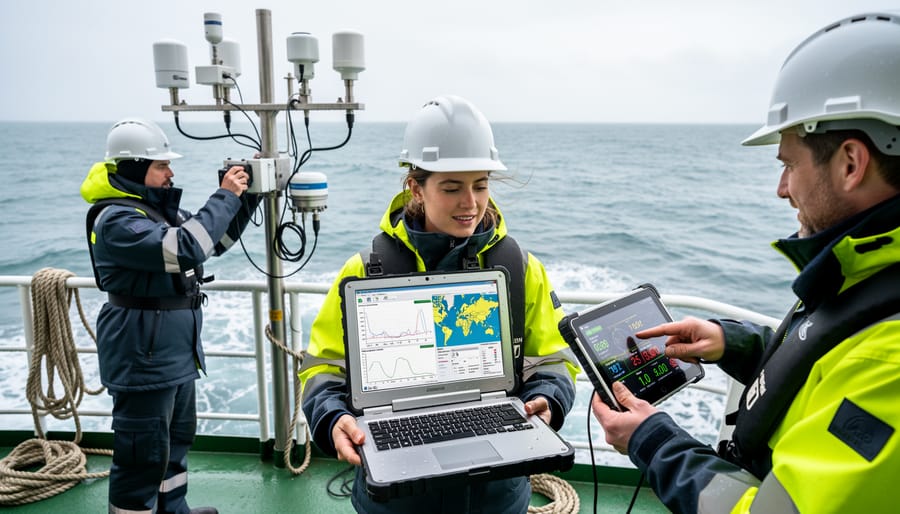
Once you’ve collected your marine monitoring data, the real work begins. Data cleaning is your first line of defense against errors—removing duplicate entries, correcting obvious typos, and standardizing formats across your dataset. Think of it as quality control for the ocean’s story you’re documenting.
Outlier detection requires careful consideration in marine environments. Is that unusually high sea temperature reading a genuine heat spike or a sensor malfunction? Context matters. Marine biologist Dr. Elena Rodriguez shares, “I always cross-reference anomalies with nearby monitoring stations and weather patterns before dismissing them. Sometimes outliers reveal the most important ecological changes.”
Cross-validation strengthens your findings by comparing data across multiple sources or time periods. When citizen scientists and research vessels document similar trends in fish populations, confidence in those observations grows substantially. This collaborative verification process ties directly to broader data sharing practices that amplify conservation impact.
Documentation might seem tedious, but metadata breathes life into raw numbers. Record collection methods, weather conditions, equipment specifications, and observer notes. These details transform measurements into meaningful evidence that other researchers can trust and build upon. Clear documentation also opens doors for volunteer involvement, as newcomers can understand exactly how data was gathered and contribute confidently to ongoing monitoring efforts.
Tools and Technologies That Help
Quality Control Software and Platforms
Modern technology has revolutionized how we maintain data quality in marine monitoring programs, making sophisticated quality control accessible to everyone from professional researchers to citizen scientists. Several user-friendly platforms now automate routine quality checks that once required hours of manual review.
Open-source tools like R and Python packages (including tidyverse and pandas) offer powerful data validation capabilities, with visualization libraries that help spot outliers and patterns instantly. For those preferring point-and-click interfaces, platforms like OBIS-ENV-DATA and Ocean Biodiversity Information System provide built-in quality control features specifically designed for marine biodiversity data.
Cloud-based collaborative platforms such as iNaturalist and eMammal automatically flag questionable species identifications, inviting expert verification before data enters permanent databases. These systems learn from community input, continuously improving their accuracy.
Many marine monitoring programs now use customizable dashboards that display real-time data quality metrics, alerting teams to potential issues before they compound. Dr. Sarah Chen, a marine ecologist, shares: “Quality control software transformed our volunteer program. Automated checks catch 95% of common errors, freeing our team to focus on complex validation and meaningful conservation work.”
Whether you’re establishing a new monitoring program or joining existing efforts, exploring these platforms helps ensure your contributions advance marine conservation effectively.
Emerging Technologies Making a Difference
The landscape of marine data collection is rapidly evolving with technological innovations that significantly enhance reliability and accuracy. AI-assisted species identification now enables volunteers and researchers to verify observations through automated image recognition systems, dramatically reducing misidentification errors while processing thousands of records in minutes.
Advanced sensor technology has transformed underwater monitoring, with new generation devices that self-calibrate and flag anomalous readings in real-time. These smart sensors can detect equipment malfunctions before they compromise data integrity, sending alerts directly to researchers.
Perhaps most exciting is the rise of citizen science apps that incorporate built-in quality checks. These platforms guide contributors through proper data collection protocols with step-by-step prompts, GPS verification, and photo requirements. Marine biologist Dr. Sarah Chen notes, “These apps have democratized ocean monitoring while maintaining professional standards. We’re seeing data from citizen scientists that rivals research-grade quality.”
For those interested in contributing, many programs now offer virtual training modules that teach data quality principles before volunteers begin field work, ensuring everyone understands their vital role in collecting reliable information.
Getting Involved: Opportunities for Citizen Scientists and Volunteers
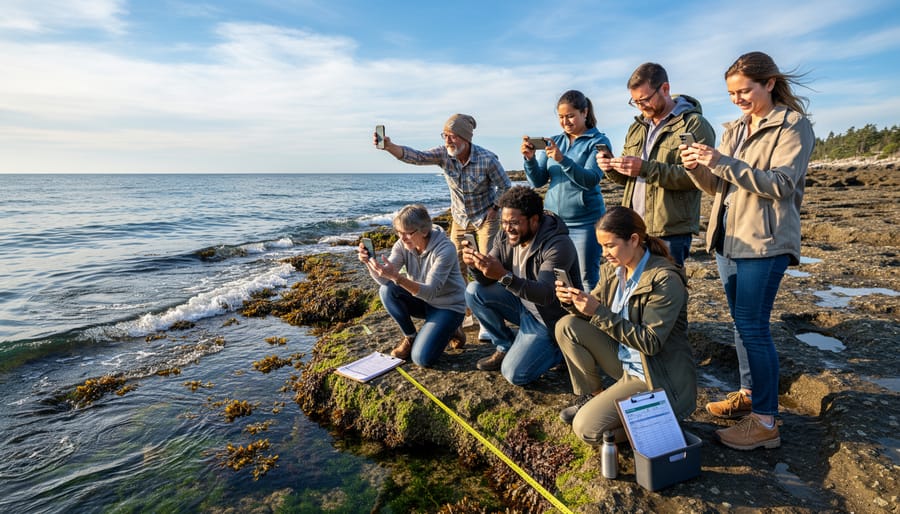
You don’t need a PhD to make meaningful contributions to marine monitoring programs. Across Canada’s coastlines, trained volunteers are collecting high-quality data that shapes conservation decisions and advances scientific understanding. The key is comprehensive training and clear protocols that ensure citizen science contributions meet the same rigorous standards as professional research.
Most marine monitoring programs offer structured training sessions covering species identification, proper sampling techniques, and data recording protocols. You’ll learn to use standardized datasheets, understand quality control measures, and recognize when observations need expert verification. Many programs provide ongoing support through online forums, field mentors, and regular check-ins to maintain data accuracy.
Sarah Chen, a high school teacher from Vancouver Island, discovered the real impact volunteers can have when she noticed unusual patterns during her first season monitoring intertidal zones. Several recorded sea star observations didn’t match the habitat characteristics she’d been trained to recognize. When she flagged these discrepancies, program coordinators discovered that previous volunteers had been misidentifying a similar-looking species. Her attention to detail led to protocol refinements, including improved photo guides and additional training modules that enhanced data quality across the entire network.
Getting started is straightforward. Contact local marine research stations, conservation organizations, or university programs to find opportunities matching your schedule and interests. Whether you can commit to weekly surveys or seasonal sampling events, your carefully collected observations fill critical knowledge gaps. Programs particularly welcome volunteers willing to monitor less-studied locations or species, where consistent data collection can reveal important trends that might otherwise go unnoticed. Your curiosity and commitment to following protocols makes you an invaluable partner in marine conservation.
Quality data isn’t just about numbers and spreadsheets—it’s about safeguarding the future of our oceans. Every accurately recorded observation, every carefully calibrated instrument, and every standardized protocol contributes to a clearer picture of marine ecosystem health. When we prioritize data quality in monitoring programs, we equip decision-makers with the reliable evidence they need to establish effective marine protected areas, develop sustainable fishing policies, and respond swiftly to emerging threats like coral bleaching or invasive species.
The journey toward better marine monitoring starts with each of us. Whether you’re a seasoned researcher refining your protocols or a curious volunteer joining your first coastal survey, your commitment to data quality amplifies our collective impact. Begin by implementing even one or two quality control measures in your work—regular equipment calibration, consistent training for team members, or thorough documentation practices. These seemingly small steps create ripples of improvement across entire monitoring networks.
The Marine Biodiversity Science Center invites you to join our growing community of ocean advocates. Explore our volunteer monitoring programs, where you’ll receive comprehensive training in data collection best practices. Connect with fellow marine enthusiasts through our e-network to share experiences, troubleshoot challenges, and celebrate successes. Together, we’re building a global movement where quality data drives meaningful conservation action.
Our oceans face unprecedented challenges, but they also have unprecedented numbers of people who care. With your engagement and dedication to monitoring excellence, we’re creating a brighter, more resilient future for marine life worldwide.

jessica
Ava Singh is an environmental writer and marine sustainability advocate with a deep commitment to protecting the world's oceans and coastal communities. With a background in environmental policy and a passion for storytelling, Ava brings complex topics to life through clear, engaging content that educates and empowers readers. At the Marine Biodiversity & Sustainability Learning Center, Ava focuses on sharing impactful stories about community engagement, policy innovations, and conservation strategies. Her writing bridges the gap between science and the public, encouraging people to take part in preserving marine biodiversity. When she’s not writing, Ava collaborates with local initiatives to promote eco-conscious living and sustainable development, ensuring her work makes a difference both on the page and in the real world.