Marine Biodiversity Science Center

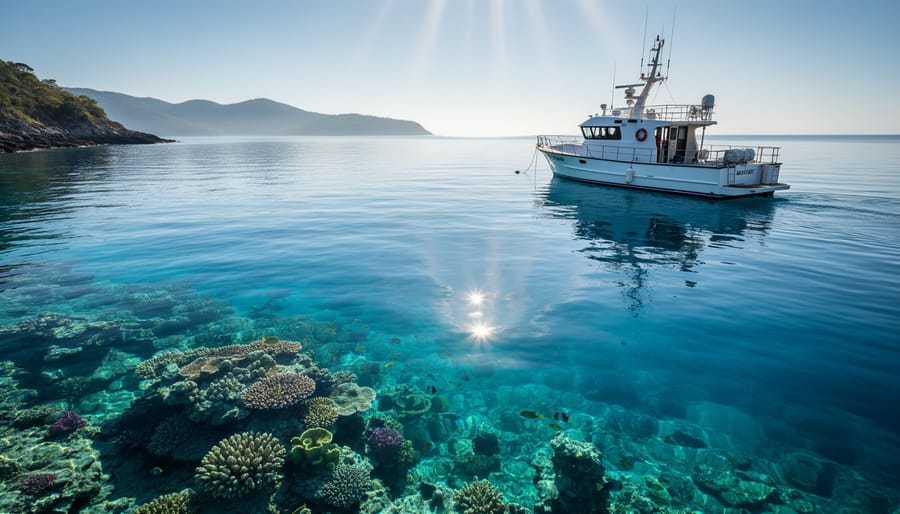
A marine protected area (MPA) is a clearly defined section of ocean, estuary, or coastal zone where human activities are regulated to safeguard marine ecosystems, biodiversity, and natural resources. These underwater sanctuaries range from zones that prohibit all extractive use to areas allowing sustainable fishing and recreation under strict guidelines. Think of them as the ocean’s equivalent of national parks, but with management strategies tailored to the unique challenges of protecting life beneath the waves.
MPAs matter because our oceans face unprecedented pressure. Overfishing has depleted commercial stocks by more than 90% in some regions. Climate change bleaches coral reefs that took millennia to form. Pollution transforms vibrant underwater ecosystems into barren zones. Protected areas offer a proven defense: studies consistently show that well-managed MPAs increase fish biomass, restore habitat complexity, and rebuild populations that spill over into surrounding waters, benefiting fisheries and coastal communities alike.
Yet confusion persists about what these protections actually mean. Does “protected” mean no one can enter? Can you still swim or snorkel? What makes one MPA different from another? The answers shape everything from where you can drop anchor to how nations meet international conservation commitments. By 2026, nearly 100 countries have pledged to protect 30% of their ocean territory by 2030, making the precise definition of MPAs more consequential than ever.
This article clarifies what qualifies as an MPA, how these zones function within broader management frameworks, and the spectrum of protection levels that exist. You’ll discover how definitions translate into real-world conservation outcomes and why understanding these distinctions empowers everyone from marine biologists to weekend ocean enthusiasts to participate more effectively in protecting our blue planet.
What Marine Protected Areas Really Mean
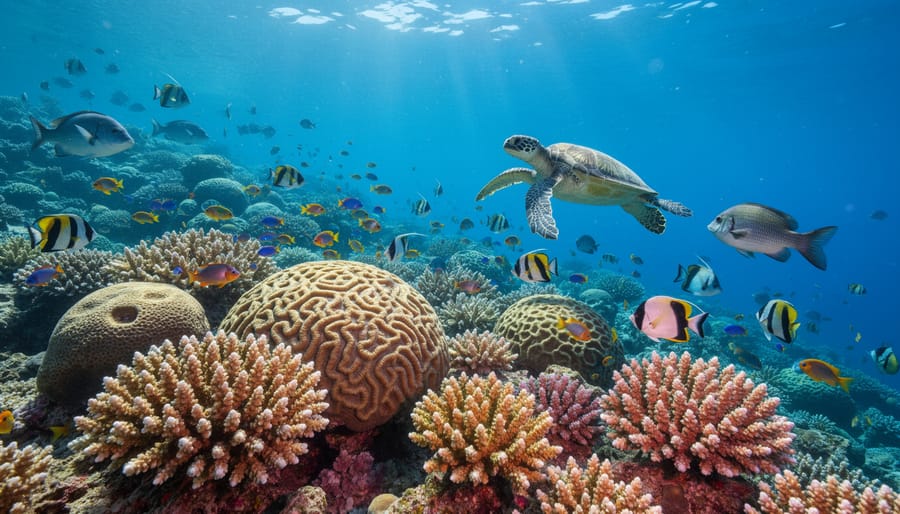
At its core, a marine protected area is a clearly defined geographic space in the ocean that receives legal recognition and management to achieve the long-term conservation of nature. That’s the IUCN definition of MPAs and it’s intentionally broad. The framework captures everything from strictly off-limits marine reserves where no fishing or extraction occurs, to multi-use zones where sustainable activities continue under careful oversight. This spectrum exists because ocean ecosystems and human communities are diverse, and effective conservation requires flexible tools.
The key word in that definition is “protected,” which trips up many people. Protection doesn’t automatically mean exclusion. It means management designed to safeguard ecological values over the long haul. A no-take reserve bans extractive activities entirely. A sustainable-use MPA might allow traditional fishing with gear restrictions, seasonal closures, or catch limits. Both qualify as MPAs if their primary purpose is conservation, but they operate under different rules and deliver different outcomes.
Understanding this distinction matters enormously for management success. When stakeholders hear “marine protected area” and assume it means a total lockout, conflict erupts before planning even begins. Conversely, when an MPA gets labeled “protected” but permits business-as-usual extraction, it delivers minimal conservation benefit and erodes public trust. Clear definitions prevent these failures by aligning expectations with reality from the start.
- Marine Protected Area (MPA)
- A legally designated ocean space managed primarily for long-term conservation of marine ecosystems, habitats, and species. Protection level varies widely depending on management objectives and local context.
- No-Take Zone
- An area where all extractive activities, fishing, mining, collecting organisms, are prohibited. These zones offer the highest level of protection and typically show the most dramatic ecological recovery.
- Marine Reserve
- Generally synonymous with no-take zones, though some jurisdictions use the term more broadly. Reserves prioritize ecosystem integrity over human use.
- Multiple-Use Area
- An MPA that allows compatible human activities under regulation, balancing conservation goals with sustainable resource use. Fishing, tourism, and research may continue with restrictions.
- Marine Sanctuary
- A designation used primarily in the United States for MPAs that protect cultural and ecological values. Sanctuaries often permit multiple uses while prohibiting particularly harmful activities.
Internationally, the IUCN has formalized this spectrum into a classification system running from Category I (strict protection) through Category VI (sustainable use with conservation). This framework gives managers and scientists a shared language. When researchers report that Category Ia reserves rebuild fish biomass faster than Category V zones, everyone knows what those labels mean. That precision enables evidence-based policy and helps communities choose the right MPA design for their circumstances, rather than treating all protected areas as identical.
How Marine Protected Areas Work
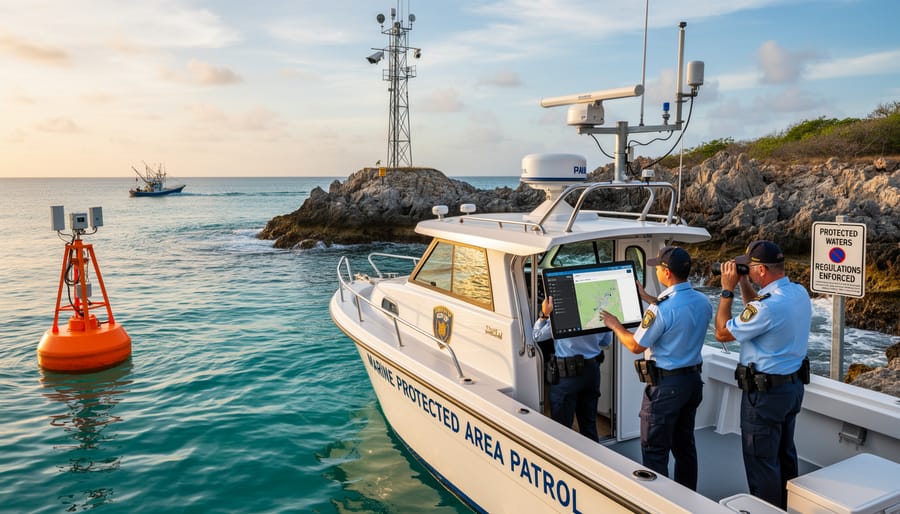
Marine protected areas function through a carefully orchestrated system that begins long before any regulations take effect. Scientists and managers first identify priority regions using criteria like biodiversity hotspots, spawning grounds, migration corridors, or degraded habitats ripe for recovery. They analyze oceanographic data, species distribution models, and historical fishing patterns to define geographic boundaries that make ecological sense, not just administrative ones. A well-designed MPA accounts for larval dispersal ranges, seasonal movements of target species, and connectivity with surrounding habitats. The boundaries are typically mapped using GPS coordinates and marked with buoys, signs, or digital mapping tools accessible to fishers and recreational users.
Once boundaries are set, zonation divides the MPA into functional areas. A core no-take zone might prohibit all extractive activities, while buffer zones permit limited fishing with gear restrictions. Recreation zones allow swimming and diving but ban anchoring on sensitive reefs. This layered approach lets managers tailor protection levels to specific conservation goals while accommodating human use where appropriate. Zonation isn’t arbitrary, it reflects trade-offs between ecological needs and socioeconomic realities. A small island nation reliant on subsistence fishing, for instance, might establish narrow no-take cores surrounded by broader sustainable-use zones.
Enforcement transforms paper plans into real protection. Patrol vessels, aerial surveillance, and increasingly, satellite monitoring detect violations like illegal trawling or poaching. Rangers conduct regular inspections, check permits, and document biodiversity trends. In well-resourced MPAs, enforcement combines technology with boots-on-the-ground presence. But enforcement alone rarely works without legitimacy. When fishers participate in rule-making and see tangible benefits, recovering fish stocks, ecotourism income, stronger storm protection from healthier reefs, compliance improves dramatically.
Monitoring provides the feedback loop that makes adaptive management possible. Scientists track indicator species, measure fish biomass through underwater surveys, and assess habitat condition with benthic transects or photo quadrats. Water quality sensors detect pollution, while acoustic tags reveal animal movements across zones. This data reveals whether the MPA is meeting its goals or needs adjustment. If a species rebounds faster than expected, managers might relax certain restrictions. If poaching persists despite patrols, they might increase enforcement or engage communities differently.
Stakeholder coordination weaves these elements together. Effective MPAs involve fishers, Indigenous groups, tourism operators, and NGOs in decision-making from the start, not as an afterthought. Co-management models, where communities share authority with government agencies, often outperform top-down approaches. Regular forums let users voice concerns, propose solutions, and access up-to-date monitoring results. This ongoing dialogue turns potential opponents into stewards who have skin in the game and understand how short-term sacrifice yields long-term abundance.
Categories and Protection Levels
No-Take Reserves vs. Multi-Use Zones
No-take reserves prohibit all extractive activities, fishing, mining, even collecting shells, creating underwater refuges where marine life recovers without human interference. Multi-use zones, by contrast, allow regulated activities like sustainable fishing, recreational diving, or research while still imposing controls stricter than unprotected waters. The choice between these models hinges on conservation goals, community needs, and enforcement capacity.
Research consistently shows no-take reserves deliver stronger ecological outcomes. A 2024 global analysis found fully protected areas yielded 670% greater biomass of large fish compared to partially protected zones, with faster recovery of ecosystem complexity. They excel at rebuilding depleted populations and protecting spawning aggregations. However, they can spark local opposition if fishing communities lose access to traditional grounds without adequate compensation or alternative livelihoods.
Multi-use zones offer pragmatic compromise. They maintain some economic activity while introducing precautionary limits, seasonal closures, gear restrictions, catch quotas, that reduce pressure without full prohibition. Success depends on robust monitoring and community buy-in. Indonesia’s Komodo National Park combines small no-take cores with surrounding zones permitting traditional fishing methods, balancing conservation with the needs of 200+ local villages.
The most effective strategies often layer both approaches: strict reserves as ecological anchors surrounded by buffer zones allowing sustainable use. This mosaic design protects critical habitats while distributing benefits and restrictions more equitably across stakeholder groups.
Where and How MPAs Are Applied
MPAs function as adaptable conservation tools applied across the full range of marine environments, from shallow tropical reefs to the abyssal plains thousands of meters below the surface. Their implementation always reflects both the ecological characteristics of the target ecosystem and the human communities that depend on it.
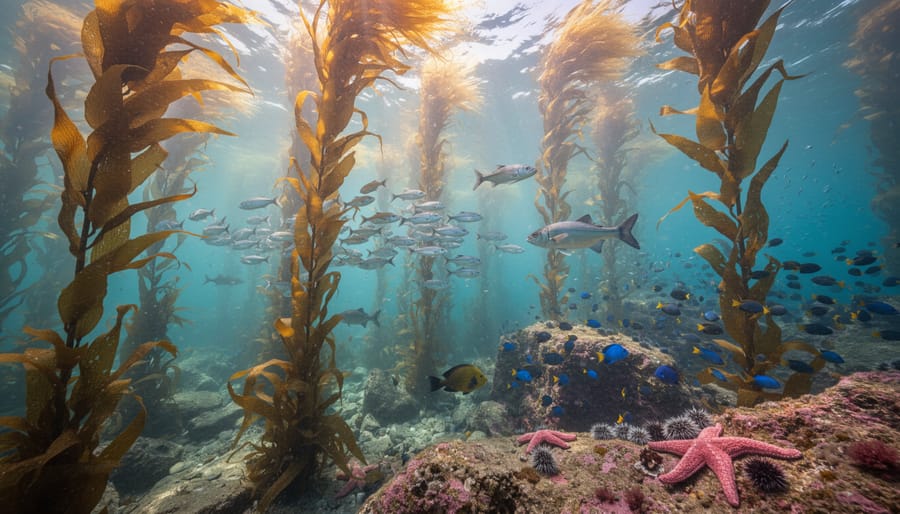
In coral reef systems, MPAs typically focus on protecting spawning aggregation sites and preventing destructive fishing practices. The Great Barrier Reef Marine Park’s zoning system demonstrates how ecosystem-based management can balance tourism, fishing, and conservation across a massive, ecologically diverse area. Kelp forest MPAs, such as those along California’s coast, often serve dual purposes: rebuilding overfished rockfish populations while preserving critical habitat for sea otters and the biodiversity they support through trophic cascades.
Open ocean MPAs present unique challenges. The Papahānaumokuākea Marine National Monument protects migratory pathways for tuna, sharks, and seabirds across 1.5 million square kilometers, requiring enforcement technologies like satellite monitoring rather than traditional patrol boats. Deep-sea MPAs around hydrothermal vents and seamounts safeguard ecosystems we’re only beginning to understand, where species may take decades to recover from a single trawl pass.
The practical applications of MPAs span multiple conservation contexts:
- Fisheries conservation and recovery zones where depleted stocks can rebuild
- Biodiversity hotspots protecting concentrations of endemic or threatened species
- Migratory corridors ensuring safe passage for whales, sea turtles, and pelagic fish
- Spawning and nursery grounds critical for population recruitment
- Cultural heritage sites preserving indigenous fishing traditions and sacred areas
- Scientific research baselines documenting natural ecosystem function
Management strategies must adapt to local realities. A community-managed MPA in the Philippines may rely on volunteer fish wardens and traditional knowledge, while an Antarctic MPA depends on international treaties and remote sensing. Climate resilience has become a primary driver: managers now select sites that offer thermal refugia, protect carbon-storing seagrass beds, or encompass depth gradients that allow species to shift ranges as waters warm.
The most successful MPAs integrate scientific goals with the economic and cultural needs of coastal communities. A no-take zone protecting grouper spawning sites benefits both biodiversity and nearby fishers who see spillover into adjacent waters. This pragmatic flexibility, defining protection in ways that fit the ecosystem and the people, explains why MPAs have become central to nearly every marine conservation strategy worldwide.
What Makes an MPA Effective
Establishing an MPA is just the first step. Decades of research reveal that effectiveness hinges on how well these areas are designed, enforced, and integrated into the broader seascape. Understanding what makes MPAs work requires looking at both ecological principles and real-world implementation challenges.
Size matters considerably. Studies consistently show that larger MPAs protect more species and maintain healthier ecosystems. Small reserves often cannot sustain breeding populations of wide-ranging species like sharks or tuna, and edge effects erode benefits from the center outward. Research published through 2025 suggests that MPAs exceeding 100 square kilometers demonstrate measurably stronger biodiversity outcomes than smaller patches, though even modest reserves provide value when strategically placed.
Enforcement capacity determines whether rules exist only on paper or actually protect marine life. No-take zones without regular patrols often see illegal fishing continue unchecked, negating conservation gains. Successful MPAs pair clear regulations with visible enforcement, whether through ranger patrols, community monitoring networks, or technology like vessel tracking systems. The difference between a thriving reserve and one quietly degrading frequently comes down to this operational commitment.
Community involvement transforms enforcement from an external burden into shared stewardship. When local fishers, indigenous groups, and coastal residents participate in MPA design and management, compliance rises and conflicts diminish. People support what they help create. The most resilient MPAs worldwide feature governance structures where communities hold decision-making power, not just consultative roles.
Connectivity amplifies impact. Isolated MPAs function like biological islands, vulnerable to local extinctions and unable to replenish neighboring areas. Networks of connected protected areas allow larvae, juveniles, and adults to move between sites, strengthening regional populations. Placement matters: positioning MPAs to capture prevailing currents and migration routes maximizes ecological benefit across the seascape.
Finally, adaptive management keeps MPAs relevant as conditions change. Regular monitoring reveals whether targets are being met, and flexible frameworks allow adjustments based on evidence. Climate shifts, invasive species, and altered human pressures demand responsiveness. Static plans fail; learning systems endure.
Common Questions About Marine Protected Areas
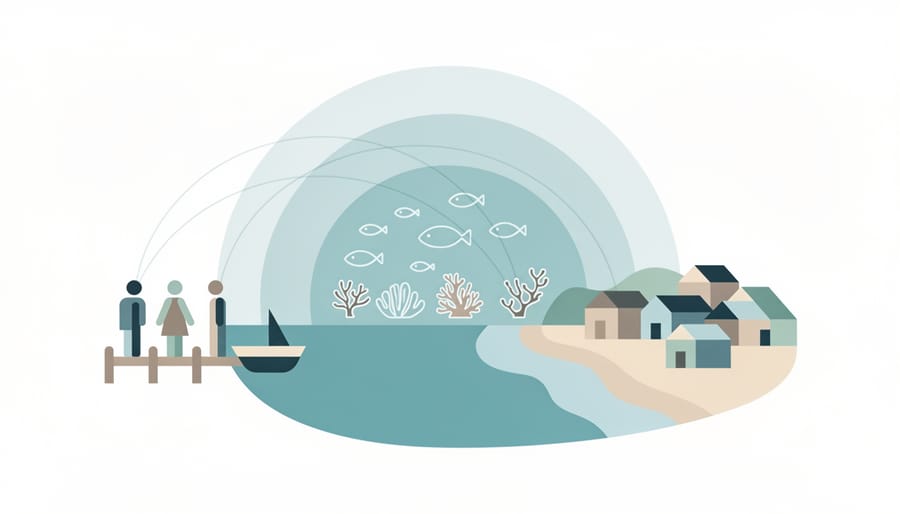
People often have practical questions about how Marine Protected Areas function in everyday life, especially when planning trips or trying to understand their broader conservation value. These questions reveal common misconceptions worth addressing clearly.
Can people still visit Marine Protected Areas?
Yes, most MPAs welcome visitors, though activities may be restricted depending on the protection level. Multi-use zones typically allow swimming, snorkeling, and wildlife viewing, while no-take reserves prohibit fishing and harvesting but still permit non-extractive recreation.
How long does it take for an MPA to show results?
Fish populations often rebound within 5-10 years in well-enforced MPAs, though full ecosystem recovery can take decades. Coral reefs and slow-growing species need longer timeframes, sometimes 20-30 years, to show significant restoration.
Do Marine Protected Areas help with climate change?
MPAs build resilience by maintaining healthy ecosystems that better withstand temperature shifts and ocean acidification. Protected habitats like mangroves and seagrass beds also sequester carbon, though MPAs alone cannot solve climate change.
Are MPAs the same worldwide?
No. While IUCN categories provide a common framework, actual regulations, enforcement capacity, and community involvement vary dramatically between countries and regions. An MPA in Norway operates differently from one in Indonesia or the Caribbean.
Who decides what activities are allowed in an MPA?
Management authorities, typically government agencies working with scientists, local communities, and stakeholders, establish regulations based on conservation goals, cultural needs, and scientific evidence. The process and level of public input varies by jurisdiction.
Can fishing communities survive near no-take MPAs?
Yes. Research shows that spillover effects from well-managed no-take zones often boost catches in adjacent fishing grounds over time, benefiting local fleets. Many successful MPAs involve fishing communities directly in planning and monitoring.
These answers highlight a central reality: MPAs are tools that work differently depending on how they’re designed and managed. The definition shapes what’s possible, but local context determines what actually happens on the water. Understanding this variation helps educators explain MPAs accurately and helps potential visitors know what to expect when they encounter protected marine habitats, whether on vacation or through volunteer monitoring programs.
Understanding what a marine protected area truly means goes far beyond memorizing a textbook definition. It shapes how we design conservation strategies, allocate resources, and measure success. When managers, policymakers, and communities share a clear understanding of MPA categories and protection levels, they can match the right tool to the right challenge, whether that’s rebuilding a collapsed fishery, safeguarding critical breeding habitat, or preserving a culturally significant seascape.
Well-defined MPAs, backed by adaptive management and genuine community partnership, have proven themselves as powerful instruments for ocean health. The evidence is compelling: properly enforced no-take reserves restore fish populations, multi-use zones can balance conservation with sustainable livelihoods, and networks of connected MPAs build resilience against climate change. Yet definitions alone accomplish nothing without the people who bring them to life, the scientists monitoring ecosystems, the enforcement officers patrolling boundaries, the fishing communities adapting practices, and the educators inspiring the next generation.
You can be part of this work. The Marine Biodiversity Science Center welcomes volunteers from all backgrounds to contribute to our research expeditions, citizen science projects, and educational outreach programs. Whether you’re a student exploring career paths, a professional lending expertise, or simply someone who cares deeply about the ocean, there’s a role for you. Join our e-network to receive updates on volunteer opportunities, field programs, and ways to support marine conservation in your own community. Together, we’re not just protecting ocean spaces, we’re securing a thriving marine future for generations to come. The ocean needs advocates, and that starts with understanding what we’re protecting and why it matters.

jessica
Ava Singh is an environmental writer and marine sustainability advocate with a deep commitment to protecting the world's oceans and coastal communities. With a background in environmental policy and a passion for storytelling, Ava brings complex topics to life through clear, engaging content that educates and empowers readers. At the Marine Biodiversity & Sustainability Learning Center, Ava focuses on sharing impactful stories about community engagement, policy innovations, and conservation strategies. Her writing bridges the gap between science and the public, encouraging people to take part in preserving marine biodiversity. When she’s not writing, Ava collaborates with local initiatives to promote eco-conscious living and sustainable development, ensuring her work makes a difference both on the page and in the real world.