Marine Biodiversity Science Center

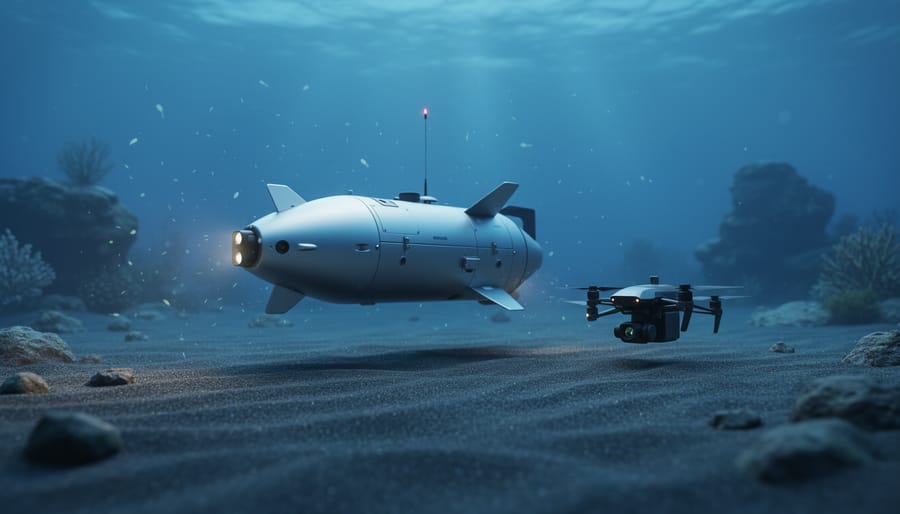
Unmanned marine vehicles are autonomous or remotely operated robotic platforms that navigate ocean environments independently, collecting critical data on marine ecosystems through advanced sensors, cameras, and artificial intelligence. These sophisticated machines range from torpedo-shaped gliders that traverse vast ocean distances to compact underwater drones that explore coral reefs, all designed to monitor marine life, track environmental changes, and gather conservation data without direct human control beneath the waves.
The revolution in marine conservation monitoring has arrived through the marriage of robotics and artificial intelligence. Where researchers once relied on costly ship expeditions or brief scuba surveys, unmanned vehicles now patrol the ocean for weeks or months at a time, documenting species populations, measuring water quality, and mapping habitats with unprecedented detail. AI algorithms onboard these platforms can identify individual species in real time, detect illegal fishing activity, and flag environmental anomalies that demand immediate attention.
Dr. Maria Santos, a marine biologist who has deployed autonomous vehicles in the Mediterranean for the past three years, recalls her first encounter with the technology’s power. “We discovered a previously unknown aggregation of endangered grouper simply because our vehicle could stay on station for 45 consecutive days. No human team could have maintained that presence, and we would have missed a critical spawning event.”
The applications stretch across every ocean challenge facing conservationists today. Autonomous vehicles track whale migrations across entire ocean basins, monitor the health of deep-sea coral gardens in crushing depths unreachable by divers, and survey vast marine protected areas that would require dozens of research vessels to cover manually. For students and professionals entering marine science, understanding these platforms has become essential. They represent not just a research tool, but a fundamental shift in how we observe and protect ocean ecosystems.
What Unmanned Marine Vehicles Are and How They Work
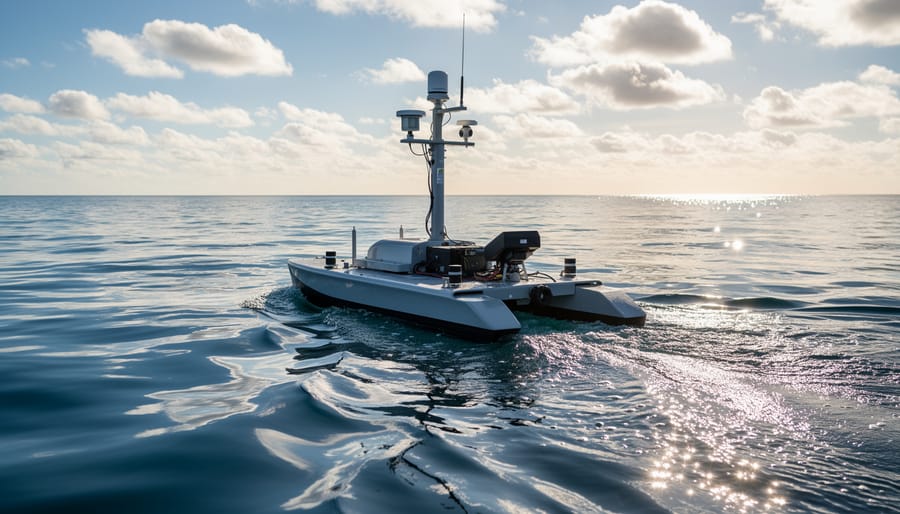
Unmanned marine vehicles are robotic platforms that navigate ocean environments without a crew aboard, collecting scientific data through sensors, cameras, and environmental monitoring equipment. These sophisticated machines have become essential tools for marine researchers, operating in conditions too dangerous, deep, or remote for human divers while gathering unprecedented volumes of information about our oceans.
The technology falls into three primary categories, each designed for specific monitoring tasks. Autonomous underwater vehicles operate independently beneath the surface, following pre-programmed routes or making real-time navigation decisions based on environmental conditions. These torpedo-shaped vehicles use battery-powered propellers or jet propulsion to travel thousands of meters deep, equipped with sonar mapping systems, water chemistry sensors, and high-resolution cameras. Unlike their autonomous cousins, remotely operated vehicles remain tethered to a surface vessel through cables that supply power and enable human operators to control movements in real time, making them ideal for detailed inspection work and sample collection. Unmanned surface vehicles cruise along the ocean’s surface, using solar panels or conventional fuel to extend their operational range while deploying sensors both above and below the waterline.
- AUV (Autonomous Underwater Vehicle)
- A self-propelled submersible robot that navigates and collects data independently without real-time human control, typically following pre-programmed mission parameters or adapting routes based on AI decision-making.
- ROV (Remotely Operated Vehicle)
- An underwater robot controlled in real time by human operators via a tether that provides power and communication, allowing for precise manipulation and immediate response to discoveries.
- USV (Unmanned Surface Vehicle)
- An autonomous or remotely controlled vessel that operates on the ocean’s surface, often serving as a communication relay or deploying subsurface sensors while covering vast distances efficiently.
- Autonomous Navigation
- The capability of a vehicle to determine its position, plan routes, and avoid obstacles without human intervention, using sensors, GPS (when surfaced), and inertial guidance systems.
- AI Sensor Fusion
- The process by which artificial intelligence combines data from multiple sensors, sonar, cameras, temperature probes, chemical detectors, to create comprehensive environmental understanding and enable intelligent decision-making.
What sets modern unmanned marine vehicles apart from earlier generations is their integration with artificial intelligence. Onboard AI systems process incoming sensor data immediately, identifying marine species through image recognition, detecting anomalies in water chemistry, and adjusting mission parameters without waiting for human instructions. Machine learning algorithms trained on millions of underwater images can distinguish between fish species, recognize coral health indicators, and flag unusual phenomena for closer investigation. These vehicles compress and prioritize data before transmission, sending critical findings to researchers via satellite uplinks while storing comprehensive datasets for later analysis. The propulsion systems vary by vehicle type and mission duration: some AUVs glide through water columns using changes in buoyancy to conserve energy, while others employ traditional propellers for faster transit speeds and precise maneuvering in complex underwater terrain.
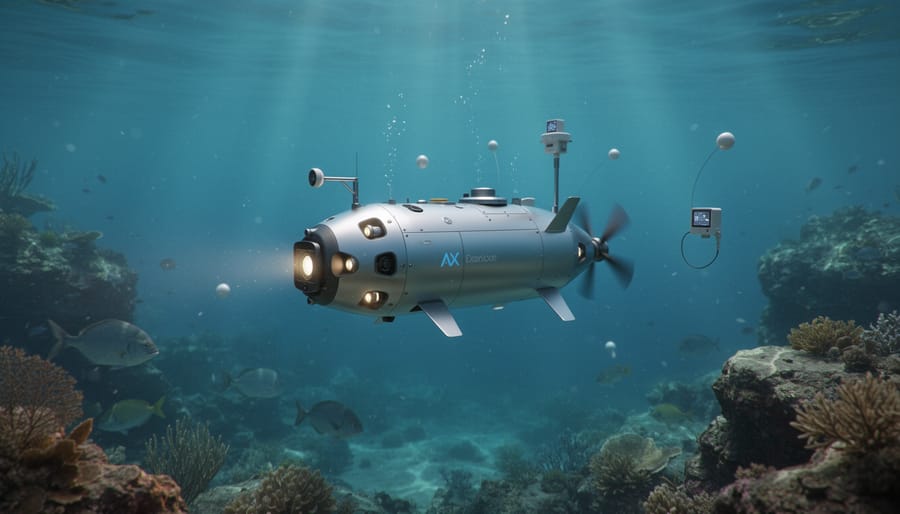
AI Capabilities That Make Marine Monitoring More Effective
The marriage of artificial intelligence and unmanned marine vehicles has fundamentally changed what’s possible in ocean research. While traditional monitoring relied on manual species counts, sporadic sampling, and human interpretation of limited data sets, today’s AI-powered marine monitoring systems process millions of data points in real-time, identifying patterns invisible to human observers and enabling unprecedented ecosystem understanding.
Computer vision stands as perhaps the most revolutionary AI capability deployed in these vehicles. Trained on vast image databases, neural networks can now identify individual marine species with accuracy rates exceeding 95%, distinguishing between similar-looking fish, cataloging coral species, and even recognizing individual animals by unique markings. A single AUV can photograph and classify thousands of organisms during a deployment, work that would take marine biologists months to complete manually. More importantly, the AI doesn’t tire, maintains consistent identification standards, and improves its accuracy with every dive as algorithms learn from new encounters.
Machine learning algorithms excel at detecting subtle patterns that signal ecosystem shifts. These systems analyze water chemistry fluctuations, temperature gradients, animal behavior changes, and habitat alterations simultaneously, connecting dots that isolated measurements would miss. When coral polyps retract earlier than normal or fish congregate in unusual formations, pattern recognition algorithms flag these anomalies for researcher attention, often catching problems weeks before traditional monitoring would notice.
Predictive analytics take monitoring beyond simple observation into forecasting. By processing historical data alongside current conditions, AI models predict harmful algal bloom development, forecast species migration timing, and estimate how pollution plumes will spread. This foresight enables proactive conservation responses rather than reactive damage control.
Real-time data processing might be the capability that most dramatically separates modern UMVs from traditional methods. Instead of collecting samples for later laboratory analysis, onboard AI processes sensor readings instantly, adjusting vehicle paths to follow interesting phenomena, triggering alerts when detecting pollutants, and transmitting urgent findings to researchers via satellite. This immediacy transforms monitoring from periodic snapshots into continuous ecosystem surveillance, catching transient events that would otherwise go unrecorded.
Critical Applications in Marine Ecosystem Monitoring
Biodiversity Surveys and Species Population Tracking
Unmanned marine vehicles have fundamentally changed how scientists conduct biodiversity surveys across ocean environments that were once prohibitively expensive or dangerous to study consistently. These marine robots can spend weeks mapping seafloor habitats, cataloging species encounters, and building comprehensive biodiversity databases without the limitations of human dive times or surface vessel schedules.
For endangered species tracking, UMVs equipped with acoustic sensors and computer vision systems follow migration routes of whales, sea turtles, and large fish populations across thousands of nautical miles. The vehicles collect photo identification data, record behavioral patterns, and monitor body condition indicators that reveal population health trends. In Australia’s Great Barrier Reef, AUVs have successfully tracked green sea turtle populations across multiple breeding seasons, identifying critical nesting beaches and foraging grounds that require protection.
Population health monitoring becomes particularly powerful when UMVs operate on regular schedules, returning to the same locations to document changes over time. Scientists have deployed fleets of vehicles to monitor fish spawning aggregations, detecting population declines years earlier than traditional methods would reveal. Off the coast of California, autonomous vehicles tracked the recovery of abalone populations in marine protected areas, providing data that validated conservation zone effectiveness and informed management decisions for similar regions worldwide.
Coral Reef Health Assessment
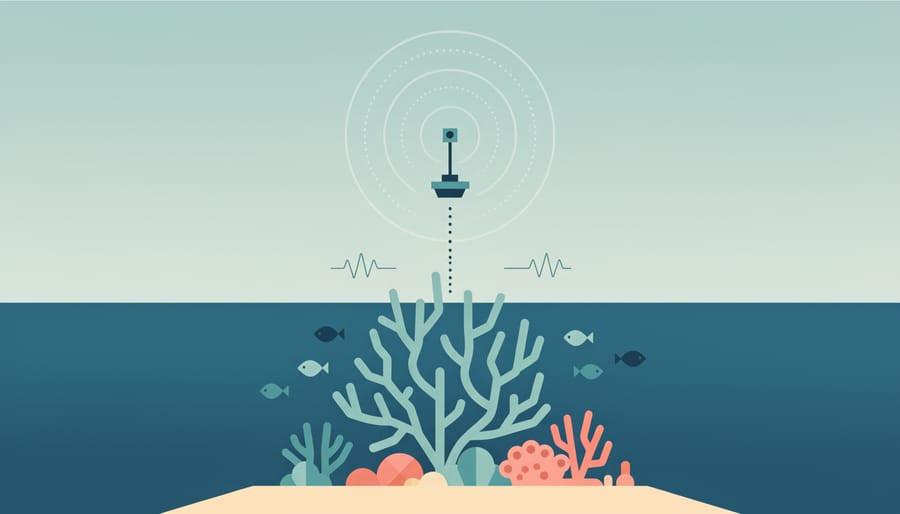
Coral reefs face unprecedented threats from warming oceans and acidification, making regular health assessments essential for conservation efforts. Unmanned marine vehicles have transformed how scientists monitor these critical ecosystems, enabling continuous surveillance that would be impossible with diver-based surveys alone.
AUVs equipped with high-resolution cameras systematically photograph reef sections, while AI algorithms analyze the images to detect early signs of bleaching before it becomes visible to the human eye. These vehicles can map entire reef systems in days, documenting structural changes, algae overgrowth, and species diversity shifts with remarkable precision. The technology captures baseline data that researchers use to track recovery rates after bleaching events and measure the success of coral restoration projects.
Because UMVs operate without disturbing fragile reef structures, they provide objective, repeatable measurements over months and years. Scientists at restoration sites deploy them quarterly to monitor transplanted coral survival and growth patterns, adjusting intervention strategies based on real-time data. This continuous monitoring cycle has revealed crucial information about which coral species show resilience to temperature stress and where conservation efforts yield the greatest impact, directly informing regional protection policies.
Water Quality and Pollution Detection
Unmanned marine vehicles equipped with AI sensors detect pollution threats that would otherwise go unnoticed until significant damage occurs. These autonomous platforms carry specialized instruments that continuously measure pH levels, dissolved oxygen, nitrogen concentrations, heavy metals, and microplastic particles, analyzing thousands of data points hourly across vast ocean areas. When a UMV’s machine learning algorithms identify chemical signatures indicating sewage discharge, agricultural runoff, or industrial contamination, they can immediately alert researchers and environmental authorities, compressing response times from weeks to hours.
Oil spill detection represents one of the most critical applications. AI-powered cameras and spectrometers on unmanned vehicles distinguish oil sheens from natural phenomena, calculate spill volume and trajectory, and guide cleanup operations to areas of highest concentration. Surface vehicles patrol shipping lanes and offshore drilling zones, while underwater vehicles track how contaminants disperse through the water column and affect benthic ecosystems.
The integration with radar networks and satellite systems creates comprehensive pollution monitoring grids that provide complete ocean coverage, ensuring that contamination events trigger coordinated response protocols before they escalate into ecological disasters.
Climate Change Impact Documentation
UMVs excel at documenting climate change impacts because they can gather continuous, multi-year datasets from the same ocean regions, something nearly impossible with traditional vessel-based surveys. These vehicles track subtle temperature shifts across different depths, measuring both surface warming and the migration of thermal layers that force marine species to relocate. They also monitor ocean acidification by recording pH levels and carbonate chemistry changes that threaten shellfish and coral survival.
Long-term deployment creates invaluable trend data. An AUV returning to the same Arctic site annually captures ice loss effects on plankton communities, while tropical USVs document expanding marine heatwave zones. This persistent monitoring reveals patterns that short-term research missions miss entirely, seasonal pH fluctuations, incremental habitat degradation, and ecosystem tipping points.
The data collected directly informs climate policy and marine spatial planning. When UMVs documented accelerated warming in specific fishery zones, resource managers adjusted catch limits before populations crashed. Their evidence of changing currents and oxygen levels helps scientists model future scenarios with greater accuracy, giving policymakers concrete information for protecting vulnerable marine areas before damage becomes irreversible.
Advantages Over Traditional Marine Monitoring Methods
Unmanned marine vehicles fundamentally reshape what’s possible in ocean research by eliminating constraints that have limited marine science for decades. Traditional monitoring methods, ship-based surveys, crewed submersibles, and stationary sensors, work well for targeted studies but struggle with the ocean’s sheer scale and hostility. UMVs solve problems that once seemed insurmountable.
Access ranks among the most dramatic advantages. AUVs routinely reach depths beyond 6,000 meters, exploring trenches, seamounts, and polar ice environments where human-operated vessels cannot safely go. This expanded reach has already led to the discovery of previously unknown deep-sea coral gardens and chemosynthetic communities that inform our understanding of biodiversity hotspots requiring protection.
The capacity for continuous operation transforms data quality. While research vessels typically conduct surveys for days or weeks before returning to port, autonomous vehicles can monitor sites for months without interruption. This persistence captures seasonal variations, spawning events, and migration patterns that brief surveys miss entirely. A single AUV deployment off California’s coast documented previously unseen feeding behaviors in endangered blue whales by maintaining observation stations around the clock.
Cost-effectiveness becomes apparent over extended periods. Though initial equipment investment runs high, operational expenses drop sharply. One UMV replaces the need for a crewed research vessel that burns thousands of gallons of fuel daily and requires salaries for a full crew. Organizations conducting multi-year baseline assessments report 60-70% lower costs using autonomous platforms versus traditional ship time.
Safety benefits extend beyond protecting researchers from dangerous conditions. UMVs eliminate human presence in shark aggregation zones, deep-sea volcanic areas, and contaminated waters following industrial spills. This risk reduction allows scientists to gather crucial data from environments they would otherwise avoid.
Perhaps most significant for conservation, UMVs disturb marine life minimally. Their quiet electric propulsion and compact profiles cause far less behavioral disruption than large vessels with engine noise and bright lights. Fish and marine mammals often ignore passing AUVs entirely, yielding more accurate population counts and natural behavior observations that strengthen conservation planning.
Real-World Success Stories and Research Partnerships
The Great Barrier Reef Foundation’s 2025 deployment of AI-equipped AUVs transformed coral restoration monitoring across 500 square kilometers of degraded reef. These vehicles documented a 34% increase in coral recovery rates within transplanted zones, data that would have required thousands of dive hours using traditional methods. The project brought together researchers from four universities, government agencies, and local indigenous communities, creating what marine biologist Dr. Sarah Chen calls “the most comprehensive reef health dataset we’ve ever compiled.”
“Watching the AUV footage reveal juvenile fish returning to restored coral structures was extraordinary,” Chen reflects. “We saw species we hadn’t documented in that area for over a decade. The AI identified 127 distinct species in a single pass, something our team might have missed during manual surveys. It proved our restoration approach was working in ways we couldn’t have validated before.”
Off the coast of British Columbia, a collaborative network of research institutions deployed USVs equipped with acoustic sensors and tiny ocean sensor arrays to track endangered orca populations. The vehicles documented previously unknown feeding grounds and identified pollution hotspots affecting prey availability. This data directly informed shipping route modifications that reduced vessel noise in critical habitat zones by 40%.
The European Union’s Marine Robotics Research Infrastructure represents one of the largest UMV data-sharing initiatives. Seventeen marine research stations across eight countries pool observations from autonomous vehicles, creating real-time maps of jellyfish blooms, microplastic concentrations, and shifting fish migration patterns. This collaborative approach revealed connections between Mediterranean warming and Atlantic species range expansions that no single institution could have detected alone.
In Antarctica, AUVs operating beneath ice shelves captured the first comprehensive footage of ice-dependent species adapting to accelerated melting. The vehicles documented emperor penguin colonies relocating to more stable ice formations and identified previously unknown krill nursery grounds. These discoveries reshaped scientists’ understanding of polar ecosystem resilience and informed international protection zone proposals now under consideration by the Antarctic Treaty nations.
Challenges and Ethical Considerations
Despite their transformative potential, unmanned marine vehicles face significant operational hurdles. Battery life remains a primary constraint. Most AUVs operate for 8 to 24 hours before requiring recharge or retrieval, which limits their ability to monitor remote ocean regions continuously. This means research teams must carefully plan deployment windows and often cannot capture critical events that occur outside operational periods.
The sheer volume of data these vehicles generate creates another challenge. A single week-long deployment can produce terabytes of high-resolution imagery and sensor readings. Marine research institutions often lack the storage infrastructure and computational resources to process this information efficiently, creating bottlenecks between data collection and actionable insights.
Initial costs present barriers too. Research-grade AUVs typically range from $100,000 to several million dollars, pricing out smaller conservation organizations and developing nations where marine biodiversity monitoring is often most urgent. Operating these systems demands specialized technical expertise that many coastal communities and regional research centers simply don’t have.
Beyond practical limitations, ethical questions deserve careful attention. When UMVs survey traditional fishing grounds or indigenous territories, who controls access to the collected data? Communities that have stewarded these waters for generations rightfully ask whether monitoring technology respects their sovereignty and knowledge systems.
There’s also the risk that vehicles disturb the very ecosystems they’re meant to protect. Propeller noise can disrupt marine mammal communication. Bright lights used for imaging may alter fish behavior. Researchers must continually refine protocols to minimize these impacts.
Perhaps most critically, we need safeguards ensuring this technology serves genuine conservation rather than commercial exploitation. The same vehicles that map coral reefs for protection could map resources for extraction. Strong governance frameworks and transparent partnerships between researchers, conservationists, and local communities help ensure unmanned vehicles advance biodiversity protection rather than undermine it.
Getting Involved: Opportunities for Conservationists and Students
The growing field of autonomous marine monitoring offers multiple entry points for aspiring conservationists, students, and career changers passionate about protecting ocean ecosystems. You don’t need a PhD in robotics to contribute meaningfully to this revolution.
Several organizations now run citizen science programs that invite volunteers to analyze UMV-collected imagery and data. The Ocean Exploration Trust, for instance, trains remote participants to identify species, map habitats, and spot anomalies in underwater footage captured by their ROVs. These programs teach you how AI catches threats while building your own analytical skills and contributing to real research databases used by marine scientists worldwide.
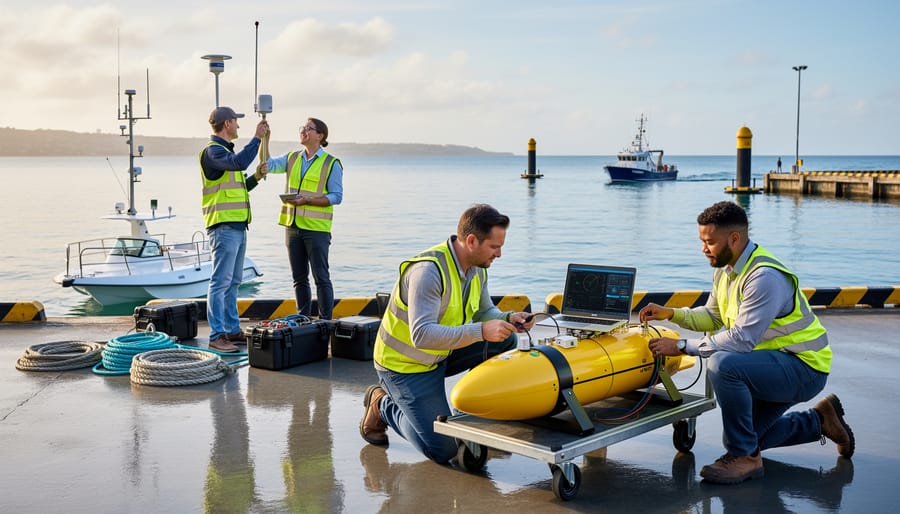
For hands-on experience, look into field research assistantships with marine labs and conservation groups deploying UMVs. The Marine Biodiversity Science Center partners with several institutions conducting autonomous vehicle surveys and welcomes volunteers who can commit to multi-week expeditions. You’ll gain practical experience in vehicle deployment, sensor maintenance, and data collection protocols, skills increasingly valued in marine conservation careers.
Educational pathways have expanded significantly. Several universities now offer specialized graduate certificates in marine robotics and autonomous systems, while online courses through platforms like Coursera and edX cover AI for environmental monitoring. Organizations such as NOAA and the Schmidt Ocean Institute provide free webinars and training modules on interpreting UMV data.
Career opportunities span multiple disciplines: marine robotics engineering, AI algorithm development for species identification, data science roles managing massive ocean datasets, field technician positions, and research coordination. The intersection of technology and conservation is creating jobs that didn’t exist five years ago, and demand continues to grow as more institutions adopt autonomous monitoring.
Common Questions About Unmanned Marine Vehicles
Readers often wonder how these sophisticated autonomous vehicles actually function in real-world conservation settings, and whether the technology is within reach for smaller research teams or individual scientists. The questions below reflect the most common curiosities we hear from students, educators, and marine professionals exploring this field.
How accurate is the data collected by unmanned marine vehicles compared to human observations?
UMVs equipped with AI imaging systems can match or exceed human accuracy in species identification and environmental measurements, particularly for repetitive tasks over extended periods. The technology eliminates observer fatigue and provides consistent data collection standards across multiple deployments.
What does an unmanned marine vehicle cost, and is the technology accessible to smaller organizations?
Entry-level ROVs start around $3,000-$10,000, while research-grade AUVs can range from $50,000 to several million for deep-sea models. Many universities and conservation groups now share equipment through partnerships or rent vehicles for specific projects, making the technology increasingly accessible.
Do these vehicles disturb marine life during monitoring operations?
Well-designed UMVs operate quietly and emit minimal light, causing less disturbance than traditional research vessels or human divers. Most marine species quickly habituate to the vehicles’ presence, allowing for more natural behavioral observations.
Can unmanned vehicles replace human marine biologists?
No, UMVs are tools that enhance rather than replace human expertise. Marine scientists are essential for interpreting data, designing research questions, understanding ecological context, and making conservation decisions based on findings.
How long can these vehicles operate before needing maintenance or recharging?
Battery life varies widely by model and mission profile. Small ROVs might operate for 4-8 hours, while advanced AUVs can conduct missions lasting several days or even weeks on a single charge, depending on their energy management systems.
What happens to all the data these vehicles collect?
Most research institutions store UMV data in dedicated marine databases, often making it available to other scientists through open-access platforms. The sheer volume requires sophisticated data management systems and AI algorithms to process and extract meaningful patterns.
Are there training programs for people interested in operating these vehicles?
Yes, many universities now offer marine robotics courses, and organizations like MATE (Marine Advanced Technology Education) provide ROV training and certification programs. Some conservation groups also train volunteers in basic UMV operation and data analysis.
These vehicles work best as part of an integrated monitoring strategy. A typical research project might deploy autonomous vehicles for broad-area surveys and continuous monitoring, then send human divers or crewed submarines to investigate specific sites identified by the UMVs. This combination leverages the strengths of both approaches, the vehicles’ endurance and data volume, paired with human judgment and contextual understanding.
The learning curve for operating UMVs has shortened considerably. Basic ROV piloting can be learned in a few days, though mastering complex AUV mission planning and AI parameter tuning takes longer. What matters most is pairing technical operation skills with solid marine science knowledge, so operators understand what they’re looking for and why it matters for conservation outcomes.
AI-driven unmanned marine vehicles represent a turning point in our ability to understand and protect the ocean. These autonomous systems have opened access to previously unreachable ecosystems, delivering continuous streams of high-quality data that transform how we monitor marine biodiversity. What once required months of planning and substantial funding can now happen routinely, providing researchers with the comprehensive, long-term datasets essential for effective conservation strategies.
The technology itself, however powerful, is only one piece of the equation. Real progress comes when cutting-edge tools work alongside dedicated scientists, informed citizens, and communities committed to ocean health. As UMV capabilities expand and costs decrease, more organizations worldwide can deploy these vehicles to protect threatened habitats and species. The data they collect informs policy, guides restoration projects, and reveals connections within marine ecosystems we are only beginning to comprehend.
This is an optimistic moment for marine conservation. We have both the technology and the growing global awareness needed to reverse biodiversity decline. Yet these advances demand our active participation. Whether you contribute through citizen science projects analyzing UMV footage, support research institutions pioneering this work, or pursue education in marine robotics and AI applications, your involvement matters.
The Marine Biodiversity Science Center offers multiple pathways to engage with this transformative technology. Explore our volunteer programs, attend workshops on autonomous marine monitoring, or connect with researchers using UMVs in ongoing conservation projects. Together, we can harness these remarkable tools to ensure thriving oceans for generations ahead.

jessica
Ava Singh is an environmental writer and marine sustainability advocate with a deep commitment to protecting the world's oceans and coastal communities. With a background in environmental policy and a passion for storytelling, Ava brings complex topics to life through clear, engaging content that educates and empowers readers. At the Marine Biodiversity & Sustainability Learning Center, Ava focuses on sharing impactful stories about community engagement, policy innovations, and conservation strategies. Her writing bridges the gap between science and the public, encouraging people to take part in preserving marine biodiversity. When she’s not writing, Ava collaborates with local initiatives to promote eco-conscious living and sustainable development, ensuring her work makes a difference both on the page and in the real world.