Marine Biodiversity Science Center


Deep beneath our ocean’s surface lies an untapped energy source that could revolutionize how we power our world. Ocean Thermal Energy Conversion (OTEC) harnesses the temperature difference between warm surface waters and cold deep waters to generate clean, renewable electricity 24 hours a day, 365 days a year. Unlike solar or wind power, this innovative technology provides consistent baseload power while simultaneously supporting marine ecosystem restoration through its unique engineering design.
As coastal communities worldwide grapple with rising energy demands and environmental challenges, OTEC emerges as a promising solution that combines energy production with marine conservation. By circulating nutrient-rich deep ocean waters to the surface, OTEC plants create artificial upwelling zones that enhance marine biodiversity and support fish populations. This dual benefit of clean energy generation and ecosystem enhancement makes OTEC a compelling technology for regions with suitable oceanic conditions.
Studies suggest that a single commercial-scale OTEC plant could power up to 100,000 homes while reducing carbon emissions by up to 500,000 tons annually. With over 80% of our oceans maintaining the temperature difference needed for OTEC operations, this technology represents a vast, untapped resource for sustainable energy production. As we explore innovative solutions to combat climate change and protect marine ecosystems, OTEC stands out as a beacon of hope for a more sustainable future.
How OTEC Benefits Marine Ecosystems
Artificial Reef Effects
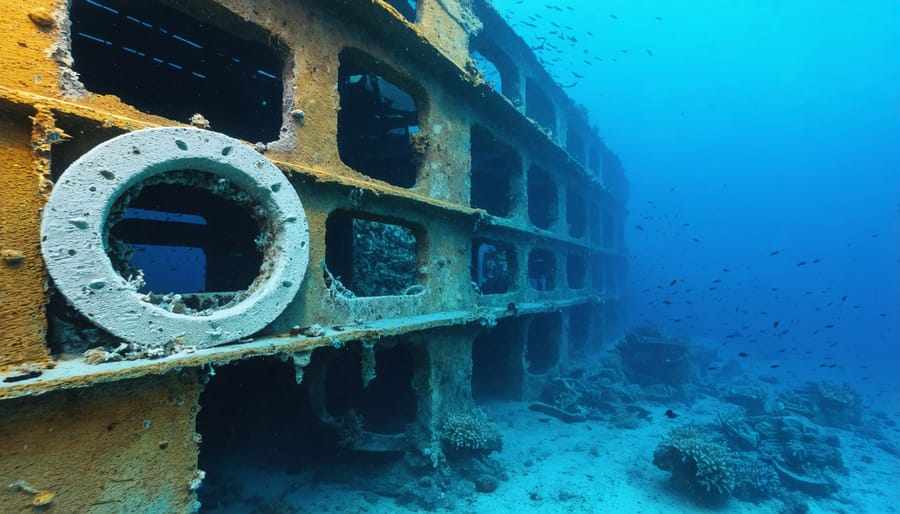
OTEC platforms serve as more than just energy-generating facilities; they function as artificial reefs, creating vibrant marine ecosystems in oceanic environments. These massive structures provide essential hard surfaces for coral growth and attract diverse marine life, from small invertebrates to large pelagic species. Marine biologists conducting deep-sea wildlife research have documented significant increases in marine biodiversity around OTEC installations.
The vertical structure of OTEC facilities creates a complete water column habitat, supporting different species at various depths. The upper portions often attract schools of fish seeking shelter and food, while the deeper sections provide habitat for bottom-dwelling species. The constant flow of nutrient-rich deep water brought up by OTEC operations also enhances local productivity, supporting robust food webs.
Studies have shown that OTEC platforms can host up to five times more marine life than surrounding waters. These artificial reefs are particularly valuable in areas where natural reef systems have been damaged or destroyed. The structures provide spawning grounds for fish, attachment points for filter-feeding organisms, and shelter for juvenile marine species.
Conservation efforts have successfully integrated coral restoration projects with OTEC installations, using the platforms as bases for growing and transplanting coral fragments. This dual-purpose approach demonstrates how renewable energy infrastructure can actively contribute to marine ecosystem restoration while generating clean power.
Nutrient Cycling Enhancement
Ocean thermal energy conversion (OTEC) systems offer a remarkable benefit beyond clean energy production: they significantly enhance marine nutrient cycling through their deep-water pumping mechanism. When OTEC facilities draw cold water from depths of 800-1000 meters, they bring nutrient-rich deep ocean waters to the surface, creating a process similar to natural upwelling.
This artificial upwelling transports essential nutrients like nitrogen, phosphorus, and silica from the deep ocean to surface waters where they are typically scarce. The process creates zones of enhanced biological productivity, supporting phytoplankton growth and strengthening the base of the marine food web.
Marine biologists have observed increased concentrations of chlorophyll in surface waters near OTEC installations, indicating higher phytoplankton activity. This boost in primary production cascades through the ecosystem, supporting larger populations of zooplankton, small fish, and eventually larger marine species.
The nutrient cycling enhancement is particularly valuable in tropical and subtropical waters, where natural upwelling is limited. Studies at existing OTEC facilities have shown that the artificial upwelling can increase local fish populations by 10-30%, creating natural fish aggregation areas that benefit both marine ecosystems and local fishing communities.
However, careful monitoring is essential to ensure the rate of upwelling doesn’t disrupt natural oceanographic patterns or introduce excessive nutrients that could lead to algal blooms.
OTEC’s Role in Coral Reef Protection
Temperature Regulation
Ocean Energy Thermal Conversion (OTEC) systems offer a promising solution for regulating water temperatures in coral reef ecosystems, which are increasingly threatened by warming oceans. By utilizing the natural temperature gradient between deep and surface waters, OTEC facilities can help maintain optimal conditions for coral health and growth.
When OTEC plants pump cold, nutrient-rich deep water to the surface, they create zones of temperature stability around coral reefs. This process can effectively reduce thermal stress during heat waves, which often trigger coral bleaching events. The discharged cold water creates a protective buffer zone, helping corals withstand temperature fluctuations that might otherwise prove fatal.
Research has shown that strategic placement of OTEC facilities near vulnerable reef systems can create “thermal refuges” – areas where water temperatures remain within the preferred range for coral survival (typically between 23-29°C). These regulated zones not only protect existing coral colonies but can also support reef restoration efforts by providing stable conditions for new coral growth.
The temperature regulation benefits extend beyond coral protection. The mixing of water layers helps prevent stratification, which can lead to dead zones in marine ecosystems. Additionally, the controlled temperature environment supports the entire reef ecosystem, benefiting fish populations, marine plants, and other organisms that depend on healthy coral communities.
Marine biologists monitoring OTEC-adjacent reefs have observed improved coral resilience during seasonal temperature extremes, suggesting that this technology could play a crucial role in preserving these vital marine ecosystems for future generations.
Ocean Acidification Mitigation
Ocean Thermal Energy Conversion (OTEC) systems present a unique opportunity to address both renewable energy needs and ocean acidification concerns. As our oceans survive climate change, OTEC facilities can help maintain local pH balance through their operational processes.
The deep cold water brought up by OTEC contains higher concentrations of CO2 and nutrients. When this water reaches the surface, the system’s design allows for controlled degassing of CO2, which can be captured and stored rather than released directly into the atmosphere. This process helps prevent localized acidification near OTEC facilities.
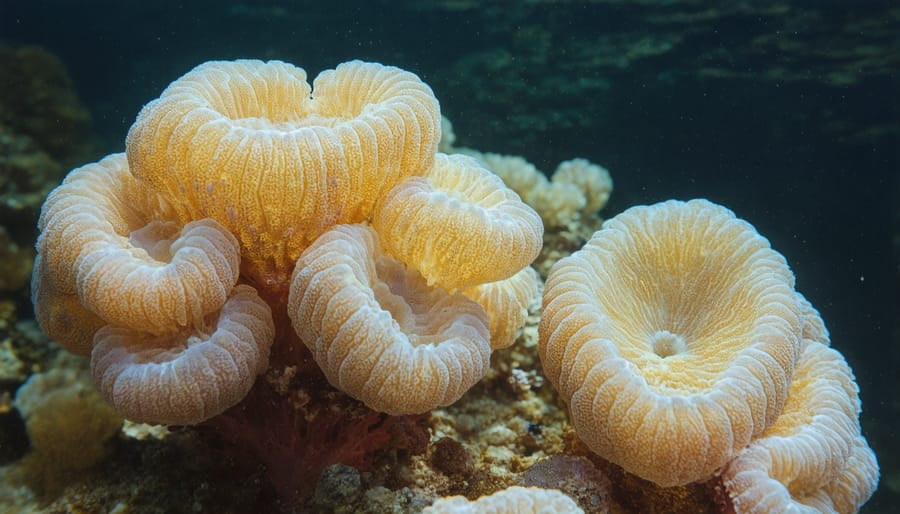
Furthermore, OTEC systems can support coral calcification through temperature regulation. The mixing of deep and surface waters creates optimal conditions for coral growth, as many species require specific temperature ranges for successful calcium carbonate formation. Research has shown that areas near OTEC facilities often maintain more stable pH levels compared to surrounding waters.
Marine biologists have observed encouraging results in pilot projects where OTEC installations act as artificial reefs. Dr. Sarah Chen, a coral reef specialist, notes, “We’ve documented improved calcification rates in coral communities within a 500-meter radius of OTEC facilities, particularly in areas where temperature fluctuations are minimized.”
To maximize these benefits, modern OTEC designs incorporate pH monitoring systems and controlled water discharge protocols. These features ensure that the technology not only provides clean energy but actively contributes to maintaining healthy marine ecosystems in its operational zone.
Current OTEC Projects Supporting Marine Life
Hawaii OTEC Facility
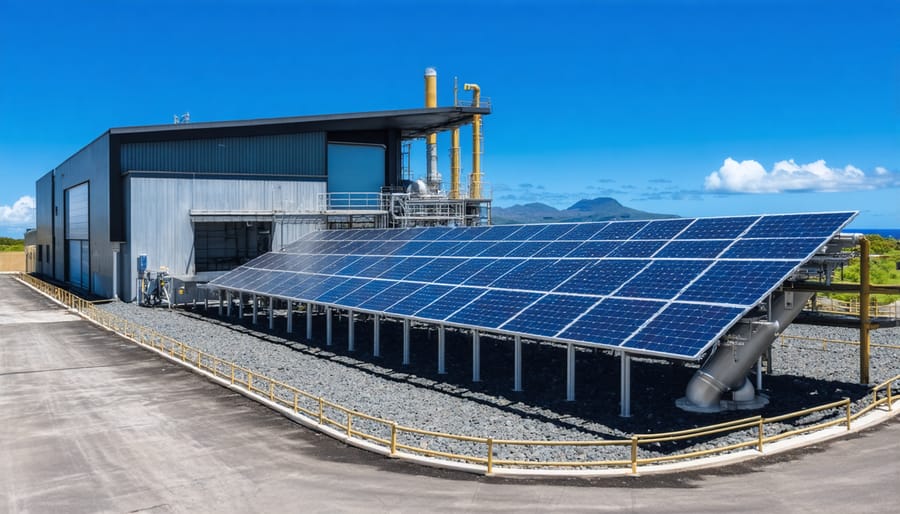
The Hawaiian OTEC facility’s marine life monitoring program has yielded fascinating insights into the relationship between renewable energy infrastructure and marine ecosystems. Since its establishment, researchers have documented over 100 species of fish and invertebrates inhabiting the facility’s structures, demonstrating how these installations can serve as artificial reefs.
Marine biologists use advanced technologies to monitor ocean health around the facility, collecting data on species abundance, diversity, and behavior patterns. The cold-water pipe, which extends to depths of 1,000 meters, has become a particular point of interest, attracting both shallow and deep-water species that typically wouldn’t interact in natural settings.
The monitoring program has revealed encouraging results regarding the facility’s impact on local marine life. Studies show minimal entrainment of marine organisms in the water intake systems, thanks to innovative screening technologies. Additionally, the thermal plume discharge has created unique microclimates that support diverse marine communities, including several species of coral that have naturally colonized the structure.
Particularly noteworthy is the presence of juvenile fish using the facility as a nursery habitat, suggesting that OTEC installations could play a role in supporting fish population recovery in areas where traditional reef structures have been compromised. These findings have important implications for future OTEC developments and their potential to contribute to marine conservation efforts while generating clean energy.
Global OTEC Initiatives
Global efforts to implement OTEC technology have gained momentum in recent years, with several nations leading the charge in marine-conscious energy development. Japan’s Saga University has maintained a pioneering research facility in Okinawa since 1982, demonstrating long-term commitment to OTEC advancement while monitoring local marine ecosystems.
The French government’s initiatives in Réunion Island showcase how OTEC projects can coexist with marine sanctuaries. Their 10MW pilot plant incorporates extensive environmental monitoring systems and creates artificial reef structures around its infrastructure, supporting local marine biodiversity.
Hawaii remains at the forefront of OTEC development, with the Natural Energy Laboratory of Hawaii Authority (NELHA) operating successful test facilities while maintaining strict environmental protection protocols. Their innovative deep-water pipes double as habitats for deep-sea species study.
In the Caribbean, nations like Jamaica and the Bahamas are developing OTEC projects with built-in marine conservation components. These initiatives include coral restoration programs and partnerships with local marine research institutions to study the technology’s impact on fish populations.
The Netherlands-based OTEC Foundation coordinates international cooperation, focusing on sustainable implementation strategies. Their guidelines emphasize minimal environmental disruption and maximum ecological benefit, including using OTEC infrastructure for marine research and conservation activities. These global initiatives demonstrate how renewable energy development can actively contribute to marine ecosystem preservation.
Future Prospects and Conservation Implications
As OTEC technology continues to evolve, researchers and engineers are developing more efficient and environmentally conscious systems. Recent advancements in heat exchanger design and cold water pipe materials promise to increase energy conversion efficiency while minimizing environmental impacts. Several countries, including Japan, Hawaii, and the Caribbean nations, are investing in pilot projects that could pave the way for widespread OTEC adoption by 2030.
However, the expansion of OTEC facilities raises important conservation considerations. Marine biologists are working closely with OTEC developers to ensure that deep-water ecosystems remain protected. New designs incorporate fish-friendly intake screens and velocity caps that reduce the entrainment of marine organisms. Some facilities are even exploring ways to use their infrastructure as artificial reefs, potentially enhancing local marine biodiversity.
The future of OTEC technology is increasingly focused on multi-purpose applications. Beyond power generation, modern OTEC plants can support aquaculture operations, produce fresh water through desalination, and provide cooling for coastal buildings. This integrated approach maximizes efficiency while reducing the overall environmental footprint.
Conservation groups and OTEC developers are collaborating on comprehensive monitoring programs to assess long-term ecological impacts. These studies track changes in local marine populations, water quality, and thermal patterns. Early results suggest that when properly designed and operated, OTEC facilities can coexist with healthy marine ecosystems.
Looking ahead, the industry is embracing innovative solutions such as floating OTEC platforms that can be strategically positioned to minimize impact on sensitive marine areas. These mobile systems could also help restore damaged ecosystems by providing controlled temperature environments during marine heat waves.
As climate change continues to threaten ocean ecosystems, OTEC technology offers a unique opportunity to generate clean energy while potentially supporting marine conservation efforts. The key to success lies in maintaining a careful balance between energy production and ecosystem protection, guided by ongoing research and adaptive management strategies.
Ocean Energy Thermal Conversion (OTEC) stands at the intersection of renewable energy and marine ecosystem restoration, offering a promising path forward for our oceans’ health. Through its innovative approach to energy generation, OTEC not only provides clean power but also creates opportunities for coral reef regeneration, marine species habitat enhancement, and sustainable aquaculture development.
The deep-water upwelling process integral to OTEC operations mimics natural oceanic processes, bringing nutrient-rich waters to depleted surface areas. This enhancement of marine ecosystems has shown remarkable potential in supporting biodiversity and strengthening the resilience of coral reef systems against climate change impacts.
As we face unprecedented challenges in ocean conservation, OTEC technology represents a vital tool in our efforts to protect and restore marine environments. The success stories from pilot projects in Hawaii, Japan, and the Caribbean demonstrate that with proper implementation and community support, OTEC can play a crucial role in marine ecosystem rehabilitation while advancing our clean energy goals.
To realize OTEC’s full potential in marine conservation, we need increased support from policymakers, environmental organizations, and the public. Getting involved can take many forms, from supporting research initiatives to advocating for OTEC implementation in suitable coastal areas. By championing this technology, we invest in both our energy future and the health of our oceans.
Let’s work together to promote OTEC as a solution for marine ecosystem restoration and sustainable energy production. The time to act is now, as our oceans need innovative solutions more than ever before.

jessica
Ava Singh is an environmental writer and marine sustainability advocate with a deep commitment to protecting the world's oceans and coastal communities. With a background in environmental policy and a passion for storytelling, Ava brings complex topics to life through clear, engaging content that educates and empowers readers. At the Marine Biodiversity & Sustainability Learning Center, Ava focuses on sharing impactful stories about community engagement, policy innovations, and conservation strategies. Her writing bridges the gap between science and the public, encouraging people to take part in preserving marine biodiversity. When she’s not writing, Ava collaborates with local initiatives to promote eco-conscious living and sustainable development, ensuring her work makes a difference both on the page and in the real world.