Marine Biodiversity Science Center

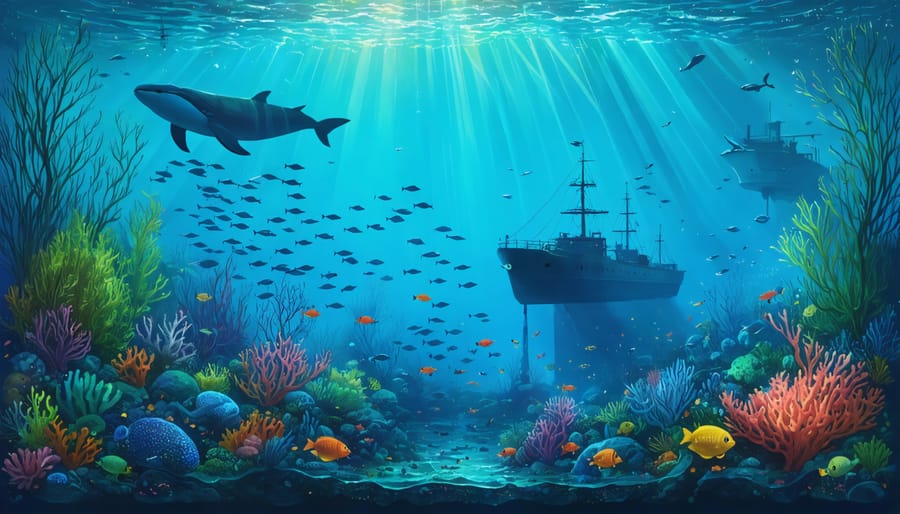
Beneath the ocean’s surface lies a complex web of life that powers our planet’s most vital ecosystem. Marine food webs, from microscopic phytoplankton to apex predators, form an intricate balance that not only sustains marine biodiversity but also holds immense potential for sustainable ocean biomass energy production. These underwater communities represent nature’s most efficient energy transfer systems, where each organism plays a crucial role in maintaining ecological stability and carbon sequestration.
As climate change threatens marine ecosystems worldwide, understanding these delicate relationships becomes increasingly vital for conservation efforts and renewable energy development. From the nutrient-rich coastal waters to the mysterious depths of the abyssal plains, marine ecosystems showcase nature’s remarkable ability to create self-sustaining energy cycles that have evolved over millions of years.
This dynamic interplay between species, their environment, and energy flow offers crucial insights for both environmental protection and sustainable resource utilization. By studying these natural systems, scientists and conservationists can develop better strategies for preserving marine biodiversity while responsibly harnessing the ocean’s potential for clean energy solutions. The future of our oceans – and the countless species that depend on them – hinges on our ability to understand, protect, and sustainably manage these precious ecosystems.
Understanding Marine Ecosystem Components
Primary Producers and Energy Flow
At the foundation of every marine ecosystem lie the primary producers – microscopic phytoplankton and various forms of algae that harness the sun’s energy through photosynthesis. These tiny yet mighty organisms form the base of the marine food web, converting sunlight, carbon dioxide, and nutrients into organic matter and oxygen.
Phytoplankton, including diatoms and dinoflagellates, float freely in the water column, particularly abundant in the sunlit surface waters. They’re responsible for producing approximately 50% of the world’s oxygen and serve as a crucial carbon sink, helping regulate our planet’s climate. Meanwhile, different types of algae, from delicate seaweeds to robust kelp forests, provide both energy and habitat for countless marine species.
These primary producers are essential for energy flow within marine ecosystems. Through photosynthesis, they create glucose and other organic compounds that store solar energy in chemical bonds. This stored energy then moves up the food chain as organisms consume one another, though some energy is lost as heat at each transfer.
Dr. Maria Santos, a marine biologist studying coastal ecosystems, explains: “What’s fascinating about marine primary producers is their efficiency. A single drop of seawater can contain thousands of phytoplankton cells, each contributing to the ecosystem’s energy production. Their productivity supports everything from tiny zooplankton to the largest whales.”
Trophic Levels and Energy Transfer
In marine ecosystems, energy flows through distinct trophic levels, creating a fascinating network of food chains and energy transfer. At the base, microscopic phytoplankton harness solar energy through photosynthesis, forming the foundation of marine biomass pyramids. These primary producers support an intricate web of consumers, from tiny zooplankton to massive whales.
The transfer of energy between trophic levels follows the Ten Percent Rule, where approximately 90% of energy is lost as heat during each transfer. For example, when small fish consume zooplankton, only about 10% of the energy is converted into their biomass. This pattern continues up the food chain, explaining why top predators like sharks are relatively rare compared to their prey species.
This energy transfer efficiency plays a crucial role in maintaining ecosystem balance. The loss of energy at each level creates the characteristic pyramid shape of marine food webs, with abundant primary producers supporting progressively smaller populations of higher-level consumers. Understanding these energy dynamics is essential for marine conservation efforts and sustainable resource management.
Recent studies by marine biologists have shown that climate change and ocean acidification can disrupt these delicate energy transfer patterns, potentially affecting entire food webs. Protecting these energy pathways is vital for maintaining healthy marine ecosystems and the countless species that depend on them.

Biomass Energy Extraction Methods
Algal Biomass Harvesting
Algal biomass harvesting represents a promising intersection of renewable energy production and marine resource management. The process involves cultivating and collecting various species of algae, from microscopic phytoplankton to larger seaweeds, which naturally absorb carbon dioxide while producing oxygen through photosynthesis.
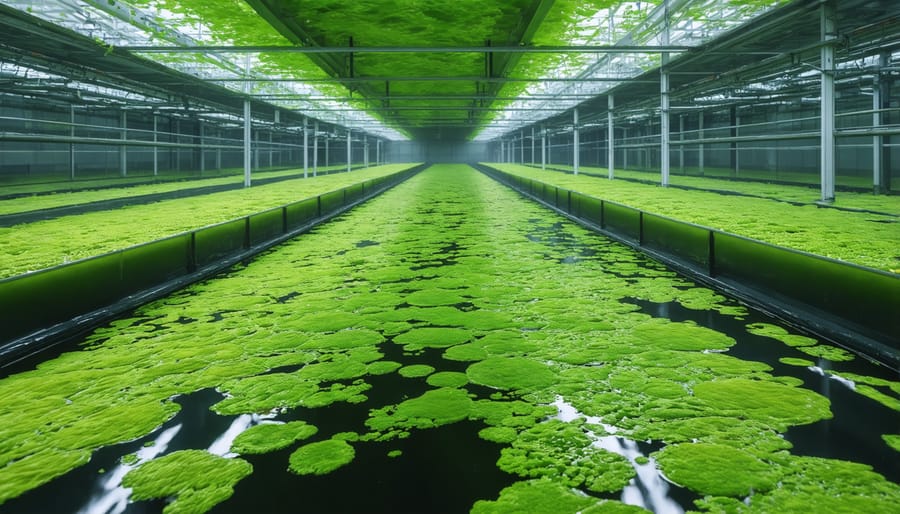
Modern harvesting techniques employ several methods, including mechanical filtration, centrifugation, and flotation systems. Open pond systems remain popular for large-scale cultivation, while closed photobioreactors offer more controlled environments for specific species. These systems must be carefully managed to prevent ecosystem disruption while maximizing yield.
The environmental impact of algal harvesting varies significantly based on the methods used. Sustainable practices focus on maintaining natural algal populations while harvesting excess growth, ensuring minimal disruption to local marine life. Some innovative approaches incorporate multi-trophic aquaculture systems, where algae cultivation complements fish farming and helps maintain water quality.
Marine biologists have observed that well-managed algal farms can actually enhance local biodiversity by providing additional habitat structures for marine organisms. However, careful monitoring is essential to prevent potential negative impacts such as nutrient depletion or the introduction of invasive species.
Recent developments in harvesting technology have improved efficiency while reducing energy consumption. Automated systems now use sensors to optimize collection timing, ensuring maximum biomass yield while preserving ecosystem balance. These advancements make algal biomass an increasingly viable contributor to sustainable energy production.
Waste-to-Energy Conversion
Marine ecosystems offer innovative opportunities for sustainable energy production through waste-to-energy conversion processes. The abundance of organic marine waste, including seaweed, fish processing byproducts, and other biological materials, can be transformed into valuable biofuels and renewable energy sources.
Through anaerobic digestion, marine biomass waste is broken down by microorganisms in oxygen-free environments, producing biogas rich in methane. This biogas can be captured and used for electricity generation or refined into natural gas alternatives. For example, some coastal communities have successfully implemented small-scale digesters that process seaweed waste into biogas for local power needs.
Thermal conversion methods, such as gasification and pyrolysis, offer another pathway for marine waste utilization. These processes heat organic materials in controlled conditions to produce synthetic gas (syngas) or bio-oil, which can be further refined into various fuel products. Advanced facilities can process up to several tons of marine waste daily, significantly reducing landfill burden while generating clean energy.
Recent technological innovations have improved the efficiency of these conversion processes. Marine scientists and engineers have developed specialized pre-treatment methods that enhance biomass degradation and increase energy yield. These developments make waste-to-energy systems increasingly viable for coastal communities and marine industries.
The implementation of these technologies not only addresses waste management challenges but also contributes to circular economy principles in marine resource utilization. As we continue to seek sustainable energy solutions, marine biomass waste-to-energy conversion represents a promising pathway for both environmental protection and renewable energy production.
Ecological Impact Assessment
Direct Ecosystem Effects
Marine ecosystems face immediate and significant changes when biomass energy extraction activities are introduced. The environmental impact of marine biomass energy harvesting can disrupt delicate ecological balances that have evolved over millennia. Common effects include the displacement of marine species from their natural habitats and alterations to their feeding patterns.
When large-scale algae farming operations are established, they can create artificial barriers that affect the movement patterns of larger marine animals. Fish populations may experience changes in their migration routes, while filter-feeding organisms might find their food sources altered by the presence of cultivation structures.
The introduction of artificial structures also impacts the seafloor ecosystem. Bottom-dwelling creatures may lose access to their usual habitats, while new surfaces create opportunities for invasive species to establish themselves. Light penetration to deeper waters can be reduced by floating biomass farms, affecting photosynthetic organisms beneath them.
However, some species adapt positively to these changes. Certain fish populations thrive around cultivation structures, using them as artificial reefs. Small invertebrates often colonize these installations, creating new micro-ecosystems. Understanding these complex interactions helps marine biologists and conservation experts develop more sustainable approaches to biomass energy production while protecting vital marine biodiversity.
Long-term Sustainability Factors
The long-term sustainability of marine ecosystems depends on several interconnected factors that maintain ecological balance and resilience. Ocean acidification, temperature changes, and human activities continue to pose significant challenges, making it crucial to understand and protect these vital systems for future generations.
Key to maintaining ecosystem stability is the preservation of biodiversity, particularly among keystone species that play critical roles in food webs. Marine protected areas (MPAs) have proven effective in supporting ecosystem recovery and enhancing population resilience. Studies show that well-managed MPAs can increase fish biomass by up to 400% while providing spillover benefits to surrounding waters.
Sustainable fishing practices and pollution reduction efforts are essential components of long-term marine ecosystem health. Communities worldwide are adopting innovative approaches, such as seasonal fishing restrictions and plastic reduction initiatives, demonstrating that human activities can coexist with marine conservation goals.
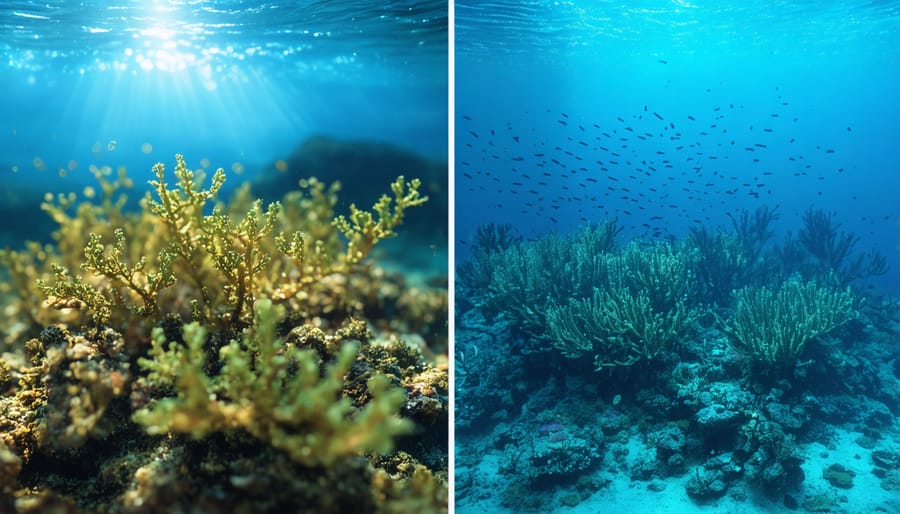
Climate change adaptation strategies, including coral reef restoration and seagrass meadow protection, are becoming increasingly important. These efforts not only preserve marine biodiversity but also enhance the ecosystem’s carbon sequestration capacity, contributing to climate change mitigation.
The future of marine ecosystems relies heavily on international cooperation and local community engagement. Successful conservation programs often combine scientific monitoring with traditional ecological knowledge, creating more robust and adaptable management strategies that can respond to changing environmental conditions.
Conservation and Mitigation Strategies
To protect marine ecosystems while harnessing their energy potential, scientists and conservationists have developed comprehensive strategies that balance environmental preservation with renewable energy needs. These sustainable marine energy solutions focus on minimizing disruption to marine life while maximizing energy production efficiency.
Key mitigation approaches include implementing seasonal restrictions during critical migration periods and establishing protected corridors for marine species. Marine biologists work closely with energy companies to identify and protect sensitive breeding grounds and feeding areas, ensuring minimal impact on local populations.
Advanced monitoring systems using underwater cameras and acoustic sensors help track marine life movements and behavior patterns. This real-time data allows operators to adjust energy harvesting activities when necessary, reducing potential conflicts with marine species.
Design innovations play a crucial role in conservation efforts. Modern turbines incorporate fish-friendly features such as slower rotation speeds and wider blade spacing, significantly reducing the risk of injury to marine life. Protective screens and deterrent systems help guide larger marine mammals away from energy installation zones.
Community engagement has proven essential for successful conservation. Local fishing communities contribute valuable knowledge about marine ecosystems, while citizen science programs enable broader monitoring and data collection efforts. Regular stakeholder meetings ensure that conservation strategies remain adaptive and responsive to changing environmental conditions.
Restoration projects run parallel to energy development, with artificial reef creation and seagrass rehabilitation programs helping to offset any unavoidable impacts. These initiatives often result in net positive effects on marine biodiversity, creating new habitats while generating clean energy.
Through careful planning and implementation of these strategies, marine energy projects can contribute to both renewable energy goals and marine ecosystem preservation, demonstrating that environmental protection and energy production can work hand in hand.
Marine ecosystems stand as remarkable examples of nature’s intricate balance, where every species plays a vital role in maintaining the health and sustainability of our oceans. Through our exploration of this marine ecosystem model, we’ve seen how energy flows through different trophic levels, from microscopic phytoplankton to apex predators, creating a complex web of life that sustains our planet’s biodiversity.
The future of marine ecosystems faces both challenges and opportunities. Climate change, ocean acidification, and human activities continue to pressure these delicate systems. However, growing awareness and scientific understanding have led to innovative conservation strategies and increased public engagement. Community-led initiatives, such as citizen science programs and local marine protection efforts, demonstrate how collective action can make a significant difference.
Looking ahead, technological advances in monitoring and protection methods offer hope for more effective ecosystem management. Scientists are developing new tools to track species populations, measure environmental changes, and implement targeted conservation measures. The success of marine protected areas worldwide shows that when we take decisive action, ecosystems can recover and thrive.
As we move forward, each of us has a role to play in protecting these precious underwater worlds. Whether through supporting conservation efforts, making sustainable choices in our daily lives, or participating in local cleanup initiatives, our actions today will shape the future of marine ecosystems for generations to come.

jessica
Ava Singh is an environmental writer and marine sustainability advocate with a deep commitment to protecting the world's oceans and coastal communities. With a background in environmental policy and a passion for storytelling, Ava brings complex topics to life through clear, engaging content that educates and empowers readers. At the Marine Biodiversity & Sustainability Learning Center, Ava focuses on sharing impactful stories about community engagement, policy innovations, and conservation strategies. Her writing bridges the gap between science and the public, encouraging people to take part in preserving marine biodiversity. When she’s not writing, Ava collaborates with local initiatives to promote eco-conscious living and sustainable development, ensuring her work makes a difference both on the page and in the real world.