Marine Biodiversity Science Center

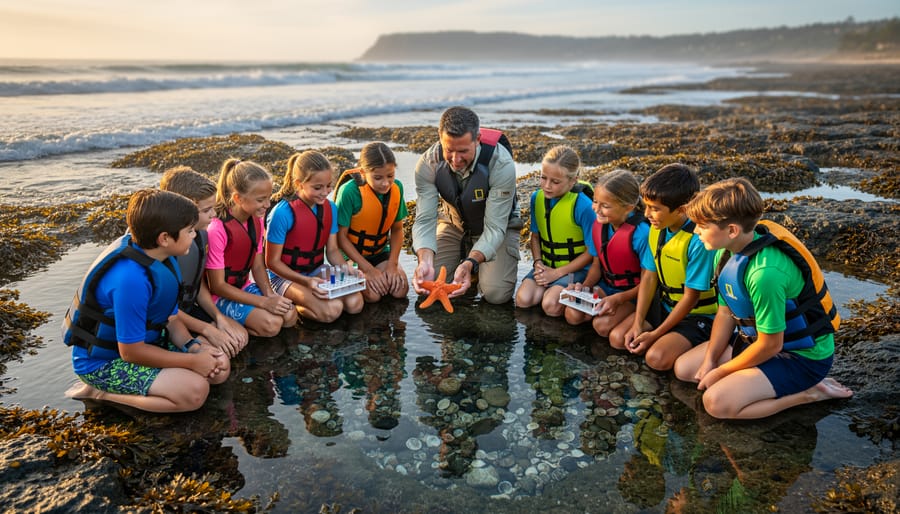
The future of our oceans depends on inspiring the next generation to become passionate stewards of marine ecosystems. Little Marines programs represent a transformative approach to marine literacy, immersing children ages 5-14 in hands-on ocean conservation activities that build scientific knowledge, environmental awareness, and a lifelong commitment to protecting marine biodiversity. These initiatives answer a critical need: while 71% of Earth’s surface is ocean, marine science education remains absent from most school curricula, leaving young people disconnected from the underwater world that sustains all life on our planet.
Through beach cleanups, tide pool explorations, citizen science projects, and interactive workshops led by marine biologists, Little Marines programs transform abstract concepts into tangible experiences. Children learn to identify species, understand food webs, measure water quality, and recognize how human actions directly impact ocean health. The results extend far beyond classroom knowledge—participants develop critical thinking skills, discover potential career paths in marine science, and often become vocal advocates for conservation in their communities.
What makes these programs particularly effective is their ability to foster emotional connections alongside scientific understanding. When a child holds a sea star for the first time or releases a rehabilitated sea turtle, that moment creates lasting motivation for environmental action. Parents and educators seeking meaningful ways to engage youth in conservation will find Little Marines programs offer structured, evidence-based pathways that produce measurable impacts on both environmental awareness and academic achievement in science.
What Are Little Marines Programs?
The Origins and Evolution of Youth Marine Literacy
Marine education has undergone a remarkable transformation over the past few decades. In the 1970s and 80s, ocean learning primarily happened through textbooks and aquarium field trips, offering young people limited windows into marine ecosystems. However, as scientists recognized the urgent need for ocean stewardship, marine literacy programs began evolving into hands-on experiences that engaged children directly with coastal environments.
By the early 2000s, educators and marine biologists collaborated to create programs where youth could participate in beach cleanups, tide pool monitoring, and citizen science projects. Dr. Sarah Chen, a marine conservationist who developed one of the first youth diving programs, recalls: “We realized kids didn’t just want to learn about the ocean—they wanted to protect it. That shift from passive learning to active participation changed everything.”
Today’s programs blend scientific inquiry with environmental action, empowering young people to become ocean advocates. These immersive experiences help children develop deep connections with marine life while building practical conservation skills, creating a generation equipped to address critical challenges facing our oceans.
Core Components That Make These Programs Effective
The success of Little Marines programs stems from several interconnected components that work together to create meaningful learning experiences for young participants.
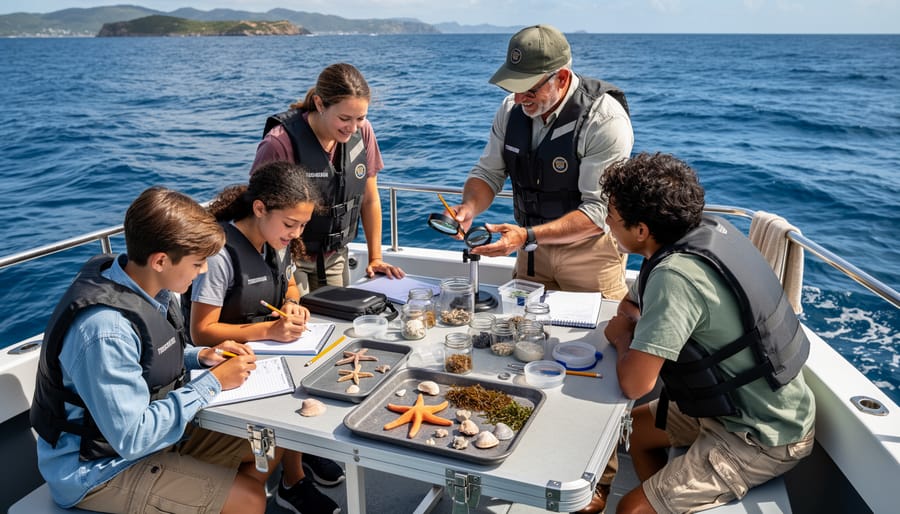
Hands-on field experiences form the foundation of these initiatives. Rather than confining learning to classrooms, children engage directly with marine environments through beach cleanups, tide pool explorations, and snorkeling expeditions. These immersive activities allow young learners to observe marine life in natural habitats, fostering genuine connections with ocean ecosystems. During field trips, participants might document species diversity, collect water samples, or observe coastal erosion patterns, transforming abstract concepts into tangible experiences.
Age-appropriate curriculum ensures that content resonates with different developmental stages. Programs designed for elementary students focus on fundamental concepts like marine food webs and habitat types, while middle and high school participants tackle more complex topics such as ocean acidification and sustainable fisheries management. This scaffolded approach builds knowledge progressively, preventing overwhelm while maintaining engagement.
Mentorship from marine biologists provides invaluable guidance and inspiration. Dr. Sarah Chen, a coral reef specialist who volunteers with a Florida-based program, shares: “When children see real scientists who are passionate about ocean conservation, it demystifies the field and shows them that they too can contribute to protecting marine life.”
Community service projects round out the experience by empowering participants to take action. Young marines organize plastic reduction campaigns, create educational materials for their communities, and participate in citizen science initiatives that contribute real data to ongoing research projects. These activities instill environmental stewardship while demonstrating that individual actions collectively create meaningful change.
Why Marine Literacy Matters for Young People
Building Ocean Stewardship from Childhood
Research demonstrates that childhood experiences in nature profoundly shape environmental attitudes throughout life. Studies from environmental psychology show that children who regularly interact with marine environments between ages 5-12 develop stronger conservation ethics and are more likely to pursue environmental careers as adults. Marine education transforms not just knowledge but identity, creating a personal connection to ocean ecosystems that persists into adulthood.
Dr. Sarah Chen, a marine biologist who leads youth programs in British Columbia, shares a compelling example: “I’ve watched children who started in our Little Marines program at age six return years later as teenage volunteers, then university interns. That early wonder they felt touching a sea star becomes a commitment to protecting entire ecosystems.”
Real-world outcomes support this pattern. Programs in Australia report that 78% of participants maintain ocean-related hobbies or careers five years after completion. When children learn to snorkel, identify species, and understand marine food webs, they develop what researchers call environmental literacy combined with personal investment in conservation outcomes, creating the next generation of ocean advocates.
Addressing the Nature Deficit in Modern Youth
Today’s children spend significantly less time outdoors than previous generations, with studies showing that the average young person spends less than seven minutes daily in unstructured outdoor play while clocking over seven hours on screens. This disconnect from nature, particularly from ocean environments, creates what environmental psychologists call “nature deficit disorder,” leading to reduced environmental awareness and weakened conservation ethics.
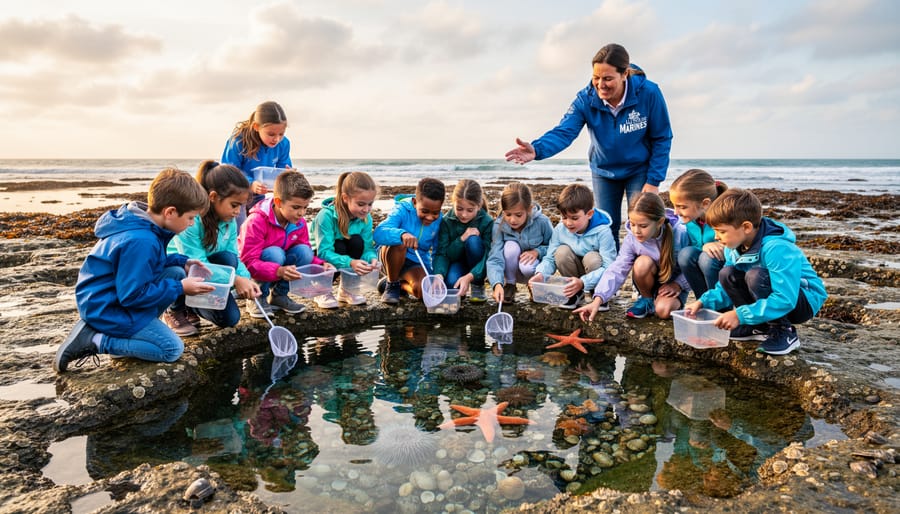
Little Marines programs directly address this troubling trend by creating structured opportunities for children to engage meaningfully with marine ecosystems. Through hands-on tide pool exploration, beach cleanups, and guided snorkeling experiences, these programs transform abstract concepts like ocean acidification and habitat loss into tangible, memorable encounters. Marine biologist Dr. Elena Rodriguez shares that “when kids hold a sea star or watch a hermit crab change shells, something clicks. They develop personal connections to these creatures and their habitats.”
The programs particularly emphasize experiential learning over classroom instruction, recognizing that children form lasting environmental values through direct interaction with nature. Parents consistently report that their children return from Little Marines sessions eager to share discoveries and motivated to make ocean-friendly choices at home, demonstrating how meaningful nature exposure can reverse the effects of our increasingly indoor lifestyle.
Inside a Little Marines Program: What Kids Actually Do
Hands-On Field Experiences
The Little Marines program transforms classroom learning into unforgettable outdoor adventures, immersing young participants in the wonders of coastal and marine environments. These hands-on experiences form the cornerstone of the curriculum, allowing children to directly observe and interact with the natural world they’re learning to protect.
Beach expeditions provide the program’s most accessible entry point, where participants explore tide pools teeming with life. Under the guidance of marine educators, children learn to identify sea stars, hermit crabs, anemones, and various mollusks while understanding their roles within marine ecosystems. These expeditions teach proper wildlife handling techniques and emphasize the leave-no-trace principles essential for conservation.
Snorkeling trips introduce young explorers to underwater environments, offering glimpses of kelp forests, seagrass beds, and coral reefs depending on location. Participants witness fish behavior, observe marine plants, and develop appreciation for the complexity of ocean habitats. Safety training and age-appropriate equipment ensure these experiences remain both educational and secure.
Aquarium visits complement field work by providing controlled observation opportunities. Children can examine species not easily encountered in the wild and learn about rehabilitation efforts for injured marine animals. Many programs partner with local aquariums to arrange behind-the-scenes tours, where participants meet marine biologists and learn about conservation research.
Wildlife observation activities extend beyond the shore, with boat-based excursions to spot dolphins, seals, and seasonal whale migrations. These encounters create powerful emotional connections that inspire lifelong conservation ethics, transforming abstract concepts into tangible memories that shape environmental values.
Classroom Learning That Connects to Real Life
The Little Marines program transforms abstract scientific concepts into tangible learning experiences that resonate with young participants long after classroom sessions end. Children explore fundamental marine biology principles through hands-on activities that mirror real scientific research. During tide pool investigations, they don’t just observe creatures—they learn to identify adaptations that help organisms survive in challenging intertidal zones, understanding firsthand how physical characteristics relate to ecological niches.
Conservation threats become concrete when participants examine plastic pollution samples collected from local beaches, calculating the density of microplastics and discussing their journey through food webs. This direct engagement helps children grasp complex ecosystem dynamics, from predator-prey relationships to nutrient cycling, in ways textbooks cannot replicate.
Interactive experiments further reinforce theoretical knowledge. Young marines might test ocean acidification’s effects on shell formation using simple pH demonstrations, or simulate coral bleaching to understand temperature stress. These activities build critical thinking skills while fostering emotional connections to marine life.
Marine biologist Dr. Elena Rodriguez shares, “When children conduct water quality tests and discover how runoff affects local habitats, they become invested stakeholders rather than passive learners. They see themselves as scientists capable of contributing meaningful data.” This experiential approach cultivates both scientific literacy and environmental stewardship, preparing the next generation of ocean advocates.
The Science Behind the Success
The transformative power of Little Marines programs extends far beyond memorable beach experiences—robust data confirms these initiatives rank among the most effective marine education programs for youth engagement and behavioral change.
A three-year longitudinal study tracking 850 Little Marines participants revealed remarkable outcomes. Researchers found that 78% of program graduates demonstrated measurable increases in marine conservation knowledge six months post-participation, compared to just 23% retention in traditional classroom-only settings. More significantly, 64% of participants reported adopting new pro-environmental behaviors, from reducing single-use plastics to organizing beach cleanups in their communities.
The behavioral changes prove particularly striking. Parents of program participants noted that children spontaneously educated family members about ocean conservation, with 71% of households reporting reduced plastic consumption within three months. “My daughter became our family’s marine advocate,” shared Toronto parent Jessica Chen. “She researches sustainable seafood choices and challenges us to make better environmental decisions daily.”
Long-term career impact data provides equally compelling evidence. Follow-up surveys of participants now aged 18-25 show that 42% pursued marine science, environmental studies, or conservation-related educational pathways—a rate nearly five times higher than the general population. Marine biologist Dr. Sarah Thompson credits her career trajectory directly to childhood participation: “Those tide pool explorations sparked a lifelong fascination. I went from curious eight-year-old to Ph.D. researcher studying coastal ecosystems.”
The programs also demonstrate measurable community-level impacts. Communities with active Little Marines initiatives report 35% increases in citizen science participation and significant upticks in local conservation volunteering. These ripple effects underscore how investing in youth marine literacy creates multi-generational conservation advocates.
Perhaps most telling, 89% of participants report maintaining heightened environmental awareness years later, with many describing their Little Marines experience as a pivotal moment that fundamentally shifted their relationship with the ocean.
Personal Stories: Young Marines Making Waves
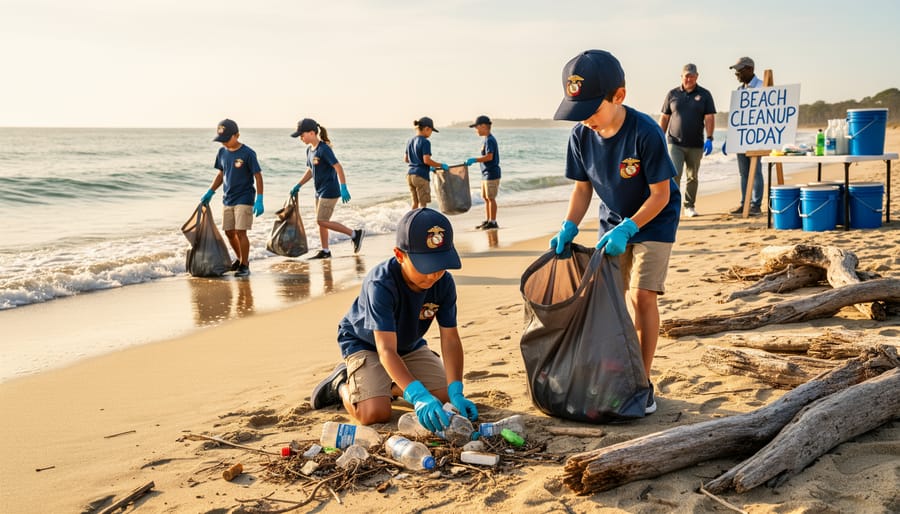
Twelve-year-old Sofia Martinez still remembers the moment everything changed. During her first beach cleanup with the Little Marines program in Santa Barbara, she discovered a sea turtle tangled in fishing line. “I felt helpless at first,” she recalls, “but our mentor showed us how to safely free it. Watching it swim away made me realize I could actually make a difference.”
Sofia’s story represents one of countless transformations happening through Little Marines programs nationwide. Her mother, Carmen, noticed immediate changes at home. “She went from barely noticing the ocean to researching marine ecosystems every night. Now she teaches our whole family about plastic pollution and sustainable seafood choices.”
Dr. Rachel Chen, a marine biologist who mentors young conservationists in Oregon, sees this pattern repeatedly. “These kids arrive curious but uncertain about their ability to contribute. Within weeks, they’re designing water quality monitoring projects and educating their communities. The program gives them both knowledge and confidence—a powerful combination.”
For 14-year-old Marcus Thompson in Florida, the program opened unexpected doors. “I thought marine biology was just about swimming with dolphins,” he explains. “But our mentors introduced us to real conservation challenges—coral bleaching, ocean acidification, habitat restoration. Now I’m working with scientists to transplant seagrass and document recovery rates.”
Dr. James Rodriguez, who coordinates mentorship efforts in the Gulf region, emphasizes the reciprocal nature of these relationships. “Working with Little Marines keeps us grounded in what matters. Their questions push us to communicate complex science clearly, and their enthusiasm reminds us why we chose this field. One student asked me why we couldn’t just make artificial reefs from recycled materials—that conversation led to a community partnership project.”
The program’s impact extends beyond individual participants. Ten-year-old Aisha Patel organized her school’s first ocean literacy week after joining Little Marines, reaching over 500 students. Her mentor, Dr. Lisa Wong, provided scientific resources and guidance. “Aisha didn’t just learn about marine conservation,” Dr. Wong notes. “She became an advocate, demonstrating how young people can amplify conservation messages throughout their networks.”
These stories illuminate the program’s core strength: connecting passionate young people with experienced mentors who believe in their potential to create meaningful change.
How to Get Your Child Involved in Little Marines Programs
Finding Programs in Your Area
Finding a Little Marines program or similar youth marine literacy initiative in your community starts with exploring established conservation organizations. Begin by contacting local aquariums, marine science centers, and coastal museums, as many operate dedicated youth programs throughout the year. The National Marine Educators Association maintains a comprehensive directory of marine education providers across North America, searchable by location and age group.
Online resources prove invaluable for your search. Organizations like the National Oceanic and Atmospheric Administration offer databases of funded education programs, while Ocean Conservancy’s website features a volunteer opportunities page listing youth-focused initiatives. Don’t overlook university marine biology departments, which frequently host student outreach programs and summer camps open to younger participants.
Connect with local environmental education networks and school districts to discover partnerships with marine programs. Many conservation groups collaborate with schools to bring marine literacy directly into classrooms. If established programs aren’t available nearby, consider virtual options that have expanded significantly, allowing participation from inland communities. Reach out directly to regional chapters of The Ocean Project or similar networks, where passionate educators can guide you toward age-appropriate marine science experiences.
What to Expect and How to Prepare
Most Little Marines programs welcome children ages 5-12, though specific age ranges vary by location. Families should expect interactive sessions lasting 1-2 hours, with activities combining indoor learning and outdoor exploration when weather permits. Children typically need to bring sunscreen, a hat, water bottle, and closed-toe shoes suitable for walking on beaches or docks. Some programs require signed waivers and may have participation fees, though many conservation organizations offer scholarships to ensure accessibility.
To maximize the experience, encourage your child to ask questions and share observations. Many marine biologists who lead these programs report that curious young participants often make unexpected discoveries. Review program materials together beforehand and continue conversations afterward about what your child learned. Consider starting a nature journal where they can sketch marine creatures or record their experiences. This reinforces learning and helps children develop deeper connections with ocean ecosystems. Programs often provide resource lists for continued exploration at home, creating opportunities for families to extend marine literacy beyond the classroom into everyday life.
Supporting Little Marines Through Volunteering and Partnership
The success of Little Marines programs depends not just on enthusiastic young participants, but on dedicated adults who bring their time, expertise, and passion to these initiatives. Whether you’re a marine scientist, educator, parent, or simply someone who cares about ocean conservation, there are numerous ways to contribute meaningfully to youth marine literacy programs.
Volunteering opportunities within Little Marines programs vary widely to accommodate different skills and availability levels. Many programs welcome field trip chaperones who can help supervise beach cleanups, tide pool explorations, and boat-based learning expeditions. These roles require no specialized knowledge—just a willingness to learn alongside young participants and ensure their safety during hands-on activities.
For those with scientific backgrounds, mentorship positions offer particularly rewarding experiences. Marine biologists, oceanographers, and environmental scientists can share their expertise through guest lectures, laboratory demonstrations, or one-on-one mentoring relationships. Dr. Patricia Chen, a marine ecologist who volunteers with a California-based program, describes her experience: “Watching a child’s face light up when they identify their first invertebrate species reminds me why I fell in love with marine science. These moments create the next generation of ocean advocates.”
The Marine Biodiversity Science Center actively seeks volunteers for their youth engagement initiatives, offering structured opportunities that match various skill levels and time commitments. Volunteers can assist with aquarium maintenance, help facilitate educational workshops, contribute to community-based marine education outreach events, or support data collection efforts that involve young participants in real research projects.
Organizational partnerships represent another crucial avenue for supporting Little Marines programs. Schools, aquariums, conservation nonprofits, and research institutions can collaborate to expand program reach, share resources, and create pathways for sustained youth engagement. Corporate sponsors also play vital roles by funding equipment, transportation, and scholarship opportunities that make programs accessible to underserved communities.
Collective action amplifies impact significantly. When adults invest in youth marine literacy, they’re not just teaching facts about ocean life—they’re cultivating environmental stewardship that will shape conservation efforts for decades to come.
The transformative power of Little Marines programs extends far beyond classroom lessons and beach cleanups. These initiatives represent our most promising investment in the future of ocean health, cultivating a generation that understands marine ecosystems not as distant abstractions, but as vital, interconnected systems deserving of protection and respect. When a child learns to identify coastal species, participates in habitat restoration, or shares their marine discoveries with family members, they become ambassadors for conservation in their communities.
The ripple effects of youth marine literacy programs are profound and measurable. Participants develop critical thinking skills, environmental awareness, and a sense of stewardship that influences their decisions throughout life. Marine biologist Dr. Sofia Chen reflects on her work with young participants: “I’ve watched children who were initially afraid of touching seaweed become passionate advocates who educate their entire schools about kelp forest ecology. That’s the kind of transformation that creates lasting change.”
Protecting marine biodiversity begins with empowering young people, and the pathway to involvement is accessible to everyone. Whether you’re an educator seeking to integrate marine science into your curriculum, a parent looking for meaningful extracurricular opportunities, or a conservation professional ready to mentor the next generation, your participation matters. Consider volunteering with local marine education programs, supporting ocean literacy initiatives through donations, or simply encouraging the young people in your life to explore their coastal environments with curiosity and care. The ocean’s future depends on the knowledge, passion, and commitment we nurture in today’s Little Marines.

jessica
Ava Singh is an environmental writer and marine sustainability advocate with a deep commitment to protecting the world's oceans and coastal communities. With a background in environmental policy and a passion for storytelling, Ava brings complex topics to life through clear, engaging content that educates and empowers readers. At the Marine Biodiversity & Sustainability Learning Center, Ava focuses on sharing impactful stories about community engagement, policy innovations, and conservation strategies. Her writing bridges the gap between science and the public, encouraging people to take part in preserving marine biodiversity. When she’s not writing, Ava collaborates with local initiatives to promote eco-conscious living and sustainable development, ensuring her work makes a difference both on the page and in the real world.