Marine Biodiversity Science Center

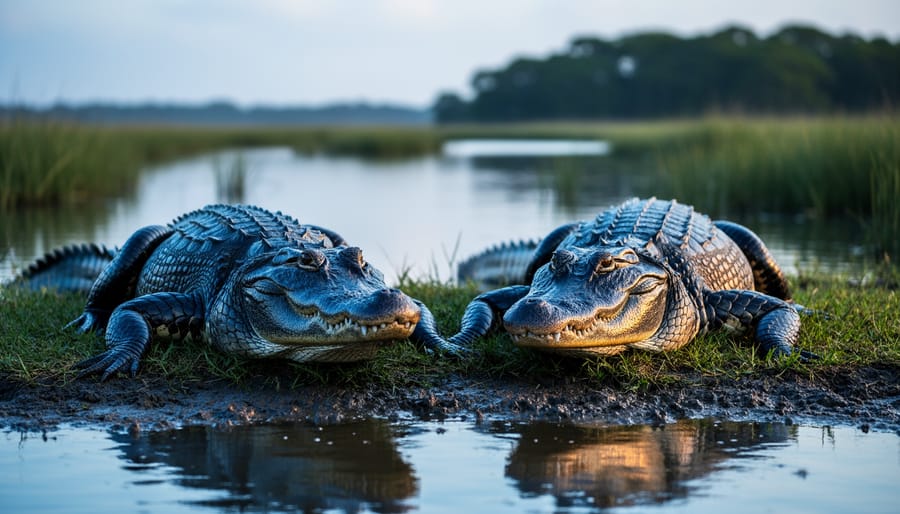
When encountering a large reptile basking near a waterway, the simplest way to tell the difference is this: American alligators have broad, U-shaped snouts and prefer freshwater habitats across the southeastern United States, while crocodiles sport narrow, V-shaped snouts and tolerate saltwater, with American crocodiles found only in southern Florida and coastal areas. For anyone living, working, or exploring wetlands from the Carolinas to Texas, you’re almost certainly seeing an alligator. Crocodile territory is far more restricted in the U.S., making these sightings rare outside extreme South Florida.
The confusion between these prehistoric predators is understandable. Both belong to the order Crocodylia, both inspire awe and caution, and both have recovered from the brink of extinction thanks to decades of conservation efforts. Yet they diverged millions of years ago, evolving distinct adaptations that dictate where they live, how they behave, and what role they play in their ecosystems. Knowing which species you’re observing matters for safety, for conservation awareness, and for appreciating the resilience of these ancient lineages.
American alligators thrive in freshwater swamps, marshes, rivers, and lakes, numbering over five million individuals today after being listed as endangered in 1967. American crocodiles, by contrast, remain far less common, with fewer than 2,000 adults in the U.S., concentrated in brackish and saltwater mangroves. Their tolerance for salt and their aggressive reputation often overshadow the nuances that separate them from their alligator cousins.
This guide cuts through the myths and lays out the key differences in anatomy, behavior, habitat, and distribution. Whether you’re an educator preparing a lesson, a student researching biodiversity, or someone who simply wants to identify what’s lurking in the local pond, understanding these distinctions deepens your connection to the wild and underscores why protecting wetland habitats remains urgent work in 2026.
What Each Option Is
The American alligator (Alligator mississippiensis) is a large reptilian predator native exclusively to the southeastern United States. This freshwater specialist belongs to the family Alligatoridae and represents one of only two alligator species worldwide. Built for life in swamps, rivers, and lakes, American alligators feature broad, rounded snouts and dark, nearly black coloration that helps them blend into murky waters.
Crocodiles, by contrast, comprise a diverse family (Crocodylidae) with species distributed across tropical and subtropical regions worldwide. When comparing to American alligators, we typically reference the American crocodile (Crocodylus acutus), the species sharing range in southern Florida. Crocodiles are adapted for saltwater and brackish environments, possessing specialized glands that excrete excess salt. Their lighter olive-brown coloration and distinctive narrow, pointed snouts set them apart from their alligator cousins.
While both belong to the order Crocodylia and share ancient evolutionary lineage dating back millions of years, these reptiles have evolved distinct adaptations to different ecological niches, making them separate species rather than simple variations of the same animal.
Who Should Choose Which
The question of “choosing” between American alligators and crocodiles isn’t really about preference, it’s about understanding which species you’re dealing with based on your location and circumstances.
If you’re anywhere in the southeastern United States outside of southern Floridayou’re encountering American alligators. From Louisiana bayous to Georgia marshes, Texas coastal wetlands to the Carolinas, alligators are your only native crocodilian. Learn to identify them, respect their space, and appreciate their role in freshwater ecosystems.
If you’re in coastal South Florida, particularly the Everglades, Florida Keys, or mangrove-lined baysyou might encounter either species. The brackish, saltwater-tolerant American crocodile shares this unique overlap zone with alligators. Here, identification skills become essential, that narrow snout and visible teeth signal a crocodile, which demands extra caution.
For wildlife photographers and ecotouristsalligators offer more accessible viewing opportunities across a broader range. They’re tolerant of observation from safe distances and predictable in their habitat use.
For marine conservationists and researcherscrocodiles present greater challenges and urgent conservation needs, especially as climate change threatens their coastal nesting sites. Volunteer monitoring programs welcome participants who can commit to working in challenging saltwater environments.
At-a-Glance: American Alligator vs. Crocodile
| Feature | American Alligator | Crocodile (American) |
|---|---|---|
| Snout Shape | Broad, U-shaped | Narrow, V-shaped |
| Teeth Visibility | Hidden when mouth closed | Visible, especially lower 4th tooth |
| Color | Dark gray to black | Olive-brown to tan |
| Habitat | Freshwater swamps, marshes, lakes | Brackish and saltwater coastal areas |
| Geographic Range | Southeastern U.S. (NC to TX) | Southern Florida, Caribbean, Central/South America |
| Temperament | Generally shy, avoids humans | More aggressive and territorial |
| Conservation Status | Recovered, stable populations | Threatened (U.S. populations) |
This quick-reference guide captures the primary differences you’ll notice in the field. Both species serve critical wetland ecosystem roles but their distinct physical features, habitat preferences, and behaviors reflect millions of years of separate evolutionary paths. The American alligator’s darker coloring and broader snout make it easily distinguishable from the lighter, more streamlined crocodile, while their geographic ranges rarely overlap except in southern Florida’s unique coastal ecosystem.
Understanding Each Species
The American Alligator: An Apex Predator of Freshwater Habitats
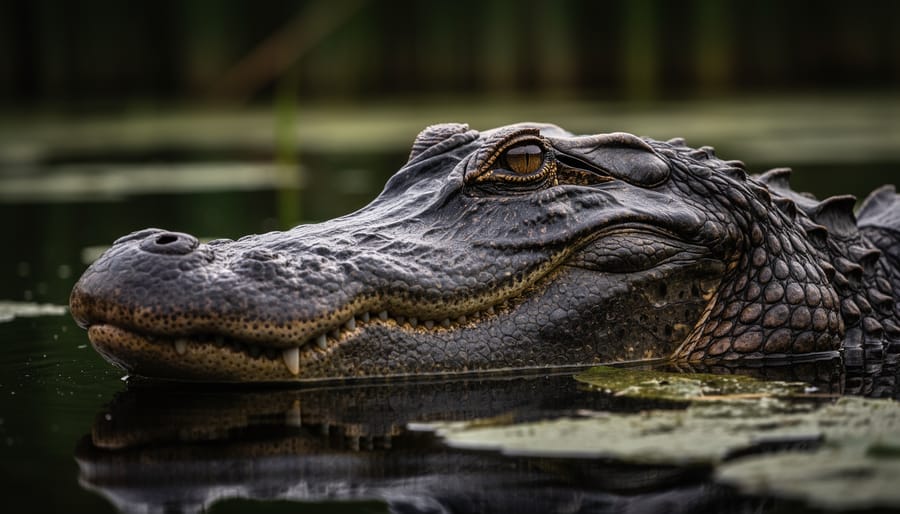
The American alligator (Alligator mississippiensis) stands as one of North America’s most impressive reptiles and a testament to successful conservation. Belonging to the family Alligatoridae, this species diverged from crocodilians roughly 80 million years ago, developing specialized adaptations for freshwater dominance. Adult males typically reach 11 to 15 feet in length and weigh between 500 and 1,000 pounds, while females are smaller, averaging 8 to 10 feet. Their powerful bodies feature dark, armored skin with a characteristic broad, rounded snout that distinguishes them from their crocodilian cousins.
Geographically, American alligators inhabit freshwater environments throughout the southeastern United States, from North Carolina’s coastal plains south through Florida and west to Texas. They thrive in slow-moving rivers, swamps, marshes, lakes, and even retention ponds in suburban areas. Unlike crocodiles, alligators lack specialized salt glands, restricting them primarily to freshwater systems where they’ve become perfectly adapted apex predators.
Beyond their role as formidable hunters of fish, turtles, birds, and mammals, alligators function as critical ecosystem engineers. During dry seasons, they excavate “gator holes” that retain water, providing vital refuges for fish, amphibians, and aquatic invertebrates. These depressions sustain entire communities of wildlife during droughts, demonstrating how one species can shape habitat for dozens of others. Their nesting mounds create elevated microhabitats, and their presence helps control prey populations while providing food for scavengers.
The American alligator’s conservation status represents one of wildlife management’s great success stories. Listed as endangered in 1967, aggressive protection and habitat conservation allowed populations to rebound dramatically. By 1987, the species was reclassified to “threatened due to similarity of appearance” and now thrives with stable populations estimated over 5 million individuals across its range. This recovery demonstrates how dedicated conservation efforts, when combined with public education about how to identify crocs and gators can reverse even severe population declines.
Crocodiles: Saltwater Specialists with Global Range
While American alligators reign over freshwater habitats in the southeastern United States, crocodiles represent a much larger and more diverse family with species inhabiting tropical and subtropical regions across six continents. The family Crocodylidae encompasses 14 recognized species, ranging from the massive saltwater crocodile of Indo-Pacific waters to the critically endangered Philippine crocodile.
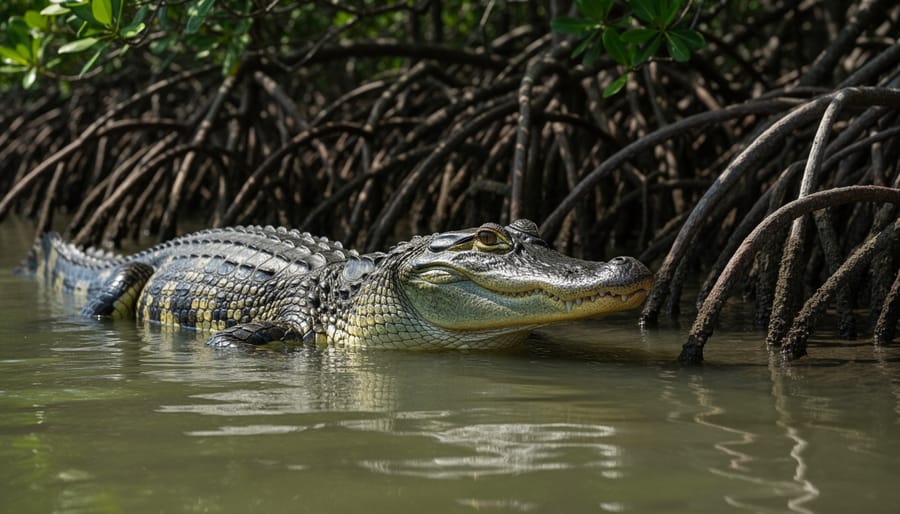
For direct comparison with American alligators, the American crocodile (Crocodylus acutus) serves as the most relevant species. This reptile inhabits coastal areas from southern Florida through the Caribbean, Central America, and northern South America to Venezuela and Peru. Unlike their alligator cousins, American crocodiles possess specialized salt glands on their tongues that allow them to excrete excess salt, enabling survival in brackish and marine environments that would be inhospitable to alligators.
Physical characteristics distinguish crocodiles immediately. The narrow, V-shaped snout optimizes catching fish and marine prey in open water. Adult American crocodiles typically measure 10 to 13 feet, though males occasionally exceed 15 feet. Their lighter olive-brown to gray coloration provides camouflage in sandy coastal environments, contrasting sharply with the darker tones of freshwater alligators.
Behaviorally, crocodiles tend toward greater aggression and unpredictability than alligators. They defend territories more vigorously and show less tolerance for human presence. American crocodiles construct nests in coastal areas, often on sandy beaches or elevated banks near mangrove forests, laying 30 to 60 eggs per clutch.
Conservation challenges differ markedly from the alligator success story. American crocodiles remain federally listed as threatened in the United States, with estimated populations around 2,000 individuals in South Florida as of 2026. Habitat loss from coastal development, rising sea levels affecting nesting sites, and human conflict pose ongoing threats. International populations face similar pressures, though some Central American countries maintain more robust numbers where suitable habitat persists.
Physical Differences: How to Tell Them Apart
Snout Shape: The Most Reliable Identifier
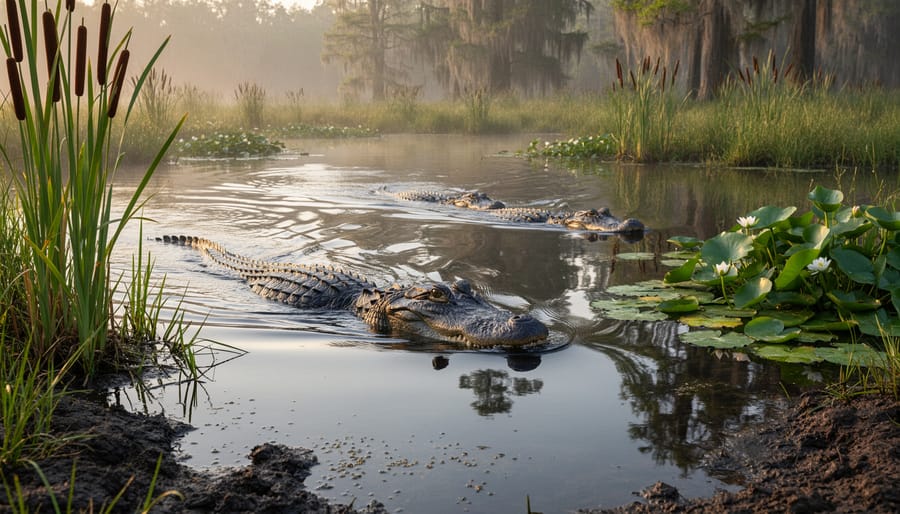
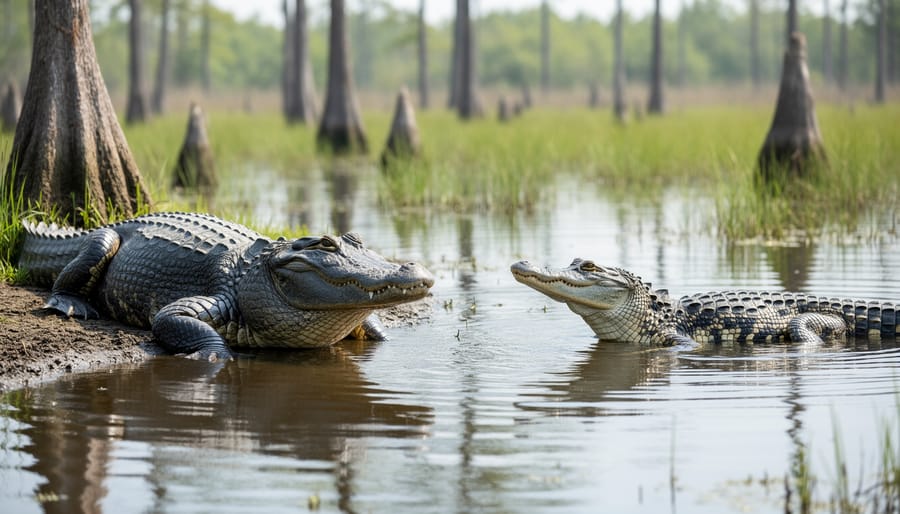
The most reliable way to distinguish an American alligator from a crocodile is the shape of the snout. Alligators possess a broad, rounded, U-shaped snout that resembles a shovel, while crocodiles have a narrow, pointed, V-shaped snout that tapers dramatically toward the tip. This difference is immediately visible even from a distance and remains consistent across age groups and throughout the alligator range.
These distinct snout shapes evolved to support different feeding strategies. The alligator’s wide, powerful snout delivers tremendous crushing force, ideal for cracking turtle shells, breaking through thick-scaled fish, and gripping medium-sized prey in freshwater environments. The shorter jaw also provides mechanical advantage for the bite-and-hold technique alligators use when subduing prey. Crocodiles, with their slender snouts, evolved for quick lateral strikes to catch fast-moving fish in open water and coastal zones. The streamlined shape reduces water resistance during rapid head movements, allowing crocodiles to snatch fish with precision rather than relying purely on crushing power.
Teeth Visibility and Jaw Structure
When an alligator closes its mouth, its upper jaw overlaps the lower jaw completely, concealing most teeth from view. This creates a smooth, relatively uniform appearance along the jawline. In contrast, crocodiles display visible teeth even when their jaws are shut, with the prominent fourth tooth on each side of the lower jaw fitting into external notches in the upper jaw, creating the characteristic toothy grin that distinguishes them at a glance.
These structural differences reflect distinct evolutionary adaptations. Alligators evolved in freshwater swamps and marshes where powerful crushing force proved more advantageous for subduing prey like turtles and large fish. Crocodiles, found in mangrove habitats and coastal zones, developed interlocking teeth better suited for gripping slippery marine prey.
Both possess formidable bite forces, alligators can exert over 2,000 pounds per square inch, while saltwater crocodiles exceed 3,700 PSI, but alligators generate proportionally stronger crushing power relative to body size. Their broader snout and overlapping jaw structure distribute force across a wider surface area, making them particularly effective at breaking through hard-shelled prey.
Coloration and Size
American alligators typically display darker coloration, ranging from nearly black to dark gray-green, which helps them blend into the shadowy waters of swamps and marshes. Their darker hue becomes more pronounced with age, while juveniles often show lighter yellow or white stripes that fade over time. In contrast, American crocodiles exhibit lighter olive-brown to gray coloration that provides better camouflage in the brighter, open waters of coastal habitats and mangrove environments.
Size differences between the species are notable but overlap considerably. Adult male American alligators average 11 to 15 feet in length, with exceptional individuals reaching 19 feet. Females are substantially smaller, typically measuring 8 to 10 feet. American crocodiles grow slightly larger on average, with males reaching 13 to 16 feet and females measuring 8 to 12 feet. The largest verified American crocodile measured over 20 feet.
Environmental factors significantly influence appearance in both species. Water chemistry affects coloration, with tannin-rich blackwater habitats producing darker individuals. Algae growth on the skin can create a greenish tint, particularly in warmer months when both species bask frequently in shallow waters.
Skin Texture and Sensory Features
Beyond the obvious differences in snout shape and teeth, the skin of alligators and crocodiles reveals fascinating adaptations that reflect their hunting strategies. Both species possess osteoderms, bony plates embedded beneath their scales that provide protection and help with thermoregulation, but crocodiles typically have fewer osteoderms on their belly, making their ventral skin more valuable in the leather trade.
The most significant difference lies in their integumentary sensory organs (ISOs). These small, dome-shaped receptors appear as dark spots on scales and function like underwater motion detectors, sensing vibrations, pressure changes, and chemical cues in the water. Crocodiles possess ISOs across their entire body, including their bellies, giving them extraordinary sensory awareness in their aquatic environment. American alligators, by contrast, have ISOs only on their jaws, limiting their sensory detection primarily to prey near their mouths.
This distinction matters because crocodiles, which often hunt in saltwater and brackish environments with variable visibility, rely heavily on these sensors to detect fish and other prey in murky conditions. Marine biologists studying crocodilian behavior have documented how crocodiles can locate prey in complete darkness using these receptors alone, a capability that helps explain their success as coastal predators.
Habitat and Geographic Range: Where You’ll Find Each Species
American Alligator Territory: Freshwater Dominance
American alligators command an impressive freshwater domain spanning the coastal plain of the southeastern United States. Their primary range stretches from North Carolina’s Outer Banks through South Carolina, Georgia, Florida, Alabama, Mississippi, Louisiana, and into eastern Texas. While the range extends to Texas the highest population densities concentrate in Louisiana and Florida, where optimal wetland conditions support millions of individuals.
These reptiles thrive in freshwater environments: cypress swamps, river deltas, oxbow lakes, retention ponds, marshes, and slow-moving rivers. They’ll tolerate brackish conditions temporarily but lack the specialized salt glands that allow crocodiles to inhabit saltwater long-term. Water temperature drives their northern boundary, they require warm climates for successful reproduction and overwinter survival.
In 2026, urban sprawl creates new challenges as subdivisions, golf courses, and commercial developments encroach on traditional alligator habitat. Florida faces particularly complex human-wildlife dynamics, with alligators now common in suburban retention ponds, canal systems, and even swimming pools. Residential communities near Louisiana’s bayous and South Carolina’s coastal wetlands report increased sightings as development fragments natural corridors. These encounters necessitate ongoing public education about coexistence strategies, including maintaining safe distances, never feeding wildlife, and reporting problem animals to state wildlife agencies rather than attempting removal. Proper wetland protection and thoughtful development planning remain critical for sustaining healthy populations while minimizing conflicts.
Crocodile Range: Coastal and Subtropical Zones
The American crocodile (Crocodylus acutus) inhabits a much more limited range within the United States, but extends broadly across warmer coastal regions of the Americas. In the U.S., this species occurs in South Florida primarily in the southern tip of the peninsula, the Keys, and portions of the Everglades where saltwater and freshwater mingle. Beyond U.S. borders, their range sweeps southward through coastal Mexico, Central America, and into northern South America, reaching as far as Venezuela and Peru, with scattered populations throughout the Caribbean islands.
Unlike their freshwater-loving cousins, American crocodiles show a strong preference for coastal environments where salinity fluctuates. Mangrove swamps serve as their primary habitat, these dense, root-tangled forests provide ideal nursery areas for hatchlings and hunting grounds for adults. They also frequent tidal creeks, coastal marshes, lagoons, and estuarine zones where rivers meet the sea. Some individuals venture into fully marine environments, crossing open ocean between islands or hunting along sandy beaches.
This salinity tolerance stems from specialized lingual salt glands located beneath the tongue. These glands actively excrete excess salt absorbed from brackish and saltwater, allowing crocodiles to maintain proper internal electrolyte balance in environments that would quickly dehydrate most reptiles. While American crocodiles can also inhabit freshwater rivers and lakes, they thrive in coastal zones where alligators cannot, effectively claiming a distinct ecological niche. This adaptation, combined with their speed race capabilities in water, makes them formidable coastal predators.
The Overlap Zone: South Florida’s Unique Ecosystem
South Florida’s Everglades National Park stands as the only place on Earth where American alligators and crocodiles naturally coexist. This remarkable overlap occurs because the region’s mosaic of freshwater marshes, mangrove estuaries, and brackish coastal waters creates distinct microhabitats for each species.
Niche partitioning prevents direct competition. Alligators dominate the freshwater sawgrass prairies and inland sloughs, while crocodiles claim the saltier mangrove swamps and coastal bays. Even when they occupy adjacent waterways, salinity gradients effectively separate them, crocodiles tolerate salt concentrations that would stress alligators.
This coexistence demonstrates how subtle environmental differences allow ecologically similar predators to share space without conflict, making South Florida a living laboratory for studying reptilian adaptation.
Behavioral and Temperament Differences
Aggression and Human Safety Considerations
While American alligators and crocodiles both deserve respect as apex predators, scientific data reveals significant differences in their threat levels to humans. Crocodiles, particularly saltwater and Nile species, consistently rank as more aggressive and unpredictable than American alligators. Of the species discussed here, American crocodiles display greater territorial aggression and are more likely to perceive humans as threats or potential prey, whereas American alligators typically avoid human contact unless provoked or conditioned to associate people with food.
Several factors influence aggression levels in both species. During nesting season (typically April through July for alligators), females of both species become highly protective and may charge perceived threats near their nests. Food conditioning presents an even greater risk: feeding wildlife trains reptiles to approach humans, erasing natural wariness and creating dangerous encounters. Habitat encroachment compounds these issues as development pushes into wetlands, increasing overlap between human activity and reptile territory.
Understanding these behavioral patterns helps researchers and conservation programs monitor populations safely. The Marine Biodiversity Center offers volunteer opportunities in crocodilian monitoring programs, where trained participants assist with nesting surveys and behavioral observations under expert supervision. These initiatives provide valuable data while educating communities about coexistence strategies.
For those wondering which reigns supreme in terms of danger to humans, the answer depends on species and context, but maintaining distance and never feeding wildlife remains the golden rule for safe coexistence with both.
Hunting Strategies and Dietary Preferences
American alligators and crocodiles employ different hunting strategies shaped by their physical adaptations and habitats. Alligators are ambush predators that rely on patience and explosive power. They typically remain motionless in murky freshwater, waiting for prey to approach before launching a rapid strike. Their broad, U-shaped snouts generate tremendous crushing force, up to 2,125 pounds per square inch, ideal for gripping and drowning larger prey like turtles, deer, and wild boar. This snout design allows alligators to feed opportunistically on whatever is abundant in their freshwater territories, from fish and birds to small mammals.
Crocodiles, particularly American crocodiles, are more active hunters with narrower, V-shaped snouts optimized for catching agile fish and marine prey. Their elongated jaws move more quickly through water, enabling them to snatch fast-moving targets with precision. Crocodiles hunt in both freshwater and saltwater environments, feeding heavily on fish, crustaceans, and wading birds. They’ll also scavenge opportunistically and sometimes employ cooperative hunting behaviors near river mouths.
Both species create crucial ecological balance by controlling prey populations and recycling nutrients through their feeding activities. Alligators particularly excel at breaking through turtle shells and accessing prey other predators cannot, while crocodiles help regulate coastal fish populations. Their different dietary niches reduce competition in areas where both species coexist.
Conservation Status and Ecological Importance
The American Alligator’s Recovery: A Conservation Success
The American alligator stands as one of the most remarkable conservation success stories in U.S. wildlife history. By the 1960s, unregulated hunting for hides and habitat destruction had pushed populations to the brink of collapse across the Southeast. Alligators disappeared from much of their historic range, and biologists feared the species might not recover.
The 1973 Endangered Species Act changed everything. Federal protection halted commercial hunting, allowed populations to rebound, and mandated habitat conservation. State wildlife agencies collaborated with landowners to protect nesting sites and wetland corridors. The response exceeded expectations. Within two decades, alligator populations had recovered so thoroughly that the species was removed from the endangered list in 1987.
Regulated hunting programs, implemented after recovery, now provide both population management and economic incentives for habitat conservation. Landowners who maintain wetlands can benefit from sustainable alligator harvests, creating a win-win scenario that keeps habitat intact while controlling populations.
Current estimates for 2026 place the American alligator population at approximately 5 million individuals across their range, with particularly robust numbers in Florida, Louisiana, and Georgia. Population density varies by habitat quality, but healthy wetlands can support 15 to 20 alligators per square kilometer.
This recovery demonstrates how science-based conservation, legal protection, and community engagement can reverse even severe population declines. The success offers valuable lessons for protecting other threatened species, including their crocodilian cousins.
Crocodile Conservation Challenges
Unlike the American alligator’s recovery success, the American crocodile (Crocodylus acutus) remains federally listed as threatened in the United States, with an estimated 2,000 individuals in South Florida as of 2026. While populations have grown modestly from critical lows in the 1970s, these reptiles face persistent challenges that mirror broader coastal ecosystem pressures.
Habitat loss drives the primary threat. Coastal development destroys nesting beaches and mangrove nurseries, compressing crocodile populations into fragmented refuges. Sea level rise, one of many ocean threats affecting marine and estuarine species, increasingly inundates nesting sites, drowning eggs before they hatch. Warmer sand temperatures from climate change also skew sex ratios toward females, potentially limiting breeding viability in coming decades.
International conservation efforts vary widely across the crocodile’s Caribbean and Latin American range. While Costa Rica and Cuba maintain protected nesting areas, illegal hunting and egg collection continue in regions with limited enforcement. Coastal pollution from agricultural runoff degrades the brackish habitats these reptiles require, particularly affecting juvenile survival rates.
Volunteer monitoring programs offer tangible ways to support recovery. The Everglades National Park crocodile monitoring initiative trains citizen scientists to document nesting sites, track hatchling emergence, and report human-wildlife conflicts. Marine conservation centers coordinate beach survey programs during nesting season, collecting data that informs habitat protection decisions and helps researchers understand how coastal changes affect reproductive success.
Ecosystem Engineers: Why Both Species Matter
Both American alligators and crocodiles function as keystone species that fundamentally shape their ecosystems. Alligators excavate and maintain “gator holes”, deep depressions that retain water during droughts, providing critical refuge for fish, turtles, wading birds, and countless invertebrates when surrounding wetlands dry. These engineered habitats can sustain entire food webs through seasonal dry periods, with some gator holes supporting wildlife communities for decades.
Crocodiles create similar structures in coastal environments, digging burrows and wallows that serve as nurseries for juvenile fish and invertebrates while aerating sediments. Both species regulate prey populations through predation, preventing any single species from dominating and maintaining biodiversity balance. Their nesting mounds, raised platforms of vegetation and mud, become dry-season refuges for other animals and enriched microhabitats as organic material decomposes.
As apex predators with specific habitat requirements, healthy populations of both species signal robust ecosystem function. Their presence indicates adequate water quality, intact food chains, and sufficient undisturbed habitat, making them valuable bioindicators for wetland and coastal health monitoring programs.
Which Species Are You Most Likely to Encounter?
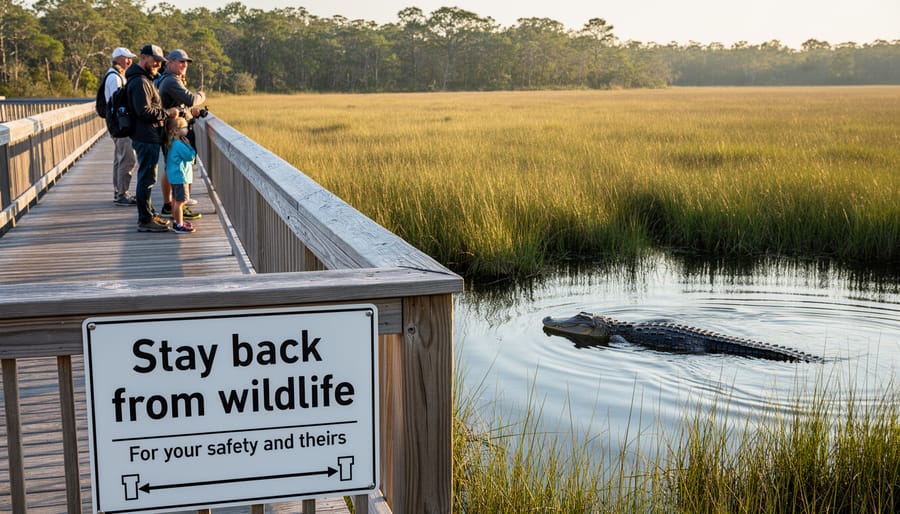
Your likelihood of encountering an American alligator versus a crocodile depends almost entirely on your geographic location and the type of habitat you’re exploring. Understanding these patterns helps you prepare appropriately and appreciate the wildlife you’re most likely to observe.
Geographic Location: The Primary Determining Factor
If you’re anywhere in the southeastern United States outside of extreme southern Florida, any large reptile you encounter will be an American alligator. This includes all of Louisiana, Mississippi, Alabama, Georgia, South Carolina, North Carolina, Arkansas, eastern Texas, and most of Florida. Alligators thrive in freshwater golf course ponds, urban retention basins, river systems, swamps, and lakeshores throughout this region. In states like Louisiana and Florida, where alligator populations exceed one million individuals, encounters are remarkably common for anyone spending time near freshwater.
Crocodile encounters, conversely, remain extremely rare and geographically restricted. In the United States, you’ll only find American crocodiles in the coastal zones of extreme southern Florida, primarily in the Florida Keys, the southern Everglades, and along the coastline from Miami south through Florida Bay. Even within this limited range, crocodile populations number only around 2,000 individuals, making sightings far less frequent than alligator encounters.
Habitat-Based Encounter Predictions
The type of water you’re near provides additional clues. Freshwater environments, lakes, rivers, swamps, marshes, and even roadside ditches, suggest alligator territory. Brackish or saltwater habitats, mangrove-lined coastlines, tidal creeks, saltwater estuaries, and coastal lagoons, indicate potential crocodile habitat if you’re in the right geographic zone.
Here’s what you can expect based on your specific situation:
- Kayaking freshwater rivers in Georgia or Louisiana: expect alligators; practice maintaining safe distance and never approach nests or young
- Hiking Everglades freshwater trails: likely alligators; watch for basking individuals on banks and give them wide berth
- Fishing mangrove coastlines in the Florida Keys: possible crocodiles; remain extra vigilant and never feed or harass wildlife
- Photographing wildlife at Anhinga Trail (Everglades): guaranteed alligator sightings; early morning offers best lighting and activity
- Boating in Florida Bay or coastal southern Everglades: rare but possible crocodile encounters; report sightings to park rangers
- Golfing at southeastern U.S. courses with water features: common alligator presence; observe from distance and never retrieve balls near basking gators
Citizen Science and Responsible Wildlife Viewing
Wildlife enthusiasts can contribute valuable data through citizen science platforms that track crocodilian sightings and behavior. Programs like iNaturalist and state-specific wildlife apps welcome photographic documentation with location data, helping researchers monitor population distribution and habitat use patterns. When photographing either species, use telephoto lenses rather than approaching closely, recommended minimum distances are 60 feet for alligators and even greater for the more unpredictable crocodiles. Never feed, harass, or attempt to touch any crocodilian, as this creates dangerous habituation and is illegal throughout their range.
Key Takeaways: American Alligators vs. Crocodiles
Understanding these remarkable reptiles goes beyond simple identification. The American alligator’s U-shaped snout and hidden teeth distinguish it from the crocodile’s V-shaped snout with visible fourth tooth. Color provides another reliable cue: alligators appear nearly black while crocodiles display lighter olive-brown tones.
Geographic location often determines which species you’ll encounter. If you’re exploring freshwater swamps, marshes, or lakes from North Carolina to Texas, you’re in alligator territory. Coastal mangroves, brackish estuaries, and saltwater zones in southern Florida signal crocodile habitat. Only the Everglades ecosystem hosts both species living side by side.
Conservation status reflects different trajectories. The American alligator represents one of the greatest wildlife recovery successes, rebounding from near-extinction to stable populations exceeding five million. American crocodiles remain federally threatened, requiring ongoing habitat protection and monitoring efforts.
Both species serve as ecosystem engineers, creating habitat for countless other species while maintaining healthy predator-prey balances. Join citizen science monitoring programs, support wetland and coastal conservation initiatives, or contribute observations to research databases. These actions directly support the freshwater and marine ecosystem health that sustains crocodilians and the biodiversity they protect.
Frequently Asked Questions
Can alligators and crocodiles mate with each other?
No, alligators and crocodiles cannot produce offspring together despite their similarities. They belong to different taxonomic families (Alligatoridae and Crocodylidae) and diverged evolutionarily about 80 million years ago, making them too genetically distinct for hybridization.
Which is more dangerous to humans: alligators or crocodiles?
Crocodiles are generally considered more dangerous, exhibiting greater aggression and a higher likelihood of attacking humans unprovoked. American alligators typically avoid human contact and are responsible for fewer fatal attacks, though both species should always be treated with caution and respect.
Can American alligators survive in saltwater environments?
Alligators can tolerate brief periods in brackish or saltwater but lack the specialized salt-excreting glands that crocodiles possess. Extended exposure to high salinity can be fatal, which is why alligators remain predominantly in freshwater habitats while crocodiles thrive in coastal zones.
Are there crocodiles in Louisiana, Georgia, or Alabama?
No, these states only have alligator populations. American crocodiles in the United States are restricted to the southern tip of Florida, particularly in coastal areas of the Everglades, Florida Bay, and the Florida Keys.
How can I help with crocodilian conservation efforts?
You can participate in citizen science monitoring programs, support wetland habitat restoration projects, and join research organizations as a volunteer for fieldwork and data collection. Reporting sightings to wildlife agencies and advocating for wetland protection policies also contribute meaningfully to conservation success.
What should I do if I encounter an alligator or crocodile in the wild?
Maintain a safe distance of at least 30 feet, never feed or approach the animal, and slowly back away while keeping it in view. If you’re on water, paddle calmly away without splashing, and report aggressive behavior or animals in unusual locations to local wildlife authorities immediately.
These questions reflect the most common concerns people have when learning to distinguish between these remarkable reptiles. Understanding the answers helps foster safer coexistence and deeper appreciation for the ecological roles both species play in their respective habitats.
Remember that both alligators and crocodiles are protected species with specific legal safeguards. Harassing, feeding, or harming them is illegal and undermines decades of conservation work that brought American alligators back from the brink of extinction. If you’re interested in observing these animals responsibly, consider joining guided wildlife tours led by trained naturalists who can provide safe, educational experiences while supporting local conservation economies.
Understanding the differences between American alligators and crocodiles extends far beyond satisfying curiosity. These distinctions matter for conservation, public safety, and our ability to coexist with remarkable wildlife that has thrived for millions of years. When communities can accurately identify these species, report sightings to wildlife officials, and appreciate their ecological roles, conservation efforts become more effective and sustainable.
Both species serve as powerful indicators of ecosystem health. Healthy alligator and crocodile populations signal thriving wetlands that support countless other species, filter water, and protect coastlines. By protecting their habitats, we safeguard entire networks of biodiversity that extend from freshwater marshes to coastal marine environments.
The success of American alligator recovery demonstrates what’s possible when science, policy, and public engagement work together. That same model can protect crocodiles and the ecosystems they inhabit, but it requires informed participation.
You can make a tangible difference by joining citizen science monitoring programs that track reptile populations, supporting wetland restoration projects in your area, or simply sharing accurate information about these often-misunderstood animals. The Marine Discovery Center offers volunteer opportunities and maintains an e-network that delivers updates on crocodilian research, conservation initiatives, and ways to get involved in protecting aquatic ecosystems.
Every observation shared, every habitat protected, and every person educated strengthens the foundation for long-term conservation. Together, we’re building a future where humans and apex predators thrive side by side.

jessica
Ava Singh is an environmental writer and marine sustainability advocate with a deep commitment to protecting the world's oceans and coastal communities. With a background in environmental policy and a passion for storytelling, Ava brings complex topics to life through clear, engaging content that educates and empowers readers. At the Marine Biodiversity & Sustainability Learning Center, Ava focuses on sharing impactful stories about community engagement, policy innovations, and conservation strategies. Her writing bridges the gap between science and the public, encouraging people to take part in preserving marine biodiversity. When she’s not writing, Ava collaborates with local initiatives to promote eco-conscious living and sustainable development, ensuring her work makes a difference both on the page and in the real world.