Marine Biodiversity Science Center

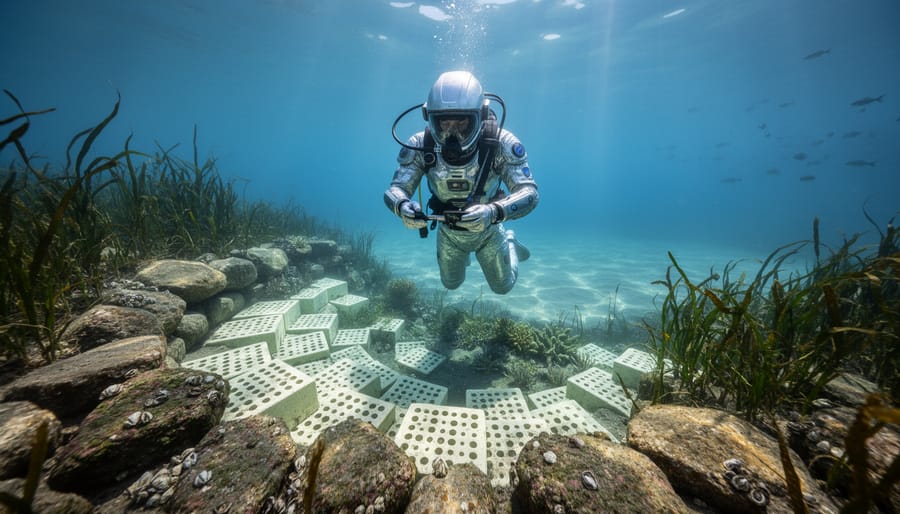
Marine environmental engineering is the application of engineering principles to protect, restore, and sustain ocean and coastal ecosystems. This specialized discipline combines civil, chemical, and ecological engineering with marine science to design solutions for pollution control, habitat restoration, coastal protection, and the mitigation of human impacts on marine environments.
Our oceans face unprecedented challenges. Climate change, plastic pollution, coastal development, and overfishing have pushed marine ecosystems to their limits. Traditional conservation efforts alone cannot address the scale and complexity of these threats. Marine environmental engineers bridge the gap between ecological understanding and practical intervention, creating technologies and systems that help oceans heal while supporting the communities that depend on them.
The field goes far beyond cleaning up oil spills or building seawalls. Engineers design artificial reef structures that encourage coral growth and provide habitat for threatened species. They develop advanced filtration systems for aquaculture operations that prevent nutrient pollution from reaching coastal waters. They create living shorelines using native vegetation and natural materials to protect coastlines from erosion while maintaining ecosystem function. Some even work on cutting-edge ocean geoengineering proposals, though these large-scale interventions raise important ethical questions about unintended consequences and our responsibility to future generations.
What makes marine environmental engineering distinctive is its focus on working with natural processes rather than against them. The most successful projects mimic the ocean’s own mechanisms, whether that means designing structures that withstand powerful currents or developing materials that support the growth of marine organisms.
This article explores what marine environmental engineers actually do, the methods they employ, the types of projects they tackle, and how their work translates into measurable protection for ocean ecosystems. You’ll discover opportunities to contribute to this vital field, whether you’re considering a career path or looking for ways to support marine restoration in your own community.
What Marine Environmental Engineering Means
Marine environmental engineering sits at the intersection of applied science and ecological protection, tackling some of the ocean’s most pressing threats through systematic, evidence-based interventions. Unlike traditional marine engineering, which designs ships, offshore platforms, and port infrastructure, this discipline focuses squarely on reversing environmental damage and safeguarding marine ecosystems for the long term.
At its core, the field draws on three interconnected branches of engineering. Civil engineering principles guide the design of physical structures like artificial reefs and living shorelines. Chemical engineering informs how we treat contaminated water, remove toxins, and manage nutrient cycles in coastal zones. Ecological engineering brings an understanding of how marine organisms interact with their environment, ensuring that human-made solutions support rather than disrupt natural processes.
- Marine Environmental Engineering
- The application of engineering principles to solve environmental problems in ocean and coastal ecosystems, prioritizing ecosystem health over built infrastructure.
- Remediation
- The process of removing or neutralizing pollutants and contaminants from marine environments to restore baseline conditions.
- Restoration Ecology
- The science of assisting the recovery of degraded ecosystems by repairing physical habitat, reintroducing species, or removing stressors that prevent natural regeneration.
- Ecosystem Services
- The tangible benefits healthy marine environments provide to humans and other species, including carbon storage, coastal protection, fisheries productivity, and biodiversity support.
What sets marine environmental engineers apart is their dual mandate: solve technical problems while respecting ecological complexity. A coastal wastewater system must not only meet discharge standards but also consider how effluent affects seagrass beds downstream. An artificial reef must provide habitat without altering currents that nearby coral colonies depend on.
The work addresses four major challenge areas. Pollution control tackles everything from agricultural runoff to microplastics. Habitat restoration rebuilds damaged coral reefs, mangroves, and kelp forests. Climate adaptation helps ecosystems withstand warming waters and rising seas. Biodiversity support creates conditions where threatened species can survive and reproduce.
This isn’t about imposing human will on nature. It’s about using engineering tools to remove the obstacles, often human-caused, that prevent marine ecosystems from functioning as they should.
How Marine Environmental Engineering Works in Practice
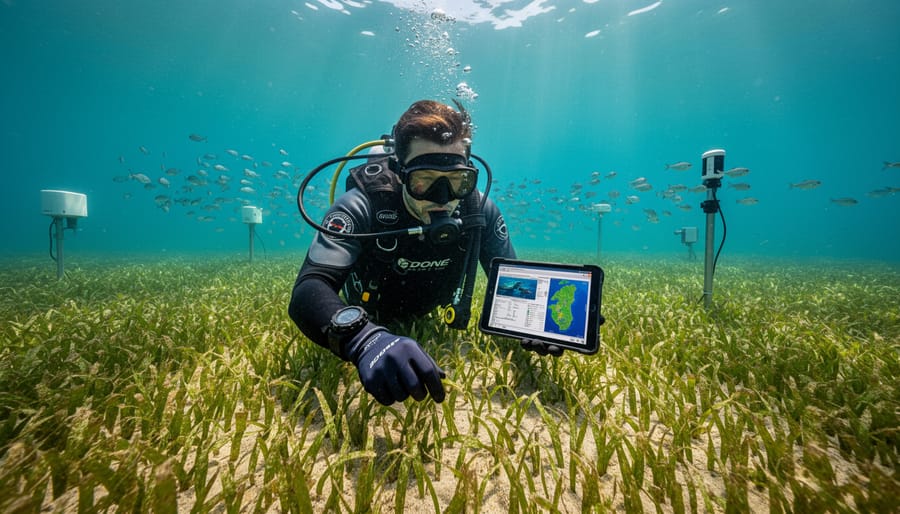
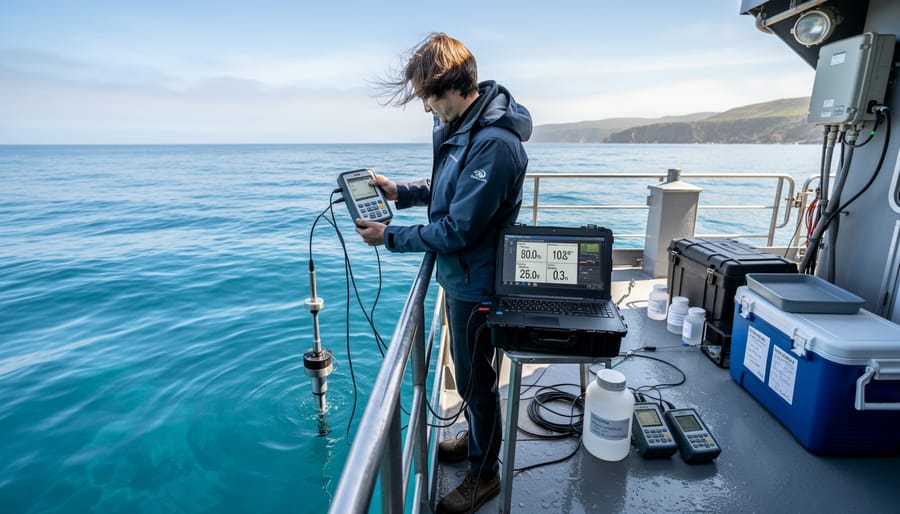
Marine environmental engineers follow a structured yet flexible process that begins long before any physical intervention. The work starts with comprehensive assessment: teams deploy sensors to monitor water quality parameters, map seafloor habitats using acoustic surveys, and build computer models that simulate how pollutants move through currents or how species use different areas. This diagnostic phase often reveals unexpected connections, a decline in fish populations might trace back to upstream agricultural runoff that depletes oxygen levels in coastal spawning grounds.
Once the problem is clearly defined, engineers design solutions that must satisfy both technical requirements and ecological constraints. A wastewater treatment system for a coastal town, for instance, needs to remove nutrients and pathogens effectively while also considering how the discharge point affects nearby seagrass beds or coral reefs. Engineers test concepts using scale models, computer simulations, and sometimes small pilot projects before committing to full implementation. Throughout this phase, they consult with marine biologists who understand species behavior and habitat needs, oceanographers who know current patterns and sediment dynamics, and local conservationists who bring knowledge of the area’s ecological history.
Several core principles guide responsible marine environmental engineering:
- Ecosystem-based design that considers the whole system, not just isolated problems
- Adaptive management allowing adjustments as monitoring reveals how ecosystems respond
- Stakeholder engagement involving fishing communities, indigenous groups, and conservation organizations
- Precautionary approach that favors smaller, reversible interventions over large-scale permanent changes
Implementation demands careful timing and technique. Habitat restoration projects often schedule construction during seasons when target species aren’t breeding or migrating through the area. Equipment selection matters, certain vessels and methods minimize sediment disturbance that could smother nearby organisms. Field teams include environmental monitors who can halt work if unexpected impacts appear, such as marine mammals entering the work zone.
The process doesn’t end when construction finishes. Long-term monitoring tracks whether the intervention achieved its goals and identifies any unintended consequences. Engineers measure parameters like water clarity, species abundance, and habitat complexity over months or years, comparing results against baseline conditions and reference sites. This feedback loop informs future projects, gradually refining what works and what doesn’t in the complex, dynamic reality of ocean ecosystems.
Main Approaches and Applications
Pollution Control and Water Quality
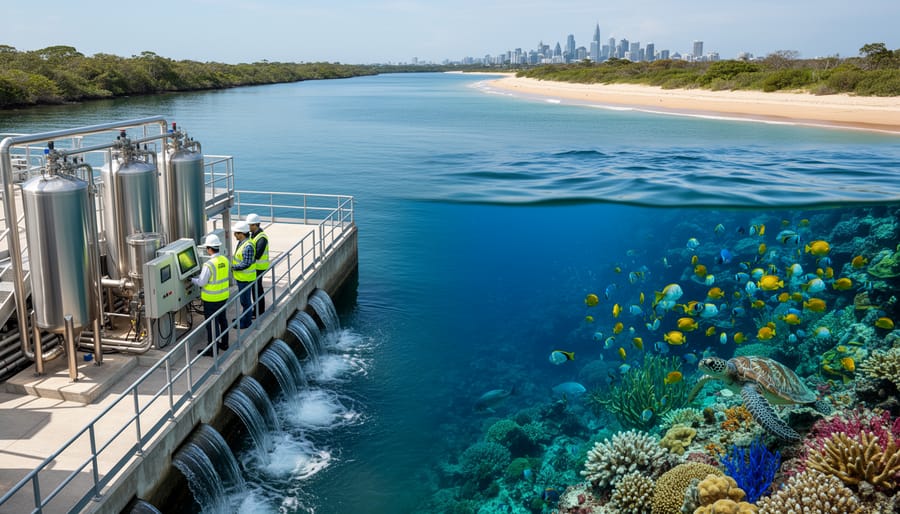
Pollution control in marine environments tackles four main threats: untreated wastewater, stormwater runoff carrying contaminants from land, physical debris, and chemical changes like acidification. Each requires engineered systems that intercept marine pollutants before they reach vulnerable ecosystems.
Constructed wetlands act as natural filters along coastlines. Engineers design shallow basins planted with salt-tolerant vegetation like cordgrass and rushes. As contaminated runoff flows through, plant roots and soil microbes break down nitrogen, phosphorus, and organic pollutants. These systems handle stormwater surges while creating habitat for juvenile fish and wading birds.
Biofilters target specific pollutants in coastal wastewater treatment. Mussel beds, oyster reefs, and specially designed algae tanks remove excess nutrients and heavy metals from discharge water. The organisms consume or sequester contaminants, producing cleaner effluent that won’t trigger harmful algal blooms offshore.
For marine debris, engineers develop barriers and collection systems placed at river mouths and stormwater outfalls. Floating booms with fine mesh capture plastics and other solids before they enter open water. Some coastal cities now install trash interceptors in drainage systems, automated devices that continuously remove debris while allowing water to flow.
Ocean acidification presents a tougher challenge. No single device can reverse the pH changes caused by atmospheric carbon dissolving in seawater. Engineers contribute through monitoring and modeling ocean chemistry identifying vulnerable areas, and testing localized interventions like alkalinity enhancement in enclosed bays. The microplastics ethics discussion extends to these approaches, who benefits from localized protection, and does treating symptoms distract from addressing root causes? Effective pollution control pairs technology with upstream prevention: better land use planning, stricter discharge standards, and reducing waste at the source.
Habitat Restoration and Creation

Marine environmental engineers design systems that accelerate ecosystem recovery while working with natural processes rather than against them. When coral reefs suffer from bleaching events or physical damage, engineers create structures that provide stable substrate for coral fragments, position them at optimal depths for light and water flow, and protect young colonies during vulnerable early growth stages. These nursery systems and outplanting frameworks give corals the best chance to establish and reproduce, turning our ethical duty to protect reefs into tangible action through carefully designed interventions.
Seagrass bed rehabilitation relies on engineering principles to address why natural recovery fails. Engineers analyze current patterns, sediment stability, and nutrient flows to identify sites where transplanted seagrass can survive. They design anchoring systems that hold plants in place during storms, create sediment retention structures that prevent erosion, and sometimes install wave-attenuation devices that reduce physical stress on establishing beds. The goal is removing the barriers that prevent natural regeneration rather than replacing nature’s work entirely.
Mangrove reforestation projects benefit from engineering support systems that improve survival rates in degraded areas. Engineers design drainage patterns that maintain proper soil salinity, create protective barriers against wave action during early growth, and develop planting grids that optimize spacing for root development and canopy closure. These interventions address the specific conditions that caused original mangrove loss, whether that was altered hydrology, excessive erosion, or unsuitable substrate.
Oyster reef construction combines ecological knowledge with structural engineering. Reef designs account for tidal ranges, current speeds, and sediment transport to ensure structures remain stable and functional. Engineers select materials and configurations that maximize surface area for oyster larvae settlement while creating complex three-dimensional habitat that benefits fish and invertebrates throughout the life of the reef.
Climate Change Adaptation
Climate change brings three major stressors to marine ecosystems: rising temperatures that exceed the thermal tolerance of many species, sea level rise that reshapes coastal habitats, and ocean acidification that weakens calcifying organisms. Marine environmental engineers respond not by reversing these changes directly, but by creating conditions that help ecosystems withstand them or move toward safer environments.
Living shorelines replace traditional hardened seawalls with hybrid designs that combine natural vegetation, marsh grasses, mangroves, oyster reefs, with minimal structural support. These systems absorb wave energy, reduce coastal erosion, and provide habitat while adapting to gradual sea level rise through vertical accretion and inland migration corridors. Unlike fixed concrete barriers that eventually fail as water rises, living shorelines can adjust over time.
Thermal refuges address localized warming by identifying and protecting areas where cooler water persists, shaded sections, upwelling zones, or deeper channels where temperature-sensitive species can shelter during heat events. Engineers enhance these natural refuges by removing obstructions to water flow, increasing shade through strategic plantings, or creating passages that connect isolated cool pockets.
Assisted migration infrastructure supports species moving toward suitable habitats as conditions shift. This includes fish ladders or culverts that allow passage through coastal development, corridors linking fragmented reef patches, and transplantation systems that relocate temperature-sensitive corals to higher latitudes where warming may eventually create viable conditions.
The trend in climate adaptation engineering favors many small, targeted interventions over ambitious ocean-scale geoengineering. Local projects carry lower risk, allow adaptive management based on monitoring, and respect the complexity of ecosystems better than blanket solutions. Each intervention starts with understanding what the ecosystem needs to persist, then designing the minimum engineering necessary to provide it.
Fisheries and Biodiversity Support
Marine environmental engineers design structures and systems that support fish populations and broader ecosystem health. Fish passage systems, for example, help migratory species navigate around dams and barriers that historically blocked their routes to spawning grounds. These engineered solutions range from fish ladders to nature-like bypass channels that mimic natural stream conditions, allowing salmon, sturgeon, and other species to complete their life cycles.
Spawning habitat enhancement involves creating or improving the physical conditions fish need to reproduce successfully. Engineers might design gravel beds with specific particle sizes for bottom-spawning species, construct submerged structures that provide shelter for eggs and juveniles, or restore tidal connections that bring nutrient-rich water into degraded estuaries. The strategic placement of artificial reefs also supports biodiversity by providing hard substrate for coral attachment, shelter for reef fish, and feeding areas for larger predators.
Success depends on evidence-based design informed by the biology and behavior of target species. Long-term ecological monitoring tracks whether interventions actually increase spawning success, juvenile survival, and population recovery. This rigorous approach helps ensure that ethical fisheries decisions guide where and how engineering resources get deployed, prioritizing interventions with measurable conservation benefits rather than symbolic gestures.
The Ethics of Ocean Geoengineering and Intervention
As marine environmental engineering evolves from small-scale habitat restoration to proposals that could reshape entire ocean systems, the ethical stakes grow exponentially. Every intervention, no matter how well-intentioned, carries the risk of unintended consequences in ecosystems we still imperfectly understand. The fundamental tension is clear: marine biodiversity is declining at an alarming rate, creating pressure to act swiftly, yet the precautionary principle warns us to proceed carefully when the long-term effects remain uncertain.
The question of who decides which ecosystems receive intervention reveals deep ethical complexities. When resources are limited, should we prioritize charismatic species that attract public support, or less visible organisms that play crucial ecological roles? Should coastal communities have veto power over engineering projects that affect their traditional fishing grounds? These decisions intersect with marine spatial planning where competing human uses must be balanced against conservation needs. Without transparent decision-making processes that include diverse voices, including indigenous communities, local fishers, and marine scientists, interventions risk reinforcing existing power imbalances.
The distinction between restoration and novel ecosystem creation matters profoundly. Restoration aims to return a damaged ecosystem to its historical state, working with natural processes to rebuild what existed before. Novel ecosystem creation, by contrast, designs entirely new configurations that may have no natural precedent. While restoration generally raises fewer ethical concerns, even this approach faces challenges: What time period defines the “original” state? How do we account for ecosystems already transformed by climate change, where historical conditions may no longer be viable?
Large-scale ocean geoengineering proposals, such as iron fertilization to promote plankton blooms or artificial upwelling to cool surface waters, amplify these ethical dilemmas. Such interventions could affect ocean chemistry, food webs, and species distributions across vast areas, potentially crossing national boundaries and affecting communities that had no voice in the decision. The potential for unintended harm, from toxic algal blooms to oxygen-depleted dead zones, demands rigorous testing and international governance frameworks that do not yet exist.
Marine environmental ethics matter because they force us to ask not just whether we can engineer a solution, but whether we should. They require engineers, conservationists, and policymakers to consider long-term ecosystem resilience over short-term fixes, to value humility alongside innovation, and to recognize that protecting marine biodiversity sometimes means choosing restraint over action.
Common Questions About Marine Environmental Engineering
How do marine environmental engineers measure success?
Success metrics vary by project but typically include species diversity counts, water quality indicators, habitat coverage percentages, and survival rates of restored organisms. Long-term ecological monitoring, often spanning five to ten years, tracks whether engineered interventions support self-sustaining ecosystems rather than requiring perpetual maintenance.
What qualifications do marine environmental engineers need?
Most professionals hold degrees in environmental engineering, civil engineering, or marine sciences, often combining technical coursework with field experience in coastal ecosystems. Many pursue graduate specialization in environmental restoration, oceanography, or ecological engineering, and successful engineers develop skills in both quantitative modeling and hands-on fieldwork.
How can non-engineers support marine environmental engineering work?
Volunteers contribute enormously through citizen science monitoring programs, habitat restoration events like coral nursery maintenance, and data collection that helps engineers assess intervention outcomes. Public advocacy for evidence-based marine policies and financial support for research organizations also directly enables engineering projects that might otherwise lack funding.
What’s the difference between engineered solutions and natural recovery?
Natural recovery relies on ecosystems regenerating without human intervention, which can work well when stressors are removed and sufficient time is available. Engineered interventions accelerate recovery or provide conditions that nature alone cannot restore quickly enough, particularly when ecosystems face ongoing threats like warming waters or have crossed degradation thresholds that prevent self-repair.
How long do engineered interventions take to show results?
Timelines depend heavily on ecosystem type and intervention scale. Some water quality improvements appear within months, while habitat restoration projects may require several years before biodiversity metrics improve noticeably, and full ecosystem function can take a decade or longer to establish.
These practical questions reflect the curiosity and commitment of people who want marine environmental engineering to succeed. The answers also highlight a reality that distinguishes this field from conventional engineering: success isn’t measured solely by whether a structure stands or a system operates efficiently. Instead, the ultimate test is ecological health, resilience, and the capacity of marine life to thrive.
Engineers collaborate closely with biologists and ecologists precisely because biological indicators tell the real story. A constructed oyster reef might look impressive, but its success depends on whether it recruits wild oyster larvae, filters water effectively, and provides habitat for fish and invertebrates. Similarly, a coastal restoration project succeeds not when construction finishes but when native species colonize the area and ecosystem functions resume.
For those considering careers in this field or wondering how to contribute, understanding these measures of success clarifies what the work actually entails. It’s iterative, patient, and grounded in ecological reality rather than engineering perfection.
Getting Involved: From Awareness to Action
You do not need an engineering degree to contribute meaningfully to marine environmental engineering efforts. Opportunities exist for every interest level, from one-day beach cleanups to career transitions into this emerging field.
Start with hands-on habitat restoration projects in your region. Coastal wetland plantings, oyster reef installations, and seagrass restoration programs regularly seek volunteers to help with physical implementation and monitoring. These projects provide direct experience with engineered interventions while supporting ecosystem recovery. Many welcome participants with no prior experience and offer training on-site.
Citizen science programs extend your impact beyond single events. Water quality monitoring initiatives, marine debris surveys, and species observation networks generate data that engineers and scientists use to assess environmental conditions and track intervention success. Consistent participation over months or years builds a valuable long-term dataset while deepening your understanding of local marine ecosystems.
Financial support for research organizations accelerates innovation in marine environmental engineering. Conservation groups and university programs often operate on limited budgets, and donations directly fund equipment purchases, field studies, and pilot projects testing new restoration techniques. Consider supporting institutions that publish their findings openly and maintain transparent monitoring practices.
For students and career-changers, educational pathways into marine environmental engineering blend ecological knowledge with practical skills. Undergraduate programs in environmental engineering, marine biology, or coastal management provide foundational training. Graduate specialization allows deeper focus on specific challenges like pollution remediation or climate adaptation. Interdisciplinary programs that combine engineering coursework with marine ecology fieldwork produce professionals equipped to design solutions grounded in ecosystem understanding.
Dr. Elena Morrison’s journey illustrates this convergence of passion and science. After witnessing mass coral bleaching during her doctoral research in marine biology, she pursued a master’s in environmental engineering. “I realized documenting decline wasn’t enough,” she explains. “I wanted tools to actively rebuild what we’re losing.” Today she designs coral nursery systems that optimize survival conditions while working alongside restoration volunteers who maintain the structures she engineers.
Advocacy amplifies all other contributions. Contact local representatives about funding for marine conservation infrastructure, attend public meetings on coastal development projects, and push for policies requiring environmental impact assessments before offshore construction. Evidence-based advocacy ensures that engineering interventions receive the regulatory support and resources needed for long-term success.
The Marine Biodiversity Science Center connects volunteers with restoration projects, citizen science programs, and educational resources through its volunteer network. Whether you contribute a weekend or a career, your participation strengthens the collective effort to protect ocean ecosystems through thoughtful engineering and sustained commitment.
Marine environmental engineering stands at the intersection of scientific rigor and environmental necessity. It offers tangible pathways to protect and restore ocean ecosystems at a moment when marine biodiversity faces unprecedented threats. The discipline proves that thoughtful intervention, guided by ecological understanding and ethical frameworks, can support ecosystem recovery and resilience.
Yet engineering solutions remain tools, not ends in themselves. Their value depends entirely on how they serve broader conservation goals and whether they genuinely enhance marine ecosystem health rather than simply imposing human designs on natural systems. The precautionary principle must guide every intervention, ensuring that our attempts to help don’t inadvertently cause harm.
What makes this field truly powerful is its collaborative foundation. Engineers design innovative solutions, but marine biologists provide ecological insight, oceanographers contribute environmental data, and conservationists ensure alignment with protection priorities. Citizens participate through monitoring programs, habitat restoration projects, and advocacy that drives policy change. This collective effort transforms scientific possibility into conservation reality.
The ocean’s future depends on everyone who chooses to engage. Whether you pursue marine engineering education, volunteer for restoration initiatives, participate in citizen science, or simply advocate for evidence-based ocean protection, your contribution matters. Marine environmental engineering provides the methods, but committed communities provide the momentum to reverse biodiversity loss and build resilient marine ecosystems for generations to come.

jessica
Ava Singh is an environmental writer and marine sustainability advocate with a deep commitment to protecting the world's oceans and coastal communities. With a background in environmental policy and a passion for storytelling, Ava brings complex topics to life through clear, engaging content that educates and empowers readers. At the Marine Biodiversity & Sustainability Learning Center, Ava focuses on sharing impactful stories about community engagement, policy innovations, and conservation strategies. Her writing bridges the gap between science and the public, encouraging people to take part in preserving marine biodiversity. When she’s not writing, Ava collaborates with local initiatives to promote eco-conscious living and sustainable development, ensuring her work makes a difference both on the page and in the real world.