Marine Biodiversity Science Center

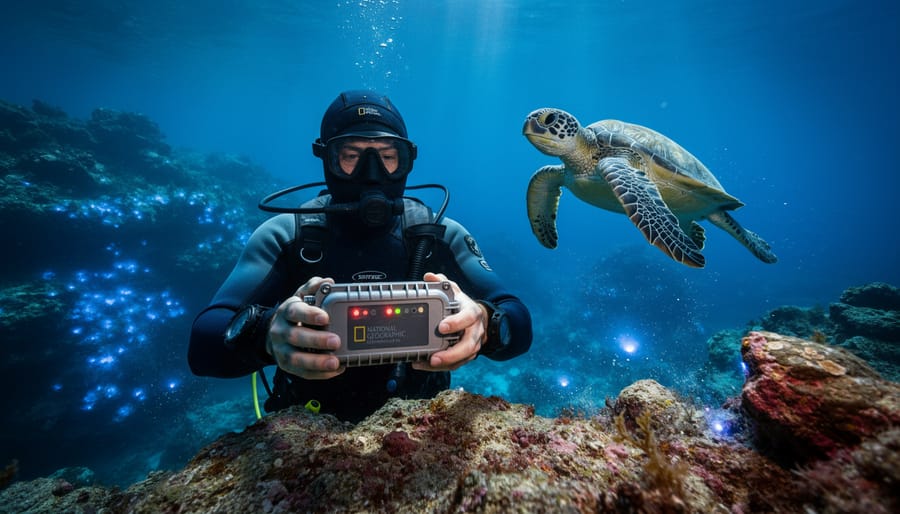
The Journal of Neurophysiology, often shortened to J Neurophysiol, is a peer-reviewed scientific publication dedicated to advancing our understanding of how nervous systems function across all animal species, from microscopic marine invertebrates to large ocean mammals. While not exclusively marine-focused, this journal has become an essential resource for researchers studying how ocean organisms sense, process, and respond to their underwater environment, publishing groundbreaking discoveries about everything from shark electroreception to octopus problem-solving abilities.
Understanding the neurophysiology of marine life matters far more than many realize. The ocean’s inhabitants have evolved extraordinary sensory and cognitive capabilities that allow them to navigate vast distances, communicate across miles of open water, detect prey in complete darkness, and survive in environments that would be instantly fatal to terrestrial animals. Research published in J Neurophysiol reveals these mechanisms at the cellular and molecular level, providing conservation scientists with critical insights into how pollution, climate change, and habitat degradation affect marine animals’ ability to survive and reproduce.
For marine conservationists, educators, and students, this journal offers a window into the hidden workings of ocean life. When we grasp how a sea turtle’s brain processes magnetic field information for navigation, or how rising ocean temperatures impair a fish’s neural responses to predators, we gain powerful tools for designing effective protection strategies. This article will guide you through what the Journal of Neurophysiology publishes, how the peer-review process ensures research quality, the types of marine neurophysiology studies you’ll encounter, and how these findings translate into real-world conservation applications that protect our ocean ecosystems.
What the Journal of Neurophysiology Is
The Journal’s Mission and Scope
The Journal of Neurophysiology publishes original research investigating how nervous systems function at every level, from the molecular mechanisms within individual neurons to the complex networks that control entire organisms. Founded in 1938, it concentrates on four core areas that directly illuminate how marine animals interact with their ocean environment: cellular neuroscience explores how individual nerve cells generate and transmit signals; systems neuroscience examines how neural circuits work together to process information and coordinate responses; sensory processing research reveals how animals detect and interpret environmental cues; and motor control studies uncover the neural basis of movement and navigation.
For marine scientists, these focus areas prove particularly valuable because ocean species have evolved extraordinary neural adaptations. Research on sensory processing, for instance, helps explain how sharks detect electrical fields generated by hidden prey, how dolphins process complex echolocation signals, and how deep-sea fish perceive bioluminescence in near-total darkness. The journal’s emphasis on neural plasticity, the brain’s ability to reorganize and adapt, is equally crucial for understanding how marine animal senses and behaviors adjust to changing ocean conditions, from warming waters to shifting food availability.
This broad yet rigorous scope means the journal serves as a comprehensive resource for anyone studying the neural foundations of marine life, from octopus intelligence to fish schooling behavior.
Why Marine Scientists Turn to This Publication
Marine scientists rely on the Journal of Neurophysiology because it maintains exacting standards that give their findings credibility in both academic circles and policy discussions. The peer-review process here isn’t merely a formality. It involves multiple experts scrutinizing methodology, data analysis, and conclusions before publication, which means studies that make it into print have survived rigorous challenges. For marine conservation work, this validation matters enormously. When a researcher documents how Pacific salmon use magnetic field detection to navigate thousands of miles back to spawning grounds, that finding needs to withstand skepticism before it can inform fisheries management or dam removal decisions.
The journal’s broad readership amplifies discoveries that might otherwise remain siloed in marine biology circles. Neurophysiologists studying terrestrial species, clinicians researching human brain plasticity, and conservation biologists all access these pages. This cross-pollination has led to unexpected insights. Research on how octopuses rewire their nervous systems after injury, published here, has influenced rehabilitation approaches for marine mammals at rescue centers. Studies documenting electroreceptor function in hammerhead sharks have shaped fishing gear regulations designed to reduce bycatch.
Beyond prestige, the journal provides a permanent, searchable archive. A marine biologist investigating coral reef fish cognition in 2026 can trace the lineage of sensory research back decades, building on established baselines rather than starting from scratch. That continuity transforms individual studies into a growing body of knowledge that supports long-term conservation strategies.
How Research Gets Published in J Neurophysiology
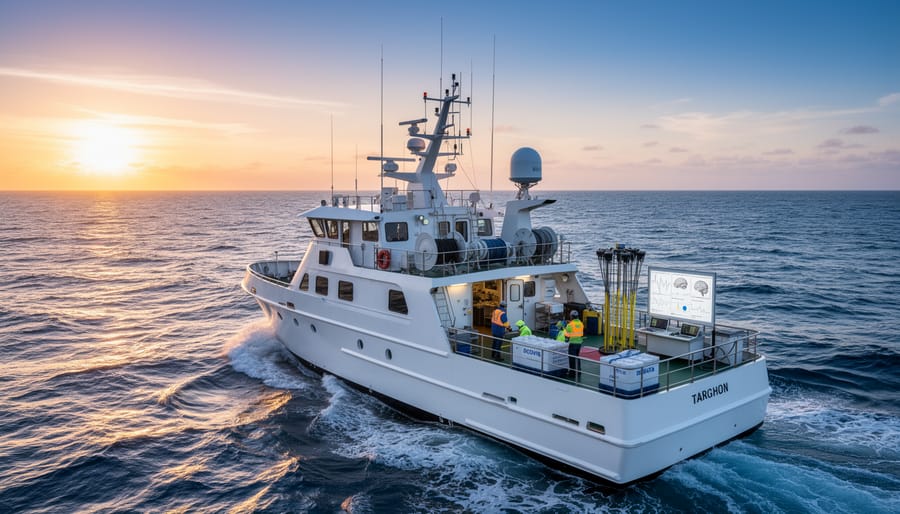
When a marine researcher makes a discovery about how dolphins process echolocation signals or how octopuses coordinate their arms, publishing that finding in J Neurophysiology requires navigating one of science’s most rigorous quality control systems. The peer-review process serves as the critical filter ensuring that conclusions about marine neural systems rest on solid evidence rather than speculation.
The journey begins when scientists submit their manuscript electronically, including detailed methodology, raw data sets, statistical analyses, and often supplementary videos of animal behavior. For marine neurophysiology research, this typically means documenting everything from how they collected neural recordings in field conditions to how they controlled for variables like water temperature and salinity that might affect neural activity. The journal’s editorial team conducts an initial assessment to determine whether the study falls within the journal’s scope and meets basic scientific standards before sending it out for review.
The peer-review phase involves multiple experts in neurophysiology, often scientists who have published similar research on marine sensory systems or neural plasticity, evaluating the manuscript anonymously. These reviewers scrutinize whether the experimental design actually tests what the researchers claim, whether the sample sizes provide statistical power, and whether alternative explanations have been properly ruled out. For studies involving marine animals, reviewers pay particular attention to whether the findings could result from stress responses rather than normal neural function, and whether the lab conditions adequately represent the animal’s natural environment.
This back-and-forth between researchers and reviewers often spans several months. Authors might need to conduct additional experiments, reanalyze data with different statistical approaches, or clarify how their findings about a specific species might apply more broadly. A study showing unusual neural plasticity in reef fish, for instance, would need to demonstrate that the effect wasn’t unique to lab-raised individuals or caused by artificial lighting conditions.
The journal also requires transparency about funding sources, potential conflicts of interest, and ethical approval for animal research. Marine neurophysiology studies must show compliance with institutional animal care committees and international standards for research involving sentient ocean species. This ethical oversight matters enormously for conservation science, ensuring that knowledge gains justify any impact on the animals studied and that methods could be replicated responsibly by other research teams working to protect marine biodiversity.
Categories of Marine Neurophysiology Research Featured
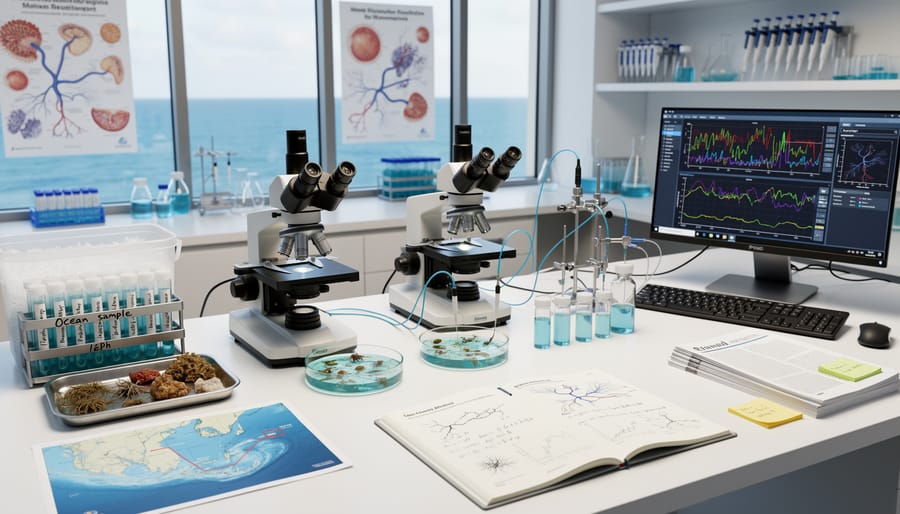
Sensory System Adaptations
Marine animals have evolved some of nature’s most remarkable sensory systems, and J Neurophysiology regularly publishes research revealing how these abilities work at the neural level. Sharks and rays navigate using electroreception through specialized organs called ampullae of Lorenzini, clusters of gel-filled pores that detect electrical fields from prey buried in sand or hidden in murky water. Studies in the journal have mapped the neural pathways processing these signals, showing how a hammerhead’s wide head arrangement enhances spatial resolution for hunting.
Fish use their lateral line detects currents and pressure changes through mechanoreceptors running along their bodies. Research published in J Neurophysiology has documented how these neural circuits process water movement information, enabling schooling fish to coordinate turns milliseconds apart and predators to sense struggling prey in complete darkness. The system’s sensitivity rivals what artificial sensors can achieve.
Crustaceans rely heavily on chemoreception, with antennae housing thousands of receptor cells that bind specific chemical signatures. Journal studies have traced how lobster brains process pheromone signals for mating or chemical trails leading to food sources, neurological mechanisms critical for survival.
These findings extend to deep-sea adaptations where research reveals how animals living in perpetual darkness have expanded non-visual sensory neural networks. Understanding these systems helps scientists predict how pollution, ocean acidification, and noise impact marine species at the neurological level, knowledge essential for developing effective protection measures.
Neural Plasticity and Learning
Marine animals demonstrate remarkable brain flexibility when confronting environmental pressures, injuries, and new challenges. Research published in J Neurophysiology reveals that species from octopuses to reef fish can rewire neural pathways in response to habitat degradation, temperature shifts, and pollution exposure, adaptations that directly impact their capacity for learning and survival in rapidly changing oceans.
Studies on coral reef fish show how neural reorganization enables these animals to modify foraging behaviors when familiar food sources disappear due to bleaching events. Injured dolphins and sea turtles exhibit brain plasticity that facilitates recovery of motor function after propeller strikes or fishing gear entanglement, with rehabilitation centers now using these findings to design targeted therapy protocols. Octopuses demonstrate perhaps the most striking neural flexibility, with research documenting how their distributed nervous systems adapt problem-solving strategies based on previous experiences and environmental feedback.
This plasticity research carries urgent conservation implications. Understanding which neural mechanisms allow certain species to cope with stressors while others struggle helps scientists predict population resilience and prioritize protection efforts. Marine biologists studying these adaptive processes emphasize that neuroplasticity has limits, chronic stress, persistent pollution, and rapid environmental change can overwhelm even flexible neural systems, underscoring the need for proactive habitat protection rather than relying solely on species’ adaptive capacity.
Motor Control and Navigation
Marine animals demonstrate extraordinary motor control abilities that scientists are only beginning to understand through neural research published in J Neurophysiology. Studies reveal how the brain coordinates precise movements during behaviors like vertical migration in squid, where animals must adjust buoyancy and fin movements simultaneously while traveling hundreds of meters between ocean layers. Research on sea turtle navigation has shown that specialized brain regions integrate magnetic field detection with visual cues, allowing juveniles to return to natal beaches decades after hatching. The neural circuits controlling cephalopod arm movements are particularly fascinating, octopuses possess distributed nervous systems with two-thirds of their neurons located in their arms, enabling independent limb control while the central brain handles higher-level decision-making.
Swimming pattern research has documented how different species optimize energy expenditure through neural timing mechanisms. Tuna maintain continuous cruising through coordinated muscle activation patterns controlled by spinal circuits, while pufferfish achieve remarkable maneuverability through precisely timed fin movements. Some species combine motor control with sensory displays, as seen in deep-sea fish that coordinate bioluminescence patterns with swimming behaviors for communication and predator evasion. These findings help conservationists understand how environmental changes, from ocean warming to light pollution, might disrupt the neural pathways that marine animals depend on for survival.
How Marine Neurophysiology Research Gets Applied
Informing Conservation Strategies
Neurophysiology research published in journals like J Neurophysiology has directly influenced how we design protections for marine species. When scientists discovered how sharks’ electroreceptors detect electromagnetic fields with extraordinary sensitivity, fisheries managers used that knowledge to develop specialized fishing gear with barium ferrite magnets. These modifications reduced bycatch of threatened shark species by up to 60% in some longline fisheries, transforming an abstract neural mechanism into concrete conservation gains.
Studies on fish hearing thresholds and stress responses have reshaped marine protected area boundaries. Research showing that specific frequencies disrupt spawning behaviors led to temporal restrictions on boat traffic near critical breeding grounds. For sea turtles, neurophysiology studies revealing how artificial light disorients hatchlings’ navigation systems informed lighting ordinances in coastal development zones, reducing mortality during the vulnerable journey from nest to ocean.
Understanding the neural basis of dolphin and whale echolocation has improved ship strike prevention protocols. Scientists now know the precise acoustic conditions under which marine mammals can detect approaching vessels, allowing regulators to set evidence-based speed limits in high-traffic corridors. One study demonstrated that reducing ship speeds from 15 to 10 knots in sensitive areas gave whales sufficient time to process acoustic cues and maneuver, cutting collision rates by 40%.
These applications share a common thread: they translate laboratory findings about how marine animals sense and respond to their environment into actionable protections that work with, not against, neural biology.
Advancing Rehabilitation Science
Marine animal rescue centers now apply neurophysiology research to dramatically improve outcomes for stranded dolphins, injured sea turtles, and debilitated seals. When researchers discovered that marine mammal brains reorganize neural pathways after injury, much like terrestrial mammals, rehabilitation protocols shifted from basic supportive care to targeted therapies that stimulate specific brain regions. For example, centers treating sea turtles with flipper injuries now use sensory enrichment exercises that encourage neural remapping, helping animals regain coordination faster than with rest alone. Understanding how stress hormones affect neural recovery has led facilities to redesign holding tanks with visual barriers and reduced noise, creating environments that support rather than hinder brain healing. Neuroplasticity research also explains why gradual reintroduction to natural feeding behaviors, rather than hand-feeding throughout recovery, builds stronger neural connections that improve post-release survival. This knowledge of recovery and resilience mechanisms transforms rehabilitation from simple physical care into brain-conscious therapy that prepares animals to thrive once returned to the ocean.
Breakthrough Discoveries in Marine Neural Science
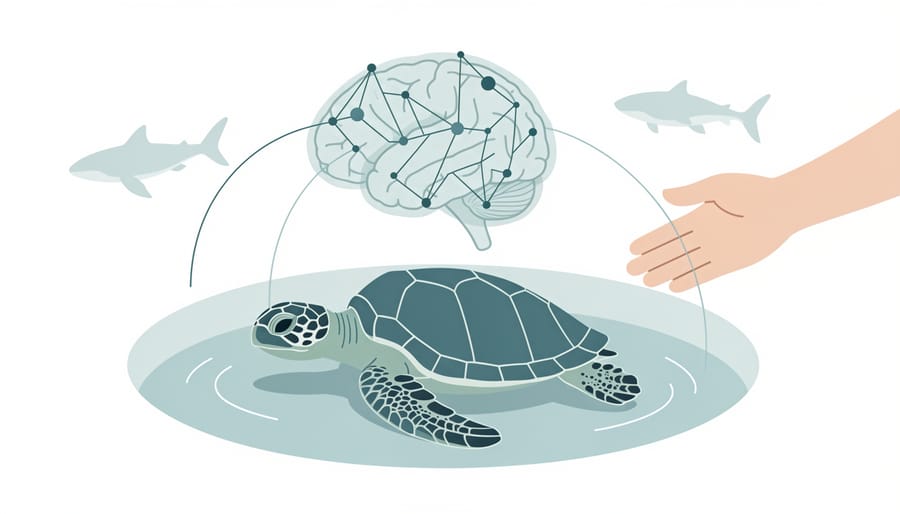
Over the past several decades, the Journal of Neurophysiology has published research that fundamentally altered how we understand marine animal cognition and sensory processing. These aren’t just incremental advances, they’re paradigm shifts that challenged long-held assumptions about intelligence in the ocean.
One landmark series of studies documented the neural basis of octopus problem-solving, revealing that these animals process information both centrally and through their arms. Researchers demonstrated that two-thirds of an octopus’s neurons reside in its arms, allowing each limb to independently explore and manipulate objects while the central brain coordinates complex tasks. This distributed intelligence model was revolutionary. It showed that sophisticated cognition doesn’t require a vertebrate brain structure, fundamentally expanding our definition of what “smart” looks like in the animal kingdom.
Equally groundbreaking were studies on electroreception in sharks and rays. Journal publications revealed the extraordinary sensitivity of the ampullae of Lorenzini, specialized organs that detect electrical fields as weak as five billionths of a volt per centimeter. This research explained how sharks navigate across featureless open ocean and locate prey buried beneath sand, capabilities that seemed almost supernatural before the neural mechanisms were understood. The findings have direct conservation implications, as they showed why electromagnetic fields from underwater cables and fishing gear can disorient these species.
Dr. Sarah Chen, a marine neurobiologist who has published multiple studies in the journal, reflects on the impact of neural plasticity research: “We documented a Pacific octopus regrowing functional neural connections after arm loss in just eight weeks. The speed and completeness of that recovery challenged everything we thought we knew about invertebrate neural regeneration. It suggests resilience mechanisms we’re only beginning to understand.”
Research on fish lateral line systems has been similarly transformative. Studies revealed that this sensory organ detects water movement with such precision that schooling fish maintain formation in complete darkness, responding to pressure changes that signal predators or obstacles milliseconds before visual cues would register. This discovery reshaped our understanding of collective behavior in marine environments.
Perhaps most poignant are findings about neural stress responses in marine mammals exposed to anthropogenic noise. Journal publications documented measurable changes in neural activity patterns and stress hormone levels, providing the physiological evidence that strengthened regulations protecting critical habitats from acoustic disturbance. These weren’t abstract findings, they translated directly into protections that reduced documented strandings.
What These Findings Mean for Ocean Conservation
The neural discoveries published in J Neurophysiology don’t just expand scientific knowledge, they fundamentally reshape how we protect marine life. When research reveals that sharks navigate using Earth’s magnetic field through specialized neural receptors, conservation strategies shift accordingly. Marine protected areas can be designed around migration corridors these animals follow, and fishing regulations can account for the sensory vulnerabilities that lead to bycatch. Understanding the neurological basis of marine behavior transforms vague protection efforts into precisely targeted interventions.
Policy makers rely on this neurophysiology research to justify conservation measures with hard science. Studies documenting neural plasticity in recovering sea turtles provide evidence that rehabilitation programs work at a biological level. Research showing octopuses possess learning abilities comparable to some vertebrates strengthens legal arguments for their welfare protection. When scientists can demonstrate through neural measurements that certain sounds or light pollution disrupt critical brain functions in marine species, regulations gain the scientific backing needed to withstand legal challenges and economic pressures.
Perhaps most importantly, these findings cultivate public support for ocean conservation by revealing the remarkable intelligence and sensitivity of marine life. When people learn that fish possess neural systems for pain processing, or that dolphins demonstrate self-awareness through complex brain structures, their relationship to the ocean changes. Marine species become recognized not as renewable resources, but as sentient beings with sophisticated neural capabilities deserving protection. This shift in perception, grounded in rigorous neurophysiology research, builds the public will necessary for long-term conservation commitment. The journal’s documentation of marine neural complexity provides conservationists with compelling narratives that inspire action, volunteer participation, and sustained advocacy for ocean protection.
Common Questions About Neurophysiology Research and Marine Life
Understanding how scientists explore the neural worlds of marine animals raises important questions about methods, ethics, and impact. Here are answers to some of the most common queries about marine neurophysiology research and its role in ocean conservation.
How do scientists study marine animal brains ethically?
Researchers use non-invasive techniques like behavioral observation, sensory testing, and advanced imaging technologies that don’t harm animals. When invasive studies are necessary, they follow strict ethical protocols requiring minimal sample sizes, pain management, and scientific justification that the knowledge gained will benefit conservation efforts.
Why does understanding neural plasticity matter for marine conservation?
Neural plasticity reveals how quickly marine species can adapt their behavior to changing ocean conditions, pollution, or habitat loss. This information helps conservationists predict which species might cope with environmental changes and which need immediate protection because their neural systems can’t adapt fast enough.
Can neurophysiology research actually help save endangered marine species?
Absolutely. Understanding how endangered species navigate, find food, and respond to threats allows scientists to design more effective protected areas, reduce harmful fishing practices, and improve rehabilitation success rates for injured animals.
How can I support marine neurophysiology research?
You can volunteer at marine research centers, participate in citizen science programs that track animal behavior, donate to organizations conducting this work, or advocate for policies that fund marine science research and ocean protection.
The intersection of neuroscience and marine conservation represents one of the most hopeful frontiers in ocean protection. Every discovery about how a shark’s brain processes electrical signals or how an octopus reorganizes its neural networks after learning a new skill adds another piece to the puzzle of protecting these remarkable animals.
For those inspired to get involved, marine research centers regularly seek volunteers to assist with behavioral observations, data collection, and public education programs. These hands-on opportunities don’t require a neuroscience background, just curiosity and commitment. Even casual ocean observers can contribute valuable data through apps that track marine animal sightings and behaviors, feeding information into larger research databases.
The beauty of marine neurophysiology research is that it transforms our relationship with ocean life from abstract concern to informed appreciation. When you understand that the fish navigating a reef uses a sophisticated lateral line system to detect minute water movements, or that a sea turtle returning to its birth beach relies on magnetic field detection we’re only beginning to understand, these animals become not just subjects of protection but marvels of neural engineering worth defending.
The Journal of Neurophysiology stands as more than an academic publication, it’s a continuous conversation between laboratory science and ocean stewardship. Every study examining how a shark detects electrical fields or how an octopus reorganizes its neural pathways after injury adds another piece to the puzzle of marine intelligence. These insights don’t remain locked in research journals. They flow directly into conservation strategies, rehabilitation protocols, and the policies that shape how we interact with ocean life.
Understanding the neural foundations of marine behavior transforms our relationship with these animals. When we recognize that fish navigate using sophisticated neural maps, that rays possess electroreceptive abilities honed over millions of years, and that cephalopods demonstrate learning capacities rivaling those of many mammals, protection becomes not just an ethical choice but a scientifically informed imperative. The research published in J Neurophysiology provides the evidence base that turns abstract concern into concrete action.
The discoveries documented in this journal reveal ocean inhabitants as remarkably adaptive, intelligent beings facing unprecedented environmental challenges. Yet this same research shows us their resilience, their neural plasticity, their capacity to recover from injury, their ability to adjust to changing conditions. This knowledge empowers rather than discourages.
You can contribute to this vital work. Marine research centers and conservation organizations need volunteers to support field studies, assist with rehabilitation efforts, and help communicate these discoveries to broader audiences. Whether you’re documenting animal behavior, supporting injured wildlife recovery, or sharing these stories with your community, you’re strengthening the bridge between neural science and ocean conservation. The more we understand about how marine animals experience their world, the better equipped we become to ensure they have a world worth experiencing.

jessica
Ava Singh is an environmental writer and marine sustainability advocate with a deep commitment to protecting the world's oceans and coastal communities. With a background in environmental policy and a passion for storytelling, Ava brings complex topics to life through clear, engaging content that educates and empowers readers. At the Marine Biodiversity & Sustainability Learning Center, Ava focuses on sharing impactful stories about community engagement, policy innovations, and conservation strategies. Her writing bridges the gap between science and the public, encouraging people to take part in preserving marine biodiversity. When she’s not writing, Ava collaborates with local initiatives to promote eco-conscious living and sustainable development, ensuring her work makes a difference both on the page and in the real world.