Marine Biodiversity Science Center

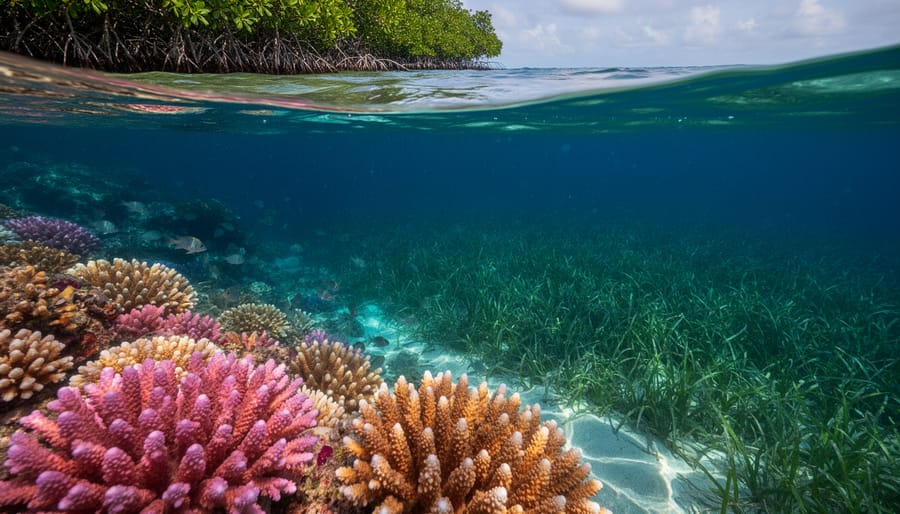
Tropical marine climates are characterized by warm ocean temperatures year-round, typically ranging from 20°C to 30°C, abundant rainfall, and minimal seasonal temperature variation. These climate zones, found within approximately 25 degrees north and south of the equator, create some of the most biodiverse marine ecosystems on Earth, including coral reefs, mangrove forests, and seagrass meadows that collectively support over 25% of all marine species.
Understanding tropical marine climates has never been more urgent. As our oceans absorb more than 90% of the excess heat from climate change, these traditionally stable environments face unprecedented stress. Water temperatures that remained consistent for millennia now fluctuate beyond the tolerance thresholds of species that evolved in predictable conditions. The cascading effects reach far beyond the tropics themselves. Coral bleaching events, once rare phenomena, now occur with alarming frequency. Mangrove forests that protect coastlines and sequester massive amounts of carbon face threats from both rising seas and changing precipitation patterns.
For conservation professionals and students working to protect marine biodiversity, grasping the fundamental mechanics of tropical marine climates provides essential context for adaptation strategies. Dr. Maria Santos, a marine ecologist who has spent 15 years studying reef systems in the Indo-Pacific, puts it plainly: “You cannot design effective conservation interventions without first understanding the climate envelope these ecosystems evolved within and how rapidly that envelope is shifting.”
This article breaks down the defining characteristics of tropical marine climates, explains the atmospheric and oceanic forces that create them, examines the distinct subtypes found across different ocean basins, and connects this knowledge to practical conservation applications. Whether you’re planning field research, developing adaptation strategies, or looking for volunteer opportunities in tropical marine conservation, understanding these climate fundamentals equips you to contribute meaningfully to protecting our ocean’s most vibrant ecosystems.
What Tropical Marine Climates Mean for Ocean Ecosystems
Tropical marine climates exist in a band roughly 3,000 kilometers north and south of the equator, encompassing the tropics between Cancer and Capricorn. These are ocean regions where the water stays warm year-round, typically holding between 25 and 29 degrees Celsius at the surface. Unlike temperate seas that swing between cold winters and warm summers, tropical waters maintain remarkably stable temperatures, rarely fluctuating more than 2-3 degrees across the entire year.
This consistency stems from intense, direct solar radiation that bathes the region throughout the year. The sun’s rays strike these waters at steep angles, delivering concentrated energy that keeps ocean surfaces perpetually warm. Combined with relatively stable salinity levels due to consistent evaporation and rainfall patterns, tropical marine climates create an environment where conditions remain predictable over time.
Several key terms help explain these systems:
- Sea Surface Temperature
- The temperature of the ocean’s top layer, which in tropical zones remains between 25-29°C year-round, creating optimal conditions for marine life adapted to warmth.
- Thermocline
- The boundary layer where water temperature drops sharply with depth, typically shallow in tropical regions and acting as a barrier between warm surface waters and cold deep waters.
- Upwelling Zones
- Areas where deep, nutrient-rich waters rise to the surface, less common in tropical regions but crucial where they occur for supporting productive fisheries.
- Trade Winds
- Consistent easterly winds in tropical latitudes that influence surface currents, mixing patterns, and regional climate variations across tropical marine zones.
- Tropical Convergence Zones
- Regions where warm air masses meet, creating areas of intense rainfall and affecting surface salinity patterns in tropical waters.
These stable, warm conditions make tropical marine climates the foundation for three of Earth’s most productive coastal ecosystems. Coral reefs require consistent warmth to thrive, with their symbiotic zooxanthellae algae functioning optimally within the narrow temperature range tropical waters provide. Mangrove forests, which line tropical coastlines, depend on warm temperatures for year-round growth and cannot survive prolonged cold snaps. Seagrass beds flourish in the clear, well-lit shallow waters typical of tropical zones, where high solar radiation supports the photosynthesis these marine plants need.
The biological productivity of these ecosystems isn’t just about warmth. It’s about predictability. Species evolving in tropical marine climates have adapted to environments where temperatures, salinity, and light levels remain within tight bounds, allowing specialized relationships and finely tuned life cycles that wouldn’t be possible in more variable conditions.
How Tropical Marine Climate Systems Work
The Role of Ocean Currents
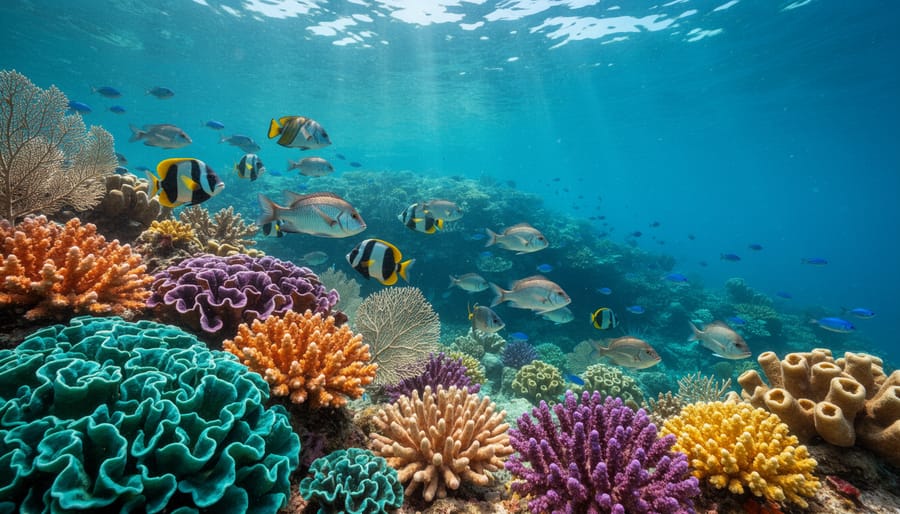
Warm equatorial ocean currents act as massive conveyor belts, redistributing solar heat absorbed at the equator across tropical marine zones. The Equatorial Current System, flowing east to west across the Pacific, Atlantic, and Indian Oceans, carries warm surface water thousands of kilometers, maintaining the stable 25-29°C temperatures that define tropical marine climates.
These currents don’t just move heat, they transport nutrients upwelled from deeper waters. When equatorial currents encounter landmasses or interact with counter-currents, nutrient-rich water rises to the surface, fueling the productivity of coral reefs and pelagic ecosystems. The Equatorial Undercurrent, flowing eastward beneath westward surface currents, creates particularly rich upwelling zones where these opposing flows interact.
Current velocity and direction shape rainfall patterns too. Warm water evaporates readily, feeding the atmospheric moisture that produces the high precipitation characteristic of equatorial marine regions. Where currents diverge, creating upwelling zones, cooler water can suppress rainfall, generating localized drier conditions within otherwise humid tropical zones. This interplay between current patterns and atmospheric circulation creates the mosaic of microclimates supporting diverse coral reef systems across tropical waters.
Seasonal Patterns and Monsoon Influence
While tropical marine climates experience far less seasonal variation than temperate zones, they’re not entirely static. The subtle shifts that do occur play an outsized role in marine life cycles.
In most tropical marine regions, seasonal changes manifest primarily through rainfall patterns rather than temperature swings. Sea surface temperatures typically fluctuate by only 2-3°C throughout the year, but precipitation can vary dramatically. This creates distinct wet and dry periods that trigger spawning events, migration patterns, and nutrient cycling in reef ecosystems.
Monsoons represent the most significant seasonal force in tropical marine climates. In the Indian Ocean and Southeast Asian waters, monsoon winds reverse direction biannually, fundamentally altering ocean circulation, upwelling patterns, and nutrient availability. The southwest monsoon (June-September) brings heavy rainfall and strong winds that increase coastal runoff and turbidity, while the northeast monsoon (December-March) typically brings calmer, clearer waters.
Marine species have evolved precise timing mechanisms around these patterns. Many coral species synchronize their annual spawning to occur just after the full moon following monsoon transitions, when water clarity improves and currents favor larval dispersal. Sea turtles similarly time nesting to avoid peak monsoon storms.
Major Types of Tropical Marine Climate Zones
Equatorial Marine Climates
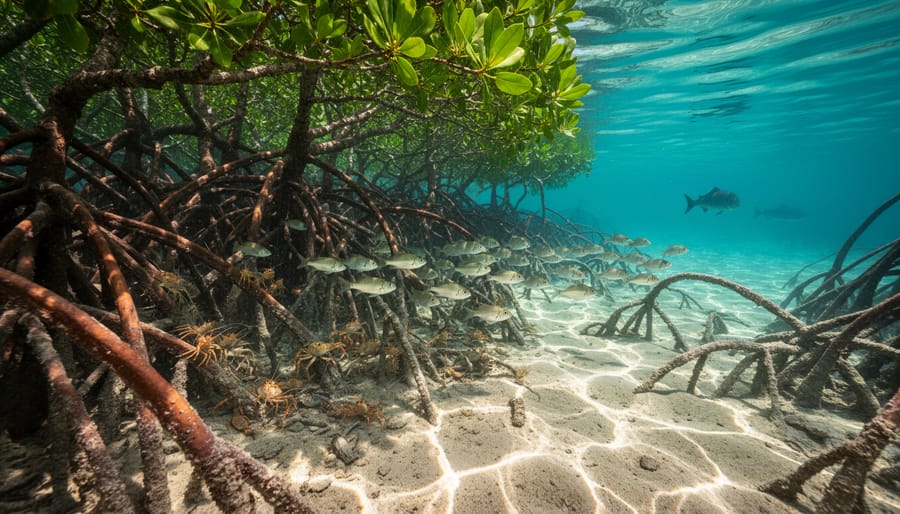
The equatorial marine climate zone spans roughly 5 degrees north and south of the equator, creating what marine scientists call the most thermally stable ocean environment on Earth. Sea surface temperatures here hover between 27-29°C throughout the year, with monthly variations rarely exceeding 1-2 degrees. This remarkable consistency stems from the region’s position directly beneath the sun’s most intense rays year-round, combined with weak or variable winds that allow surface waters to retain heat.
Rainfall in equatorial waters exceeds 2,000mm annually, often delivered through afternoon convective storms that cycle nutrients from deeper waters to the surface. The constant warmth and nutrient availability create ideal conditions for explosive biodiversity. The Coral Triangle, stretching from the Philippines through Indonesia to the Solomon Islands, exemplifies this productivity, harboring over 600 coral species and 3,000 reef fish species, more than any other marine region globally.
These waters support intricate food webs where phytoplankton blooms fuel everything from filter-feeding manta rays to apex predators like reef sharks. The lack of seasonal temperature swings means species can specialize in narrow ecological niches, driving the evolutionary diversity that makes equatorial marine ecosystems irreplaceable conservation priorities.
Trade Wind Tropical Marine Zones
Trade winds shape tropical marine climates differently than their equatorial counterparts, creating zones characterized by steadier breezes and significantly lower rainfall. These consistent easterly winds, generated by the Earth’s rotation and atmospheric pressure differences, blow across tropical waters between roughly 10° and 30° latitude in both hemispheres. The constant airflow reduces cloud formation and precipitation while increasing evaporation rates, resulting in clearer skies and higher water clarity.
Caribbean reefs thrive under these drier conditions. The reduced freshwater input maintains stable salinity levels year-round, while the enhanced light penetration supports prolific coral growth. Trade wind zones typically experience less than 1,000 millimeters of annual rainfall, compared to 2,000-3,000 millimeters in equatorial regions. This creates distinct ecosystem characteristics: Caribbean waters host different coral species adapted to higher salinity and stronger currents than their Indo-Pacific relatives.
The steady wind patterns also generate consistent wave action and surface mixing, which prevents stratification and maintains oxygen levels throughout the water column. Many of the world’s most resilient reef systems occupy trade wind zones, where the reliable climate patterns have allowed species to adapt to predictable environmental conditions over millennia.
Monsoon-Influenced Tropical Waters
Monsoon-influenced tropical waters experience dramatic seasonal shifts that set them apart from other tropical marine zones. These regions, concentrated in the Indian Ocean, Bay of Bengal, and Southeast Asian seas, alternate between intense rainy seasons and prolonged dry periods driven by reversing wind patterns.
During the wet monsoon, massive freshwater influx from rivers like the Ganges and Mekong reduces surface salinity and creates stratified water columns. Nutrient-rich runoff fuels phytoplankton blooms that support seasonal fisheries. The southwest monsoon brings upwelling along coastlines, pulling cooler, nutrient-dense water to the surface and triggering biological productivity that sustains commercial fish stocks.
The dry season brings calmer seas, higher salinity, and clearer waters that allow deeper light penetration, critical for coral photosynthesis. Many marine species in these regions have evolved life cycles synchronized with monsoon patterns. Sea turtles time nesting to avoid storm seasons, while whale sharks aggregate during plankton blooms triggered by monsoon transitions.
This pronounced seasonality creates unique conservation challenges. Rapid salinity swings stress coral communities already vulnerable to warming, while extreme rainfall events increase coastal pollution and sedimentation that smothers reefs and seagrass beds.
How Tropical Marine Climates Support Biodiversity
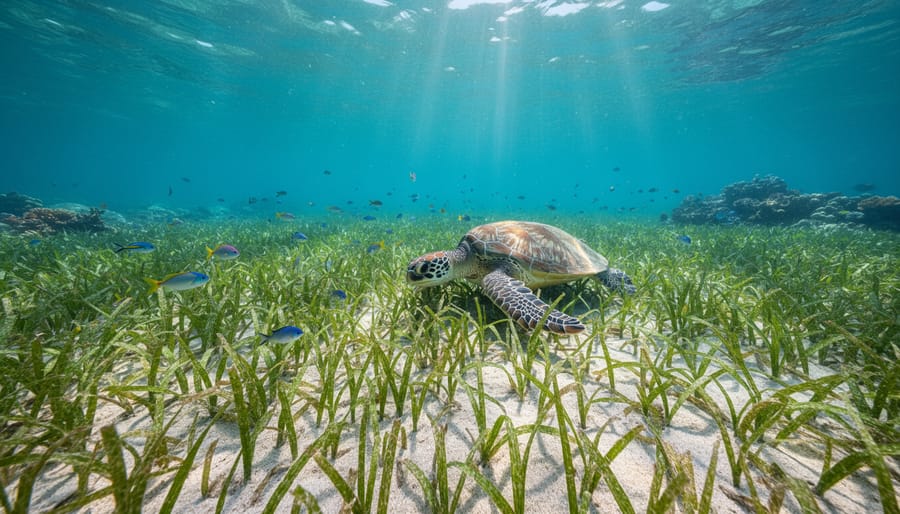
Tropical marine climates function as the engine rooms of global ocean biodiversity, supporting an estimated 25% of all marine species despite covering less than 1% of the ocean’s surface. The stable, warm conditions create an evolutionary laboratory where life flourishes in extraordinary density and complexity.
Coral reefs, enabled by the consistent warmth of tropical waters, form three-dimensional structures that rival terrestrial rainforests in species diversity. These calcium carbonate frameworks grow through the symbiotic relationship between corals and zooxanthellae algae, a partnership that requires the stable temperatures tropical marine climates provide. A single reef system can host over 4,000 fish species alongside countless invertebrates, creating biodiversity hotspots that serve as genetic reservoirs for the entire ocean.
The nursery habitat role of tropical marine zones proves equally critical. Mangrove forests and seagrass beds, thriving in warm coastal waters, provide protected environments where juvenile fish, sharks, and crustaceans shelter during vulnerable early life stages. Research shows that up to 80% of commercial fish species depend on these tropical nursery habitats at some point in their lifecycle, connecting tropical marine climates directly to global food security.
Tropical marine climates also function as essential waypoints for migratory species. Sea turtles navigate thousands of miles to nest on tropical beaches warmed by these stable climates, while humpback whales calve in tropical waters before returning to polar feeding grounds. These migration patterns, refined over millions of years, depend on the predictable conditions tropical marine climates deliver.
Beyond supporting individual species, these climate zones provide ecosystem services that extend far beyond tropical regions:
- Carbon sequestration through coral reefs, mangroves, and seagrass beds that store atmospheric CO2
- Coastal protection as reef structures and mangrove roots buffer storm surges and prevent erosion
- Fisheries support providing protein for over one billion people globally
- Tourism revenue generating approximately $36 billion annually from reef-related activities
- Pharmaceutical resources with marine organisms yielding compounds for cancer treatments and antibiotics
The climate regulation function of tropical marine zones deserves special attention. These waters absorb solar radiation and redistribute heat through ocean currents, moderating global temperatures. Mangroves and seagrasses sequester carbon at rates up to four times higher than terrestrial forests, making tropical marine climates crucial allies in climate stabilization. When we protect these systems, we’re not just conserving biodiversity, we’re maintaining planetary life-support infrastructure that benefits every ocean and every coastline.
Climate Change Impacts on Tropical Marine Systems
Rising ocean temperatures are fundamentally reshaping tropical marine climates at a pace that outstrips the adaptive capacity of many species. Since the 1980s, tropical sea surface temperatures have increased by approximately 0.5°C, with some regions experiencing warming of nearly 1°C. This seemingly modest shift has profound consequences: coral reefs typically thrive within a narrow temperature range of 25-29°C, and sustained warming of just 1-2°C above normal summer maximums triggers mass bleaching events. The 2016 bleaching episode in the Great Barrier Reef killed nearly 30% of shallow-water corals, while back-to-back events in 2020 and 2024 left limited recovery time between disturbances. We’re now seeing annual bleaching in regions where it once occurred only during extreme El Niño years.
Beyond temperature stress, ocean acidification is quietly eroding the foundations of tropical ecosystems. As seawater absorbs excess atmospheric CO₂, it becomes more acidic, reducing the availability of carbonate ions that corals, mollusks, and crustaceans need to build their calcium carbonate structures. Studies from Papua New Guinea’s naturally acidic volcanic seeps show what future reefs might look like: structurally simpler, dominated by soft corals and algae rather than the complex hard coral frameworks that support thousands of species. Young corals struggle to establish in these conditions, and existing structures weaken and erode faster than healthy reefs can repair themselves.
Altered current patterns are disrupting the nutrient delivery systems that tropical marine life depends on. The Indonesian Throughflow, which channels warm Pacific water into the Indian Ocean, has shown measurable changes in volume and temperature, affecting larval dispersal patterns for species throughout Southeast Asian waters. Meanwhile, weakening trade winds in some regions reduce the upwelling that brings deep, nutrient-rich water to surface layers, essentially creating ocean deserts where productive ecosystems once flourished.
Storm intensity presents a mounting threat to shallow-water habitats. Category 4 and 5 hurricanes have become more frequent in tropical waters, physically destroying coral structures, uprooting mangroves, and scouring seagrass beds. While these ecosystems evolved with storms, the combination of more frequent severe weather and reduced recovery periods between events pushes systems past their resilience thresholds. Species distributions are already shifting as mobile organisms move toward the poles seeking cooler waters, leaving behind ecosystems that depend on their ecological roles as grazers, predators, or prey.
Marine Climate Adaptation Strategies for Tropical Waters

Conservation Technology in Tropical Regions
Conservation technology is revolutionizing how we protect tropical marine ecosystems. Coral nurseries now employ 3D-printed reef structures that accelerate growth rates by up to 50%, allowing scientists to cultivate climate-resilient coral strains before transplanting them to degraded reefs. These facilities often integrate with marine sanctuaries to maximize restoration impact.
Remote sensing tools have transformed monitoring capabilities. Autonomous underwater vehicles equipped with high-resolution cameras patrol marine protected areas documenting coral health, fish populations, and water quality without disturbing sensitive habitats. Satellite imaging detects bleaching events in real-time across vast reef systems, enabling rapid response.
Environmental DNA sampling offers another breakthrough. Scientists can now catalog entire ecosystems by analyzing water samples, identifying species presence without physical surveys. In the Coral Triangle, this technology revealed previously unknown biodiversity hotspots, reshaping conservation priorities. Acoustic monitoring devices track whale migrations and detect illegal fishing vessels simultaneously, providing enforcement data while advancing research. These innovations make protection more effective and cost-efficient across tropical waters.
A Marine Biologist’s Perspective
Dr. Maria Santos remembers the first time she witnessed mass coral bleaching in the Philippines. “I’d been monitoring these reefs for seven years,” she recalls. “Watching them turn ghostly white in 2024 felt like losing old friends.”
Rather than retreat from the devastation, Santos doubled down. She now leads a coral restoration project combining traditional transplantation with assisted evolution techniques. Her team collects coral fragments that survived bleaching events, cultivates them in offshore nurseries, and outplants heat-tolerant specimens back onto degraded reefs.
The work is grueling. “We’re essentially gambling on which corals will survive the next heatwave,” Santos admits. But early results encourage her. Reefs restored with thermally-selected corals showed 40% less bleaching during the 2025 marine heatwave compared to nearby natural reefs.
What keeps her motivated isn’t just the science, it’s the local fishing communities who now protect “her” reefs as their own. “They’ve seen the fish come back,” she says. “That connection between healthy reefs and healthy communities drives everything we do.”
Common Questions About Tropical Marine Climates
Tropical marine climates spark curiosity and concern among conservationists, students, and ocean enthusiasts alike. Understanding these unique environments is crucial for building a sustainable future for our oceans. Here are answers to the most common questions about these vital climate zones.
What makes tropical marine climates different from temperate oceans?
Tropical marine climates maintain consistently warm temperatures (25-29°C) year-round with minimal seasonal variation, while temperate oceans experience significant temperature swings between seasons. This stability in tropical waters allows specialized species like corals to thrive but also makes them more vulnerable to even small temperature increases.
Why are coral reefs only found in tropical waters?
Reef-building corals require warm water temperatures above 20°C and high light levels to support their symbiotic algae partners. These conditions exist consistently only in tropical marine climates, typically within 30 degrees of the equator.
How deep do tropical marine climate effects extend?
The warm, stable conditions that define tropical marine climates typically extend to depths of 100-200 meters where sunlight penetrates. Below this photic zone, temperatures drop and conditions become more similar across different ocean regions regardless of surface climate.
What can individuals do to help protect tropical marine climates?
Support marine conservation organizations working in tropical regions, reduce your carbon footprint to limit ocean warming, choose sustainable seafood, participate in beach cleanups, and consider volunteer opportunities with coral restoration or monitoring programs. Every action contributes to protecting these critical ecosystems.
These questions reflect the growing awareness that tropical marine climates face unprecedented pressures from human activity. The more we understand about how these systems function and why they matter, the better equipped we are to protect them through informed conservation action.
Tropical marine climates represent far more than a scientific classification, they’re the beating heart of ocean biodiversity and essential regulators of our planet’s climate system. These warm, stable waters nurture coral reefs that support a quarter of all marine species, mangroves that protect coastlines and sequester carbon, and seagrass meadows that serve as critical nursery habitats. The ecosystems thriving in these zones don’t just matter to marine life; they sustain the livelihoods of hundreds of millions of people and influence weather patterns across continents.
The challenges facing tropical marine climates in 2026 are real and urgent. Rising temperatures, ocean acidification, and changing current patterns threaten to fundamentally alter these systems. But here’s what gives us hope: we know what works. Effective marine protected areas, innovative restoration techniques, and community-led conservation programs are already making measurable differences in tropical waters worldwide.
You can be part of this solution. Whether you’re a student considering fieldwork, an educator looking to inspire the next generation, or simply someone who cares about our oceans, there are meaningful ways to contribute. Volunteer with marine conservation projects in tropical regions, support organizations working on climate adaptation strategies, or join our e-network to stay connected with the latest research and opportunities.
The future of tropical marine climates, and the incredible biodiversity they support, depends on collective action starting today.

jessica
Ava Singh is an environmental writer and marine sustainability advocate with a deep commitment to protecting the world's oceans and coastal communities. With a background in environmental policy and a passion for storytelling, Ava brings complex topics to life through clear, engaging content that educates and empowers readers. At the Marine Biodiversity & Sustainability Learning Center, Ava focuses on sharing impactful stories about community engagement, policy innovations, and conservation strategies. Her writing bridges the gap between science and the public, encouraging people to take part in preserving marine biodiversity. When she’s not writing, Ava collaborates with local initiatives to promote eco-conscious living and sustainable development, ensuring her work makes a difference both on the page and in the real world.