Marine Biodiversity Science Center

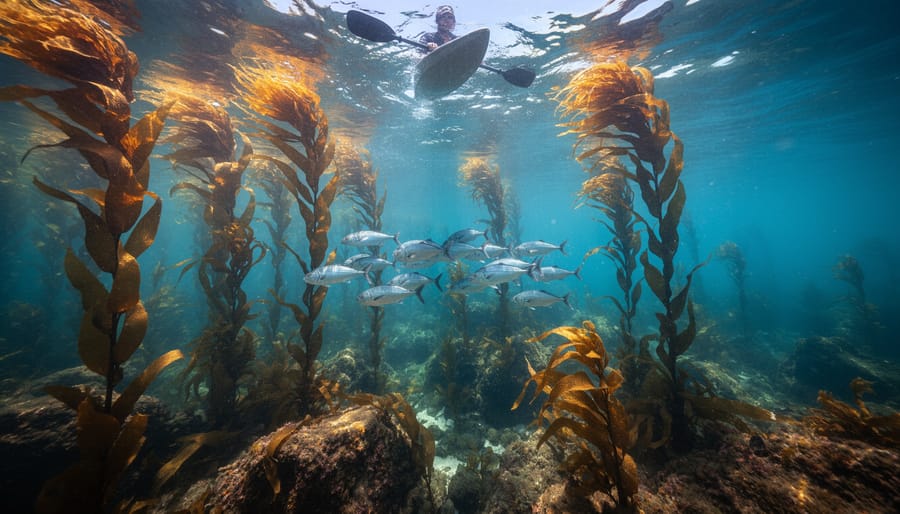
A State Marine Conservation Area (SMCA) is a designated ocean zone where specific activities are regulated or prohibited to protect marine ecosystems while allowing compatible public uses like kayaking, swimming, and in many cases, limited fishing. Unlike marine reserves that ban all take, SMCAs balance conservation goals with community needs by restricting only those activities proven to harm sensitive habitats or species. Across U.S. coastal states, these areas serve as living laboratories where scientists monitor recovery, communities participate in stewardship, and policymakers refine management strategies based on real-world outcomes.
The designation process brings together marine biologists, fishermen, divers, Indigenous communities, and conservation groups to map ecologically critical zones and negotiate protection levels. Dr. Elena Marquez, a marine ecologist who has worked on SMCA planning in California since 2018, recalls how a community forum in Monterey shifted a proposed boundary after local fishermen shared decades of observations about seasonal rockfish nurseries. That collaboration led to protections that allowed the fish population to rebound by 40% within five years, demonstrating how informed participation strengthens both conservation results and public trust.
Understanding how SMCAs function within the broader marine policy landscape empowers you to advocate for their creation, volunteer in monitoring programs, or simply visit these protected waters with greater appreciation. Whether you’re a student researching marine policy, an educator developing curriculum, or a citizen concerned about ocean health, knowing what makes SMCAs effective prepares you to contribute to their success.
Understanding State Marine Conservation Areas
Legal Framework and Designation Process
The establishment of a state marine conservation area follows a structured legal process designed to balance conservation priorities with stakeholder input. In most coastal states, the authority to designate SMCAs rests with state fish and wildlife agencies or marine resources departments, often working in partnership with coastal commissions and environmental agencies. These bodies operate under enabling legislation, typically state ocean management acts or marine life protection statutes, that grants them regulatory authority over state waters extending three miles from shore.
The designation process typically begins with a scientific assessment identifying areas of ecological significance: critical habitats, biodiversity hotspots, or ecosystems requiring protection from overuse. Agencies then develop a proposal outlining the SMCA’s boundaries, conservation objectives, and proposed use restrictions. This triggers a mandatory public review period, during which stakeholders can submit comments, attend hearings, and participate in working groups. Fisheries managers, marine scientists, tribal representatives, recreational users, and conservation groups often contribute specialized knowledge during this phase.
Following public review, agencies revise proposals to address legitimate concerns while maintaining conservation efficacy. The final designation requires formal adoption through state regulatory processes, which may include approval by a commission, council vote, or in some cases, legislative action. From initial proposal to full implementation, the timeline typically spans 18 months to three years, though complex designations involving contentious use conflicts can extend longer.
Once established, SMCAs are codified in state marine regulations, creating enforceable boundaries and use restrictions backed by state law enforcement and penalties for violations.
Activities Permitted and Restricted
Activities within State Marine Conservation Areas are carefully regulated to balance ecological protection with sustainable human use. Unlike full no-take marine reserves, SMCAs typically permit certain low-impact recreational and traditional activities while restricting or prohibiting more intensive extraction that could harm habitats or deplete populations.
Recreational fishing often remains allowed in many SMCAs, though with specific gear restrictions, hook-and-line fishing from shore or boat may be permitted while trawling or gillnetting is prohibited. Diving, swimming, kayaking, and wildlife observation are generally unrestricted since these activities create minimal ecosystem disruption. Commercial fishing faces the most significant limitations, as SMCAs aim to reduce overfishing impacts while preserving habitat integrity.
| Activity | Status | Rationale |
|---|---|---|
| Recreational hook-and-line fishing | Typically permitted | Low habitat impact, manageable extraction rates |
| Diving and snorkeling | Permitted | Non-extractive, supports education and monitoring |
| Commercial trawling | Prohibited | Damages seafloor habitats and benthic communities |
| Gillnet and trap fishing | Usually restricted | Can cause bycatch and entanglement concerns |
| Kelp and invertebrate harvesting | Varies by location | Depends on species vulnerability and ecosystem role |
Specific regulations vary by location based on ecological sensitivity and stakeholder input. California’s Point Lobos SMCA prohibits all take of living marine resources but allows transit and diving, while Lovers Point SMCA permits recreational take of finfish but bans commercial fishing entirely. Anacapa Island SMCA allows limited lobster and sea urchin harvest with special permits while protecting rockfish populations. These tailored approaches reflect the collaborative designation process, where scientists, fishermen, and community members negotiate protections that address local conservation priorities without unnecessarily restricting traditional uses that pose minimal ecological risk.
The Science Behind Marine Conservation Areas
Measurable Conservation Outcomes
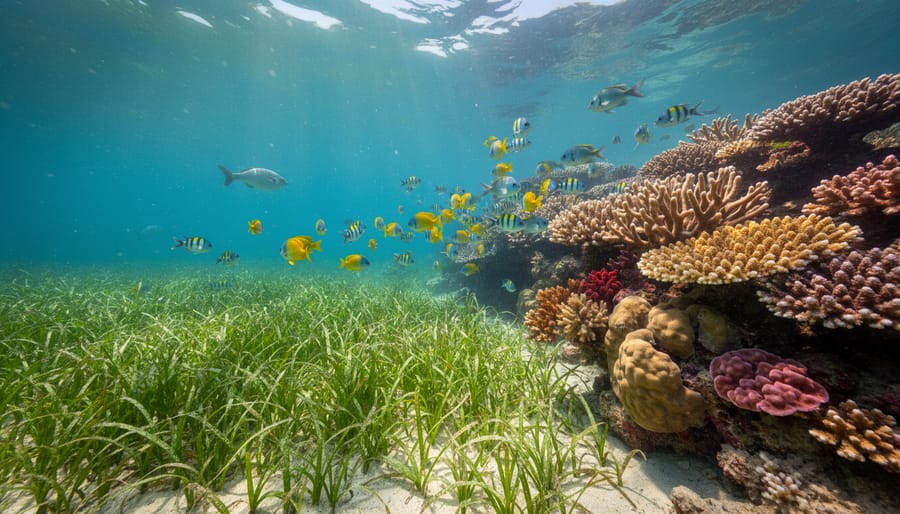
Research demonstrates that well-managed SMCAs deliver measurable improvements in marine ecosystem health. Long-term monitoring studies in California’s network, for example, have documented biodiversity increases of 20-35% within five to seven years of designation, with particularly strong recovery among targeted rockfish species and invertebrates. Fish populations inside SMCAs often show greater size and abundance compared to adjacent unprotected waters, suggesting that even partial restrictions on extraction allow stocks to rebuild.
Habitat restoration outcomes are equally compelling. Kelp forest density, seagrass coverage, and coral recruitment rates typically improve as SMCAs reduce physical disturbance from trawling and other extractive gear. These healthier habitats become more resilient to stressors like ocean pollution and warming events, creating cascading benefits throughout the food web.
Scientists track these outcomes using a mix of methods accessible to trained volunteers and professionals alike. Underwater visual census, baited remote cameras, and acoustic monitoring record species presence and abundance. Habitat surveys map changes in substrate and vegetation cover. Citizen science programs have proven invaluable, expanding monitoring coverage while engaging communities in data collection. This combination of rigorous science and participatory observation builds a robust evidence base showing that SMCAs work, not as ecological islands, but as functional components of broader conservation strategies that support both biodiversity and the people who depend on healthy oceans.
Community Engagement in SMCA Planning and Management
Stakeholder Participation in Designation
The SMCA designation process actively seeks input from those who will be most affected by new regulations. State agencies typically launch a series of public scoping meetings in coastal communities where proposed areas are located, inviting fishermen, divers, Indigenous nations, conservation groups, and residents to share their knowledge of local marine resources and concerns about potential restrictions.
Working groups form the backbone of collaborative planning. These bodies bring together diverse stakeholders, commercial fishers, recreational anglers, marine scientists, tribal representatives, and environmental advocates, to negotiate boundaries, allowable uses, and enforcement approaches. Members contribute essential local ecological knowledge, identify sensitive habitats, and propose management strategies that minimize economic disruption while achieving conservation goals. The West Marin example demonstrates how early, sustained community involvement can shape outcomes that enjoy broad support.
Formal hearings provide opportunities for public testimony before commissions finalize designations. Written comments, scientific reports, and economic impact assessments also inform decision-making. Some states have adopted adaptive management frameworks that allow for post-designation adjustments based on monitoring data and stakeholder feedback, creating ongoing dialogue rather than a one-time decision.
This multi-layered participation doesn’t guarantee unanimous agreement, but it produces SMCAs with greater legitimacy, clearer compliance, and management rules grounded in both science and practical realities of coastal livelihoods.
Building Local Support and Compliance
Building trust with user groups begins long before an SMCA is formally established. Transparent communication about conservation goals, potential impacts on fishing access, and the scientific evidence behind restrictions helps reduce resistance. When commercial fishermen, recreational anglers, and dive operators understand how limited protections can stabilize fish stocks and improve catch quality over time, they’re more likely to support the designation. Addressing economic concerns head-on, through transition assistance, alternative fishing areas, or opportunities to participate in ecotourism, demonstrates that conservation need not come at the expense of livelihoods.
Education programs tailored to specific audiences strengthen compliance without heavy enforcement. Workshops that explain boundary markers, permitted gear types, and seasonal closures give users the knowledge to self-regulate. Posting clear signage at boat launches, creating mobile apps with GPS boundaries, and distributing waterproof regulation cards make it easier for people to follow the rules. When recreational users feel informed rather than policed, violations drop significantly.
Community-led conservation initiatives, including volunteer stewardship patrols and citizen science monitoring, transform passive compliance into active ownership. When locals help collect population data, report violations, and educate visitors, they become invested in the SMCA’s success. These participatory programs build social norms around protection, creating peer accountability that often proves more effective than external enforcement alone.
How You Can Support and Participate
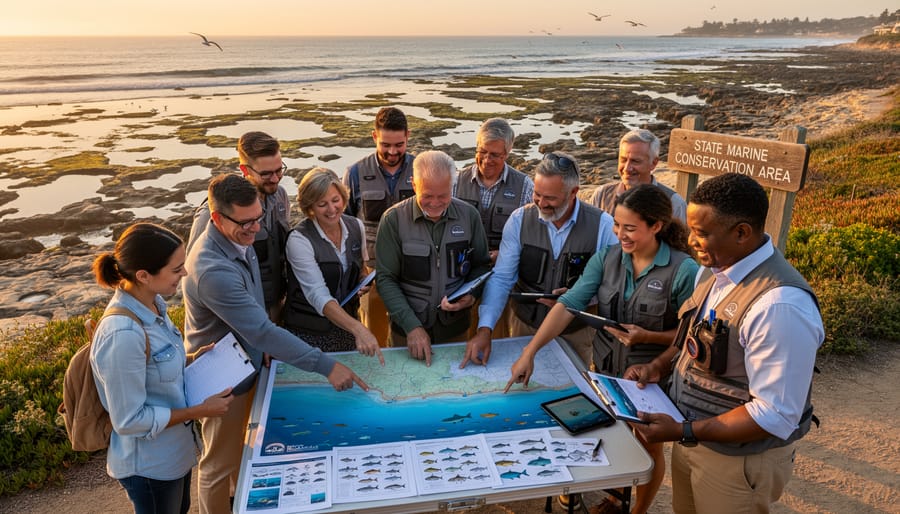
You don’t need to wait for a major policy announcement to make a difference in protecting marine ecosystems. Getting involved with state marine conservation areas offers numerous hands-on ways to contribute to ocean stewardship while learning about the marine world around you. The Marine Biodiversity Science Center coordinates volunteer monitoring programs where participants help collect valuable data on species abundance, water quality, and habitat conditions within SMCAs. These citizen science initiatives provide researchers with the field observations needed to assess conservation effectiveness while giving participants meaningful training in marine survey techniques.
Beyond monitoring, participating in public comment periods gives your voice weight in SMCA management decisions. State agencies typically open formal comment windows when reviewing management plans, adjusting regulations, or considering new designations, your input during these periods directly shapes how these areas are governed. Attending local advisory council meetings and regional stakeholder forums offers another avenue for engagement, connecting you with fishermen, researchers, and fellow conservation advocates working through management challenges.
Educational outreach represents another vital contribution. Volunteering as a beach naturalist, leading tide pool walks, or speaking at community events helps build public understanding of why SMCAs matter and how you can help others connect with these conservation efforts. Many SMCAs also welcome stewardship volunteers for habitat restoration projects like kelp forest monitoring or eelgrass bed surveys. Whether you contribute a few hours during a beach cleanup or commit to regular monitoring shifts, your participation strengthens the community foundation that makes these protected areas succeed.
Common Questions About State Marine Conservation Areas
Can I still fish or dive in a state marine conservation area?
Most SMCAs allow recreational activities like fishing, diving, and kayaking, but with specific restrictions on methods, gear types, or target species. Check the regulations for each individual SMCA, as rules vary by location to protect particular habitats or vulnerable species.
How do SMCAs differ from marine reserves?
Marine reserves are fully protected no-take zones where extractive activities are prohibited, while SMCAs permit certain uses under regulated conditions. This flexibility allows SMCAs to balance conservation goals with recreational access and some sustainable harvest activities.
Are SMCAs actually effective at restoring marine life?
Research consistently shows that well-managed SMCAs increase fish biomass, improve species diversity, and enhance ecosystem resilience over time. The effectiveness depends on appropriate regulations, adequate enforcement, community compliance, and sufficient time for ecosystems to recover.
How are SMCA regulations enforced?
State wildlife officers and marine wardens patrol designated areas, conduct compliance checks, and issue citations for violations. Many successful SMCAs also rely on voluntary compliance fostered through community education and peer monitoring among local user groups.
Do SMCAs hurt local fishing communities economically?
While some fishermen initially face displacement, many regions report long-term benefits as healthier fish populations in SMCAs spill over into adjacent fishing areas. Effective stakeholder engagement during the planning process helps design regulations that minimize economic impacts while achieving conservation objectives.
How do SMCAs fit into larger ocean management plans?
SMCAs function as essential components within comprehensive marine spatial planning frameworks, working alongside marine reserves, coastal zone management, and fisheries regulations to create connected networks of protection that support ecosystem health across entire marine regions.
These questions reflect the real concerns of ocean users encountering SMCAs for the first time. Understanding that conservation areas exist on a spectrum, from full protection to regulated use, helps clarify how different designations serve complementary purposes. The regulations aren’t arbitrary restrictions but carefully designed tools addressing specific conservation needs while maintaining public access where ecologically sound.
The enforcement question matters because conservation measures only work when followed. Successful SMCAs combine official oversight with cultural shifts toward stewardship. When local communities understand the science behind regulations and see themselves as partners in marine protection, compliance becomes part of the area’s identity rather than an imposed burden. That community ownership often proves more effective than patrols alone.
State marine conservation areas represent a crucial middle ground in ocean protection, offering flexible frameworks that safeguard marine biodiversity while accommodating sustainable human activities. Unlike rigid no-take zones, SMCAs recognize that effective conservation can coexist with responsible fishing, diving, and recreation when properly managed and monitored. This balanced approach makes them powerful tools for protecting essential habitats, supporting species recovery, and building ecosystem resilience in the face of climate change and human pressures.
The success of any SMCA ultimately depends on informed, active community participation. When local fishermen, recreational users, scientists, and conservationists collaborate in the planning and stewardship of these areas, the results benefit everyone. Your involvement matters, whether through attending public meetings, contributing to citizen science programs, or simply staying educated about the marine areas near you.
The Marine Biodiversity Science Center offers numerous volunteer opportunities for those ready to take the next step in ocean conservation. Collective action has already transformed coastal ecosystems in measurable ways. By engaging with SMCAs and supporting their continued development, you become part of a growing movement that proves humans and thriving marine life can share the same waters.

jessica
Ava Singh is an environmental writer and marine sustainability advocate with a deep commitment to protecting the world's oceans and coastal communities. With a background in environmental policy and a passion for storytelling, Ava brings complex topics to life through clear, engaging content that educates and empowers readers. At the Marine Biodiversity & Sustainability Learning Center, Ava focuses on sharing impactful stories about community engagement, policy innovations, and conservation strategies. Her writing bridges the gap between science and the public, encouraging people to take part in preserving marine biodiversity. When she’s not writing, Ava collaborates with local initiatives to promote eco-conscious living and sustainable development, ensuring her work makes a difference both on the page and in the real world.